 Andrew Adams · Co-Founder & Operations at Wireflow ·
 Pletor AI Alternative: 79 Models, No Black Box
Skip the black-box agent.
Build the same UGC, ad, and product-photo pipelines on a visual canvas where you control every model, prompt, and step: 79 models, public pay-per-generation pricing, and every workflow you publish doubles as a REST endpoint and MCP tool. Start free.
Free to build · no credit card
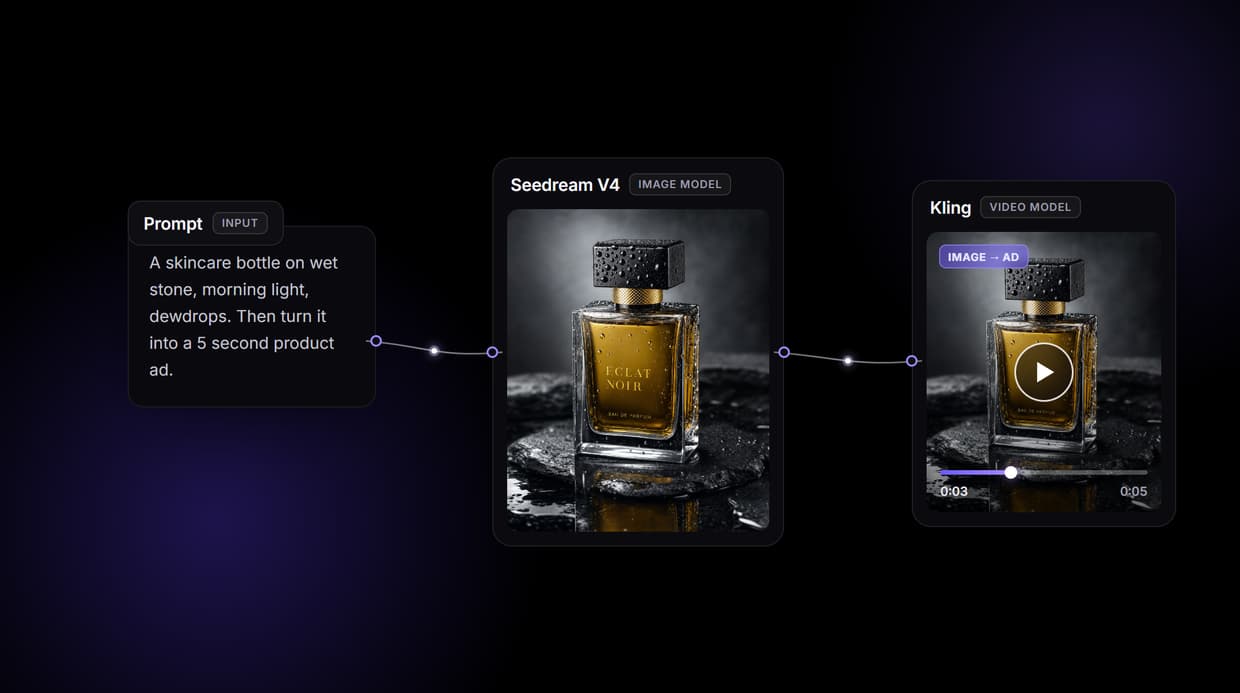
What transfers from Pletor to Wireflow
The work you do in Pletor is really three repeatable pipelines: UGC videos, product photography, and static ads. All three map cleanly onto a Wireflow canvas, usually with more control than a fixed agent gives you.
The honest tradeoff: nothing transfers as a file. You rebuild each pipeline once on the canvas, dropping nodes and choosing from 79 hosted models. The payoff is that the rebuilt workflow is fully open. Swap any model, change any parameter, branch it, version it, share it by link. A sealed agent run exposes none of that.
The REST + MCP moat
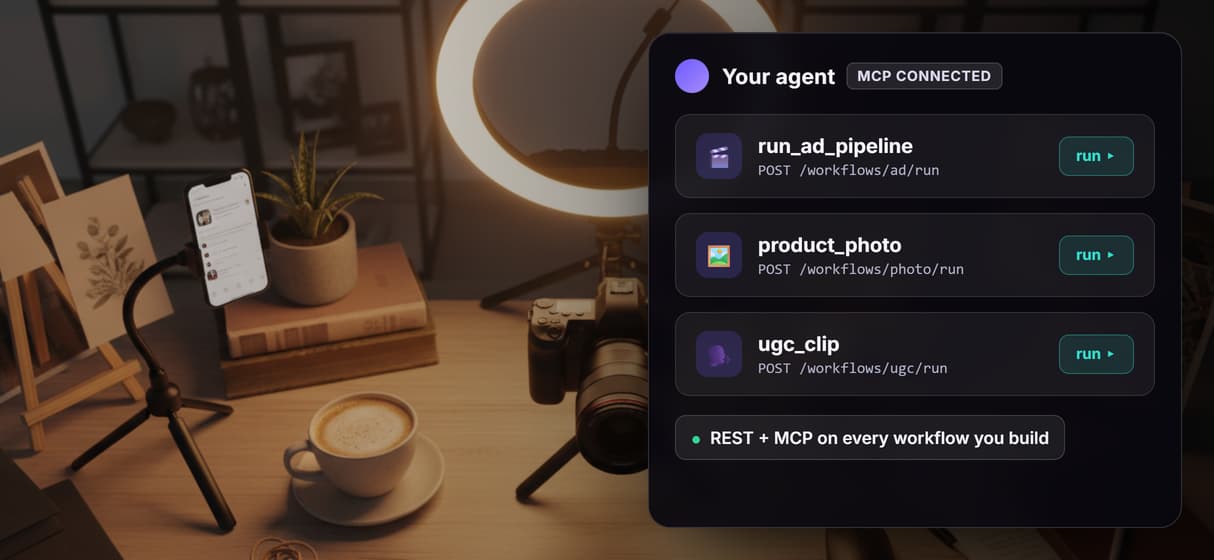
This is the part an agent-first tool cannot match. Every workflow you publish in Wireflow is automatically both a hosted REST endpoint and an MCP tool. Your agent lists your workflows, runs one with typed inputs, and gets back asset URLs. The same UGC or ad pipeline is callable by your own code and by any MCP-aware assistant, with no extra export step.
Workflows are versioned server-side and shareable by link, so the pipeline that worked last week runs the same way today. The honest tradeoff: Wireflow is the generation layer, not the reasoning brain. You bring your own agent or LLM, and in exchange the pipeline plugs into your stack instead of living inside one vendor's product.
When Pletor still wins
If you want a fully hands-off agent that decides everything for you, Pletor is built for exactly that. Its agent drives the generation, so you never touch a node or think about the pipeline. Wireflow works differently: it is the generation and orchestration layer, not the reasoning brain, and you bring your own agent or LLM.
That means some upfront setup, building the workflow before you automate it. The trade is control: on the canvas you see and can edit every step, the model choice, the prompts, the wiring, and every published workflow stays versioned and reproducible. If hands-off matters more to your team than that ownership, Pletor may be the better fit, and this page will say so plainly.
Pricing without the enterprise tier
Wireflow's pricing is public: $24 Starter, $45 Pro, and $249 Team, all listed on the pricing page. Building on the canvas is free, and generations are billed per run, so you only spend on what you actually create. With an agent-style tool, cost sits inside the agent's decisions; on a canvas, you see every node before you run it, so the cost of a generation is visible up front.
There is no sales call to book and no contract to negotiate before you can wire up a real pipeline. Build a full UGC or ad workflow for free, run it to see the exact per-generation cost, then scale spend up or down with your output. The tradeoff is real: heavy output months cost more than a flat unlimited plan would, but you never pay for capacity you do not use.
Wireflow vs Pletor AI at a Glance
Pletor points an agent at the job. Wireflow hands you the pipeline the agent would have built, so you can read and change every step.
Where Wireflow wins
- Every step of the pipeline is visible on the canvas and editable in place
- 80+ hosted image, video, and audio models, swapped one node at a time
- Public pricing with no sales call and no contract before you can wire up a real pipeline
- Every published workflow is also a REST endpoint and an MCP tool
- Workflows stay versioned and reproducible, so a client rerun matches the first run
- Build the whole pipeline free before you spend a credit on it
Choose Pletor AI if
- You want a hands-off agent that makes every decision for you
- You never want to open a pipeline, only approve the output
- The upfront build is worth less to you than the ownership it buys
Pricing, checked September 2026. Building on the Wireflow canvas is free and needs no credit card; generating runs on a paid plan. Starter is $24 a month for 1,600 credits, Professional is $45 a month for 4,300 credits with three-month rollover, and Team is $249 a month for 21,500 credits shared across four seats. Every node shows its credit cost on the canvas before you press run, so an expensive video step is visible up front instead of at the end of the month. With an agent-style tool the cost sits inside the agent's decisions; on a canvas you see the node cost before the run.
More Than Just Pletor AI Alternative: 79 Models, No Black Box
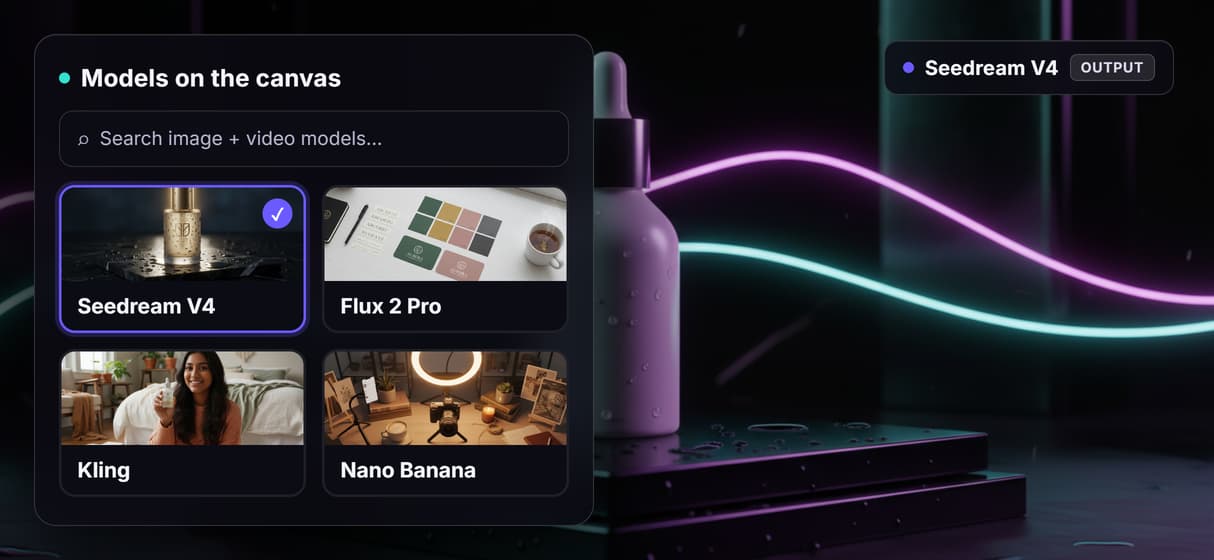
79 models, not a fixed agent
Swap hosted models per node. Build the marketing agent yourself, choose every parameter, and override the template.
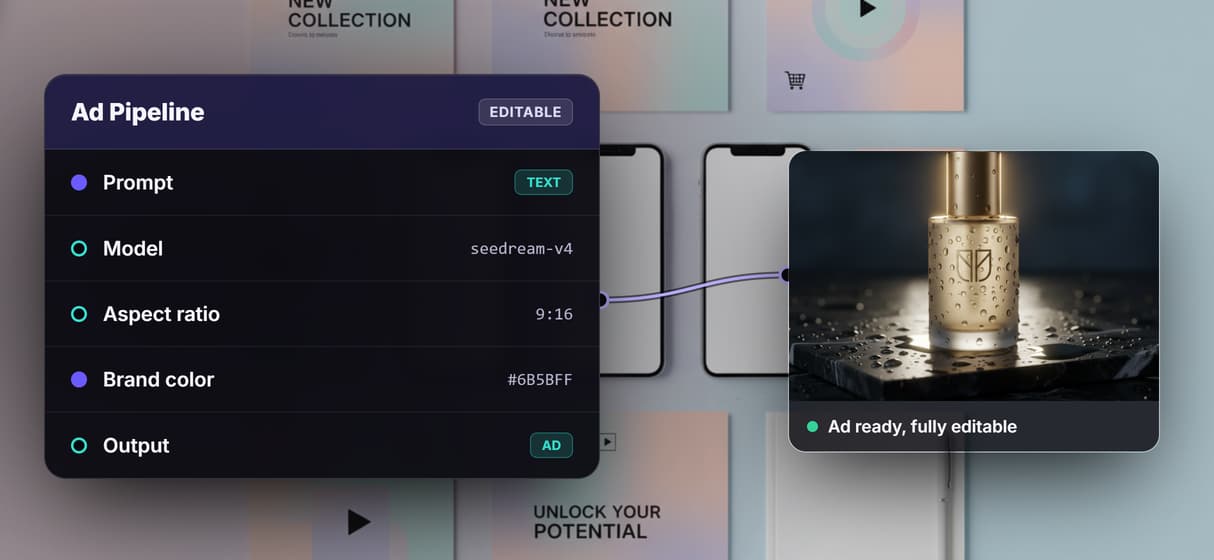
Editable ads, no template lock-in
Wire brand-ready static ads, variations, and formats. The canvas stays editable, never boxed inside a closed preset.
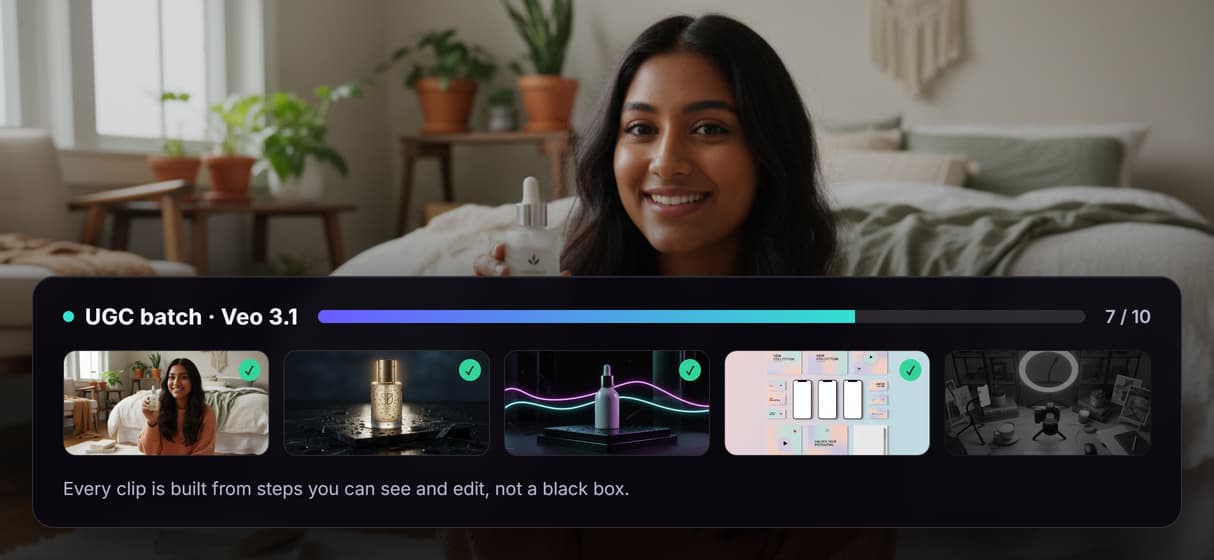
UGC video without the black box
Compose text, image, video, and voice nodes into a repeatable AI UGC workflow with models like Veo 3.1, Kling, and Seedance. You see and control every step, not just the output.
Product photos on your terms
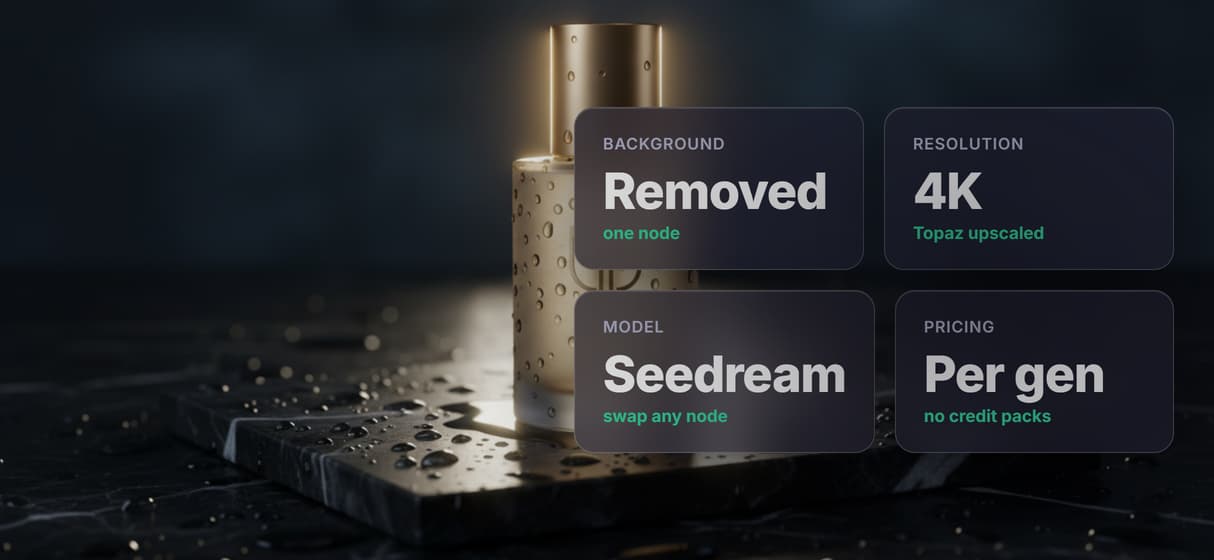
Chain background removal, upscale, and image models for catalog-matched photos. Adjust any node, not a template.
Every flow: hosted API + MCP
Typed calls automate marketing for teams and agents without lock-in. Build free; pay per use or choose $24/mo flat plans.
Pletor alternative: 79 models, no black box Workflows
No Code Required
API & Batch Processing
FAQs
Wireflow is a strong Pletor AI alternative for teams that want direct control instead of an agent that drives generation for them. You build image and video pipelines on a visual node canvas with 79 hosted models, pay per generation, and every published workflow becomes a REST endpoint plus an MCP tool. Building on the canvas is free; generations cost credits.
More From Wireflow
Written by
Andrew Adams · Co-Founder & Operations at Wireflow
Runs client operations and content strategy at Wireflow. Works directly with creative teams and agencies to build production AI workflows.
Build your first workflow free
Open the canvas, wire a UGC, ad, or product-photo workflow across 79 models, and ship it as a REST endpoint and MCP tool your agents can call. No install, no black box. Building is free, you pay only for what you generate.