
We ran the same pipelines in both. Weavy (now Figma Weave) wins precision editing; Freepik Spaces (now Magnific) wins collaboration. One tool does both.
Quick answer:
- Weavy is now Figma Weave. Acquired by Figma in October 2025; still a separate product with separate billing as of mid-2026.
- Freepik Spaces is now part of Magnific. Freepik rebranded on April 28, 2026; Spaces is its collaborative node canvas.
- Pick Figma Weave for precision: generative nodes plus deterministic edits (curves, masking, relighting) in one non-destructive graph.
- Pick Freepik Spaces for teamwork: live multiplayer canvases, node comments, and a deep stock library to build on.
- Pick Wireflow for breadth and automation: 79 models, unlimited canvases, and every workflow callable as an API.
What Happened to Weavy and Freepik Spaces?
Weavy launched as an independent node-based canvas for chaining image and video models into visual workflows. Figma acquired the company in October 2025 and relaunched the product as Figma Weave. It remains a separate app with separate billing, but the integration is deepening: at Config 2026 in June, Figma shipped Weave tools inside Figma Design as a free open beta and previewed a Figma node that will let design frames flow directly into Weave workflows. Searchers still type the old name, which is why this comparison and the Weavy alternatives roundup keep both names visible.
Freepik Spaces went through the same churn from the other direction. Freepik acquired the Magnific upscaler in 2024, then rebranded the entire company to Magnific on April 28, 2026. Spaces is the node canvas inside that platform, and freepik.com URLs, docs, and API endpoints are still migrating to magnific.com, with old endpoints working during the transition. If you are evaluating the category more broadly, the Freepik Spaces alternatives guide maps the full field.
Figma Weave (ex-Weavy): Where It Wins
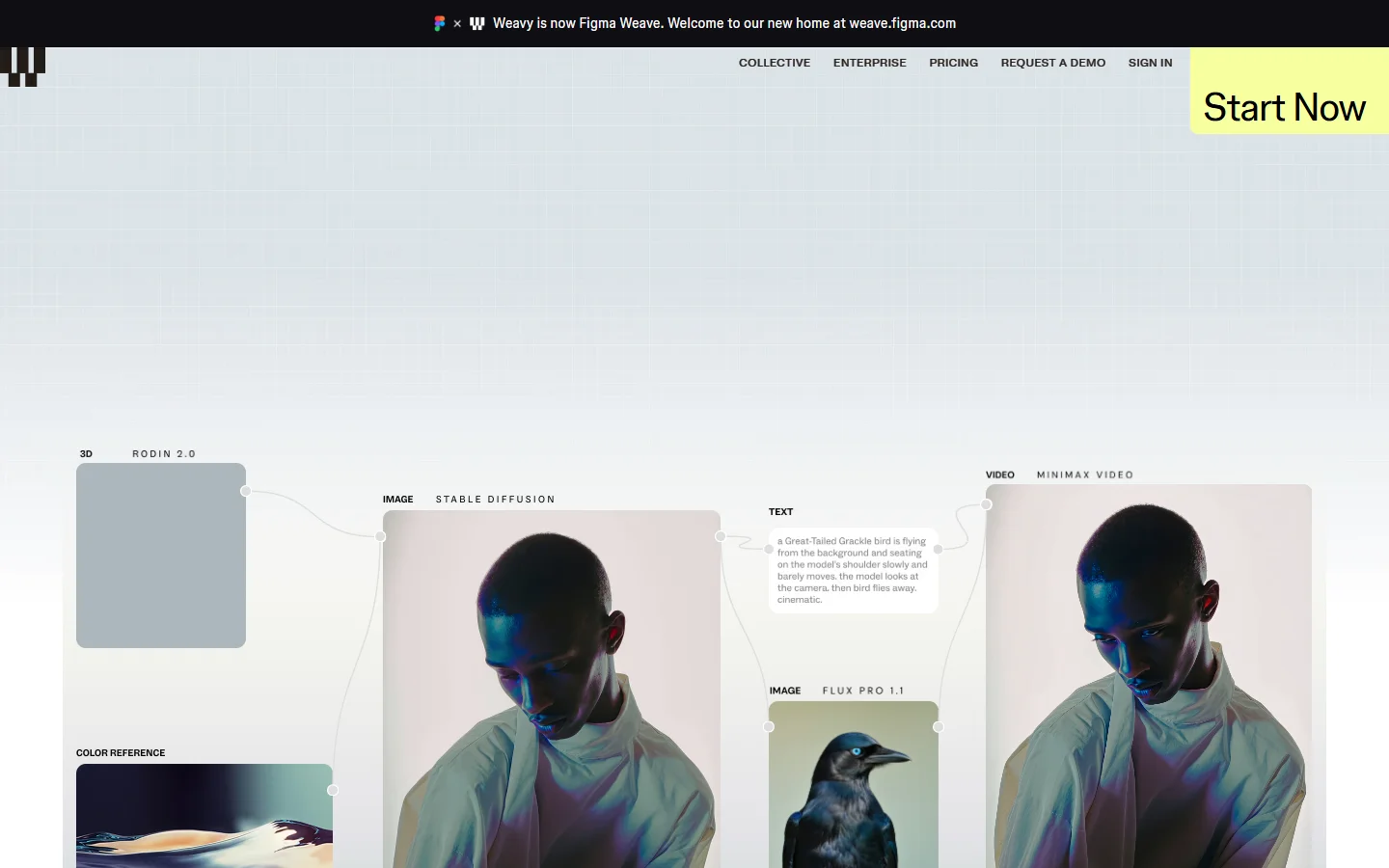
Weave's identity is precision. It blends generative nodes with deterministic editing operations such as curves, masking, and relighting in one non-destructive pipeline, so a team can codify a repeatable look instead of re-prompting and hoping. App Mode packages complex graphs into simplified tools that non-technical teammates can operate, which is the closest thing this category has to shipping an internal product. The Weavy alternative breakdown covers how that philosophy compares feature by feature.
The model roster is broad and current as of mid-2026: Seedance, Sora, and Veo for video; Flux and Ideogram for images; Nano Banana and Seedream for precision tasks. Pricing starts free at 150 credits per month, scales through Starter (about 1,500 credits) and Professional (about 4,000 credits), and tops out at a Team plan of $48 per user per month with 4,500 credits; extra credits run roughly $10 per 1,000 to 1,200. The full Weavy vs Wireflow comparison digs into how those credits translate to real output.
The limits are the flip side of the Figma embrace. Billing sits outside your Figma plan, every generation draws from a credit allowance, and the product's center of gravity is design-team pipelines rather than batch output or programmatic access. If your endgame is triggering workflows from code, that gap is exactly what a Weavy alternative with an API exists to fill.
Freepik Spaces (Magnific): Where It Wins
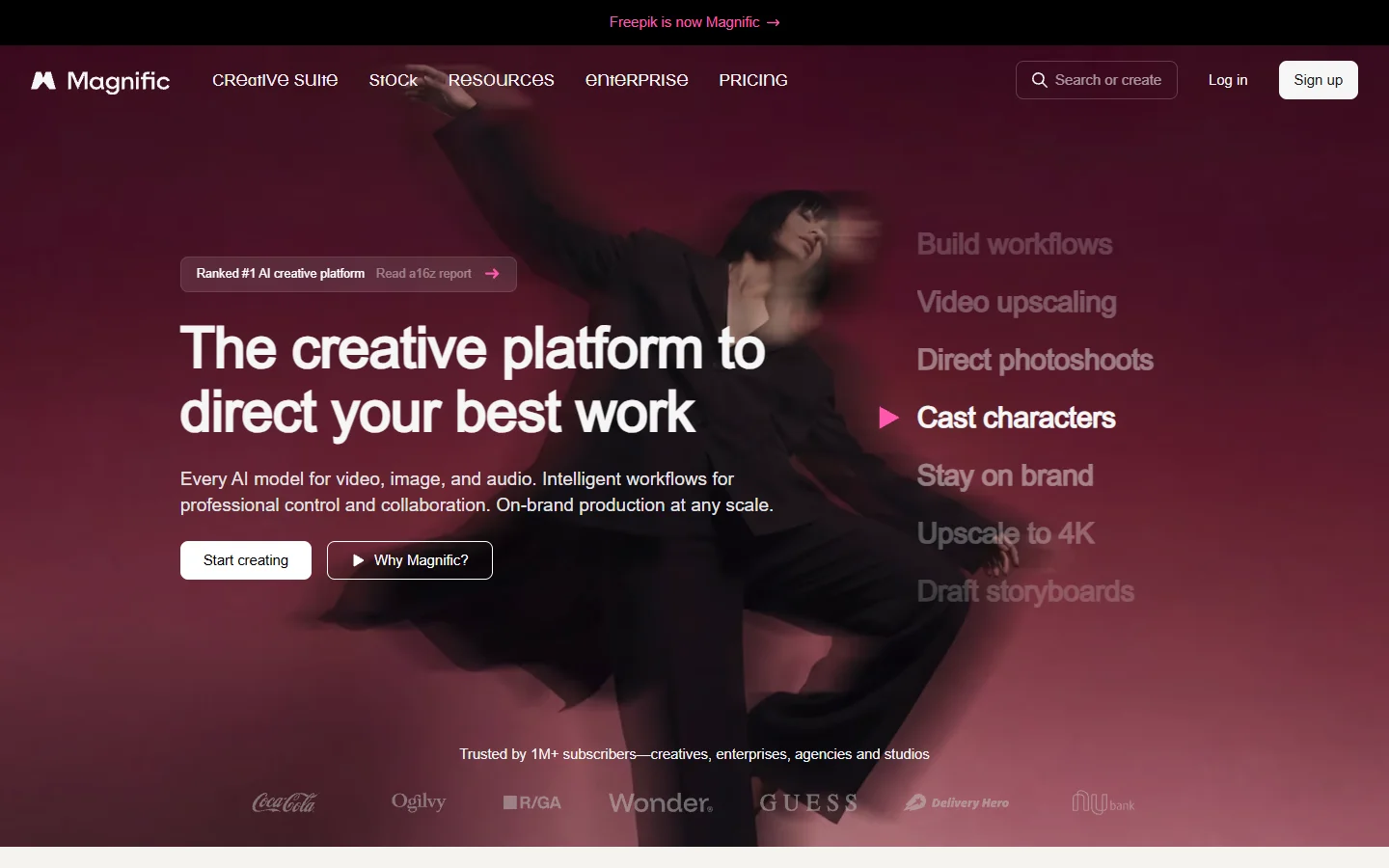
Collaboration is Spaces' clearest strength. Multiple people edit the same canvas simultaneously with live cursors, comments attach to specific nodes, and Viewer and Editor roles control who can change what. The second differentiator is the stock library: Spaces plugs straight into the Freepik (now Magnific) catalog, so teams pull professionally composed photos and vectors into a workflow as compositional scaffolding and generate on top of structure instead of noise. Integrated video models such as Wan 2.5 produce 1080p clips with audio, all inside a fully cloud-based collaborative canvas that needs zero local setup.
The limits are structural rather than hidden. Free accounts can create up to 3 Spaces but generator nodes consume credits, so you can arrange a workflow without paying yet not really run one. Image, video, upscaling, and audio all draw from a single credit pool, which volume teams drain mid-month. The model roster is curated on Magnific's schedule, and API access tightened in 2026: pay-per-use API pricing was discontinued and credentials now come with higher-tier subscriptions, the gap a dedicated Freepik Spaces API alternative targets directly.
Weavy vs Freepik Spaces: The Direct Comparison
Strip the rebrands away and this is a workflow-philosophy call, not a feature checklist. Weave assumes one skilled operator building a pipeline that others consume; Spaces assumes a group building together in real time. The feature-level comparison shows the same split from a third angle.
| Figma Weave (Weavy) | Freepik Spaces (Magnific) | |
|---|---|---|
| Core strength | Precision: generative plus deterministic editing | Real-time collaboration plus stock library |
| Collaboration | Share finished tools via App Mode | Live multiplayer, node comments, roles |
| Models (mid-2026) | Seedance, Sora, Veo, Flux, Ideogram, Nano Banana, Seedream | Curated by Magnific, including Wan 2.5 |
| Free tier | 150 credits per month | 3 Spaces; generating requires credits |
| Pricing | Credit plans up to Team at $48 per user per month | Magnific subscription, one shared credit pool |
| API access | Not the product focus | Higher-tier subscriptions only |
| Best for | Design teams codifying repeatable pipelines | Distributed teams co-creating in real time |
Where Wireflow Fits
Wireflow sits in the same node-canvas category but is built around the tradeoffs both tools leave open: model breadth and automation. The canvas exposes 79 AI models across every generation type, including Flux 2 Pro, Imagen 4, Nano Banana Pro, Seedream 4.5, Recraft V4, Ideogram V3, and GPT Image 1.5 for images; Sora 2, Veo 3.1, Kling through the O3 release, Wan 2.5, Seedance 2.0, LTX Video 2.0, and Pixverse v6 for video; ElevenLabs TTS v3 for voice; Hyper3D Rodin V2 for 3D; and LLM nodes that route Claude, GPT, Gemini, and DeepSeek into the same graph.
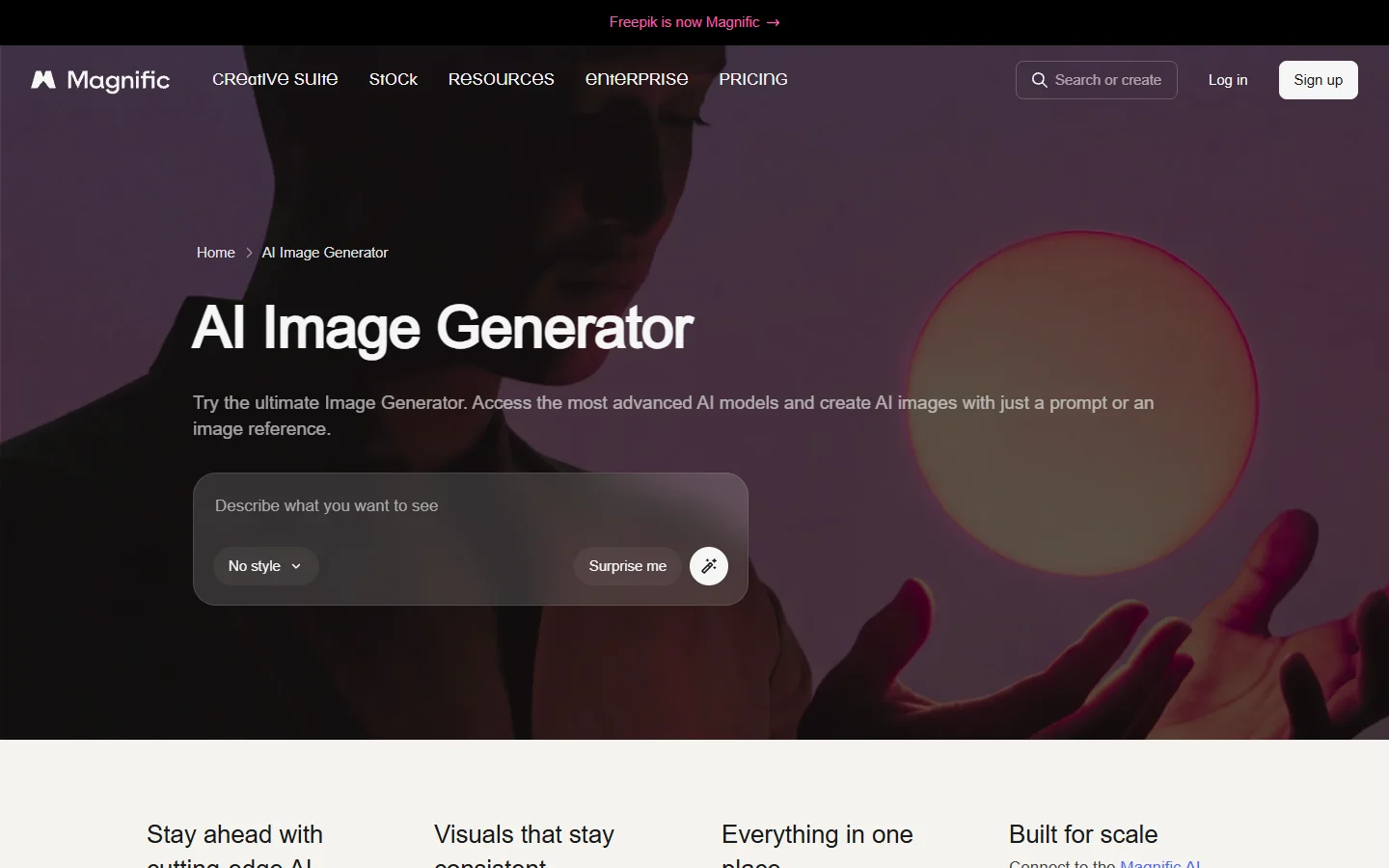
The structural differences matter more than the roster. There is no cap on canvases at any tier, including free. Iterator nodes run real batch jobs, fanning arrays of inputs through a workflow instead of duplicating templates by hand. And every workflow doubles as a callable endpoint, so automation does not require an enterprise negotiation. The side-by-side feature mapping covers the details for teams making the call.
To be fair in both directions: Weave beats Wireflow on deterministic editing depth, and Spaces beats it on multiplayer editing and native stock scaffolding. Wireflow's home ground is model flexibility, batch throughput, and API-triggered pipelines.
When Each Tool Wins
Choose Figma Weave when your team already lives in Figma, you need generative output to sit inside a controlled, repeatable editing pipeline, and one operator can own the graph. Brand teams codifying a look get the most from it.
Choose Freepik Spaces when several people need to build on one canvas at the same time and your workflows start from stock assets rather than a blank prompt. Distributed marketing teams iterating on campaign variants fit this profile.
Choose Wireflow when you need many models on one canvas, batch runs over arrays of inputs, or workflows you can trigger from code without an enterprise plan. Builders and agencies producing at volume land here.
FAQ
Is Weavy better than Freepik Spaces? For precision editing and codified pipelines, yes: Weave (ex-Weavy) combines generative and deterministic nodes in one graph. For real-time team collaboration and stock-library scaffolding, Freepik Spaces wins. Neither is better outright; they optimize different workflows.
What happened to Weavy? Figma acquired Weavy in October 2025 and relaunched it as Figma Weave. It remains a separate product with separate billing as of mid-2026, and the first Weave tools appeared inside Figma Design as an open beta at Config 2026.
Is Freepik Spaces the same as Magnific? Spaces is one product inside Magnific. Freepik rebranded to Magnific on April 28, 2026, after acquiring the Magnific upscaler in 2024. Same company and accounts; domains and docs are migrating to magnific.com.
Is Freepik Spaces free? Partly. Free accounts can create up to 3 Spaces and arrange workflows, but running generator nodes consumes credits, so meaningful generation requires a paid Magnific plan.
Does Figma Weave have a free plan? Yes. As of mid-2026 Figma Weave starts free with 150 credits per month, then scales through Starter and Professional credit plans to a Team plan at $48 per user per month.
What is the best alternative to Weavy and Freepik Spaces? It depends on the limit you hit. For model breadth, batch processing, and API-triggered workflows on the same kind of node canvas, Wireflow is the closest like-for-like option. For deterministic editing depth, Figma Weave itself is the answer; for multiplayer co-creation, Spaces is.
The Bottom Line
Weavy vs Freepik Spaces in 2026 is really Figma Weave vs Magnific: a precision pipeline tool versus a collaborative canvas with a stock library behind it. Both are credible; the right pick follows whichever constraint anchors your work, and if that constraint is model choice, batch volume, or automation, run the same workflow on Wireflow's free tier before you commit either way.
Would you rather we just built it?
We get on a call, learn your style, build the workflow, and ship the deliverables on a schedule. You keep the workflow either way.


