There is no official Midjourney API in 2026. These are the 7 best workarounds, from official-API models like FLUX to unofficial Discord wrappers, compared. Wireflow takes the official-API route: Midjourney-grade models like FLUX, Recraft V4, and Nano Banana 2 behind one stable REST API, with no account-ban risk. Below are the pricing and trade-offs for each of the seven options developers actually use in 2026.
Quick Summary
- Wireflow - Official-API image models with Midjourney-level quality - Best Overall
- PiAPI - Pay-as-you-go Midjourney wrapper with broad endpoint coverage - Best Pay-As-You-Go
- APIFrame - Hosted Midjourney API with cheap low-volume pricing - Best for Low Volume
- ImaginePro - Production-focused REST API with webhooks - Best Developer Experience
- useapi.net - Flat-rate subscription covering multiple unofficial APIs - Best Flat-Rate Bundle
- mjapi.io - Simple Midjourney wrapper aimed at quick integrations - Simplest Setup
- Apify Midjourney Actor - Automation-platform approach to Midjourney access - Best for Scraping Stacks
How We Ranked These Tools
Every unofficial Midjourney API automates the Discord or web interface, which violates Midjourney's terms of service and can get the underlying account banned. That risk is the single biggest factor separating these tools, so we weighted stability and ToS exposure first, then per-image cost, then developer experience. For teams that want programmatic image generation without that liability, a programmatic image generation platform built on officially licensed models is the safer architecture.
We also tested response formats, webhook support, and queue behavior under load. If you want the full breakdown of how these stack up feature by feature, check out the Midjourney API feature page for a hands-on look at the API-first approach in action.
1. Wireflow - Best Overall
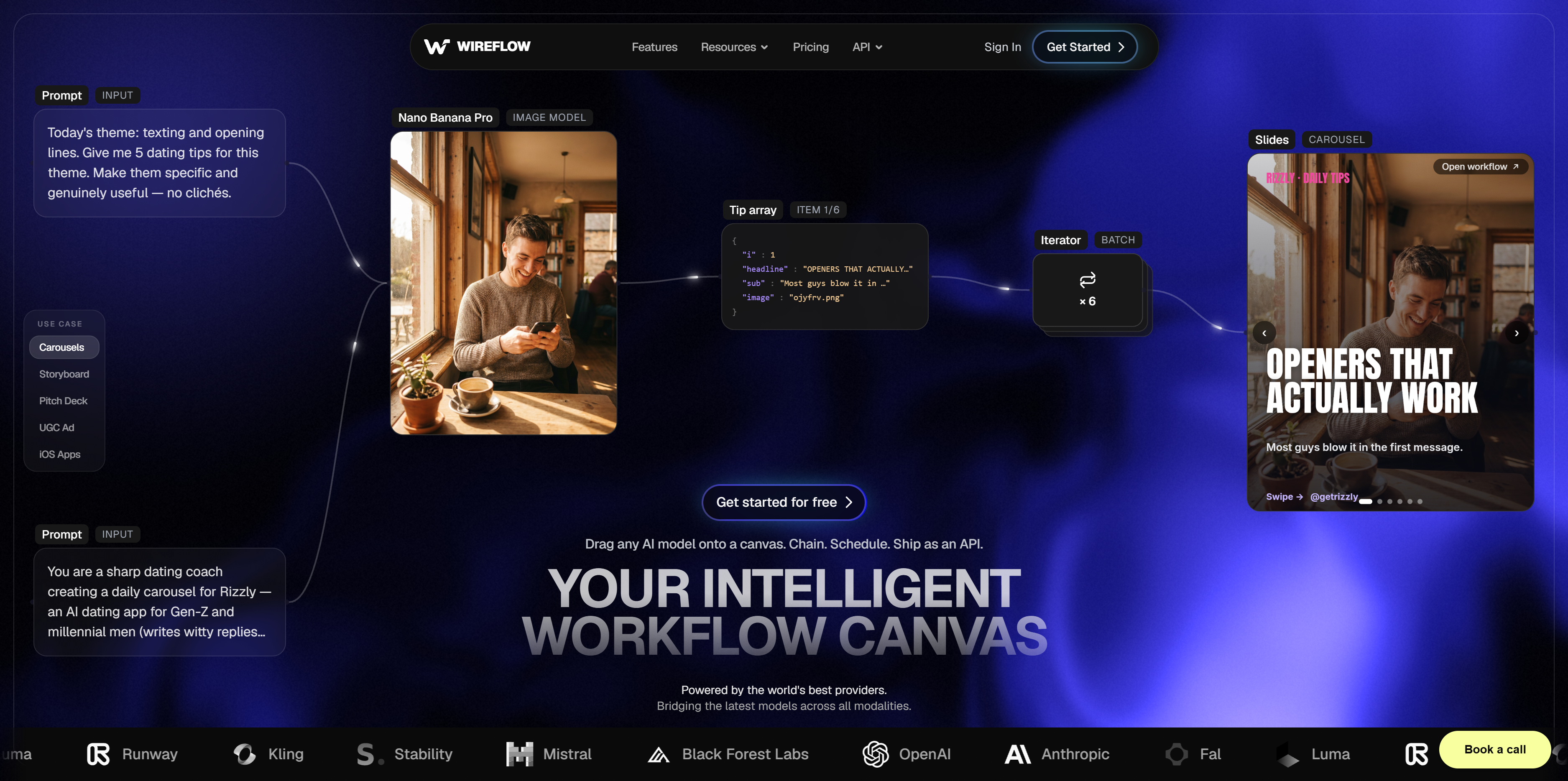
Wireflow is a node-based AI canvas with a full REST API, and it solves the Midjourney API problem by sidestepping it. Instead of wrapping a Discord bot, it exposes officially licensed models that match or beat Midjourney on photorealism and stylization, including FLUX, Recraft V4, and Nano Banana 2, through one AI image generator endpoint structure.
The practical difference shows up in production. There is no shared Midjourney account that can get banned, no Discord rate-limit roulette, and no queue position lottery. You can chain models together on the visual canvas, then call the same workflow from code, which makes batch AI generation straightforward for catalogs, ad variants, or dataset creation.
Pricing is usage-based credits rather than a monthly wrapper fee, so cost scales with actual generation volume. Compare that against paying for both a wrapper subscription and the underlying Midjourney plan; the pricing page shows the per-generation credit costs for each model.
Best for: teams shipping image generation to production who cannot accept ToS risk.
2. PiAPI - Best Pay-As-You-Go
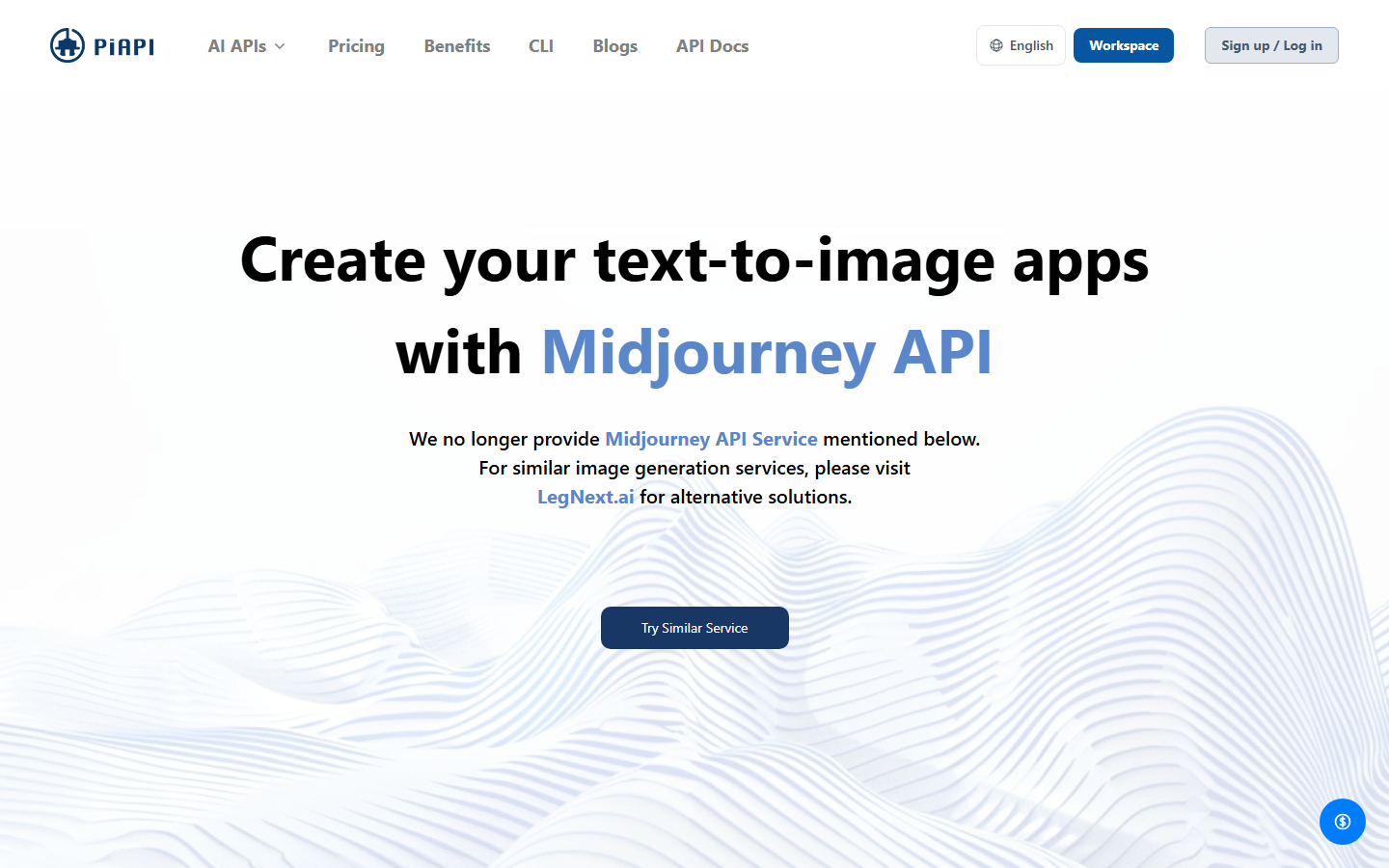
PiAPI is the most complete unofficial Midjourney wrapper, covering imagine, upscale, variation, blend, describe, and pan endpoints. It runs in two modes: a hosted pay-as-you-go service starting around $0.01 per imagine task, or a self-hosted plan at $8 per month where you connect your own Midjourney account. The hosted mode means you do not need a Midjourney subscription at all, which is similar in spirit to how a Nano Banana 2 API gives you metered access without platform lock-in.
PiAPI also wraps other models (Kling, Luma, Suno), so it can consolidate several unofficial APIs behind one key. The trade-off is the usual one: automation of Midjourney accounts violates its terms, and hosted capacity can degrade when Midjourney tightens detection.
Best for: developers who want per-task pricing and broad endpoint coverage.
3. APIFrame - Best for Low Volume
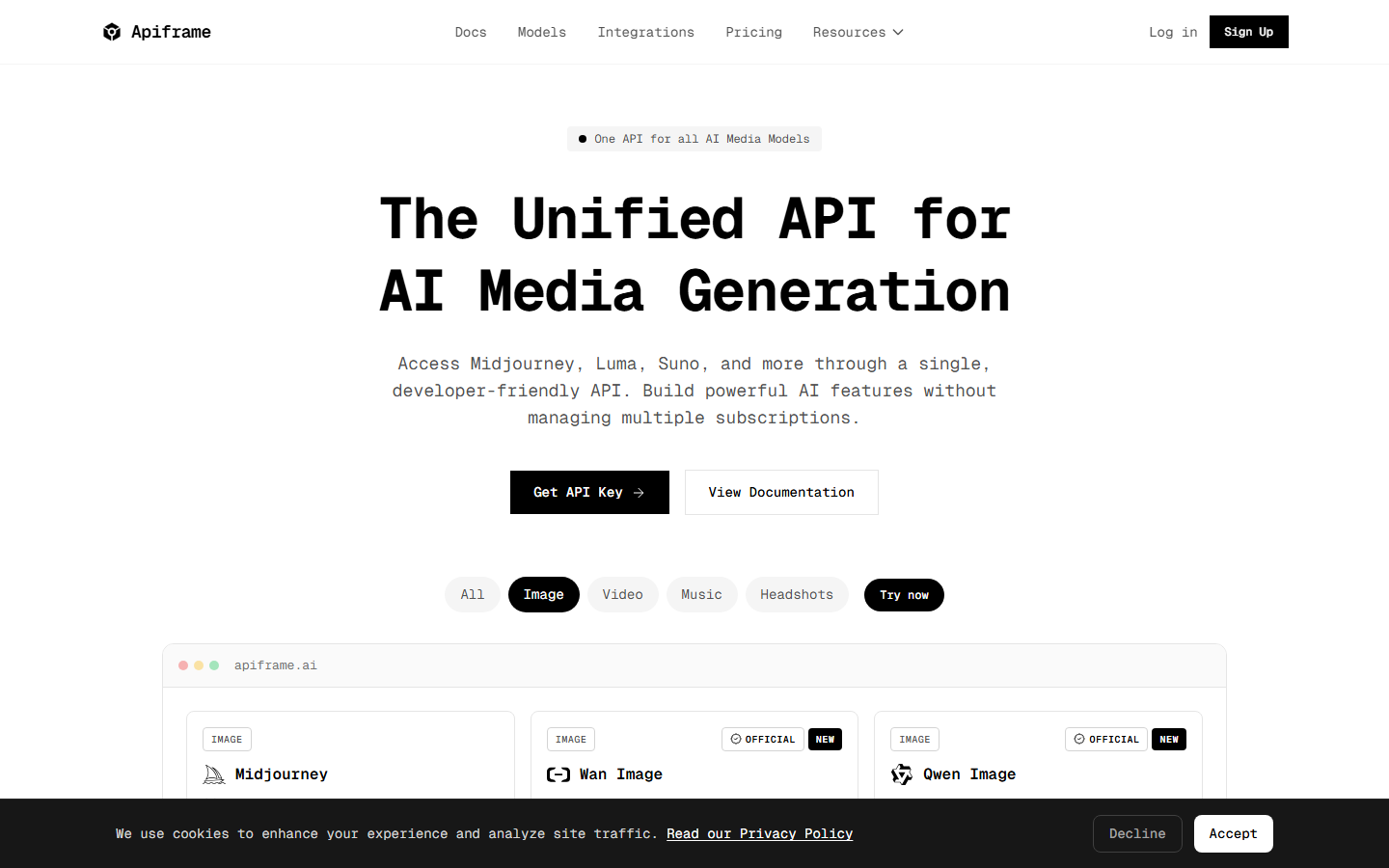
APIFrame focuses on making low-volume Midjourney access cheap. At roughly 100 images per month it works out to a few dollars, well under the $30 you would pay for a Midjourney subscription you barely use. The REST interface is clean, with async task creation and webhook callbacks when generations finish, a pattern any team using a usage-based AI API pricing model will recognize.
Documentation is solid and includes quick-start examples in Python and Node. The weakness is throughput: heavy parallel loads queue noticeably, and like every wrapper here, the service depends on pools of Midjourney accounts that can be disrupted.
Best for: side projects and internal tools generating under a few hundred images monthly.
4. ImaginePro - Best Developer Experience
ImaginePro positions itself as a production-ready Midjourney REST API with free credits to test, webhook delivery, and clear status polling. Of the wrappers, it has the most polished onboarding: you can go from signup to a generated image in a few minutes without touching Discord. That developer-first posture mirrors what a developer-friendly AI image platform should look like, just applied to unofficial infrastructure.
It also exposes upscale and variation actions and returns CDN-hosted output URLs, which saves you from storing intermediate images yourself. Pricing is credit-based with monthly tiers. The standard caveats apply on reliability and terms-of-service exposure.
Best for: teams prototyping Midjourney-style output who value clean docs and fast setup.
5. useapi.net - Best Flat-Rate Bundle
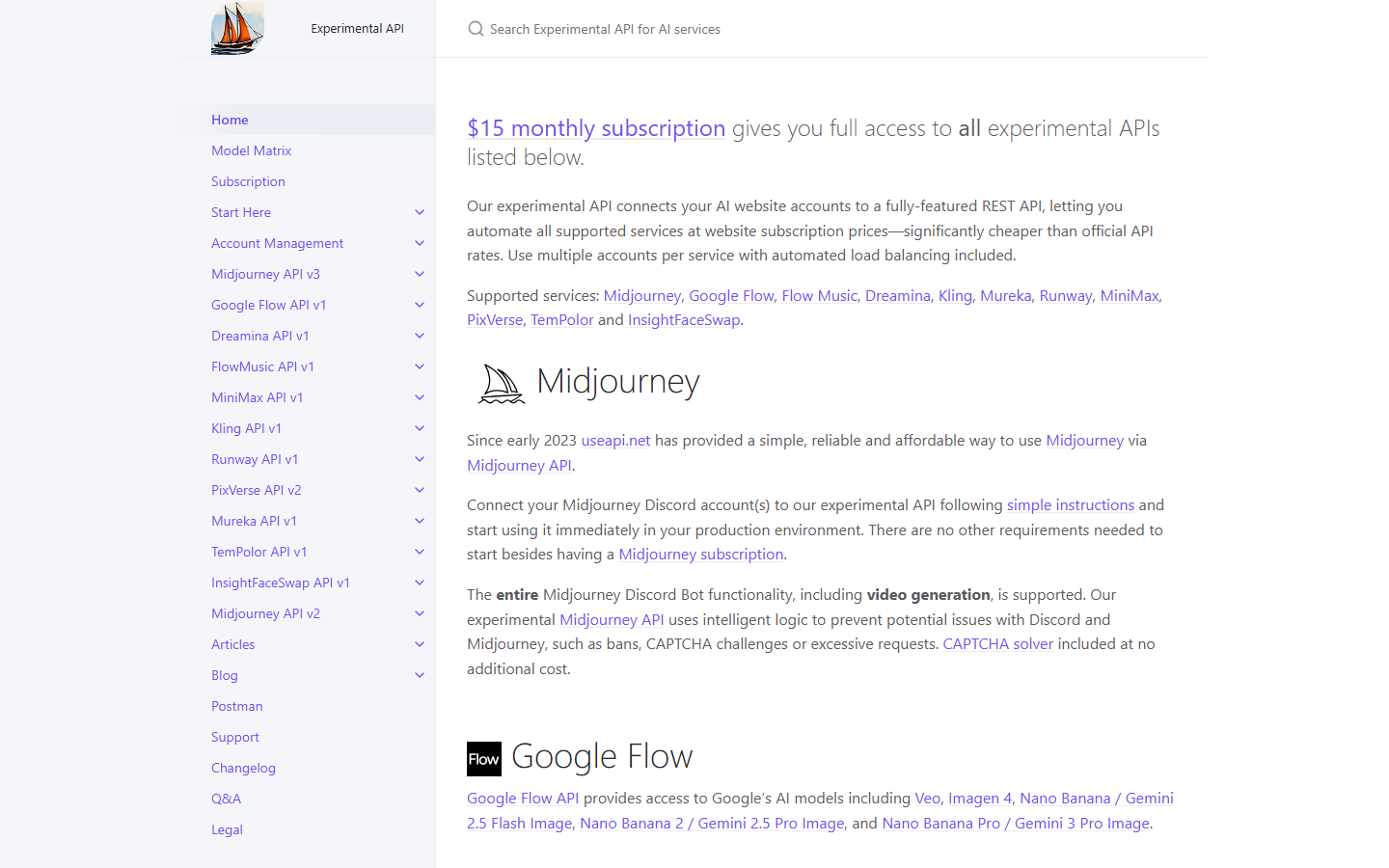
useapi.net charges a flat $10 per month and bundles unofficial APIs for Midjourney, Pika, InsightFaceSwap, and PixVerse under one subscription. You connect your own Midjourney account, so you still pay Midjourney directly, but the predictable flat fee is attractive for steady workloads where per-task billing gets hard to forecast. Teams that need spend predictability at larger scale usually end up wanting an AI generation API with spend limits instead of stacking subscriptions.
Because it drives your own account, your generation speed matches your Midjourney plan tier, and your account carries all the ban risk. Documentation is thorough, including LLM-friendly schema files.
Best for: solo developers with an existing Midjourney subscription and multiple unofficial-API needs.
6. mjapi.io - Simplest Setup
mjapi.io strips the problem down to the essentials: a small REST surface for imagine, upscale, and variations, with an option to use its hosted accounts or bring your own. There is little to configure, which makes it the fastest wrapper to wire into a script or a no-code automation. It fits the same niche that no-code AI with API access serves for builders who want results before architecture.
The minimalism cuts both ways. There are fewer endpoint options than PiAPI, less infrastructure transparency than APIFrame, and support is thin. For weekend projects that is fine; for revenue-bearing products it is a gamble.
Best for: quick scripts and prototypes where setup time matters more than depth.
7. Apify Midjourney Actor - Best for Scraping Stacks
Apify offers Midjourney access as an actor on its web automation platform. If your stack already runs Apify for scraping or browser automation, adding image generation as another actor keeps billing and orchestration in one place. It is the same consolidation argument that favors an AI generation API for SaaS apps over per-feature vendors.
As a Midjourney route it is the most indirect option here: actor cold starts add latency, and pricing follows Apify's compute-unit model rather than per-image rates, which makes cost estimation harder. Treat it as a convenience for existing Apify users rather than a primary image API.
Best for: teams already orchestrating workloads on Apify.
Comparison Table
The table below summarizes the trade-offs. Note that every option except the first depends on automating Midjourney accounts against its terms of service, which is why many teams evaluating these tools end up considering a Midjourney alternative with official API access instead.
| Tool | Model access | Pricing | MJ account needed | ToS risk |
|---|---|---|---|---|
| Wireflow | FLUX, Recraft V4, Nano Banana 2, more (official) | Usage-based credits | No | None |
| PiAPI | Midjourney (unofficial) + others | ~$0.01/task or $8/mo BYO | Optional | High |
| APIFrame | Midjourney (unofficial) | Per-image, low-volume friendly | No | High |
| ImaginePro | Midjourney (unofficial) | Credit tiers, free trial credits | No | High |
| useapi.net | Midjourney + Pika + PixVerse (unofficial) | $10/mo flat | Yes | High |
| mjapi.io | Midjourney (unofficial) | Subscription | Optional | High |
| Apify Actor | Midjourney (unofficial) | Apify compute units | Varies | High |
Try it yourself: Build this workflow in Wireflow - the nodes are pre-configured with the exact text-to-image API setup discussed above.
FAQ
Does Midjourney have an official API in 2026?
No. Midjourney has not released a broadly available public API. All "Midjourney API" products on the market are third-party wrappers that automate the Discord bot or web app.
Is using an unofficial Midjourney API against the terms of service?
Yes. Midjourney's terms prohibit automation, and accounts used through wrappers can be suspended or banned. Hosted wrappers absorb some of this risk with account pools, but service interruptions still happen when bans hit.
What is the cheapest way to get Midjourney-style images via API?
For under 100 images a month, hosted wrappers like APIFrame cost a few dollars. At higher volume, usage-based access to official models such as FLUX or Recraft V4 is usually cheaper per image and far more reliable.
Can I get Midjourney quality from models with official APIs?
Yes. Current FLUX, Recraft V4, and Nano Banana 2 checkpoints match Midjourney on photorealism and stylized output in most head-to-head tests, and they support precise prompt control that Midjourney's parameter system does not.
How do unofficial Midjourney APIs actually work?
They run real Midjourney accounts in Discord or the web app, submit your prompt through automation, then poll for the result and return the image URL. That is why latency and reliability vary with Midjourney's own queue and detection systems.
Should I bring my own Midjourney account to a wrapper?
Bring-your-own-account plans are cheaper but put your personal account at ban risk. Hosted pools shift the risk to the provider at a higher per-image cost. Neither removes the underlying terms-of-service problem.
What happens to my product if a wrapper gets cut off?
Your image generation goes down with it. If image output is core to your product, build on officially supported APIs, or at minimum implement a fallback provider with an abstraction layer over multiple image models.
Do these APIs support upscaling and variations?
Most wrappers expose upscale and variation endpoints mirroring Midjourney's buttons. PiAPI has the widest coverage, including blend and describe. Official-API platforms handle upscaling with dedicated models instead.
Conclusion
The unofficial wrappers all share one structural flaw: they sit on top of a platform that actively does not want them there. PiAPI, APIFrame, and ImaginePro are competent engineering around that constraint, and for experiments they work. For anything in production, the math favors official APIs, and the gap in output quality that once justified the risk has closed. Wireflow gives you those official models, FLUX through Recraft V4 and beyond, behind one API and a visual canvas, so the Midjourney question becomes optional rather than load-bearing.
Would you rather we just built it?
We get on a call, learn your style, build the workflow, and ship the deliverables on a schedule. You keep the workflow either way.