Arcads Pricing in 2026: Real Costs, Credits, and What Each Video Actually Costs

In this article▾
Arcads pricing starts at $110 per month for 8,000 credits and up to 50 AI UGC videos, but the real cost per video depends on a credit system the company does not publish openly. This guide breaks down every Arcads plan, explains how the credits translate into finished videos, and compares the numbers against alternatives. If you would rather skip subscription math entirely, Wireflow takes a different approach: a node-based canvas where you chain video and image models and pay per generation instead of committing to a monthly plan.
Why Arcads pricing is hard to find
Arcads does not have a public pricing page. As of July 2026 the /pricing URL returns a 404, and the only way to see plan details is to create an account first. That is why searches for Arcads pricing mostly surface third-party breakdowns instead of an official page. The numbers below come from user-reported plan screens and the Arcads help center, so treat them as accurate at the time of writing rather than guaranteed. We saw the same opacity pattern when we compared the platform head to head in our Arcads vs Creatify breakdown: both tools gate their most important numbers behind signup.
One more thing to know before the tables: Arcads runs a 30 percent discount on monthly plans that appears to be permanent rather than a limited promotion. The list prices function as anchors, and most buyers pay the discounted rate.
Build this in Wireflow
Make the same kind of asset on a canvas you control, with a free account and no credit card.
Arcads plans compared: Starter, Creator, and Pro
Arcads sells three subscription tiers. All of them are credit-based, and the credits determine how many videos you can actually produce.

| Plan | List price | With 30% discount | Annual (20% off list) | Credits | AI videos | AI actors |
|---|---|---|---|---|---|---|
| Starter | $110/mo | $77/mo | $88/mo | 8,000 | Up to 50 | 300 |
| Creator | $220/mo | $154/mo | $176/mo | 16,000 | Up to 100 | 1,000 |
| Pro | $550/mo | $385/mo | $440/mo | 40,000 | High volume | 1,500 |
Three details matter more than the headline prices:
- Starter is feature-gated. No captions and no background removal. Both are table stakes for ad creative, and adding captions later costs extra credits anyway.
- The actor library scales with the plan. Starter gets 300 AI actors, Creator gets 1,000, Pro gets 1,500. If you produce ads for multiple client niches, actor variety is usually the reason to upgrade before credits are.
- Pro is the only plan with API access and actor cloning. Teams that want to automate production or use a custom spokesperson have exactly one option, at $385 to $550 per month.
There is no free trial. Competitors in this category commonly offer one, which we cover in the roundup of UGC ad tools for agencies, so the lack of a trial is a genuine differentiator, just not in Arcads' favor.
How Arcads credits work
Credits are where the advertised "up to 50 videos" claim gets complicated. Every action in Arcads consumes credits at a different rate:
- AI talking actor video: 800 credits per minute per actor
- Veo 3.1 generation: 800 credits
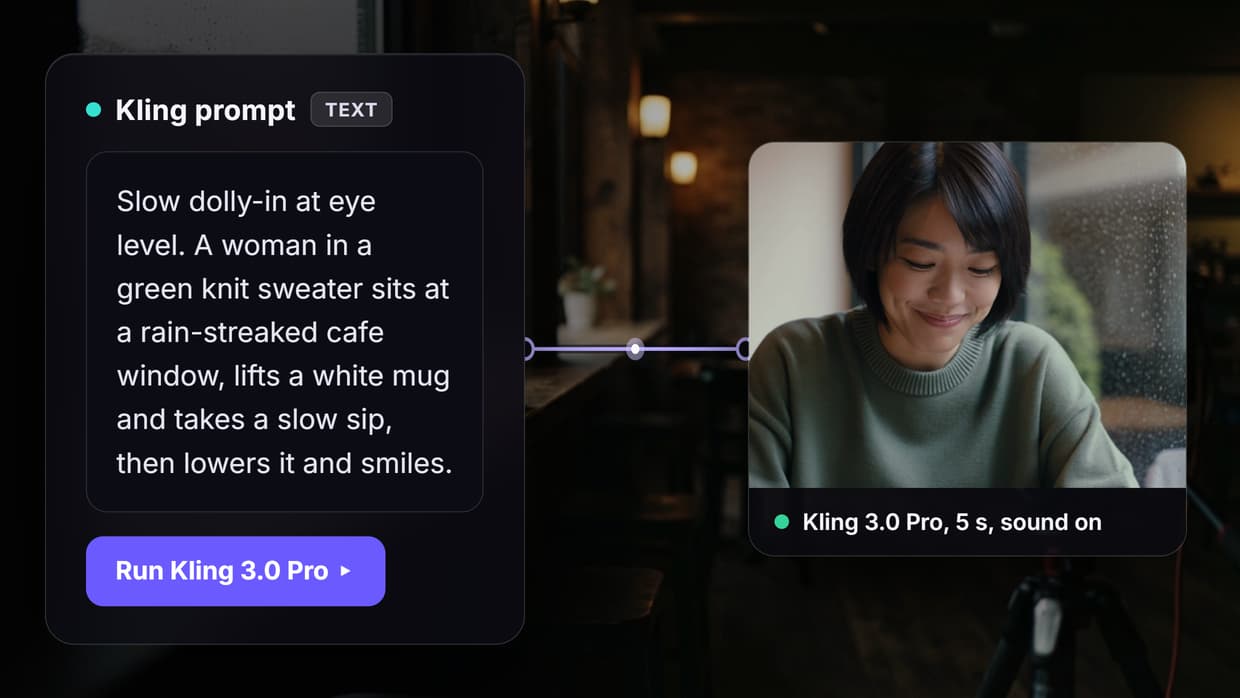
- Kling 3.0 generation: 176 to 560 credits depending on settings
- Seedance 2.0 generation: 96 to 1,620 credits depending on resolution
- Captions: 80 credits per video
- Actor replacement: 800 credits
- Upscaling: 80 credits per 10 seconds
Run the math on a typical 30 to 60 second UGC ad with one actor and captions, and a Starter subscriber lands at roughly $11 per finished video at the discounted rate. That is fine for a brand shipping a handful of ads per month. It gets expensive fast for agencies running creative testing at volume, where dozens of variations per campaign is normal practice. If you bill clients for this work, our guide on what to charge clients for AI UGC ads shows how per-video production cost flows through to your margin.

The annual pricing trap
Here is the strangest part of the Arcads pricing structure: the annual plan is a worse deal than the monthly plan.
Annual billing takes 20 percent off the list price, which puts Starter at $88 per month paid upfront. But the ongoing monthly discount is 30 percent, which puts the same plan at $77 per month with no lock-in. Unless the monthly promotion disappears, prepaying for a year costs you $132 more on Starter and locks you in for twelve months on top of it.
The practical advice is simple: take the monthly discount, skip the annual commitment, and re-check the promo before each renewal. Pricing structures like this change without notice, especially at startups iterating on their model.
What you give up on each tier
Feature gating determines the real plan you need, so map your workflow against the gates before subscribing:
- You need captions on ads. Starter is out. Captions are gated to Creator and above, and virtually every paid social ad needs them.
- You need background removal. Also Creator and above.
- You need API access or automation. Pro only. There is no programmatic access at $77 or $154 per month, which matters if you plan to automate UGC video production rather than click through the interface for every ad.
- You need a cloned actor of a real spokesperson. Pro only.
For solo brands, Creator at $154 per month is the realistic entry point once you account for the caption gate. For agencies, Pro is usually the only viable tier, which puts the honest starting price for professional use somewhere between $385 and $550 per month.

Arcads pricing vs alternatives
The UGC ad space has real price competition, and the per-video math varies a lot between tools:
| Tool | Starting price | What you get | Best for |
|---|---|---|---|
| Arcads | $77/mo (discounted) | ~50 videos, 300 actors, no captions | Brands wanting a large actor library |
| Creatify | $39/mo (annual) | Credit-based, 60-second cap | Budget entry into AI UGC |
| MakeUGC | $49/mo | 5 videos/mo, $1 trial available | Testing the format cheaply |
| HeyGen | $29/mo | Avatar video, not UGC-specific | Talking-head content beyond ads |
| Wireflow | Pay per generation | Model chaining on a canvas, API included | Teams building repeatable ad pipelines |
The structural difference to notice is subscription versus usage pricing. Every subscription tool in the table sells you a monthly credit allowance whether you use it or not, and the tools that win on price at low volume, covered in our list of AI tools for mass-producing UGC ads, tend to get expensive once you scale past their included credits.
Usage-based platforms invert that. You build the pipeline once, run it when you have ads to make, and pay nothing in slow months. The same models Arcads charges credits for, including Veo, Kling, and Seedance, are available as nodes you wire together yourself.

Is Arcads worth the price?
It depends on which buyer you are.
Arcads makes sense if you are a brand or creator producing 20 to 50 actor-led ads per month, you value a large ready-made actor library, and you want a focused tool that does one thing without setup. The $154 Creator plan is defensible for that profile.
Arcads is hard to justify if you are an agency running high-volume creative testing, you need API automation below the Pro tier, or your volume swings month to month and unused credits burn a hole in the budget. Those profiles either need Pro at $385 or more, or a usage-based setup entirely. Our comparison of AI video ad creators for agencies goes deeper on which tools fit agency economics.
Nobody should buy annual while the 30 percent monthly discount is live. The annual plan costs more and adds a lock-in.
Try the usage-based approach yourself: the UGC ad workflow in Wireflow is pre-configured with an actor-led ad chain: GPT Image 2.5 Flare renders the actor, HeyGen Avatar4 speaks your script, and the Video Editor cuts the ad. Open it, swap in your product, and see the per-generation cost before you commit to any subscription.
FAQ
How much does Arcads cost per month?
Arcads has three plans: Starter at $110, Creator at $220, and Pro at $550 per month at list price. An ongoing 30 percent discount brings those to $77, $154, and $385. There is no public pricing page, so you need an account to see current numbers.
Does Arcads have a free trial?
No. Arcads does not offer a free trial or free plan. The cheapest way to test it is one month of Starter at the discounted $77 rate.
How many videos do you get with Arcads Starter?
Starter includes 8,000 credits, marketed as up to 50 videos. A talking actor video costs 800 credits per minute per actor, so 50 short clips is the ceiling and realistic output is lower once you add captions (80 credits each) or regenerate takes.
Is the Arcads annual plan cheaper?
No, and this is unusual. Annual billing is 20 percent off list price, but the standing monthly discount is 30 percent off. Monthly at $77 beats annual at $88 for Starter, without the twelve-month commitment.
What does a single Arcads video actually cost?
Roughly $11 for a typical 30 to 60 second single-actor ad with captions on the discounted Starter plan. Costs rise with video length, extra actors, actor replacement (800 credits), and premium model generations like Veo 3.1 (800 credits).
Does Arcads have an API?
Only on the Pro plan at $385 to $550 per month. Starter and Creator subscribers have no programmatic access, so automation below the Pro tier is not possible.
Which Arcads plan do most people need?
Creator, in practice. Starter lacks captions and background removal, and captions are effectively mandatory for paid social ads. Agencies usually need Pro for the API, actor cloning, and team features.
What is the cheapest Arcads alternative?
HeyGen starts at $29 per month for general avatar video, and Creatify starts at $39 per month billed annually for UGC-style ads. For usage-based pricing with no subscription, workflow platforms let you pay per generation instead of holding a monthly plan.
The bottom line on Arcads pricing
Arcads is priced for brands that want convenience and a deep actor library, not for volume production. The honest numbers are $154 per month for the plan most buyers actually need and $385 or more for professional automation, with a per-video cost around $11 that compounds quickly at agency scale. Before committing to any credit subscription, price out the usage-based route: Wireflow's pay-per-generation pricing runs the same video models through workflows you control, so your cost scales with the ads you ship rather than the plan you picked in January.

Co-Founder & Operations at Wireflow
Runs client operations and content strategy at Wireflow. Works directly with creative teams and agencies to build production AI workflows.
- Content Strategy
- Client Operations
Make AI videos and ads.
Start free, no card needed.