Best Agentic Advertising Tools in 2026

In this article▾
- Quick Summary
- 1. Wireflow (Best Overall)
- 2. AdCreative.ai (Best for Static Ads)
- 3. Creatify (Best for Quick Video Ads)
- 4. Arcads (Best AI Actor Library)
- 5. Omneky (Most Fully Agentic)
- 6. Pencil (Best Enterprise Option)
- 7. Superscale (Best for Paid Media Teams)
- 8. Predis.ai (Best Budget Option)
- Comparison Table
- FAQ
- Conclusion
The advertising industry has moved past simple AI image generators. A new class of tools now handles the full creative production loop: briefing, asset generation, variant testing, and performance feedback. These are agentic advertising platforms, and they differ from basic AI ad generators because they chain multiple steps together with minimal human input. Wireflow takes this further with a visual canvas where you chain multiple AI models into ad-creative pipelines, giving you full control over each node while the system handles execution. Below, we compare the eight strongest options available right now and help you decide which fits your team.
Quick Summary
- Wireflow - Canvas-based agentic ad-creative pipelines. Best Overall
- AdCreative.ai - Brief-to-creative static ads with performance scoring. Best for Static Ads
- Creatify - Video ads from a URL or brief, UGC style. Best for Quick Video Ads
- Arcads - UGC video ads from scripts with AI actors. Best AI Actor Library
- Omneky - Predictive scoring plus multi-channel creative. Most Fully Agentic
- Pencil - Brandtech's AI ad creation with prediction. Best Enterprise Option
- Superscale - Brief-to-iterate loop with ad platform integrations. Best for Paid Media Teams
- Predis.ai - Social ad creative plus scheduling. Best Budget Option
For a hands-on look, see the agentic advertising feature page.
If you are moving off AdCreative.ai specifically, we also ranked the best AdCreative.ai alternatives.
1. Wireflow (Best Overall)
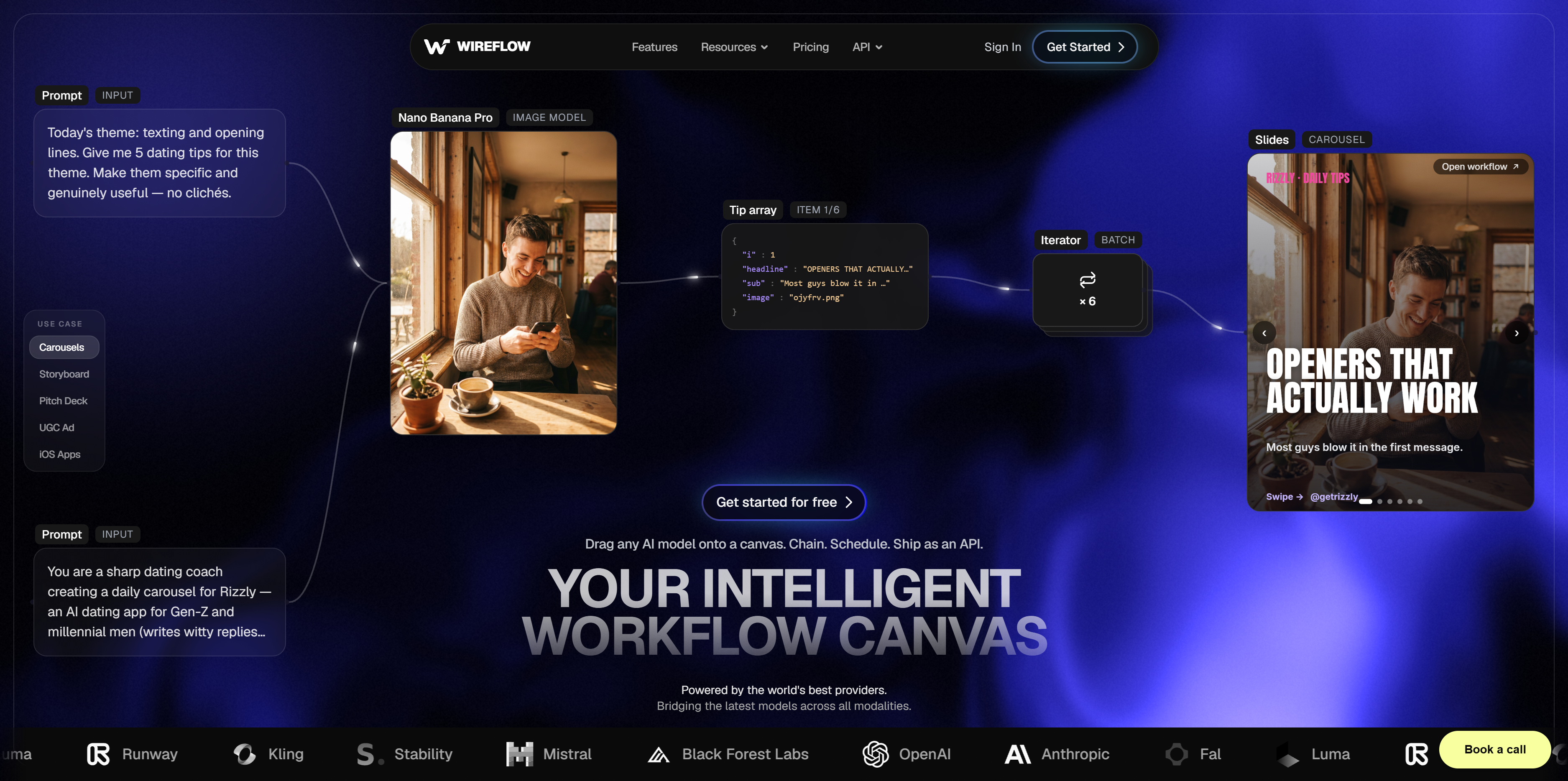
Wireflow is a node-based canvas where each step of your ad-creation process becomes a visible, editable block. Connect an image generation model to a background-removal node, feed the output into a text overlay step, and branch into multiple aspect ratios. Every pipeline is reproducible: swap the product image and run the same flow next quarter. The build-once-reuse-everywhere approach means you set up a pipeline and run it across campaigns without rework. To turn that brief into a finished spot, try our commercial spot generator on a node canvas.
- Strengths: full model flexibility (Flux, SD, video, LLMs in one workflow), API access for every pipeline, transparent usage-based pricing
- Limitations: initial setup time to build your first pipeline, no native ad-platform spend integrations, steeper learning curve than brief-based tools
Build this in Wireflow
Make the same kind of asset on a canvas you control, with a free account and no credit card.
2. AdCreative.ai (Best for Static Ads)
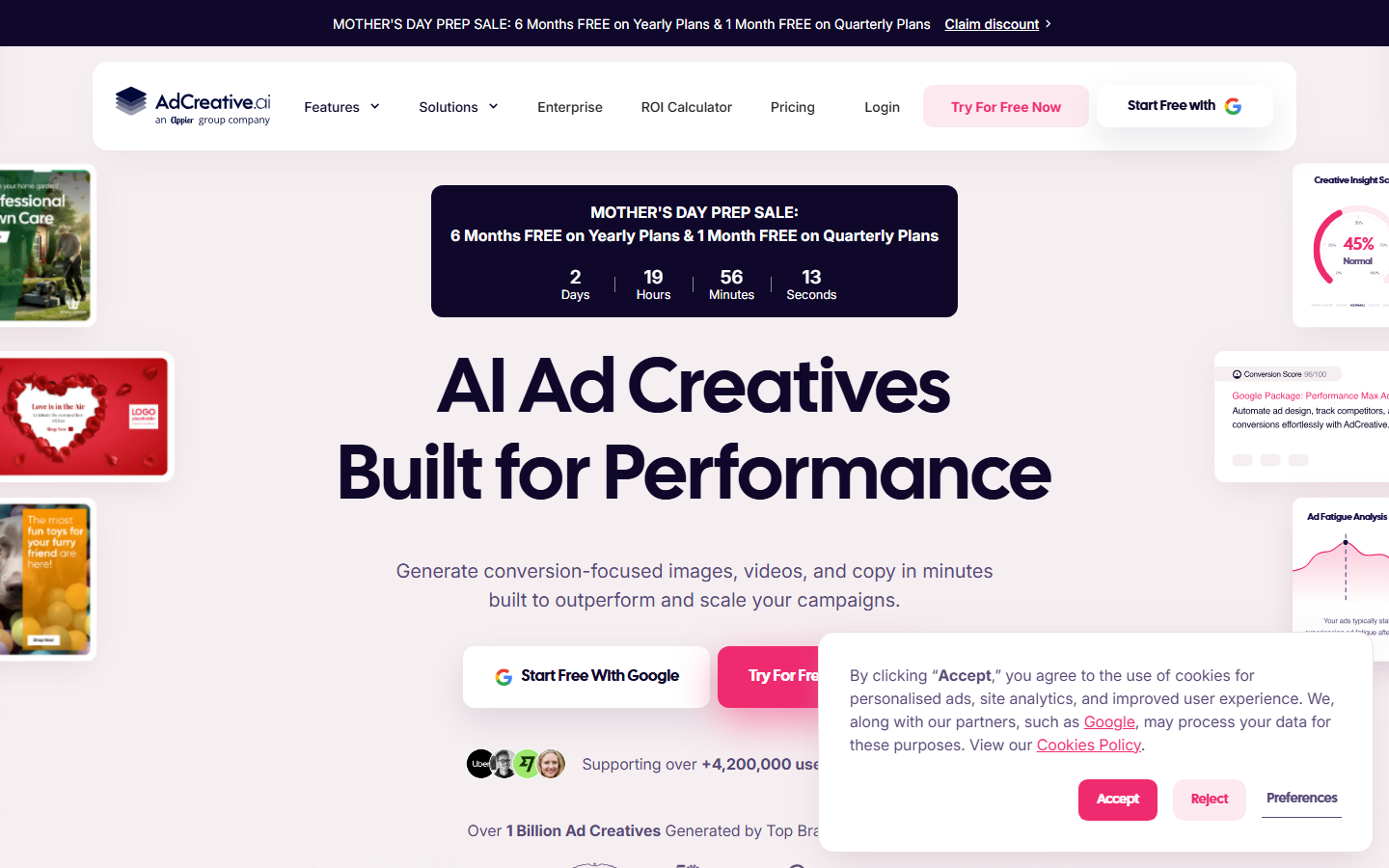
AdCreative.ai generates static ad creatives and copy from a brief, then scores each variant with a predictive performance model. Upload brand assets, describe your campaign goal, and receive dozens of creatives within minutes. It integrates with Meta and Google Ads for direct publishing.
- Strengths: fast brief-to-creative output, performance scoring filters weak variants, strong copy generation alongside visuals
- Limitations: video support is limited, the scoring model is a black box, template-heavy outputs can feel similar across brands
AdCreative.ai suits marketing teams that need volume on static social ads without hiring additional designers.
3. Creatify (Best for Quick Video Ads)
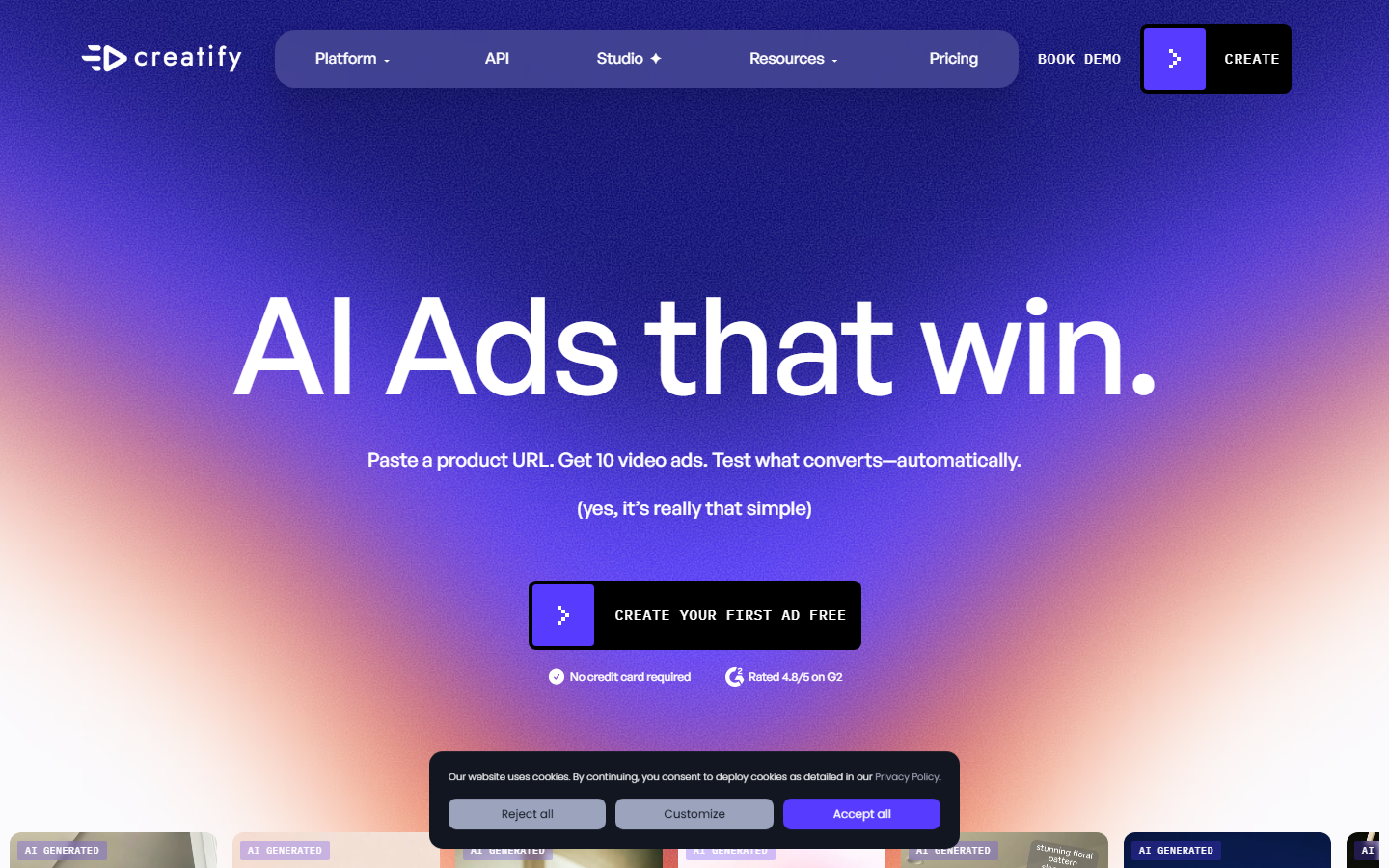
Creatify turns a product URL or text brief into short-form video ads. It scrapes your landing page, pulls product images and copy, then assembles a video with AI voiceover and motion graphics. The UGC-style output targets TikTok and Instagram Reels.
- Strengths: URL-to-video in minutes, multiple AI avatar options, built-in script editor, competitive pricing
- Limitations: limited control over individual production steps, avatar quality varies, no API for batch production
Creatify is a strong pick for e-commerce brands that need fast social video ads from existing product pages.
4. Arcads (Best AI Actor Library)
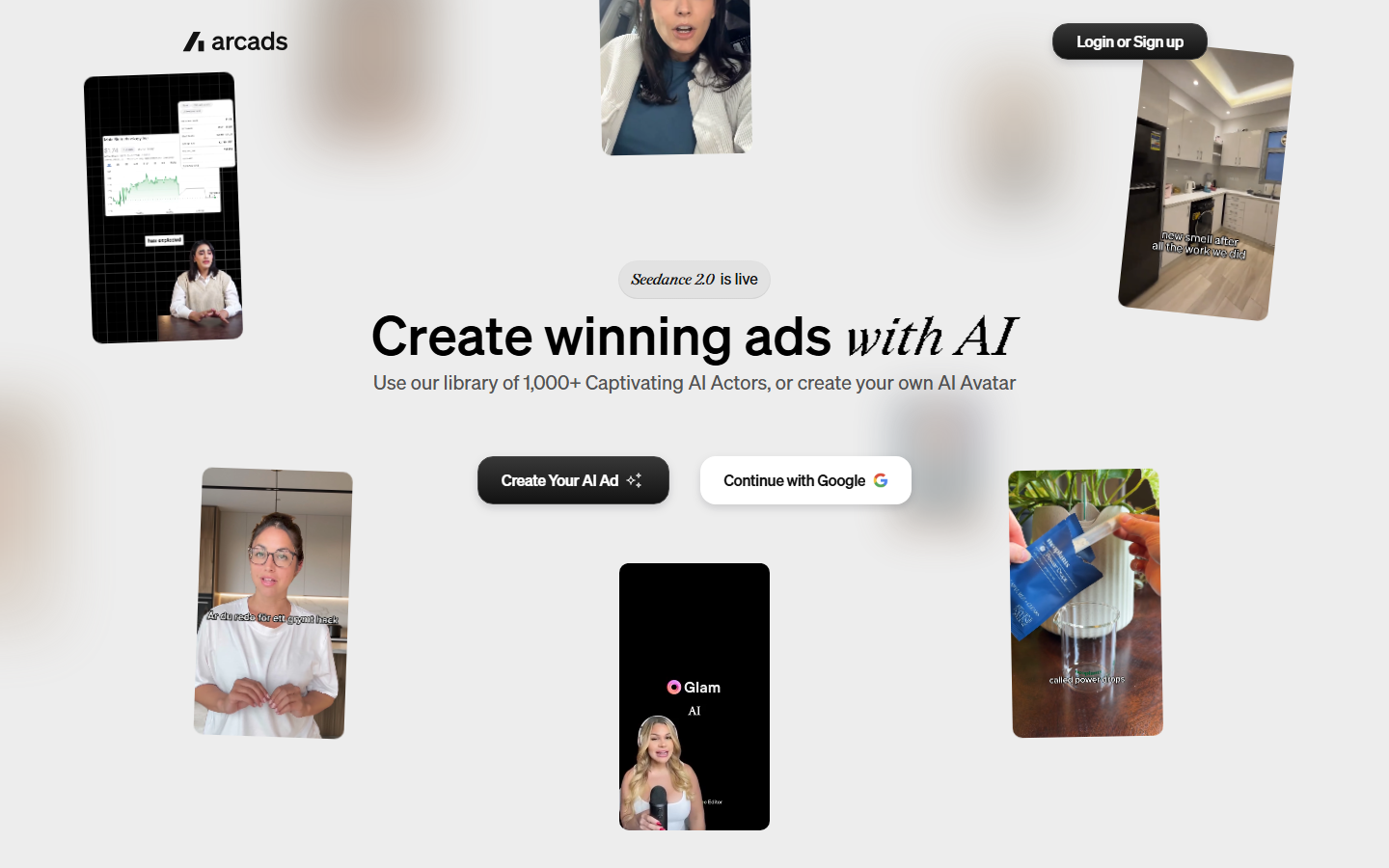
Arcads focuses on UGC-style video ads generated from scripts. You write (or let AI draft) a script, select from a library of AI actors, and the platform produces a video that mimics a real creator testimonial or product review.
- Strengths: large, diverse AI actor library; script-first workflow for precise messaging; batch rendering for rapid variant testing
- Limitations: pricing scales with render volume, no static-creative capabilities, limited post-production editing
For teams running AI-driven brand content strategies that lean on video testimonials, Arcads delivers consistent quality without coordinating real creators.
5. Omneky (Most Fully Agentic)
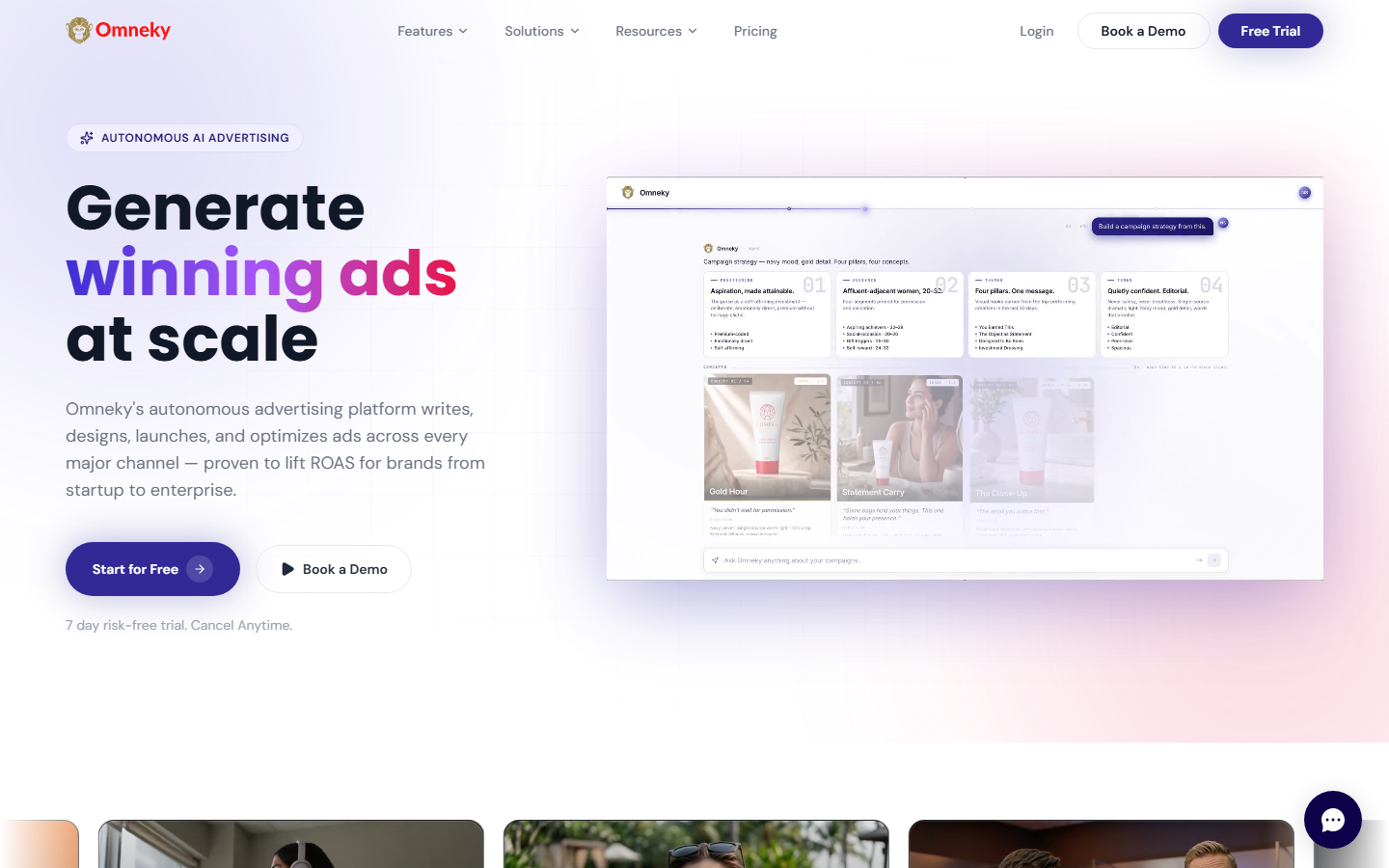
Omneky comes closest to a true agentic loop among the tools listed here. It generates creatives, predicts performance, publishes to ad platforms, monitors results, and feeds data back into the next generation cycle. The platform handles static and video formats across Meta, Google, and TikTok.
- Strengths: closed-loop feedback, multi-channel publishing, enterprise-grade brand safety, relatively transparent analytics
- Limitations: enterprise pricing excludes small teams, onboarding requires heavy asset preparation, needs large ad budgets for meaningful optimization
Omneky fits mid-to-large marketing teams exploring agentic workflows who want one platform for both creation and optimization.
6. Pencil (Best Enterprise Option)
Pencil, now part of Brandtech Group, generates ad creatives with built-in performance prediction. It analyzes historical ad data and industry benchmarks to recommend which concepts are likely to perform before you spend a dollar.
- Strengths: deep Brandtech ecosystem integration, prediction grounded in large proprietary datasets, supports static and video, strong brand consistency
- Limitations: primarily available through Brandtech partnerships, less flexible than canvas-based tools, prediction accuracy depends on having sufficient historical data
Pencil is best for enterprise advertisers already in the Brandtech ecosystem or those with extensive campaign history to fuel the prediction engine.
7. Superscale (Best for Paid Media Teams)
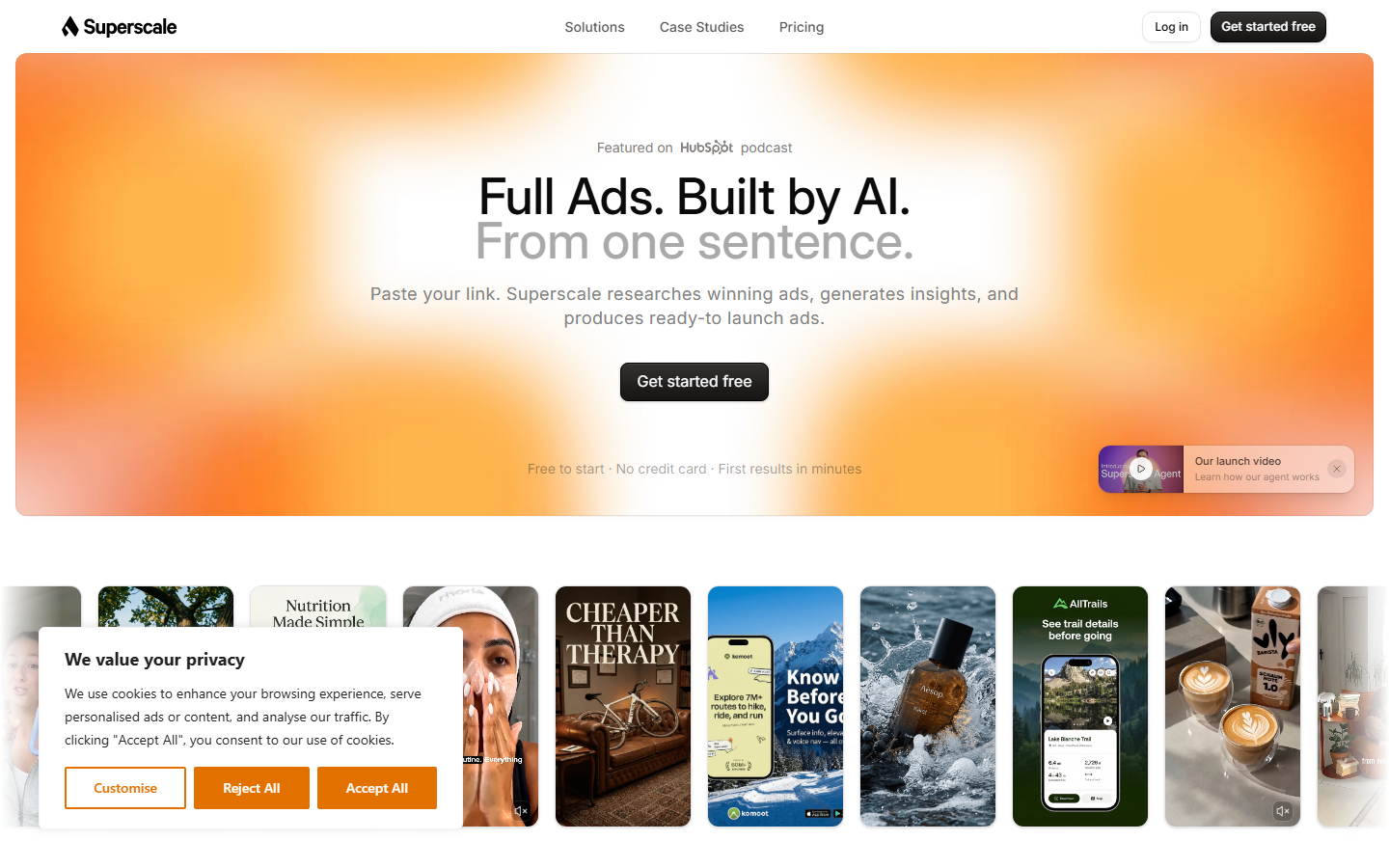
Superscale focuses on the iterate-and-test loop. You start with a brief, the platform generates variants, and it integrates directly with Meta, TikTok, and Google Ads to push creatives live. Performance data flows back to inform the next iteration.
- Strengths: direct ad-platform integrations, iteration-focused workflow, supports static/video/carousel, built for performance marketers
- Limitations: newer platform with less community documentation, video quality trails dedicated tools, pricing requires a sales conversation
Superscale appeals to paid media teams that want a tighter loop between creative generation and campaign management.
8. Predis.ai (Best Budget Option)
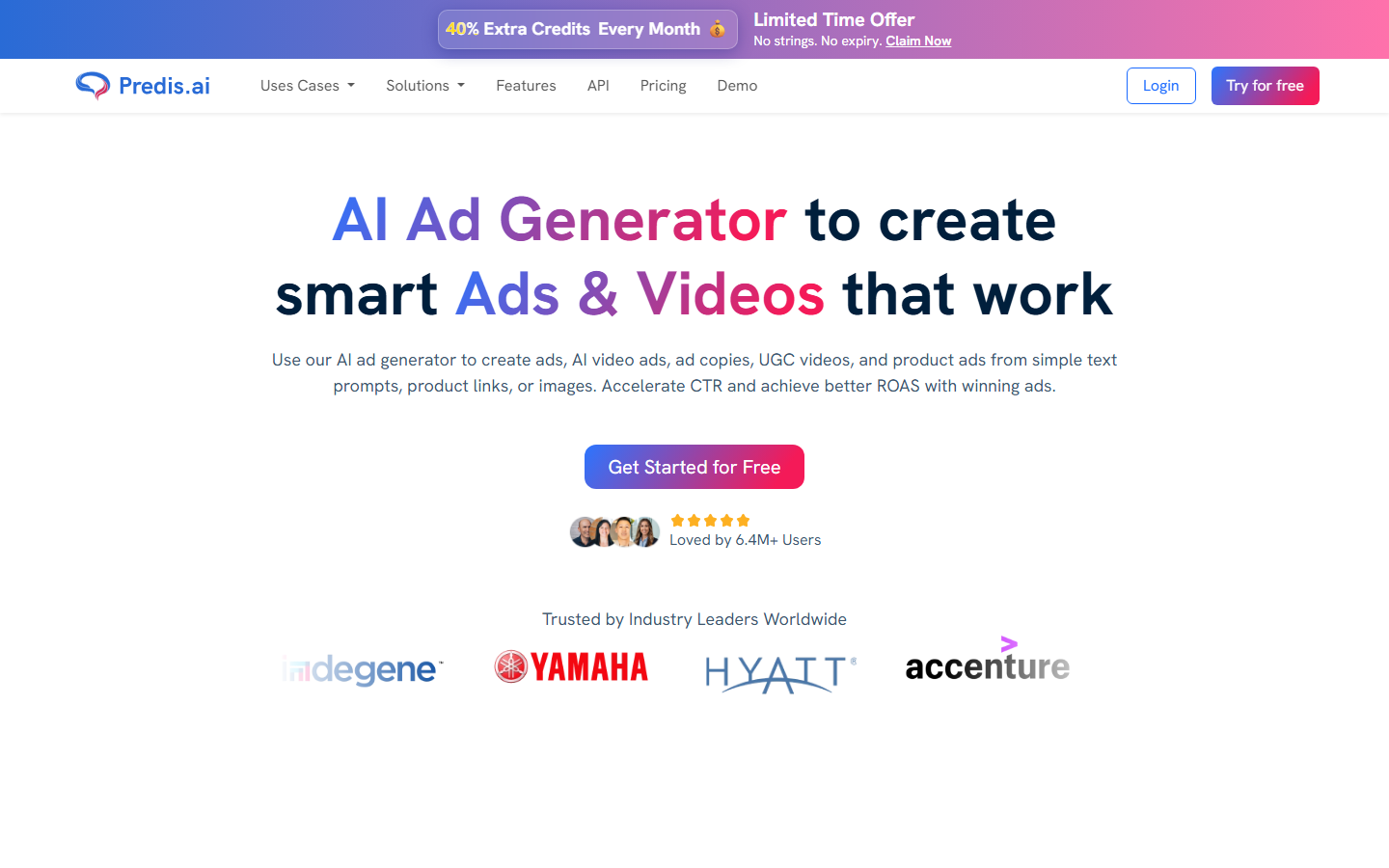
Predis.ai combines ad creative generation with social media scheduling. It generates static ads, carousels, and short videos from text prompts, then schedules them directly to your social accounts.
- Strengths: free tier available, built-in scheduling replaces a separate social tool, template library covers standard formats
- Limitations: creative quality below enterprise-grade tools, basic video capabilities, no optimization loop (generates and schedules only)
Predis.ai works well for small businesses and solo marketers who need an all-in-one AI creative agent on a tight budget.
Comparison Table
When evaluating these tools, consider four factors: what formats they produce, how deep their agentic capabilities go (simple generation vs. closed-loop optimization), whether they integrate with ad platforms, and pricing accessibility.
| Tool | Best For | Formats | Agentic Depth | Pricing Model |
|---|---|---|---|---|
| Wireflow | Custom pipelines, API-driven teams | Image, video, text (via nodes) | High (user-built loops) | Usage-based, free tier |
| AdCreative.ai | Static ad volume | Static, copy | Medium (scoring) | Subscription |
| Creatify | Quick video ads from URLs | Video, UGC | Low (single-pass) | Subscription |
| Arcads | UGC video at scale | Video only | Low (batch render) | Per-render |
| Omneky | Full-loop optimization | Static, video, multi-channel | Highest (closed-loop) | Enterprise |
| Pencil | Enterprise with prediction | Static, video | Medium (prediction) | Enterprise/partnership |
| Superscale | Paid media iteration | Static, video, carousel | High (platform-integrated) | Custom quote |
| Predis.ai | Budget-friendly social ads | Static, carousel, short video | Low (generate + schedule) | Freemium |
Try it yourself: Build this workflow in Wireflow, the nodes are pre-configured with the exact setup discussed above.
FAQ
What is an agentic advertising tool vs. a regular AI ad generator?
A regular AI ad generator takes a prompt and produces one output. An agentic tool chains multiple steps: briefing, generation, variant creation, scoring, and sometimes publishing and optimization. The key difference is autonomy across the full workflow, not just one step.
Can these tools manage ad spend and bidding, or just create assets?
Most focus on creative asset production. Omneky and Superscale come closest to full ad management by integrating with ad platforms and feeding performance data back into creative decisions. None replace a dedicated media-buying platform.
Which tools work directly with Meta, TikTok, or Google Ads?
AdCreative.ai, Omneky, and Superscale offer direct integrations with major ad platforms. Creatify and Predis.ai support publishing to social channels. Wireflow provides API access so you can build your own integration with any platform.
How do I generate UGC-style video ads with AI?
Arcads and Creatify specialize in this. Arcads uses AI actors with scripted dialogue, while Creatify can pull content directly from a product URL. Both produce short-form videos that mimic the look of creator-shot content.
What is the best free option?
Predis.ai offers a free tier with limited monthly generations. Wireflow also has a free tier that lets you build and test workflows before committing to paid usage. AdCreative.ai offers a trial period but requires a subscription after that.
Do I still need a designer?
For routine formats, these tools can replace a junior designer's output. For brand-level creative direction and custom illustration, a human designer remains essential. The strongest approach is using AI for volume while a designer focuses on high-impact work.
Can AI agents test and optimize ads automatically?
Omneky comes closest with its closed-loop system that generates, publishes, measures, and iterates. Superscale also supports this pattern. Most other tools stop at generation and scoring, leaving the testing and optimization to your media-buying team.
What effect do agentic ad tools have on ROAS?
Faster creative iteration (more variants tested in less time) and reduced production costs (less designer time per variant) are the two main drivers. Tools with predictive scoring, like AdCreative.ai and Pencil, add a third by filtering weak creatives before they consume budget. Exact improvements vary by industry and baseline.
Conclusion
The agentic advertising space in 2026 ranges from single-purpose video generators to full closed-loop optimization platforms. Your choice depends on where you need automation most. If you want maximum control over every creative step with the ability to swap models and chain processes, Wireflow gives you that flexibility through its node-based canvas. If you need a turnkey solution that handles everything from brief to bid optimization, Omneky or Superscale may be the better fit. Start by identifying whether your bottleneck is creative production, variant testing, or performance optimization, then pick the tool that addresses that specific gap.

Co-Founder & Operations at Wireflow
Runs client operations and content strategy at Wireflow. Works directly with creative teams and agencies to build production AI workflows.
- Content Strategy
- Client Operations
Get unlimited ad creatives today.
One call to see if we are a fit and scope the first ad. If it fits, your first batch lands inside week one.