Best AI Marketing Agent Tools in 2026

In this article▾
AI marketing agents have moved well past basic chatbots and scheduling tools. The newest platforms run full campaigns on their own: researching audiences, drafting copy, placing ads, and reporting results with minimal human input. Wireflow takes this a step further by letting you chain multiple AI models together on a visual canvas, so you can build end-to-end marketing workflows without writing code.
Below is a ranked list of the best AI marketing agent tools worth evaluating this year.
Quick Summary
- Wireflow - Best overall for visual AI marketing workflows
- HubSpot Breeze AI - Best for teams already on HubSpot
- Jasper - Best for high-volume brand copy
- Salesforce Agentforce - Best for enterprise CRM-driven marketing
- Gumloop - Best for connecting LLMs to internal tools
- Zapier AI - Best for cross-app automation
- Enrich Labs - Best for autonomous multi-channel execution
For the creative half of that stack, ad agency software you own keeps the brief and its render model in a node graph you can rewire and rerun for every client.
1. Wireflow
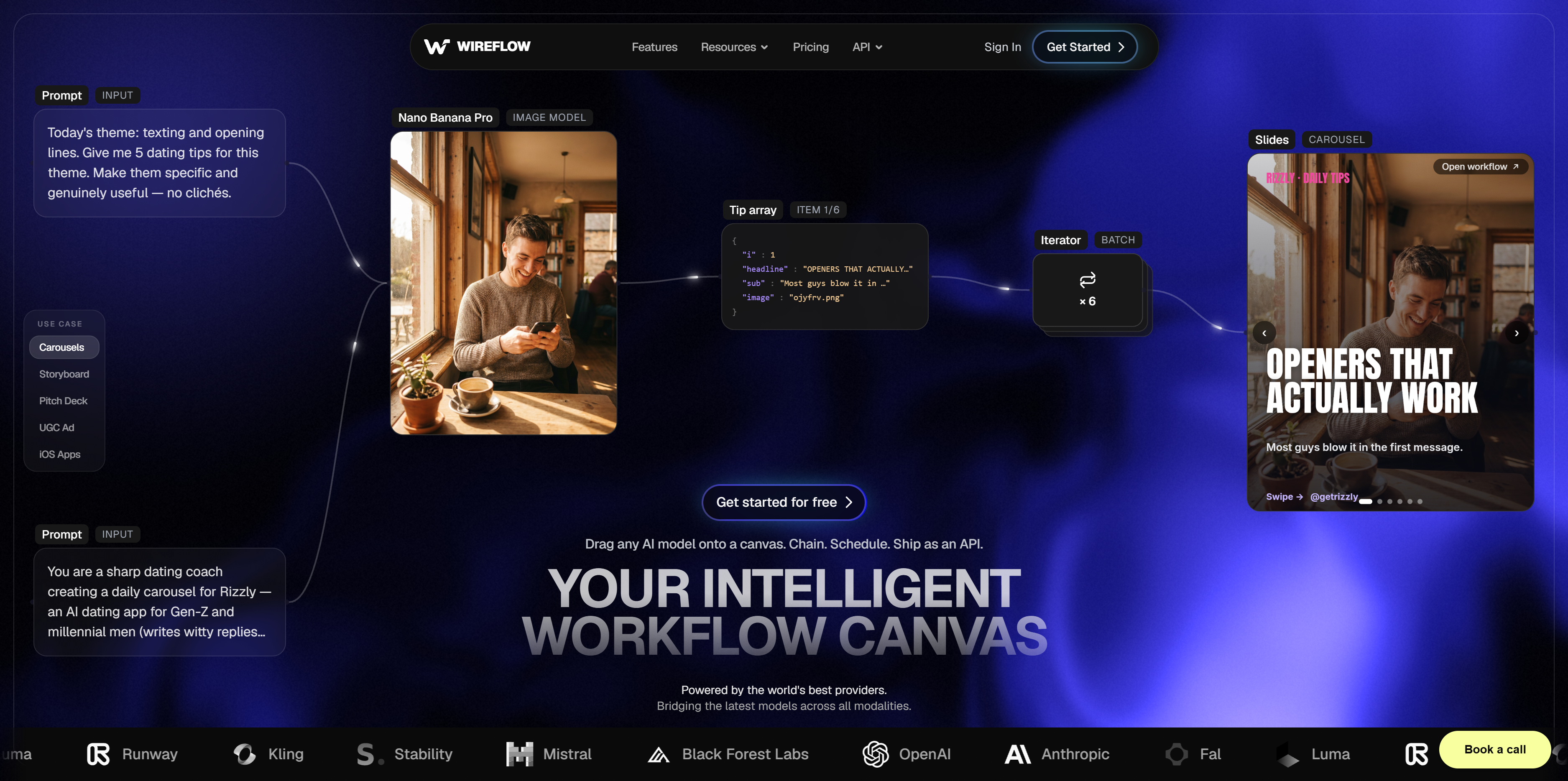
Wireflow is a visual node editor where you drag AI models onto a canvas and connect them into workflows. For marketing, that means you can wire a text prompt into an image generator, feed the output into a video model, and push the result to your distribution pipeline, all in one flow.
The platform supports dozens of models (Flux, Recraft, Kling, Seedance, GPT Image, and more) and exposes a REST API so you can trigger workflows programmatically from your CRM or ad platform. You pay per generation with no monthly seat fees, which keeps costs predictable for teams running variable volumes of creative.
For a hands-on look at this in action, check out the AI marketing video tools on Wireflow.
Best for: Teams that want full control over their AI marketing pipeline through a no-code canvas.
Build this in Wireflow
Make the same kind of asset on a canvas you control, with a free account and no credit card.
2. HubSpot Breeze AI
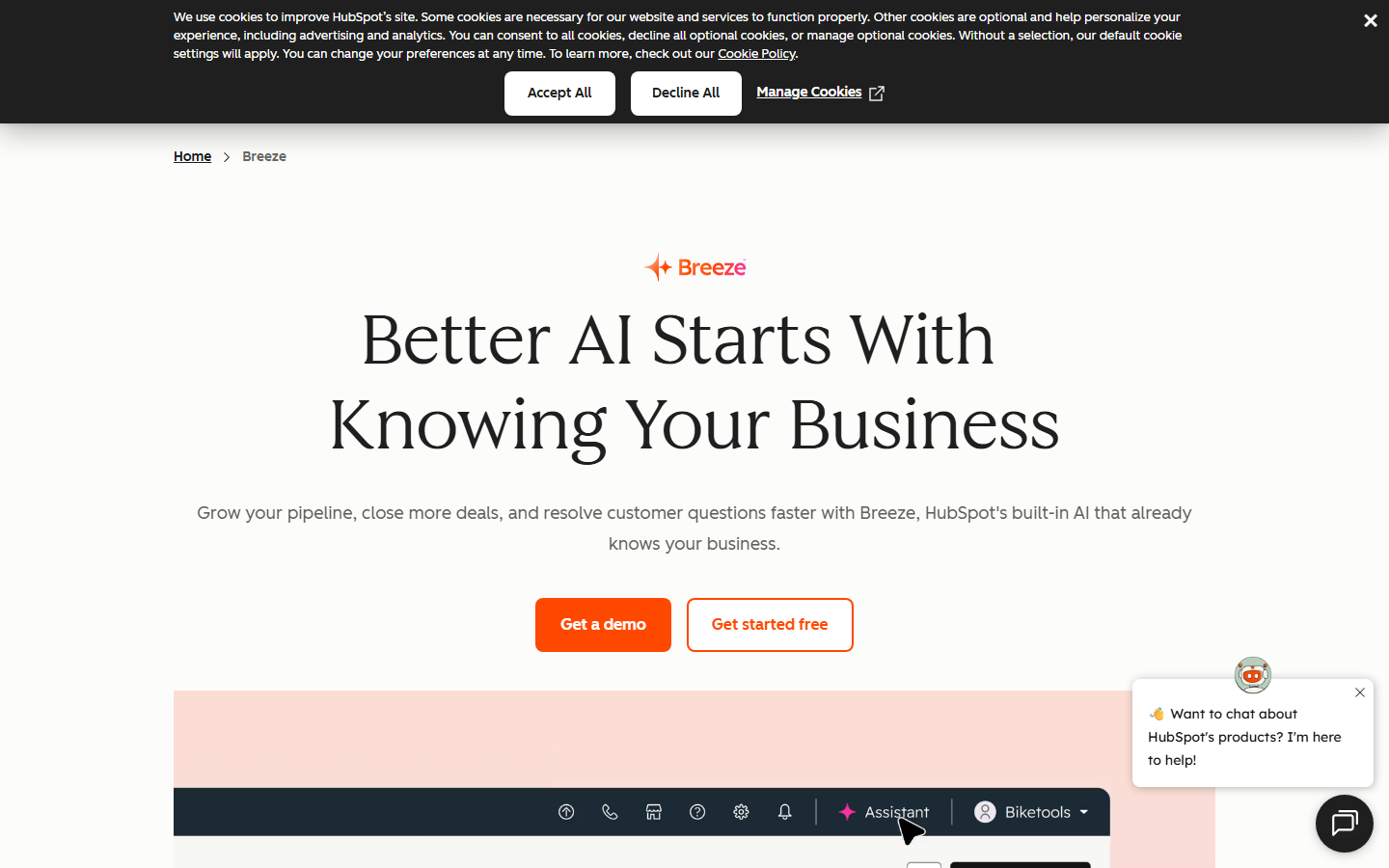
HubSpot Breeze AI is built directly into HubSpot's CRM, so the AI agents have immediate access to your contacts, deals, and content history. Breeze ships four specialized agents: prospecting, content, customer service, and social media. Each runs on its own schedule and feeds results back into the CRM.
The main advantage is zero integration work if you already use HubSpot. The content agent drafts blog posts and emails using your brand voice, and the prospecting agent scores and routes leads based on real engagement data. The limitation is that it only works inside the HubSpot ecosystem, so teams using a mix of tools may find it too restrictive for complex pipelines.
Best for: HubSpot-native marketing teams wanting AI that plugs into their existing stack.
3. Jasper
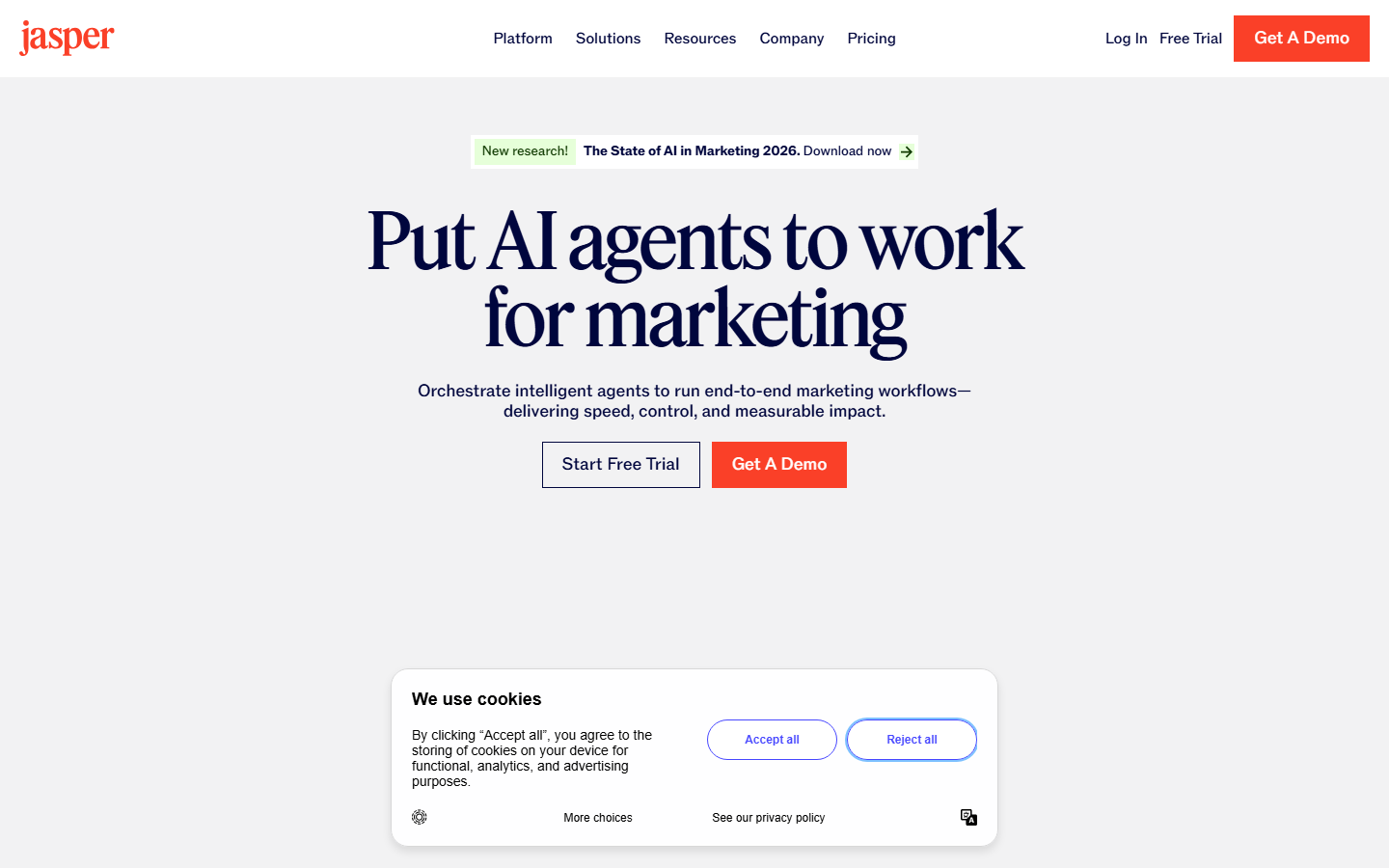
Jasper focuses on brand-consistent content generation at scale. Its marketing agents handle blog drafts, ad copy, product descriptions, and social posts while enforcing your brand voice, tone guidelines, and terminology rules. This matters for agencies managing multiple client brands.
Jasper also includes campaign planning agents that analyze competitor content and suggest topics, along with performance dashboards tracking which AI-generated assets perform best. The platform integrates with Google Workspace, Notion, and Slack. Where Jasper is weaker is in visual workflow orchestration: it generates text well but does not natively chain image, video, and audio models together the way canvas-based tools do.
Best for: Agencies and content teams producing high volumes of on-brand copy across channels.
4. Salesforce Agentforce
Salesforce Agentforce brings autonomous AI agents into the Salesforce ecosystem. Marketing-focused agents handle campaign optimization, lead nurturing, and audience segmentation using the full CRM dataset. The agents can trigger actions across Marketing Cloud, Sales Cloud, and Commerce Cloud.
The platform uses a trust layer that restricts agent actions to approved data sources and operations, which matters for regulated industries. Setup requires Salesforce expertise, and pricing sits at the enterprise tier, but for companies already invested in the Salesforce stack, Agentforce removes the need for separate AI marketing tools.
Best for: Enterprise teams running Salesforce who want AI agents with deep CRM integration.
5. Gumloop
Gumloop is a visual workflow builder (similar in concept to node-based AI platforms) that connects any LLM to your internal tools without code. Teams at Webflow, Instacart, and Shopify use it to automate marketing operations like competitive research, content briefs, and reporting.
The key differentiator is its flexibility with LLM providers: you can plug in ChatGPT, Claude, Grok, or open-source models and swap them depending on the task. Gumloop handles the orchestration, retry logic, and data passing between steps. It is more general-purpose than marketing-specific, so you will need to build your own marketing templates rather than using pre-built campaign agents.
Best for: Technical marketing teams who want to build custom LLM-powered automations with API-level control.
6. Zapier AI
Zapier has expanded from simple triggers into full AI agent workflows. Zapier Central lets you create AI bots that monitor channels (email, Slack, CRM), make decisions based on rules you define, and execute multi-step actions across its 7,000+ app integrations.
For marketing, that translates to agents that automatically categorize inbound leads, draft personalized follow-ups, post social content on schedule, and compile campaign performance reports. The tradeoff is that Zapier's AI capabilities are tied to its automation layer; it does not generate images, video, or audio natively. You would need to connect it to external generation tools for creative production.
Best for: Marketers who need AI-powered automation across a large number of SaaS tools.
7. Enrich Labs
Enrich Labs deploys a team of specialized AI agents across SEO, email, social media, and digital advertising. The platform is designed for small-to-midsize businesses that want autonomous marketing execution without hiring a full team.
Each agent handles its domain end-to-end: the SEO agent audits your site and publishes optimized content, the email agent segments lists and sends campaigns, and the social agent posts and engages. The agents coordinate with each other, so an insight from the SEO agent can trigger a new email campaign. The platform is newer and has a smaller integration ecosystem than established players, but its all-in-one autonomous approach appeals to teams with limited resources.
Best for: SMBs wanting a turnkey autonomous marketing team.
Comparison Table
| Tool | Type | Visual Canvas | API Access | Creative Generation | Pricing Model |
|---|---|---|---|---|---|
| Wireflow | Workflow platform | Yes | Yes | Images, video, audio | Pay-per-use |
| HubSpot Breeze | CRM-integrated | No | HubSpot API | Text only | Subscription |
| Jasper | Content agent | No | Yes | Text only | Subscription |
| Salesforce Agentforce | CRM agent | No | Salesforce API | Text only | Enterprise |
| Gumloop | Workflow builder | Yes | Yes | Via integrations | Freemium |
| Zapier AI | Automation agent | No | Zapier API | Via integrations | Tiered |
| Enrich Labs | Multi-channel agent | No | Limited | Text, basic visuals | Subscription |
How to Choose the Right AI Marketing Agent
The right tool depends on your existing stack and what you need automated. If you already run HubSpot or Salesforce, their native agents minimize setup time. If you need to generate creative assets (images, video, ad creative) as part of your marketing pipeline, a visual canvas tool that chains multiple AI models gives you more flexibility than text-only agents.
Consider these factors when evaluating:
- Integration depth: How many of your current tools does the agent connect to?
- Creative capabilities: Can it produce images and video, or just text?
- Autonomy level: Does it run independently, or does every action need approval?
- Pricing structure: Subscription seats vs. usage-based billing at your expected volume
Try it yourself: Build this workflow in Wireflow. The nodes are pre-configured with the exact setup discussed above: a product description feeds into both an image generator and an LLM headline writer in parallel.
FAQ
What is an AI marketing agent?
An AI marketing agent is software that autonomously executes marketing tasks like content creation, lead scoring, ad placement, and campaign optimization. Unlike simple AI assistants that respond to prompts, agents run multi-step workflows on their own schedule with minimal human oversight.
How are AI marketing agents different from regular AI tools?
Regular AI tools handle single tasks when prompted (write this email, generate this image). AI marketing agents chain multiple tasks together, make decisions based on data, and execute across channels without waiting for instructions at each step.
Can AI marketing agents replace a marketing team?
Not entirely. AI agents handle repetitive execution well: drafting copy, scheduling posts, segmenting audiences, reporting metrics. Strategy, brand positioning, creative direction, and relationship building still require human judgment. Most teams use agents to amplify their existing staff, not replace them.
What should I look for in an AI marketing agent tool?
Prioritize integration with your current stack, the ability to customize agent behavior, transparent pricing at your usage volume, and clear audit trails showing what the agent did and why. Security and data handling policies matter too, especially if the agent accesses customer data.
Are AI marketing agents worth the cost for small businesses?
Yes, for specific use cases. A small business spending hours weekly on social posting, email campaigns, or content drafts can reclaim that time with an agent. Start with one channel (email or social) and measure the time saved before expanding.
How do I build a custom AI marketing workflow?
Use a visual workflow platform where you can connect AI models, data sources, and output channels without code. Define the input (a brief, a product URL, a customer segment), chain the AI processing steps, and set the output destination (CMS, ad platform, email tool).
Which AI marketing agent is best for content creation?
For text-only content, Jasper and HubSpot Breeze are strong options. For multi-modal content that includes images, video, and audio alongside text, a workflow platform with access to multiple generation models offers more creative range.
Can I use multiple AI marketing agents together?
Yes. Many teams pair a CRM-native agent (HubSpot Breeze or Agentforce) for lead management with a creative workflow tool for asset production. The key is connecting them through APIs or automation layers so data flows between systems.

Co-Founder & Operations at Wireflow
Runs client operations and content strategy at Wireflow. Works directly with creative teams and agencies to build production AI workflows.
- Content Strategy
- Client Operations
Get unlimited ad creatives today.
One call to see if we are a fit and scope the first ad. If it fits, your first batch lands inside week one.