Best Headless AI Workflow Platforms in 2026

In this article▾
Headless AI workflow platforms let you design, chain, and deploy multi-model pipelines without locking you into a single frontend. Whether you need to process images through upscalers, route text through LLMs, or orchestrate video generation at scale, the right platform handles the complexity so you can focus on results. Wireflow is one of the leading options in this space, offering a visual node editor that doubles as a fully headless REST API you can call from any stack. Below is a ranked breakdown of the eight strongest platforms available right now.
Quick Summary
- Wireflow - Best overall headless AI workflow builder with visual editor and API access
- n8n - Best open-source workflow automation with AI nodes
- ComfyUI - Best for image generation pipelines
- LangGraph - Best for LLM agent orchestration
- Flowise - Best low-code LLM workflow builder
- BuildShip - Best for backend AI microservices
- Relevance AI - Best for enterprise AI agent deployment
- Apache Airflow - Best for large-scale ML pipeline scheduling
1. Wireflow
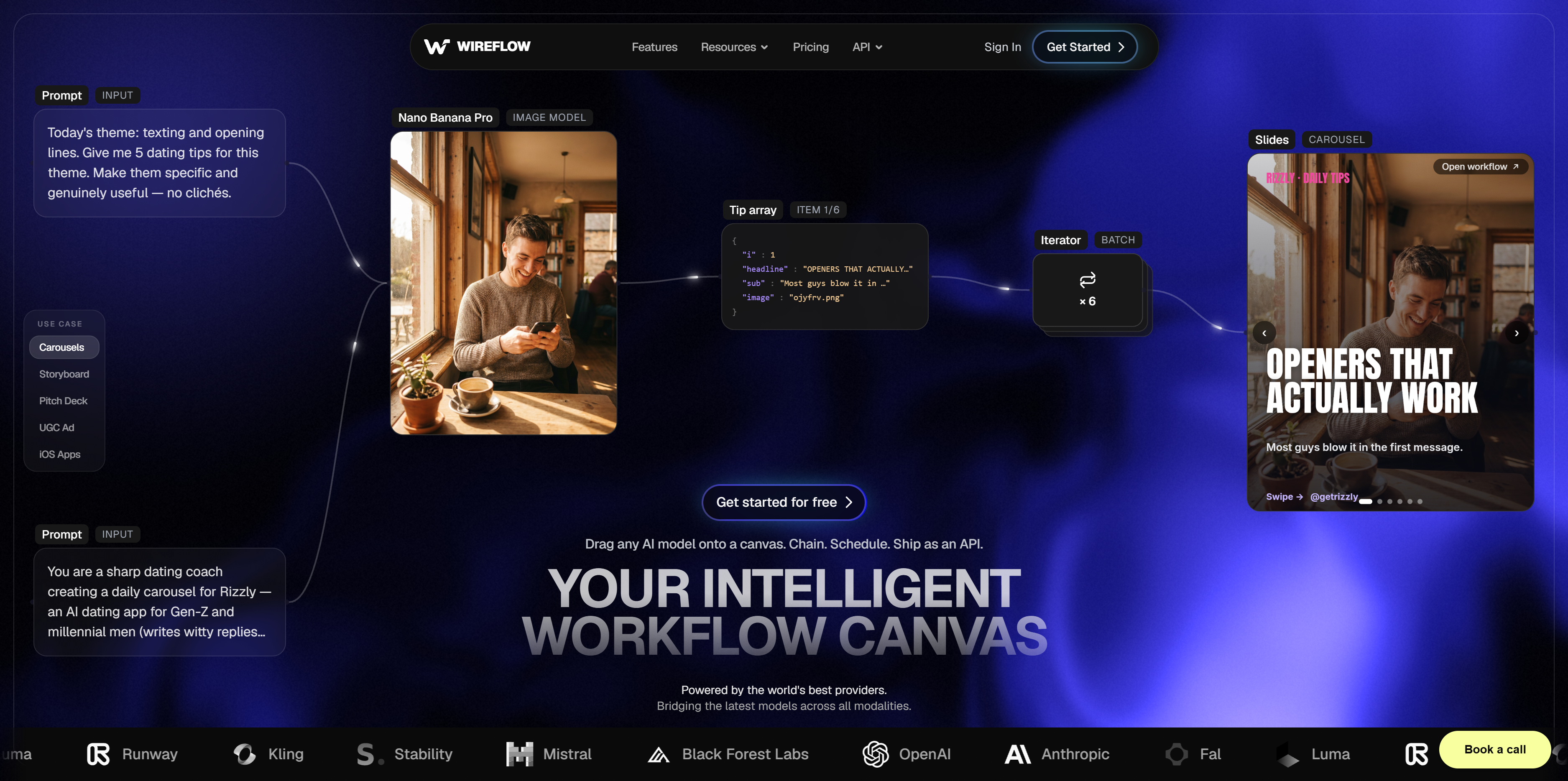
Wireflow gives you a drag-and-drop visual node editor where each node represents an AI model, a transformation step, or an input/output gate. The platform supports over 150 node types across categories including image generation (Flux 2, Imagen 4), video (Kling 2.5), audio, 3D, and utility nodes. You build a workflow visually, then run it headlessly by sending a single POST to /api/v1/workflows/{id}/execute, which returns an executionId you can poll for results.
What sets Wireflow apart is the combination of visual design and full pipeline automation. Authentication uses Bearer tokens with sk- prefixed API keys generated from the dashboard. The execute endpoint returns a 201 with an execution ID, and you poll /api/v1/workflows/executions/{id}/poll using exponential backoff (start at 1s, multiply by 1.5, cap at 10s). For external integrations that should not require API keys, webhook triggers at /workflow/{webhookId}/trigger accept POST requests with full CORS support, returning a 202.
# Execute a workflow
curl -X POST https://www.wireflow.ai/api/v1/workflows/YOUR_WORKFLOW_ID/execute \
  -H "Authorization: Bearer sk-your-api-key" \
  -H "Content-Type: application/json" \
  -d '{ "nodes": [...], "edges": [] }'

# Poll for results
curl https://www.wireflow.ai/api/v1/workflows/executions/exec_456/poll \
  -H "Authorization: Bearer sk-your-api-key"
Rate limits scale by plan: Free gets 10 requests/min, Pro jumps to 60 requests/min, while Enterprise allows 200 requests/min. Every response includes X-RateLimit-Remaining and X-Request-Id headers for monitoring. For idempotent automation, send an Idempotency-Key header on execute calls to prevent duplicate runs within a 24-hour window. Pricing starts with a free tier. For a hands-on look at this in action, check out the headless AI workflow platforms feature page.
Build this in Wireflow
Make the same kind of asset on a canvas you control, with a free account and no credit card.
2. n8n
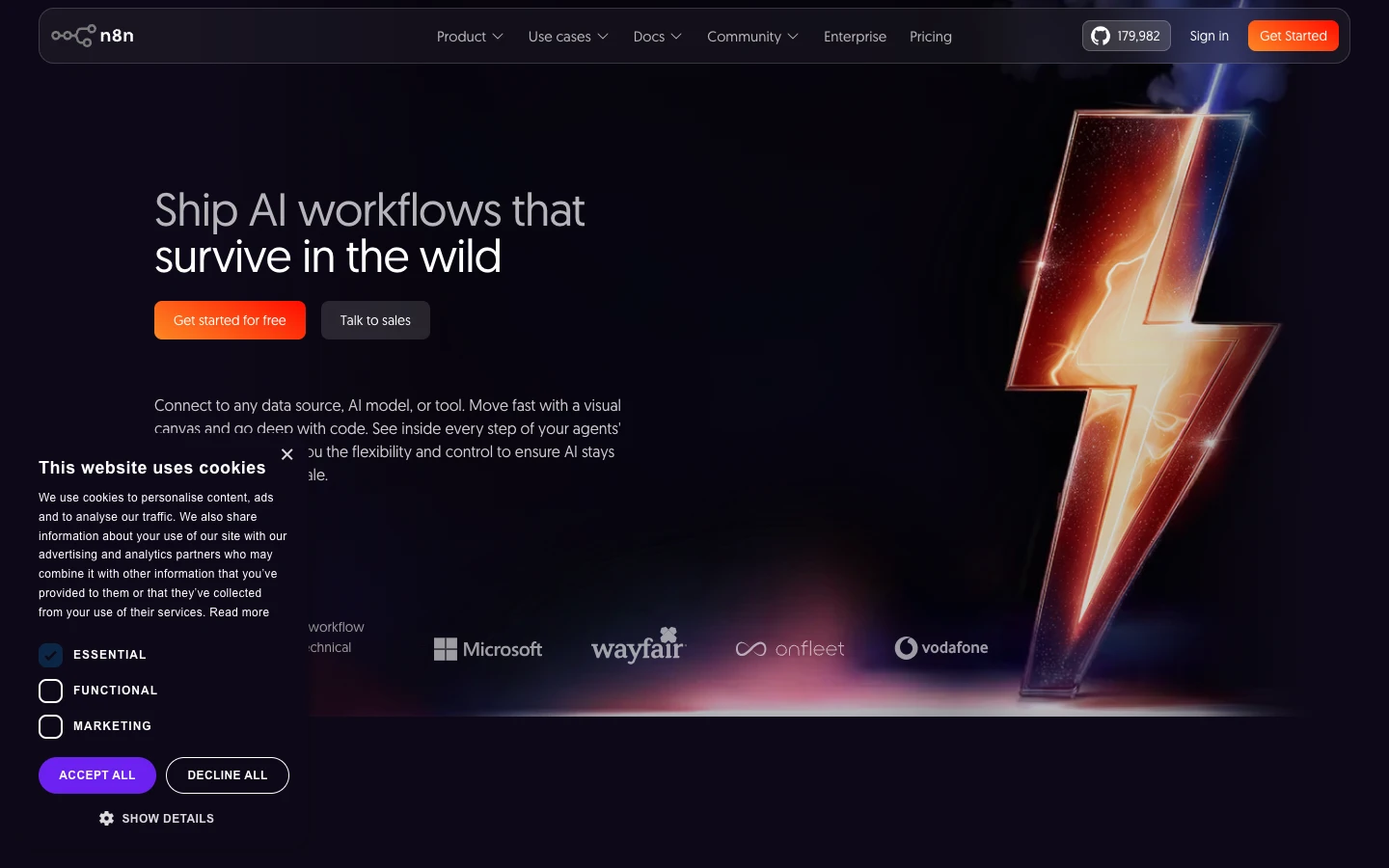
n8n is an open-source workflow automation tool that has expanded significantly into AI territory. Its node-based interface connects over 400 integrations, and recent updates added native AI nodes for OpenAI, Anthropic, and local models. You can self-host it or use the managed cloud version.
The headless aspect comes from n8n's webhook triggers and API endpoints. Every workflow can be invoked via HTTP, making it straightforward to embed AI pipelines into existing applications. The community has built hundreds of workflow templates that you can import and modify for common automation patterns.
n8n is free to self-host with no node limits. Cloud pricing starts at $24/month for 2,500 executions.
3. ComfyUI
ComfyUI is the go-to platform for complex image generation workflows. Its graph-based interface lets you wire together Stable Diffusion checkpoints, LoRA models, ControlNet preprocessors, and post-processing nodes into pipelines that produce consistent results. The model chaining approach is what makes it powerful for multi-step diffusion setups.
For headless operation, ComfyUI exposes a WebSocket and REST API. You can submit workflow JSON payloads, track progress, and retrieve outputs programmatically. Many production image generation services run ComfyUI as their backend, wrapping it with a thin API layer.
ComfyUI is fully open source and free. You supply your own GPU hardware or rent cloud GPUs. The main cost is infrastructure.
4. LangGraph
LangGraph, built by the LangChain team, is a framework for building stateful, multi-step AI pipelines with cycles and branching logic. Unlike simple chain-of-prompt tools, LangGraph lets you define graphs where nodes can loop back, maintain state across steps, and make dynamic routing decisions.
The platform is inherently headless since it is a Python/JavaScript library. You define your graph in code, deploy it as a service, and call it via API. LangGraph Cloud provides managed hosting with built-in observability, tracing, and versioning. It pairs well with orchestration APIs when you need to coordinate multiple services.
LangGraph is open source under the MIT license. LangGraph Cloud pricing varies by usage and includes a free developer tier.
5. Flowise
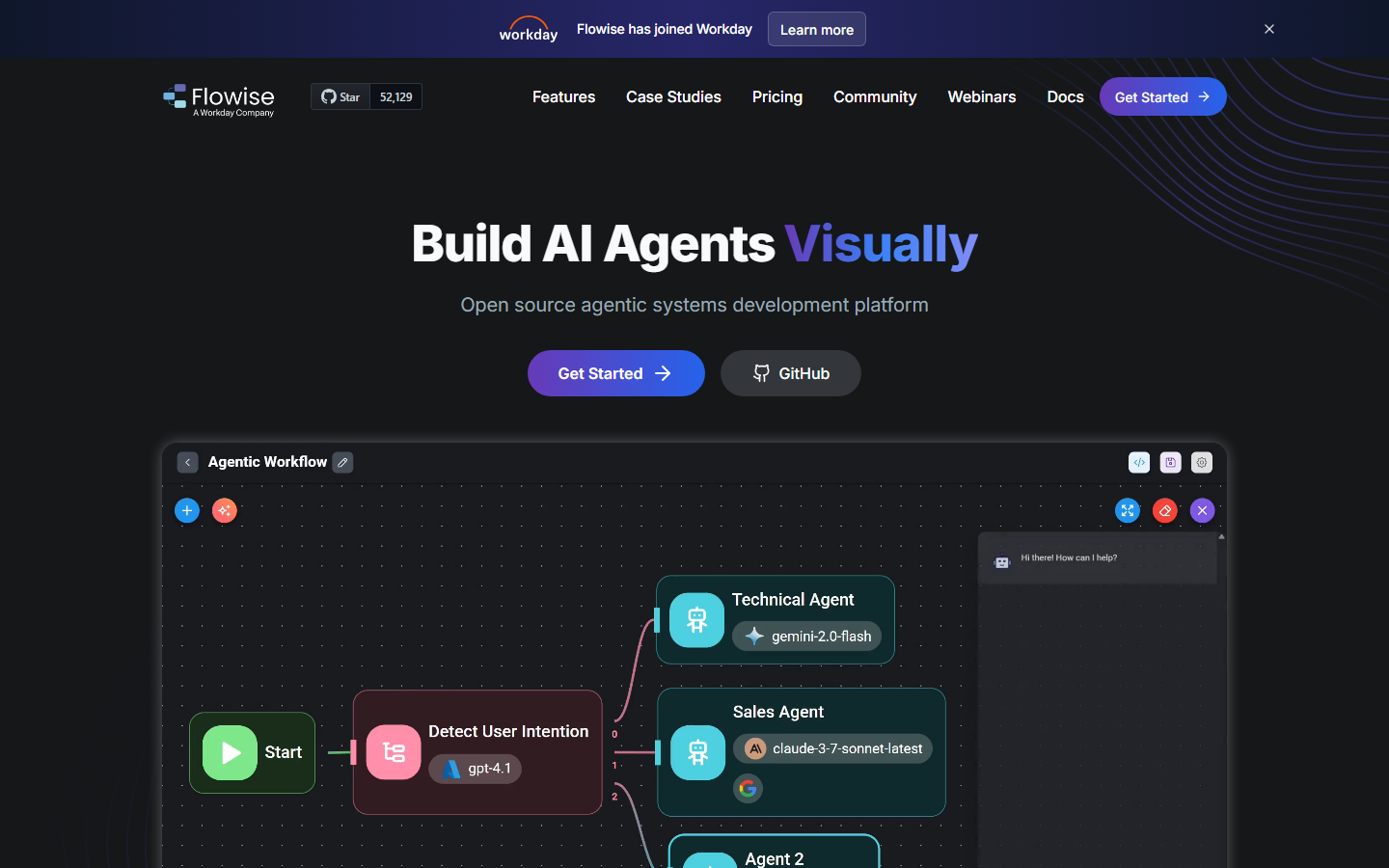
Flowise provides a visual drag-and-drop interface specifically for building LLM applications. You can chain together AI content generation steps, document retrievers, vector stores, and custom tools into complete RAG pipelines or agent workflows without writing code.
Every Flowise workflow automatically gets an API endpoint and an embeddable chat widget. This makes it particularly strong for customer-facing AI applications where you need both a chatbot UI and a headless workflow builder backend. It supports OpenAI, Anthropic, Google, and dozens of other model providers.
Flowise is open source and free to self-host. The managed cloud service, FlowiseAI Cloud, starts at $35/month with higher rate limits and built-in monitoring.
6. BuildShip
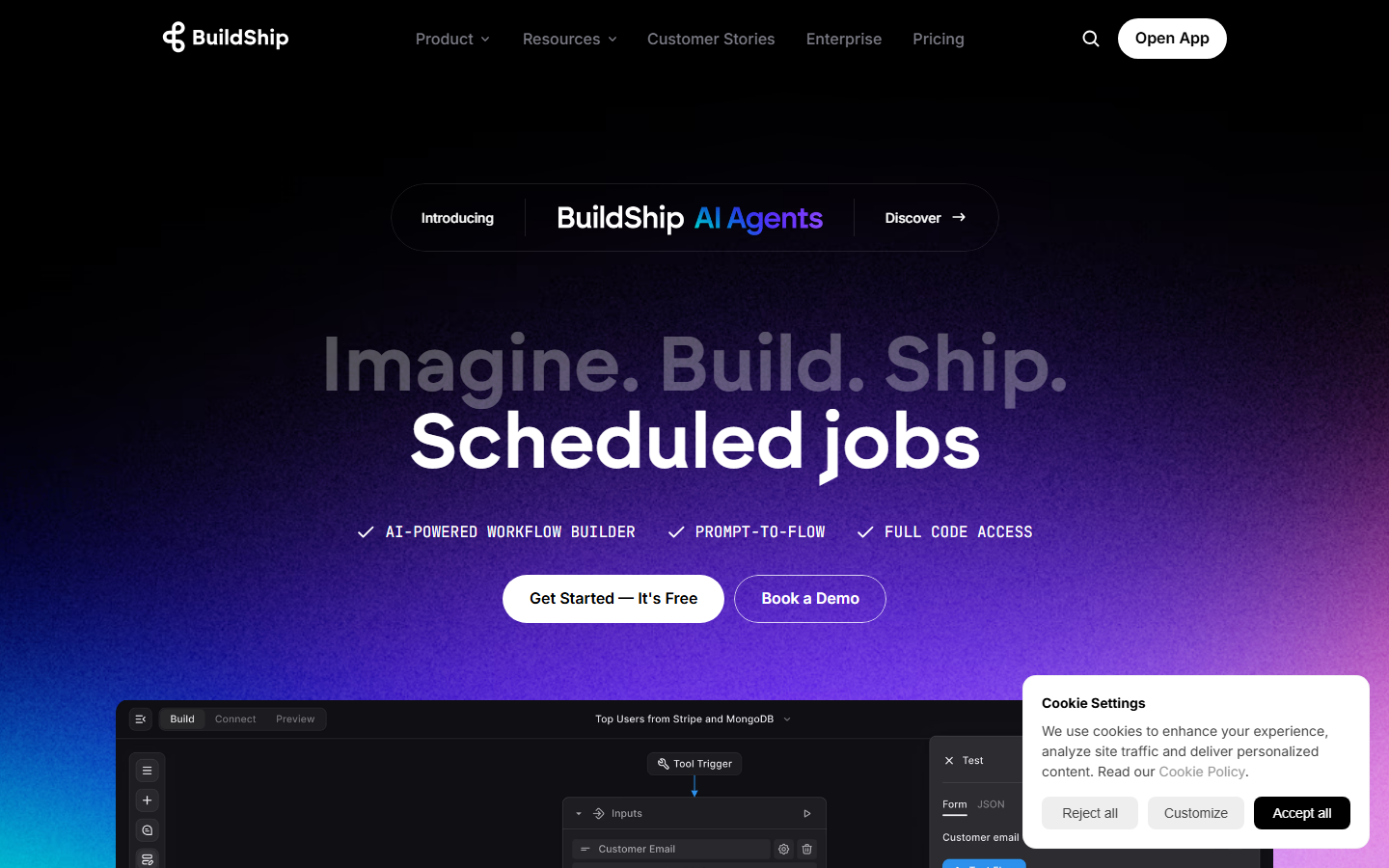
BuildShip focuses on building backend AI workflows that deploy as serverless functions. Its visual builder lets you create API endpoints, scheduled jobs, and event-driven batch AI generation processes. Each workflow compiles down to a Google Cloud Function, so scaling is handled automatically.
The platform includes pre-built nodes for common AI tasks: text generation, image analysis, embeddings, and vector search. What makes BuildShip distinct is its focus on production-grade deployment rather than experimentation. Built-in authentication, rate limiting, and error handling come standard, similar to what you would expect from a mature pipeline API.
BuildShip offers a free tier with 100 executions per day. Paid plans start at $25/month with higher limits and custom domains.
7. Relevance AI
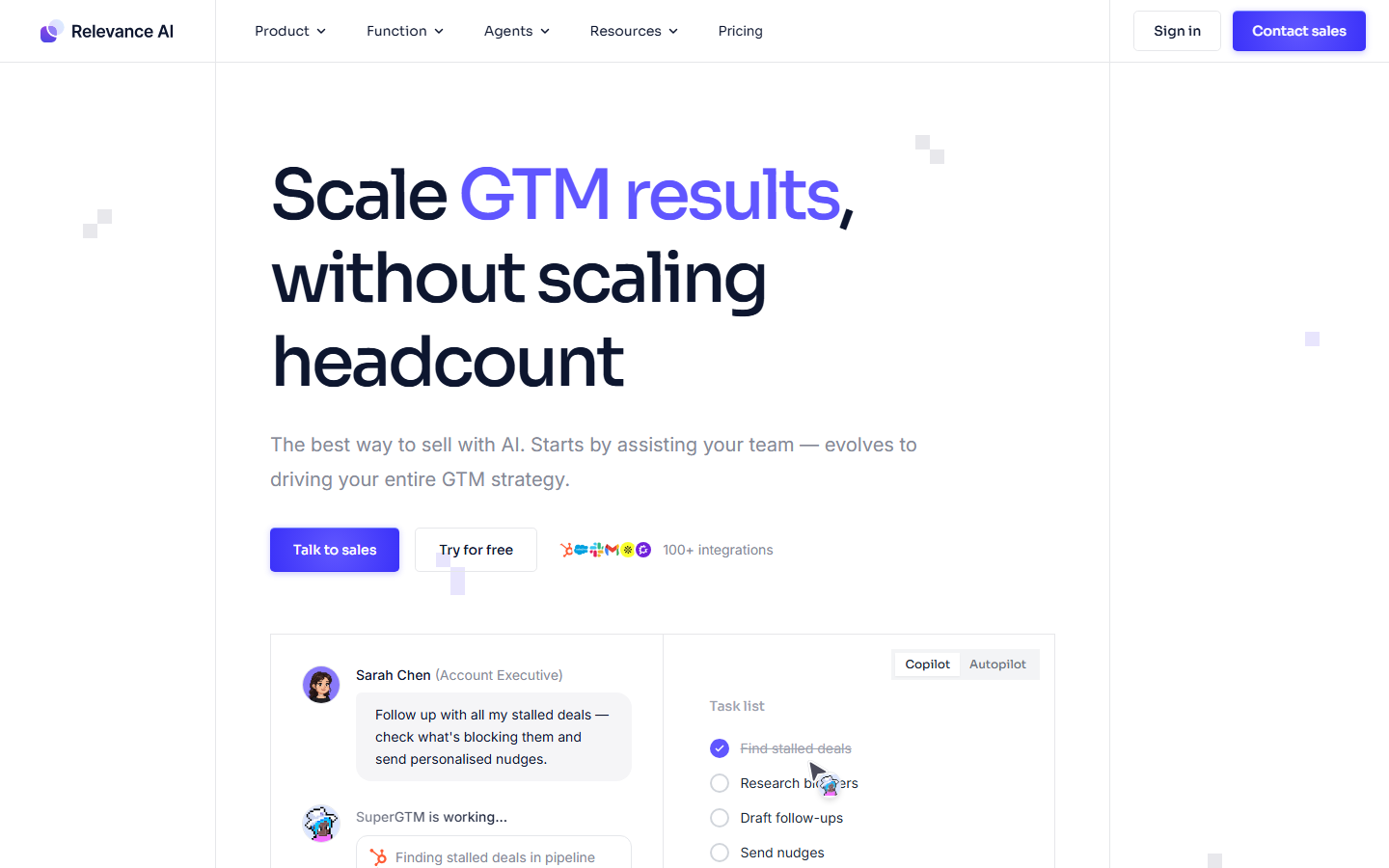
Relevance AI has positioned itself as an enterprise platform for deploying AI agents and orchestration workflows. You build multi-step tools that agents can call, chain together data transformations, and deploy everything behind API keys with granular access controls.
The headless capabilities are comprehensive: REST APIs, webhook triggers, scheduled runs, and SDK integrations for Python and JavaScript. Relevance AI also includes built-in vector storage and retrieval, making it a solid choice for enterprise teams building complete RAG applications without external dependencies.
Pricing starts with a free tier for individuals. Team plans begin at $99/month with higher rate limits and priority support.
8. Apache Airflow
Apache Airflow is the veteran of workflow orchestration. While it was not built specifically for AI, its DAG-based scheduling system handles complex ML pipelines with dependencies, retries, and monitoring. Many data teams already run Airflow, making it a natural fit for adding AI workflow API steps into existing data infrastructure.
Airflow is purely headless by design. You define DAGs in Python, trigger them via CLI or REST API, and monitor execution through its web UI. The ecosystem includes operators for every major cloud provider, database, and AI service integration.
Airflow is fully open source under the Apache License. Managed versions are available through Google Cloud Composer, Amazon MWAA, and Astronomer.
Comparison Table
| Platform | Best For | Headless API | Visual Editor | Open Source | Starting Price |
|---|---|---|---|---|---|
| Wireflow | Overall AI workflows | REST API | Yes | No | Free tier |
| n8n | Workflow automation + AI | Webhooks, REST | Yes | Yes | Free (self-host) |
| ComfyUI | Image generation | WebSocket, REST | Yes | Yes | Free |
| LangGraph | LLM agent orchestration | Library + Cloud | Code-based | Yes | Free tier |
| Flowise | LLM apps and RAG | REST, Chat widget | Yes | Yes | Free (self-host) |
| BuildShip | Backend AI services | Serverless endpoints | Yes | No | Free tier |
| Relevance AI | Enterprise AI agents | REST, SDK | Yes | No | Free tier |
| Apache Airflow | ML pipeline scheduling | REST, CLI | DAG view | Yes | Free |
Try It Yourself
Try it yourself: Build this workflow in Wireflow . The nodes are pre-configured with an LLM-to-image pipeline that shows exactly how headless AI workflows connect models end to end.
Ready to integrate headless AI workflows into your stack? View the Wireflow API docs to see endpoint details, authentication, and code examples for every operation covered above.
Frequently Asked Questions
What is a headless AI workflow platform?
A headless AI workflow platform lets you build and run multi-step AI pipelines through an API without requiring a specific frontend. You design the workflow using a visual editor or code, then trigger it programmatically from any application. Wireflow, for example, exposes endpoints for creating, executing, and polling workflows, plus webhook triggers for no-auth integrations.
Can I use multiple AI models in a single workflow?
Yes. Most platforms on this list support multi-model chaining, where the output of one model feeds into the next. Wireflow supports over 150 node types across image generation, video, audio, and text categories. You might use an LLM to generate a prompt, pass that to Flux 2 for image generation, then run the result through an upscaler, all in a single workflow graph.
What is the difference between headless and no-code AI platforms?
No-code platforms provide a complete application with a built-in frontend. Headless platforms give you the backend processing without dictating how the frontend looks. Many platforms, like Wireflow and Flowise, offer both: a no-code canvas for building and a headless API for deployment.
Are open-source options reliable enough for production?
n8n, ComfyUI, Flowise, and Airflow all run in production at significant scale. The trade-off is that you manage your own infrastructure, updates, and security. Managed cloud versions from each provider remove that burden for a monthly fee.
How much does it cost to run headless AI workflows?
Costs depend on model usage, not the platform itself. Most platforms listed here offer free tiers. The main expense is the underlying AI model API calls (OpenAI, Anthropic, FAL, etc.) and any GPU compute you provision. Budget $50-500/month for moderate usage across most content generation workloads.
Which platform is best for image generation pipelines?
ComfyUI leads for complex image generation workflows with fine-grained control over diffusion parameters. Wireflow is better if you want a simpler setup with reusable templates and REST API access without managing GPU infrastructure yourself.
Can I self-host these platforms?
n8n, ComfyUI, Flowise, LangGraph, and Airflow are all fully self-hostable. Wireflow, BuildShip, and Relevance AI are cloud-hosted with API access. Self-hosting gives you data control but requires DevOps expertise.
How do I choose between these platforms?
Start with your primary use case. For general AI workflows with visual building and full REST API access, Wireflow covers the broadest range with support for asset pipelines across image, video, and audio. For LLM-specific agents, LangGraph or Flowise are more focused. For image pipelines, ComfyUI is unmatched. For enterprise data pipelines that include AI steps, Airflow integrates with existing infrastructure.
Conclusion
The headless AI workflow space has matured rapidly, and the platforms above represent the strongest options for teams that need API-first automation. Teams that specifically orchestrate image, voice, and video generation can compare a media-focused AI orchestration platform for generative media that ships each graph as a REST endpoint and an MCP tool. If you want visual workflow design with a production-ready REST API, Wireflow gives you both in one package, complete with webhook triggers, idempotent execution, and per-plan rate limits that scale from prototyping to enterprise. Start with the use case that matters most and pick the platform that fits your stack.

Co-Founder & Operations at Wireflow
Runs client operations and content strategy at Wireflow. Works directly with creative teams and agencies to build production AI workflows.
- Content Strategy
- Client Operations
Make AI videos and ads.
Start free, no card needed.