Best AdCreative.ai Alternatives in 2026

In this article▾
- Quick summary
- Why people look for an AdCreative.ai alternative
- How these tools were ranked
- 1. Wireflow: Best Overall
- 2. Creatify: Best for UGC Video
- 3. Arcads: Best for AI Actors
- 4. Creatopy: Best Direct Replacement
- 5. Pencil: Best for Performance Prediction
- 6. Predis.ai: Best for Small Teams
- 7. Canva: Best Free Option
- 8. Omneky: Best for Enterprise
- Comparison table
- FAQ
- Conclusion
Teams leave AdCreative.ai for three reasons: the credit system charges per download rather than per generation, the output is mostly static and carousel banners, and video is a separate problem it was never built to solve. This guide ranks seven alternatives on format coverage, batch throughput, price and how much manual work sits between a brief and a finished ad, starting with Wireflow, which chains image, video and text models on one canvas instead of locking you into a single template engine. Paid plans across this list start between $0 and $300 per month, and every tool was checked against its live product pages in September 2026.
Quick summary
- Wireflow: node canvas that chains multiple AI models into one ad pipeline. Best Overall
- Creatify: turns a product URL into an AI-presenter video ad. Best for UGC Video
- Arcads: script-to-actor video with a large AI talent library. Best for AI Actors
- Creatopy: banner and display ad production at scale. Best Direct Replacement
- Pencil: generates creative and scores it against past ad data. Best for Performance Prediction
- Predis.ai: social-first post and ad generation for small teams. Best for Small Teams
- Canva: free design surface with AI generation built in. Best Free Option
- Omneky: managed creative and media service for larger accounts. Best for Enterprise
Why people look for an AdCreative.ai alternative
AdCreative.ai does one job well. You upload a brand kit once, and it produces large batches of on-brand static and carousel ads scored for predicted conversion. The friction shows up later. Credits are consumed on download, plans run from roughly $20 to $1,399 per month depending on billing cycle and credit count, and the per-credit rate on annual plans lands somewhere between $1.49 and $5.99. For a team running weekly tests that cost compounds fast, which is why most of the searches for a replacement come from people already doing ad creative testing at scale.
The second reason is format. Media buying in 2026 is dominated by short video and creator-style footage, and a banner engine cannot produce either. Teams that need both static and video end up paying for two or three subscriptions, then stitching the outputs together by hand. The tools below split roughly into video-first replacements, direct static replacements, and canvas platforms that cover both, which is the practical difference between them once you get past the marketing pages.
Build this in Wireflow
Make the same kind of asset on a canvas you control, with a free account and no credit card.
How these tools were ranked
Four criteria drove the order. Format coverage: can the tool produce static, video and UGC-style output, or only one of them. Batch throughput: whether fifty variants takes fifty manual steps. Cost structure: whether you pay per asset, per seat or per generation, because per-download pricing is the specific thing most people are trying to escape. Model control: whether you can change the underlying image or video model when a better one ships. Anyone rebuilding a production process rather than swapping one login for another should read how teams scale ad creative production before picking.
1. Wireflow: Best Overall
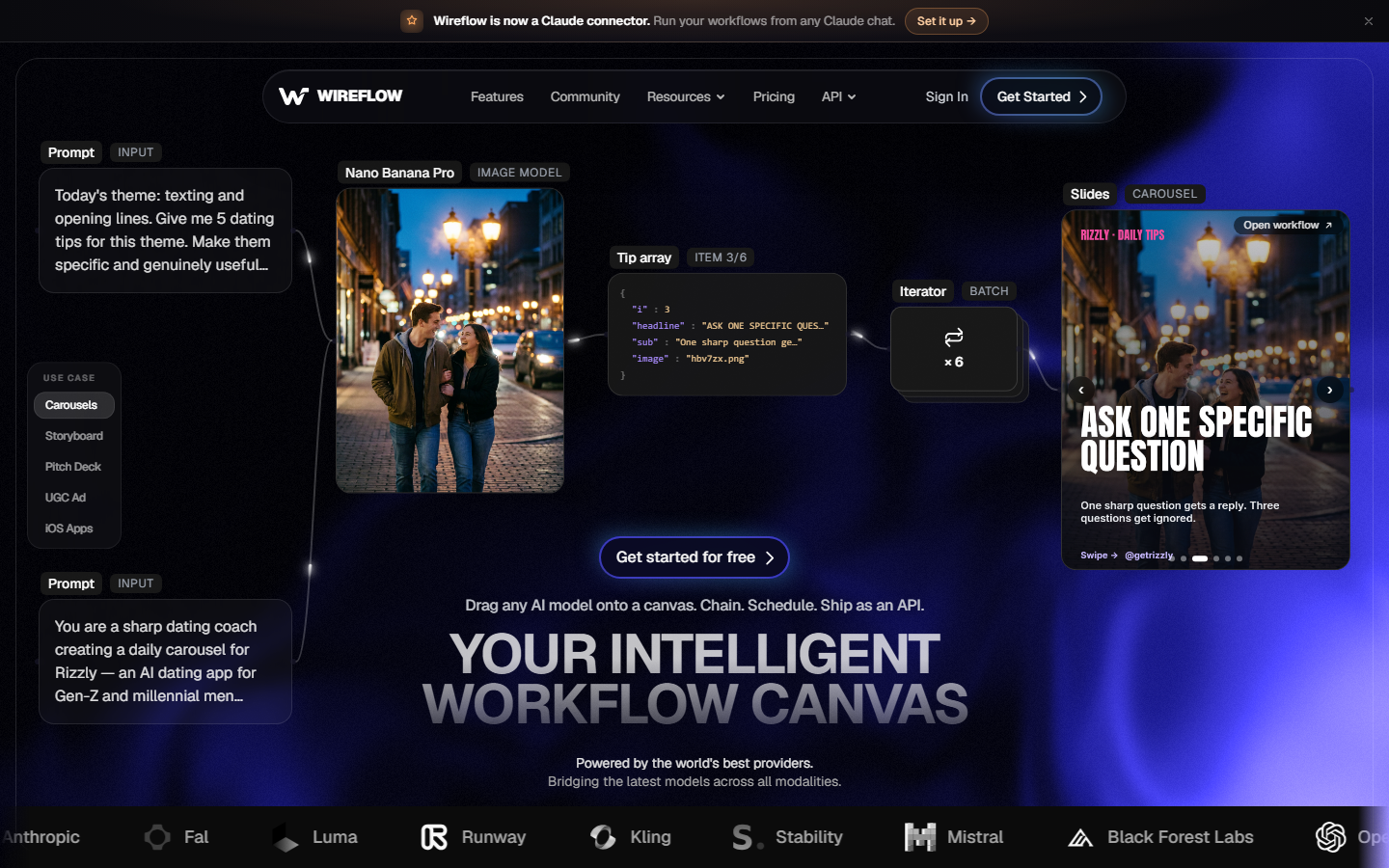
Wireflow is a node-based canvas where each step of an ad is its own block. A brief node feeds an image model, the image feeds a video model, and a compositor node assembles the finished ad. Because models sit behind nodes rather than behind a fixed template, you can swap the image model or the video model without rebuilding the pipeline. That is the structural difference from AdCreative.ai, where the engine is the product and you get what it produces.
The practical advantage is fan-out. Once one pipeline works, an iterator node runs a list of hooks, products or audiences through the same graph and returns a finished ad per row, covering static and video from the same canvas. Pricing is generation-based rather than download-based, so testing concepts does not carry a separate cost from shipping them. The honest tradeoff: a canvas asks more of you up front than a one-click generator, and for three static ads a month the setup is not worth it. Teams comparing the wider category can read the best ad creative AI tools in 2026 for the non-alternative view.
Verdict: the strongest pick for teams producing ads continuously across static, video and UGC formats.
2. Creatify: Best for UGC Video
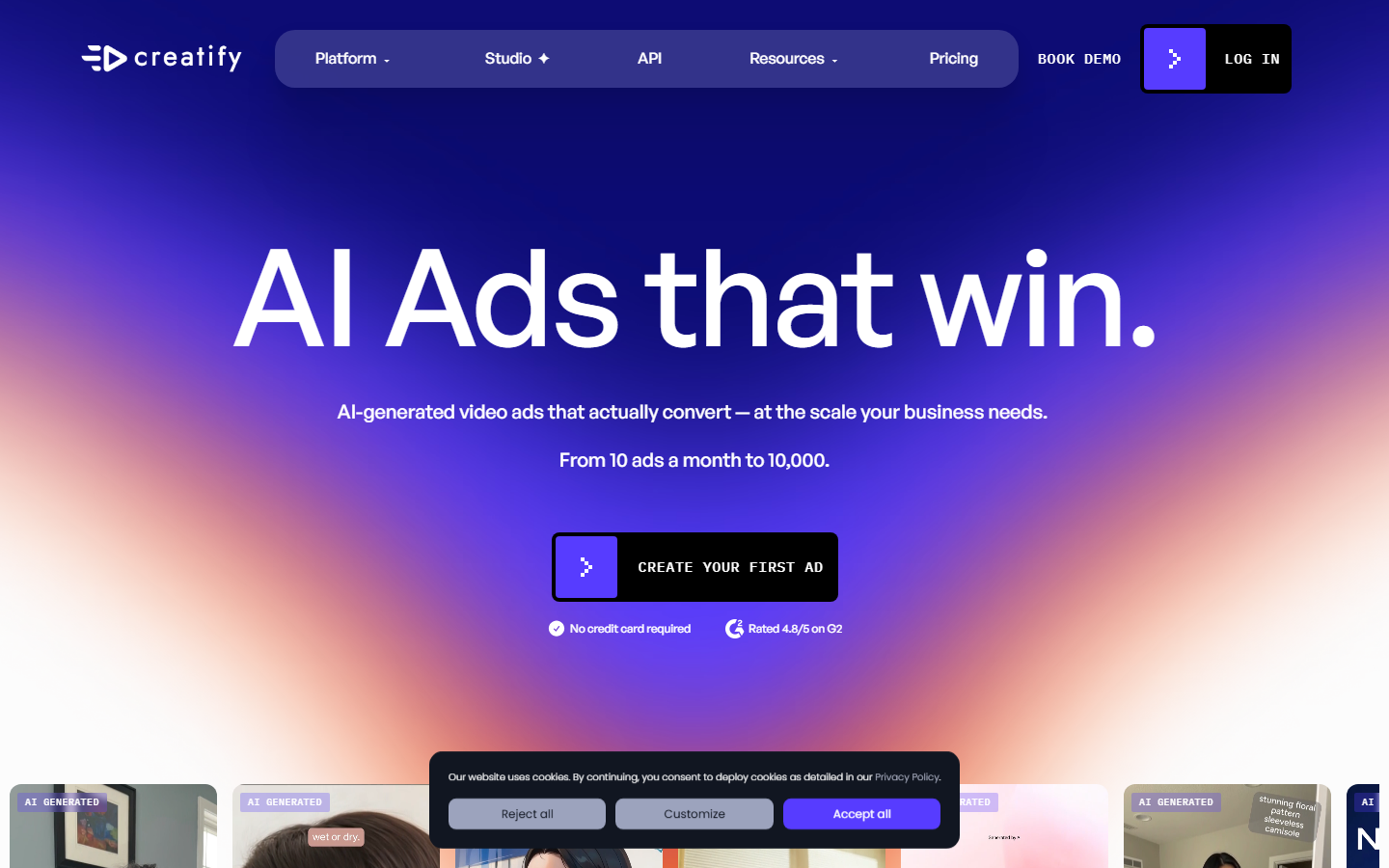
Creatify takes a product URL, pulls the images and copy, and returns a video ad with an AI presenter reading a generated script. The avatar library is large and the lip sync holds up at feed resolution, which is where these ads are actually watched. Paid plans start around $39 per month. It is the closest thing to a one-click replacement if the reason you are leaving AdCreative.ai is that you need video, and the surrounding category is covered in the best AI UGC generators in 2026.
Verdict: best when the gap you are filling is creator-style video, not banners.
3. Arcads: Best for AI Actors
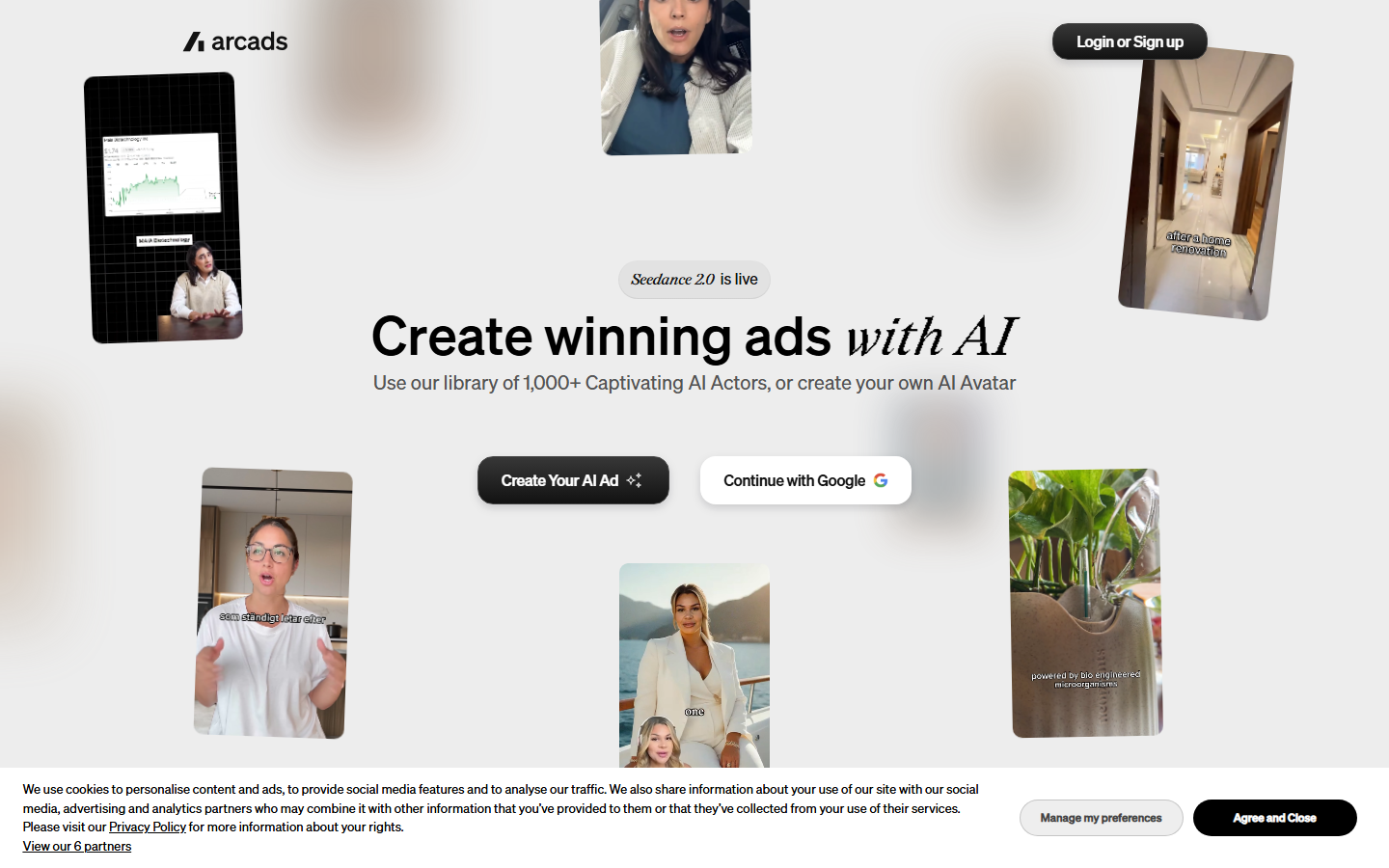
Arcads is script-first. You write or generate the script, pick from a roster of AI actors, and it renders each line as a delivered performance. Because you control the words, hook quality is yours rather than the model's, which is why performance teams often prefer it to URL-to-video tools. Plans start around $110 per month, so it is aimed at teams already spending on media rather than solo sellers. A side-by-side of the format sits in the Arcads alternatives breakdown.
Verdict: the pick when hook writing is your edge and you want acted delivery.
4. Creatopy: Best Direct Replacement
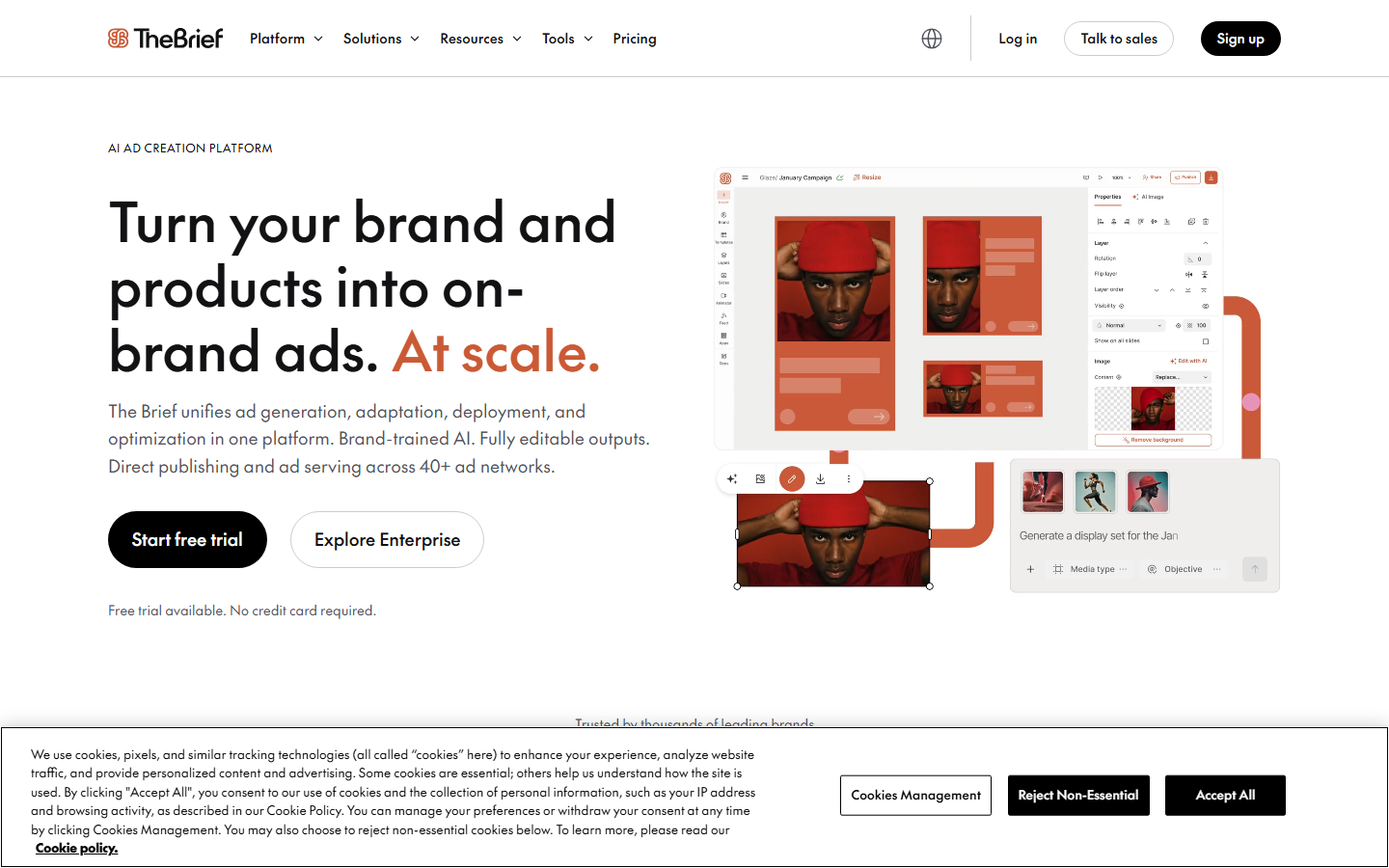
Creatopy is the closest like-for-like swap. It produces banner and display sets across every standard IAB size, keeps a brand kit enforced across the set, and handles animated HTML5 output that a static generator cannot. Where AdCreative.ai leans on a conversion score, Creatopy leans on production control: templates, layers and size sets you can actually edit. Plans start around $36 per month. If your output is display rather than social, this is the shortest migration, and it pairs naturally with Google ad creative generators.
Verdict: best straight replacement for display and banner workloads.
5. Pencil: Best for Performance Prediction
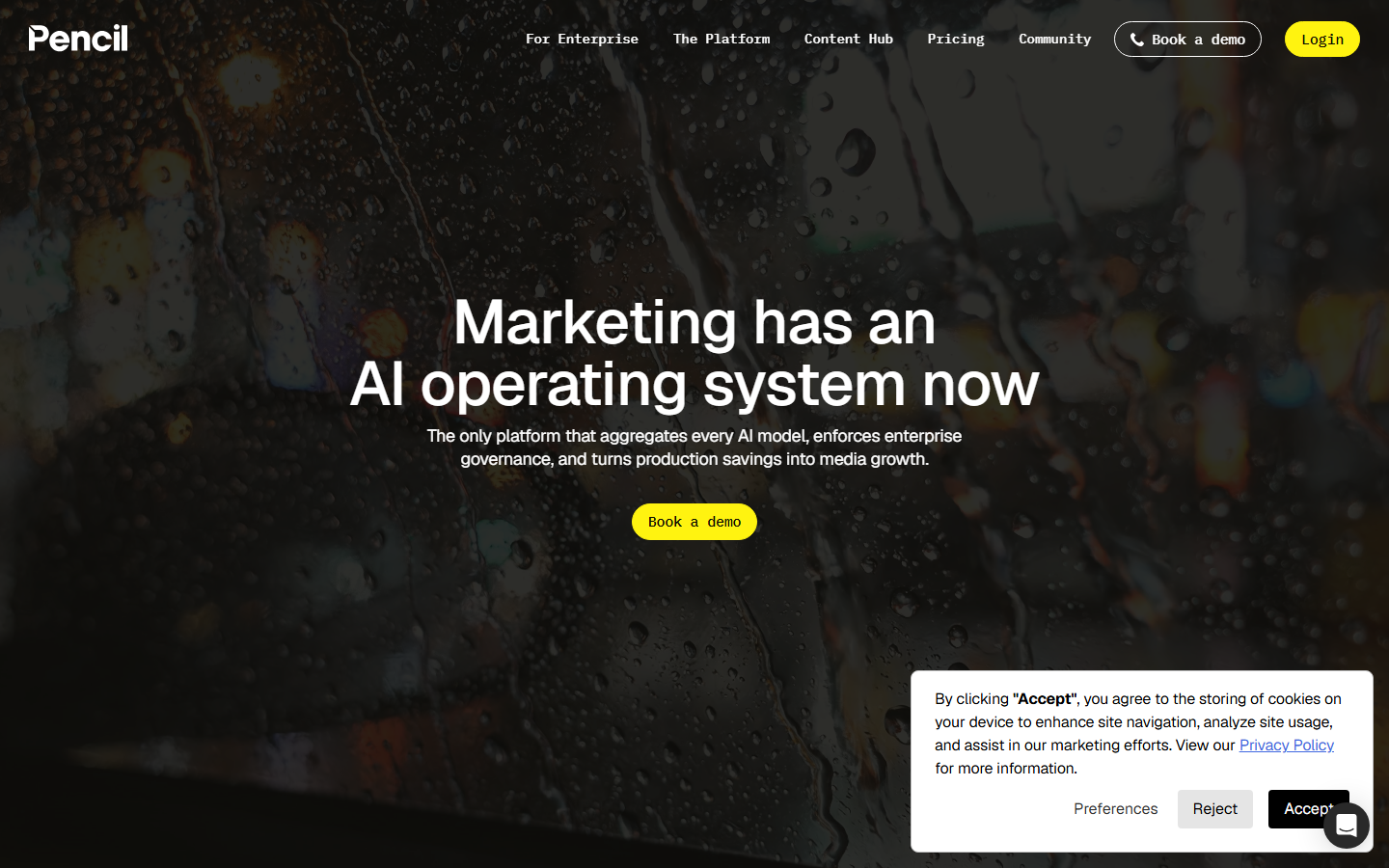
Pencil generates creative and scores it against a model trained on historical ad performance, so you get a predicted ranking before you spend. It connects to ad accounts to close the loop between what it generated and what converted. This is the feature AdCreative.ai users most often say they came for, implemented with a larger data set behind it. Pricing is quote-based above a low entry tier, which suits agencies more than individual sellers; the economics of that are unpacked in how much to charge clients for AI UGC ads.
Verdict: worth it if the conversion score was the reason you subscribed in the first place.
6. Predis.ai: Best for Small Teams
Predis.ai covers organic social posts and paid creative from the same interface, with scheduling attached. There is a free tier, and paid plans start around $32 per month. For a one-person ecommerce operation that needs a steady feed plus a handful of ads, paying once for both is more sensible than running an ad-only tool alongside a scheduler. The output ceiling is lower than the video-first tools above, which is the trade you make. Teams focused on paid social should compare it against Instagram ad creative makers.
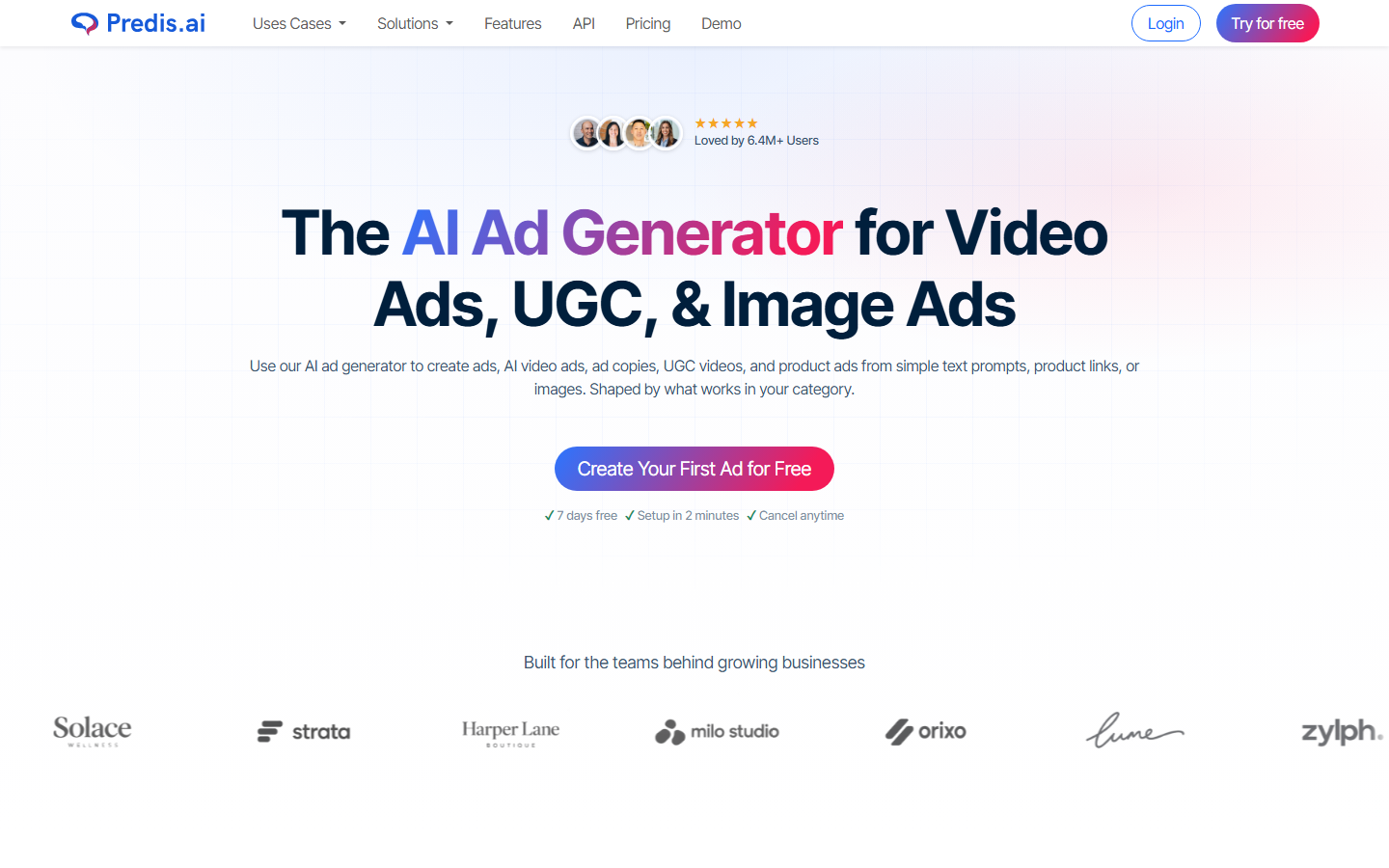
Verdict: the cheapest sensible exit if your volume is modest and organic matters too.
7. Canva: Best Free Option
Canva has absorbed enough AI generation that it covers a real share of what a dedicated ad tool does, with a free plan that is genuinely usable and Pro at around $15 per month. Brand kits, resize-to-every-placement and a very large template library mean a small team can produce a competent static set without a second subscription. What it does not do is batch: every variant is a manual action, so throughput is the ceiling. That distinction matters most for static ad creative generators where volume is the whole point.
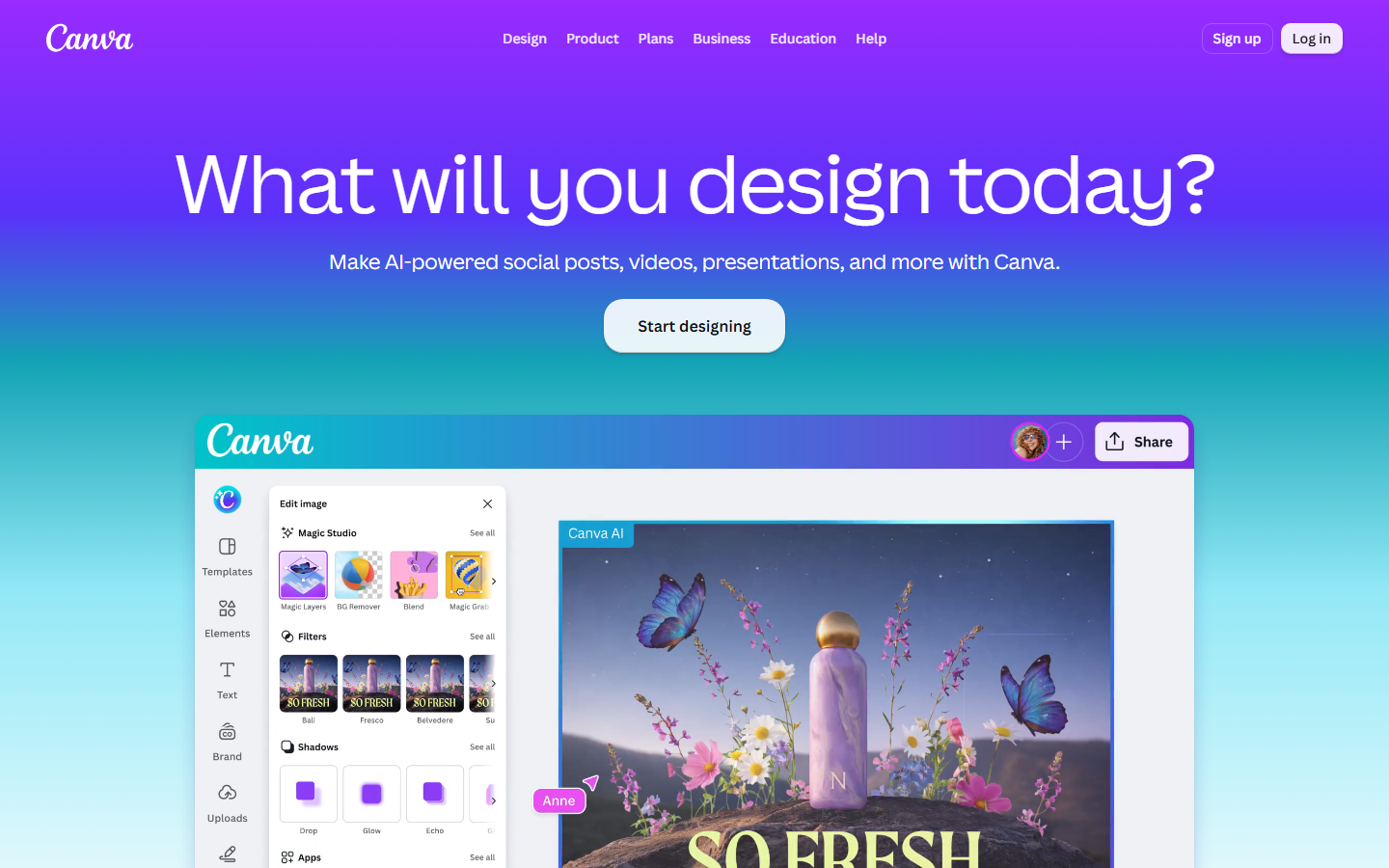
Verdict: the right answer when the budget is zero and the volume is low.
8. Omneky: Best for Enterprise
Omneky sits at the other end: a managed service that generates creative, runs it across channels and reports on performance, with people attached to the account. Pricing is quote-based and starts well above the self-serve tools here. It suits brands whose constraint is internal headcount rather than software, and it is the natural comparison for agencies already evaluating AI ad agency software tools.
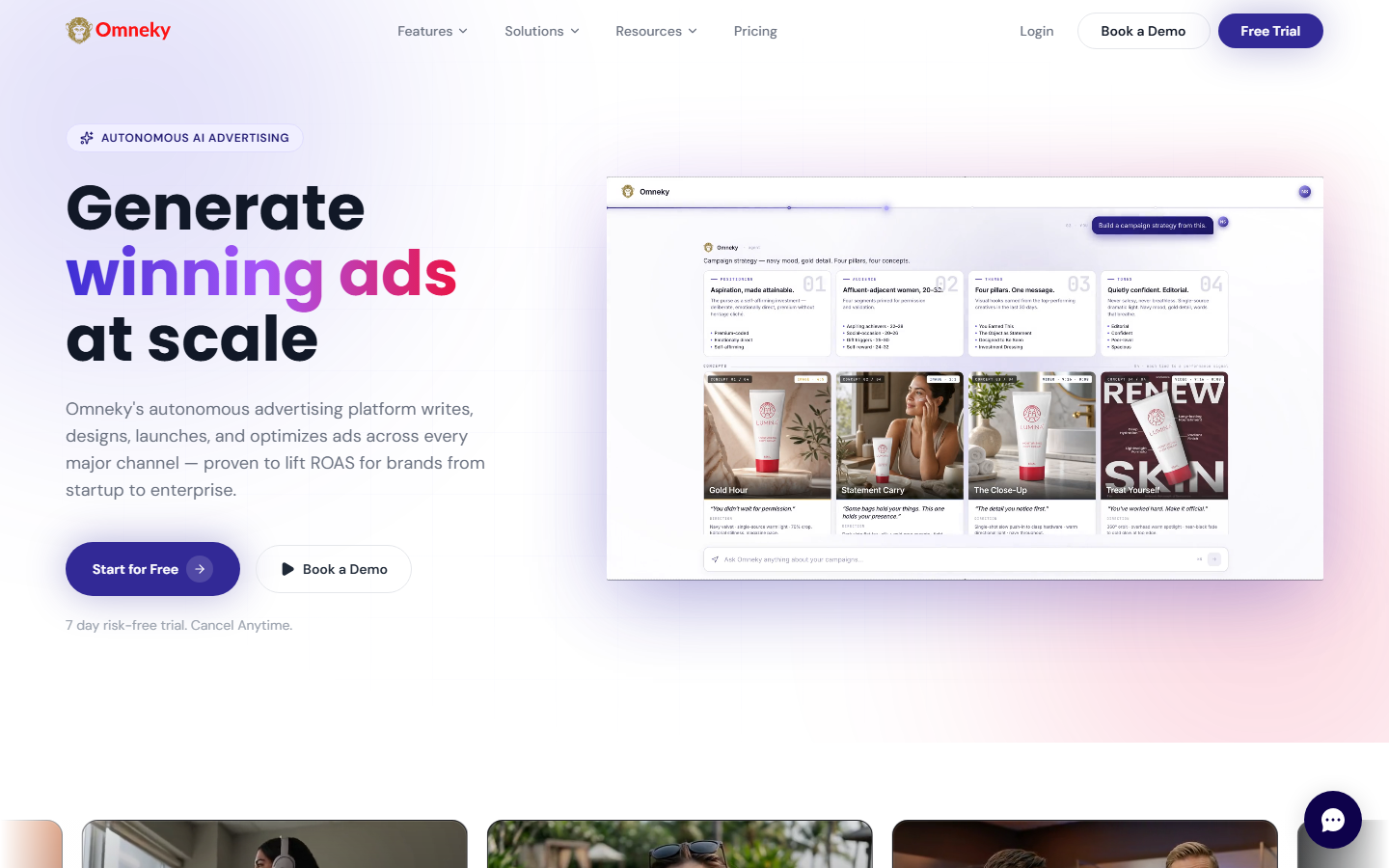
Verdict: for accounts that want the work done, not the tool.
Comparison table
| Tool | Best for | Formats | Entry price | Batch output |
|---|---|---|---|---|
| Wireflow | Overall | Static, video, UGC | Free tier, usage-based | Yes, iterator nodes |
| Creatify | UGC video | Video | ~$39/mo | Limited |
| Arcads | AI actors | Video | ~$110/mo | Yes, per script |
| Creatopy | Display swap | Static, HTML5 | ~$36/mo | Yes, size sets |
| Pencil | Prediction | Static, video | Quote-based | Yes |
| Predis.ai | Small teams | Static, short video | Free, ~$32/mo | Limited |
| Canva | Free use | Static | Free, ~$15/mo | No |
| Omneky | Enterprise | Static, video | Quote-based | Managed |
The pattern in that table is the real finding: nothing except the canvas tools covers static and video from one place, so most migrations end up being a two-tool decision rather than a one-tool swap. Agencies running both should look at how ad creative automation tools handle the handoff between them.
Try it yourself: open the ad variant workflow in Wireflow to see the node setup described above, already configured and runnable.
FAQ
Is AdCreative.ai still worth paying for in 2026? Yes, if your output is almost entirely static and carousel banners and you value the conversion score. The case weakens as soon as video becomes a meaningful share of your spend, because that is a separate purchase.
What is the cheapest AdCreative.ai alternative? Canva's free plan, followed by Predis.ai's free tier. Both trade batch throughput for cost, so they suit low-volume accounts rather than continuous testing programs.
Which alternative handles video ads best? Creatify for URL-to-video with an AI presenter, Arcads when you want to control the script and get acted delivery. For pipelines that need both video and static from one place, a node canvas covers more ground; the UGC creators hub walks through that setup.
Do credits work the same way across these tools? No, and this is the main thing to check. AdCreative.ai charges credits on download. Most alternatives charge per generation, per seat or per minute of video, which changes the cost of testing rather than the cost of shipping.
Can I migrate my brand kit? Partly. Logos, fonts and color values transfer to any of these tools manually in a few minutes. Learned brand rules and historical performance scores do not transfer, so a prediction model starts cold on a new platform.
What should agencies pick? Agencies running multiple client accounts usually need per-client brand separation and batch output, which points at Creatopy for display, a canvas for mixed formats, or Omneky if the constraint is headcount. Pricing structures for client work are covered in the ad creative generator for agencies comparison.
Is there a free AdCreative.ai alternative with no watermark? Canva's free tier exports without a watermark on most templates. Free tiers on video tools almost always watermark, so plan on a paid tier for anything you intend to run as a paid ad.
How long does switching take? For a like-for-like display swap, a day. For a move to a pipeline that covers static and video, budget a week of setup before throughput beats what you had, and check the Facebook ad creative generators comparison if Meta is your main channel.
Conclusion
The right replacement depends on which constraint pushed you out. If it was cost per download, a generation-priced tool solves it. If it was format, the answer is a video tool or a canvas that covers both. If it was throughput, only the batch-capable options qualify. Most teams that leave AdCreative.ai and stay gone are the ones that rebuilt the process rather than swapping the login, and the fastest way to test that is to run one pipeline end to end on a real product before cancelling anything. Start with the format you ship most, measure cost per usable variant, and let that number pick the tool.

Co-Founder & Operations at Wireflow
Runs client operations and content strategy at Wireflow. Works directly with creative teams and agencies to build production AI workflows.
- Content Strategy
- Client Operations
Get unlimited ad creatives today.
One call to see if we are a fit and scope the first ad. If it fits, your first batch lands inside week one.