Best Wan 2.5 API Tools in 2026

In this article▾
- Quick Summary
- How We Ranked These Wan 2.5 API Tools
- 1. Wireflow - Best Overall
- 2. fal.ai - Best Raw Endpoint
- 3. Alibaba Cloud Model Studio - Best Official Source
- 4. Replicate - Best for Prototyping
- 5. Kie.ai - Best Budget Option
- 6. WaveSpeedAI - Best for High Volume
- 7. AIMLAPI - Best Aggregator
- 8. PiAPI - Best for A/B Testing
- Comparison Table
- Which One Should You Pick
- FAQ
- Conclusion
Wan 2.5 is Alibaba's video generation model, and the reason developers keep picking it in 2026 is native audio: dialogue, ambient sound, and background music are generated in the same pass as the picture, at 720p or 1080p, in 5 or 10 second clips. Wireflow comes at that from the orchestration side, putting Wan-class video models on a node-based canvas with a REST API so a clip is one step in a pipeline rather than one isolated call. This guide compares the eight platforms developers actually use to reach Wan 2.5 through an API, what each one charges, and which job each is best at.
Quick Summary
- Wireflow - Node-based video pipelines with a full REST API - Best Overall
- fal.ai - Fast serverless Wan 2.5 endpoints with full resolution control - Best Raw Endpoint
- Alibaba Cloud Model Studio - First-party access straight from the model owner - Best Official Source
- Replicate - Versioned model deployments that never shift under you - Best for Prototyping
- Kie.ai - Credit-based Wan 2.5 at roughly $0.06 per second at 720p - Best Budget Option
- WaveSpeedAI - Throughput-tuned Fast and Extend variants - Best for High Volume
- AIMLAPI - One key across hundreds of models including Wan 2.5 - Best Aggregator
- PiAPI - Side-by-side access to multiple Wan versions - Best for A/B Testing
How We Ranked These Wan 2.5 API Tools
Every platform here exposes Wan 2.5 over HTTP, so the raw model output is broadly the same wherever you call it. What differs in production is per-second price, which resolutions and durations the host actually exposes, whether the audio track comes back with the video, and how much pipeline tooling exists above the endpoint. We weighted reliability under load first, then cost, then developer experience, because a cheap endpoint that times out costs more in retries than it saves. If you are still deciding between Wan and its rivals, it helps to compare AI video models side by side first.
One scoping note. Wan 2.5 ships as two main endpoints, text-to-video and image-to-video, and most production teams use the second because the first frame is where art direction lives. A reference still fixes composition, lighting, and product accuracy in a way a text prompt cannot, which is why teams reach for a dedicated image-to-video API rather than generating blind.
Build this in Wireflow
Make the same kind of asset on a canvas you control, with a free account and no credit card.
1. Wireflow - Best Overall
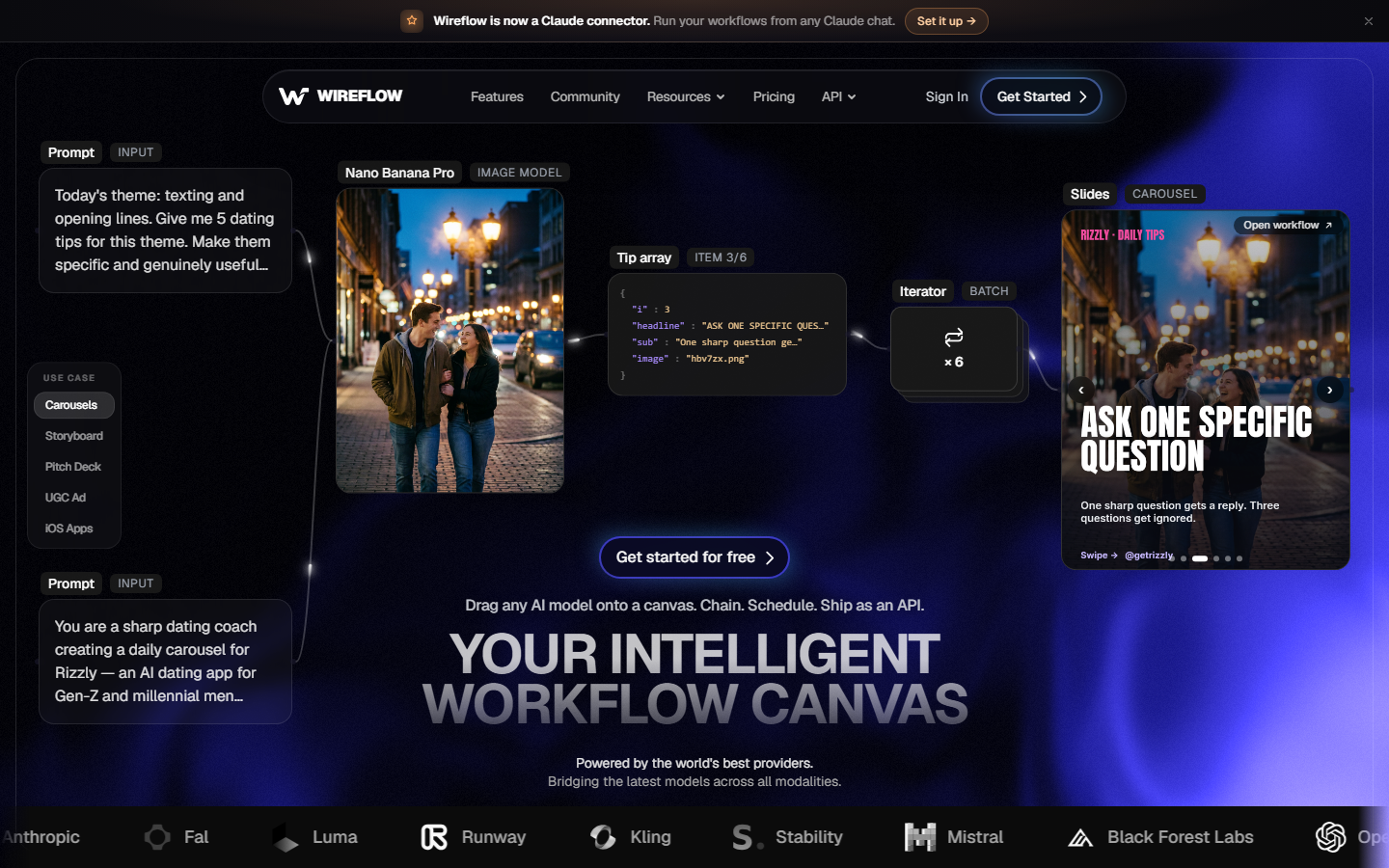
Wireflow is a node-based canvas where video, image, and text models connect as steps in a pipeline, and every canvas you build is callable as a REST endpoint. For Wan 2.5 work that matters because a finished clip is rarely one request: you generate or upload a start frame, animate it, then hand the result to editing, captioning, or upload steps. Building that as a graph makes the glue code configuration, and swapping Wan 2.5 for another model later is a node change rather than a rewrite, which is the core promise of an AI video generator built around orchestration.
The advantage shows up at batch scale. Running one prompt through a model is easy anywhere; running two hundred product variants through a start-frame step, an animation step, and a delivery step, with retries and per-node outputs you can inspect, is where raw endpoints start costing engineering time. That is the job an AI video pipeline is designed for.
2. fal.ai - Best Raw Endpoint
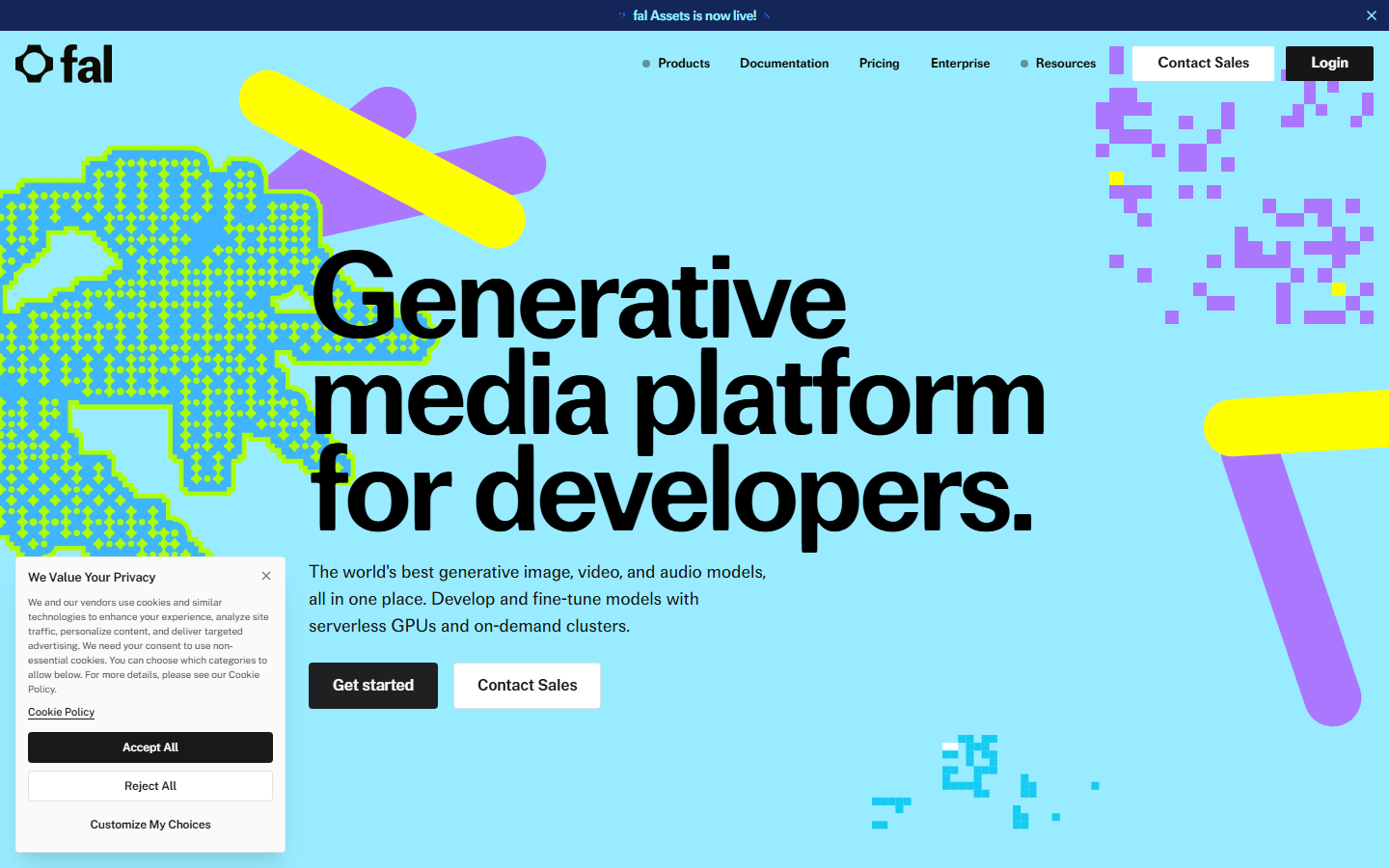
fal.ai hosts Wan 2.5 as fal-ai/wan-25-preview with separate text-to-video and image-to-video routes, and it exposes the full option set rather than a simplified subset: 480p, 720p, and 1080p resolutions, 5 or 10 second durations, and audio input in WAV or MP3 from 3 to 30 seconds, truncated automatically to the clip length. Published pricing at the time of writing is $0.15 per second at 1080p, with cheaper tiers at lower resolutions. The queue-plus-webhook pattern is the cleanest developer experience among the raw hosts, which is why fal tends to appear near the top of comparisons for Seedance and other video APIs as well.
3. Alibaba Cloud Model Studio - Best Official Source
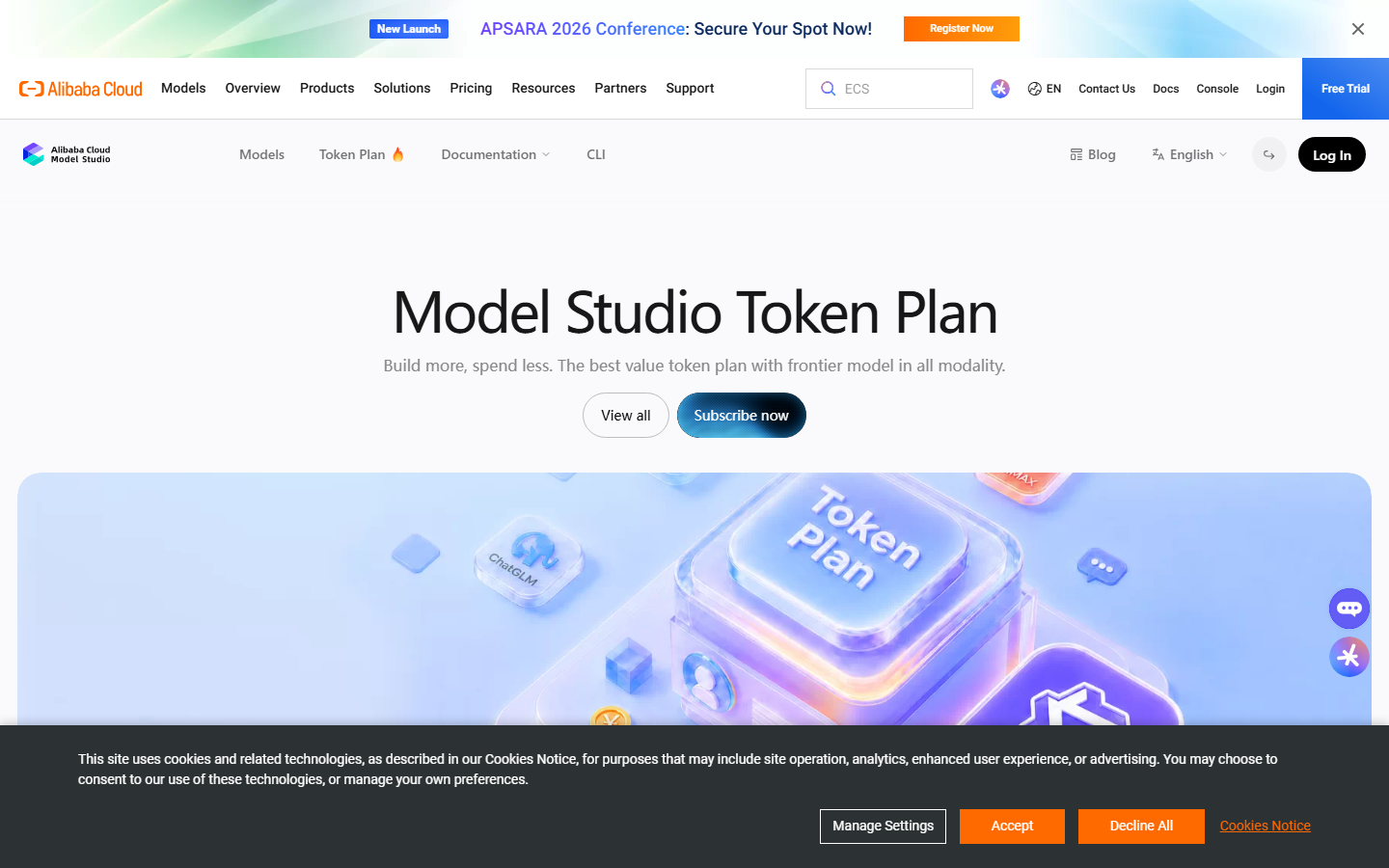
Alibaba Cloud Model Studio is the first-party route, since Alibaba builds Wan. Going direct means new model versions on release day instead of waiting for a reseller, plus the vendor's own documentation, quota system, and support path. The tradeoff is that Model Studio is a full cloud console with accounts, regions, and access keys to manage, so setup costs more than pasting a key into a single-purpose service. Teams already on Alibaba Cloud usually find it worth it, and the same logic applies to anyone evaluating a hosted video API for agents where billing consolidation matters.
4. Replicate - Best for Prototyping
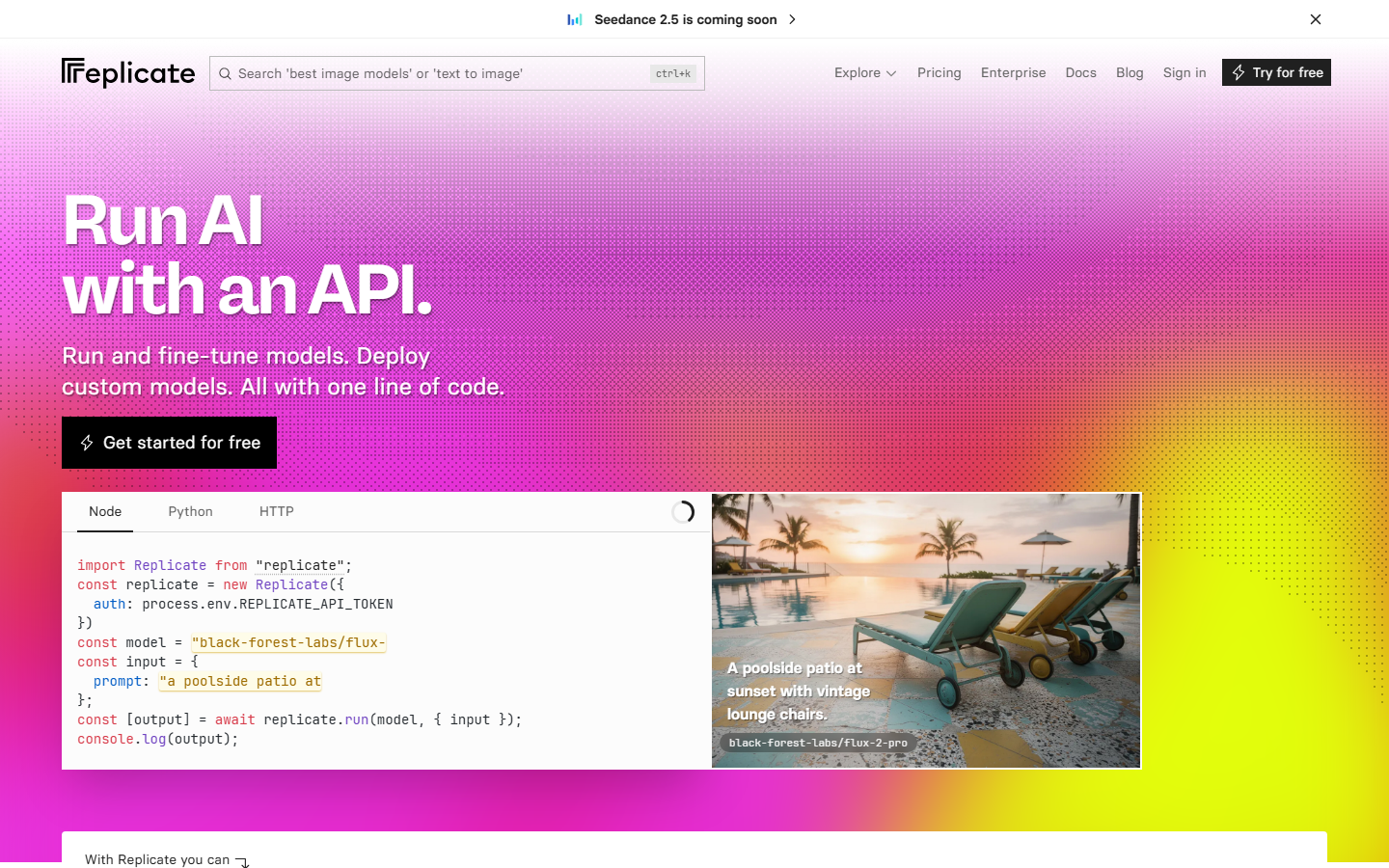
Replicate runs the Wan family, including Wan 2.5 text-to-video and image-to-video plus a Fast image-to-video variant, with versioned deployments so a model update never silently changes your output. That pinning is the reason it is the safest place to prototype: you can compare a run from last month against one from today and know the difference came from your prompt, not from the host. Prediction logs, a clean Python client, and per-run timing make debugging straightforward, which is much the same appeal as a well-documented video API for coding agents where reproducibility beats raw speed.
5. Kie.ai - Best Budget Option
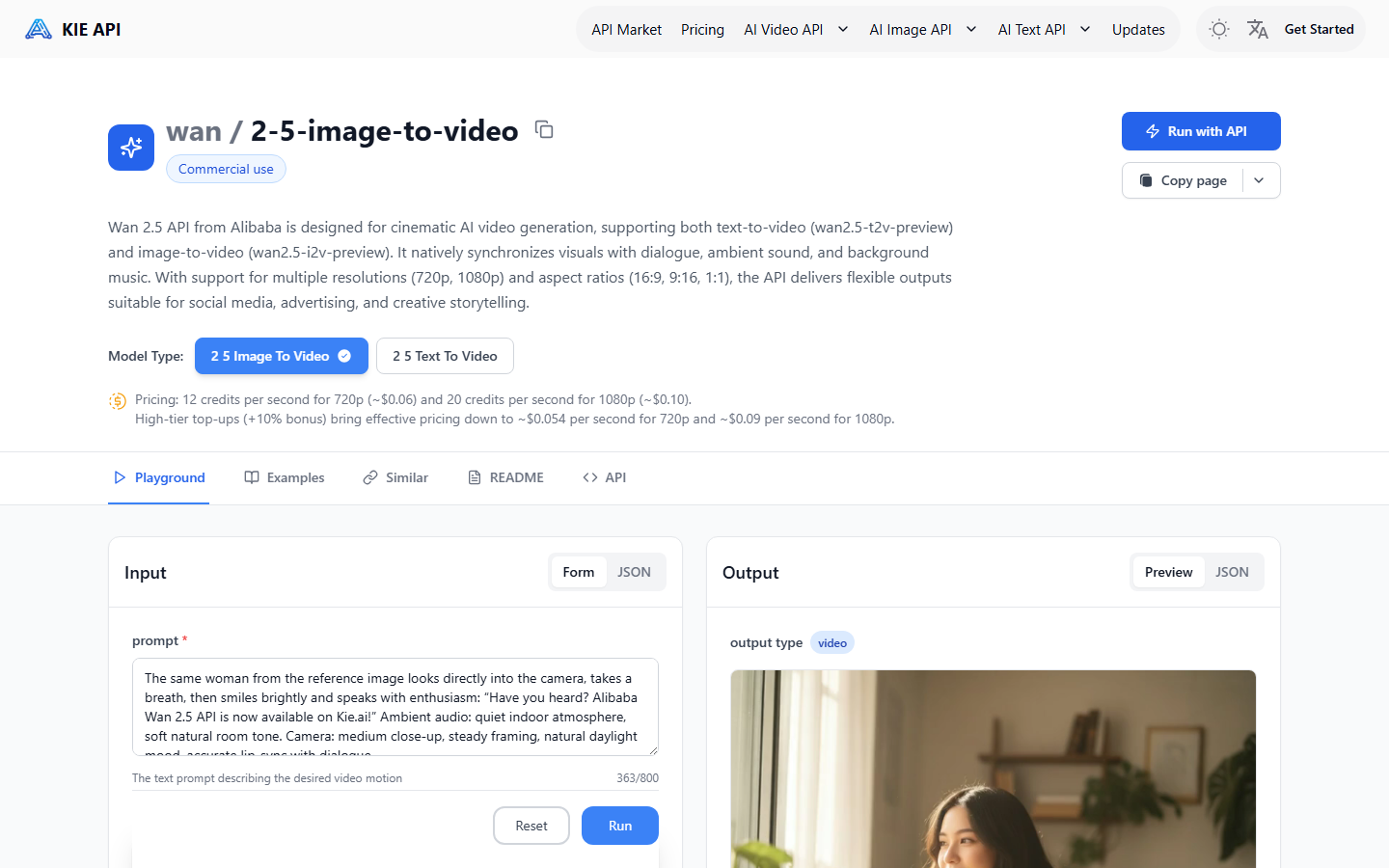
Kie.ai publishes the clearest Wan 2.5 pricing of any host on this list: 12 credits per second at 720p, roughly $0.06, and 20 credits per second at 1080p, roughly $0.10, with high-tier top-ups bringing that down to about $0.054 and $0.09 respectively. Both the text-to-video and image-to-video endpoints are available with 720p and 1080p output and 16:9, 9:16, and 1:1 aspect ratios, and the model page includes a live playground so you can test a prompt before writing any code. For volume work where unit economics decide the project, this is the cheapest credible option here, and the same per-unit thinking applies when you compare it against platform pricing that bundles orchestration into the cost.
6. WaveSpeedAI - Best for High Volume
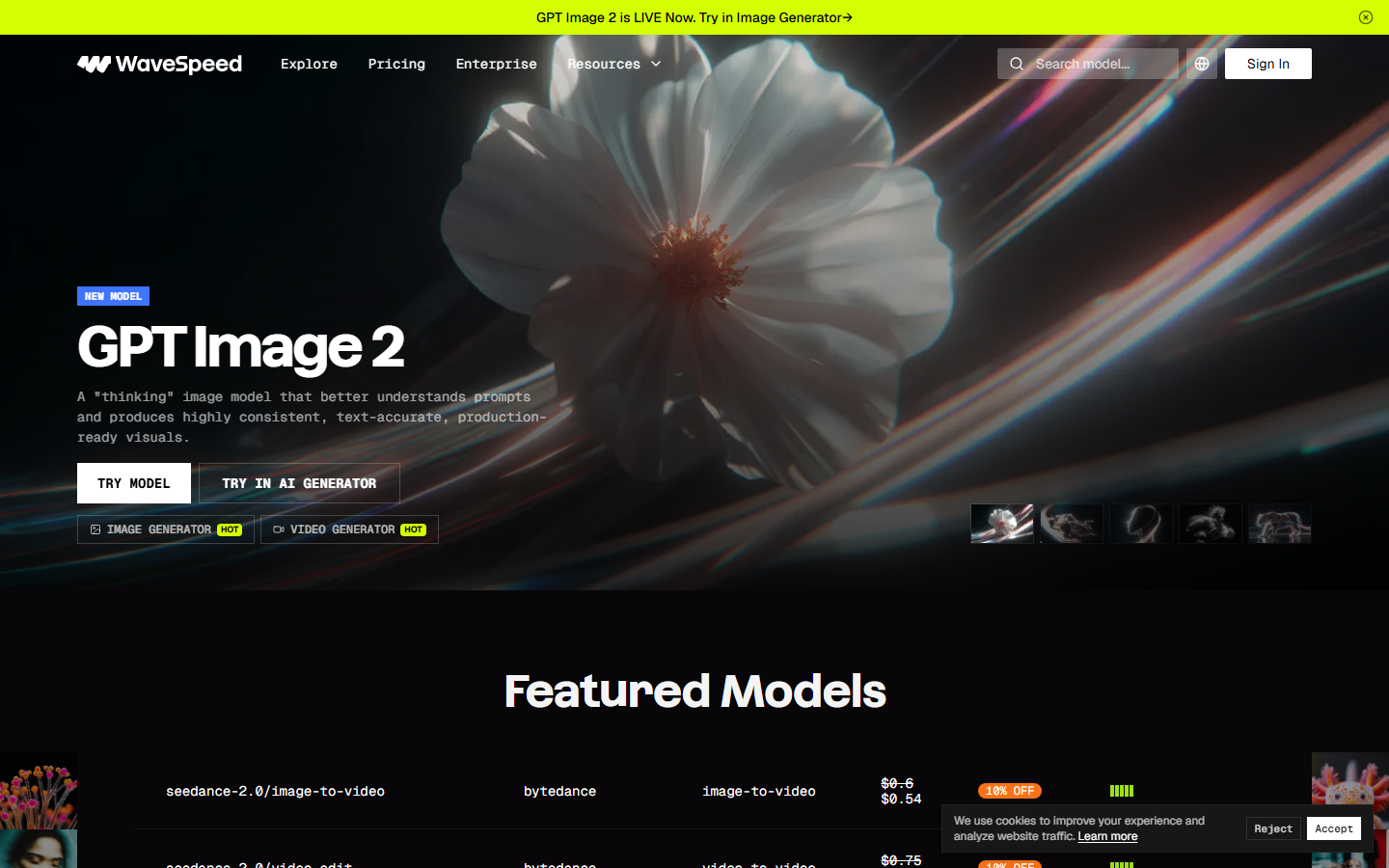
WaveSpeedAI specialises in accelerated inference, and its Wan 2.5 collection includes T2V and I2V Fast variants plus an Extend endpoint for pushing past the standard 10 second ceiling. The Fast variants trade a small amount of quality for materially lower latency, which is the right call for previews, internal review cuts, and template-driven social output where nobody is inspecting frame detail. Teams running render farms for ad creative typically use it as the muscle behind the queue while an AI video workflow layer handles sequencing and delivery.
7. AIMLAPI - Best Aggregator
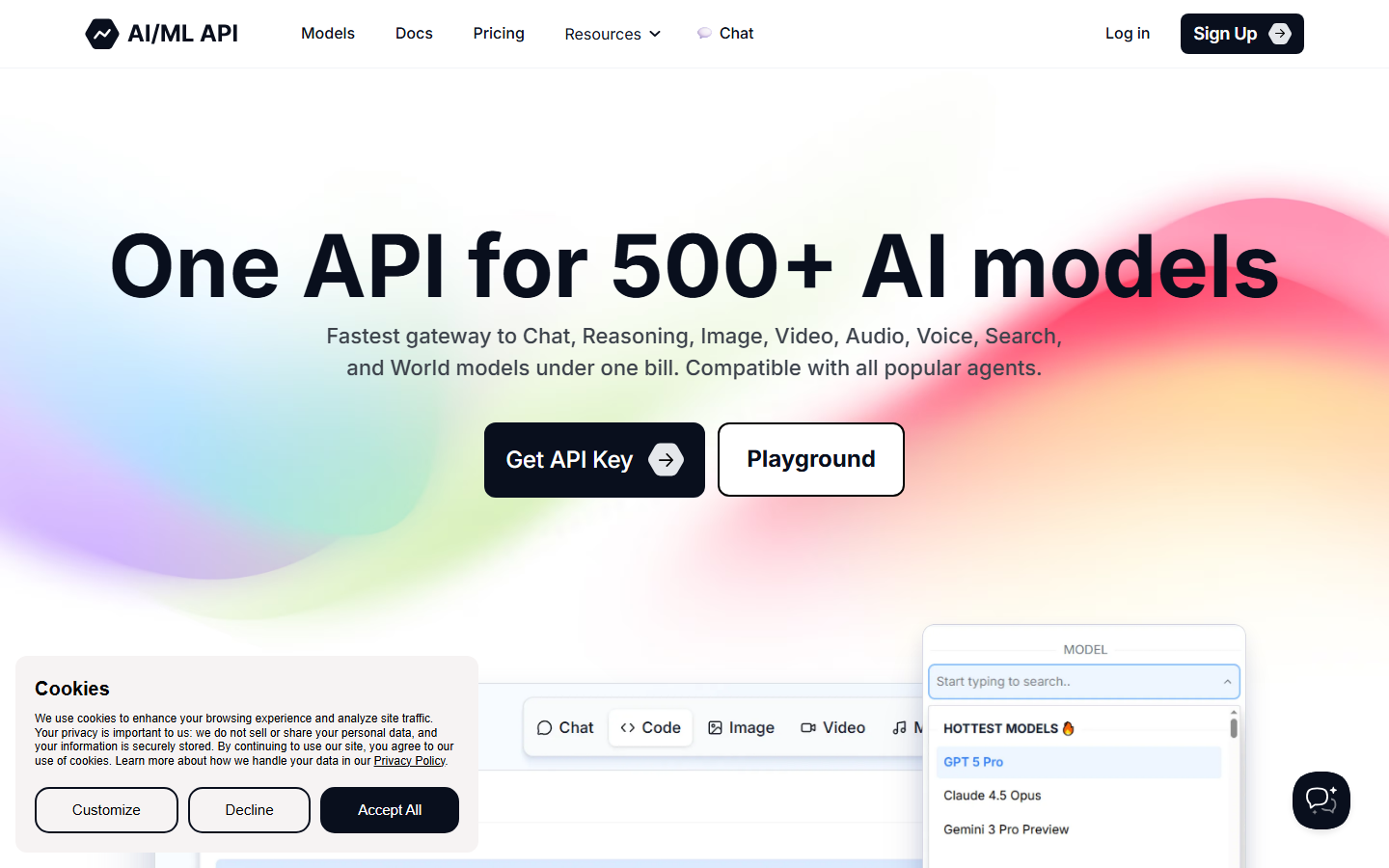
AIMLAPI serves Wan 2.5 alongside several hundred other models behind one key and one billing relationship, including the text-to-image preview endpoints from the same family. The appeal is procurement rather than performance: one contract, one invoice, and the ability to try a competing model without a new vendor review. It is a sensible default for teams whose bottleneck is approvals rather than latency, and for anyone building an AI video agent that needs to reach several model families without juggling credentials.
8. PiAPI - Best for A/B Testing
PiAPI exposes multiple Wan generations through a single integration, which makes it the easiest place to run the same prompt against Wan 2.5 and a newer tier and compare the outputs directly. That is a genuinely useful position given how quickly the Wan line has moved, because the honest answer to "is the newer version worth the price difference" depends entirely on your footage. It also fits neatly into evaluation setups built around AI video generation MCP tools where a model swap should be a parameter, not a migration.
Comparison Table
| Platform | Access type | Wan 2.5 endpoints | Indicative cost | Best for |
|---|---|---|---|---|
| Wireflow | Canvas + REST API | Via pipeline nodes | Plan based | Multi-step production pipelines |
| fal.ai | Raw serverless endpoint | T2V, I2V | ~$0.15/s at 1080p | Full option control |
| Alibaba Cloud Model Studio | First-party cloud | T2V, I2V | Cloud metered | Day-one model access |
| Replicate | Versioned model API | T2V, I2V, I2V Fast | Per-run metered | Reproducible prototyping |
| Kie.ai | Credit-based API | T2V, I2V | ~$0.06/s at 720p | Lowest unit cost |
| WaveSpeedAI | Accelerated inference | T2V, I2V Fast, Extend | Per-second metered | High throughput batches |
| AIMLAPI | Multi-model aggregator | T2V, plus image preview | Per-request metered | One key, many models |
| PiAPI | Multi-model wrapper | Multiple Wan versions | Per-request metered | Version comparisons |
Which One Should You Pick
If you need one clip per request, pick the cheapest host that holds up at your volume, which today means Kie.ai at 720p or fal.ai when you want the full resolution and audio option set. If you need reproducibility across weeks of iteration, Replicate's version pinning is worth the small premium. If your product chains steps together or has to swap video models as the leaderboard moves, the decision stops being about the endpoint and becomes about the surrounding pipeline, the same shift that pushes teams toward an AI video editing API once one generation call is no longer the whole job.
Try it yourself: Build this workflow in Wireflow: a text prompt generates a cinematic start frame, then a Wan 2.5 node animates it into a clip with synchronised audio. The nodes are pre-configured with the exact setup discussed above.
FAQ
Does Wan 2.5 have an official API?
Yes. Alibaba Cloud Model Studio is the first-party route, and it is where new Wan versions appear first. Most teams outside Alibaba Cloud reach the model through partner inference hosts such as fal.ai, Replicate, Kie.ai, WaveSpeedAI, or aggregators like AIMLAPI and PiAPI, because the setup cost is lower.
How much does the Wan 2.5 API cost in 2026?
Expect roughly $0.05 to $0.15 per second depending on host and resolution. Kie.ai lists about $0.06 per second at 720p and $0.10 at 1080p; fal.ai publishes $0.15 per second for 1080p. Price against the resolution you will actually ship, not the cheapest tier on the page.
Does Wan 2.5 generate audio with the video?
Yes, and it is the headline feature. Wan 2.5 produces dialogue, ambient sound, and background music synchronised to the picture in a single pass rather than requiring a separate audio step. Confirm your host exposes it, since some offer video-only configurations.
What resolutions and durations does Wan 2.5 support?
Common configurations are 720p and 1080p at 5 or 10 seconds, with 16:9, 9:16, and 1:1 aspect ratios. Some hosts also expose 480p for cheap previews, and WaveSpeedAI offers an Extend endpoint for going past the standard duration ceiling.
Should I use text-to-video or image-to-video?
Image-to-video for anything where the look matters: a reference still fixes composition, lighting, and product accuracy before any motion is generated, removing most of the reroll cycle. Text-to-video is better for exploration and when no reference asset exists yet.
How does Wan 2.5 compare to newer Wan versions?
Wan 2.5 has settled into the daily workhorse position: cheaper per second and fast enough for volume, with newer tiers reserved for campaign work where quality justifies the premium. The gap depends on your footage, so running one prompt through both on a host exposing multiple versions is the only reliable way to decide.
Do I need my own GPUs to run Wan 2.5?
No. Every platform here is fully hosted inference billed per second, per credit, or per request. Self-hosting only applies to the open-weight Wan releases rather than the hosted 2.5 endpoints, and for most teams the operational cost outweighs the savings.
Can I chain Wan 2.5 with other models in one request?
Not through a raw endpoint, which handles one generation per call. Chaining a start-frame image model into Wan 2.5 and then into editing or captioning requires either your own orchestration code or a pipeline platform that exposes the whole graph as one callable endpoint.
Conclusion
The Wan 2.5 API market splits along a clear line. Raw hosts compete on price, latency, and how much of the option set they expose: Kie.ai wins on cost, fal.ai on control, Replicate on reproducibility. Pipeline platforms compete on a different question, which is how much integration work disappears once video generation is one node among several. If your use case is a single clip per request, buy the endpoint. If it is a product feature generating video continuously, the orchestration layer is the real decision, and Wireflow is built for that case. Either way, pricing the job against a neighbouring model such as Seedance first is time well spent.

Co-Founder & Operations at Wireflow
Runs client operations and content strategy at Wireflow. Works directly with creative teams and agencies to build production AI workflows.
- Content Strategy
- Client Operations
Get unlimited ad creatives today.
One call to see if we are a fit and scope the first ad. If it fits, your first batch lands inside week one.