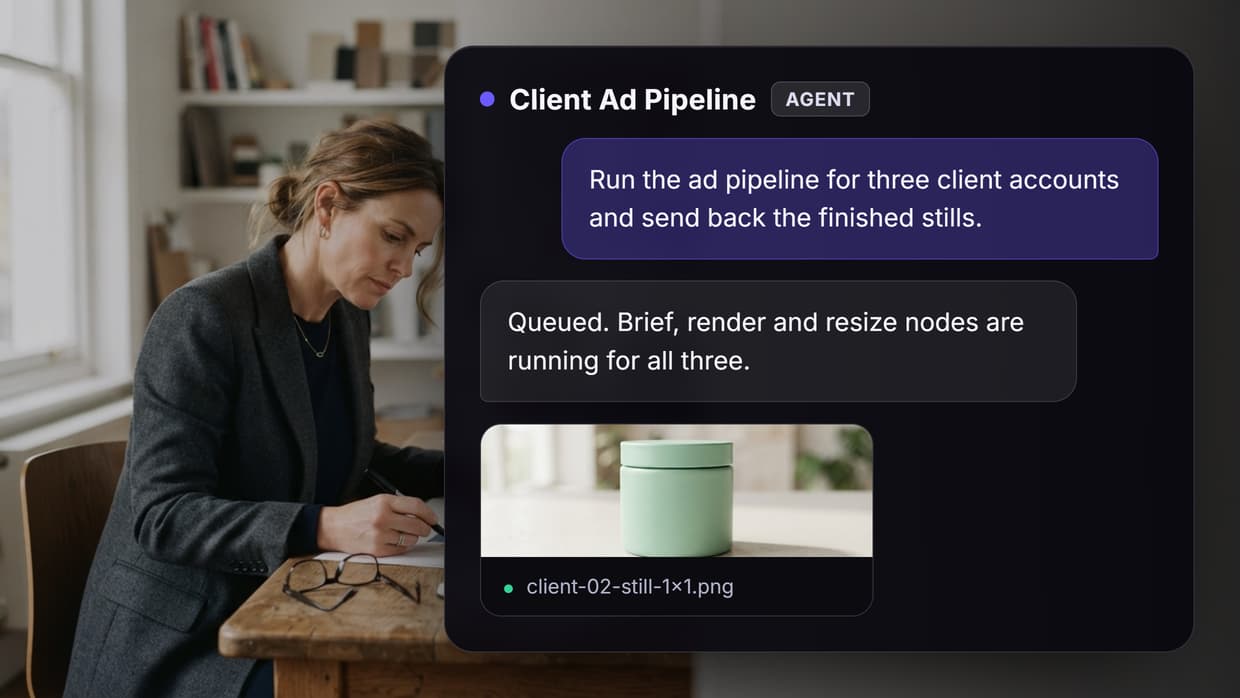
Agencies need an ad creative generator that handles many clients at once, keeps each brand separate, and produces variants faster than a designer can open a template. We ranked eight tools on the things that actually matter when creative is billable work: per client brand control, output volume, unit cost at scale, API access, and whether the tool covers static, video, and copy in one place. Wireflow takes the top spot because it chains any set of image, video, and text models on one canvas, so an agency builds its own generator instead of renting someone else's template engine.
Quick summary: the 8 tools ranked
- Wireflow: chain any AI models into a custom ad pipeline. Best overall for agencies.
- AdCreative.ai: scored statics, video, and copy from a short prompt. Best for high volume variants.
- Creatify: AI actor video ads from a product URL. Best for UGC style video.
- Arcads: 1,000+ AI actors reading your scripts. Best for scripted spokesperson ads.
- Omneky: autonomous generation plus cross channel launch. Best for managed performance work.
- Smartly: creative and media buying in one system. Best for enterprise retainers.
- Celtra: creative automation and versioning at brand scale. Best for large asset libraries.
- The Brief (formerly Creatopy): on brand ad sets across 40+ networks. Best for display and banner work.
How we ranked these tools
These are agency criteria, not solo marketer criteria. A tool that produces one great image is useless if it cannot produce four hundred across six clients without mixing up the brand kits. Most roundups rank on output quality alone and skip the operational questions, which is why agencies keep buying tools that stall in month two. Serious ad creative testing at scale depends on the boring parts.
- Multi client separation: separate brand kits, assets, and workspaces per account
- Volume economics: what 500 assets a month actually costs
- Format coverage: statics, video, and copy, or just one of them
- API and automation: can the tool run without a human in the interface
- Brand control: how much the output can drift from client guidelines
- Approval flow: how creative gets reviewed before it reaches the client
1. Wireflow
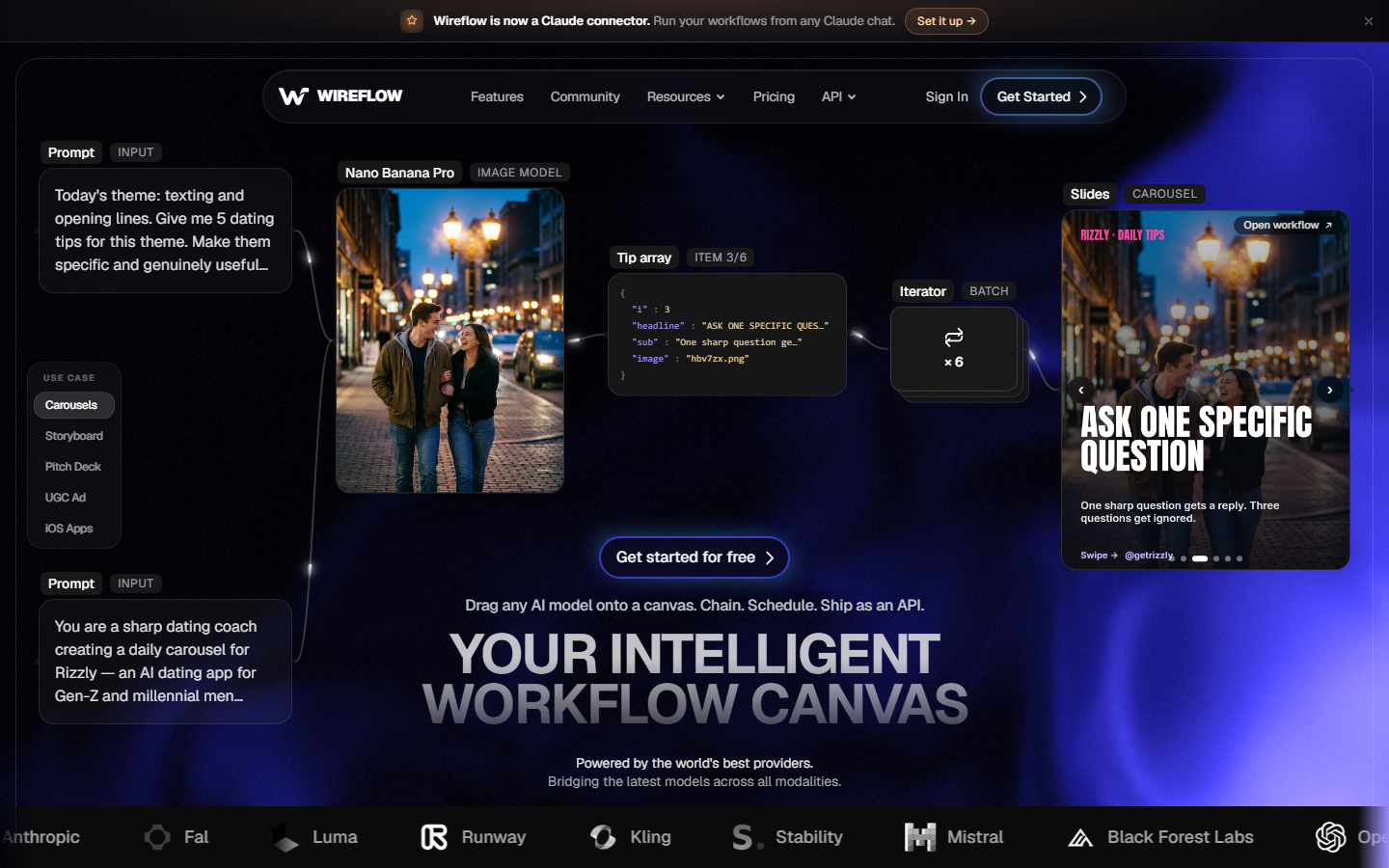
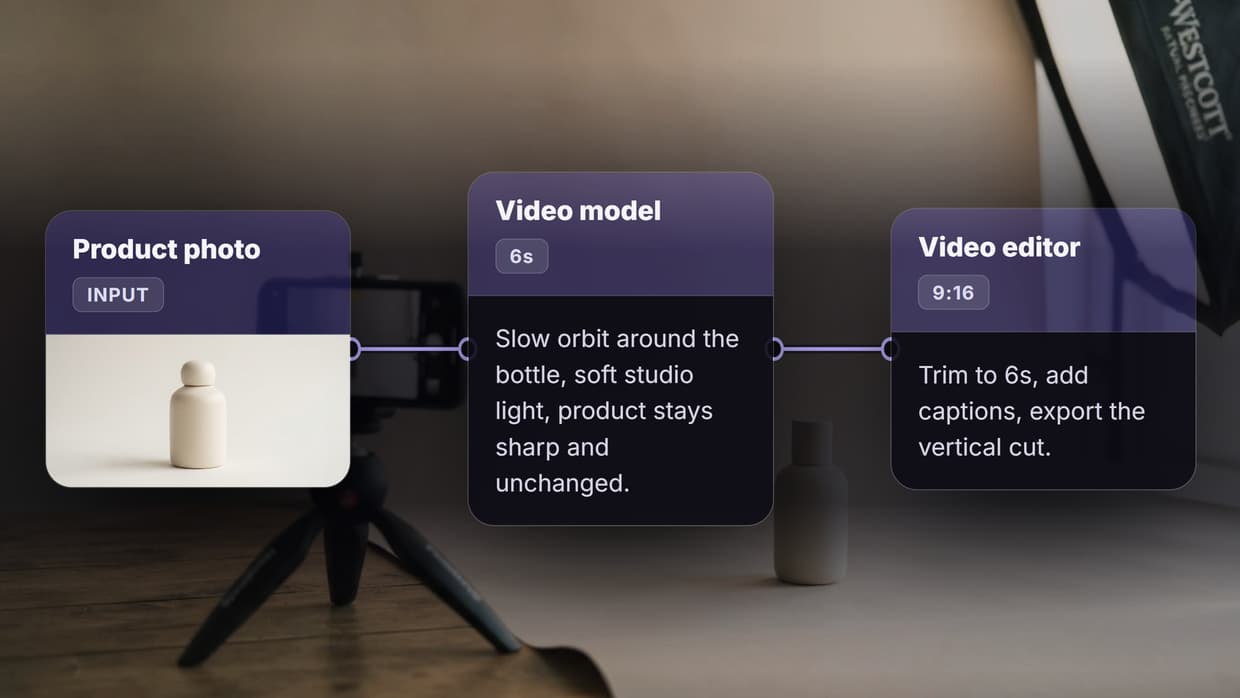
Wireflow is a node based canvas where each AI model is a node and the connections between them are your pipeline. An agency drops a client brief into a text node, feeds it into an image model such as Nano Banana Pro for the static, routes the same brief into a video model for the motion cut, and gets both out of one run. Because the canvas is yours, the pipeline encodes your process rather than a vendor's template library.
The practical advantage for agency teams is the API. Any published canvas becomes an endpoint, so a client list in a spreadsheet can loop through the same generator overnight. That turns creative into scheduled ad creative automation, which is how per asset cost drops far enough to make volume testing profitable.
Verdict: best overall for agencies that want to own the pipeline and bill on output rather than hours.
2. AdCreative.ai
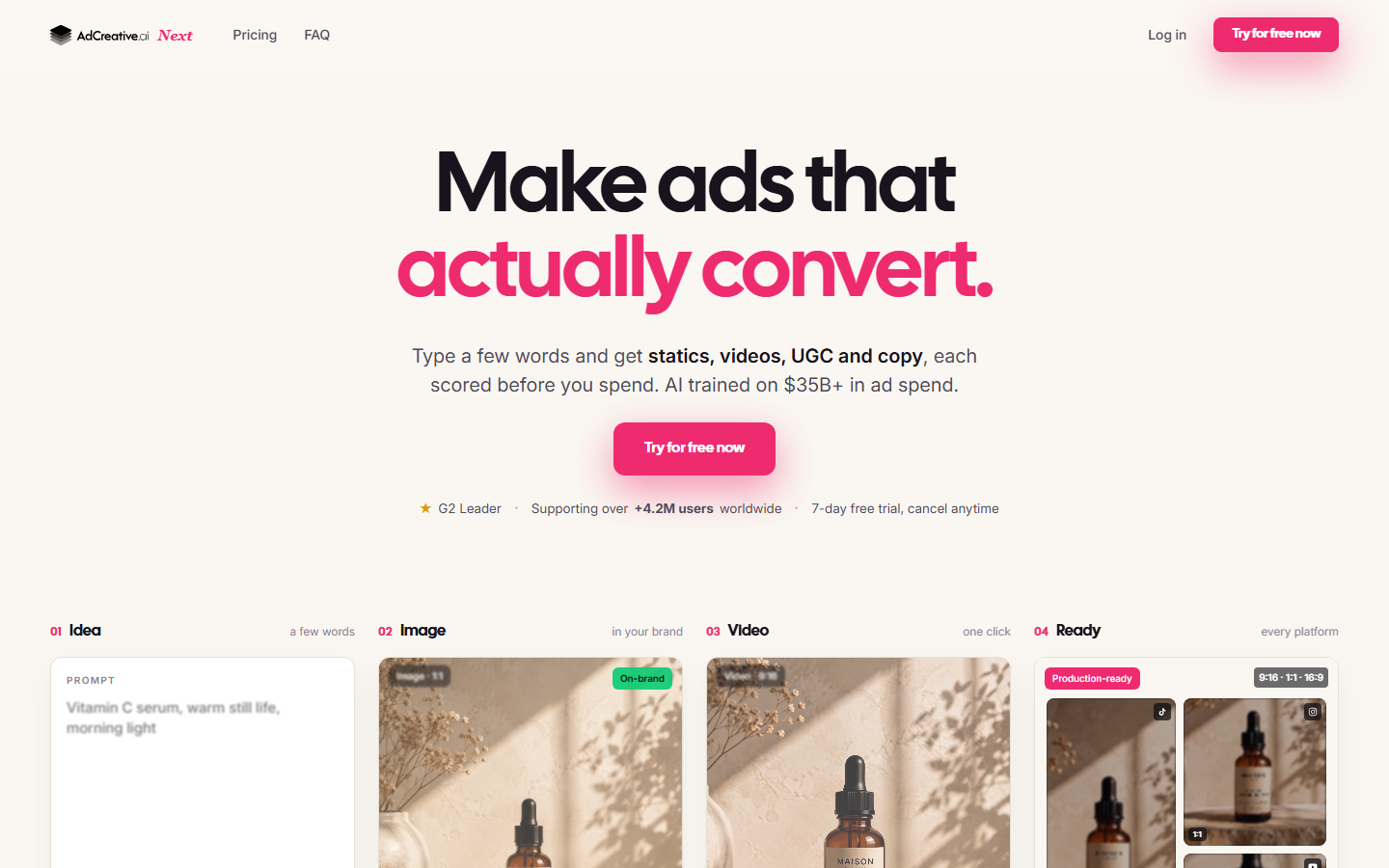
AdCreative.ai turns a few words into statics, videos, UGC style clips, and ad copy, then scores each one before you spend money on it. The company states its model is trained on more than $35 billion in ad spend and serves over 4.2 million users. The scoring layer is why agencies pick it: a creative score gives account managers something to show a client other than personal taste.
The tradeoff is template feel. Output is consistent but recognisably AdCreative, which matters more for brand led clients than direct response ones. It pairs well with a separate static ad creative generator for hero assets that need to look bespoke.
Verdict: best for high volume variant production with a built in scoring signal.
3. Creatify
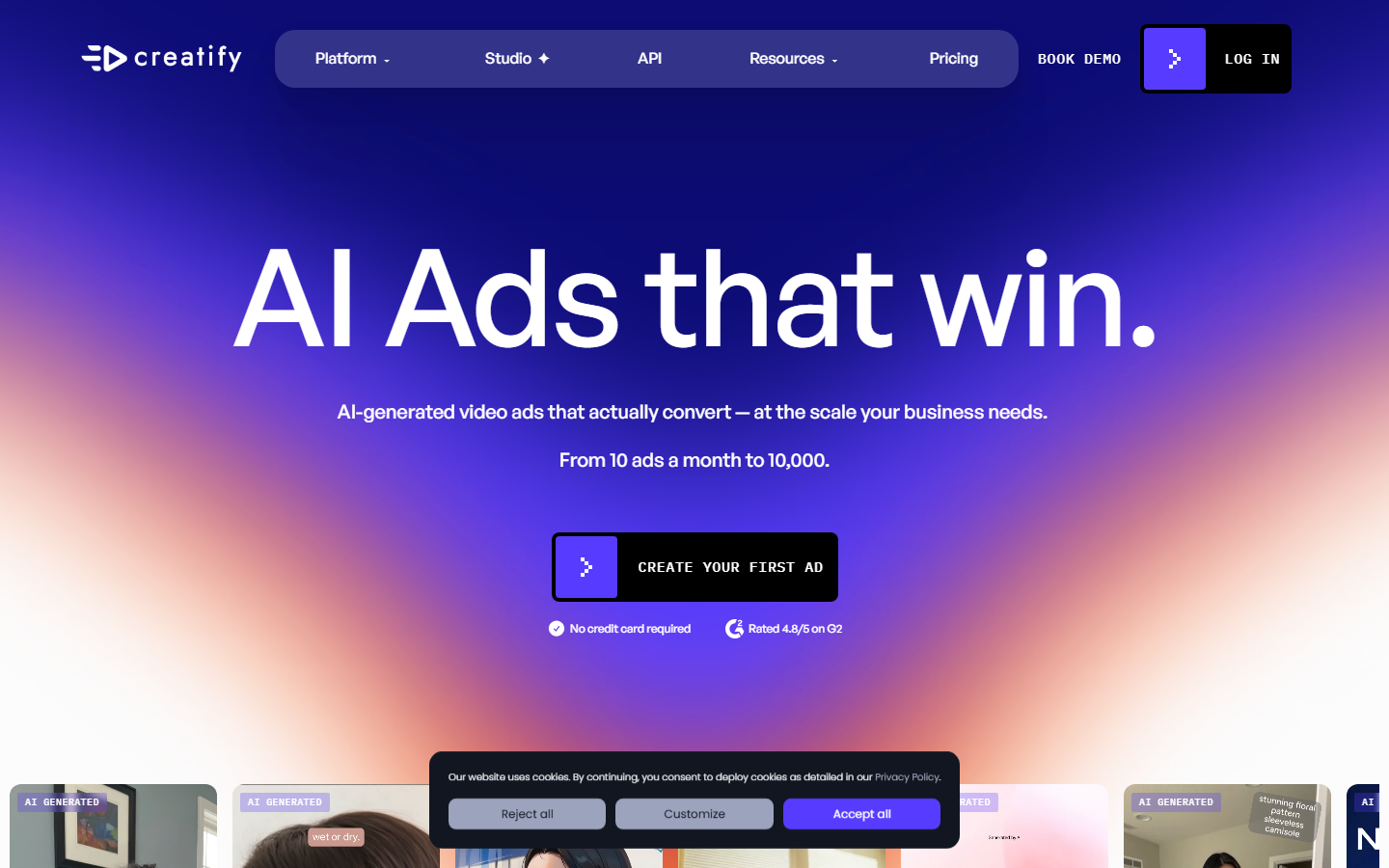
Creatify takes a product URL and returns AI actor video ads, and its own positioning is the volume range: from ten ads a month to ten thousand. For clients living on TikTok and Reels, that range is the point, because the winning format there is a talking person rather than a designed layout.
It also exposes an API, which makes it a component inside a larger pipeline rather than a destination on its own. Check the Creatify pricing tiers against your monthly render count first, since video credits are where AI ad budgets break.
Verdict: best for UGC style video ads produced from existing product pages.
4. Arcads
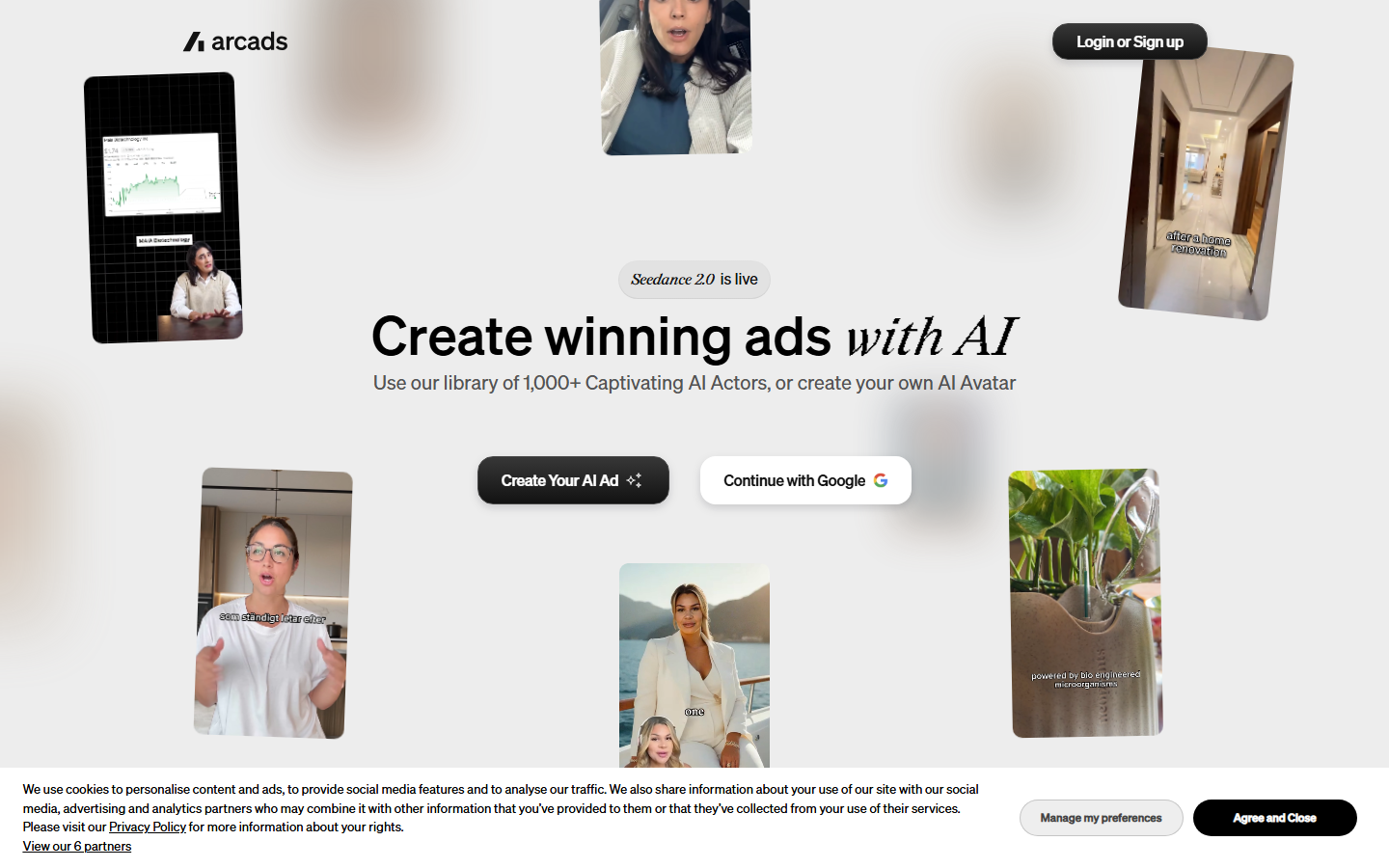
Arcads offers more than 1,000 AI actors plus custom avatars, and the workflow is deliberately narrow: write the script, pick the actor, get the read. That narrowness is a feature for agencies with a copywriter, because the creative decision stays with your team and only the filming is automated.
What it does not do is statics, so Arcads is a component rather than a stack. Read Arcads pricing per finished video, not per generation, since script iterations burn through allowances quickly.
Verdict: best for scripted spokesperson ads where your copy does the work.
5. Omneky
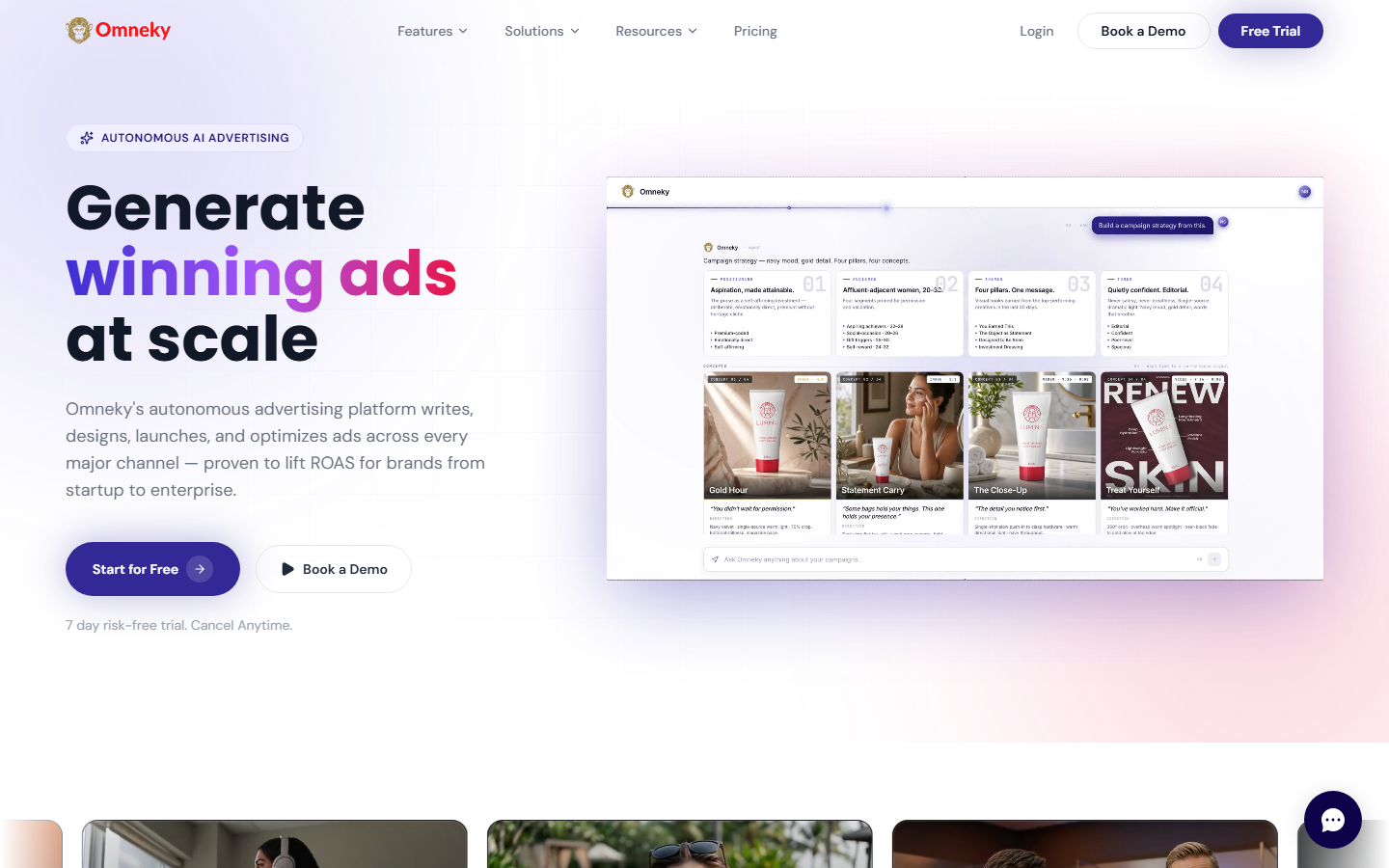
Omneky describes itself as an autonomous advertising platform that writes, designs, launches, and optimises across major channels, with a seven day trial. For agencies the interesting part is that it closes the loop: performance feeds back into what gets generated next, removing the manual step of reading reports and briefing new variants.
That loop only pays off when an account has enough spend to generate signal. On small retainers the system never gets the data it needs, so use it on your largest accounts and handle the rest with cheaper video content automation.
Verdict: best for managed performance accounts with real spend behind them.
6. Smartly
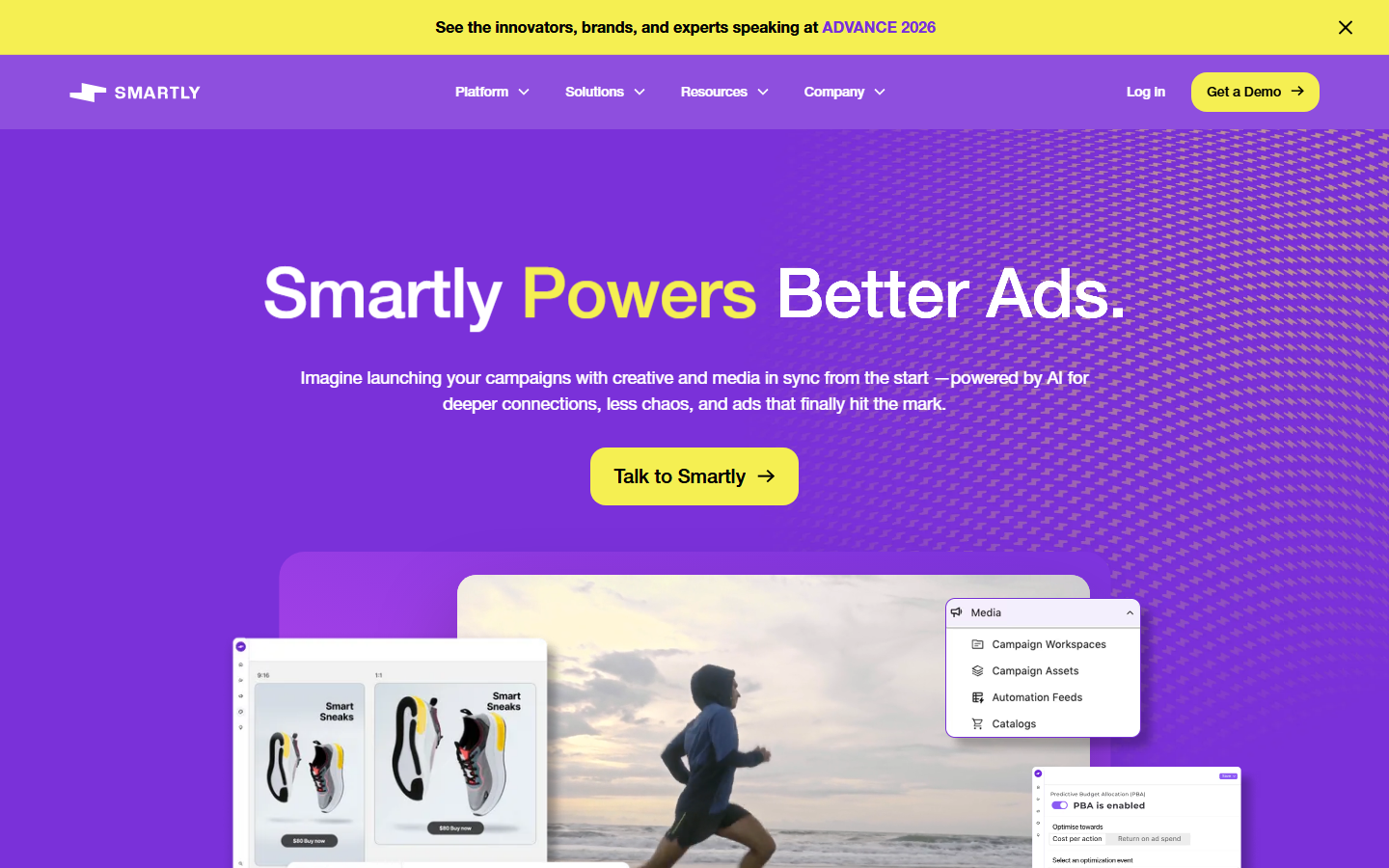
Smartly sits at the enterprise end, combining creative production with media buying so the two stay in sync from the start. Sales is demo led rather than self serve, which tells you the target customer: large in house teams and the agencies that service them under annual contracts.
If you already manage media in Smartly, using its creative side removes a handoff. If you only need creative, the platform is heavier than the job requires, and a focused Facebook ad creative generator moves faster.
Verdict: best for enterprise retainers where creative and media live together.
7. Celtra
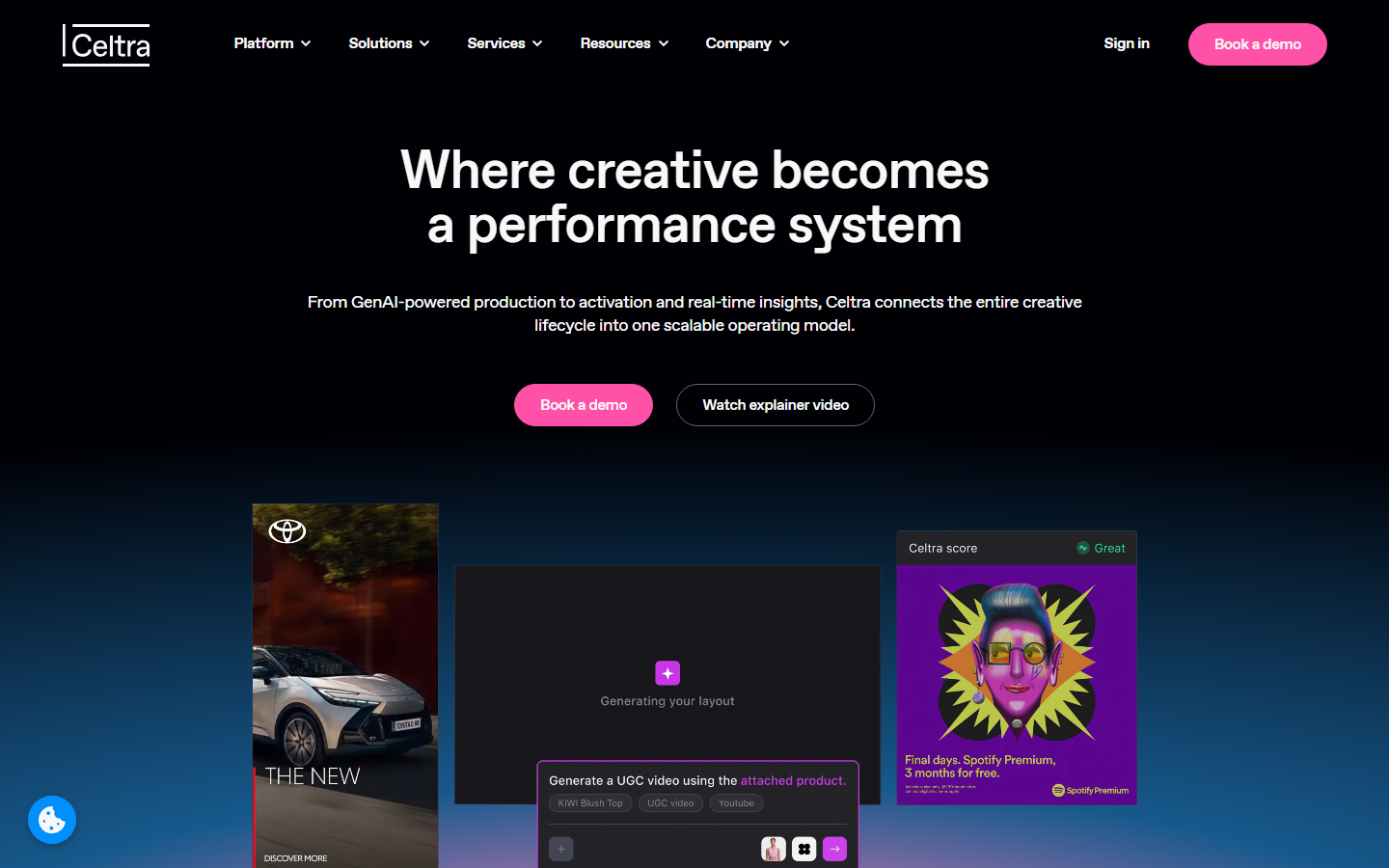
Celtra connects generative production, activation, and real time insights into one operating model, and its strength is versioning. One master concept becomes hundreds of sized, localised variants with brand rules enforced automatically, which is exactly the problem large retail and CPG accounts create.
For a ten person agency this is overbuilt. For a global account spanning dozens of markets, it is the only category of tool that handles the combinatorics without a production team. Compare it against a lighter Instagram ad creative maker if your variant count is in the dozens.
Verdict: best for large asset libraries that need enforced brand rules.
8. The Brief (formerly Creatopy)
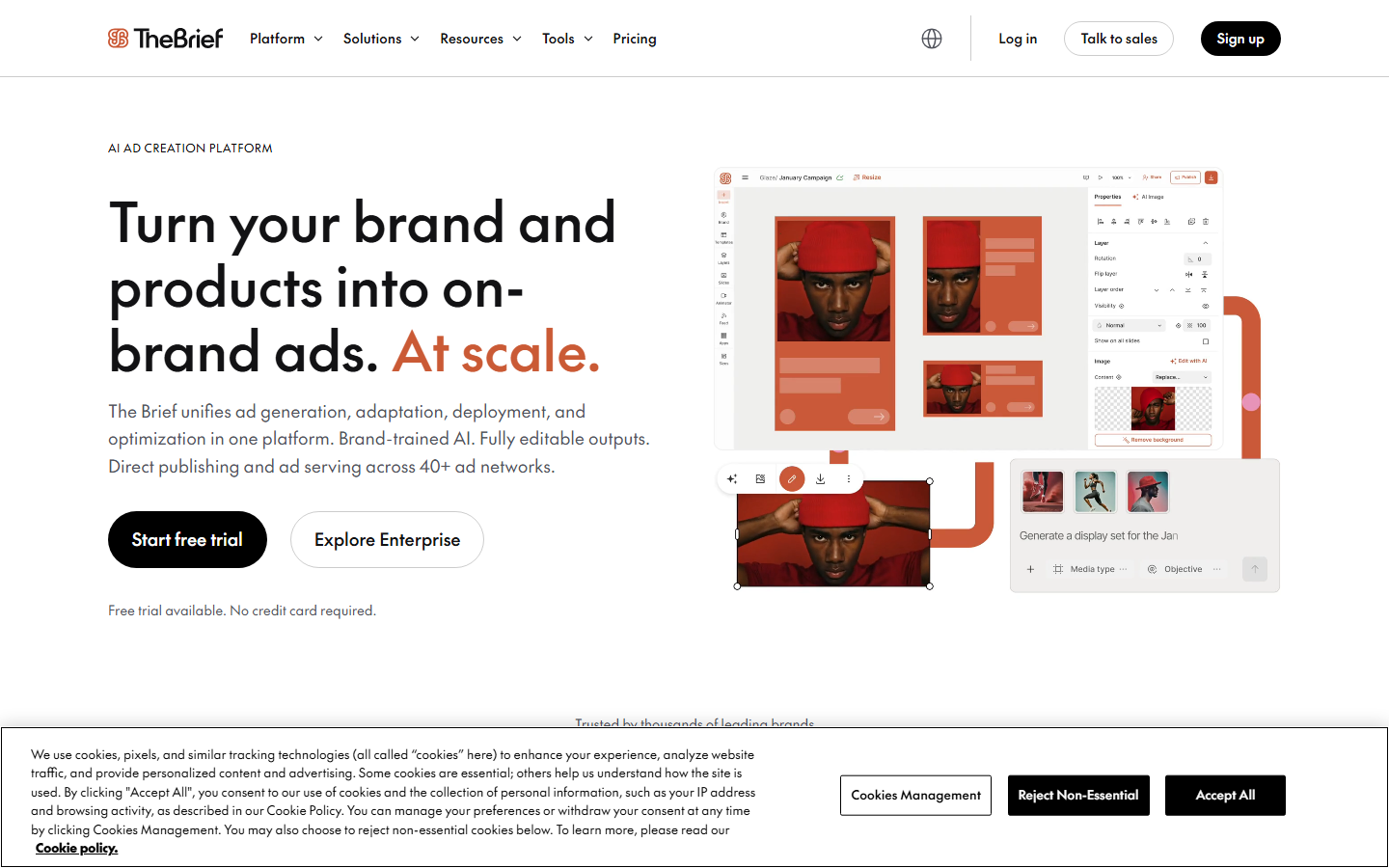
The Brief, previously Creatopy, unifies ad generation, adaptation, deployment, and optimisation, with direct publishing across more than 40 ad networks and fully editable outputs. Its display advertising heritage shows in the resizing engine: one design becomes a complete banner set without a designer touching each size.
The editable output matters more than the generation. When a client rejects a headline, you fix it in place rather than regenerating and hoping. Pair it with a Google ad creative generator to cover display and search in one review cycle.
Verdict: best for display, banner, and multi network ad sets.
Comparison table
| Tool | Primary output | Agency strength | Pricing model | API |
|---|---|---|---|---|
| Wireflow | Image, video, text (any model) | Custom pipeline per client | Self serve, usage based | Yes |
| AdCreative.ai | Statics, video, copy | Scored variants at volume | Self serve subscription | Yes |
| Creatify | AI actor video | UGC style video from a URL | Self serve subscription | Yes |
| Arcads | AI actor video | Scripted spokesperson reads | Self serve subscription | Limited |
| Omneky | Statics, video, copy | Generate, launch, optimise loop | Trial then sales led | Limited |
| Smartly | Statics, video | Creative plus media buying | Sales led | Yes |
| Celtra | Statics, video, display | Versioning and brand rules | Sales led | Yes |
| The Brief | Display, statics, video | Multi network publishing | Self serve and enterprise | Yes |
How agencies should actually choose
Pick by constraint, not by feature list. If the bottleneck is volume, a scoring platform such as AdCreative.ai clears it. If it is video, a UGC tool clears it. If every client wants something structurally different, no fixed template engine will ever clear it, and the honest answer is to build the generator yourself on a canvas. Most agencies learn this after the second tool fails to scale ad creative production past one account type.
The second question is margin. Per seat pricing punishes agencies because every new client needs a seat, while usage based pricing scales with the work. Calculate cost per finished asset at your real monthly volume and compare it to what you bill, which is the same maths behind how much to charge clients for AI ads.
Third, test the failure case, not the demo. Every platform looks good on a clean product photo with a simple headline, so run your hardest client through the trial instead: the awkward logo lockup, the regulated claims, the twelve disclaimers. Run the same test against UGC ad tools for agencies if creator formats are part of the brief.
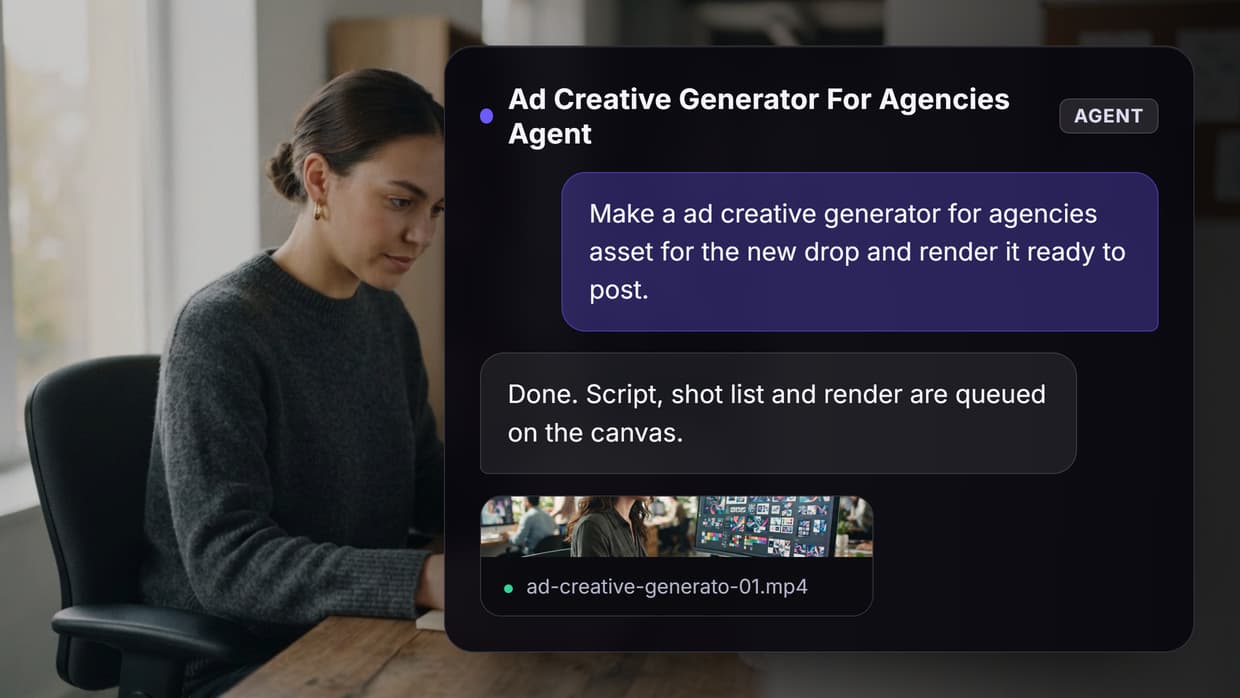
Try it yourself: open the agency ad creative workflow built in Wireflow. It takes a client brief in a text node, renders a square ad creative with a legible headline through Nano Banana Pro, and can be duplicated per client or looped over a client list through the API.
FAQ
What is the best ad creative generator for agencies in 2026? Wireflow ranks first because it chains any image, video, and text model into a custom pipeline rather than a fixed template engine, and every canvas becomes an API endpoint for bulk runs. AdCreative.ai is the strongest single purpose alternative when variant volume is the only goal.
Can one tool handle both static and video ads? Several can. AdCreative.ai, Omneky, Celtra, and The Brief produce statics and video; Creatify and Arcads are video only. A canvas setup covers both by routing one brief into separate image and video nodes.
How do agencies keep client brands separate? Look for per client workspaces or brand kits rather than one shared asset library. Celtra and The Brief enforce brand rules automatically. On a node canvas, separation comes from a distinct saved workflow per client.
What does AI ad creative cost at agency volume? It depends on the pricing model more than the platform. Per seat subscriptions get expensive because every new client needs access, while usage based platforms charge per generation. Calculate cost per finished asset at 300 to 500 assets a month before comparing headline prices.
Do these tools have APIs for bulk generation? Wireflow, AdCreative.ai, Creatify, Smartly, Celtra, and The Brief all offer API access in some form; Arcads and Omneky are more interface driven. Confirm the API covers generation and asset retrieval, not just account management.
Are AI generated ads allowed on Meta and Google? Yes. Both platforms accept AI generated creative and ship their own generation tools. The rules that matter are the normal ones about claims, disclosure, and restricted categories.
Should an agency build its own generator instead of buying one? Building from scratch with raw model APIs rarely pays off; assembling one on a visual canvas does, because you get custom structure without engineering time. Agencies serving one vertical see the fastest return, since the same AI ad generator chain works across every client in that niche.
Conclusion
The right ad creative generator for an agency is the one that matches your bottleneck and your margin, not the one with the longest feature list. AdCreative.ai wins on scored volume, Creatify and Arcads on video, Smartly and Celtra at enterprise scale, The Brief on display. Wireflow ranks first overall because the pipeline stays yours: you decide which models run, in what order, and how the output reaches the client. For the broader stack, compare the field in our roundup of AI solutions for marketing agencies.
Would you rather we just built it?
We get on a call, learn your style, build the workflow, and ship the deliverables on a schedule. You keep the workflow either way.