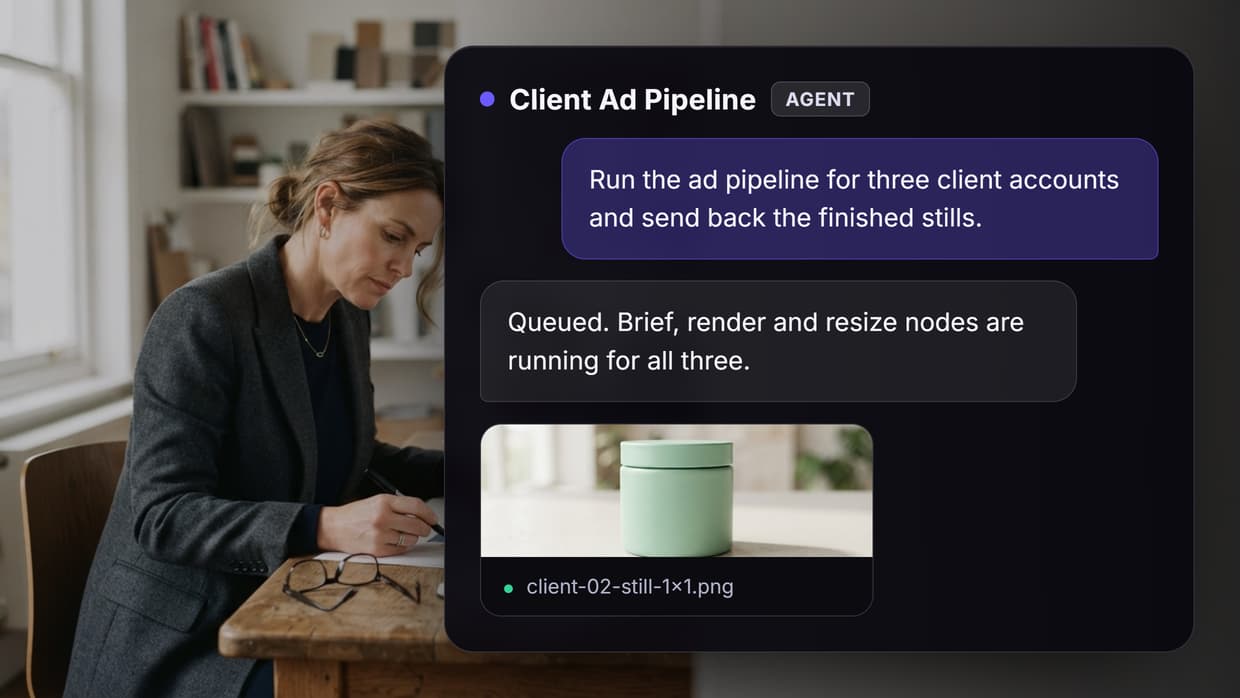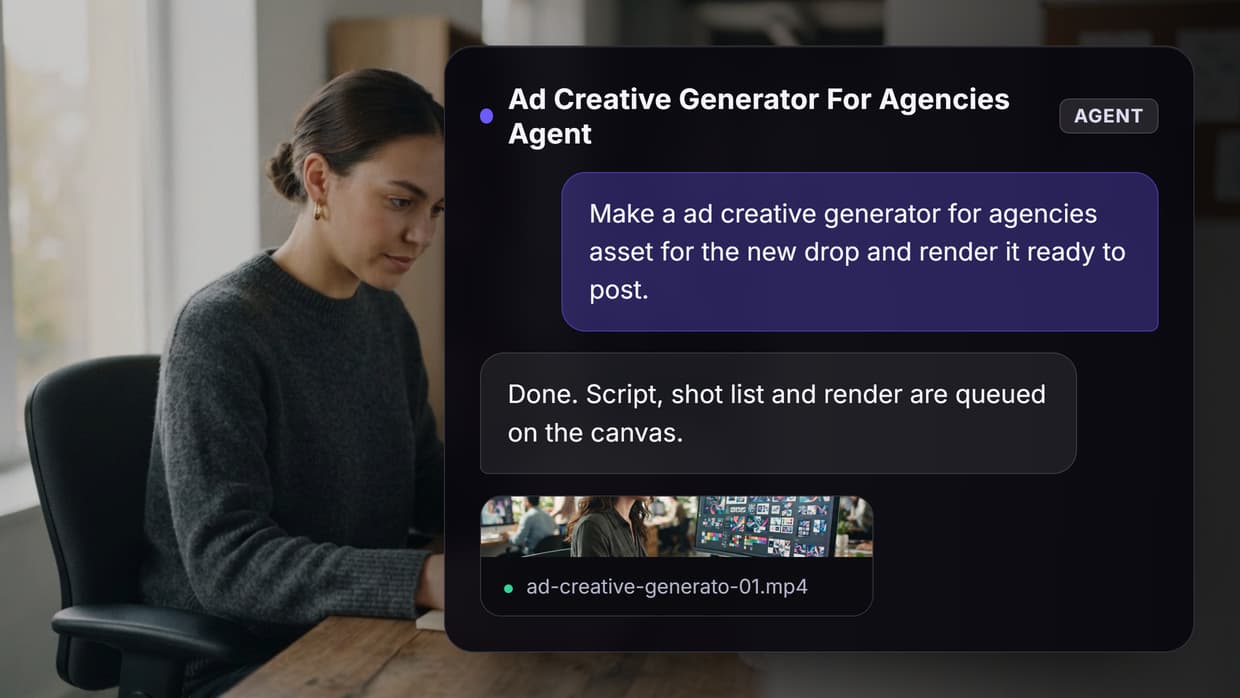
Creative automation software turns one brief into every size, language and placement a campaign needs, without a designer rebuilding each file by hand. This guide ranks eight platforms in 2026, from enterprise creative management suites to generation-first canvases like Wireflow, and shows which type fits template resizing, multi-market governance, or net-new asset creation.
Quick Summary
- Wireflow: Best overall, generates the creative instead of only resizing it
- Celtra: Best for enterprise dynamic creative optimization
- Bannerflow: Best for in-house display and social ad teams
- Storyteq: Best for multi-market brand governance
- Smartly: Best for paid social at media-buying scale
- Rocketium: Best for retail and e-commerce creative operations
- The Brief (formerly Creatopy): Best self-serve option for small teams
- Canva: Best for design-led marketing teams
How These Tools Were Ranked
Most creative automation software does one of two jobs. The older category reflows a layered master file you already designed into every required size, language and channel version. The newer category generates the asset itself, then versions it. Buying the wrong one leaves you with a fast resizer and the same six week wait for the original concept, so every entry below names its category first when shortlisting creative workflow automation platforms.
Four criteria set the order: whether the tool produces net-new creative or only recomposes assets, how many variants come out of one brief, whether there is a real API for scheduled runs, and what happens when the brand changes mid-campaign. Pricing transparency breaks ties. Teams that scale ad creative production across dozens of placements need all four.
1. Wireflow: Best Overall
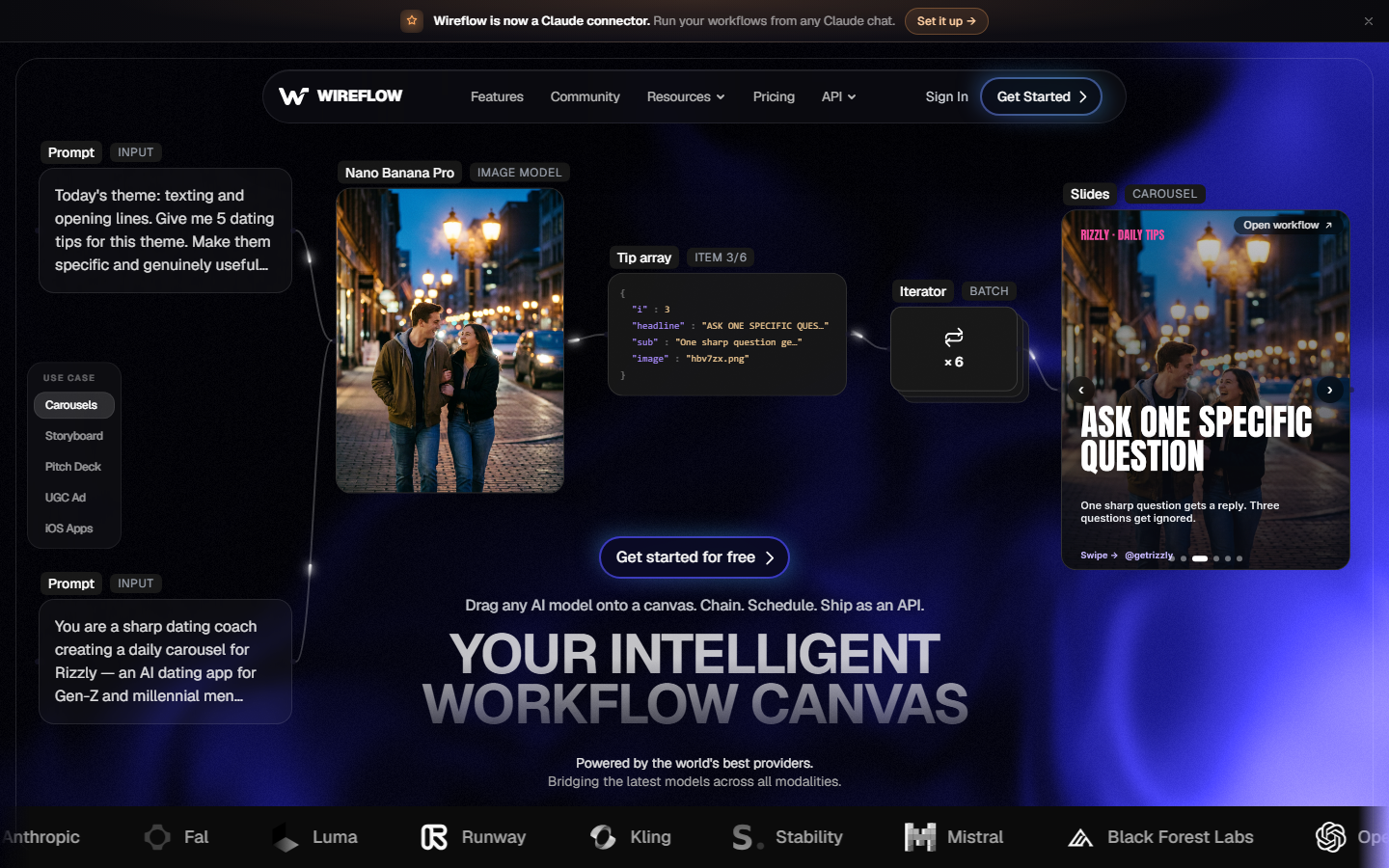
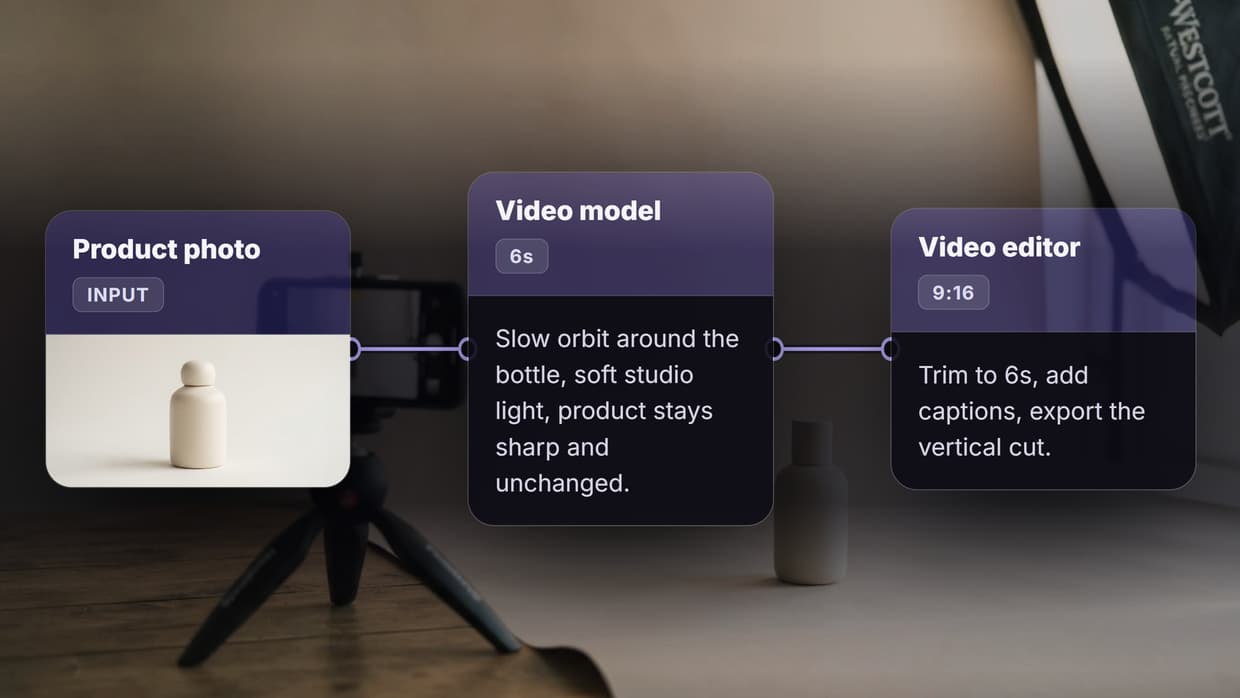
Wireflow is a node canvas where a brief becomes a finished master asset and every placement variant from the same graph. You drag model nodes on, wire them together, and rerun the graph per campaign. Because generation sits inside the pipeline rather than upstream of it, there is no layered PSD to prepare first.
The canvas hosts more than 70 models across image, video, text and audio, so one graph can write the headline, generate the hero image, animate it, and output a vertical crop. Compute is hosted, which suits teams that want AI creative workflows without standing up GPUs. Every published workflow is also a REST endpoint and an MCP tool, so a script or an agent can loop one call over a product feed for batch image generation via API. Billing is per generation, not per seat.
Verdict: strongest pick when creative has to be made rather than reformatted, and when the pipeline must be callable from code. It is not a digital asset manager and will not route approvals.
2. Celtra: Best for Enterprise Dynamic Creative Optimization
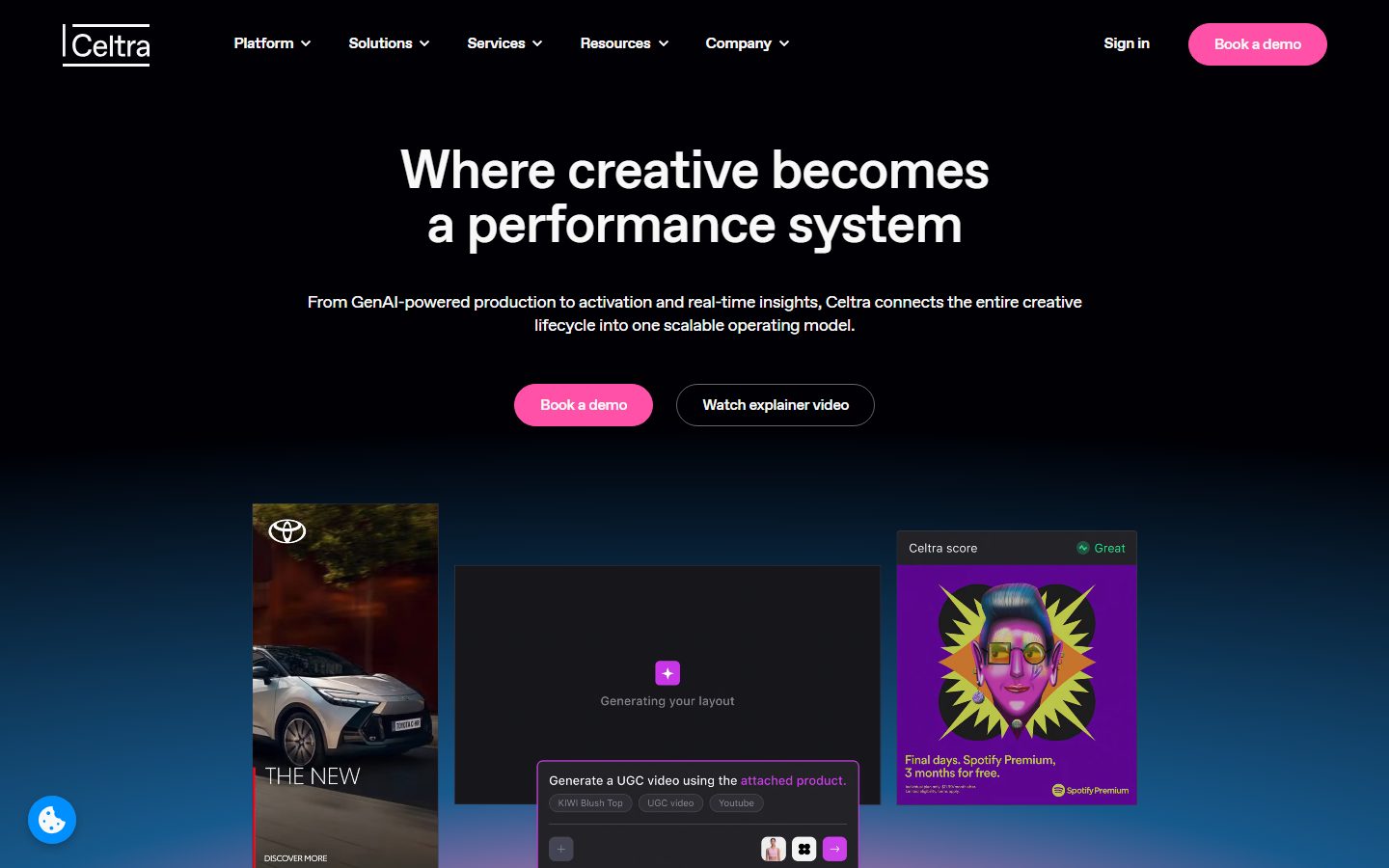
Celtra is the reference implementation of the creative management platform category. One master design becomes thousands of on-brand versions across formats, markets and channels, with dynamic creative optimization deciding which version serves to which audience in real time.
The tradeoff is scope. Celtra recomposes creative you already designed rather than generating concepts, and pricing is quote-only. For teams whose real constraint is producing enough distinct concepts for meaningful ad creative testing at scale, a DCO engine multiplies variants of an idea that still has to come from somewhere else.
Verdict: best in class for large-scale DCO and rich media. Overkill below several hundred ad versions per campaign.
3. Bannerflow: Best for In-House Display and Social Teams
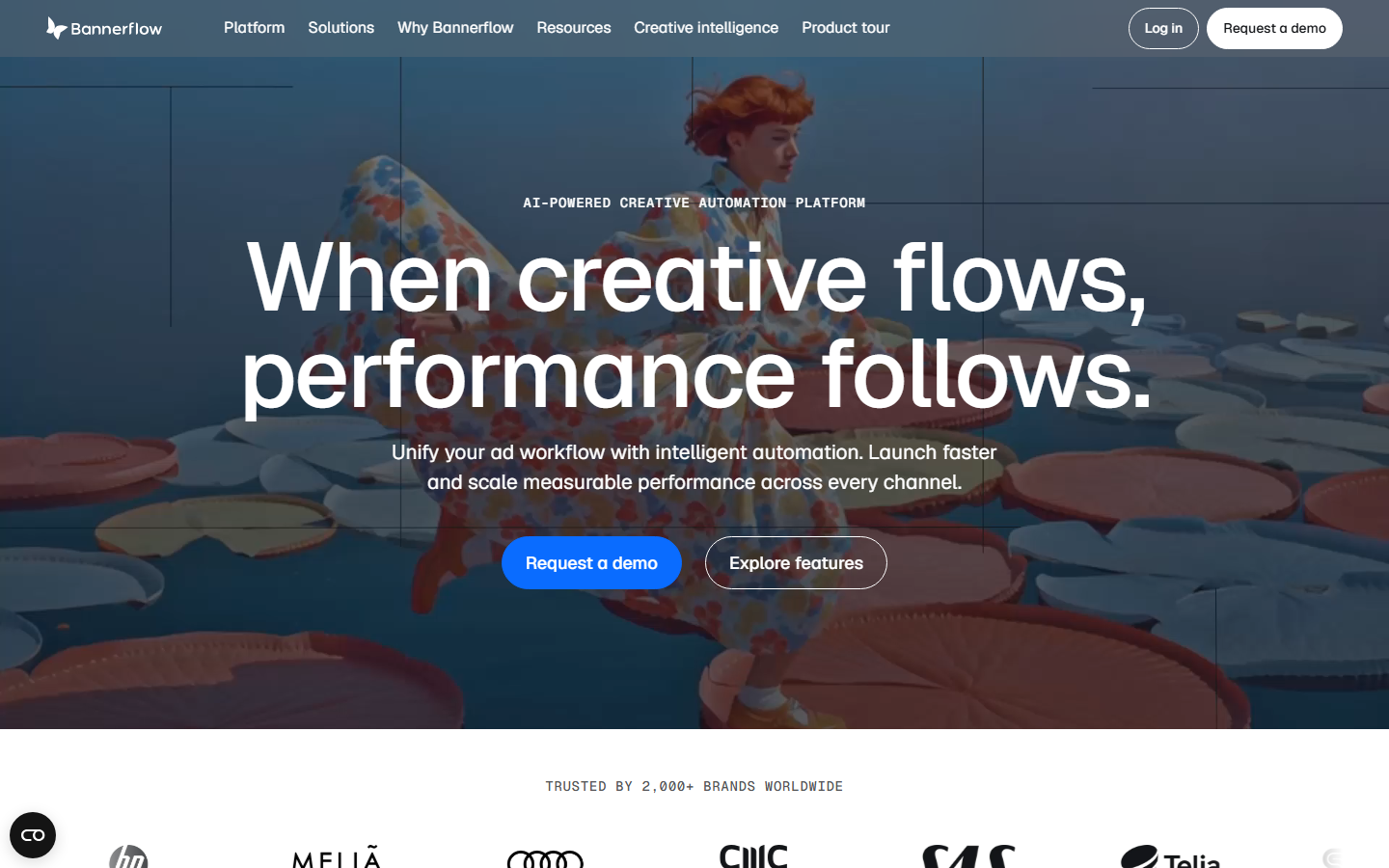
Bannerflow is built for in-house teams that took display production off agencies. It connects to more than 100 advertising platforms, handles translation inside the same editor, and keeps a live link between the published ad and its master, so a mid-flight copy fix propagates without a re-export cycle.
That live-update model beats the export-and-upload loop many teams still run, but it remains a template engine, so it sits alongside whatever produces the original artwork. Teams weighing the performance-marketing side of this category will find a different shortlist in our guide to the best ad creative automation tools.
Verdict: the strongest option for an in-house team owning display and social end to end. Pricing on request.
4. Storyteq: Best for Multi-Market Brand Governance
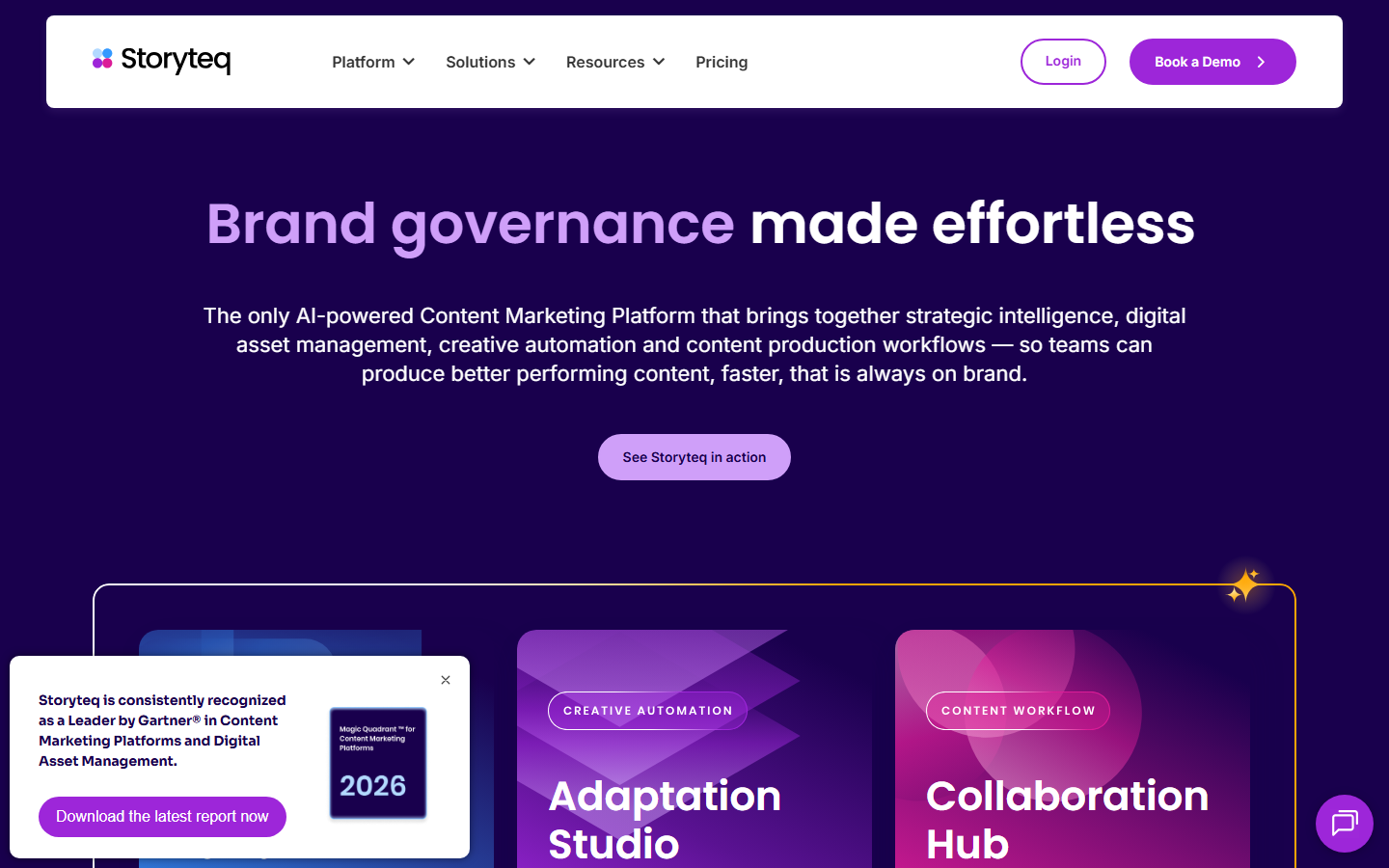
Storyteq is a digital asset management platform with creative automation layered on top, covering briefing, production, distribution and campaign analytics in one system. Brands running content across ten or more markets with formal approval chains value that breadth more than raw generation speed.
Entry pricing starts around 30,000 euros per year, which names the intended buyer. If nobody can find the approved master and three regions shipped an outdated logo, this is the right product. If you need twenty new concepts by Friday, a system built to automate brand content creation moves faster.
Verdict: buy it for governance and asset lifecycle, not for creative volume.
5. Smartly: Best for Paid Social at Media-Buying Scale
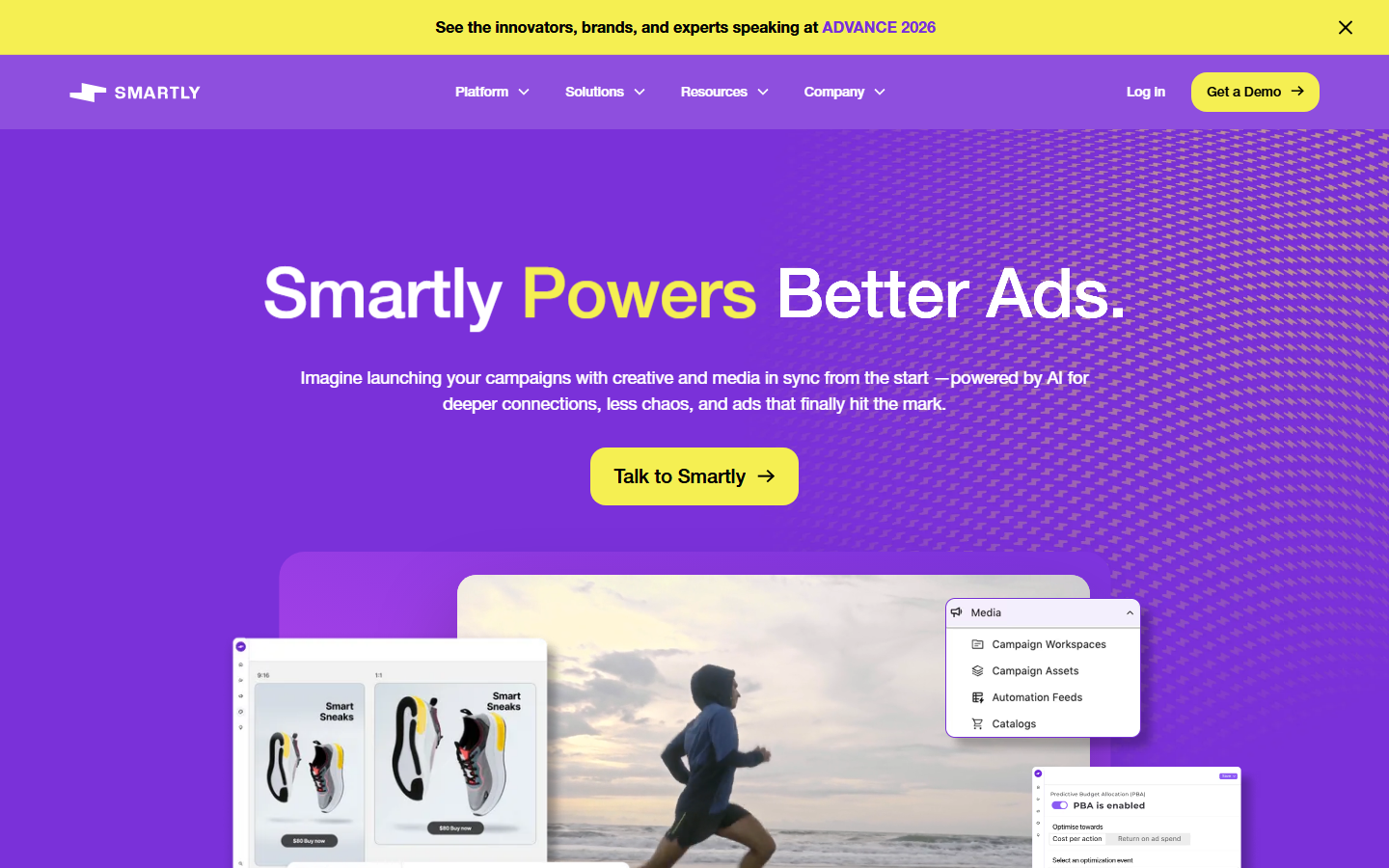
Smartly merges creative automation with media buying. Production, budget allocation and campaign management run in one platform, so the loop from performance data back into the next creative version closes inside one tool rather than across three.
It is built for advertisers spending at a level where that integration pays for itself, and pricing is enterprise-only. Feed-driven catalog campaigns are its strongest use case. Smaller teams running the same playbook on one channel get further with a focused tool from our roundup of Facebook ad creative generators.
Verdict: the pick when creative and media buying belong in one system and spend justifies enterprise pricing.
6. Rocketium: Best for Retail and E-Commerce Creative Operations
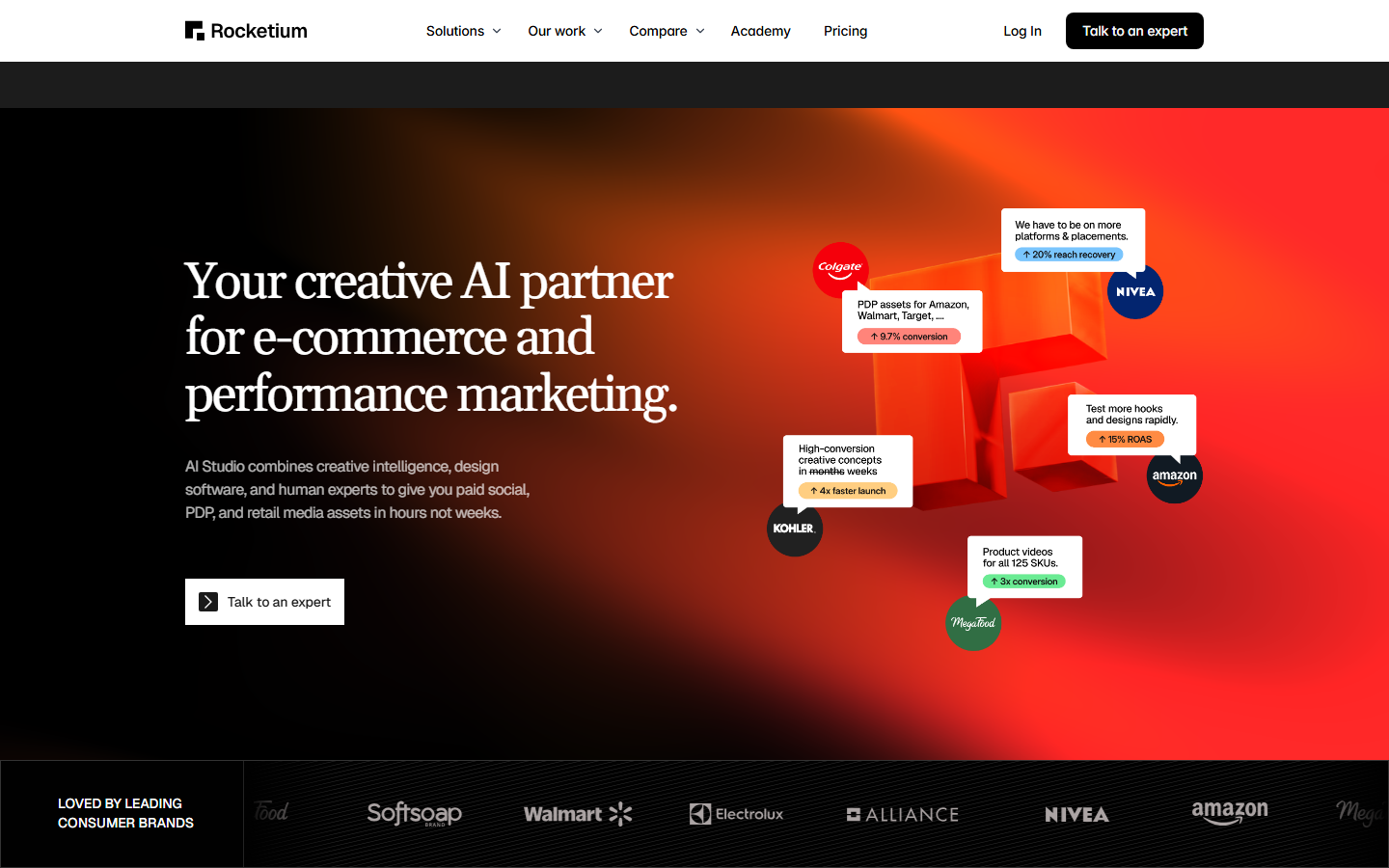
Rocketium targets consumer brands and retailers producing product page assets, retail media banners and paid social creative for large SKU counts on a repeating calendar. It pairs software with managed creative services, so delivery looks closer to a partner than a tool.
Its audit and creative intelligence features score existing assets and flag what to change, which beats generic analytics when the catalog turns over seasonally. The centre of gravity is statics, so brands needing per-SKU motion should also look at product video generators.
Verdict: strong for retail creative ops at catalog scale, less relevant at a small SKU count.
7. The Brief (formerly Creatopy): Best Self-Serve Option
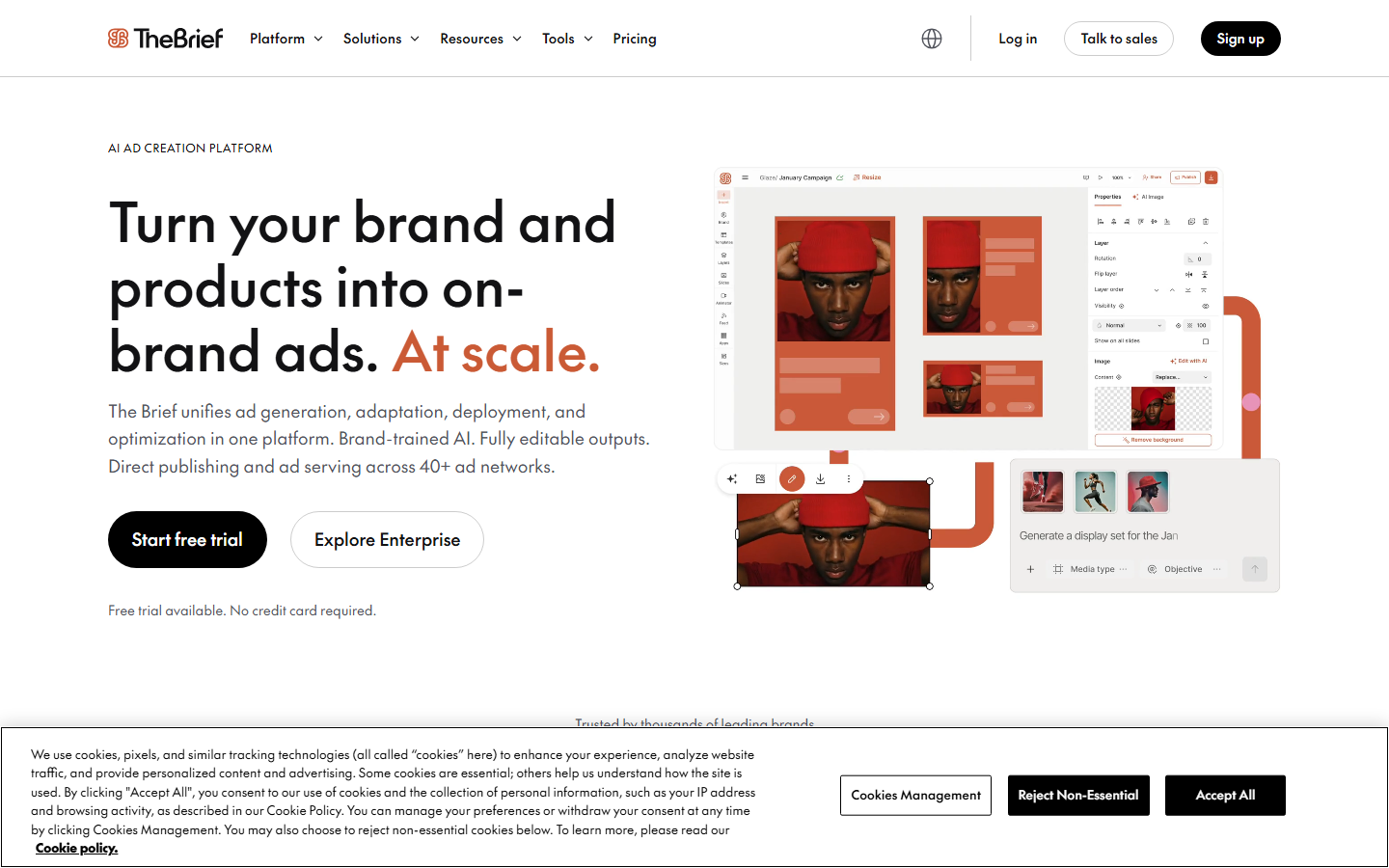
The Brief, which rebranded from Creatopy, is one of the few platforms here with published self-serve pricing, starting around 29 dollars per month. It solves the display problem directly: one concept, thirty sizes, animated and static, locked to a brand kit, with an animation timeline offering more control than most template tools.
For a small team that needs banner sets without a procurement cycle, it is the shortest path here. It recomposes rather than generates, so teams also needing net-new statics run it next to a static ad creative generator.
Verdict: best value for small teams producing display banner sets. Start here before evaluating anything quote-only.
8. Canva: Best for Design-Led Marketing Teams
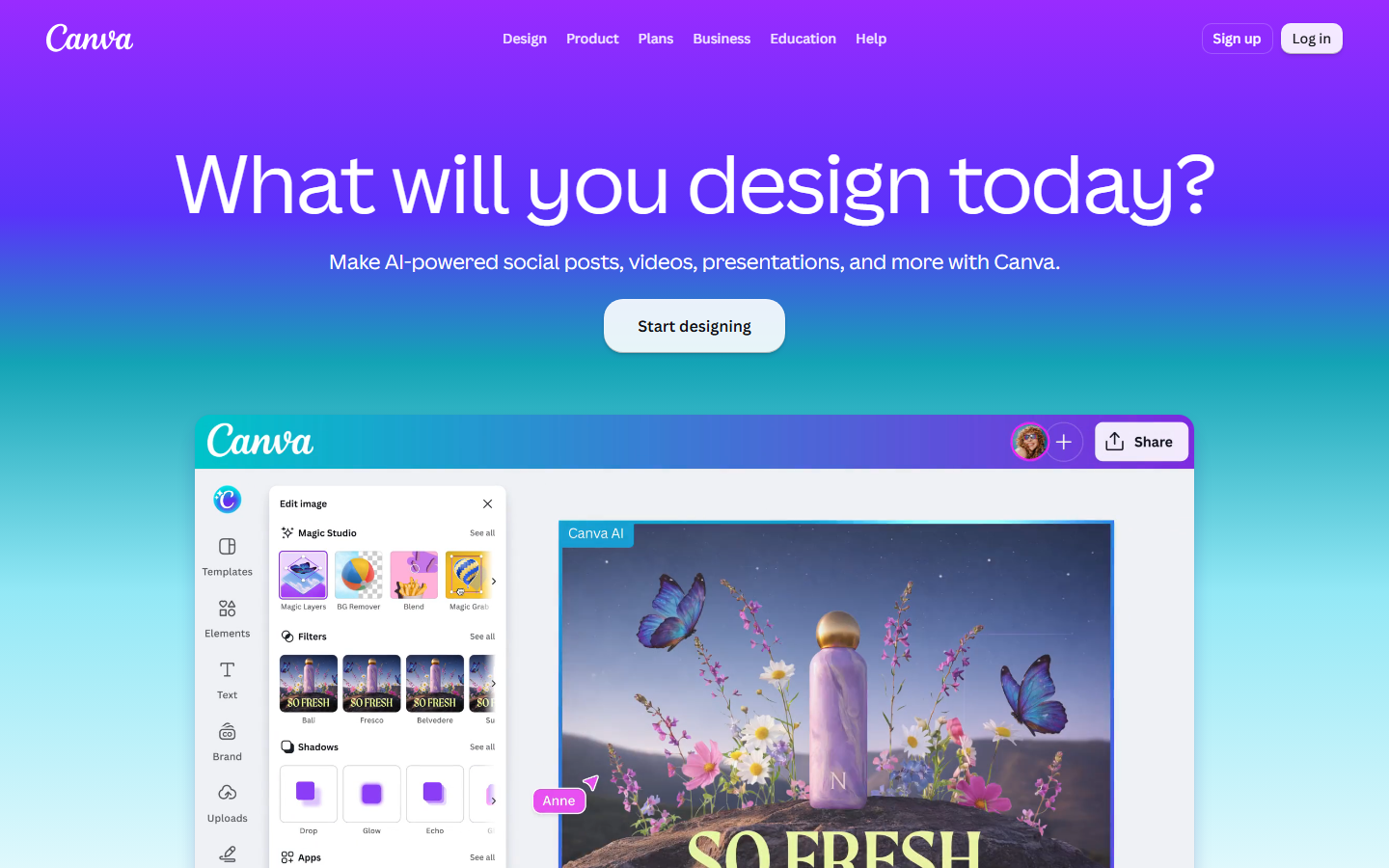
Canva earns its place through adoption. Bulk Create pulls rows from a spreadsheet into a template and outputs one asset per row, covering routine localization, offer swaps and seasonal variants with no new tooling and no training.
Brand Kits enforce fonts, colors and logo usage, and Magic Studio adds generation on top of the editor most marketing teams already use daily. The ceiling is low for high-volume programmatic work, so teams that outgrow Bulk Create usually start comparing Canva AI alternatives rather than upgrading within it.
Verdict: the lowest-friction entry point, and often enough below a few hundred variants per month.
Comparison Table
| Tool | Category | Generates new creative | API / programmatic | Published pricing |
|---|---|---|---|---|
| Wireflow | Generation canvas | Yes | REST endpoint and MCP tool | Per generation |
| Celtra | Creative management platform | No | Yes, enterprise | On request |
| Bannerflow | Creative management platform | No | Yes, 100+ ad platforms | On request |
| Storyteq | DAM plus automation | Partial | Yes, enterprise | From ~30,000 EUR/year |
| Smartly | Creative plus media buying | Partial | Yes, enterprise | On request |
| Rocketium | Creative ops plus services | Partial | Yes | On request |
| The Brief | Template engine | No | Limited | From ~$29/month |
| Canva | Design editor | Yes, via Magic Studio | Limited | From ~$15/user/month |
How to Choose
Name the bottleneck first. If you already have approved master artwork and the pain is producing 400 sized versions across six markets, buy a creative management platform. Celtra, Bannerflow and Storyteq all solve that, and the choice comes down to whether you need DCO, in-house production ownership, or asset governance. For most mid-market advertisers a focused ad creative automation setup covers it.
If the bottleneck is upstream, that the concepts themselves take weeks, template automation will not help, because it multiplies work that does not exist yet. That is where a generation-first canvas changes the problem, especially when the pipeline must run unattended against a product feed through AI pipeline automation. The two approaches are complementary more often than competing, and many teams run one of each.
Try it yourself: open the Creative Brief to Ad Variants workflow in Wireflow. One brief node feeds two image model nodes, producing a master ad creative and a resized placement variant from the same graph, with outputs already generated.
Frequently Asked Questions
What is creative automation software? It produces, versions and distributes marketing creative without a person rebuilding each file. Older platforms reflow a layered master design into every required size, language and channel. Newer platforms generate the asset from a brief, then version it. Some do both.
What is the difference between creative automation and a creative management platform? Creative management platform is the enterprise term for a subset: template-driven production, versioning and ad serving, usually with dynamic creative optimization attached. Creative automation is the broader label and now includes generation-first tools that never touch a layered template.
Can creative automation software generate net-new images and video? Some can. Celtra, Bannerflow and The Brief recompose assets you supply. Canva and Wireflow generate net-new assets, and a canvas can chain models so a text brief becomes a headline, a hero image and an animated cut in one run. Reading how to build creative workflow automations shows quickly whether that fits your process.
How much does creative automation software cost in 2026? The enterprise tier is almost entirely quote-only. Storyteq publishes an entry point around 30,000 euros per year, The Brief starts near 29 dollars per month, and per-seat HTML5 builders run roughly 110 to 400 dollars per user per month. Usage-based tools charge per generation instead, with current rates on the Wireflow pricing page.
Do I need an API, or is the app enough? If creative has to be produced on a trigger, a new product going live or a nightly feed refresh, you need an API. If a person always starts the job, the app is enough. Agencies running the same pipeline for many clients almost always want the API, a common requirement in AI tools for creative agencies.
Does creative automation hurt brand consistency? It usually improves it. Locking fonts, colors and logo placement into the automated step removes the manual variation that causes drift. The risk is sameness, not inconsistency, which is why teams pair automation with a rotation of distinct concepts, as covered in our guide to Instagram ad creative makers.
Can an AI agent run these workflows? On most enterprise platforms, no. Where a workflow is exposed as an MCP tool or a REST endpoint, an agent can trigger it and read the output, the basis of the AI creative agent pattern now appearing in production marketing stacks.
Conclusion
"Creative automation software" names two different products in 2026. Template engines like Celtra, Bannerflow, Storyteq and The Brief scale creative you have already made, and they are good at it. Generation-first canvases, Wireflow among them, remove the step before that by producing the asset from a brief. Match the tool to whichever half of the process is slowing you down, confirm it exposes an API if anything must run unattended, and check the pricing model against how your team grows, since per-seat and per-generation billing diverge fast.
Would you rather we just built it?
We get on a call, learn your style, build the workflow, and ship the deliverables on a schedule. You keep the workflow either way.