 Andrew Adams · Co-Founder & Operations at Wireflow ·
 AI Tools for Creative Agencies
Most AI tool roundups hand you a dozen separate apps to stitch together per client.
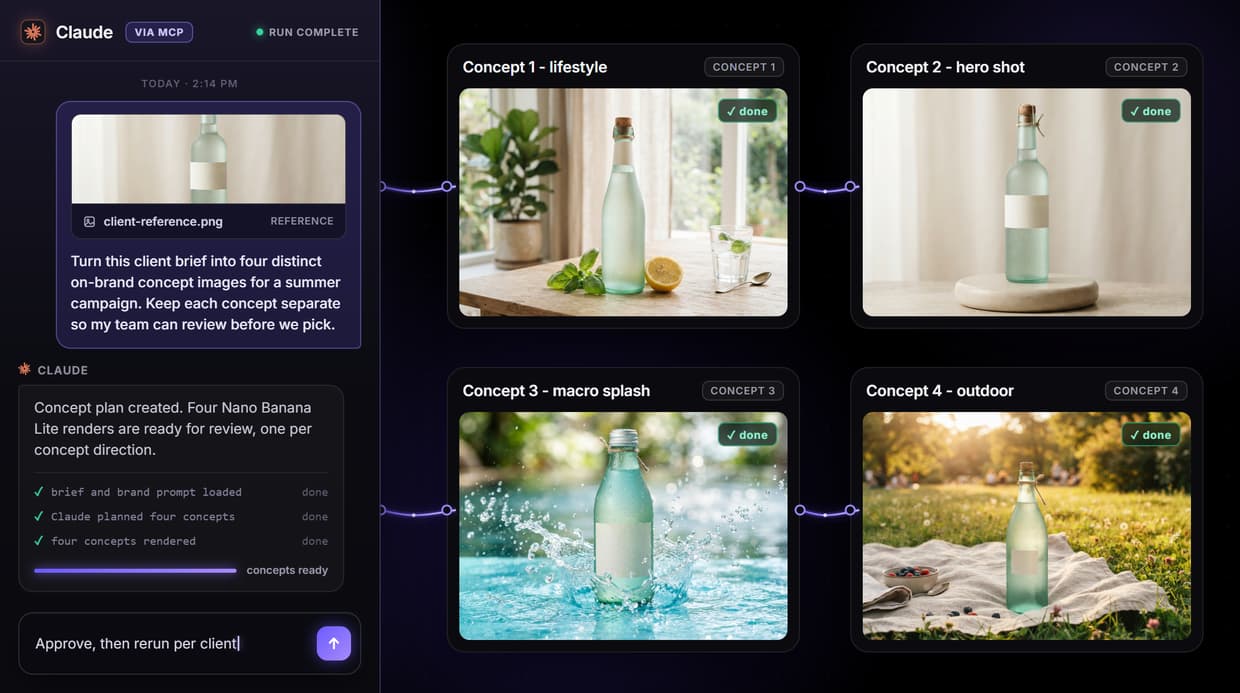
Wireflow is one node canvas where the whole production step lives: a brief goes in, Claude plans the concepts, and image models render them, all in a graph you build once and rerun for every account.
Free to build · no credit card · See how it works ↓
How to Use AI Tools for Creative Agencies
Steps to get you started in Wireflow.
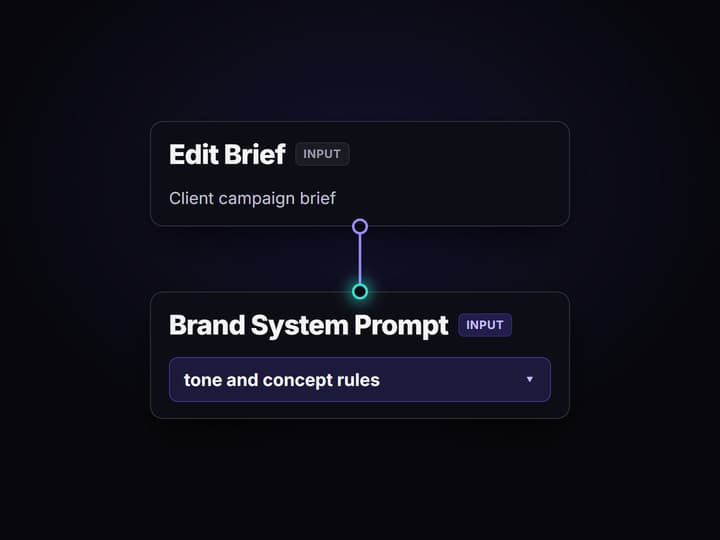
Load the brief and brand prompt
Open the flow and edit the Edit Brief input with the client ask. Keep or adjust the Brand System Prompt to set tone, audience, and concept rules.
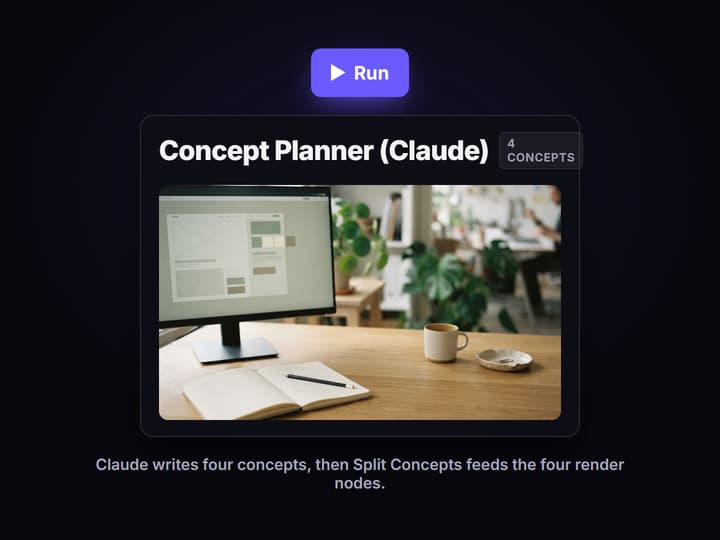
Run concept planning
Run the nodes. Claude writes four distinct concepts, Split Concepts separates them, and the four selectors feed the Nano Banana Lite render nodes.
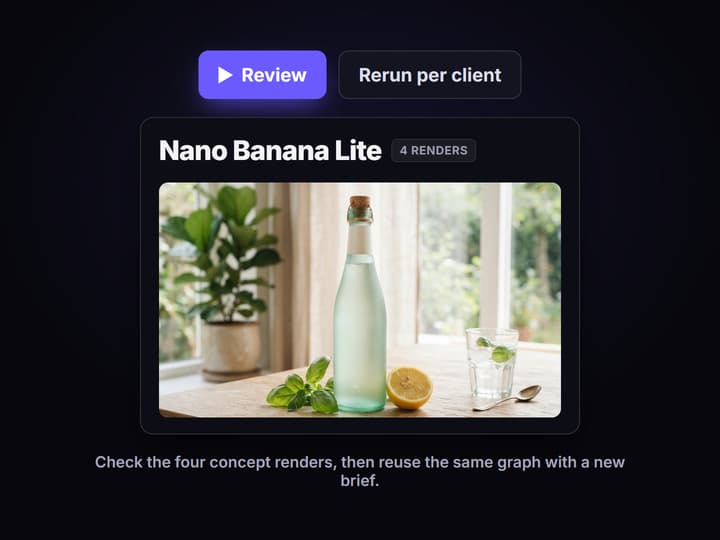
Review and rerun per client
Check the four concept renders, re-run any single one that misses, then reuse the same graph with a new brief for the next account.
Why agencies need a pipeline, not a tool list
Search for AI tools for creative agencies and you get roundups: a dozen apps for ad generation, copy, analytics, and design, each with its own login and export step. That stack works once, but agencies do not do work once. The same brand needs the next campaign, and the next client needs the same process with different inputs. The cost is not the tools, it is re-stitching them by hand every time.
Wireflow answers that with a graph instead of a menu. The workflow on this page is a real, published pipeline: an Edit Brief input, a Brand System Prompt, a Claude concept planner on the Run any LLM node, a Split Concepts step, and four Nano Banana Lite render nodes. It is the same visible-control idea behind our AI solutions for marketing agencies: the agent can operate the flow, but the production logic stays open and reusable.
What the live flow proves
Brief stays editable
The Edit Brief text node is the single creative input, so the next client is a new brief, not a rebuilt graph.
Brand direction is explicit
The Brand System Prompt is its own input, not buried in a model node, so tone and concept rules can be reviewed.
Claude plans concepts
Run any LLM turns the brief and brand prompt into four distinct concept directions before any image renders.
Concepts split into items
Split Concepts and four selectors keep each idea separate, which makes a one-concept revision cheap.
Four renders, reviewable
Each concept feeds its own Nano Banana Lite node, producing four image outputs confirmed by the executed flow.
Callable by agents
The published flow is an MCP tool and REST endpoint, so an agent can send a brief and get concept URLs back.
Build once, rerun per client
The advantage of a graph is that inputs change while the process holds. Swap the brief and the brand prompt, run the non-video nodes, and you get a fresh concept set for a different account without rebuilding anything. Because each concept renders on its own node, a bad frame is a single re-run, not a scrapped batch. That is the difference between a tool you operate and a pipeline your studio owns.
It also scales past one brief. A published workflow is callable through the hosted MCP and API layer, so an agent or a scheduled job can loop the same flow over a list of briefs. For agencies that live in ad and short-form work, it sits alongside our AI video ad creator for agencies and AI UGC ads for agencies: enough automation to scale, enough structure to review.
When Wireflow is not the right tool
Wireflow is the production layer, not the strategy brain. Claude can plan concepts inside this flow, but positioning, offer, and taste still come from your team or the agent you bring. It is also not a design-suite replacement: you get rendered assets and a callable workflow, not editable vector files or a full brand system, and there is no real-time multiplayer co-editing.
If the deliverable is a single visual with fixed art direction, a direct image tool may be faster than wiring a graph. Wireflow earns its place when the same creative pattern will run again, across clients or across a feed. If that is your world, see how agencies use it on the Wireflow for agencies page, then open the flow above and inspect the exact graph.
More Than Just AI Tools for Creative Agencies
One pipeline, every client
Build the brief to concept graph once, then rerun it per account. Wireflow for agencies is a process you own, not a tool you re-stitch.
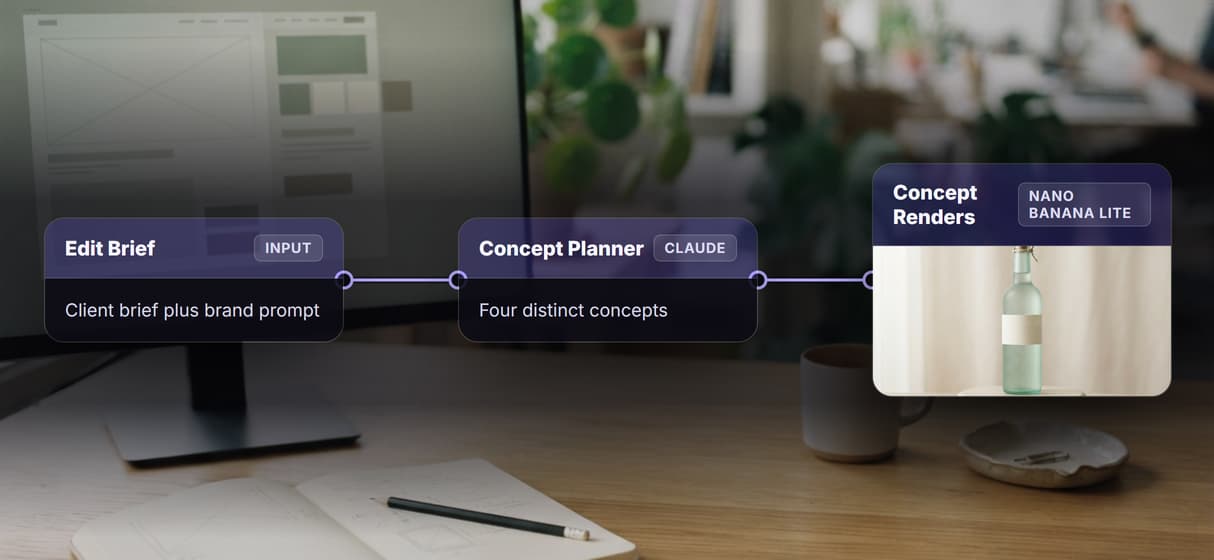
Concepts planned before pixels
A Run any LLM node turns the brief into four distinct concept directions before any image model spends a credit, so bad ideas get caught early.
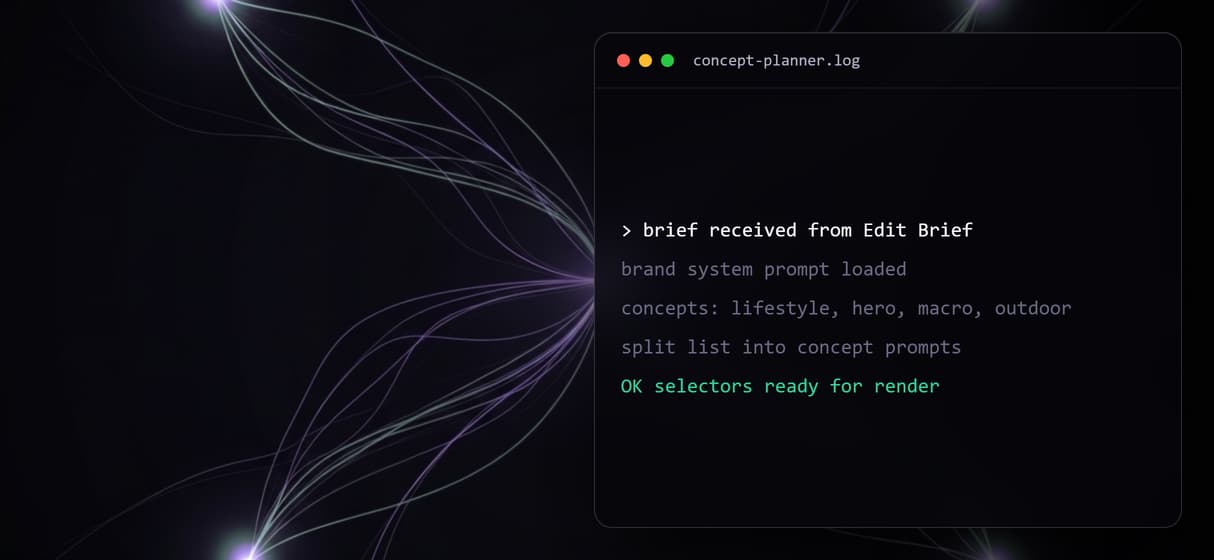
Every render stays reviewable
Split Concepts and four separate Nano Banana Lite nodes keep each idea editable, so an AI UGC ad set gets one-frame fixes.
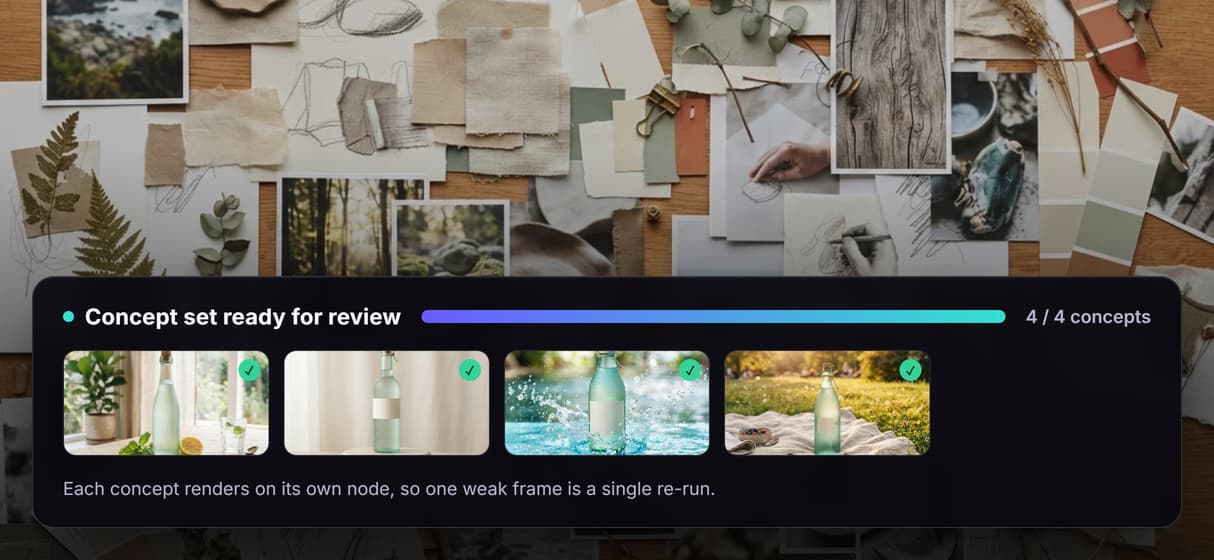
Agents can run the flow
The published workflow is an MCP tool and REST endpoint, so an agent sends the brief and gets concept URLs back after each run, no clicks needed.
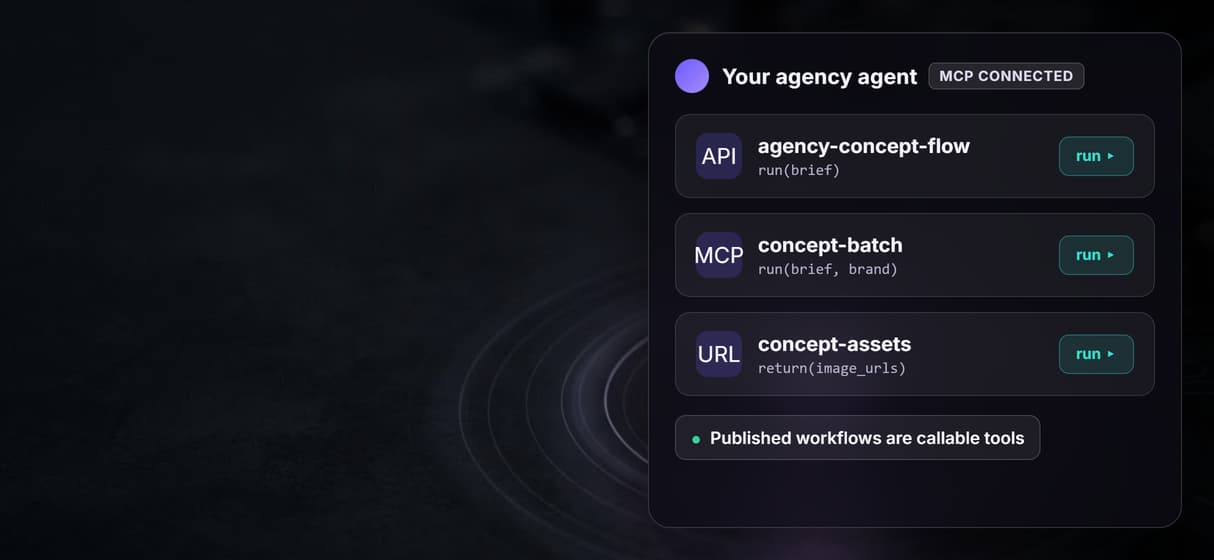
Swap in any of 90+ models
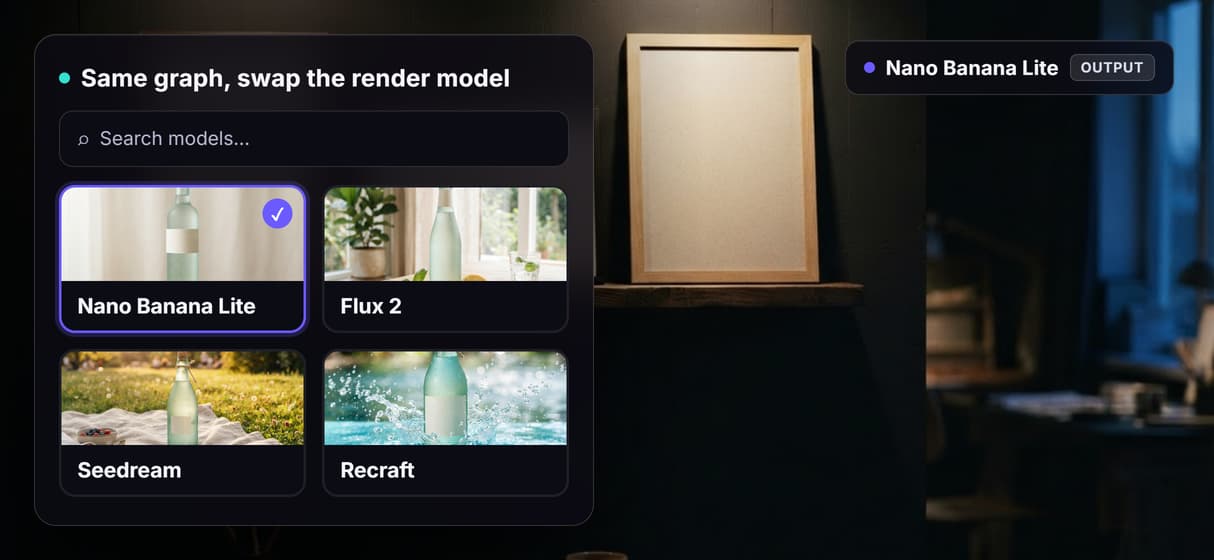
Keep the graph and change the render node to Flux or Seedream, or add an AI video ad step from over 90 models.
AI Models Available
Automate Any Workflow
Included in Every Plan
FAQs
They are AI systems agencies use to produce and iterate creative work faster, from ad images to copy to analysis. Most roundups list separate apps, but the higher-leverage version is one reproducible pipeline, like the node graph on this page, that runs the same production step again for each client.
Discover related AI tools
- AI Pipeline Automation
- AI Workflow Templates
- AI Video Pipeline: Build One on a Node Canvas
- Bulk AI Content Generation
- AI Model Chaining
- AI Asset Pipeline
- AI Workflow Builder
- AI Content Generation API
- AI Workflow API
- AI Orchestration API
- Headless AI Workflow Platform
- Krea AI API Alternative: Image and Video From One REST Endpoint
More From Wireflow
Written by
Andrew Adams · Co-Founder & Operations at Wireflow
Runs client operations and content strategy at Wireflow. Works directly with creative teams and agencies to build production AI workflows.
Build your agency's production pipeline
The flow on this page is published and already executed through its concept renders. Open it to inspect the exact graph, then rerun it with your own brief for the next client.