Best Facebook Ad Creative Generators in 2026

In this article▾
- Quick summary
- How these Facebook ad creative generators were ranked
- 1. Wireflow: Best Overall
- 2. AdCreative.ai: Best for Static Feed Ads
- 3. Creatify: Best for Video Ads
- 4. Omneky: Best for Always-On Campaigns
- 5. Pencil: Best for Performance Prediction
- 6. Predis.ai: Best for Small Teams
- 7. Creatopy: Best for Multi-Placement Resizing
- 8. Canva: Best Free Option
- Comparison table
- What Facebook placements actually demand from your creative
- Frequently asked questions
- Conclusion
The best Facebook ad creative generators in 2026 split into three groups: node canvases that chain several models into one repeatable ad pipeline, single-purpose static ad builders, and AI video tools that produce Reels and Stories footage. This guide ranks eight of them on Meta placement coverage, batch throughput, brand consistency and how ad-ready the output is, starting with Wireflow, which connects image, video and text models on one canvas so a single graph can produce a 1:1 feed ad and a 9:16 Reel from the same brief. Every tool below was checked against its live product pages in September 2026.
Quick summary
- Wireflow: node canvas that chains models into one Meta ad pipeline. Best Overall
- AdCreative.ai: high-volume static and carousel batches with scoring. Best for Static Feed Ads
- Creatify: product URL to AI-presenter video for Reels and Stories. Best for Video Ads
- Omneky: always-on creative generation tied to campaign performance. Best for Always-On Campaigns
- Pencil: generates creative and predicts how it will perform. Best for Performance Prediction
- Predis.ai: social-first ad and post generation for small teams. Best for Small Teams
- Creatopy: one design resized across every Meta placement. Best for Multi-Placement Resizing
- Canva: free design surface with AI generation and Meta templates. Best Free Option
How these Facebook ad creative generators were ranked
Facebook creative is judged on one number: how many usable variants reach a media buyer per week, and what each variant costs to make. Four criteria drove this ranking. First, placement coverage, meaning whether the tool outputs Feed 1:1, Portrait 4:5, Stories 9:16 and Reels 9:16 without a manual re-crop. Second, batch throughput, or whether fifty variants take fifty manual steps. Third, brand consistency across a set. Fourth, whether output is ad-ready or needs a second pass in an editor. Teams running structured ad creative testing at scale should weight the first two heaviest, because Meta's algorithm needs volume before it can find a winner.
Build this in Wireflow
Make the same kind of asset on a canvas you control, with a free account and no credit card.
1. Wireflow: Best Overall
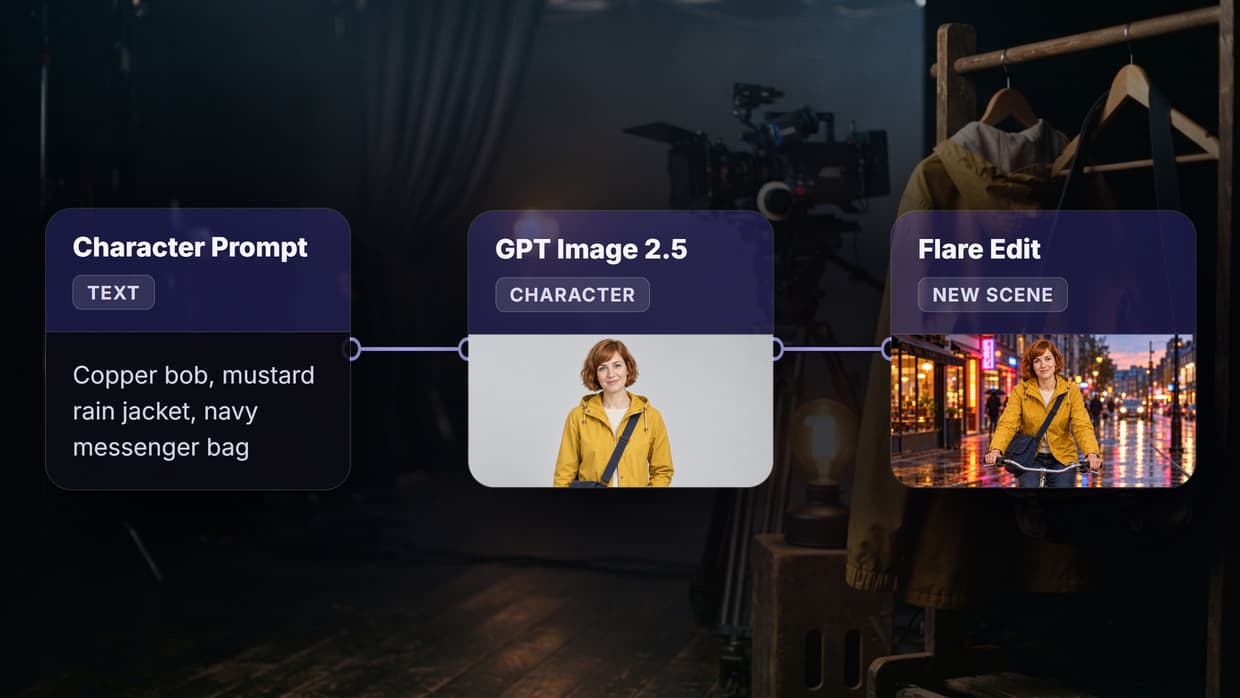
Wireflow is a node canvas where each step of a Facebook ad is its own block. A brief node feeds an image model, the image feeds a video model, and a compositor node assembles the finished creative at the aspect ratio you need. Because models sit behind nodes instead of behind a fixed template, you can swap the image model or the video model without rebuilding the pipeline, which matters when the strongest model for a given ad format changes every few months. The same graph pattern underpins a purpose-built AI ad generator setup.
The practical advantage on Meta is fan-out. Once one pipeline works, an iterator node runs a list of hooks, products or audiences through the same graph and returns one finished ad per row, in every placement ratio the graph is wired for. That turns creative production from a per-asset task into a batch job, the point of a dedicated ad creative AI surface. The tradeoff is honest: a canvas asks more of you up front, and if you ship three static ads a month the setup cost is not worth it.
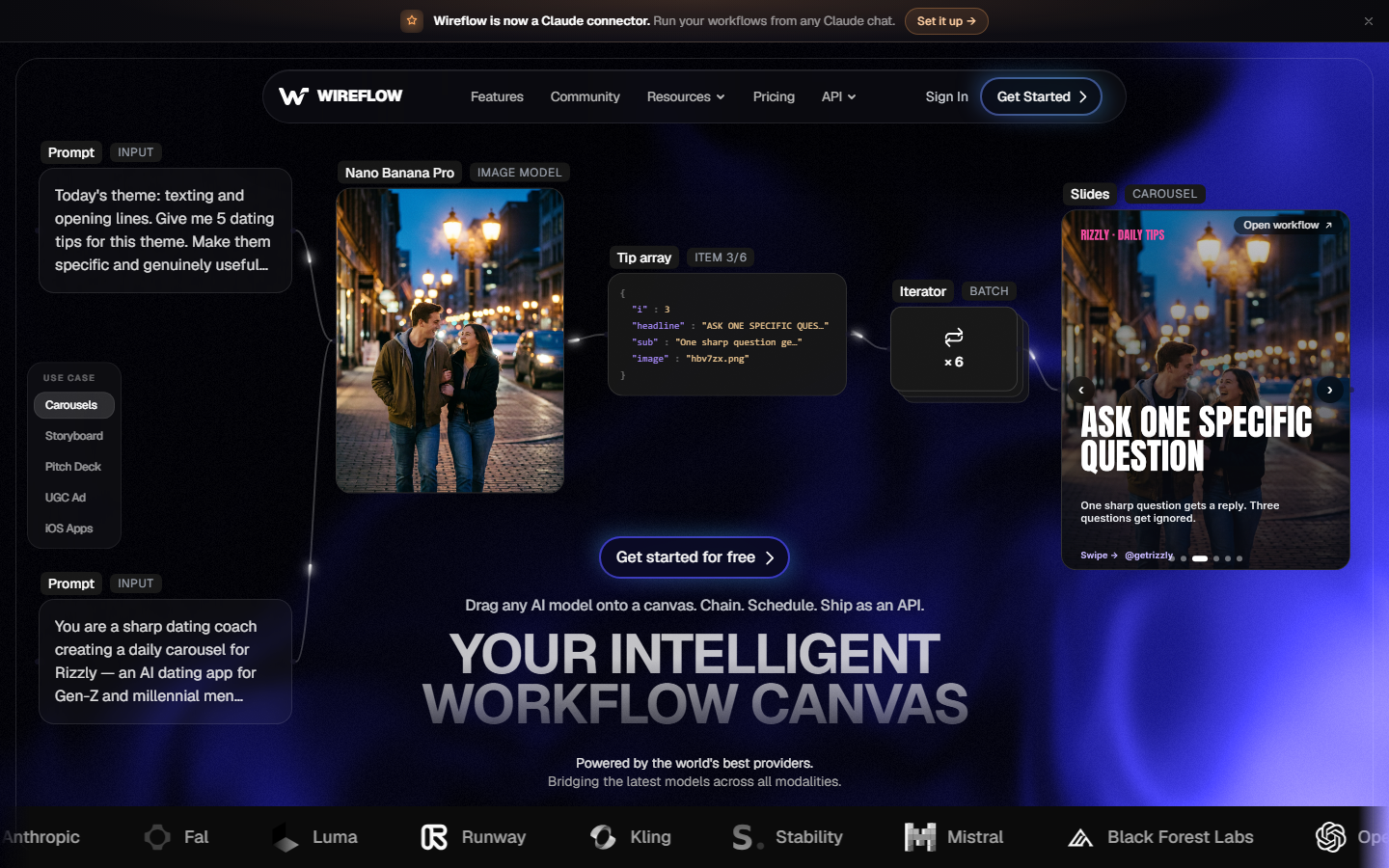
Verdict: the strongest pick for teams producing Meta creative continuously and switching between static, video and UGC formats.
2. AdCreative.ai: Best for Static Feed Ads
AdCreative.ai generates static image ads, carousels and headline variants from a brand kit you upload once. You give it a logo, colour palette, font and product image, and it returns a grid of finished ad units already sized for Facebook feed and Instagram placements.
Each output carries a creative score, a predicted engagement rating meant to help you pick what to run first. Treat it as a sorting aid rather than a forecast, since it is trained on aggregate ad data rather than your account. Quality is strongest on clean product shots and weakest on complex lifestyle scenes, the same pattern seen across ad creative AI tools generally.
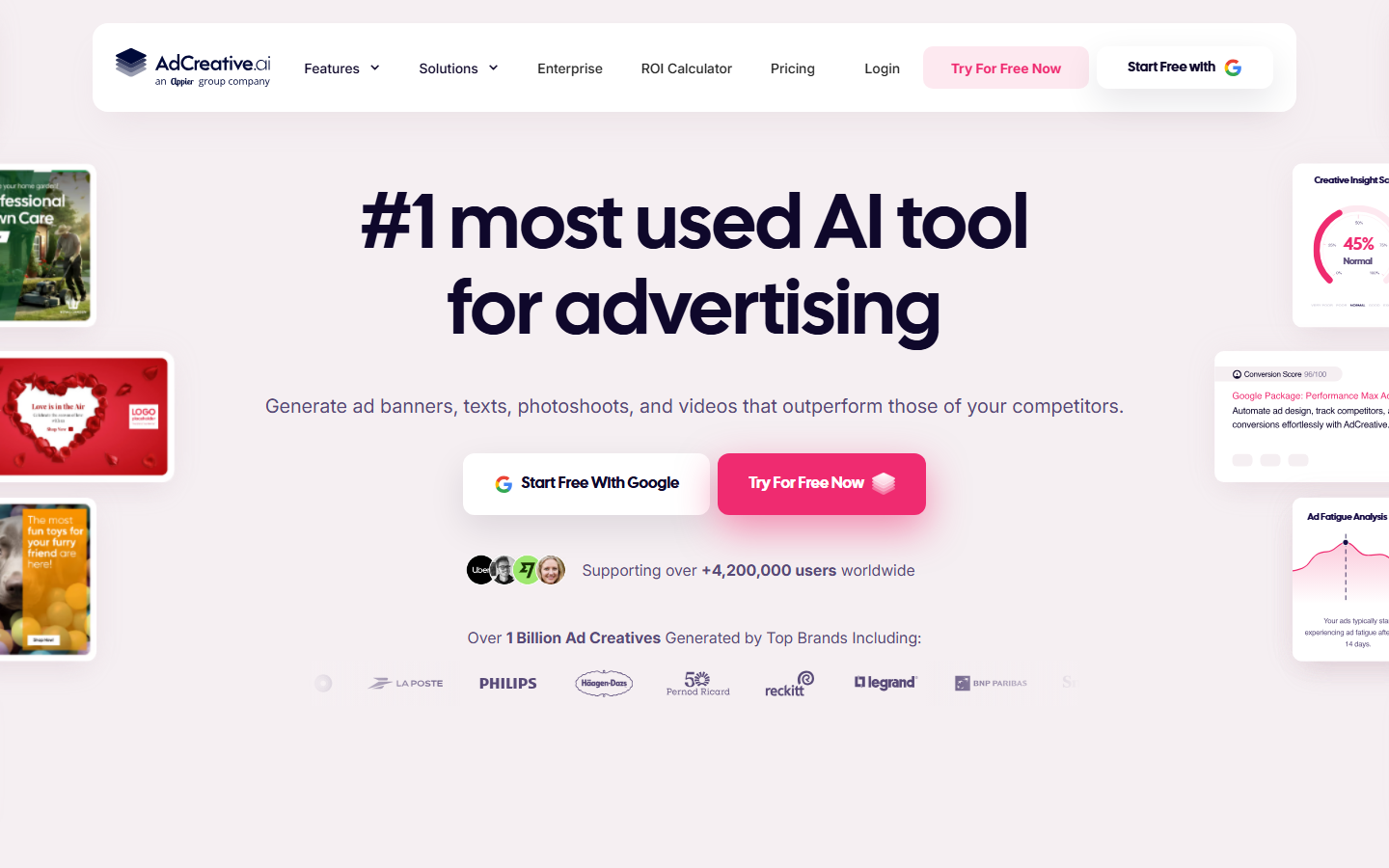
Verdict: the fastest way to get a large batch of on-brand static feed ads without a designer.
3. Creatify: Best for Video Ads
Creatify takes a product URL, pulls the imagery and copy from the page, and builds a short video ad with an AI presenter reading a generated script. For Reels and Stories inventory, where Meta increasingly sends budget, that removes the hardest part of the job, which is getting a person on camera.
The avatar library spans ages, settings and delivery styles, and you can regenerate the hook line without rebuilding the video. Presenter quality is fine for prospecting and still noticeable to an attentive viewer, so it suits volume testing more than brand films. Costs scale with video minutes rather than seats, which the Creatify pricing breakdown covers in detail.
Verdict: the best pick when your Meta results depend on vertical video rather than static images.
4. Omneky: Best for Always-On Campaigns
Omneky positions itself as an autonomous advertising platform rather than a creative generator alone. It writes, designs and launches ads across channels, then feeds performance data back into the next round of creative.
That closed loop is the reason to choose it. Instead of exporting files into Ads Manager, the platform runs the campaign and uses what it learns to bias the next batch, the pattern behind agentic advertising tooling generally. The cost is control, and it is sold to teams with meaningful monthly spend rather than solo operators.
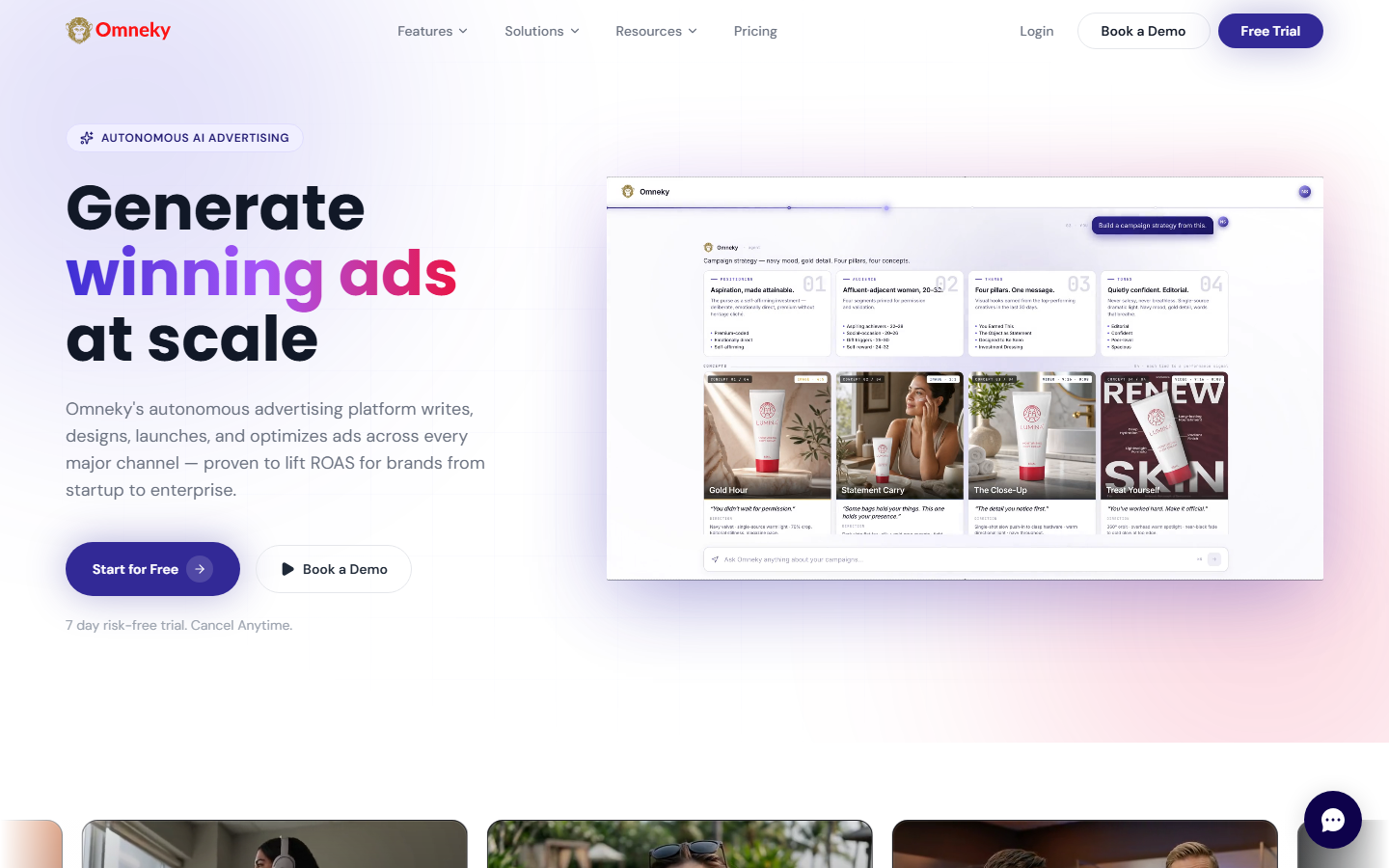
Verdict: worth it for brands running continuous Meta spend who want generation and buying in one system.
5. Pencil: Best for Performance Prediction
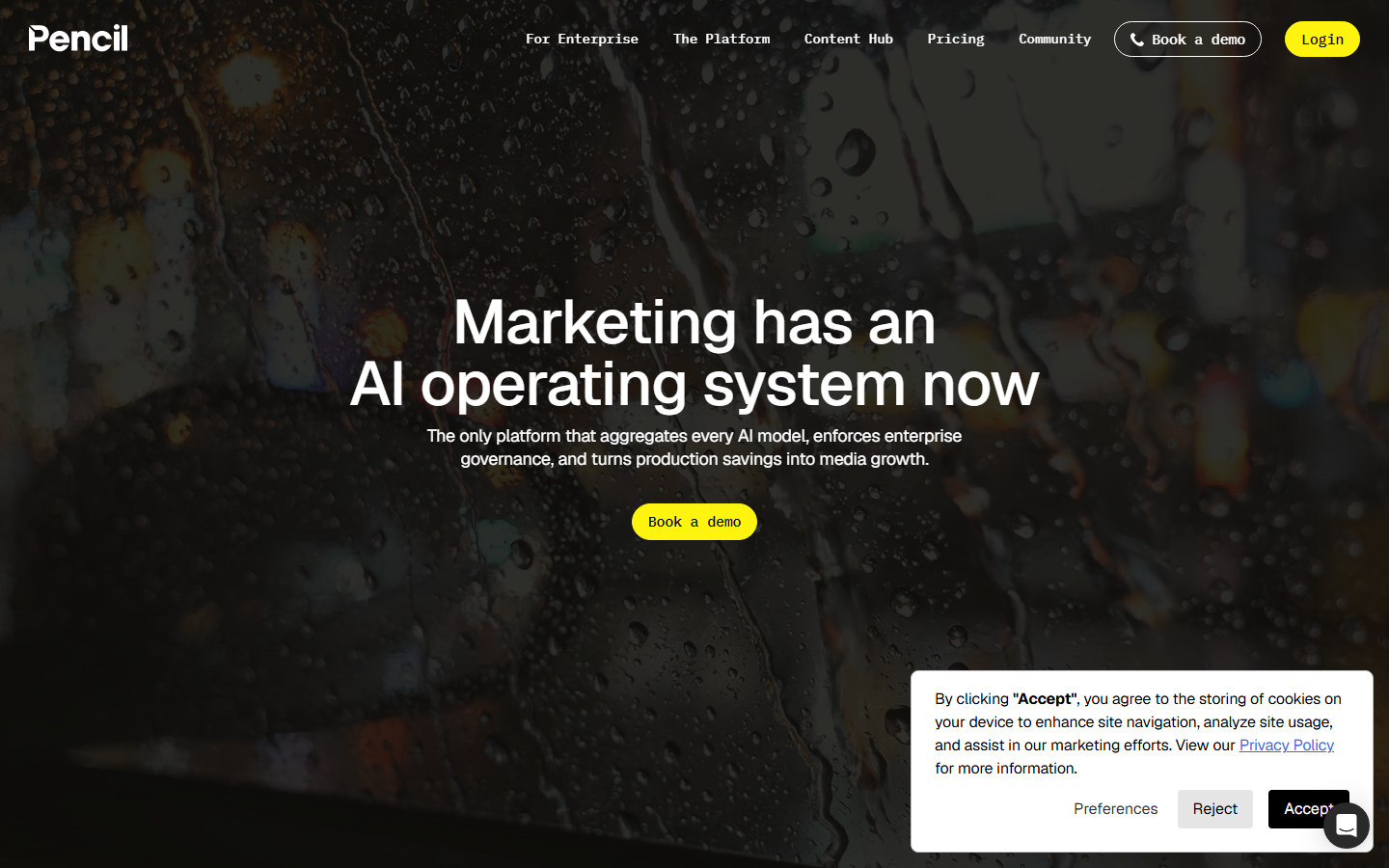
Pencil aggregates several underlying AI models behind an enterprise layer and pairs generation with prediction, scoring new creative against historical ad performance before you spend on it.
For large advertisers that pre-flight check is the product: a concept that scores badly against past winners gets killed before it consumes learning budget. Predictions are only as good as the data behind them, so accounts with thin history get less from it. Governance, brand rule enforcement and model aggregation put it closer to an AI creative agent platform than a design tool.
Verdict: the right choice for enterprise teams that need approval, governance and forecasting around generation.
6. Predis.ai: Best for Small Teams
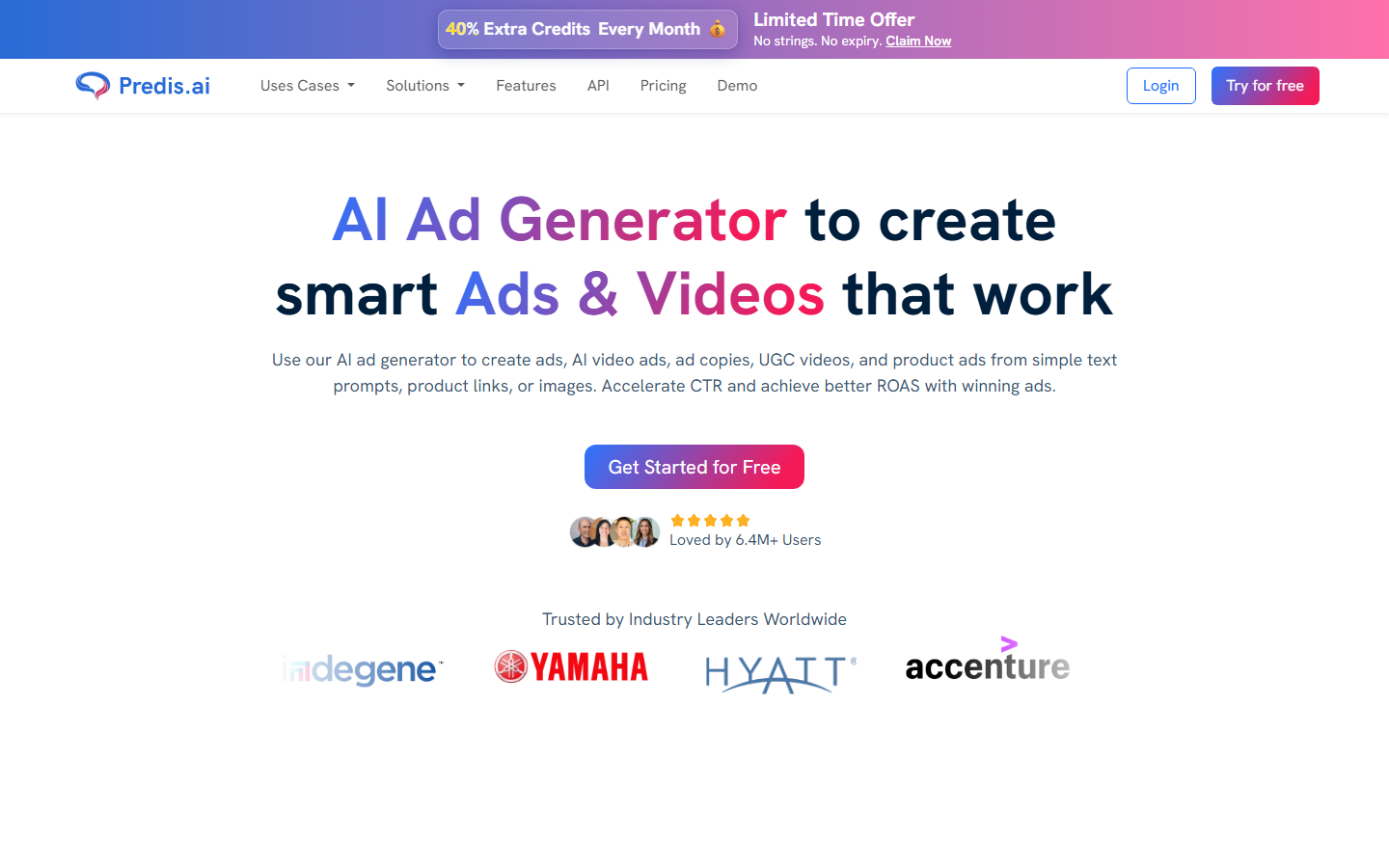
Predis.ai generates social posts and ad creative from a short text description, covering Facebook, Instagram and the other major networks from one prompt box.
It is the least specialised tool here and that is the point: a two-person business gets captions, an image or short video and a scheduling calendar without learning a new discipline. Depth is the tradeoff, since brand control is thinner and output leans generic in competitive categories. For anyone posting and boosting rather than running structured tests, it maps to how social media managers actually work.
Verdict: the most practical option for small teams who need consistent output rather than a testing engine.
7. Creatopy: Best for Multi-Placement Resizing
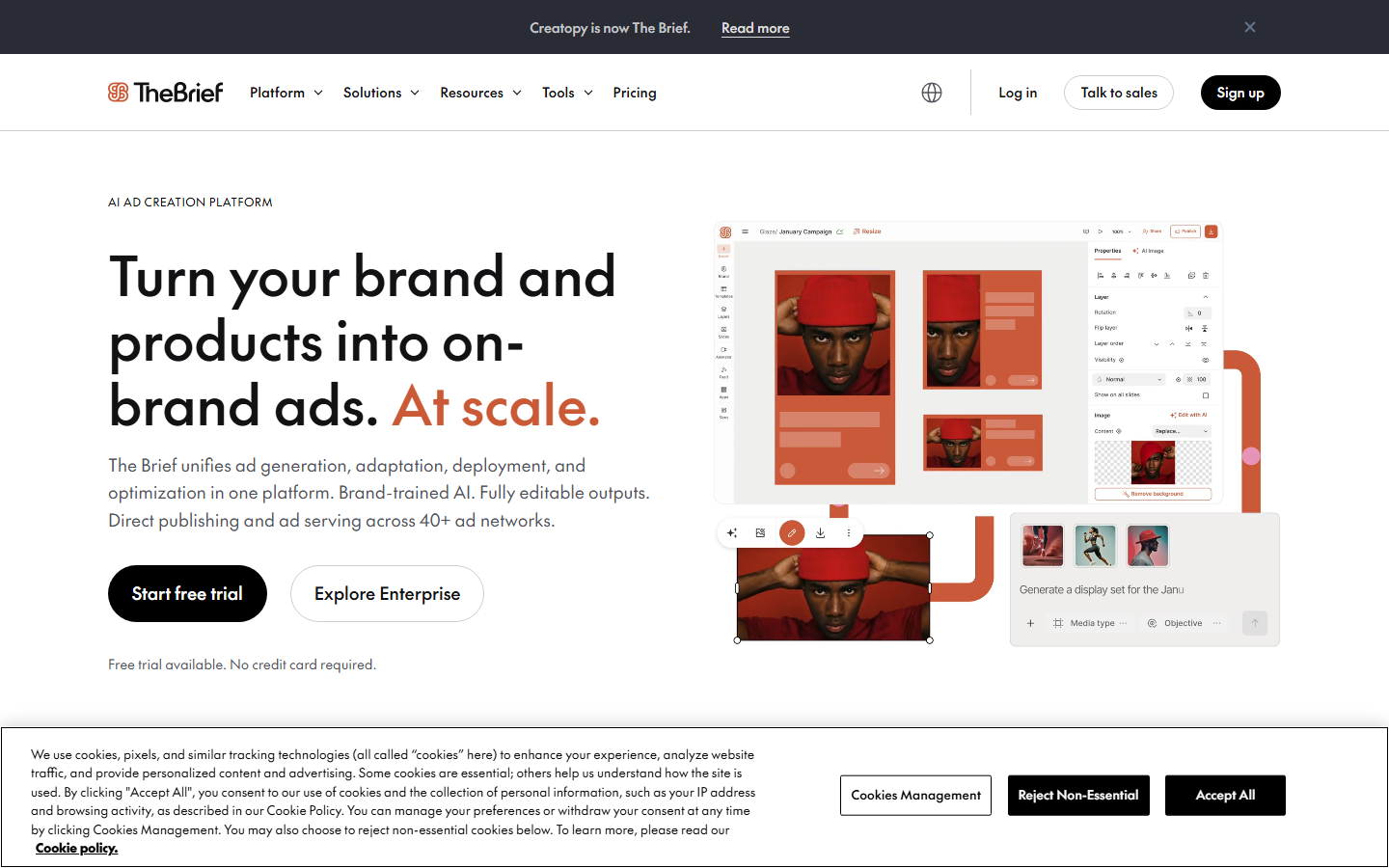
Creatopy comes from the display advertising world, and its strength is producing one design in every size a placement asks for.
That is directly useful on Meta, where one campaign wants 1:1 for feed, 4:5 for portrait and 9:16 for Stories and Reels. You build the master and the tool derives the rest, with the layout adapting rather than the image being cropped. Its AI generation is lighter than the tools above, so it suits teams who have a design direction already and need throughput, much like a purpose-built approach to social media banners.
Verdict: the best resizing and versioning engine if your creative direction is already settled.
8. Canva: Best Free Option
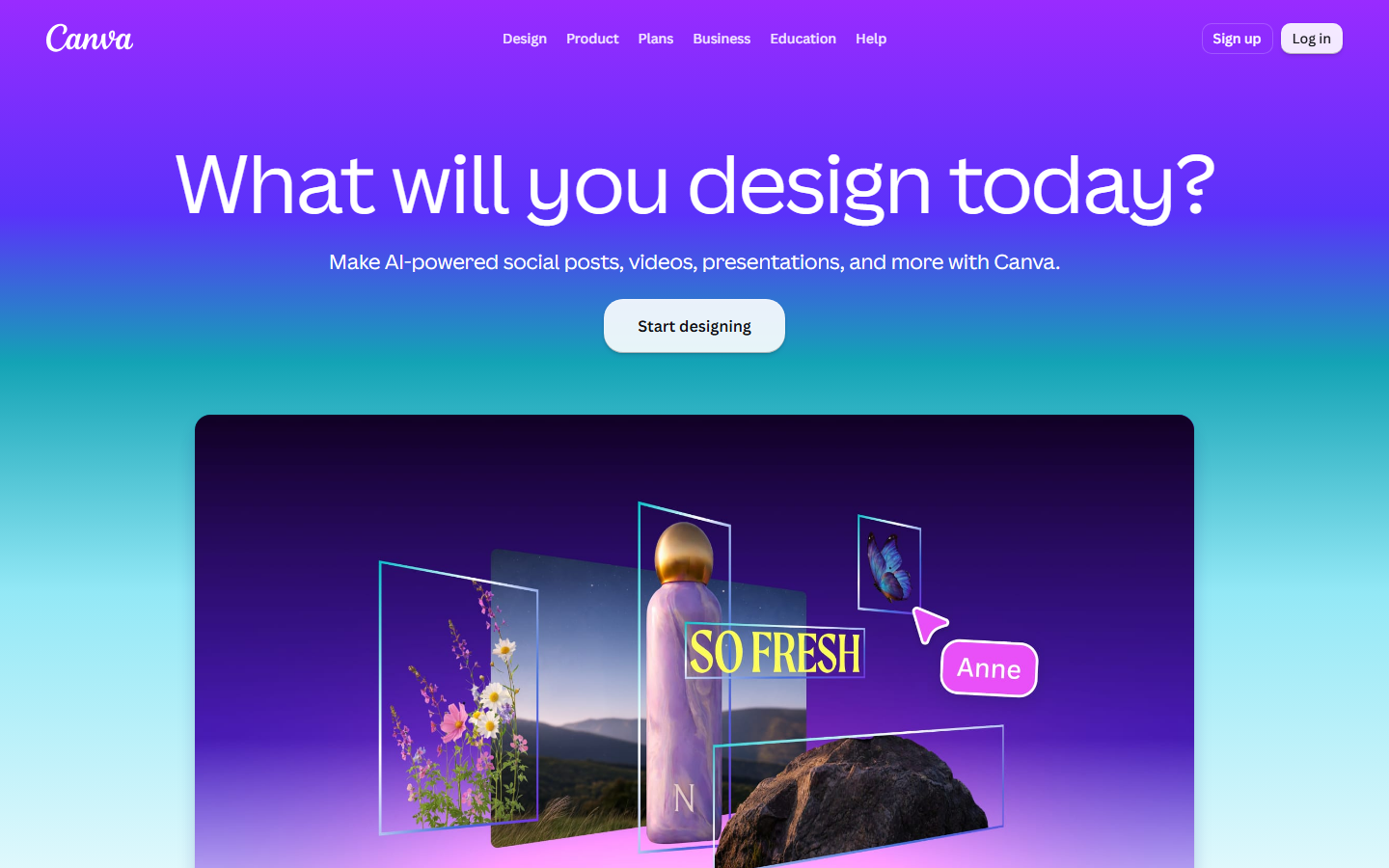
Canva is not an ad platform, but it has a usable free tier, thousands of pre-sized Facebook and Instagram ad templates, and AI image generation built into the editor.
For a business making its first ads, that is hard to beat on cost. The limits appear at volume: no batch generation of variants, no performance scoring, and keeping a set consistent is manual work. Its brand kit does hold colours and fonts steady across a campaign, the same job dedicated AI brand kit generators do at larger scale.
Verdict: the sensible starting point for small budgets and low ad volume.
Comparison table
| Tool | Best for | Static ads | Video ads | Batch variants | Performance scoring | Free tier |
|---|---|---|---|---|---|---|
| Wireflow | Overall pipelines | Yes | Yes | Yes, iterator nodes | No | Yes |
| AdCreative.ai | Static feed ads | Yes | Limited | Yes | Yes | Trial |
| Creatify | Reels and Stories | Limited | Yes | Yes | No | Trial |
| Omneky | Always-on campaigns | Yes | Yes | Yes | Yes | No |
| Pencil | Prediction and governance | Yes | Yes | Yes | Yes | No |
| Predis.ai | Small teams | Yes | Yes | Limited | Limited | Yes |
| Creatopy | Placement resizing | Yes | Limited | Yes, by size | No | Trial |
| Canva | Free design | Yes | Limited | No | No | Yes |
What Facebook placements actually demand from your creative
Meta will happily run one asset everywhere, but the results are uneven. Feed rewards a clear product and a readable value line at 1:1 or 4:5. Reels and Stories reward motion in the first second and a subject that survives being cropped by interface elements at 9:16. A generator that only exports one ratio quietly hands you that cropping problem, which is why placement coverage sits near the top of the ranking criteria and why AI ad generators for social media are increasingly judged on it.
Volume is the second demand. Meta's delivery system needs several distinct concepts before it can find the one that works, and distinct means different hooks and different framing, not the same image with a new headline. Tools that generate per-asset make that expensive; tools that generate per-list make it routine, which is the core argument for automating video creation for social ads.
Try it yourself: build this ad variant workflow in Wireflow. The nodes are pre-configured with the brief, key visual, video clip and editor steps described above, so you can run it and swap the models from there.
Frequently asked questions
What is a Facebook ad creative generator? It is software that produces the image, video and copy for a Meta ad from a brief, product URL or brand kit instead of building each asset by hand. The better ones also handle placement ratios and produce many variants from one setup, which separates them from a design app on a basic pricing tier.
Can AI-generated ads be run on Facebook without disclosure? Meta does not require a generic disclosure for AI-assisted creative, but it does require disclosure for realistic AI-generated depictions in political and social issue ads, and it applies AI labelling to some organic content. Product ads made with AI imagery are treated like any other ad and must still meet the standard advertising policies.
How many creative variants should I test on Meta? Most media buyers work in batches of at least five to ten distinct concepts per ad set rather than minor headline changes, because Meta's delivery needs signal separation to learn. That volume requirement is the main reason teams move to tools that mass produce ad variants rather than making them one at a time.
Are AI actors better than static images for Facebook ads? Neither wins universally. Static tends to hold up on feed placements and for considered purchases where the product detail carries the ad. AI presenter video usually performs better on Reels and Stories and for impulse categories, which is why UGC creators and performance teams typically run both and let the data decide.
Do these tools connect to Meta Ads Manager directly? Some do. Omneky and Pencil are built around launching and measuring campaigns, so they integrate with the ad account. Most generation-first tools export files and expect you to upload them, which adds a step once you produce dozens of assets a week for AI commercials and brand ads.
What is the cheapest way to start? Begin on a free tier, produce three to five concepts by hand, and pay for volume only once you know which direction works. Paying for batch generation first usually just produces more variations of something that was not working, a trap covered in guidance on scaling ads with UGC.
Can one tool cover both static and video Facebook ads? Increasingly yes, but usually with a bias. Video-first tools produce weak statics and static-first tools produce weak video. A canvas approach avoids the bias by putting a different model behind each output type, which is the idea behind creative workflow automation.
How often should Facebook ad creative be refreshed? Watch frequency and cost per result rather than the calendar. When frequency climbs and cost per result rises with it on a stable audience, the creative is fatigued. Accounts with steady spend usually refresh core concepts every two to four weeks, and tools built for TikTok UGC ads follow the same cadence.
Conclusion
The right Facebook ad creative generator depends on what your bottleneck actually is. If it is design capacity, AdCreative.ai or Canva clears it quickly. If it is vertical video, Creatify does. If it is campaign management and measurement, Omneky and Pencil are built for that. If the bottleneck is volume across formats, a canvas approach such as Wireflow is the one that scales, because the same graph produces every placement and every variant from one list. Whichever you pick, judge it on how many distinct, on-brand concepts it puts in front of your media buyer each week, the same standard applied to AI marketing agent tools.

Co-Founder & Operations at Wireflow
Runs client operations and content strategy at Wireflow. Works directly with creative teams and agencies to build production AI workflows.
- Content Strategy
- Client Operations
Make AI videos and ads.
Start free, no card needed.