Best Ad Creative AI Tools in 2026


In this article▾
- Quick summary
- How these tools were ranked
- 1. Wireflow: Best Overall
- 2. AdCreative.ai: Best for Static Ads
- 3. Creatify: Best for UGC Video
- 4. Arcads: Best for AI Actors
- 5. Pencil: Best for Performance Prediction
- 6. Predis.ai: Best for Small Teams
- 7. Creatopy: Best for Display Ads
- 8. Canva: Best Free Option
- Comparison table
- How to choose
- FAQ
- Conclusion
The best ad creative AI tools in 2026 fall into three groups: canvas platforms that chain several models into one repeatable pipeline, single-purpose static ad generators, and AI actor video tools that produce UGC-style footage. This guide ranks eight of them on output quality, model coverage, batch throughput and price, starting with Wireflow, which lets you connect image, video and text models on one canvas instead of paying for four separate subscriptions. Most paid plans here start between $15 and $50 per month, and every tool listed was checked against its live product pages in September 2026.
Quick summary
- Wireflow: node canvas that chains multiple AI models into one ad pipeline. Best Overall
- AdCreative.ai: high-volume static and carousel ad batches. Best for Static Ads
- Creatify: turns a product URL into an AI-presenter video ad. Best for UGC Video
- Arcads: script-to-actor video with a large AI talent library. Best for AI Actors
- Pencil: generates creative and scores it against past ad data. Best for Performance Prediction
- Predis.ai: social-first post and ad generation for small teams. Best for Small Teams
- Creatopy: banner and display ad production at scale. Best for Display Ads
- Canva: free design surface with AI generation built in. Best Free Option
How these tools were ranked
Ad creative software gets judged on one thing: how many usable variants it can put in front of a media buyer per week, at what cost per variant. Four criteria drove this ranking. First, model coverage, meaning how many underlying image and video models the tool can reach. Second, batch throughput, or whether you can produce fifty variants without fifty manual steps. Third, brand consistency across a set. Fourth, whether the output is genuinely ad-ready or needs a second pass in an editor. Teams that already run structured ad creative testing at scale should weight throughput and consistency heaviest, because a tool that produces beautiful one-offs will still starve a testing program.
One thing this category does badly: almost none of these tools tell you how they compare on a single sheet. The comparison table further down fixes that.
Build this in Wireflow
Make the same kind of asset on a canvas you control, with a free account and no credit card.
1. Wireflow: Best Overall
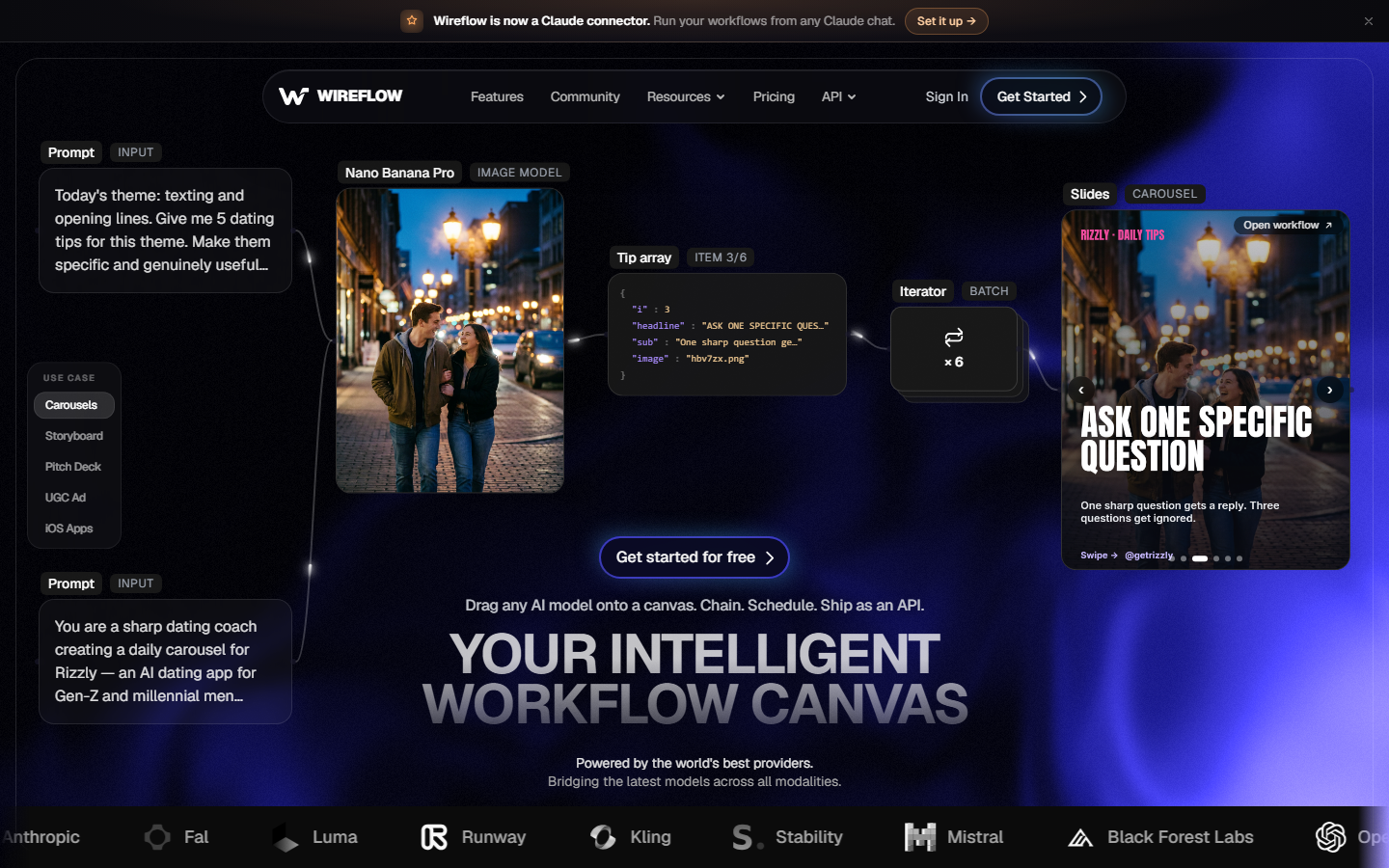
Wireflow is a node-based canvas where each step of an ad is its own block. A brief node feeds an image model, the image feeds a video model, and a compositor node assembles the finished ad. Because the models sit behind nodes rather than behind a fixed template, you can swap GPT Image 2.5 Flare for a different image model, or Gemini Omni Flash 1.1 for a different video model, without rebuilding the pipeline. That matters in 2026, when the best model for a given ad format changes every few months.
The practical advantage is fan-out. Once one ad pipeline works, an iterator node runs a list of hooks, products or audiences through the same graph and returns a finished ad per row. That turns ad creative from a per-asset task into a batch job, and it is the same pattern behind a purpose-built AI ad generator setup. The tradeoff is honest: a canvas asks more of you up front than a one-click generator, and if you only need three static ads a month, the setup cost is not worth it.
Verdict: the strongest pick for teams producing ads continuously and switching between static, video and UGC formats.
2. AdCreative.ai: Best for Static Ads
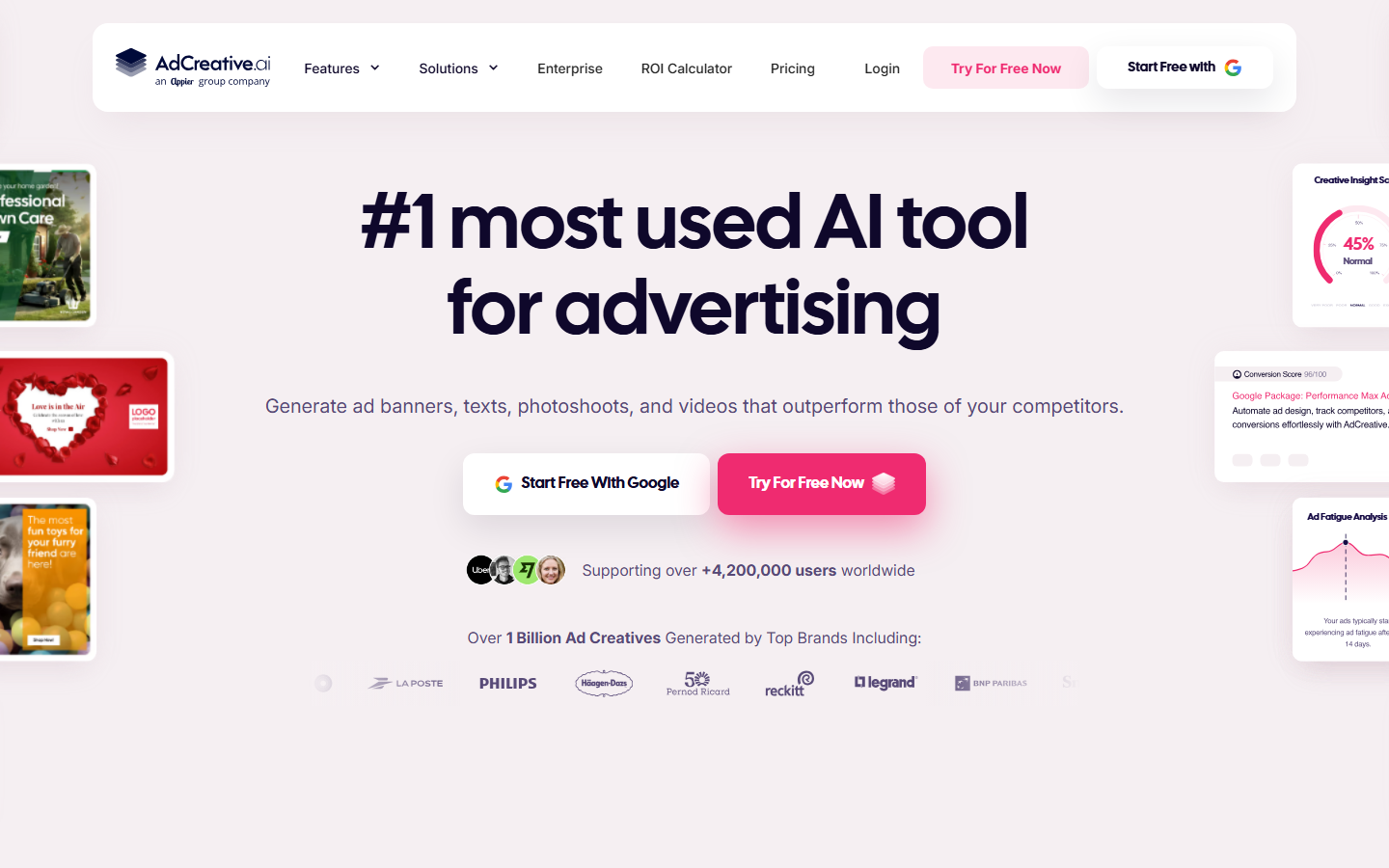
AdCreative.ai is built around one job: generating large numbers of static and carousel ad variants from a brand kit, then ranking them with a conversion score. You upload logos, fonts and colors once, and every generated set stays inside those rules. Paid plans start around $21 per month, scaling with the number of credits and brands.
It is the fastest route from brand assets to a hundred sized, on-brand statics. Where it stops is video and anything that needs an unusual layout, and the conversion score is a directional signal rather than a guarantee. If static is most of your spend, it does more per dollar than most alternatives on this list, and it pairs well with the broader set of AI ad generators for social media covered separately.
Verdict: best value if your account is static-heavy and your brand rules are fixed.
3. Creatify: Best for UGC Video
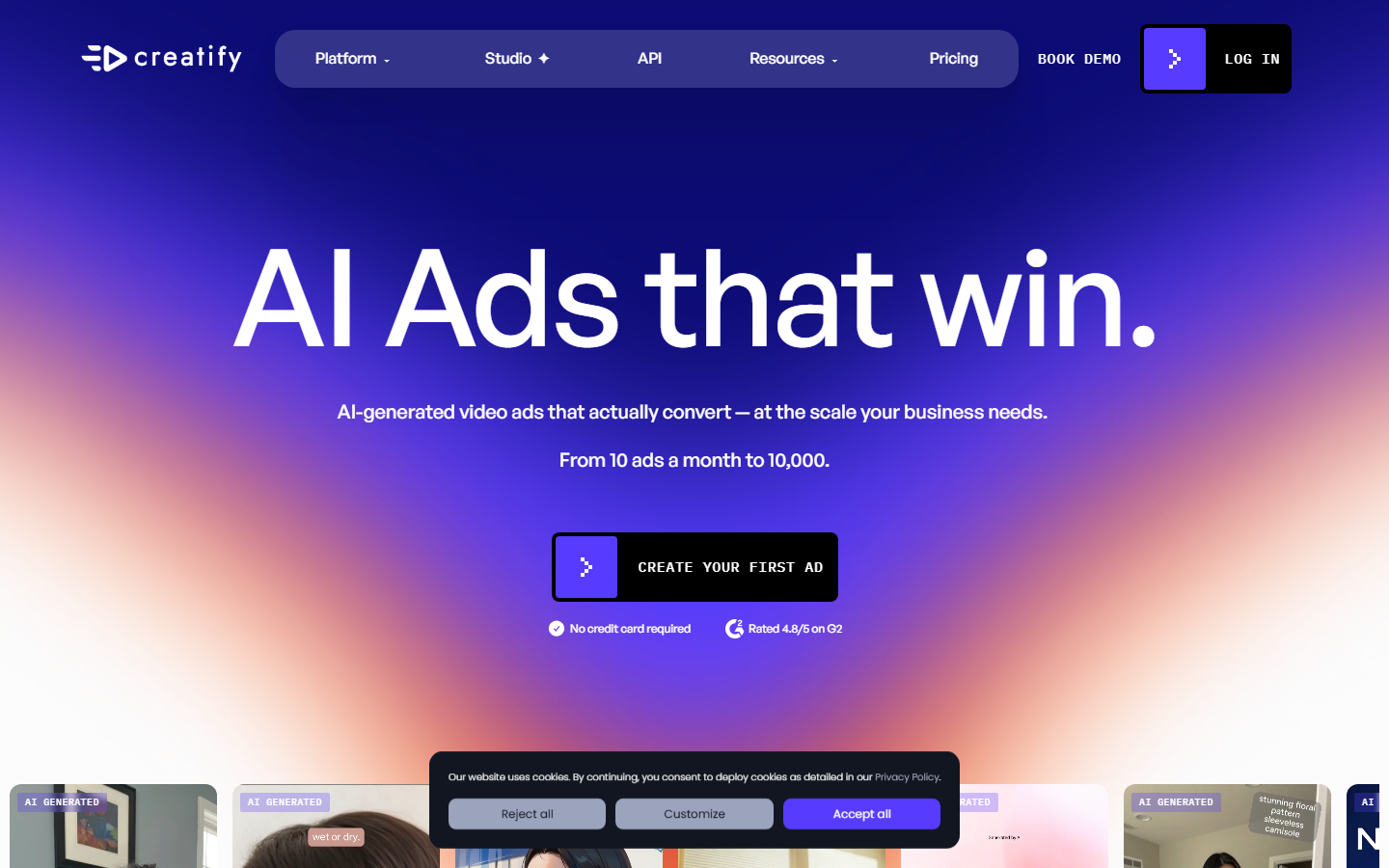
Creatify takes a product URL, pulls the images and copy, and returns a video ad with an AI presenter reading a generated script. The library of avatars is large and the lip sync holds up at feed resolution, which is where these ads are actually watched.
The output is closer to a testable ad than to finished brand film, and that is the point: it is designed for volume testing on TikTok and Reels, not for hero assets. Quality varies with how good the source product page is, so thin pages produce thin scripts. Teams that need to mass produce UGC ads usually pair it with a manual script pass to lift the hooks.
Verdict: the quickest path from a product page to a testable UGC-style video ad.
4. Arcads: Best for AI Actors
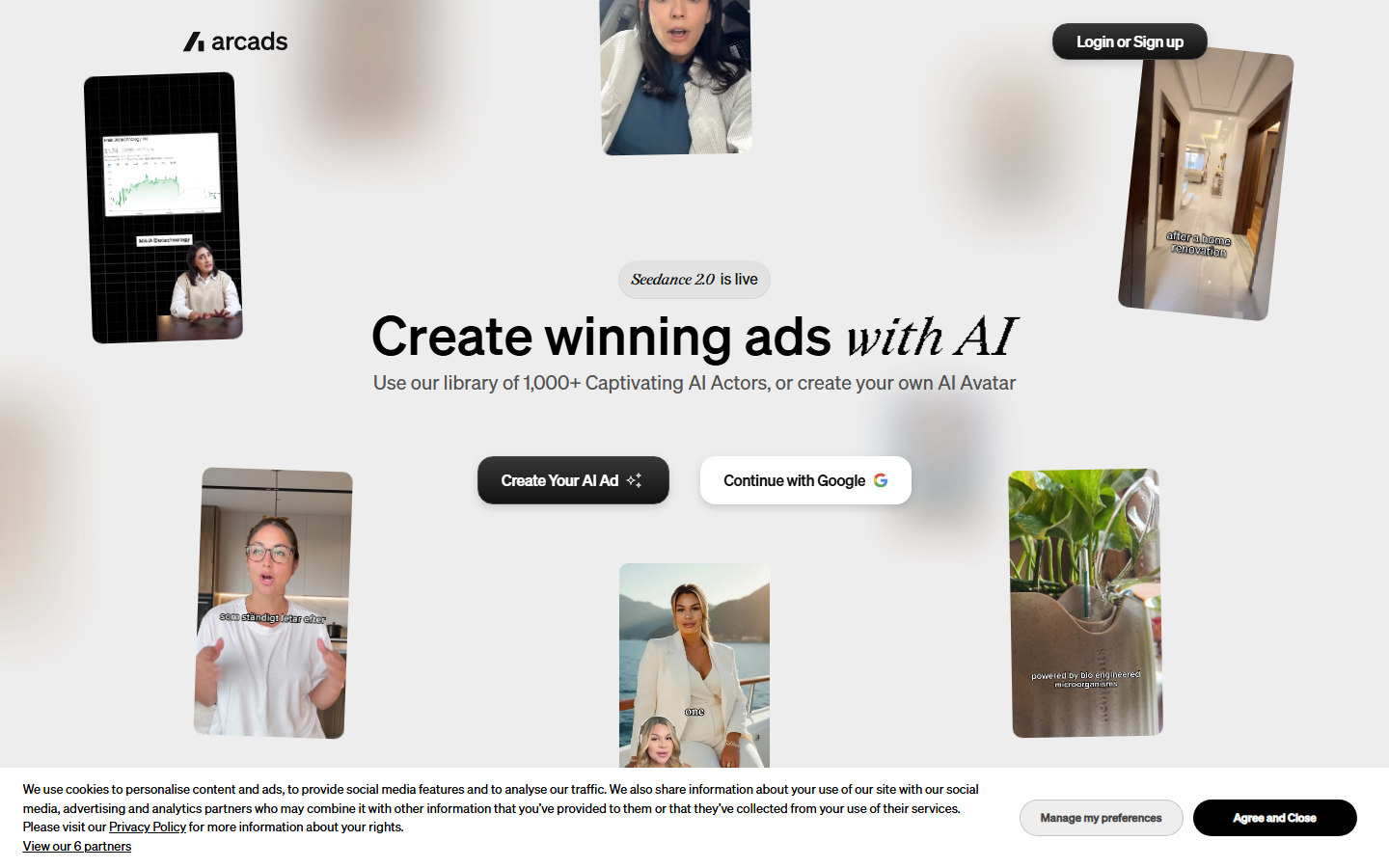
Arcads is script-first. You write or generate the script, choose from a roster of AI actors, and it renders each line as a delivered performance. Because you control the words, the hook quality is yours rather than the model's, which is the main reason performance teams prefer it over URL-to-video tools.
The actor library carries the product, so results depend on picking a face that matches the audience. It handles a single format, talking-head UGC, and does not attempt statics or display. Agencies running this at client scale usually slot it into a wider stack alongside other AI UGC ad tools for agencies.
Verdict: pick it when the script is your edge and you want the delivery handled.
5. Pencil: Best for Performance Prediction
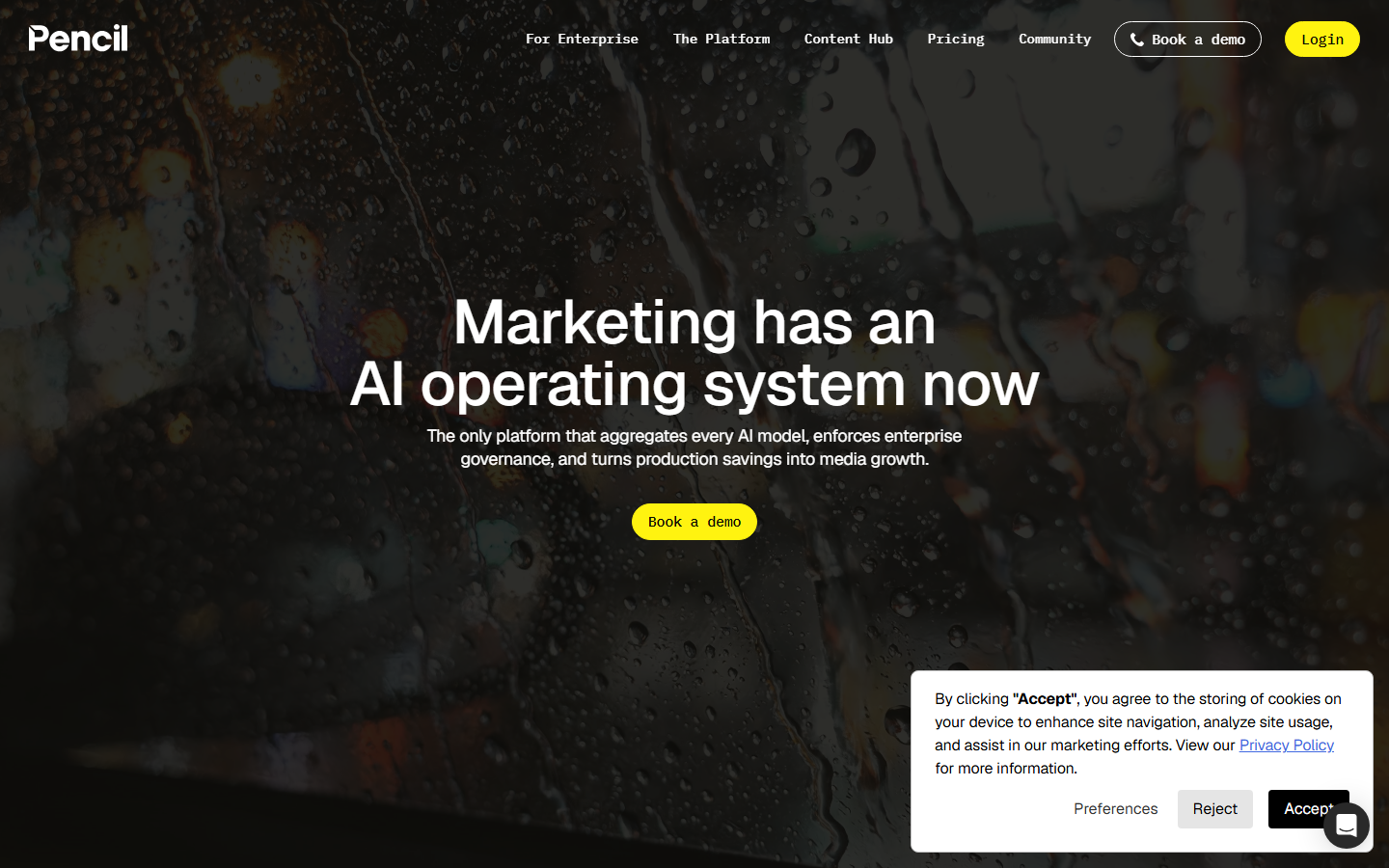
Pencil generates creative and then scores it against a model trained on historical ad performance, so you get a predicted ranking before you spend. It connects to ad accounts to close the loop between what it generated and what actually converted.
That feedback loop is the differentiator, and it is also the limitation: the predictions get useful only once it has enough of your own account history, so a new account starts with generic guidance. Pricing is quote-based and aimed at brands and agencies rather than solo operators. It suits teams already trying to scale ad creative production and needing a filter on what to launch.
Verdict: worth it for accounts with enough spend history to make the prediction meaningful.
6. Predis.ai: Best for Small Teams
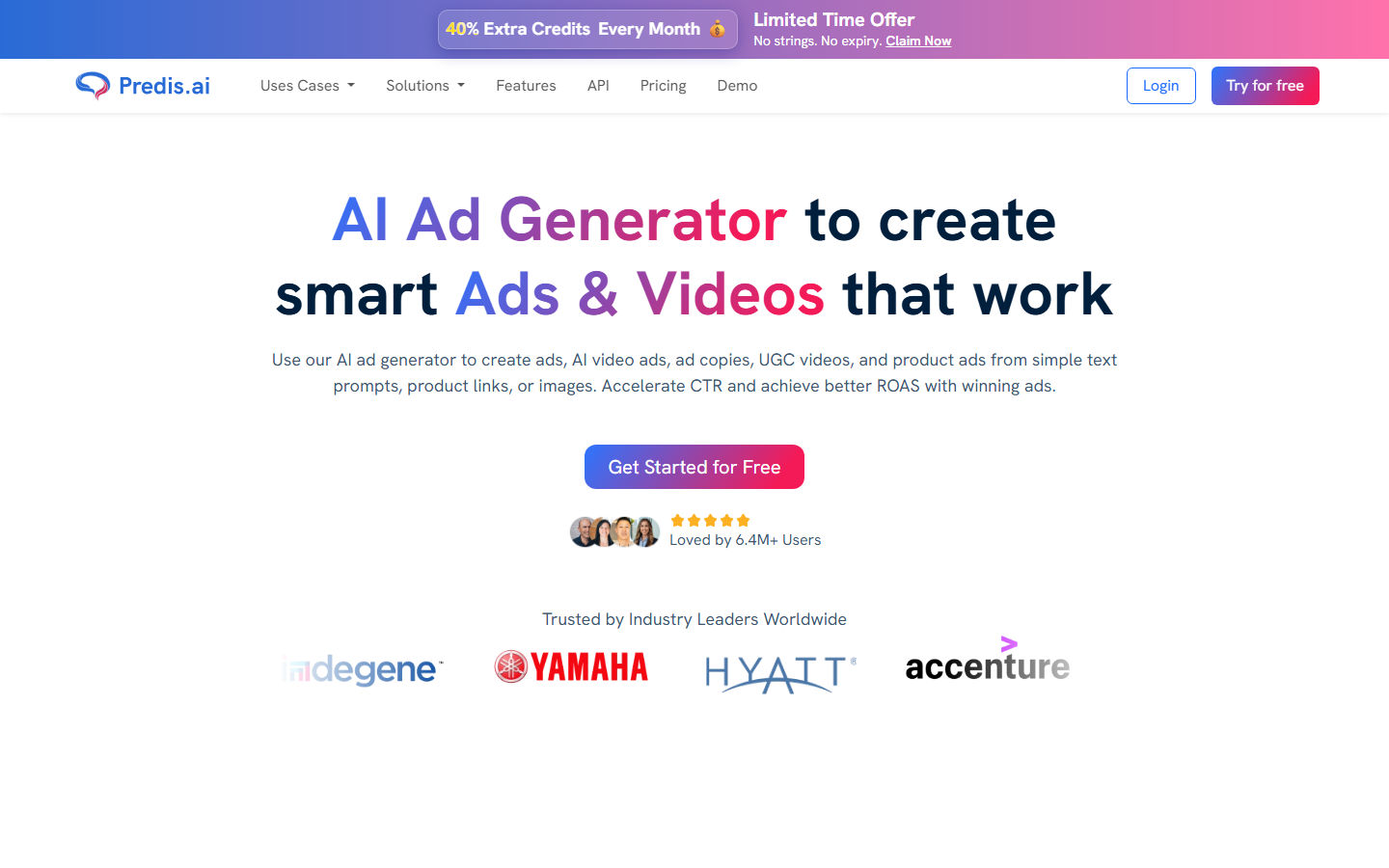
Predis.ai covers organic social posts and paid creative from the same interface, with scheduling attached. There is a free tier, and paid plans start around $32 per month.
It is the most approachable tool here for a one or two person marketing team that needs a steady stream of posts and a handful of ads without learning a new discipline. The ceiling is lower than the specialists: creative is template-led, and heavy customization pushes you back into a design tool. For solo operators and UGC creators it usually covers the whole job.
Verdict: the sensible default for small teams that need volume without complexity.
7. Creatopy: Best for Display Ads
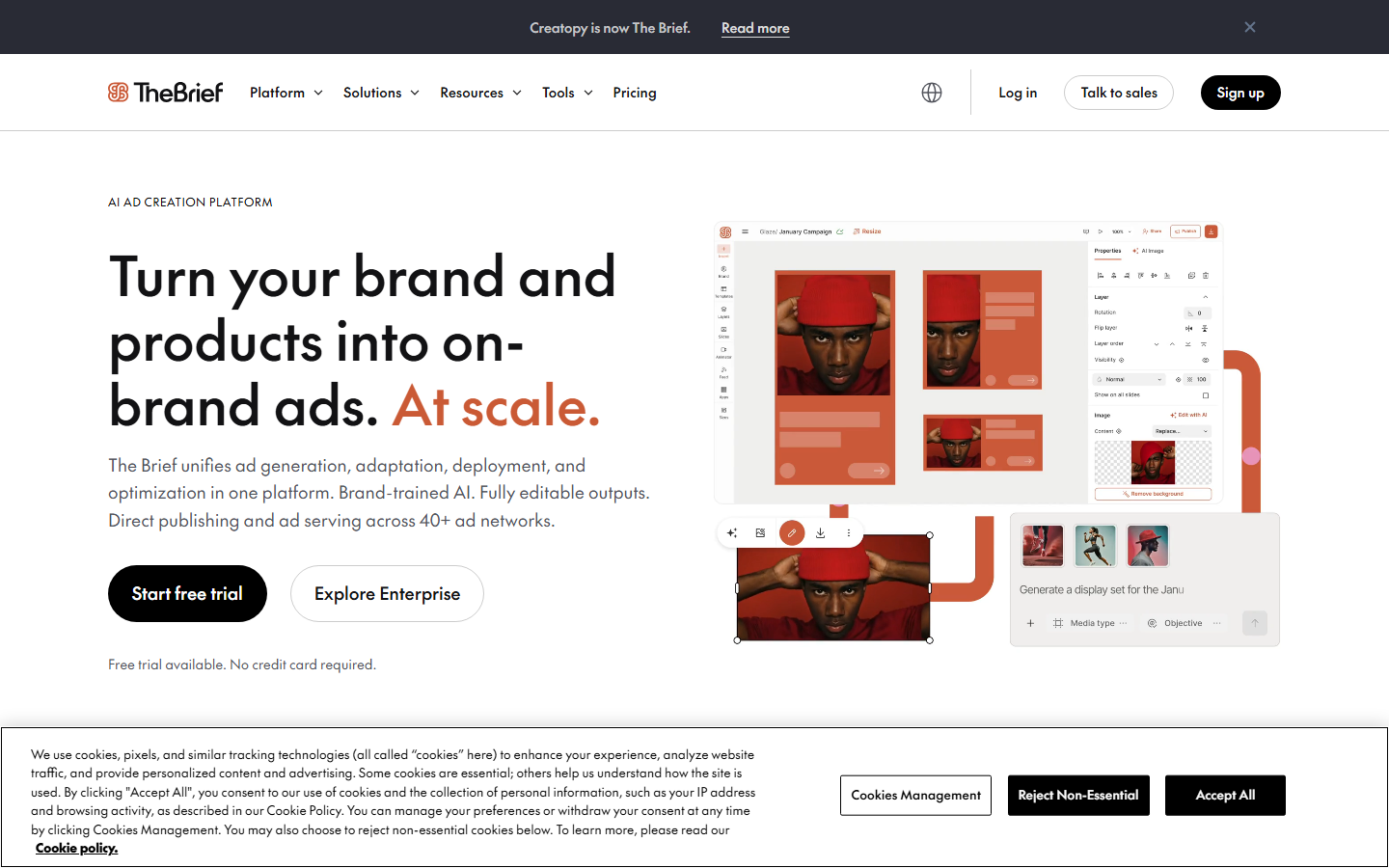
Creatopy specializes in the unglamorous part of advertising: producing one design across dozens of banner sizes, with animation and feed-driven personalization. Entry plans start around $36 per month.
If you run display and programmatic, automatic resizing across the full IAB size set saves more hours than any generative feature. It is weaker as a pure ideation tool, since the AI assists production rather than inventing concepts. Slotting it in as the resize-and-export stage of a wider creative workflow automation setup is how most teams get value from it.
Verdict: the best answer to "I need this ad in 40 sizes by Friday".
8. Canva: Best Free Option
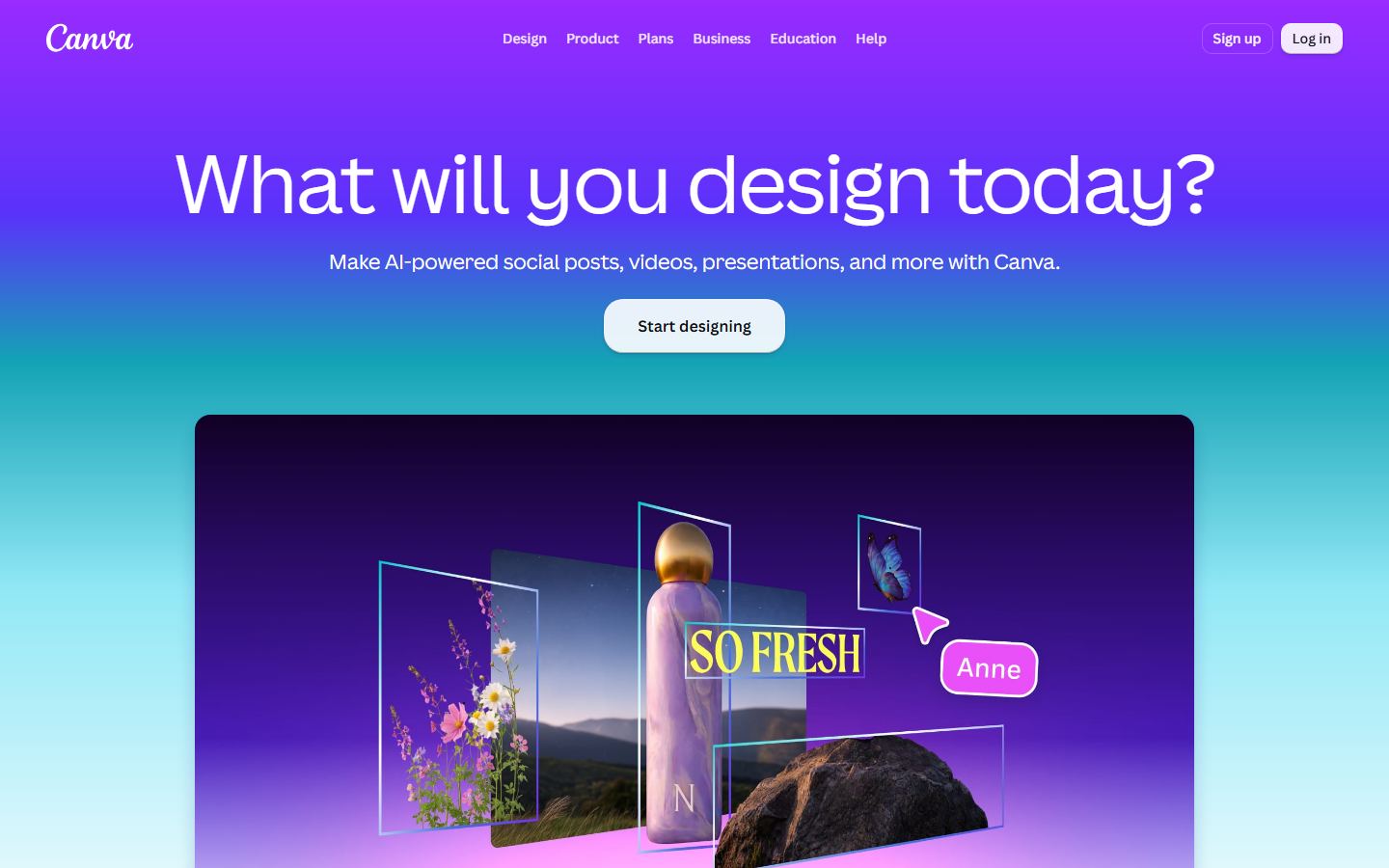
Canva is not an ad platform, but its free tier and built-in AI generation make it the most common starting point for teams with no design resource. Pro sits around $15 per month per user.
Everything is manual by default, so it does not batch, and it has no notion of ad performance. What it does give you is a shared surface where a marketer, a founder and a freelancer can all edit the same file. Most teams outgrow it once variant counts climb, at which point a purpose-built creative workflow platform becomes the cheaper option per asset.
Verdict: the right first tool, and the wrong tenth one.
Comparison table
| Tool | Best for | Formats | Batch output | Starting price |
|---|---|---|---|---|
| Wireflow | Multi-model ad pipelines | Static, video, UGC | Yes, via iterator nodes | Free tier, credit-based |
| AdCreative.ai | Static ad volume | Static, carousel | Yes | ~$21/mo |
| Creatify | UGC video from a URL | Video | Limited | Paid tiers by video volume |
| Arcads | Script-led actor video | Video | Per script | Paid tiers by video volume |
| Pencil | Predicting winners | Static, video | Yes | Quote-based |
| Predis.ai | Small marketing teams | Static, short video | Limited | Free tier, ~$32/mo |
| Creatopy | Display and banners | Static, animated banner | Yes, by size set | ~$36/mo |
| Canva | Getting started | Static | No | Free, ~$15/mo Pro |
How to choose
Match the tool to the bottleneck, not to the feature list. If the bottleneck is ideas, Pencil's scoring or a canvas that lets you try four models is the answer. If it is production volume, AdCreative.ai or Creatopy will clear it faster than anything generative. If it is video specifically, Creatify and Arcads split cleanly between URL-led and script-led. And if the bottleneck is that every new format means a new subscription, a single canvas covering AI creative workflows removes the fragmentation. Cost per usable variant is the number to track, not monthly price.
Try it yourself: open the ad creative pipeline workflow in Wireflow. The nodes are pre-configured with the brief, key visual, video and compose steps described above.
FAQ
What is an ad creative AI tool? It is software that generates advertising assets, static images, video or copy, from a brief, a product URL or a brand kit, then formats them for ad placements. The category ranges from single-purpose generators to full canvases that chain several models together.
Which ad creative AI tool is best in 2026? For teams producing continuously across formats, a multi-model canvas like Wireflow ranks first because it avoids paying for separate tools per format. For static-only accounts, AdCreative.ai is the better single purchase.
Can AI ad creative actually outperform human-made ads? Sometimes, and mostly because of volume rather than craft. AI lets you test many more hooks per week, and testing more hooks is what finds winners. The concepts still need human direction, which is why teams that decide how to charge clients for AI UGC ads price on strategy, not on render time.
How much do these tools cost? Entry paid plans in this list run from about $15 to $36 per month, with Pencil and enterprise platforms quote-based. Video tools usually price by rendered minutes or video count rather than seats.
Do I need more than one tool? Many teams run two: one for statics and one for video. The alternative is a single UGC workflow canvas that handles both, which is cheaper per asset but takes longer to set up.
Can these tools keep a brand consistent across a set? Brand kits handle fonts, colors and logos reliably. Consistency of a person or product across multiple video shots is harder and depends on the underlying model, which is where anchor-image techniques used by AI ad agent tools matter.
How many variants should I test per week? Most performance teams aim for 10 to 30 fresh variants per week per account. Anything less and you are not sampling enough hooks; anything more and creative review becomes the new bottleneck.
Is there a free way to start? Yes. Canva and Predis.ai both have free tiers, and several canvas tools offer free credits. Free tiers are enough to validate a format, not to sustain a testing program.
Conclusion
The ad creative category split in 2026 between tools that do one job very fast and platforms that let you assemble the whole pipeline yourself. If your ad output is narrow and predictable, buy the specialist. If it moves between statics, video and UGC every month, an assembled pipeline is cheaper and ages better, since you can swap in a new model without changing vendors. Wireflow sits in the second group, and its node canvas is the same approach behind broader AI creative agent setups. Whichever you pick, judge it after four weeks on one number: cost per usable variant.

Co-Founder & Operations at Wireflow
Runs client operations and content strategy at Wireflow. Works directly with creative teams and agencies to build production AI workflows.
- Content Strategy
- Client Operations
Make AI videos and ads.
Start free, no card needed.