Luma Variants Alternative: 8 Ways to Resize One Approved Ad for Every Placement (2026)

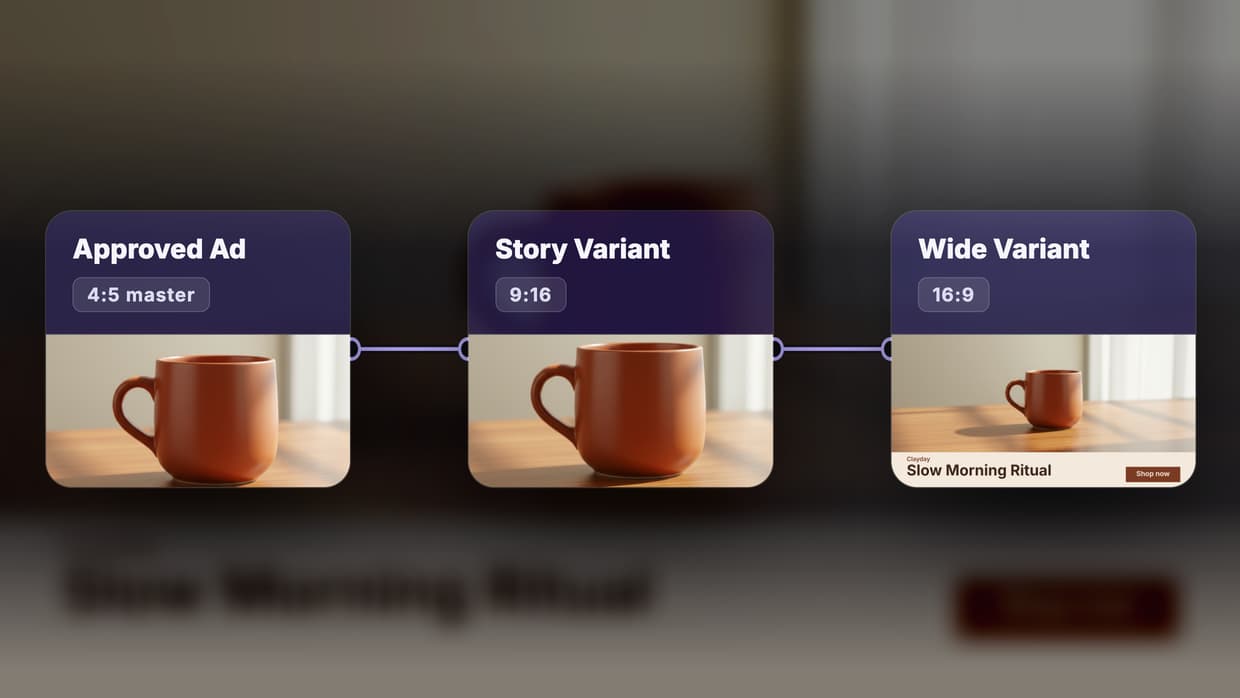
In this article▾
- Quick summary
- What Luma Variants does and costs
- 1. Wireflow Ad Variants blueprint: Best overall
- The same resize job, run on Wireflow
- 2. AdCreative: Best for self-serve resizing
- 3. The Brief (formerly Creatopy): Best for small teams
- 4. Bannerflow: Best for display at volume
- 5. Storyteq: Best for localisation
- 6. Smartly: Best for paid social at scale
- 7. Placid: Best for template automation
- 8. Bannerbear: Best for developers
- Comparison table
- Which tool suits which job
- FAQ
- Conclusion
Luma Variants alternative: 8 tools that turn one approved static ad into every placement size and language, plus our free Wireflow blueprint and its cost.
Luma Variants takes one approved static ad and returns a version for every placement and language. We read Luma's launch post on 20 October 2026, compared eight tools, and ran the same resize job on Wireflow, the node-based AI canvas we build, as a free blueprint anyone can fork. We compete with Luma, so read this as a competitor's guide.
The short version: our run turned one 4:5 master ad into five placement sizes with the exact same copy for 51 credits, and translated the copy into three languages. Luma adapts the layout and renders the translated ads for you inside one app, while our board keeps every step open to check. For the wider category, see our guide to ad creative automation.
Quick summary
- Wireflow Ad Variants blueprint: five sizes from one master, exact copy, free to fork. Best overall
- AdCreative: generates ad creatives in all required sizes. Best for self-serve resizing
- The Brief (formerly Creatopy): ad generation, adaptation and ad serving. Best for small teams
- Bannerflow: scales one master creative into many formats. Best for display at volume
- Storyteq: Adaptation Studio versions content per channel and market. Best for localisation
- Smartly: adapt, approve and launch ads across channels. Best for paid social at scale
- Placid: templates whose text and images resize to fit. Best for template automation
- Bannerbear: template renders through an API. Best for developers
What Luma Variants does and costs
Luma launched Luma Variants on 1 October 2026 for "agency and brand teams who take one approved ad across placements and markets". You upload one approved static ad, pick formats and languages, and it returns a version for every size and language pair. Luma says your logo, headline and CTA stay intact while the layout and copy adapt. Our Luma API tools roundup covers its video models.
| Setting | What Luma lists |
|---|---|
| Input | One approved static ad |
| Formats | Story 9:16, Portrait 4:5, Square 1:1, Medium Rectangle 6:5, Widescreen 16:9 |
| Languages | Pick the markets you need; the launch image shows English, German and Italian |
| Review | Preview every variant, regenerate any that are wrong |
| Output | Download, or export to a Luma Canvas board |
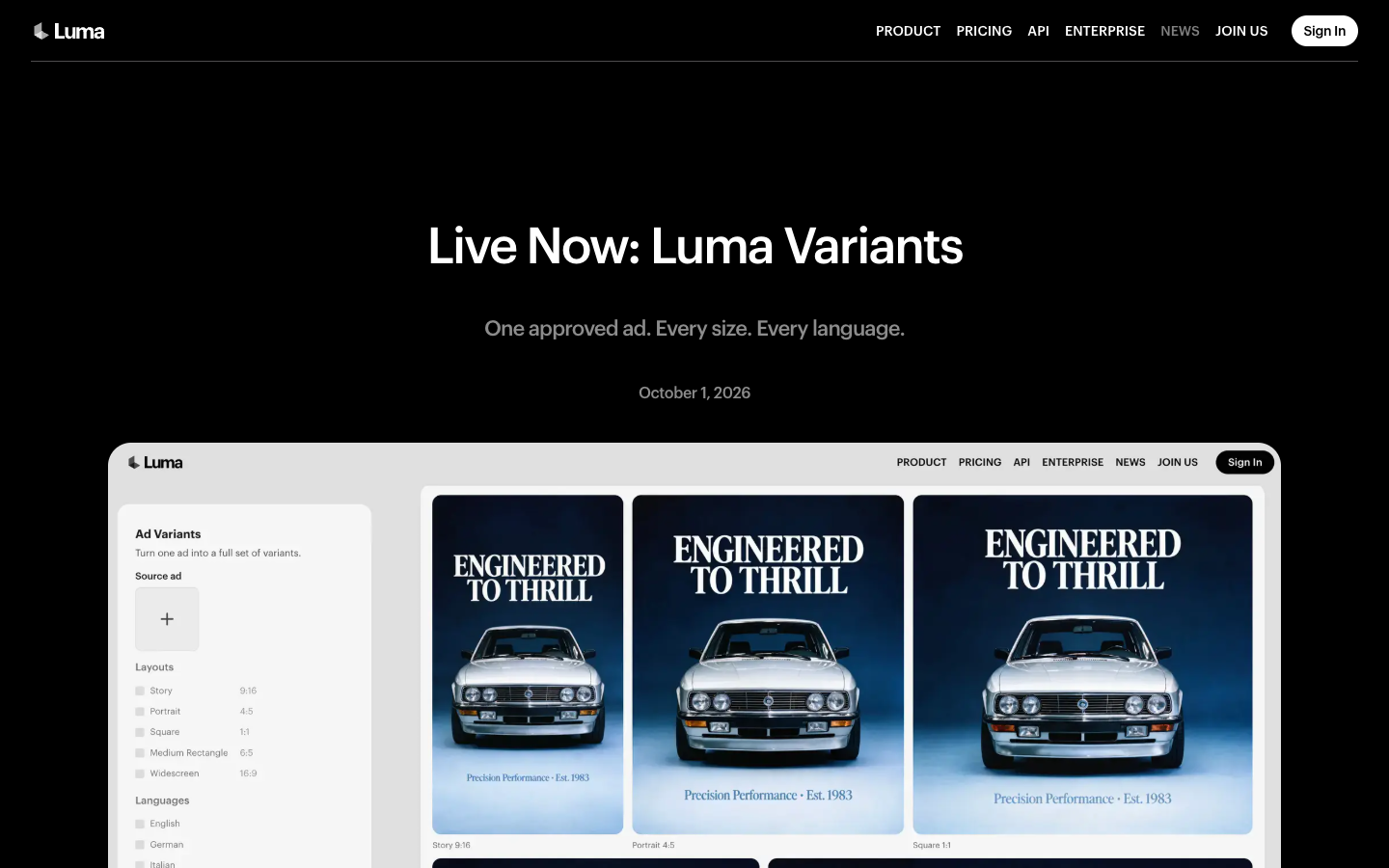
The launch post gives no price for Variants, and Luma's pricing page has no Variants line. Variants opens from the Discover tab inside Luma, whose plans start at Plus for $30 a month with 10,000 credits, then Pro at $90 and Ultra at $300. The first release covers static ads, resizing and translation only.
Build this in Wireflow
Make the same kind of asset on a canvas you control, with a free account and no credit card.
1. Wireflow Ad Variants blueprint: Best overall
The Ad Variants blueprint is a ready-made board for this job. Nano Banana makes or takes the approved picture, three more Nano Banana nodes reframe it to 9:16, 1:1 and 16:9 with no text in the picture, and one free Compositor per placement sets the brand name, headline and button as real text. It is the same idea as a static ad creative generator, pointed at one approved ad instead of a blank brief.
A translator node (Claude Sonnet 4.5, about 3 credits) rewrites the approved copy for each market you list and keeps the brand name as written. The blueprint is free to fork; running it needs a paid plan and spends your own credits. Fonts, colours and positions live in the Compositor layers, the same way an AI banner generator board keeps the layout editable.
The same resize job, run on Wireflow
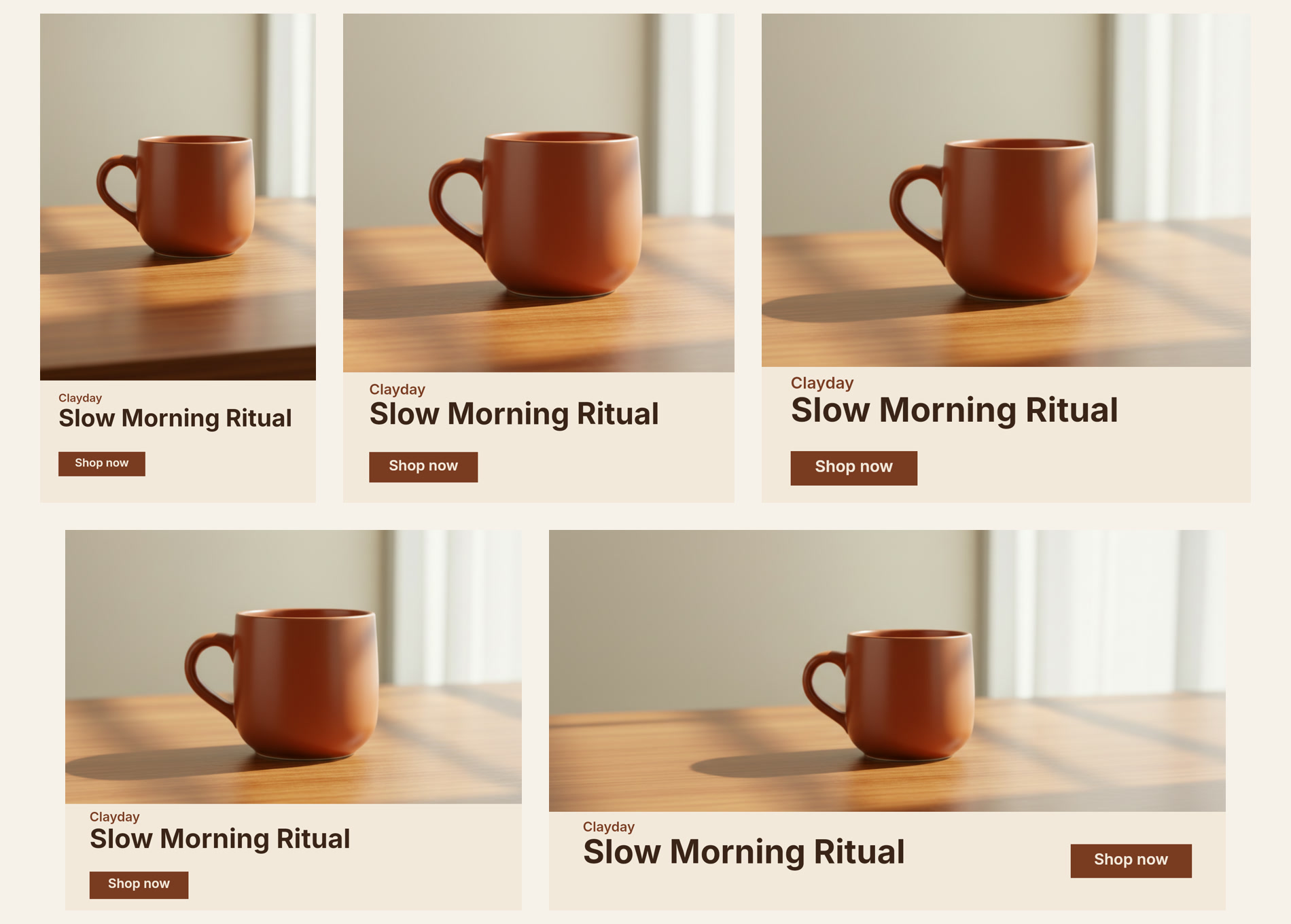
We tested Variants' core job: one approved ad in, every placement out. The product was our own terracotta mug packshot, sold by a made-up brand, Clayday. Nano Banana made a 4:5 master picture of the mug on a wooden table in morning light, and the master Compositor added "Clayday", "Slow Morning Ritual" and a "Shop now" button. We built and ran it in the visual node editor.
| Measure | Our run on 20 October 2026 |
|---|---|
| Credits used | 51 (master 12, three reframes 36, translator 3) |
| Placements | 5: 1080x1920, 1080x1350, 1080x1080, 1200x1000, 1920x1080 |
| Time per Nano Banana stage | 18 to 26 seconds |
| Compositors | 0 credits |
| Failed takes | 1 (the first 9:16 try, a provider error, not charged) |
At current plan prices ($24 for 1,600 credits on Starter, $45 for 4,300 on Professional), 51 credits cost $0.77 or $0.53. Luma does not list a price for Variants, so we cannot set the two side by side.
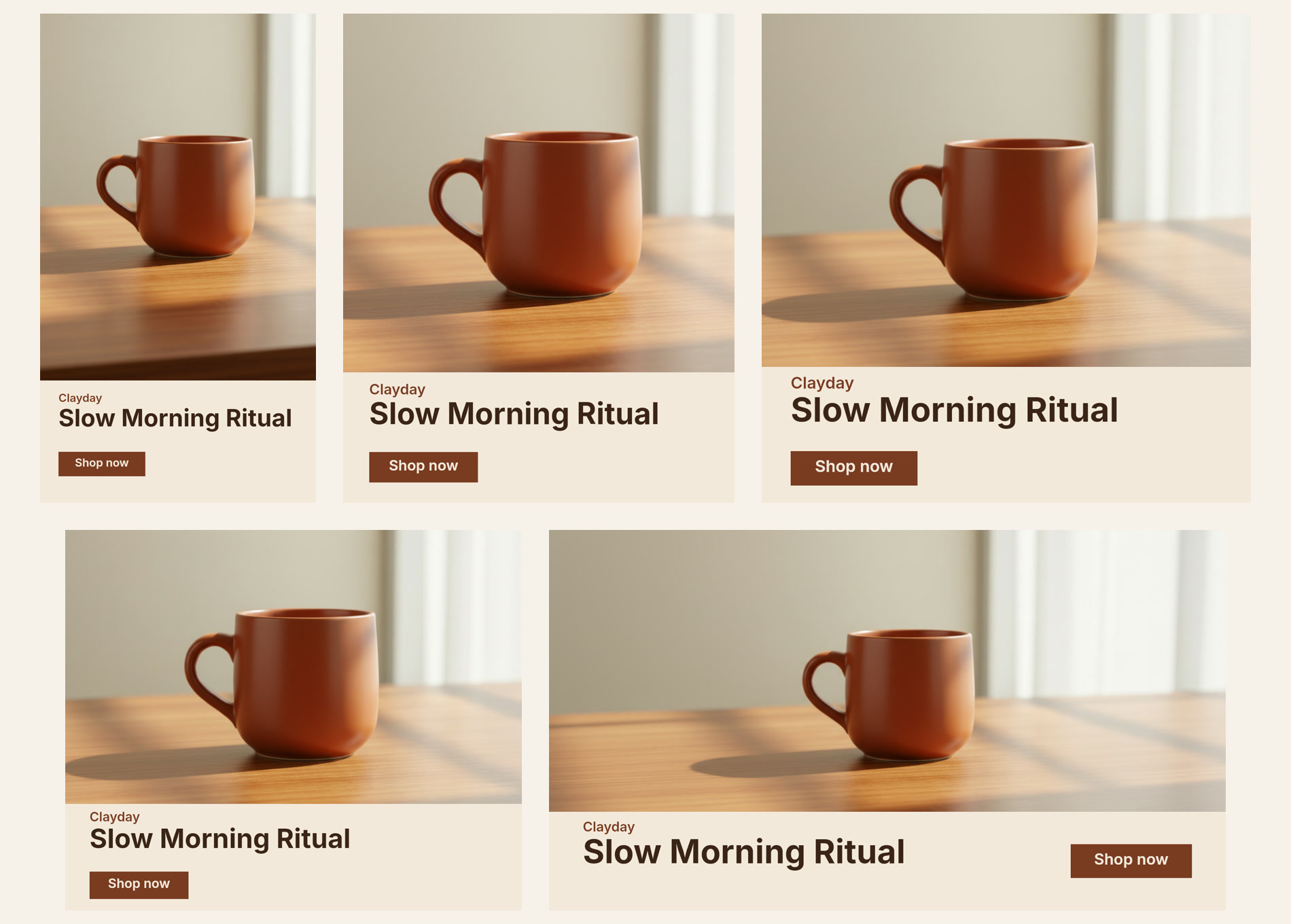
The reframes held: the same mug, handle, table and window light in every size, with the 16:9 widening the table and wall instead of stretching the picture. The copy reads exactly "Clayday", "Slow Morning Ritual" and "Shop now" on all five, because it is typed into the Compositor, not drawn by the image model. That is the gap in many tools in our static ad creative generators list. See all five sizes.
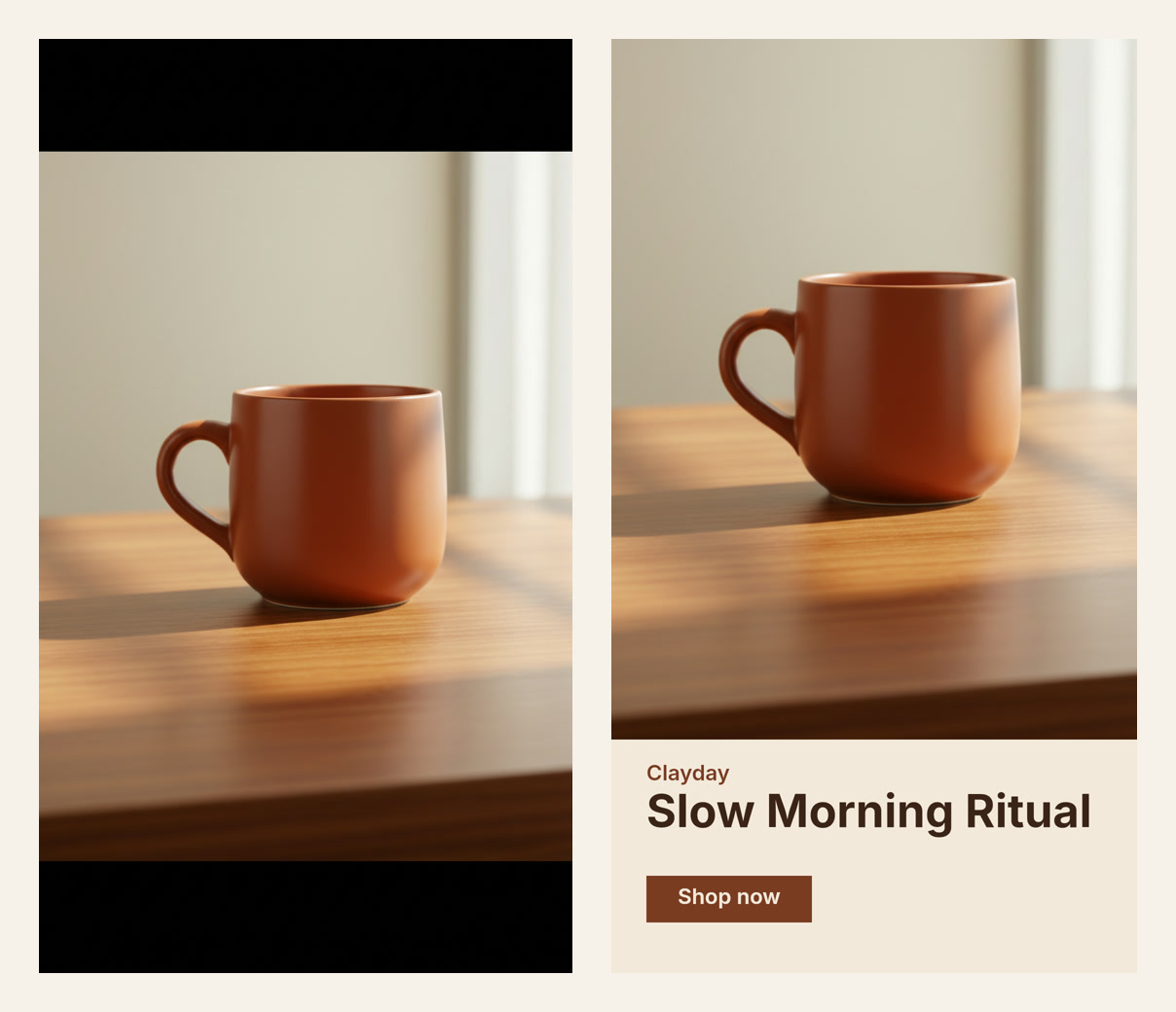
The honest flaws. Nano Banana letterboxed the 9:16 picture: it drew the scene at 3:4 and padded it with black bars. We fixed it for free by moving the picture 260 px up in the Story Compositor, so the bars sit off the canvas and under the copy band; the node label says how to undo that for a picture that fills the frame. The 6:5 rectangle is a crop of the square picture, not its own reframe. The mug comes out a little deeper red than the packshot under the warm light.
Translation is where Luma goes further. Our translator returned "Ritual de mañana pausado / Comprar ahora" for Spain, "Ruhiges Morgenritual / Jetzt kaufen" for Germany and "Rituel matinal en douceur / Acheter maintenant" for France, as text you paste into a copy of each Compositor. We did not render translated ads in this demo, and a native speaker should check the lines before they run. Luma also changes the layout per placement on its own; our Compositors use layouts you set once.
For video ads, the sibling remake swaps the product inside the clip instead: see our Higgsfield Ad Multiplier alternative.
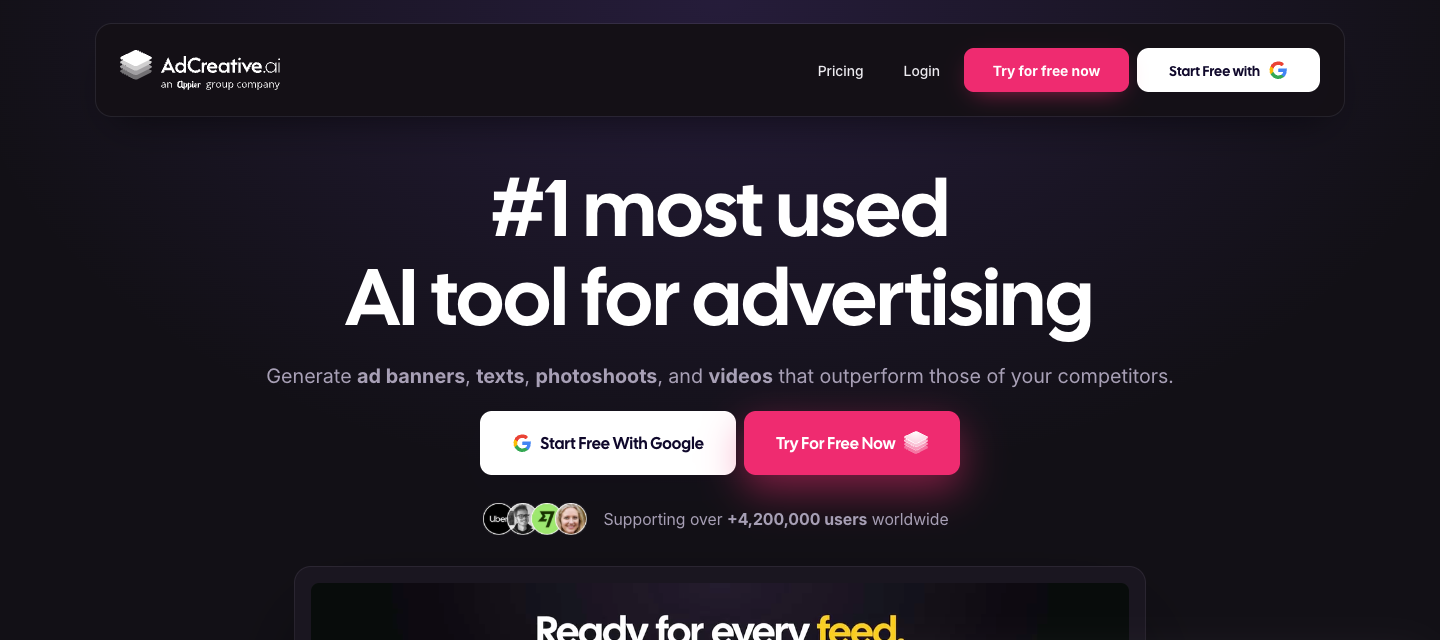
2. AdCreative: Best for self-serve resizing
AdCreative says it generates ad creatives in all required sizes and formats for social, search and display, adapts them for Meta, Google and LinkedIn without manual resizing, and can push them straight to those ad accounts. Its homepage listed Starter at $39 a month on monthly billing when we read it, among several promo price versions, with a 7 day trial of 10 credits. Compare it in our AdCreative alternative page.
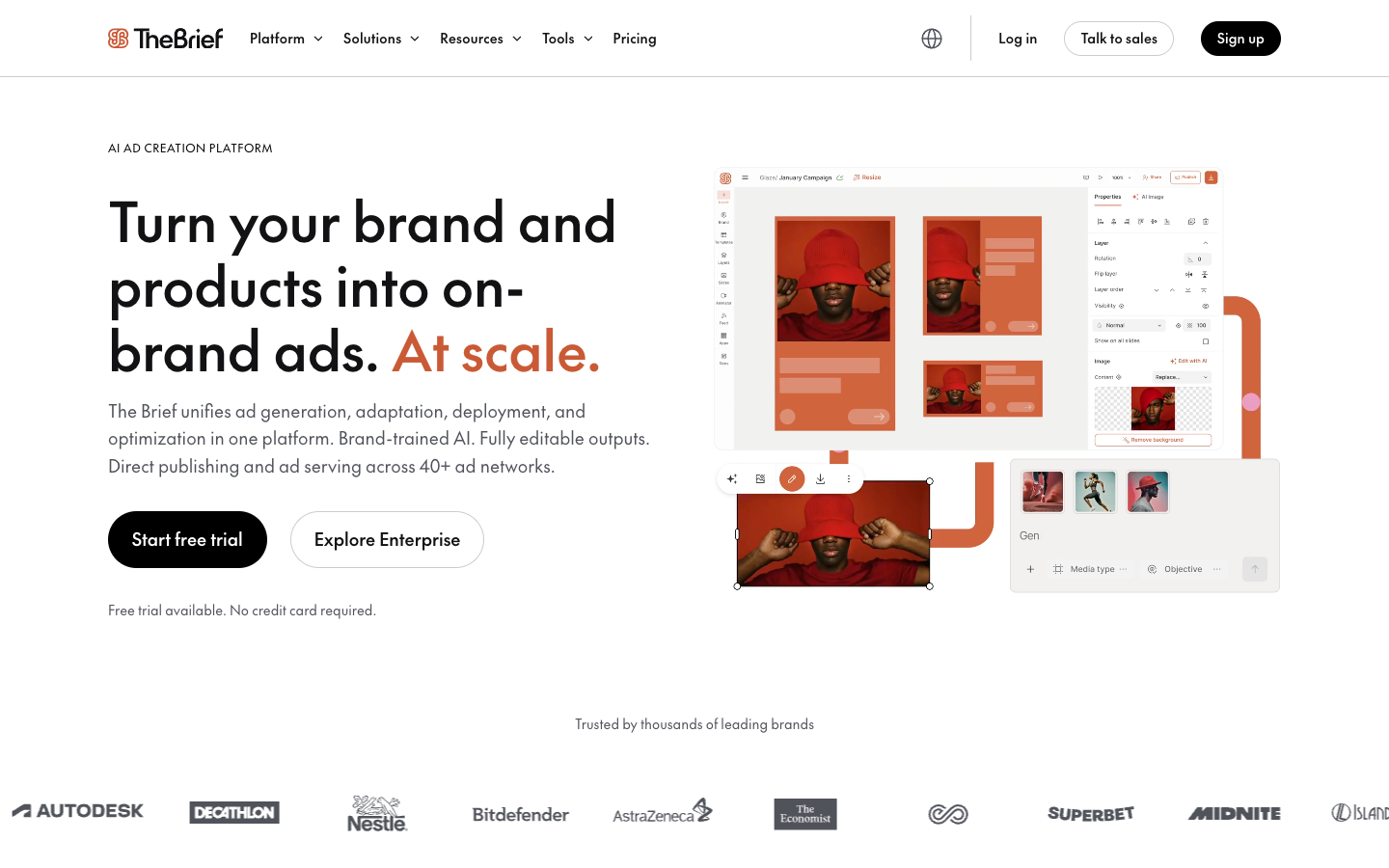
3. The Brief (formerly Creatopy): Best for small teams
The Brief, formerly Creatopy, is a platform for designing, generating, publishing and serving ads. Create (Pro) is $29 a month billed annually for one seat, with 5 brand kits and a 7 day trial with no card. API access is listed only on Enterprise. See our ad creative automation tools.
4. Bannerflow: Best for display at volume
Bannerflow scales one master creative into many formats and builds dynamic ads from product feeds, with reviews, approvals and version control. It says it connects to 100+ ad platforms across display, social, affiliate and DOOH. There are no public prices; access starts with a demo. More in our creative automation software guide.
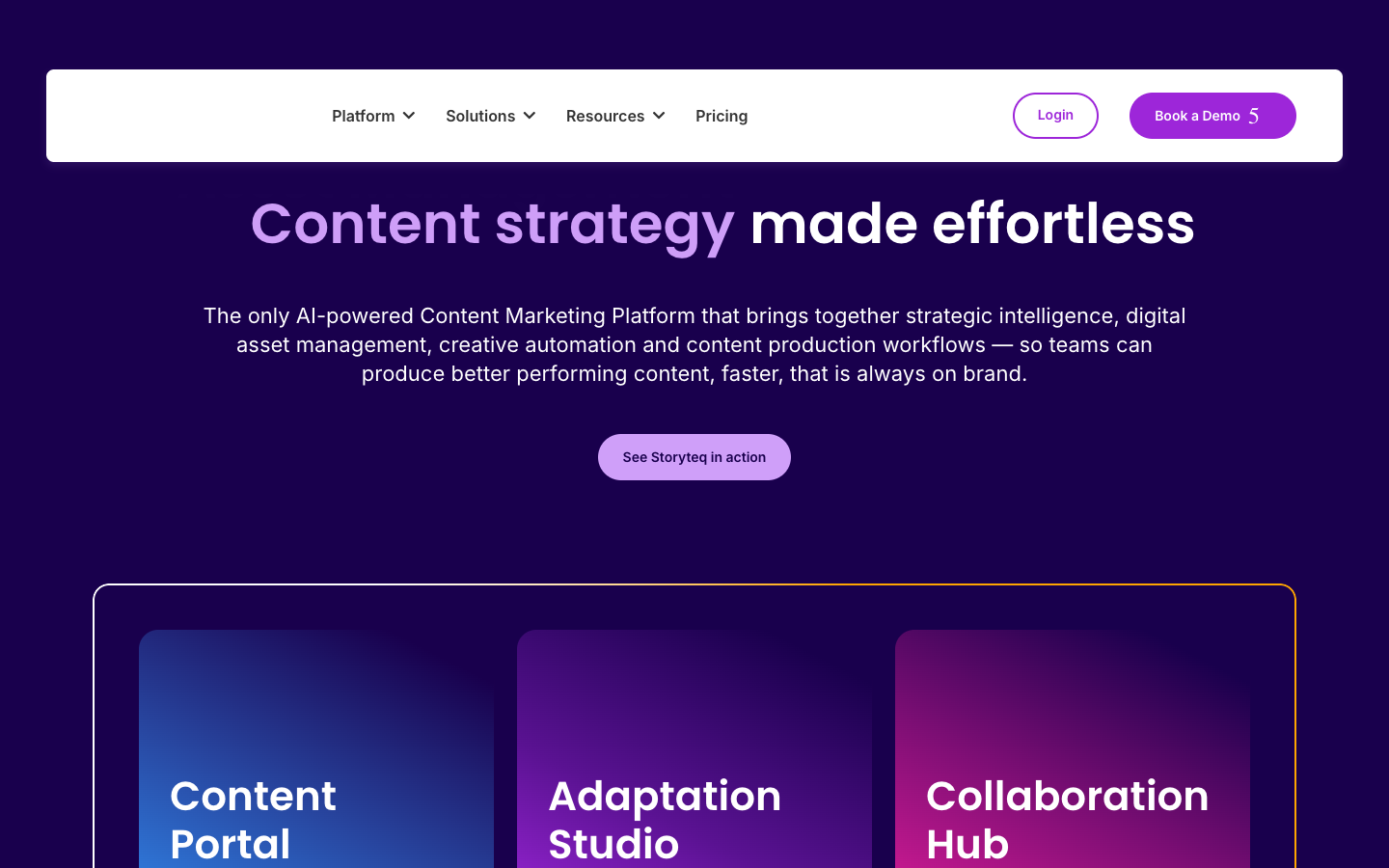
5. Storyteq: Best for localisation
Storyteq has an Adaptation Studio that versions content for every channel and market, and a Collaboration Hub for briefs, reviews and approvals. Both packages are Price on Application, with a one-off implementation charge and an annual licence by user tier. It suits teams planning to scale ad creative production across countries.
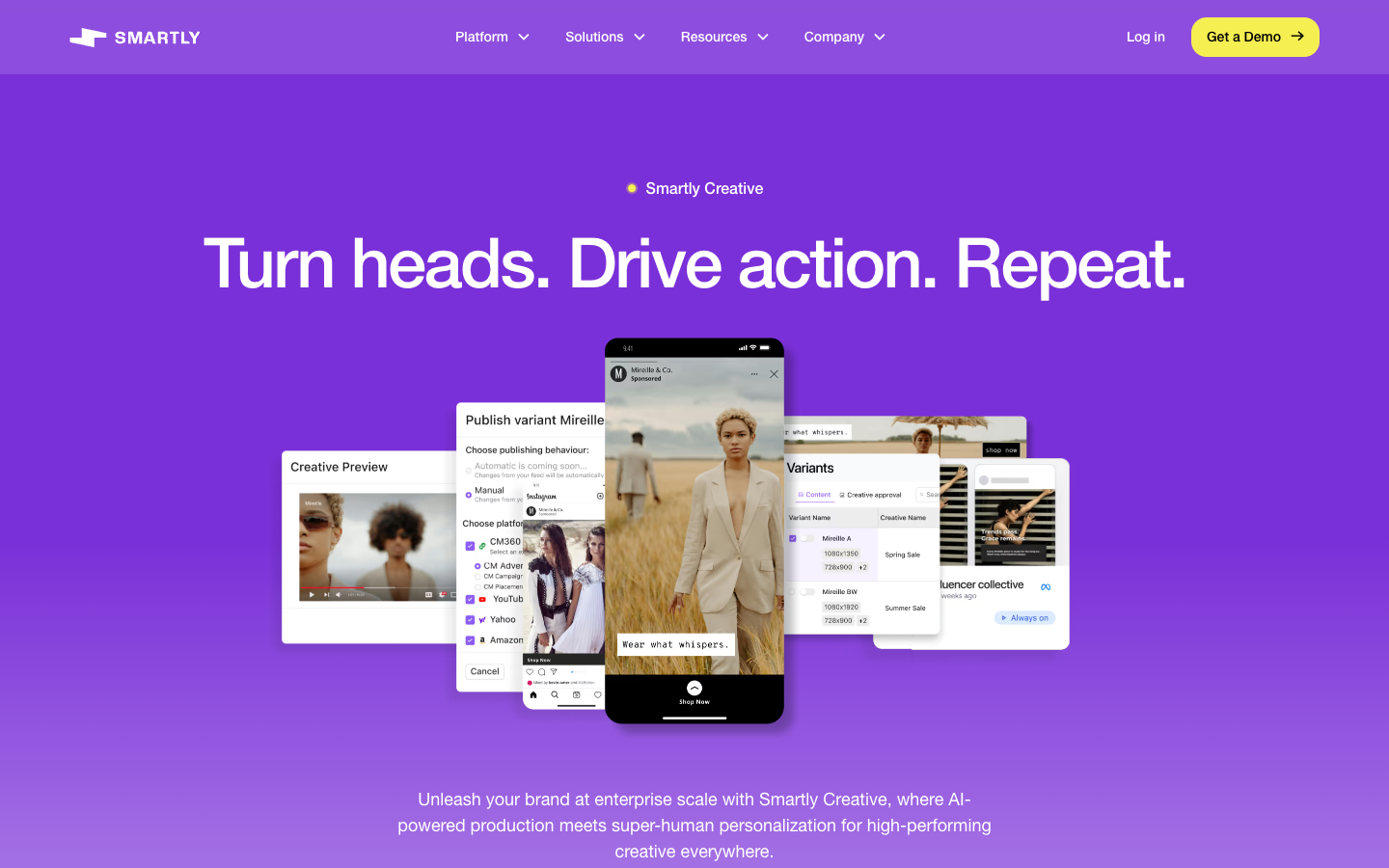
6. Smartly: Best for paid social at scale
Smartly's creative suite offers image, video, audio and HTML5 templates, or imports your own from After Effects, Photoshop, Figma or Google Web Designer. Its Producer is where teams adapt, approve and launch ads across channels. No prices are shown; the path is Get a Demo. Agencies can compare it with an ad creative generator for agencies.
7. Placid: Best for template automation
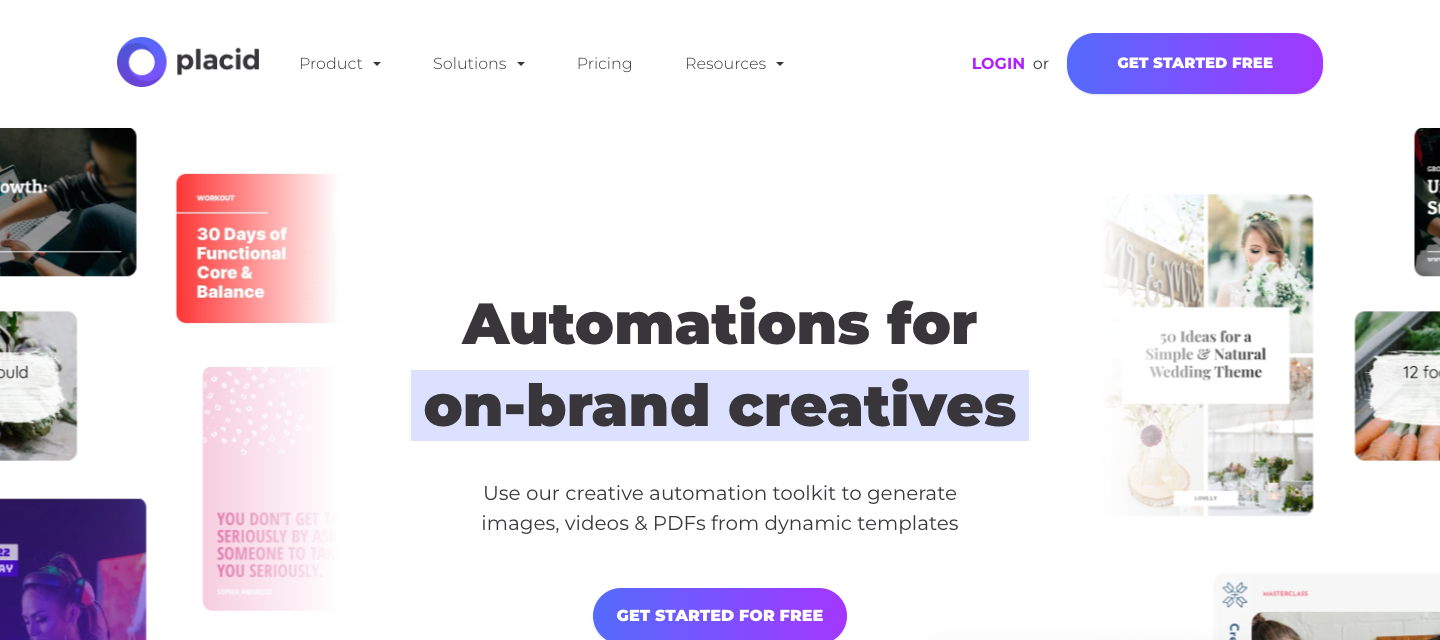
Placid fills templates with your text, photos or videos, and its dynamic text and images resize to fit each template. Basic is $19 a month with 500 credits, and one image costs one credit. It has REST APIs and an MCP, and the trial needs no card. It is classic creative automation software: you design each size once as a template.
8. Bannerbear: Best for developers
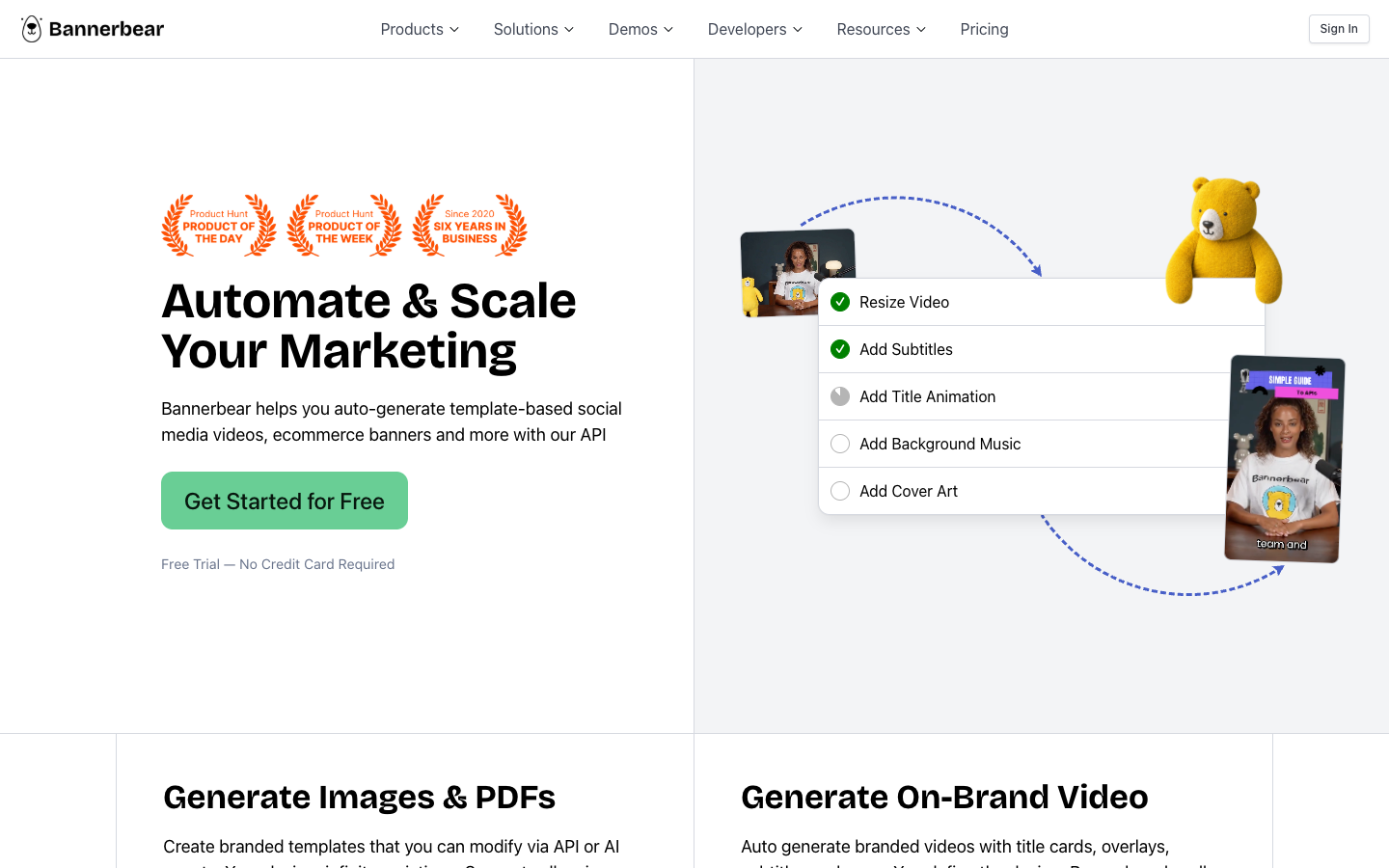
Bannerbear renders images, videos and PDFs from branded templates through a REST API or an MCP. Automate is $49 a month with 1,000 API credits, and one render costs one credit per format requested. The trial has 30 API credits and no card. See our Bannerbear alternative page.
Comparison table
Rows come from vendor pages read between 11 and 20 October 2026. For feed-first formats, see our Facebook ad creative generators.
| Tool | Starts from | Sizes | Translation | Price shown |
|---|---|---|---|---|
| Luma Variants | One approved static ad | 5 placements | Yes, pick languages | No Variants price; Luma plans from $30 a month |
| Wireflow Ad Variants | Approved picture plus typed copy | 5 in our demo, add more | Translator node, you paste the lines | 51 credits on our run |
| AdCreative | A generated creative | All required sizes, per AdCreative | Not stated | Starter $39 a month, monthly |
| The Brief | A design or generated ad | Adaptation | Not stated | $29 a month, billed annually |
| Bannerflow | A master creative | Many formats | Not stated | Demo only |
| Storyteq | Your content | Every channel and market | Yes, per market | Price on application |
| Smartly | Templates | Across channels | Not stated | Demo only |
| Placid | A template per size | Dynamic resize inside templates | Not stated | $19 a month for 500 credits |
| Bannerbear | A template per size | One render per format | Not stated | $49 a month for 1,000 API credits |
Which tool suits which job
- Every size and language in one app, layout adapted for you: Luma Variants.
- Every size with copy you can check letter by letter, free to fork: the Wireflow Ad Variants blueprint.
- Generated ads pushed straight to Meta, Google and LinkedIn: AdCreative.
- Enterprise localisation with approvals: Storyteq or Bannerflow.
- Paid social across many channels with a demo-led setup: Smartly.
- Templates driven by data or code: Placid or Bannerbear.
Try it yourself: Fork the free Ad Variants blueprint. Swap in your product photo or approved picture, type your copy into each Compositor, list your markets, and run.
FAQ
What is Luma Variants?
A Luma tool, launched on 1 October 2026, that turns one approved static ad into versions for five placements (9:16, 4:5, 1:1, 6:5 and 16:9) and the languages you pick, keeping the logo, headline and CTA.
How much does Luma Variants cost?
Luma does not list a separate price. It runs inside Luma, whose plans start at $30 a month for 10,000 credits.
Is there a free Luma Variants alternative?
The Wireflow Ad Variants blueprint is free to fork; a run needs a paid plan and cost 51 credits for five sizes and three translations on our test. Our Higgsfield Katana alternative is another free remake.
Why not let the image model write the headline?
Image models still misspell longer words. In an earlier Wireflow test Nano Banana drew "Stonware" for "Stoneware" on two takes, so this board keeps every word in a text layer.
Which ad sizes do I need?
Luma's five cover most placements: Story 9:16, Portrait 4:5, Square 1:1, Medium Rectangle 6:5 (the shape of the common 300 x 250 display unit) and Widescreen 16:9. Test which ones earn their spend with ad creative testing at scale.
Can I translate the ad copy too?
Yes. Luma renders translated ads for you. The Wireflow board's translator node returns the lines for each market, and you paste them into a copy of each Compositor; have a native speaker check them first.
Conclusion
Luma Variants is the stronger pick when you want every size and language rendered and laid out for you inside one app. If you want every word exact, every step visible and a board you fork once and rerun per campaign, Wireflow does it as a free blueprint, 51 credits for five sizes on our test, next to the rest of your AI ad generator work.

Co-Founder & Operations at Wireflow
Runs client operations and content strategy at Wireflow. Works directly with creative teams and agencies to build production AI workflows.
- Content Strategy
- Client Operations
Make AI videos and ads.
Start free, no card needed.