Static ads still carry most paid social budgets, and the tools that produce them have split into two camps: template engines that resize one design across placements, and AI generators that write, design and score new creative from a brief. This guide ranks the eight best static ad creative generators in 2026 on output quality, variant volume, brand control and price, starting with Wireflow, which chains image models on a canvas so one brief produces a full set of finished placements in a single run.
Quick Summary
- Wireflow: node canvas that chains image models into a static ad pipeline. Best Overall
- AdCreative.ai: brand-kit driven variant generation with conversion scoring. Best for Variant Volume
- Creatopy: one design auto-resized across every banner and social size. Best for Multi-Size Output
- Canva: free tier plus AI generation for teams without a designer. Best Free
- Adobe Express: commercially safe Firefly generation with brand locks. Best for Brand Safety
- Pencil: predicted performance scoring before spend. Best for Performance Teams
- Predis.ai: paid and organic static creative in one scheduling tool. Best for Social Teams
- Bannerbear: API-first image generation from templates and data. Best for Developers
Rankings weigh four things a performance team actually feels: how good the raw output looks at feed resolution, how many usable variants come out of one brief, whether brand rules hold across the set, and what the tool costs to run at volume. If you want the wider category that includes video, the broader ad creative AI tool roundup covers both formats.
1. Wireflow: Best Overall
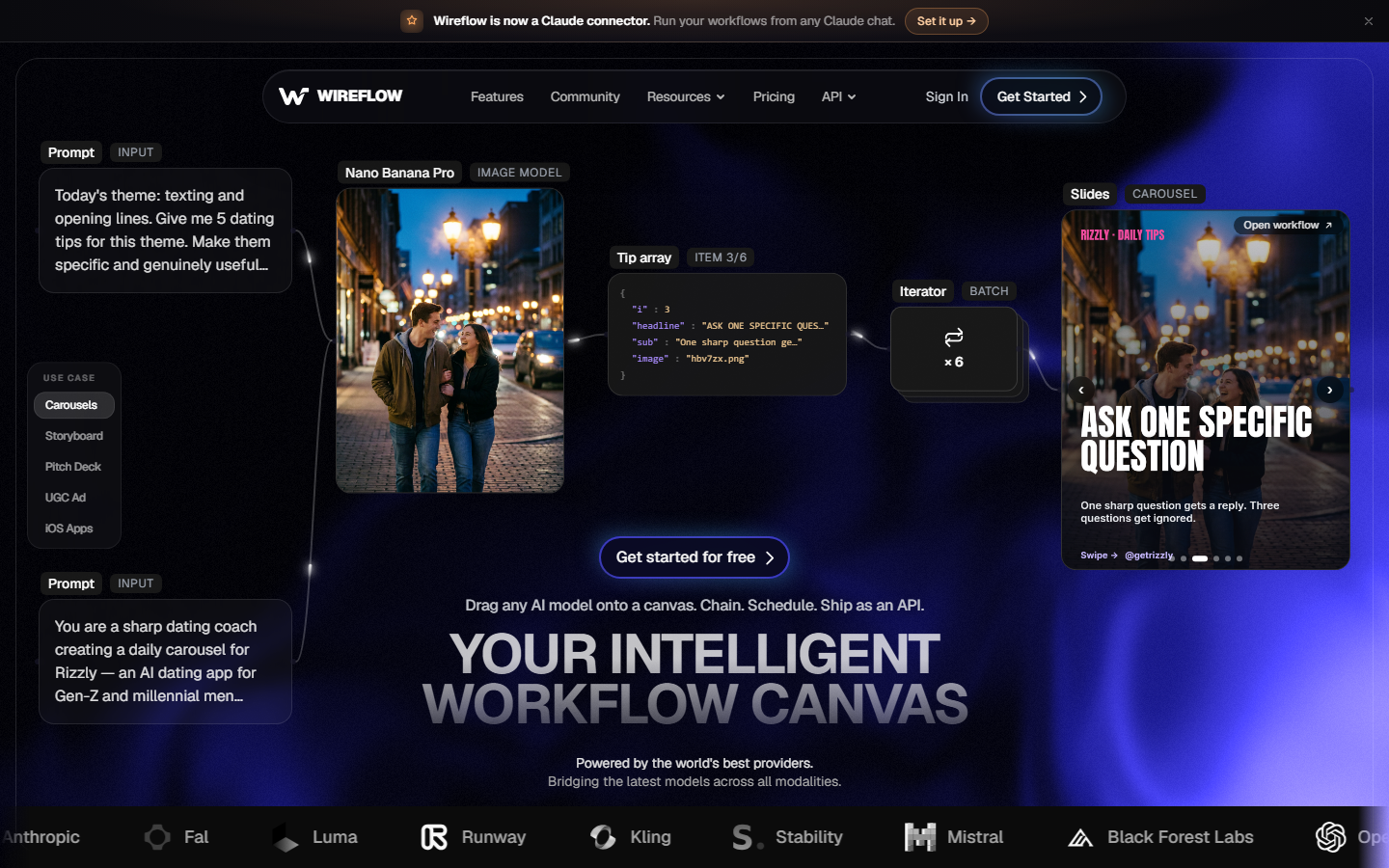
Wireflow is a node canvas where each box is a model and the wires between them are your pipeline. For static ads that means a brief node feeding an image model, which feeds a compositor node that drops in the logo, headline and legal line, which feeds an editor node that writes out the placement sizes. Because the canvas is the pipeline, changing the hook means editing one text node and re-running rather than redoing a batch by hand.
The practical difference from single-model tools is that you are not stuck with one generator's aesthetic. A product shot can come from one model, a lifestyle background from another, and the two get composited in the same run. Teams that already run this pattern for paid social tend to describe it in terms of throughput rather than novelty, which is the same framing used in scaling ad creative production.
Pricing is credit-based with a free tier to build and test a canvas before committing. The tradeoff is real: a canvas takes longer to set up than typing a prompt into a template tool, and that setup only pays back if you are producing creative repeatedly rather than one-off. Agencies running several brands get the most out of it, which is why the agency workflows page leans on saved canvases as reusable assets.
Verdict: the strongest option if you want repeatable static ad output and are willing to build the pipeline once.
2. AdCreative.ai: Best for Variant Volume
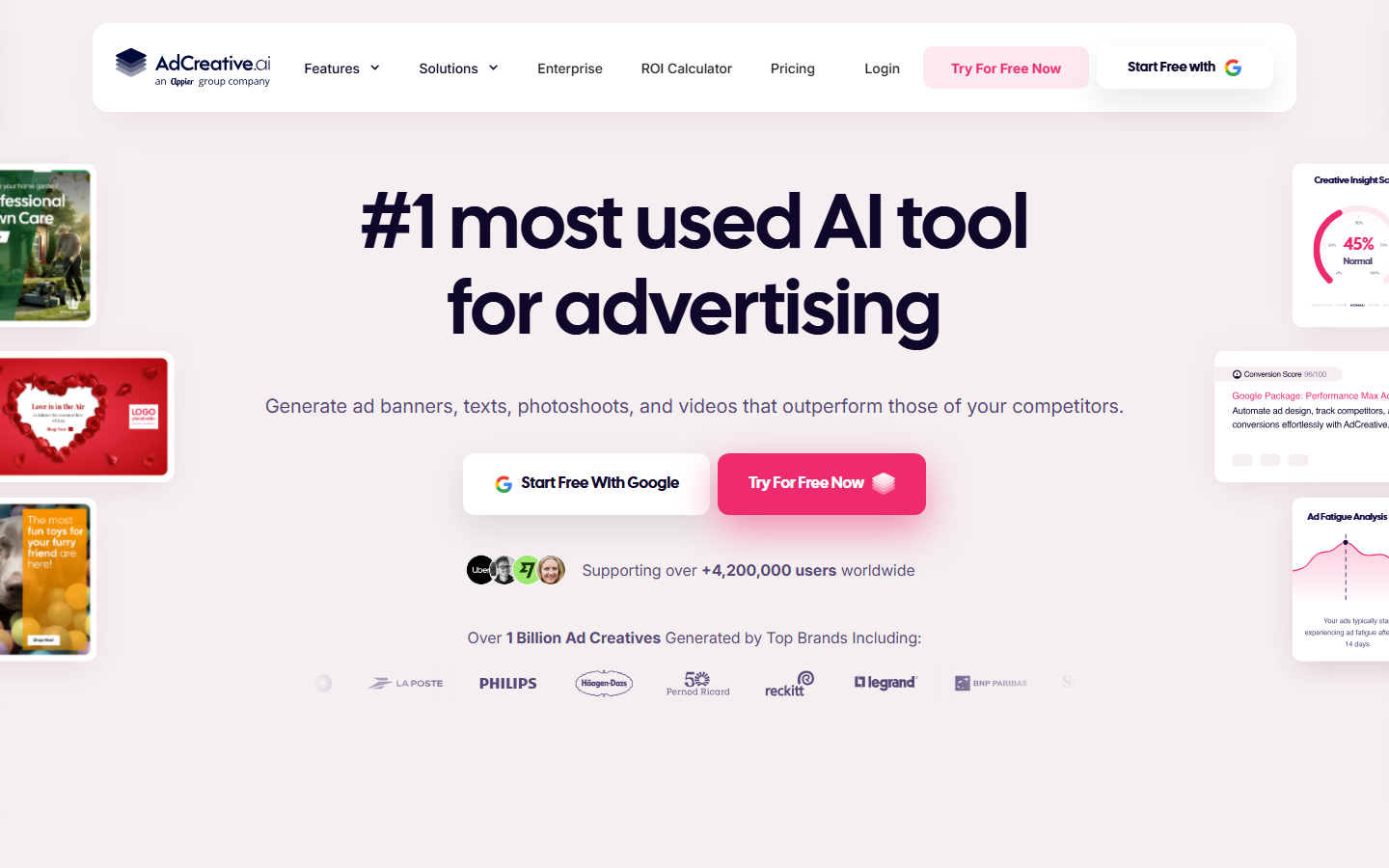
AdCreative.ai is built around generating large batches of static and carousel variants from a saved brand kit, then ranking each one with a conversion score trained on past ad performance. You load logos, fonts and colors once and every generated set stays inside those rules, which removes most of the manual cleanup that kills template tools at volume.
Paid plans start around $21 per month and scale with credits and brand slots. The output is unmistakably template-derived, so it works better for direct response than for brand campaigns where the creative itself is the differentiator. The scoring is directional rather than predictive, and treating it as a sort order instead of a guarantee is the right way to use it. That distinction matters more than most teams assume, as covered in ad creative testing at scale.
Verdict: the fastest path from a brand kit to fifty on-brand static variants.
3. Creatopy: Best for Multi-Size Output
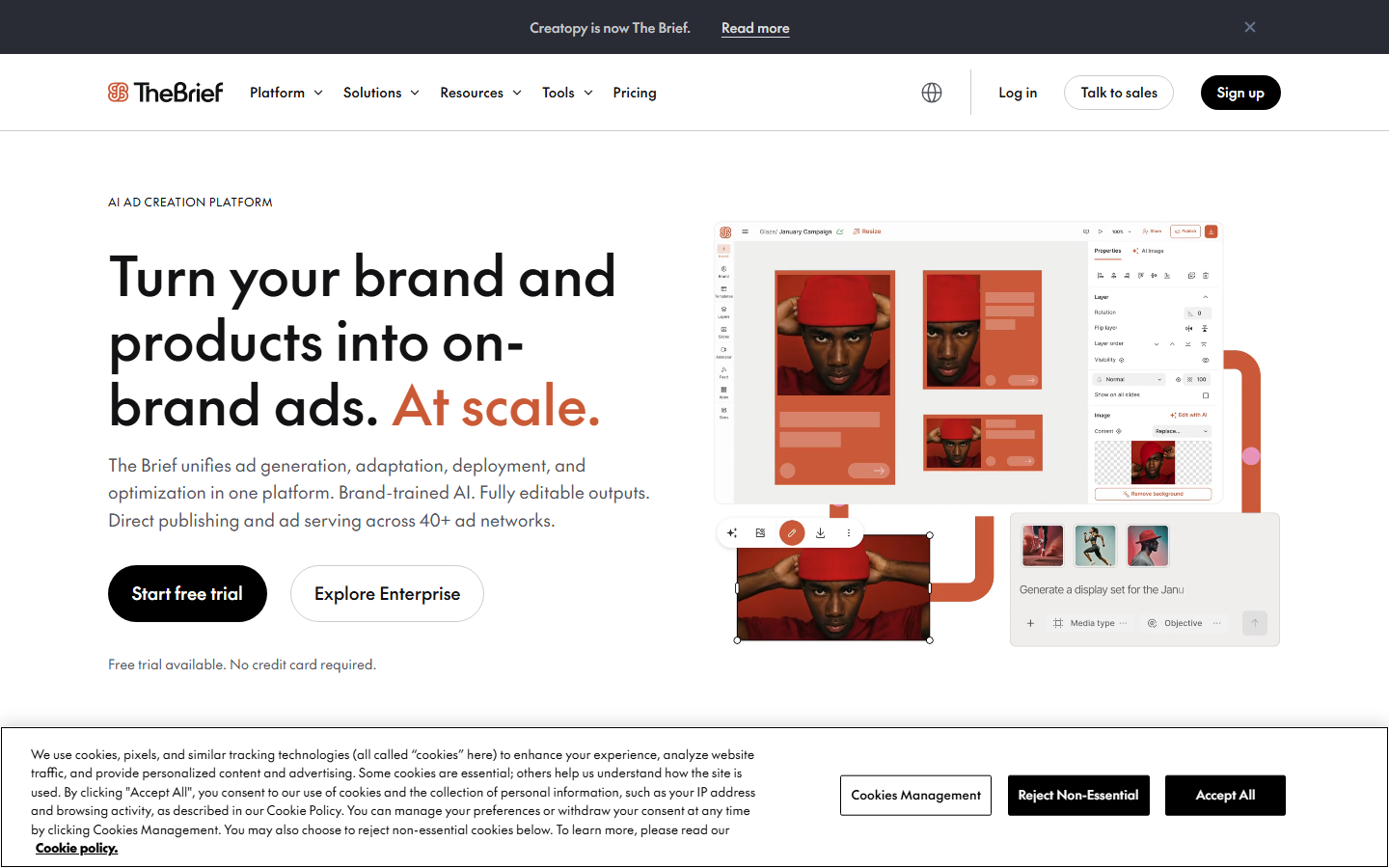
Creatopy specializes in the part of advertising nobody enjoys: taking one approved design and producing it in every banner and social size a media plan calls for, with animation and feed-driven personalization on top. Entry plans start around $36 per month.
Its AI generation is lighter than the pure-generator tools on this list, so it is better understood as a production system with AI assists than as an idea machine. Display-heavy advertisers with an existing design language get the most value, since the work is replication rather than invention. Teams pairing it with a generator upstream usually build something close to the setup described in ad creative automation.
Verdict: best when the bottleneck is sizes and versions, not ideas.
4. Canva: Best Free
Canva is not an ad platform, but its free tier and built-in AI image generation make it the default starting point for teams with no design resource. Pro sits around $15 per month per user and adds background removal, brand kits and one-click resize.
The template library is both the strength and the weakness: it gets a non-designer to a passable static ad in minutes, and it also means your creative looks like a lot of other creative in the same feed. For founders producing their first round of ads it is the correct choice, and the same reasoning applies to the adjacent job covered in creating social media banners with AI.
Verdict: the best free option, with the ceiling you would expect from templates.
5. Adobe Express: Best for Brand Safety
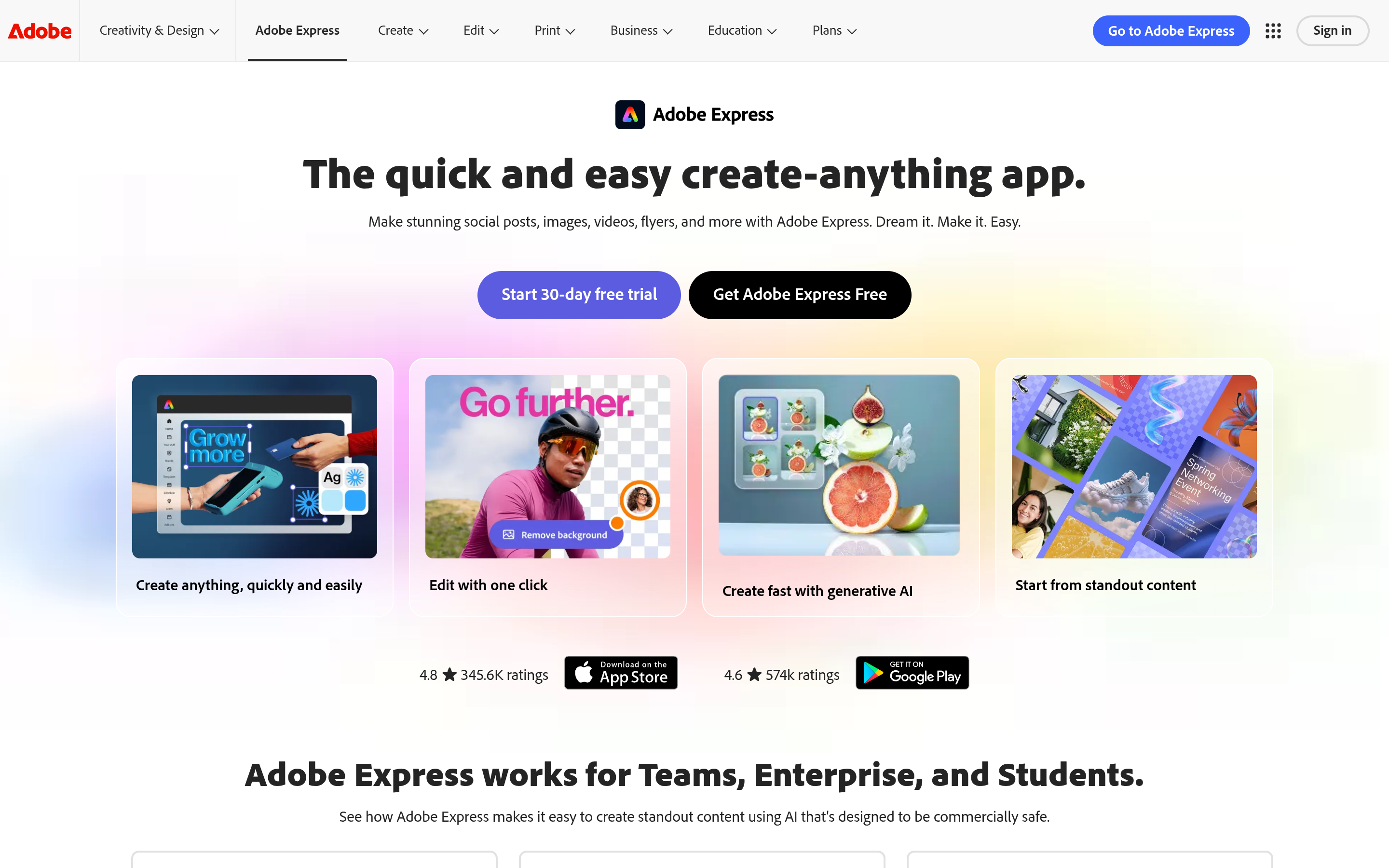
Adobe Express pairs Firefly generation with brand locks that prevent a generated asset from drifting off approved fonts and colors. Firefly is trained on licensed and public-domain content, which is the reason regulated and enterprise advertisers keep choosing it over faster alternatives.
Generation quality sits behind the frontier image models, and the gap is visible on complex product scenes. What you get in exchange is provenance you can defend in a legal review, plus tight handoff to the rest of the Creative Cloud stack. Free and paid tiers both exist, with the paid plan around $10 per month. For teams building a reusable visual system first, the approach in AI brand kit generators pairs naturally with it.
Verdict: pick this when content licensing and brand governance outrank raw output quality.
6. Pencil: Best for Performance Teams
Pencil generates static creative and then scores it against a model trained on historical ad performance, so you get a predicted ranking before you spend. It connects to ad accounts to close the loop between what was generated and what actually converted, which is the feature most of this category is missing.
Access is enterprise-oriented and priced accordingly, so it is a poor fit for a solo founder or a small store. Where it earns its cost is on accounts spending enough that a few points of CTR improvement is worth more than the seat. Buying signals and placement logic are close to what the Facebook ad creative generator page describes for Meta specifically.
Verdict: the strongest choice for teams that already measure creative rigorously.
7. Predis.ai: Best for Social Teams
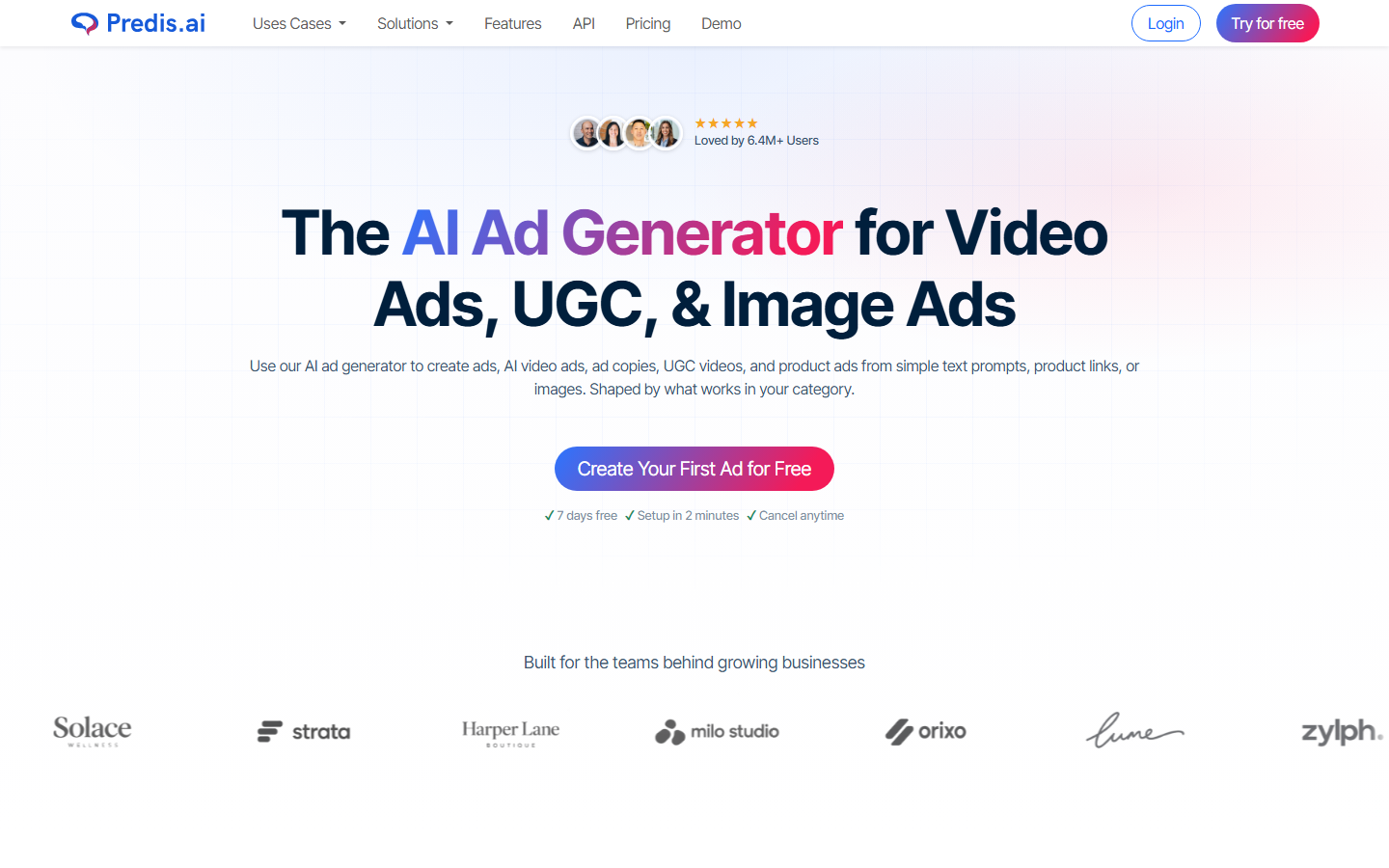
Predis.ai covers organic social posts and paid static creative from the same interface, with scheduling attached so the asset goes from generated to published without an export step. There is a free tier and paid plans start around $32 per month.
The single-surface workflow is the point. Social managers who own both organic and paid calendars stop juggling a design tool, a scheduler and a spreadsheet. Output quality is mid-tier and the carousel generation is stronger than the single-image generation, a pattern also visible in the tools covered in Instagram ad creative makers.
Verdict: best when one person owns organic and paid and needs both in one place.
8. Bannerbear: Best for Developers
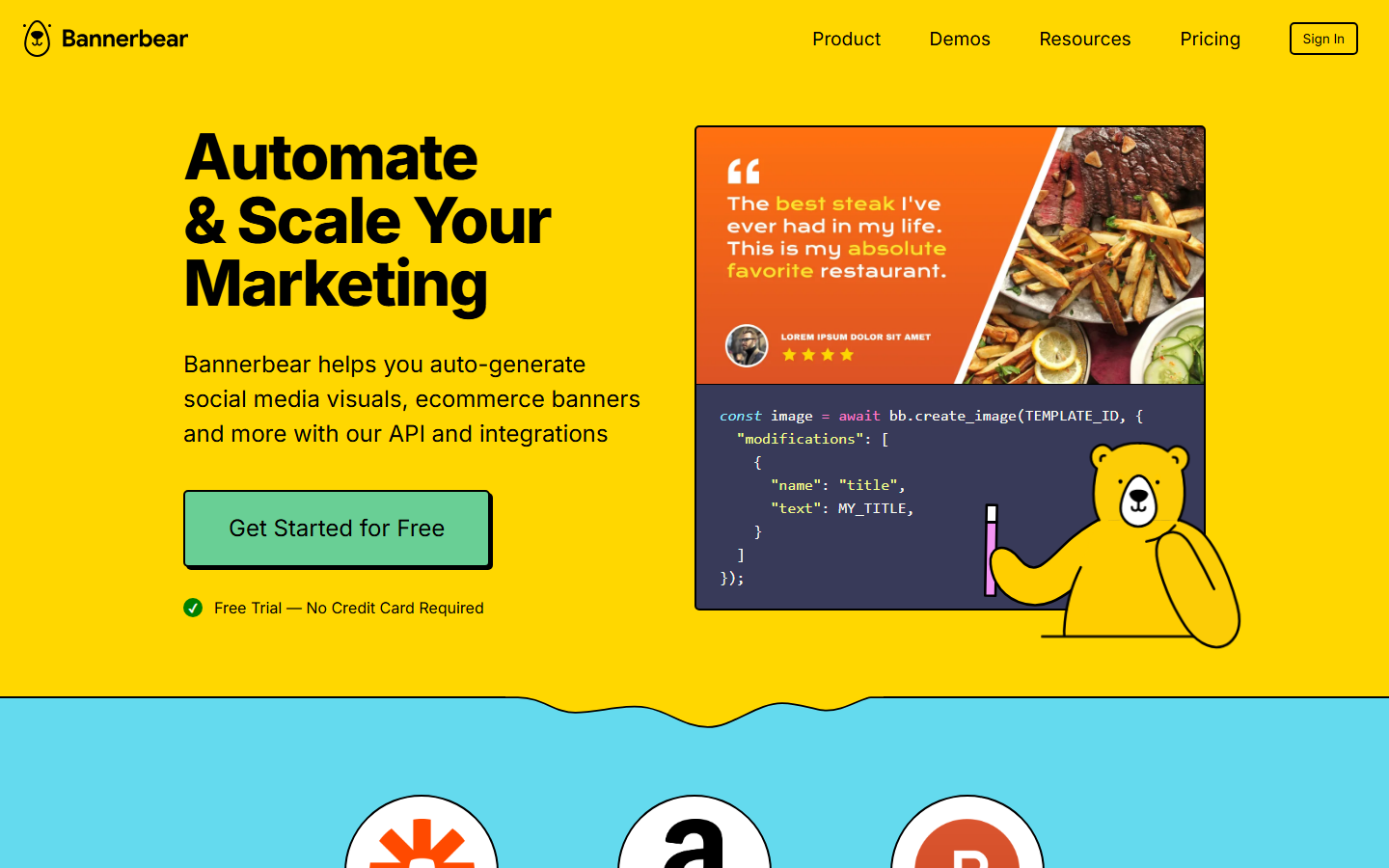
Bannerbear is an API rather than an interface. You design a template once, then POST data to it and get back rendered images, which makes it the right tool for programmatic creative: per-product ads from a catalog feed, per-city variants, personalized retargeting images.
It generates nothing on its own, so the creative idea has to exist before Bannerbear is useful. Paired with an upstream image model it becomes the rendering layer of a larger pipeline. Pricing starts around $49 per month and scales with render volume. Teams wiring it into an existing stack usually start from something like the image generation API guide for developers.
Verdict: the best programmatic option, and not a generator in the AI sense.
Comparison Table
| Tool | Best for | Starting price | AI generation | Multi-size export | Performance scoring |
|---|---|---|---|---|---|
| Wireflow | Chained model pipelines | Free tier, credit-based | Yes, multi-model | Yes | No |
| AdCreative.ai | Variant volume | ~$21/mo | Yes | Yes | Yes |
| Creatopy | Banner and size sets | ~$36/mo | Limited | Yes | No |
| Canva | Non-designers | Free, Pro ~$15/mo | Yes | Yes | No |
| Adobe Express | Brand safety | Free, paid ~$10/mo | Yes (Firefly) | Yes | No |
| Pencil | Performance teams | Enterprise | Yes | Yes | Yes |
| Predis.ai | Social managers | Free, paid ~$32/mo | Yes | Partial | No |
| Bannerbear | Developers | ~$49/mo | No | Yes | No |
How to Choose
Match the tool to your bottleneck rather than to its feature list. If you cannot produce enough ideas, pick a generator: Wireflow, AdCreative.ai or Adobe Express. If you have ideas and cannot produce enough versions, pick a production system: Creatopy or Bannerbear. If you have both and cannot tell which creative works, pick Pencil and instrument the account properly, along the lines of the setup in ad creative automation tools.
Budget sorts the rest. Under $50 per month, Canva and Predis.ai cover most of what a small team needs. Between $50 and $500, AdCreative.ai plus a rendering layer handles real volume. Above that, custom pipelines beat any single product, because the cost of building one is small next to the media spend it supports. The same logic shows up in the Google ad creative generator breakdown.
One rule holds across every tier: generate more concepts than you think you need and kill them fast. Static ads fatigue, and the teams that win are the ones with a refill pipeline rather than a good single ad. That is also why UGC-style static and video ads get rotated in alongside polished studio creative rather than replacing it.
Try it yourself: Open the Ad Creative Generator workflow. A two-node pipeline that takes an ad brief and returns a finished static ad creative, pre-configured with the setup discussed above.
FAQ
What is a static ad creative generator?
It is a tool that produces non-video ad images, either by generating them with AI models from a text brief or by rendering an existing design across the sizes and variants a campaign needs. Most tools in 2026 do some of both.
Are static ads still worth running in 2026?
Yes. Static creative remains cheaper to produce and test than video, loads instantly in feed, and still wins a large share of placements on Meta and Google. Most accounts run both, with statics doing the volume testing and video carrying the winners.
Which static ad generator produces the best output quality?
For raw image quality, tools built on current frontier image models lead, which includes Wireflow and AdCreative.ai. Template-based tools like Creatopy and Canva produce cleaner, more predictable layouts but a more recognizable look.
Can these tools keep ads on-brand?
Brand kits in AdCreative.ai, Canva and Adobe Express lock fonts, colors and logos across generated sets. Pipeline tools enforce brand through a compositor step instead, which is stricter but requires setup.
How many static variants should I test at once?
Five to ten distinct concepts per campaign, with two or three executions each, is a common starting point. Test concepts against each other first, then test executions inside the winning concept.
Do AI-generated ads get rejected by ad platforms?
Rejections usually come from claims in the copy or from visible text violations, not from the image being AI-generated. Meta and Google both allow AI creative; some placements require disclosure for realistic depictions of people.
What does a static ad generator cost?
Free tiers exist on Canva, Adobe Express and Predis.ai. Serious volume typically lands between $20 and $60 per month for a single-tool setup, with enterprise performance platforms priced considerably higher.
Is it better to buy a tool or build a pipeline?
Buy when your volume is low or irregular. Build when you produce creative every week, run multiple brands, or need models the packaged tools do not offer. The break-even usually arrives faster than teams expect.
Conclusion
The static ad category in 2026 splits cleanly. Template systems like Creatopy, Canva and Bannerbear are production infrastructure, fast and predictable inside a design language you already have. AI generators like AdCreative.ai, Adobe Express and Pencil produce the concepts, each with a different tradeoff between output quality, licensing safety and measurement. Choose based on which of those two problems is actually slowing you down, and be honest about which one it is.
For teams that outgrow both, a chained pipeline is the next step: pick the model for each stage, composite the brand layer, and export the placement set in one run. That is the approach the static and paid creative tooling on Wireflow is built around, and it scales with volume rather than against it.
Would you rather we just built it?
We get on a call, learn your style, build the workflow, and ship the deliverables on a schedule. You keep the workflow either way.