The best UGC style ads tools in 2026 are ranked here by how convincingly their output reads as real creator footage, with pricing, limits and the buyer each one fits. These are paid ads built to look like organic creator video, and most are now generated rather than filmed. The canvas platform Wireflow leads the list because it chains script, avatar performance and edit into one re-runnable flow, while most tools handle a single step.
Quick Summary
- Wireflow (Best Overall). Node canvas chaining script, avatar and edit into one repeatable flow.
- Arcads (Best for Realistic Delivery). Script-to-actor reads that pass as a real creator.
- Creatify (Best for Product URL Ads). Paste a product link, get avatar ads with captions.
- HeyGen (Best for Multilingual UGC). Large avatar library with translation and lip sync.
- Captions (Best for Editing and Subtitles). Editor with eye contact correction and auto captions.
- TopView AI (Best Budget Pick). Low cost per clip for early creative testing.
- MakeUGC (Best for Simple Talking Heads). Fast single-format output with minimal setup.
- Synthesia (Best for Corporate Video). Polished avatars, but studio-clean rather than creator-style.
How We Ranked These Tools
The ranking criterion is believability at feed speed: whether a viewer scrolling TikTok or Reels registers the clip as a person filming themselves rather than a rendered presenter. That favors handheld framing, imperfect audio and natural pacing, and it penalizes centered studio shots, which is why some technically excellent avatar platforms rank lower here than they would on a general video tools list. Our broader roundup of AI video ad tools covers the wider category.
The second factor is cost per usable variant, not cost per generation. A tool at $0.80 per clip with a 40 percent keep rate costs more per shipped ad than a $2 tool that lands eight times out of ten. Our guide to charging clients for AI UGC ads shows how keep rates flow through to margin. We also weighted whether the setup survives to the next product.
1. Wireflow: Best Overall
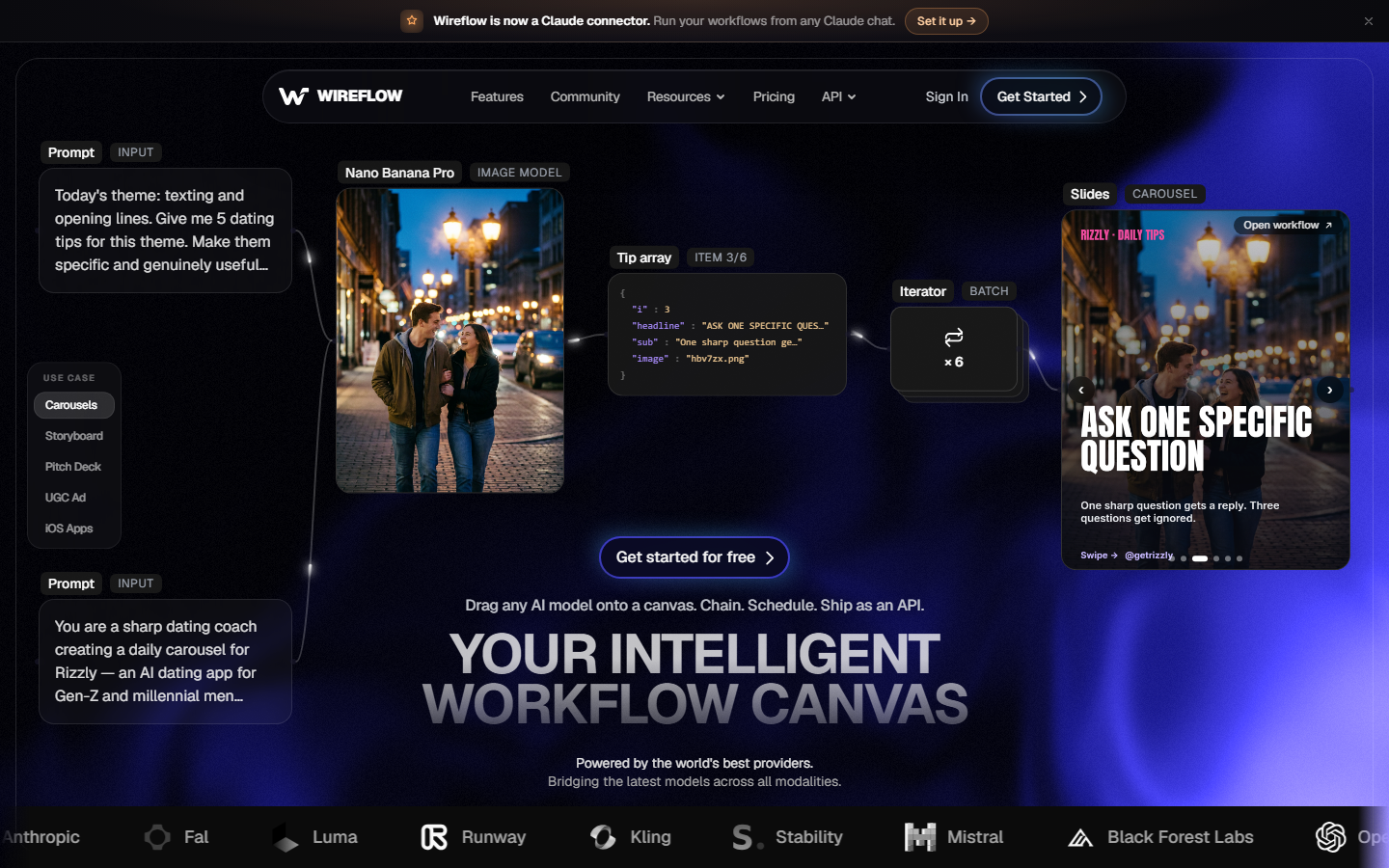
Wireflow is a node canvas where every stage of a UGC style ad is a separate node: a text node holding the hook and script, a model node generating the spokesperson performance, an editor node cutting timing and burning captions. Because the graph is the saved artifact, you swap the product image and the hook line and re-run the same chain, which separates a repeatable creative line from a one-off render. The node setup is shown on the UGC creators page.
The believability advantage comes from model choice rather than a fixed avatar library. A handheld selfie-style generation can run through one model while a product insert comes from another, then both land on the same timeline, which is what makes the output read as filmed rather than assembled. The process is broken down in our walkthrough of automating UGC video creation.
Verdict: best if you produce UGC style ads repeatedly and want the setup to persist between rounds, less so if you need one clip today and nothing after. Credit costs per node run are on the pricing page.
2. Arcads: Best for Realistic Delivery
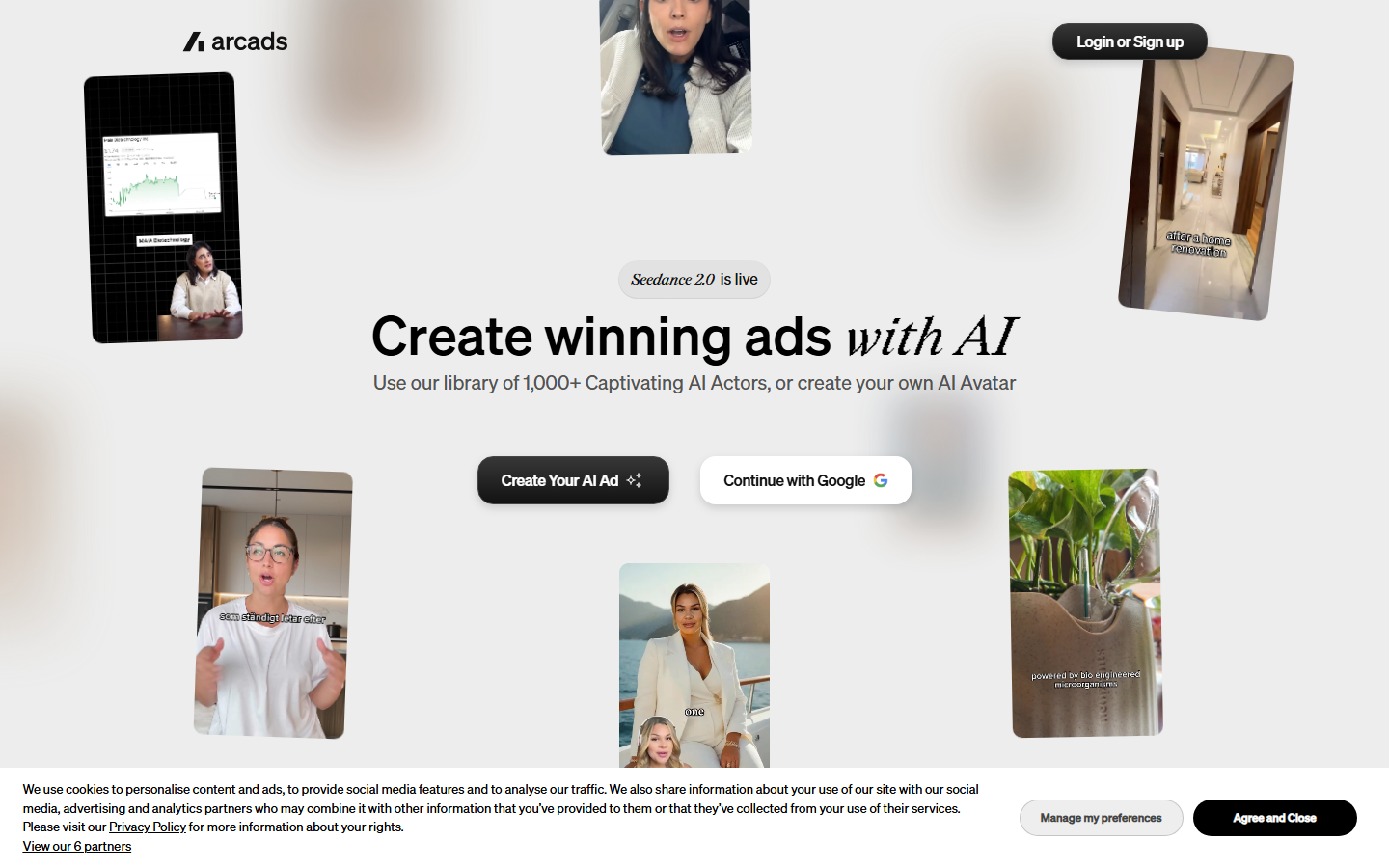
Arcads turns a written script into a performance by a licensed actor, and the delivery is what people pay for. Emphasis, breathing and small facial shifts land closer to a real creator read than most of the field, which matters where the first two seconds decide whether the ad survives. Plans start around $110 per month for a capped allowance, with per-clip economics in our Arcads pricing analysis.
The limit is scope. Arcads generates a talking clip and stops, so B-roll, product inserts and caption styling happen in another tool, and hook testing means regenerating whole clips rather than swapping the first three seconds.
Verdict: best single-tool pick when the ad is one person talking to camera.
3. Creatify: Best for Product URL Ads
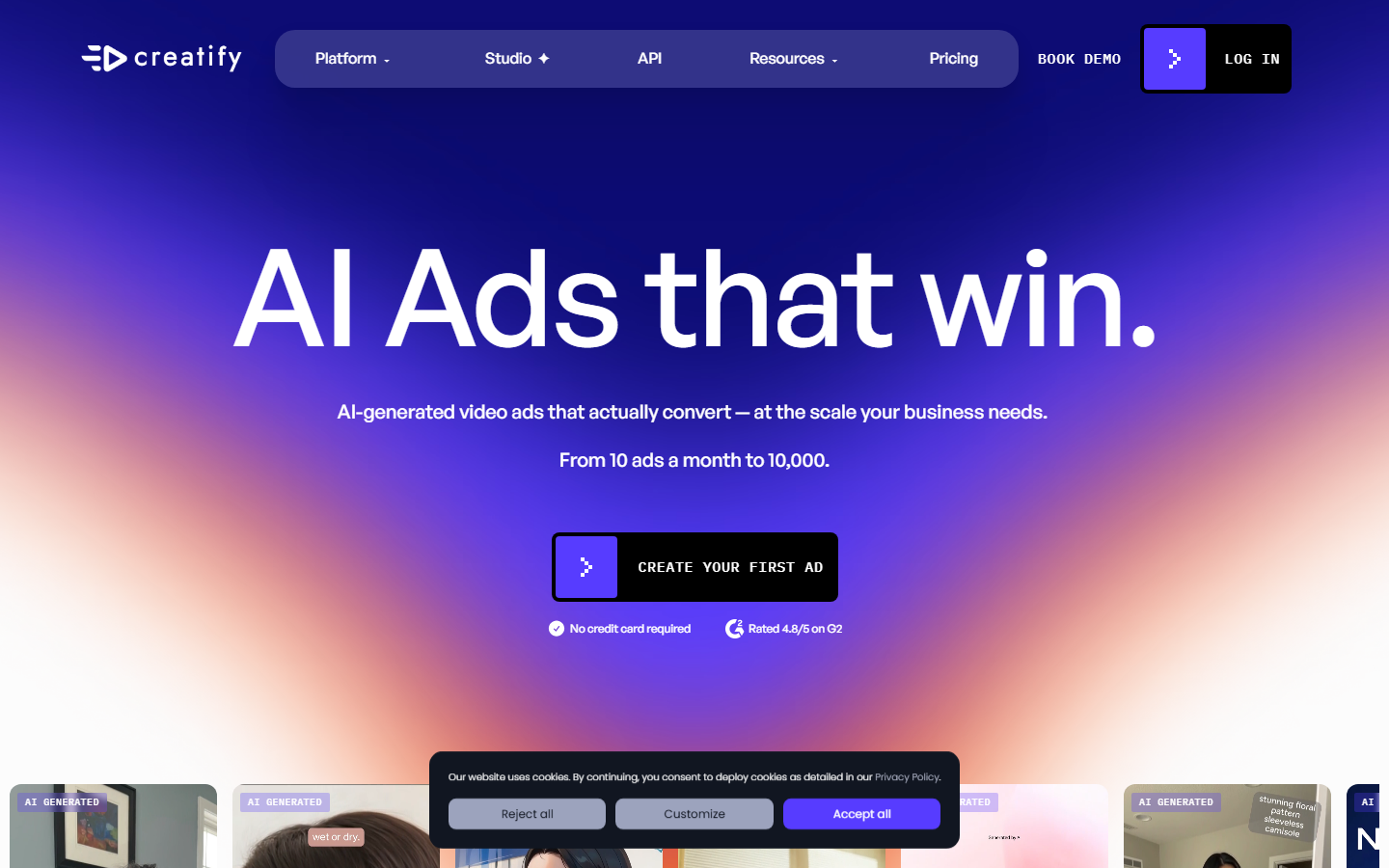
Creatify pulls product details from a URL, drafts scripts from the page copy, then assembles an avatar ad with voiceover and burned-in captions. For ecommerce catalogs this removes the slowest part of the job, which is writing thirty briefs for thirty SKUs. Entry plans begin near $39 per month, with per-credit rates in our Creatify pricing breakdown.
Output quality is uneven across avatars. The weaker ones have a flat cadence that reads as synthetic within a second, so plan on several takes per script and keep the best.
Verdict: best for large product catalogs where briefs should be generated, not written.
4. HeyGen: Best for Multilingual UGC
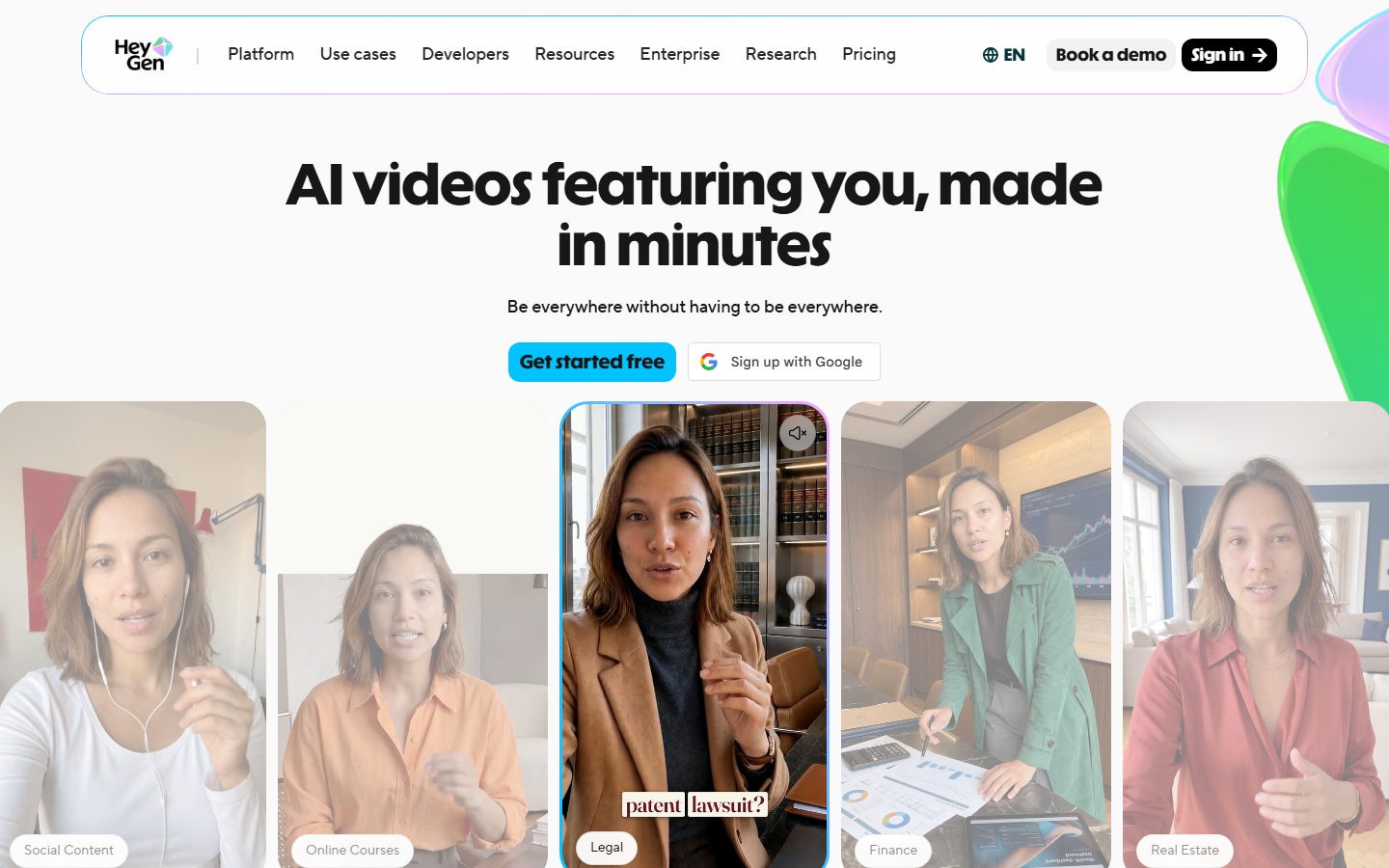
HeyGen pairs a large avatar library with translation and lip sync across dozens of languages, so one approved script becomes localized creative for every market you buy in. The API also makes it practical to trigger generations from a spreadsheet or product feed. Tier limits and overage costs are compared in our HeyGen pricing guide.
Its default look skews polished. Many avatars are framed like a webinar host, so genuine UGC framing means picking carefully from the creator-style subset.
Verdict: best when the same ad runs in five languages and translation quality outweighs handheld texture.
5. Captions: Best for Editing and Subtitles
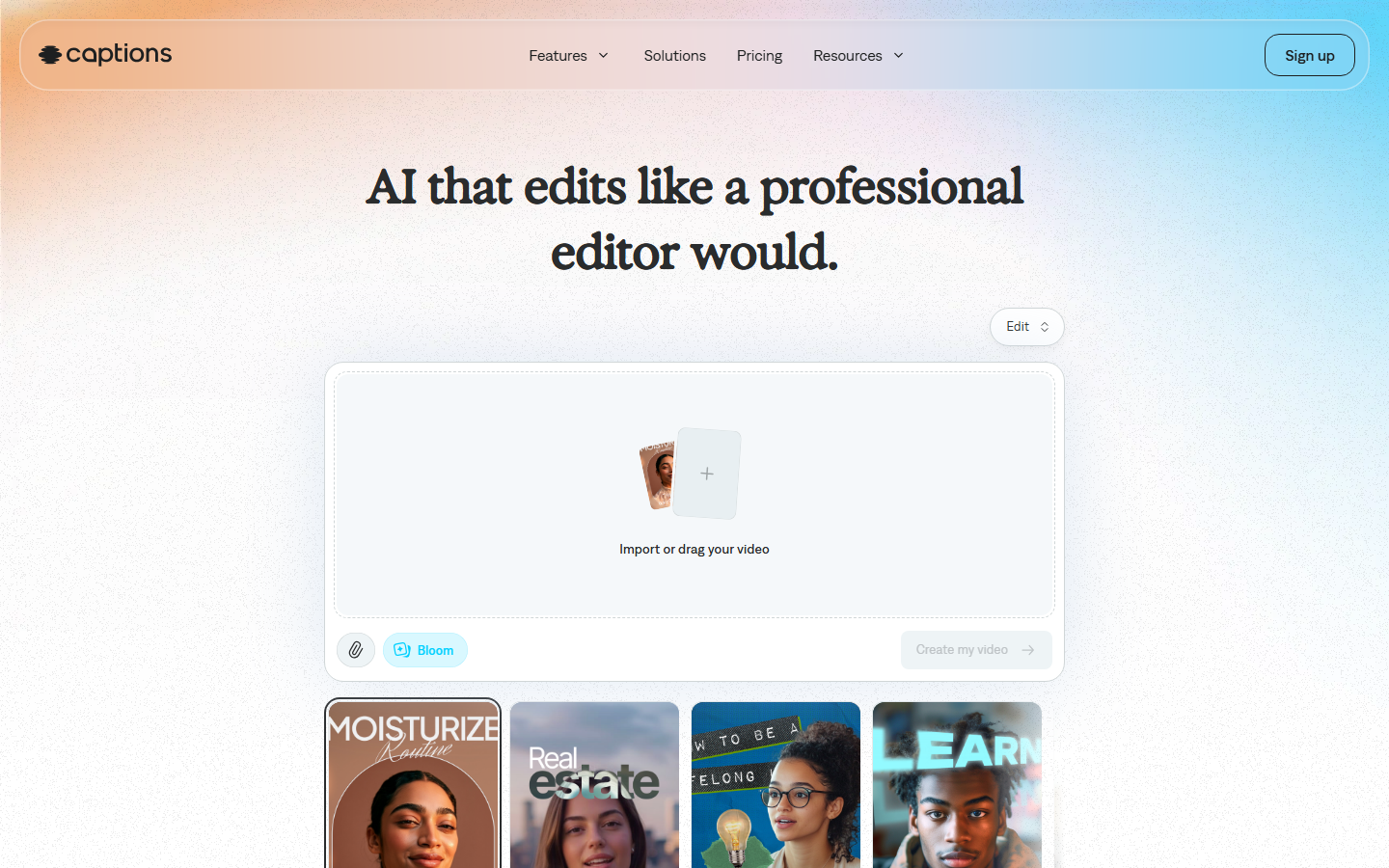
Captions started as a subtitle app and grew into an editor with eye contact correction, filler word removal and generated presenters. Its caption styling is the strongest here, and captions in the right rhythm are one of the clearest signals that a clip is creator content rather than a brand spot. Per-platform formatting notes are in our roundup of AI tools for TikTok UGC ads.
As a generator it is mid-tier. Treat it as the finishing step for footage produced elsewhere, filmed or generated.
Verdict: best as the polish layer, not the source of the performance.
6. TopView AI: Best Budget Pick
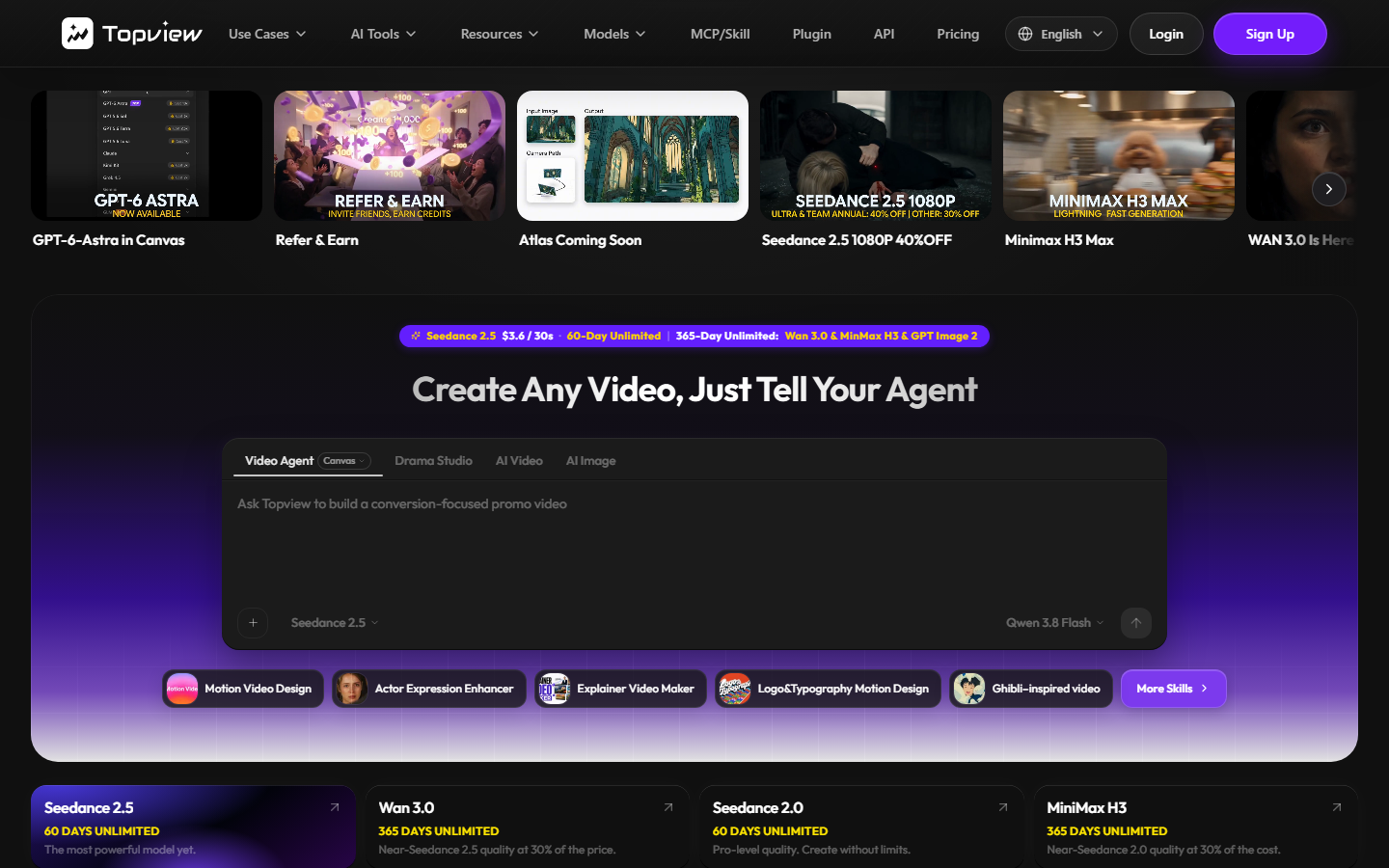
TopView AI aims at volume testing with low per-clip pricing and a product-to-video flow similar to Creatify's. When the goal is finding which of twenty hooks earns a click, spending less per test is a legitimate strategy, and the workflow is covered in our guide to mass producing UGC ads.
Quality varies more than the paid leaders. Expect a lower keep rate and treat winners as prototypes to regenerate at higher quality before scaling spend.
Verdict: best for cheap hook discovery before committing real budget.
7. MakeUGC: Best for Simple Talking Heads
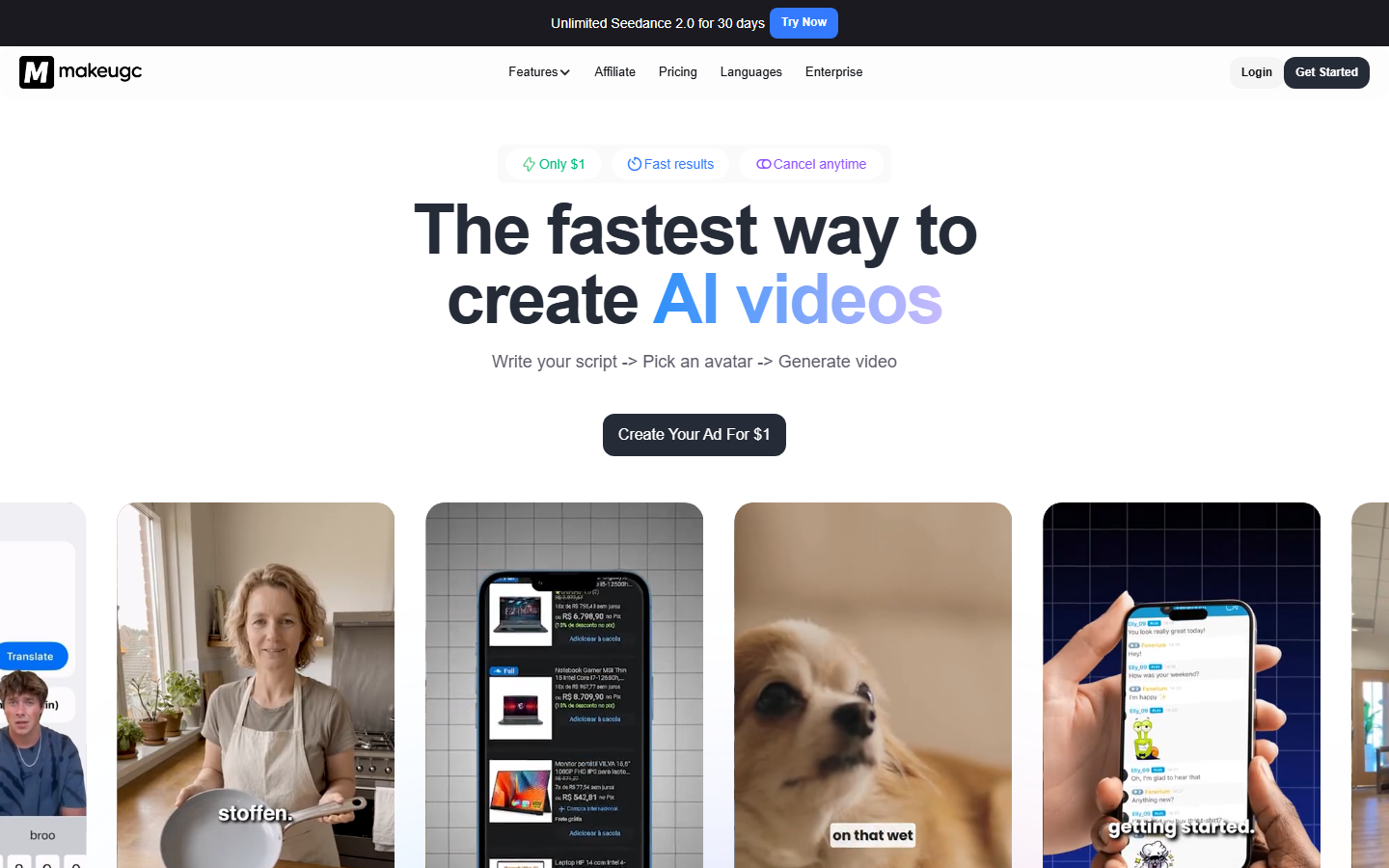
MakeUGC keeps the surface area small: pick an avatar, paste a script, export a vertical clip. For a solo founder who needs three ads this week, less product is an advantage, and the time from signup to first export is among the shortest here. Teams who outgrow it move on for the reasons in our MakeUGC alternatives comparison.
The ceiling arrives quickly. No editing timeline, no multi-scene structure and limited framing control, so every ad looks like the same shot with different words.
Verdict: best for low-volume users who value speed over range.
8. Synthesia: Best for Corporate Video
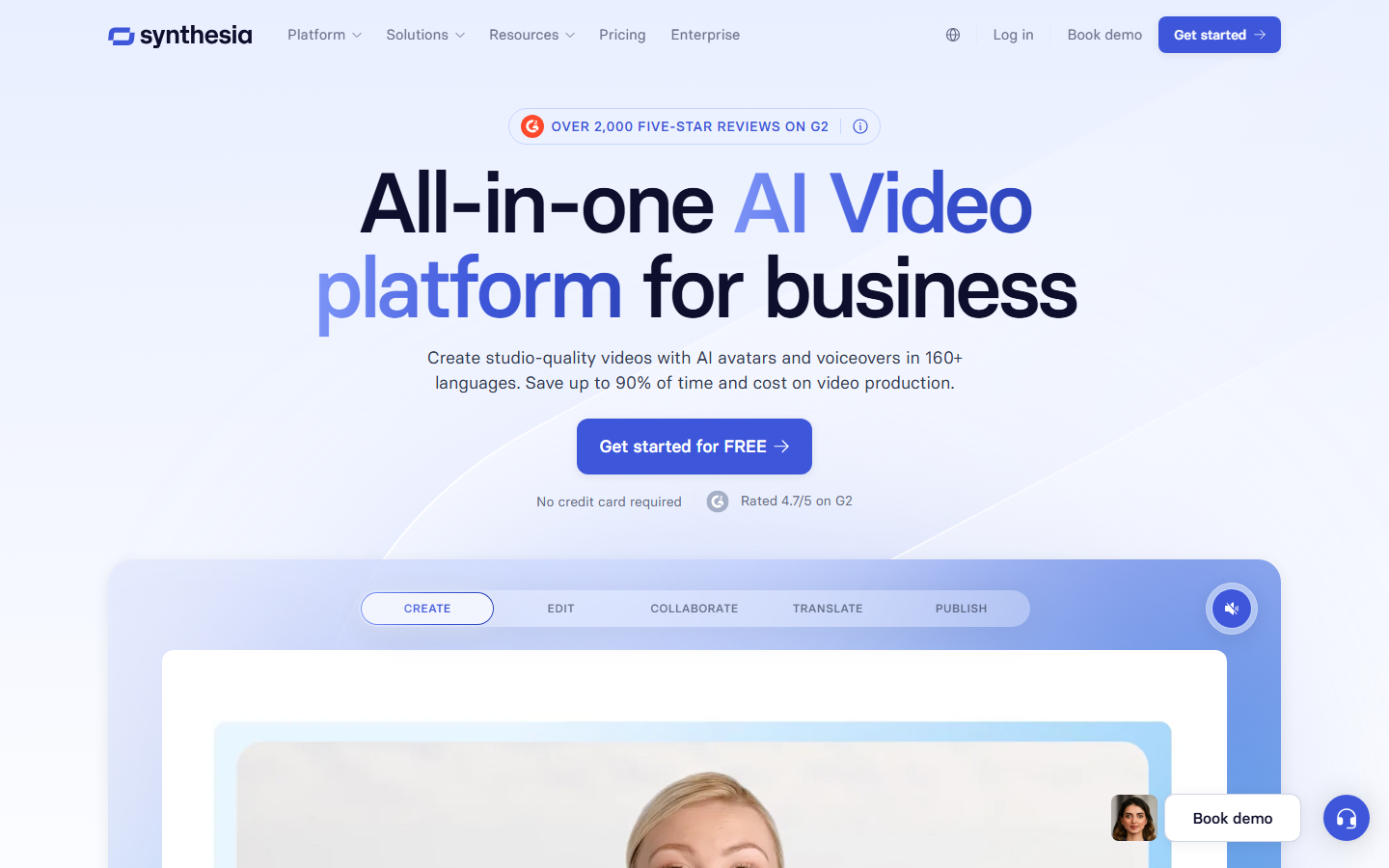
Synthesia is the most established avatar platform here, with a large actor library, broad language support and the compliance posture enterprises ask for. It is excellent at training videos and product explainers, and it belongs on this list mainly so you know where it sits. Teams weighing it for creator-style output should read our Synthesia alternatives comparison first.
For UGC style ads it is the weakest fit in this ranking. The default staging is a presenter in a clean studio frame, the opposite of the handheld imperfection this format depends on.
Verdict: excellent platform, wrong format. Choose it for corporate video.
Comparison Table
| Tool | Best for | Starting price | Editing timeline | API |
|---|---|---|---|---|
| Wireflow | Repeatable UGC pipelines | Credit-based | Yes | Yes |
| Arcads | Realistic delivery | ~$110/mo | No | Limited |
| Creatify | Product URL ads | ~$39/mo | Basic | Yes |
| HeyGen | Multilingual UGC | ~$29/mo | Basic | Yes |
| Captions | Editing and subtitles | ~$10/mo | Yes | Limited |
| TopView AI | Budget testing | ~$19/mo | Basic | No |
| MakeUGC | Simple talking heads | ~$39/mo | No | No |
| Synthesia | Corporate video | ~$29/mo | Basic | Yes |
How to Choose
Start from volume. Under roughly ten ads a month, a single generator is the right answer and a pipeline never pays back its setup cost. Above thirty, the bottleneck becomes briefs, versioning, captions and aspect ratios, a shift explored in our look at AI UGC agent tools.
Then decide whether your ads are one shot or several. Single-shot talking heads are well served by Arcads or MakeUGC, while multi-scene ads with product inserts need a real timeline or a canvas that routes several models into one output.
Try it yourself: Build this workflow in Wireflow with the nodes pre-configured for the script, spokesperson and edit setup discussed above.
Frequently Asked Questions
What is a UGC style ad? A paid ad made to look like organic content from a real person: vertical framing, handheld camera, direct-to-camera speech and casual audio.
Do AI UGC ads actually perform? They perform when the output reads as authentic and the hook is strong. The model matters less than the script and the first two seconds.
What is the cheapest way to test many hooks? Generate short variants with a low-cost tool such as TopView AI, find the two or three hooks that earn clicks, then regenerate those at higher quality before putting real budget behind them.
Do I need disclosure for AI generated ads? Meta and TikTok both require AI content labeling, and some regions add advertising disclosure rules. Check each platform's current policy before running the creative.
Can these tools use my own product footage? Some can. Editing-led tools accept your clips as source material, and canvas tools combine a real product shot with a generated performance. Pure script-to-video generators usually cannot.
Which tool is best for ecommerce catalogs? Product URL tools remove the briefing step for large catalogs. Our guide to AI tools for ecommerce product videos covers the catalog-scale workflow in detail.
How many variants should I ship per test? Most buyers run six to twelve variants per concept, varying hook, opening visual and caption style while holding the offer constant.
Conclusion
The right pick depends on where your bottleneck sits. If it is believability on a single talking-head ad, Arcads leads. If it is briefing a large catalog, Creatify or TopView AI saves the most time. If it is the surrounding production line, the repeatable canvas approach Wireflow takes keeps output steady as volume grows, because the setup persists instead of being rebuilt every round.
Would you rather we just built it?
We get on a call, learn your style, build the workflow, and ship the deliverables on a schedule. You keep the workflow either way.