Best AI UGC Agent Tools in 2026

In this article▾
The best AI UGC agent tools in 2026 turn a product link or a short brief into ready-to-run UGC-style video ads, no creators or film days required. Wireflow approaches this differently from single-purpose generators: it lets you chain script, avatar, voice, and editing models into one repeatable canvas, so your UGC pipeline is a system rather than a series of one-off renders. This guide ranks the eight tools worth evaluating this year, based on output realism, automation depth, pricing, and how well each fits an ad-buying workflow.
Quick summary
- Wireflow - Multi-model UGC pipelines on one canvas (Best Overall)
- Arcads - Most realistic AI actors for ads (Best Realism)
- Creatify - URL-to-video ad batches at volume (Best for Batch Ads)
- HeyGen - Huge avatar library, 175+ languages (Best for Localization)
- Captions - AI actors plus a full editor (Best for Creators)
- Synthesia - Compliance-friendly avatar video (Best for Enterprise)
- MakeUGC - UGC-first platform with creator marketplace (Best UGC Focus)
- InVideo AI - Budget text-to-video with AI actors (Best Budget Pick)
Once an agent owns the pipeline, it can scale ad output with UGC by running the same workflow across a matrix of briefs without manual setup.
1. Wireflow
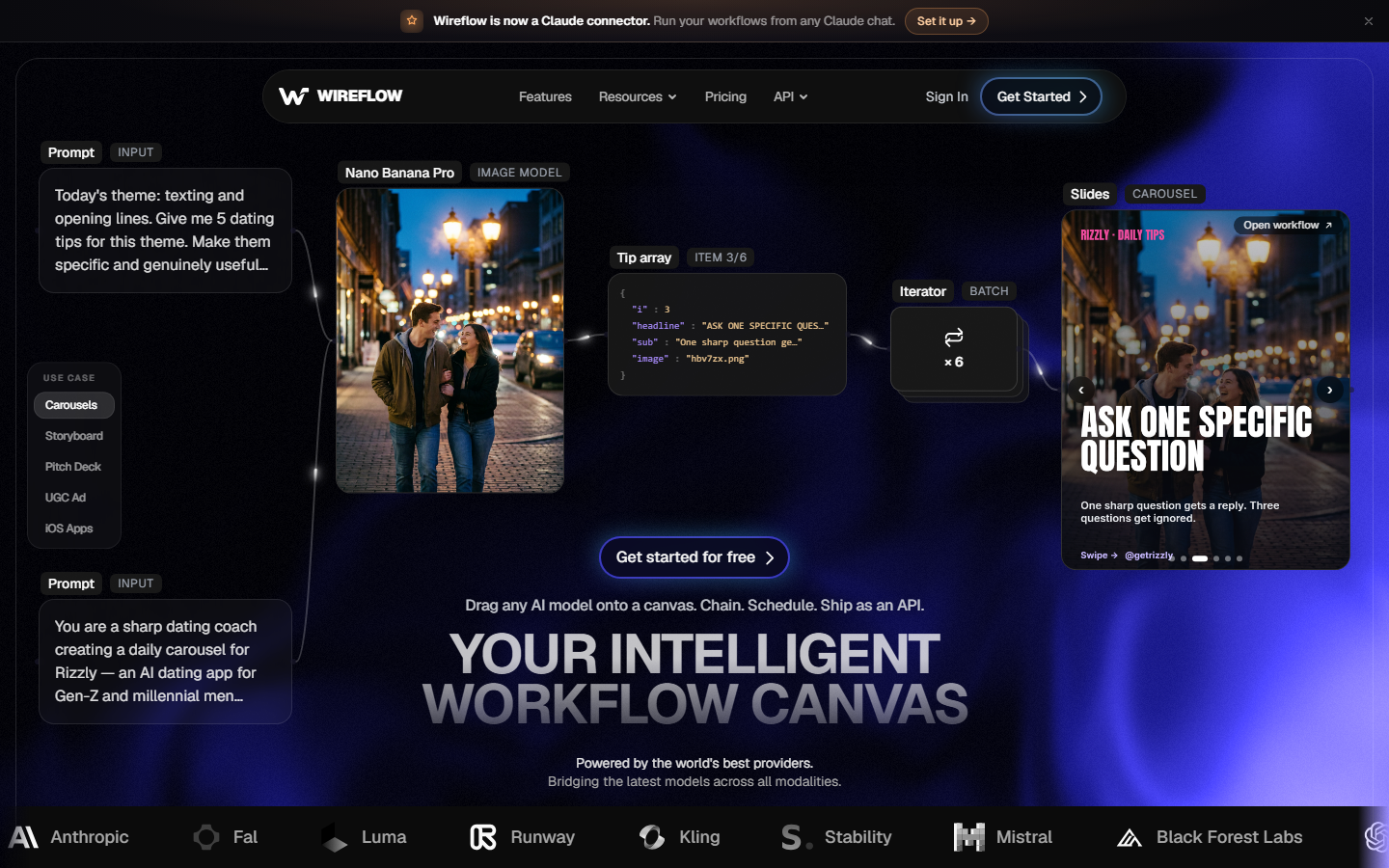
Wireflow is a node-based canvas where you connect the exact models a UGC ad needs: a script generator, an image or avatar model, a video model like Veo or Seedance, a voice model, and a final compose step. Instead of re-prompting a black-box generator, you build the pipeline once and rerun it with a new product, hook, or audience each time. For a hands-on look at this in action, check out the AI UGC agent feature page.
The agent side matters for teams shipping volume. You describe the ad you want in plain language and the agent assembles and executes the node graph for you, which makes mass-producing UGC ad variants a matter of swapping inputs rather than rebuilding projects. Because every run uses the same graph, hooks and formats stay consistent across dozens of variants, which is what ad accounts actually need for clean creative testing.
Pricing: free tier to start; paid plans are usage-based, so you pay for generations rather than seats.
Build this in Wireflow
Make the same kind of asset on a canvas you control, with a free account and no credit card.
2. Arcads
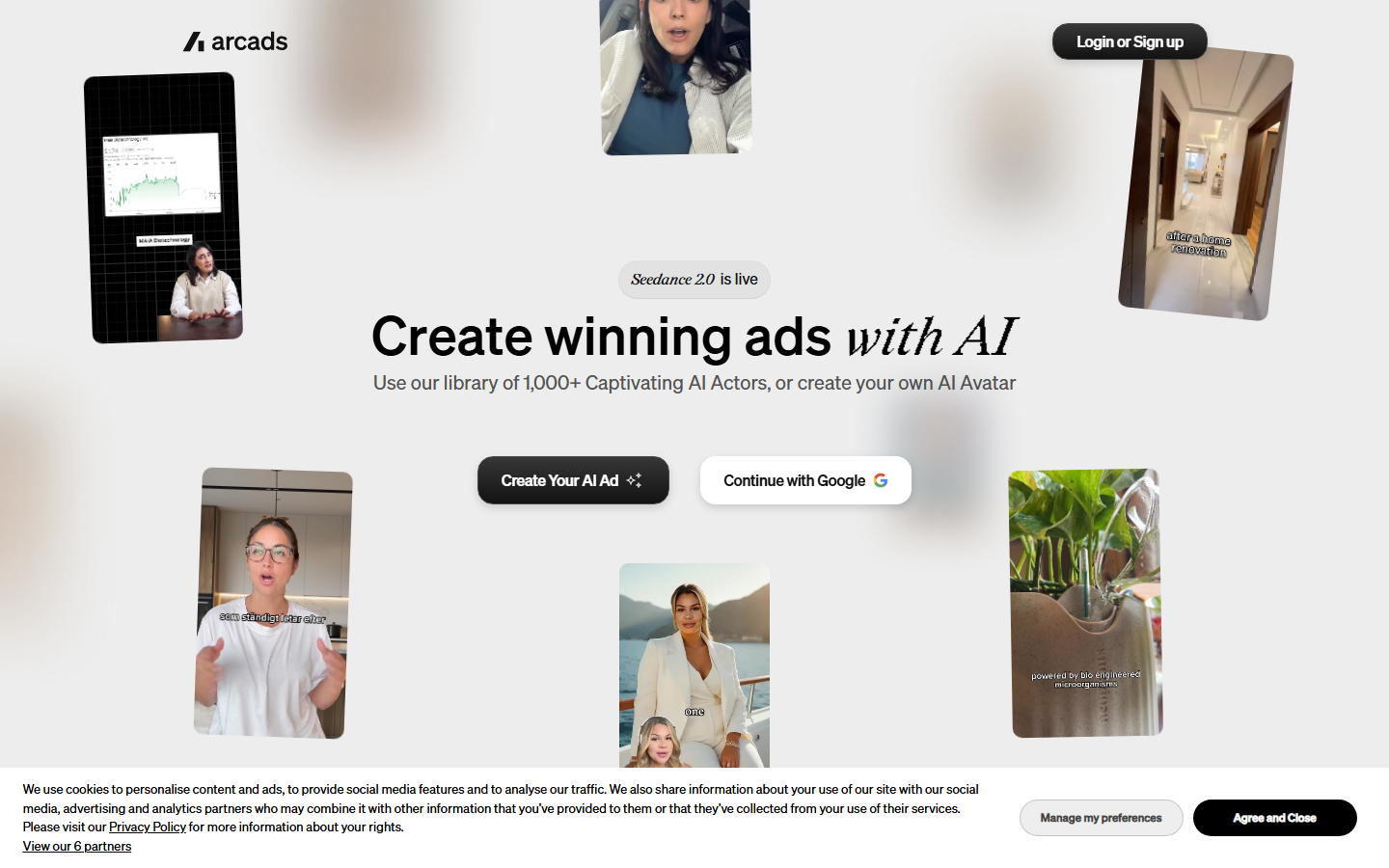
Arcads is the tool most buyers name when they want AI actors that pass as real people. You paste a script, pick from a library of actors with natural gestures and emotional range, and get a talking UGC-style ad in minutes. Agencies running ad creative testing at scale use it to spin up actor variations of a proven script without booking talent.
The trade-off is cost and scope. Plans start around $100 per month, extras like custom actors cost more, and Arcads only handles the actor video itself; scripting, b-roll, and editing live elsewhere. It is a strong single component rather than a full pipeline.
Pricing: from roughly $100/month for 10 videos.
3. Creatify
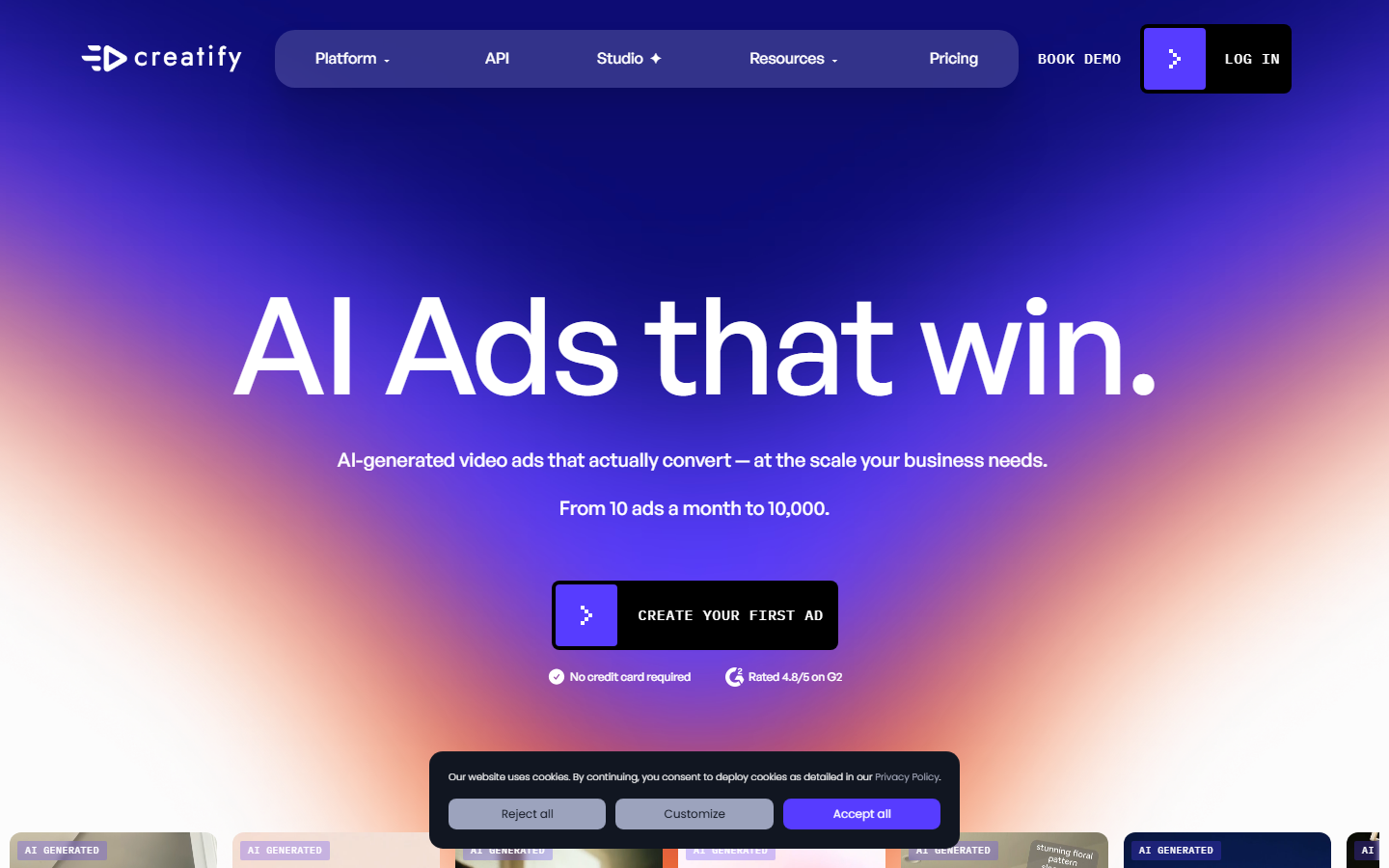
Creatify is built for volume: drop in a product URL and it generates scripts, picks avatars from a 1,500+ library, and renders batches of ad variants in one pass. That URL-to-video flow makes it popular with ecommerce teams who need ad creative production at scale more than they need any single perfect video.
Quality is the known weakness. Output across a batch is inconsistent, so expect to discard a meaningful share of renders, and unused credits do not roll over. Treat it as a top-of-funnel variant factory with a human filter at the end.
Pricing: from about $33/month.
4. HeyGen
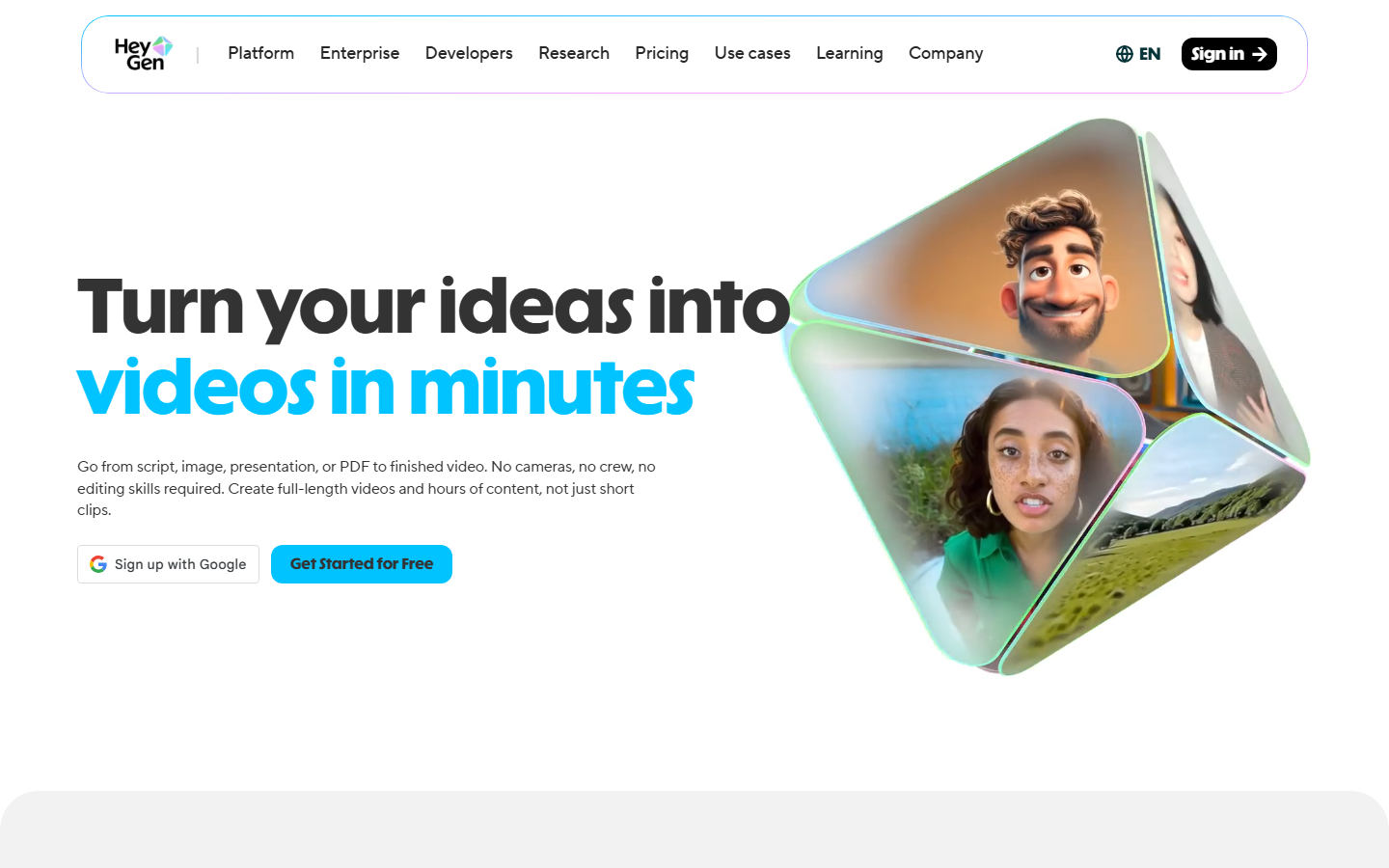
HeyGen offers one of the largest avatar libraries in the category, over 700 stock avatars plus photo avatars of yourself, and dubbing across 175+ languages with lip sync. If the same UGC ad needs to run in five markets, HeyGen is the localization workhorse, and it pairs well with a broader social media video stack.
Its ceiling shows on raw ad realism: avatars read polished rather than casual, video length is capped on lower tiers, and support response times are a common complaint. It suits explainer-style UGC better than lo-fi handheld ads.
Pricing: free tier; paid from about $24/month.
5. Captions
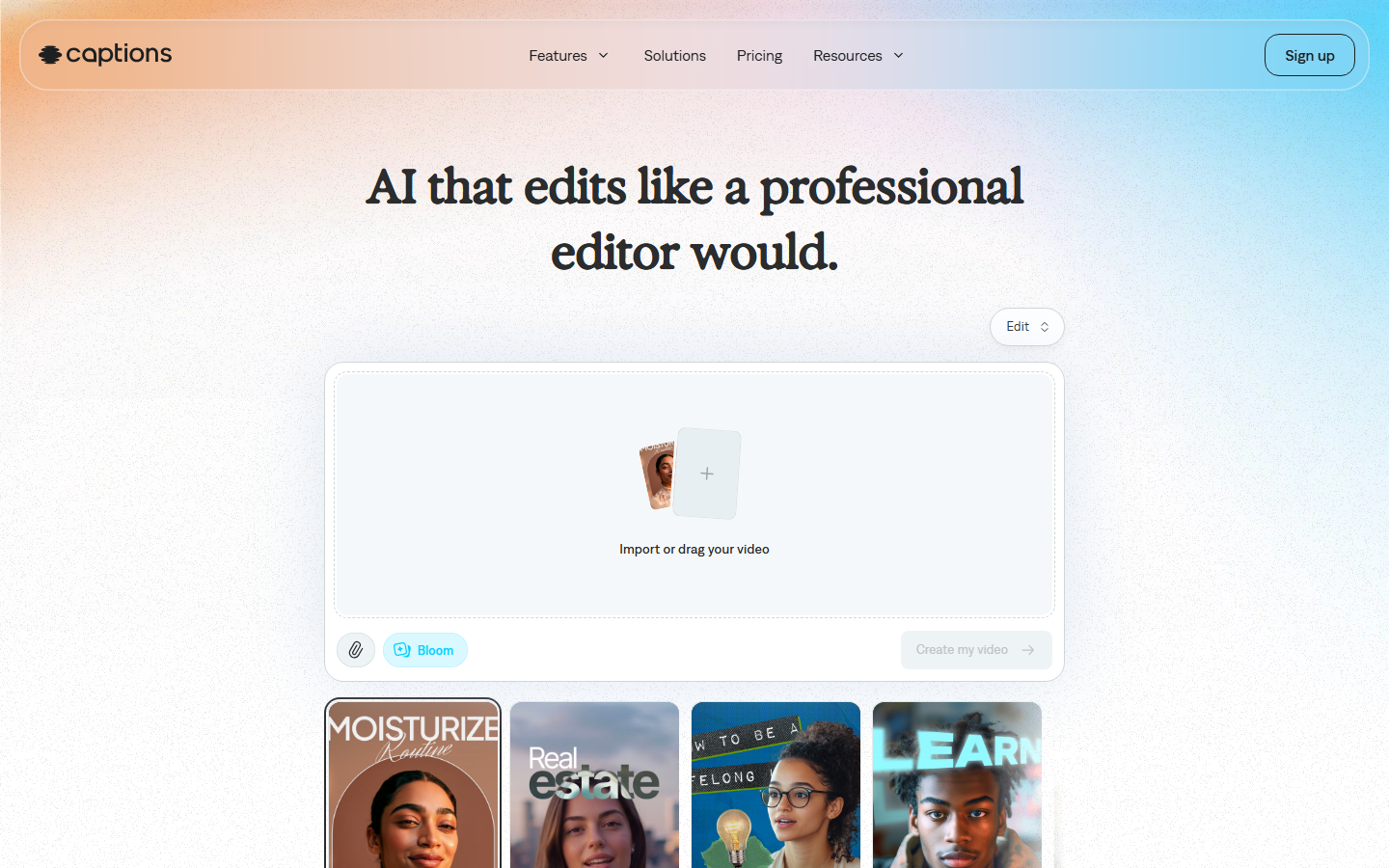
Captions comes at UGC from the creator side: it started as an AI-powered editor and added AI actors on top. That makes it the best pick when a real person films the base content and AI handles captions, eye contact correction, cuts, and b-roll. Solo creators and agencies automating video content for clients get the most from this shape.
As a pure generation tool it is thinner: the AI actor library is small compared to Arcads or HeyGen, and it is mobile-first, which can slow down desktop-heavy ad teams.
Pricing: free tier; paid from about $10/month.
6. Synthesia
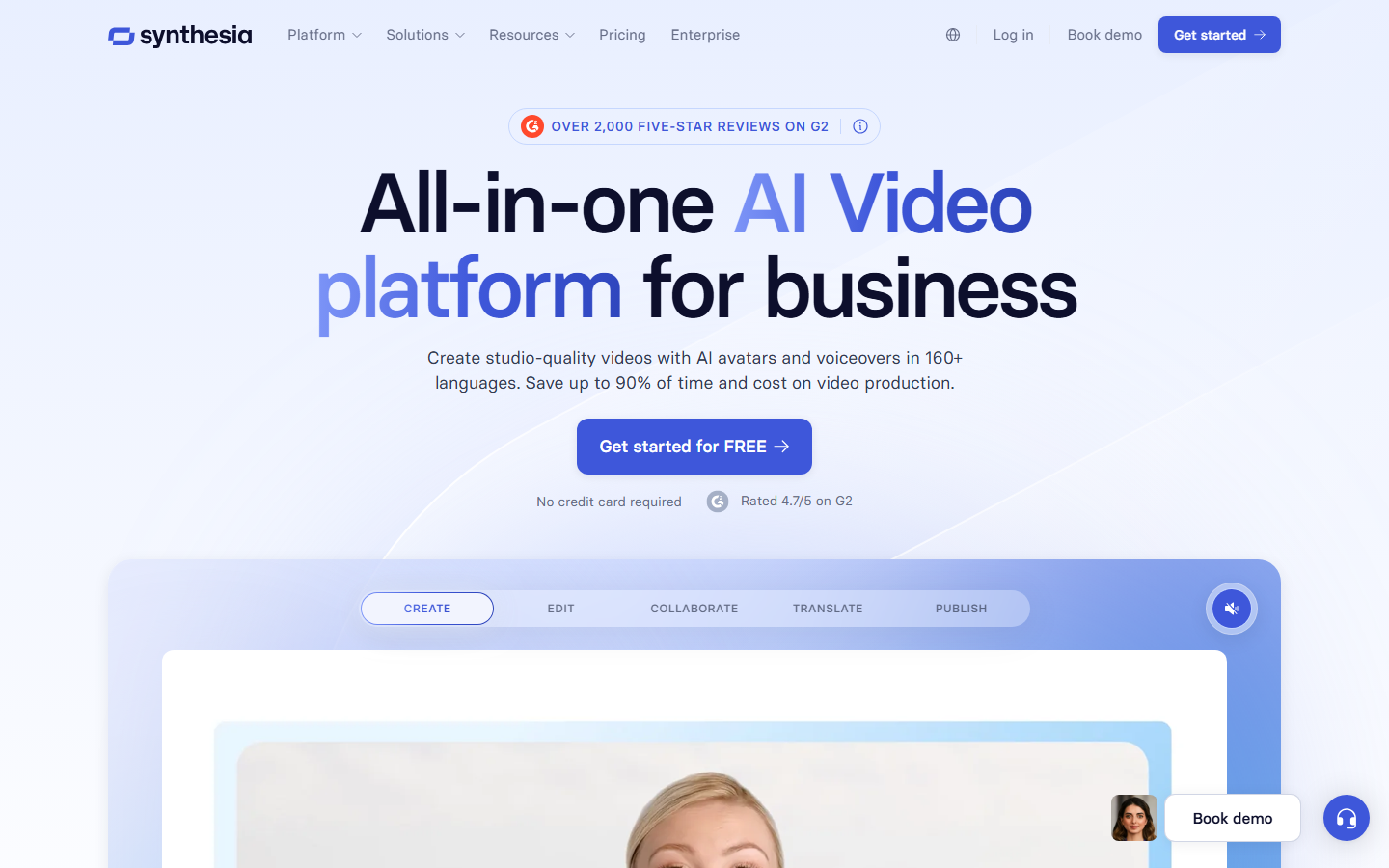
Synthesia is the enterprise standard for avatar video: SOC 2 compliance, 160+ languages, and consistent corporate-safe output. Large teams that need legal sign-off on AI presenters usually shortlist it first, and teams comparing options often start from a list of Synthesia alternatives for avatar video to calibrate.
For UGC ads specifically it is the weakest stylistic fit here. Synthesia output looks like training or comms video, not a customer filming a phone review, so it earns its slot for enterprise avatar work rather than performance creative.
Pricing: from about $18/month.
7. MakeUGC
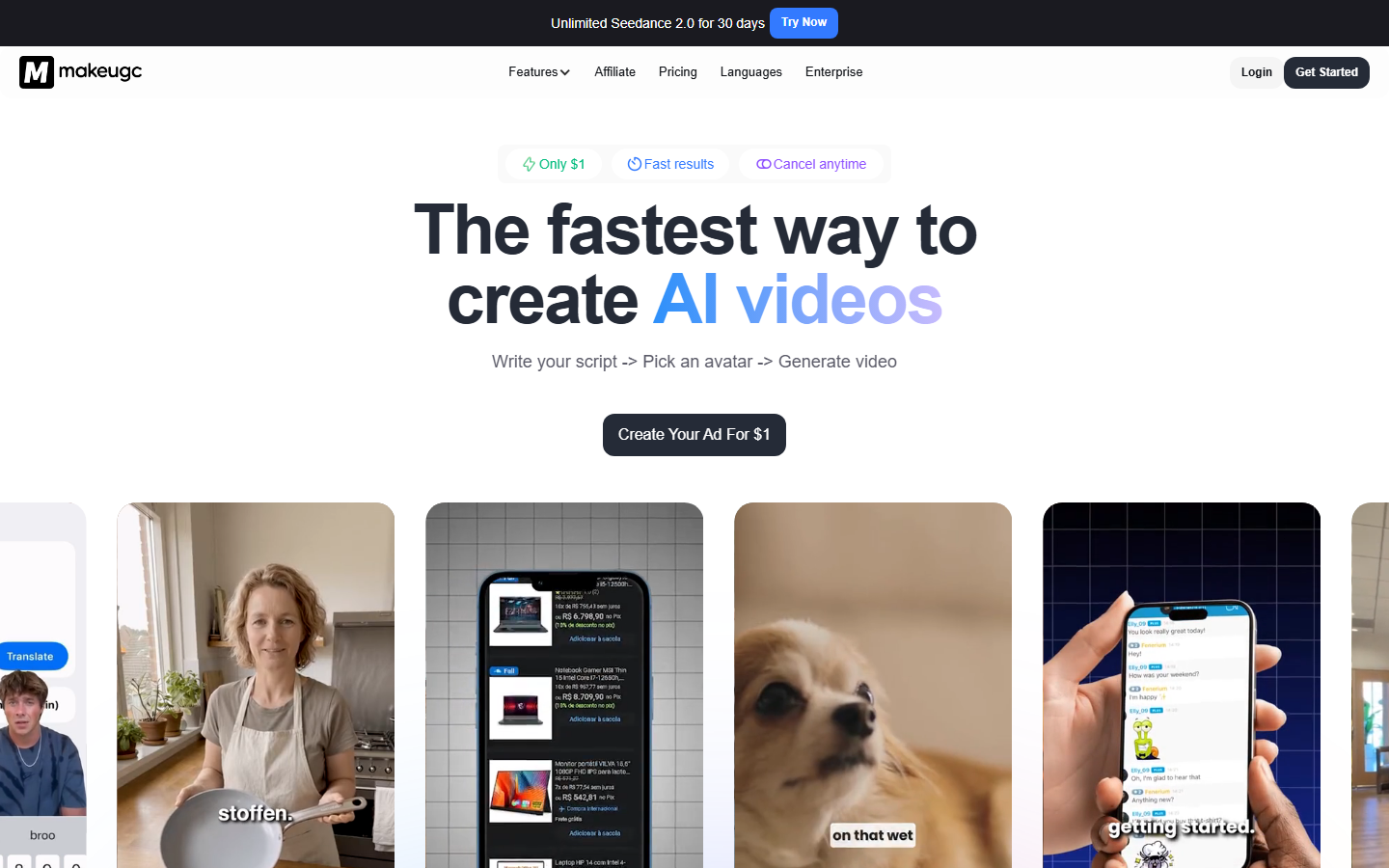
MakeUGC is purpose-built for the UGC ad format: AI creators recorded in UGC-native framing, script generation tuned for hooks, and a hybrid marketplace if you want real creators for hero assets. Teams thinking about what to charge clients for AI UGC ads like that it maps one-to-one onto the deliverable.
It is also the youngest tool on this list. The ecosystem is thinner, pricing is not public, and the avatar pool is smaller than the incumbents, so test output quality on your product category before committing.
Pricing: custom; contact sales.
8. InVideo AI
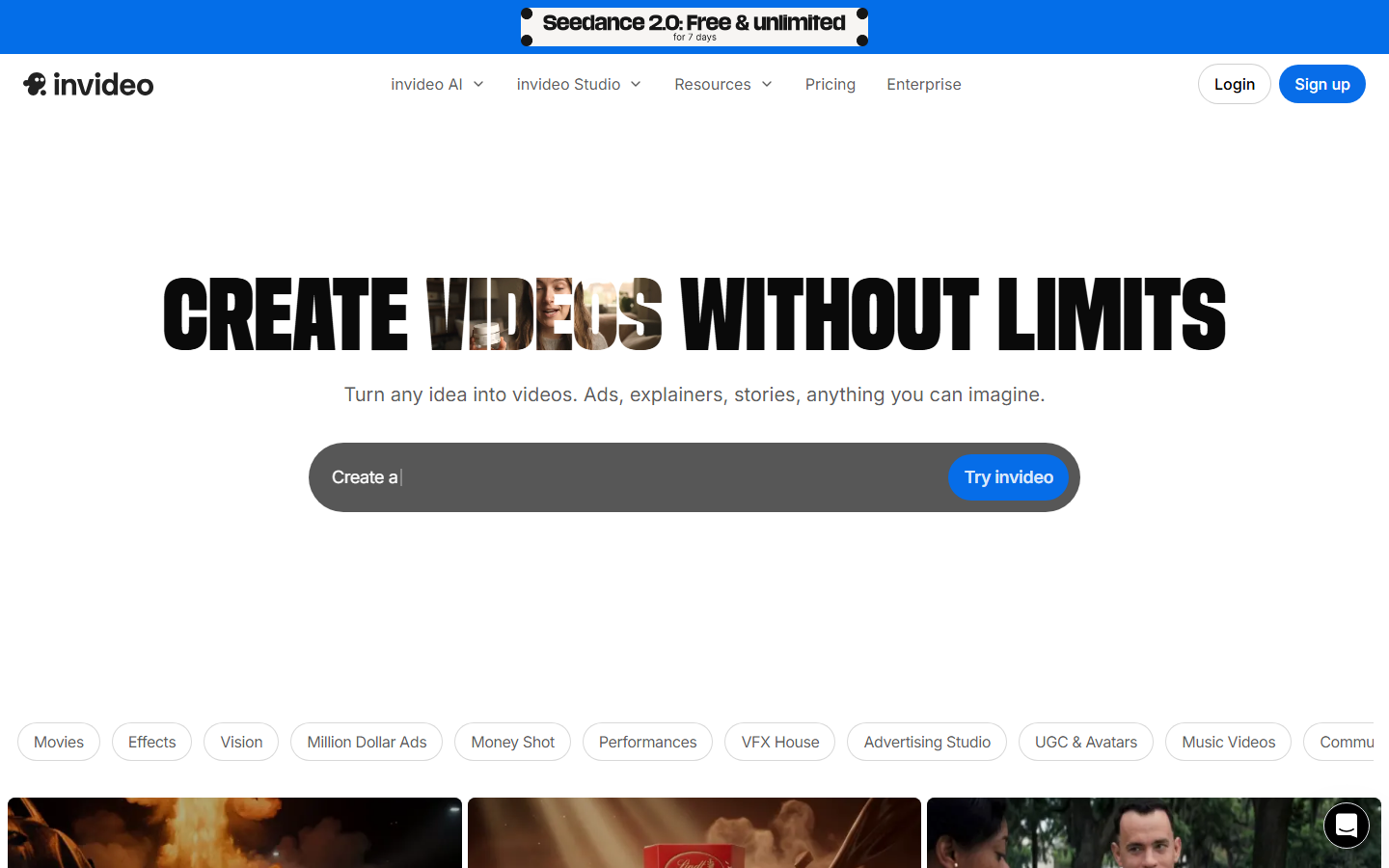
InVideo AI is the budget entry: type a prompt or paste a URL and it assembles a video with stock footage, voiceover, and optional AI actors. The free credits and low paid tier make it a reasonable first stop for testing whether AI ad generators fit your social channels at all.
Renders are slow, around 7 to 8 minutes per video, and the template-driven output reads more like a slideshow ad than authentic UGC. Fine for volume testing, limiting for winning creative.
Pricing: free credits; paid from about $28/month.
Comparison table
| Tool | Best for | AI actors | Batch generation | Starting price |
|---|---|---|---|---|
| Wireflow | Full UGC pipelines | Via connected models | Yes, agent-driven | Free tier |
| Arcads | Realistic ad actors | Yes, most natural | Limited | ~$100/mo |
| Creatify | URL-to-ad volume | Yes, 1,500+ | Yes | ~$33/mo |
| HeyGen | Localization | Yes, 700+ | Partial | Free / ~$24/mo |
| Captions | Creator editing | Yes, small library | No | Free / ~$10/mo |
| Synthesia | Enterprise video | Yes, corporate style | Partial | ~$18/mo |
| MakeUGC | UGC-native format | Yes | Yes | Custom |
| InVideo AI | Budget testing | Yes, basic | Yes | Free / ~$28/mo |
How to choose
Start from the failure mode you can least afford. If viewers clocking the ad as AI kills your funnel, prioritize actor realism (Arcads, MakeUGC). If your bottleneck is variant count for testing, prioritize batch output (Creatify, or an agent-driven multi-model workflow that regenerates the whole ad from one input change). If you sell across markets, weight localization (HeyGen).

The structural question is single tool versus pipeline. Point tools are faster on day one, but every asset that moves between them is manual glue. A creative workflow automation approach costs more setup time up front and then compounds: the same graph produces this week's twenty variants and next quarter's new product launch.
Try it yourself: open the pre-built UGC ad workflow in Wireflow. The nodes are pre-configured with the exact script-to-video setup discussed above, so you can swap in your own product and run it.
FAQ
What is an AI UGC agent?
An AI UGC agent is software that produces user-generated-content-style video ads from a brief, a script, or a product URL, handling scripting, AI actors, voice, and editing with minimal manual work. The "agent" part means it orchestrates those steps itself instead of asking you to run each tool by hand, similar to how an AI marketing agent orchestrates campaign tasks.
Do AI UGC ads perform as well as real creator content?
Often, yes, for direct-response ads. Ad accounts care about hook rate and cost per acquisition, not production method, and AI variants let you test far more hooks per week. Real creators still win for hero brand assets and for audiences sensitive to authenticity.
Will Meta or TikTok penalize AI-generated UGC?
No platform currently penalizes AI-generated ads as a category, but both require disclosure for some AI content, especially anything resembling real people or political topics. Using licensed AI actors from these tools keeps you inside each platform's synthetic media rules.
How much do AI UGC tools cost compared to hiring creators?
A single UGC creator video typically costs $60 to $250. The tools here produce videos for roughly $2 to $20 each once you are on a paid plan, which is why teams automating UGC video for agencies lead with AI for testing volume and reserve creator budget for winners.
Which tool is best for ecommerce product ads?
Creatify and MakeUGC are the fastest paths from product URL to ad. If your products need consistent visual treatment across many SKUs, a pipeline approach works better because the same graph handles every product page you feed it.
Can I use my own face or voice in these tools?
Most of them support it. HeyGen, Captions, and Synthesia offer personal avatars from a short reference recording, and voice cloning is standard across the category. Check each tool's consent verification step; reputable tools require one.
How many ad variants should I test per week?
Media buyers running these tools typically test 10 to 30 new variants weekly per active account. The constraint is usually generation and QA throughput, which is the main argument for batch-capable tools over one-at-a-time generators.
Conclusion
The 2026 UGC stack splits cleanly: Arcads for realism, Creatify for volume, HeyGen for languages, Captions for creator-led editing, Synthesia for enterprise, MakeUGC for format focus, and InVideo for budget tests. Wireflow sits above the point tools as the pipeline layer that chains any of these capabilities into one repeatable system, which is where teams end up once variant volume becomes the job. Start with the failure mode that costs you most, run a paid test on two tools, and let the social media agent playbook guide how you scale what wins.

Co-Founder & Operations at Wireflow
Runs client operations and content strategy at Wireflow. Works directly with creative teams and agencies to build production AI workflows.
- Content Strategy
- Client Operations
Get unlimited ad creatives today.
One call to see if we are a fit and scope the first ad. If it fits, your first batch lands inside week one.