Creative agencies in 2026 are not short on AI tools, they are short on tools that survive contact with real client work: brand rules, revision rounds, approvals and delivery deadlines. This guide ranks eight tools that agency teams actually keep in the stack after the trial ends, scored on output quality, per-seat cost, how well they handle multiple clients, and whether the commercial licensing holds up when a brand's legal team asks. Wireflow takes the top spot because it chains image, video and voice models into one repeatable pipeline instead of asking your team to stitch eight subscriptions together by hand.
Quick summary: the 2026 agency stack
- Wireflow: Node canvas that chains multiple AI models into one pipeline. Best overall
- Adobe Firefly: Commercially safe generation inside Creative Cloud. Best for licensing safety
- Midjourney: Highest ceiling on concept and moodboard imagery. Best for art direction
- Runway: Text and image to video with editing controls. Best for video
- Canva Magic Studio: Fast branded deliverables non-designers can ship. Best for client self-serve
- Descript: Transcript-based video and podcast editing. Best for talking-head content
- ElevenLabs: Voice cloning and multilingual narration. Best for voiceover
- Figma: Design system collaboration with AI assist. Best for product and web work
How we ranked these tools
Four criteria decided the order. First, output quality at production standard, not demo standard. Second, cost per deliverable rather than headline seat price, since a $30 seat that needs six regenerations per asset is more expensive than a $60 seat that lands on the second try. Third, multi-client handling: separate brand kits, separate asset libraries, separate billing lines. Fourth, licensing clarity, because an agency that cannot indemnify a client's campaign has a business problem, not a tooling problem. Agencies running high creative volume should also read our breakdown of ad creative automation tools, which covers the paid-social side of the same stack.
The pattern across every agency we looked at is the same: the winning setups are not the ones with the most tools, they are the ones where a brief moves through a fixed sequence of steps with fewer manual handoffs. That is the difference between an AI experiment and an AI production pipeline.
1. Wireflow: best overall
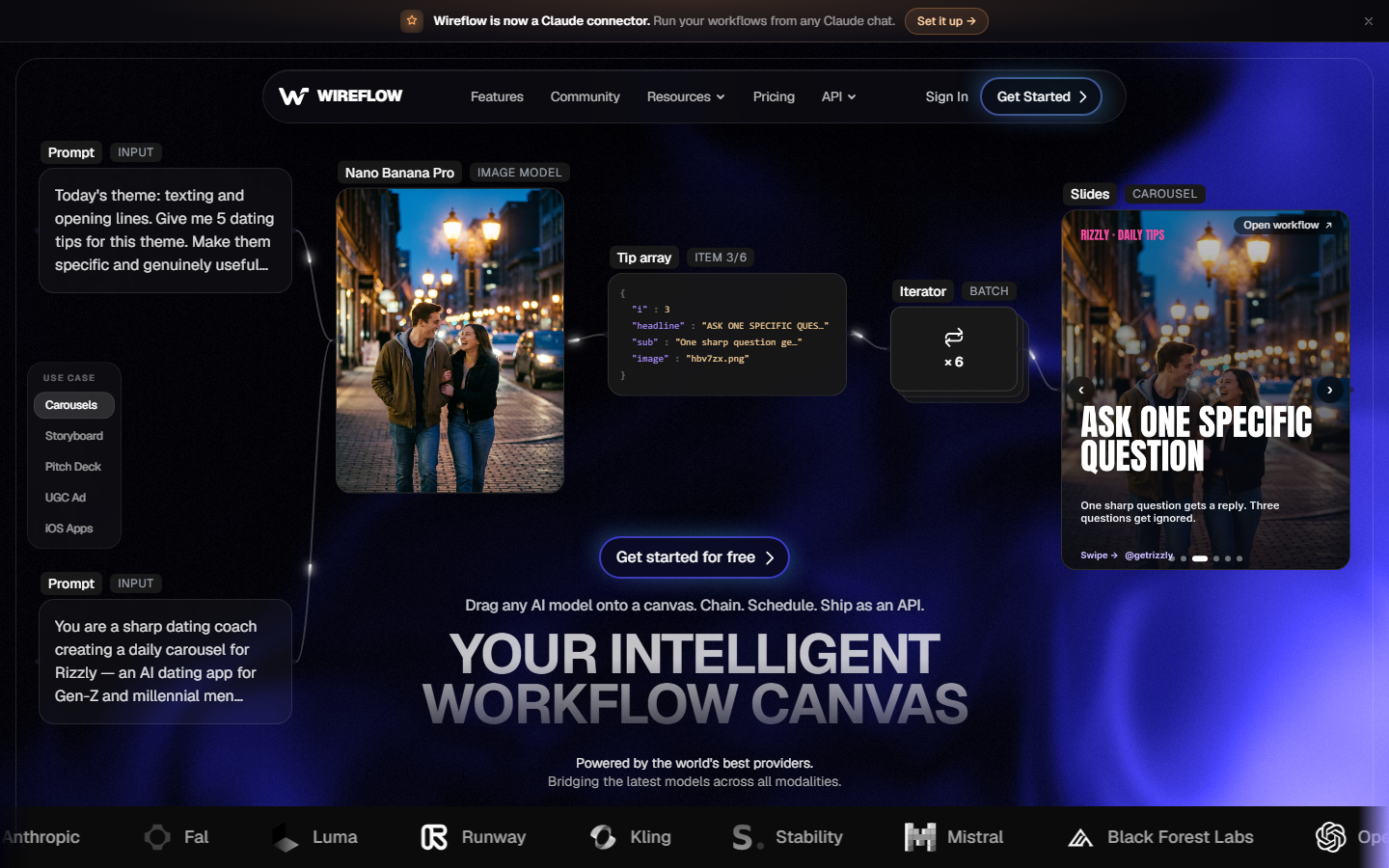
Wireflow is a node-based canvas where each node is an AI model or a processing step, and the connections between them define the pipeline. For an agency that means a brief goes in at one end and a finished set of assets comes out the other: a prompt generates a hero image, that image feeds an image-to-video node, the clip feeds a voiceover node, and the final composite lands in a client folder. Nothing is copy-pasted between five browser tabs.
The practical advantage is repeatability. Once a pipeline works for one client, you clone it, swap the brand inputs and run it for the next one. Teams handling many accounts at once tend to pair this with multi-client workflow management so each account keeps its own asset trail. Pricing is usage-based rather than per-seat, which suits agencies with uneven monthly volume; current tiers are on the pricing page.
Verdict: the strongest pick for agencies that produce creative at volume and want one system rather than eight subscriptions.
2. Adobe Firefly: best for licensing safety
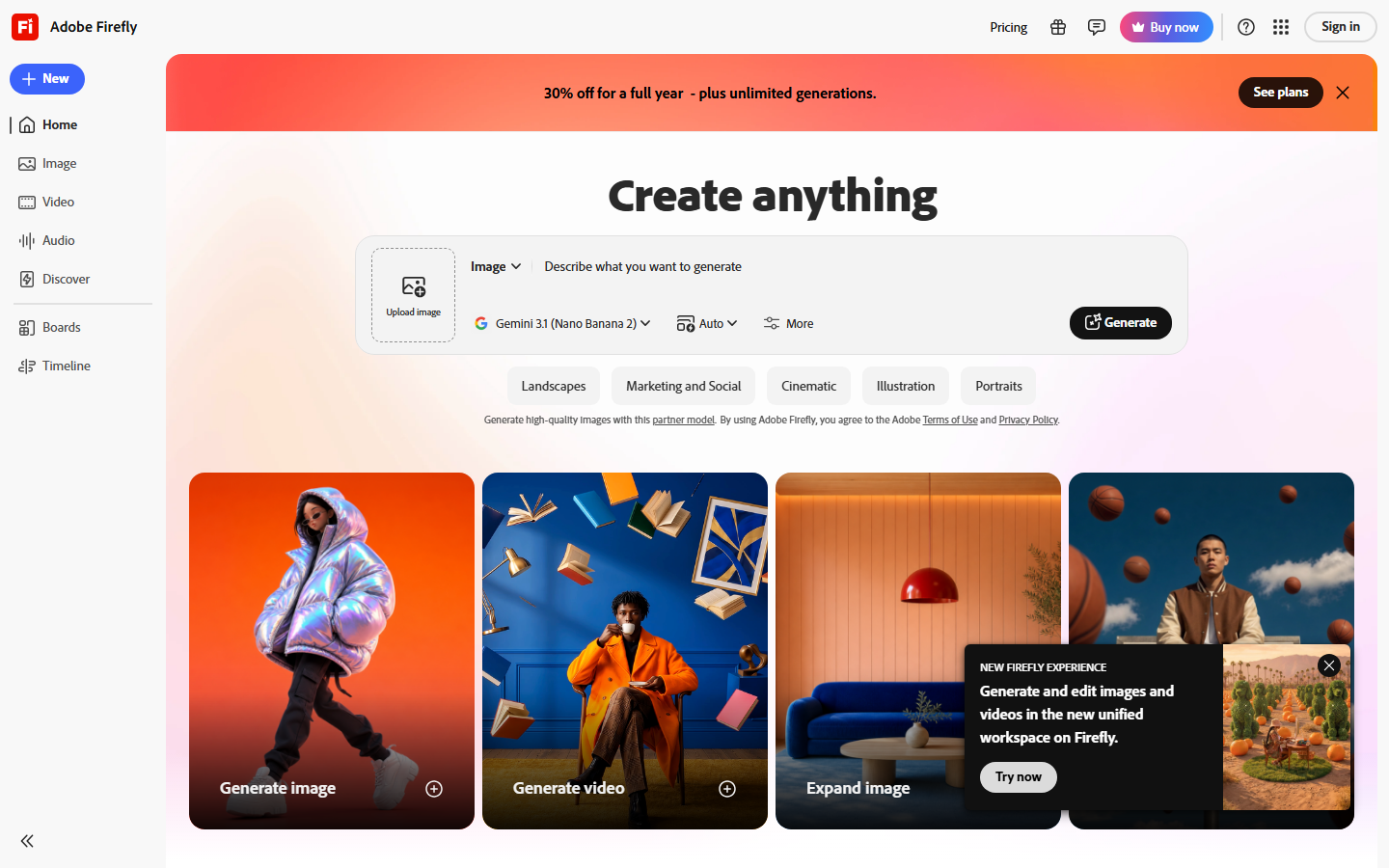
Adobe Firefly is trained on Adobe Stock, openly licensed work and public domain material, and Adobe offers commercial indemnification on the output. For agencies pitching regulated clients, that is often the deciding factor regardless of how the images compare visually. Firefly also lives inside Photoshop, Illustrator and Express, so generative fill and vector recolour happen in the file your designer already has open.
The trade-off is creative range. Firefly is dependable rather than surprising, and art directors chasing a distinctive look usually concept elsewhere and finish in Firefly. Credits are bundled with Creative Cloud, so most agencies already hold the licence. If brand consistency across generated assets is the concern, an AI brand kit generator handles the colour, type and logo rules that Firefly alone will not enforce.
Verdict: the safe default when a client's legal team needs a clear answer about training data.
3. Midjourney: best for art direction
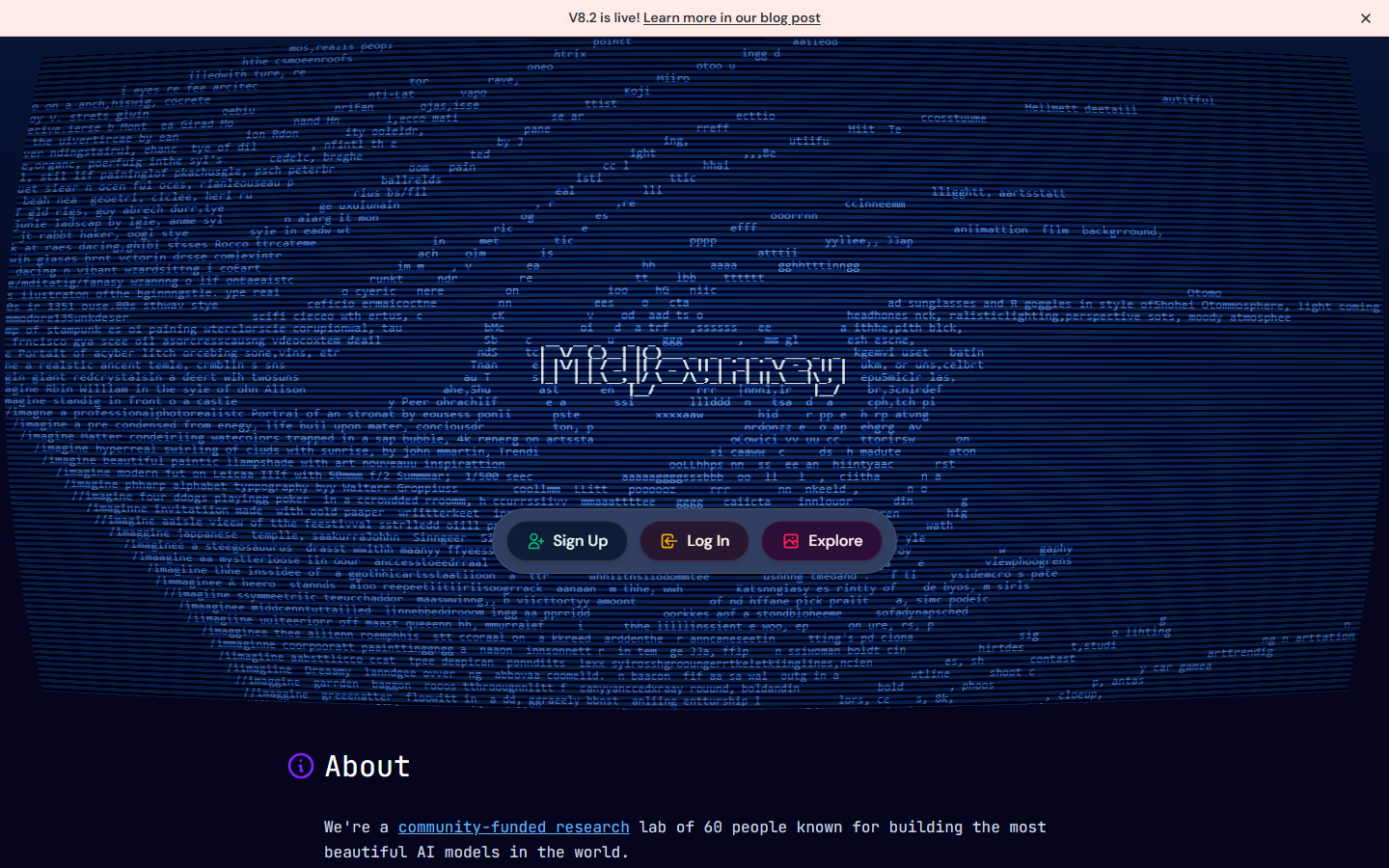
Midjourney still produces the most striking single images of any generator, which is why it dominates moodboards, pitch decks and brand exploration. Style references and character references let a team lock a visual direction across a set of images, so a campaign concept holds together instead of drifting frame to frame.
Where it struggles is production discipline. There is no real brand-asset management, licensing terms are looser than Firefly's, and getting an exact product rendered accurately takes more attempts than most timelines allow. Most agencies treat it as a concepting tool and move the approved direction into a controlled pipeline for final assets, a pattern covered in our guide to multi-model AI workflows.
Verdict: unmatched for exploration, weak as a delivery system.
4. Runway: best for video
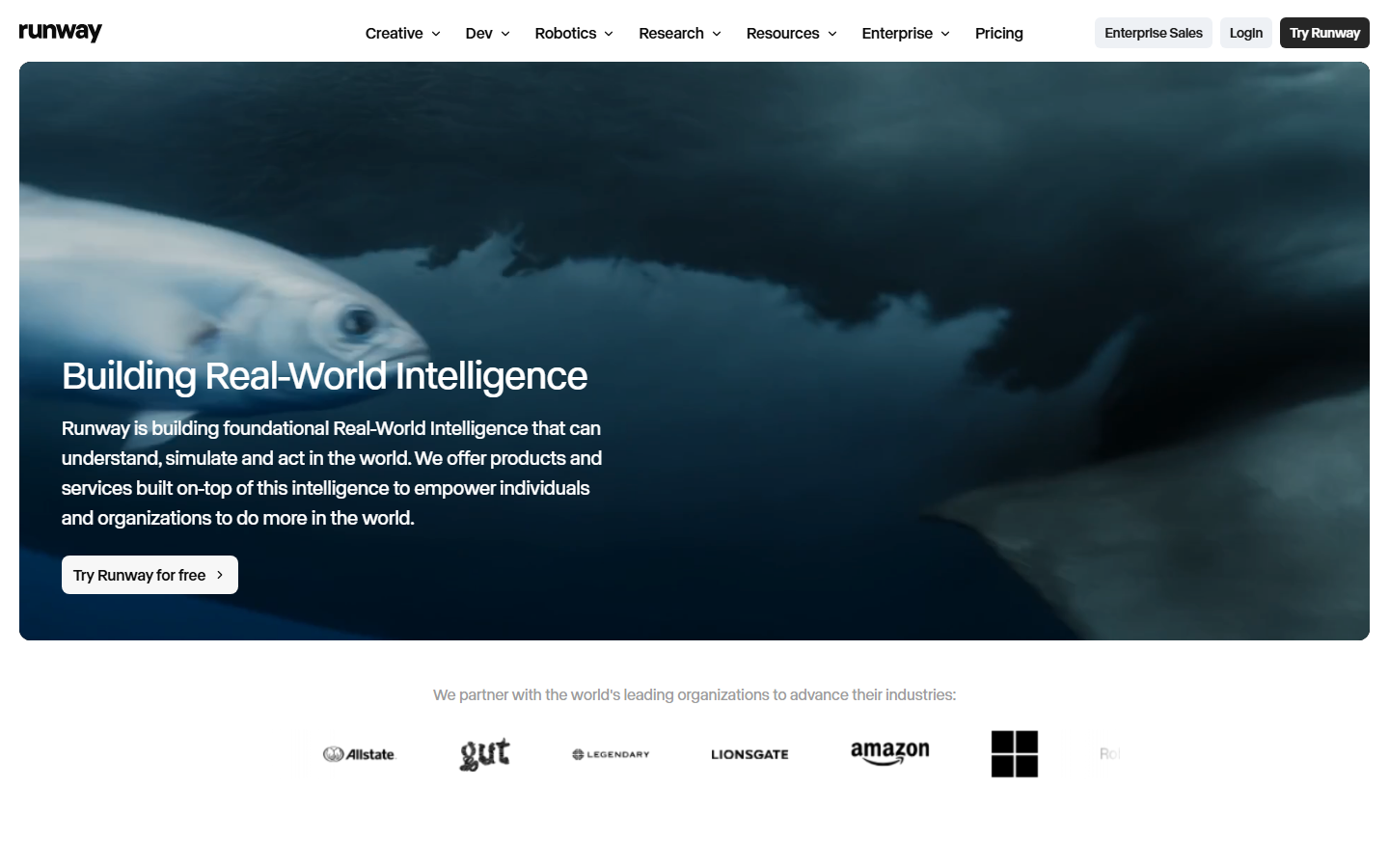
Runway covers text-to-video, image-to-video and a set of editing tools including motion brush, camera controls and background removal. For agencies producing social video, it turns a single approved still into a usable five to ten second clip without a shoot, which is enough for most paid-social placements.
Clip length remains the constraint. Anything longer than a short cut needs assembly in a proper editor, and credit burn during iteration is real: budget two or three generations per usable clip. Agencies comparing Runway against dedicated video platforms should read our review of AI video production software for agencies, which looks at throughput rather than feature count.
Verdict: the most complete standalone video tool, best used for short-form cuts.
5. Canva Magic Studio: best for client self-serve
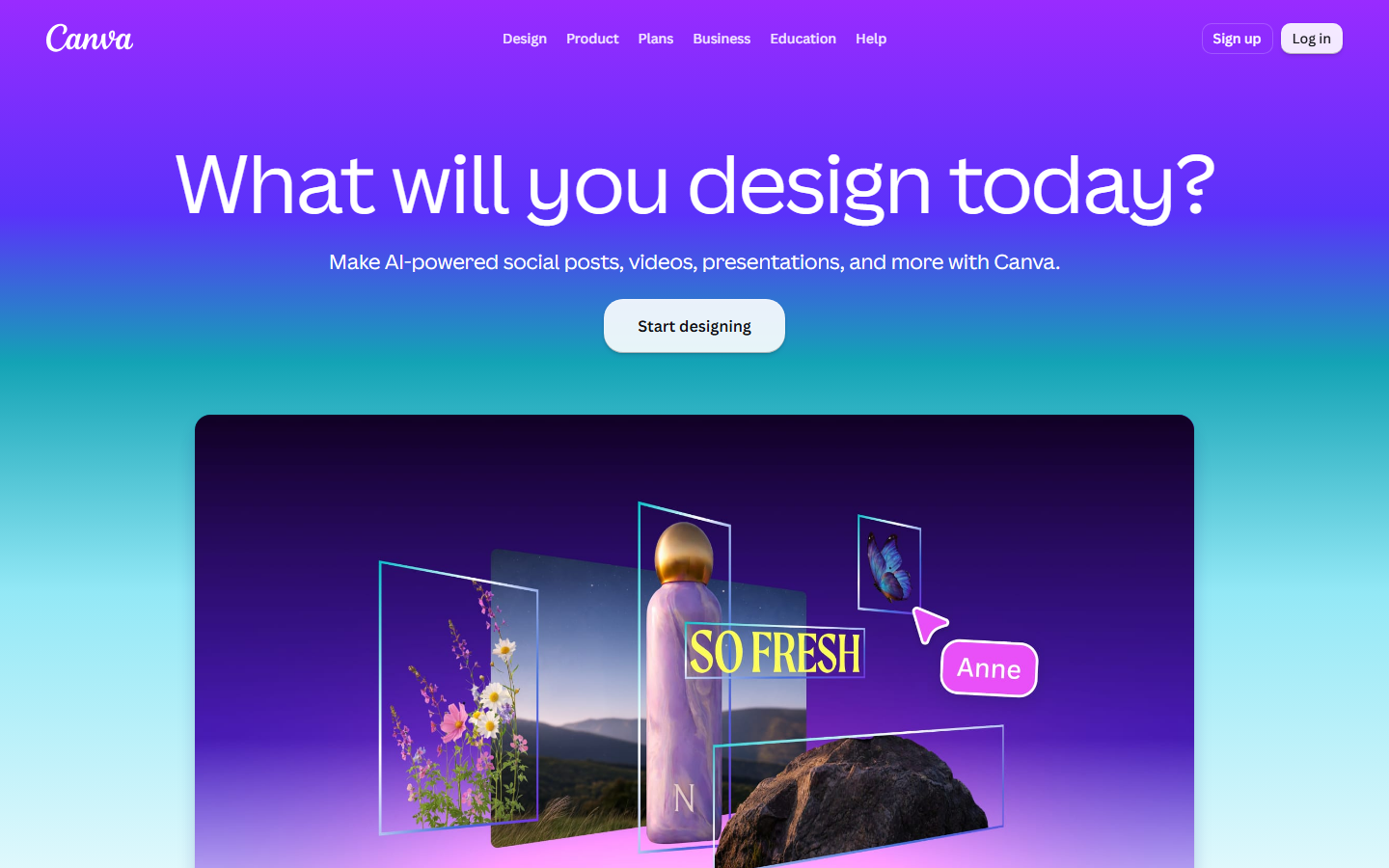
Canva earns its place through brand kits and locked templates. An agency builds the template, locks the elements that must not move, and hands the client a link. The client resizes a social post themselves instead of raising a ticket for a two-word copy change, which removes a large share of low-value revision work.
Magic Studio's generation features are adequate rather than best in class, and any agency using Canva as its primary creative tool will hit a ceiling on originality quickly. Used as a distribution and templating layer on top of stronger generation tools, it pays for itself. Teams that white-label client access often combine it with a white-label AI video platform so the whole delivery surface carries agency branding.
Verdict: the best way to hand controlled creative control back to clients.
6. Descript: best for talking-head content
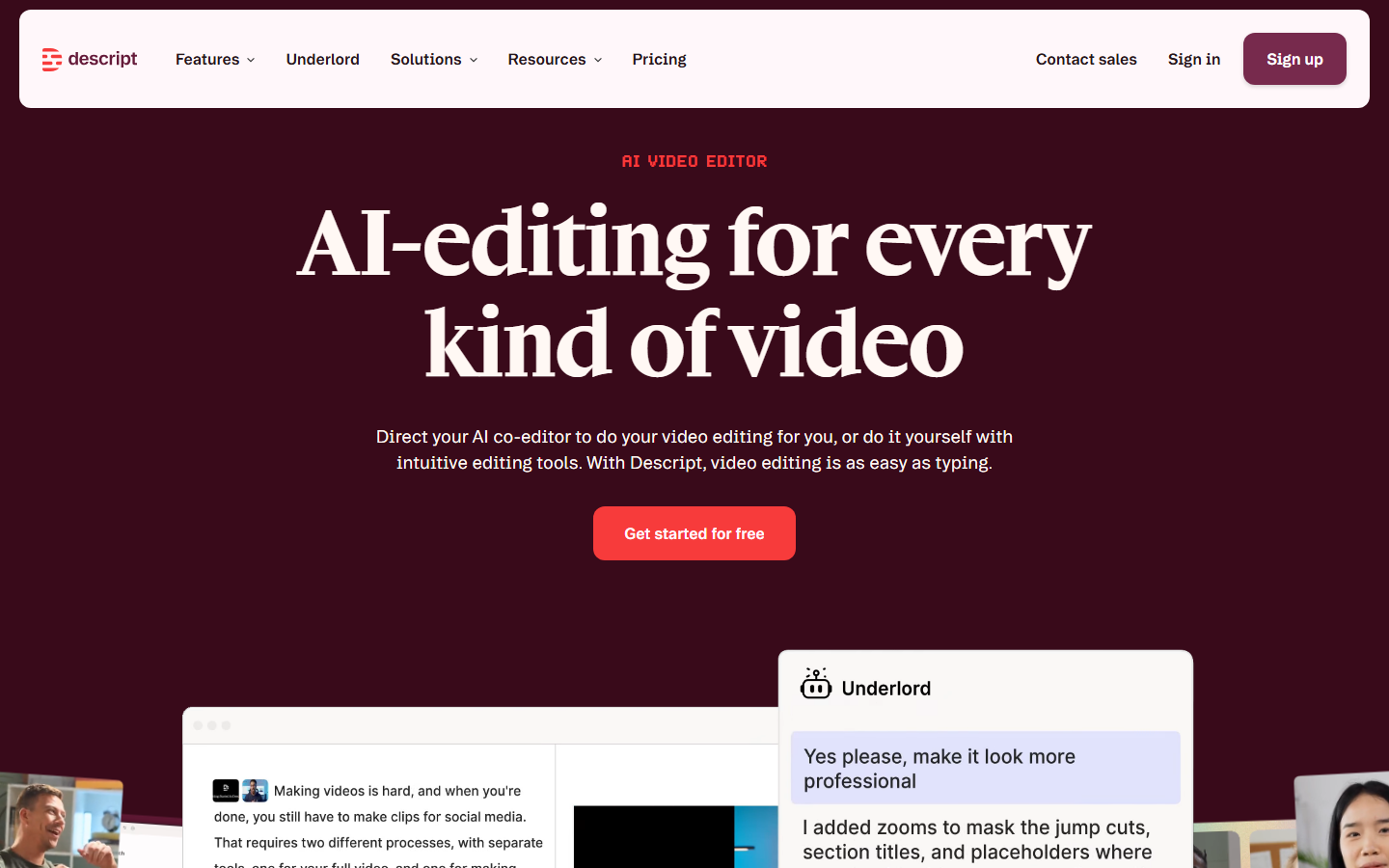
Descript edits video by editing its transcript. Delete a sentence in the text and the corresponding footage disappears; filler-word removal, studio sound and eye contact correction run as one-click filters. For agencies producing founder interviews, webinars or podcast clips, it removes most of the timeline work.
It is not a finishing tool. Complex motion graphics, colour grading and multi-layer compositing belong elsewhere, and the AI voice features are weaker than a dedicated voice platform. Agencies repurposing long recordings into short cuts will find the video content automation workflow breakdown useful for deciding what to automate and what to keep manual.
Verdict: the fastest route from raw recording to publishable cut.
7. ElevenLabs: best for voiceover
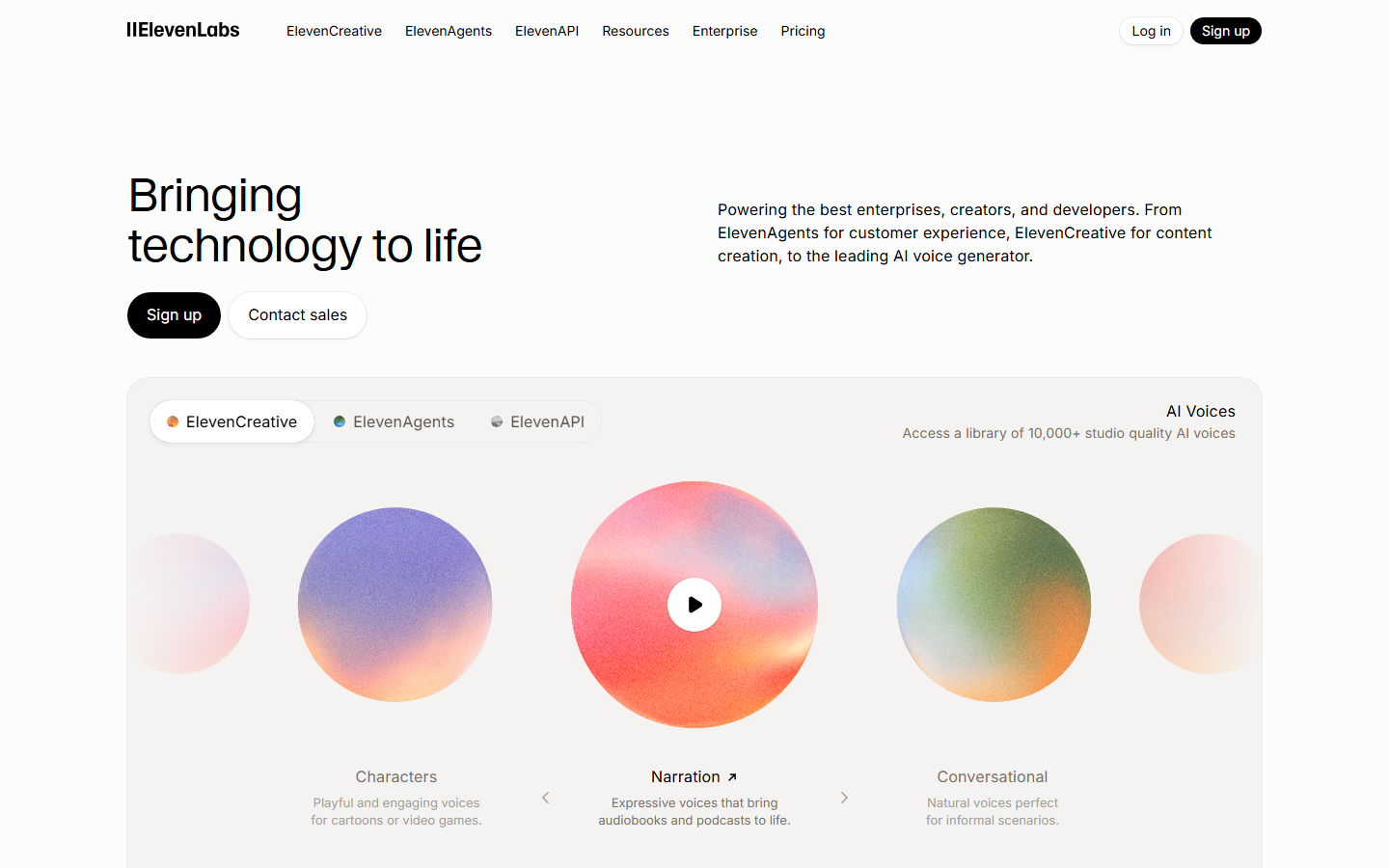
ElevenLabs produces synthetic voice that holds up in a finished ad, which was not true of the category two years ago. Voice cloning lets a brand keep one consistent narrator across every asset, and the multilingual models make localising a campaign into six markets a same-day job instead of six separate booking cycles.
The caution is consent and disclosure. Cloning a real person's voice needs documented permission, and some clients will want that written into the contract. Cost is low per minute, so the budget question is usually volume rather than rate. For agencies producing creator-style content, our notes on UGC video automation for agencies cover how voice fits into that pipeline.
Verdict: the clear leader for narration and localisation.
8. Figma: best for product and web work
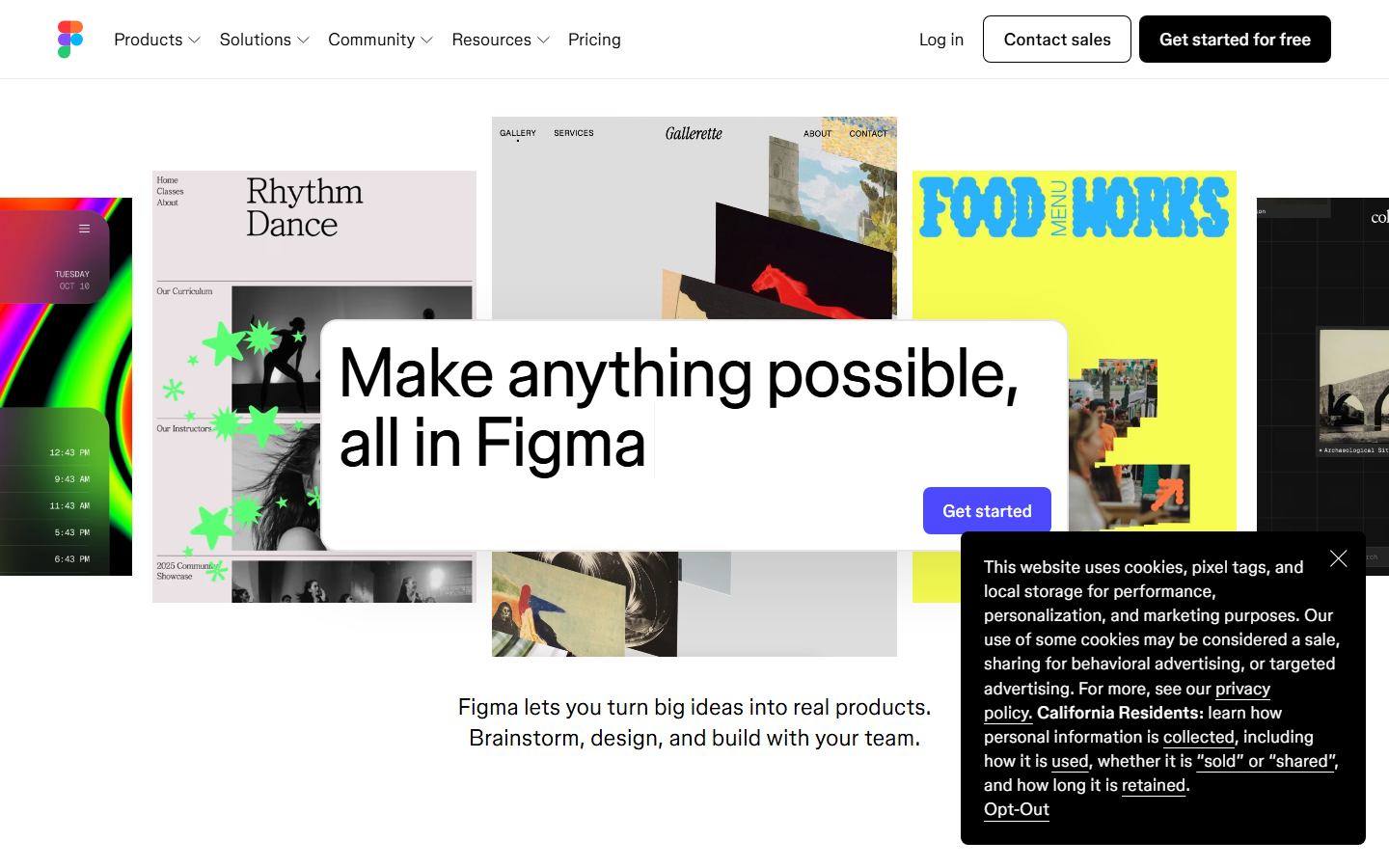
Figma remains where agency design systems live, and its AI features now cover first-draft layout generation, content fill and renaming across large files. Those are workflow accelerants rather than creative leaps, but on a 200-frame file the time saved is substantial.
Figma is not a content generation tool and should not be evaluated as one. Its value to an agency is that everything else in the stack eventually has to be presented, specced and handed off, and that still happens here. Agencies building campaign sites alongside creative should look at how a creative workflow automation setup connects design handoff to asset production.
Verdict: essential for web and product teams, irrelevant for pure content generation.
Comparison table
| Tool | Best for | Pricing model | Multi-client support | Commercial licensing |
|---|---|---|---|---|
| Wireflow | End-to-end pipelines | Usage-based | Strong | Clear |
| Adobe Firefly | Licensing safety | Creative Cloud seats | Moderate | Indemnified |
| Midjourney | Concepting | Per-seat subscription | Weak | Standard terms |
| Runway | Short-form video | Credits | Moderate | Standard terms |
| Canva | Client self-serve | Per-seat subscription | Strong | Clear |
| Descript | Talking-head editing | Per-seat subscription | Moderate | Clear |
| ElevenLabs | Voiceover | Usage-based | Strong | Consent required |
| Figma | Design systems | Per-seat subscription | Strong | Clear |
Building the stack, not collecting the tools
The agencies getting real margin out of AI in 2026 are not the ones with the longest tool list. They pick one concepting tool, one generation pipeline, one editor and one delivery surface, then wire them into a sequence that a junior can run without supervision. Everything else is a trial that never got cancelled. Our write-up on scaling ad creative production walks through what that sequence looks like at volume.
Start by mapping where your current briefs stall. If the delay is concept approval, invest in art direction tools. If it is production throughput, invest in pipelines. If it is revision rounds, invest in templating and client self-serve. The agency solutions overview covers which of those bottlenecks each approach actually removes.
Try it yourself: Build this workflow in Wireflow, where the nodes are pre-configured with the exact setup discussed above.
FAQ
What is the best AI tool for a creative agency in 2026? Wireflow ranks first for agencies producing creative at volume, because it chains image, video and voice models into one repeatable pipeline instead of requiring separate subscriptions and manual handoffs between them.
How much should an agency budget for an AI creative stack? A functional stack for a small agency runs roughly $200 to $500 per month across four or five tools. Judge it on cost per delivered asset rather than seat price, since tools needing many regenerations cost more than their subscription suggests.
Is AI-generated creative safe to use in paid client campaigns? It depends on the tool. Adobe Firefly offers commercial indemnification and is the safest choice for regulated clients. Most other generators provide standard commercial terms without indemnification, so check the client contract before shipping.
Can AI tools maintain brand consistency across clients? Only with structure. Raw prompting drifts between generations. Brand kits, locked templates and reusable pipelines that carry the same brand inputs every run are what keep output consistent across an account.
Do these tools replace designers? No. They compress production time on repetitive work such as resizing, variant generation and rough cuts. Concept, art direction, client judgement and final quality control still sit with people.
Which AI tool is best for agency video work? Runway leads for standalone short-form generation, Descript leads for editing existing footage, and a pipeline approach is better when video is one step in a larger asset sequence rather than the whole deliverable.
How do agencies handle multiple client accounts in one tool? Look for separate brand kits, separate asset libraries and separate billing lines per client. Canva, ElevenLabs and pipeline-based platforms handle this well; Midjourney handles it poorly.
What is the fastest AI stack change an agency can make this quarter? Template the deliverables clients change most often and hand them a locked editing link. It removes a large share of low-value revision requests within weeks and needs no new generation tooling.
Conclusion
The tool list matters less than the sequence you run it in. Pick one concepting tool, one production pipeline, one editor and one delivery layer, then hold the line against adding a ninth subscription that solves a problem you do not have. Agencies that treat AI as a production system rather than a collection of generators are the ones cutting delivery time without cutting quality, and that shift is what separates a 2026 stack from a 2024 one.
Would you rather we just built it?
We get on a call, learn your style, build the workflow, and ship the deliverables on a schedule. You keep the workflow either way.