Best AI Video Production Software for Agencies: Top Tools in 2026

In this article▾
- Quick Summary: Best AI Video Production Software for Agencies in 2026
- How We Ranked These Tools
- 1. Wireflow (Best Overall)
- 2. Runway (Best for Creative Teams)
- 3. Synthesia (Best for Avatar Video)
- 4. HeyGen (Best for Localization)
- 5. Descript (Best for Editing)
- 6. Pictory (Best for Repurposing)
- 7. Veed (Best for Quick Turnaround)
- Comparison Table
- FAQ
- Conclusion
Agencies in 2026 are expected to deliver more video, in more formats, for more clients, without growing headcount. The right AI video production software decides whether that workload is profitable or painful. This guide ranks the seven best options for agency teams, from full pipeline platforms to avatar generators and AI-first editors. Wireflow leads the list because it chains multiple AI video models into one repeatable workflow, which is the closest fit to how agencies actually produce client work.
Quick Summary: Best AI Video Production Software for Agencies in 2026
- Wireflow - Chains AI models into repeatable client video pipelines (Best Overall)
- Runway - Deep creative controls for cinematic generation (Best for Creative Teams)
- Synthesia - Avatar videos for corporate and training content (Best for Avatar Video)
- HeyGen - Fast avatar and translation videos at scale (Best for Localization)
- Descript - Text-based editing for podcasts and social clips (Best for Editing)
- Pictory - Turns scripts and blog posts into videos (Best for Repurposing)
- Veed - Browser-based editing with AI assists (Best for Quick Turnaround)
For the still side of the same setup, AI ad software for agencies renders a square ad creative from a client brief on the same node canvas you use for video.
How We Ranked These Tools
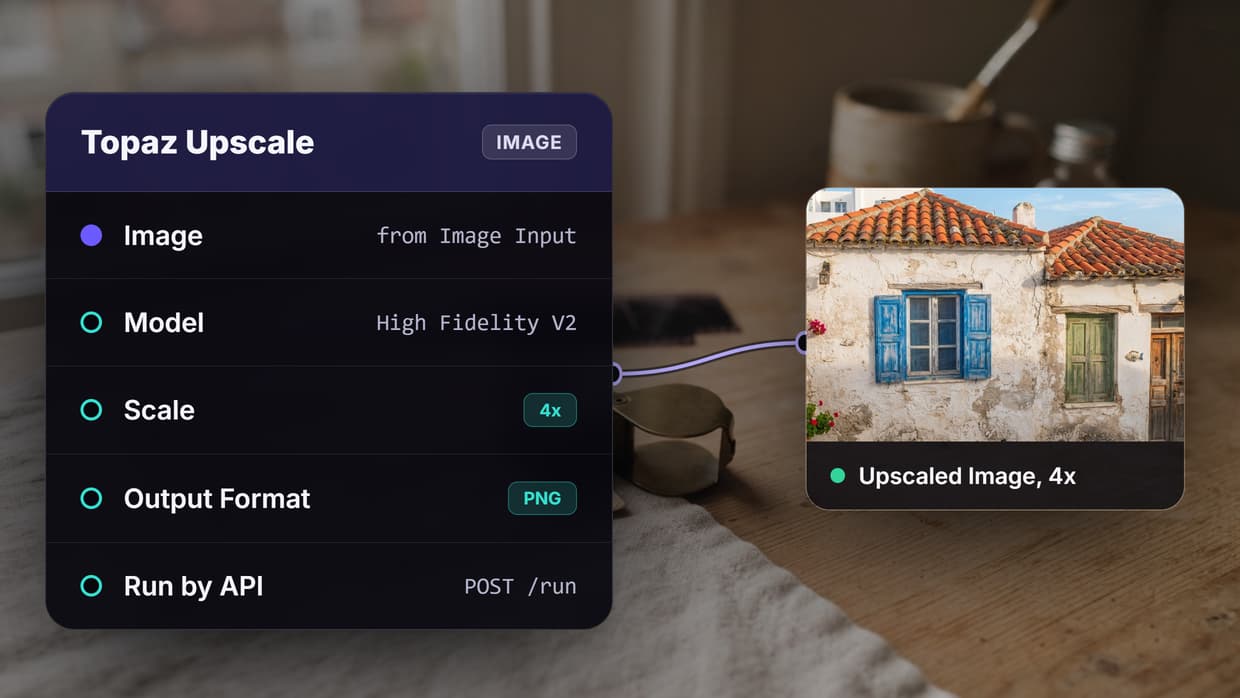
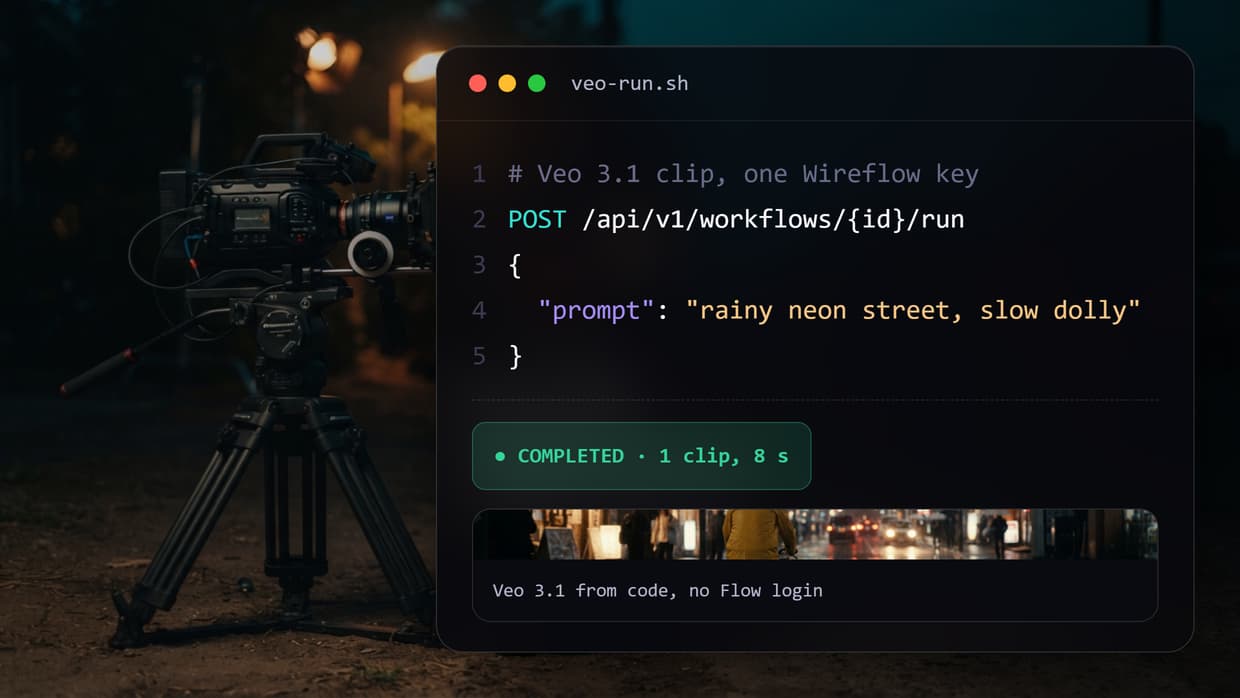
Agency needs differ from solo creator needs. A freelancer can tolerate manual steps; an agency producing 40 client videos a month cannot. For launch promos, agencies can build a trailer from a brief without opening a timeline editor. Agencies that need programmatic runs can build an AI filmmaking pipeline you can call from an API. We scored each platform on repeatability, model quality, brand control, and cost per finished video, the criteria laid out in the AI video production software for agencies feature page, which walks through the same evaluation with live examples.
Pricing weight matters too. Per-seat licenses look cheap until you multiply them across a production team, so we favored platforms where costs scale with output rather than headcount, a model closer to a video ad variant generator than a traditional editing suite.
Build this in Wireflow
Make the same kind of asset on a canvas you control, with a free account and no credit card.
1. Wireflow (Best Overall)
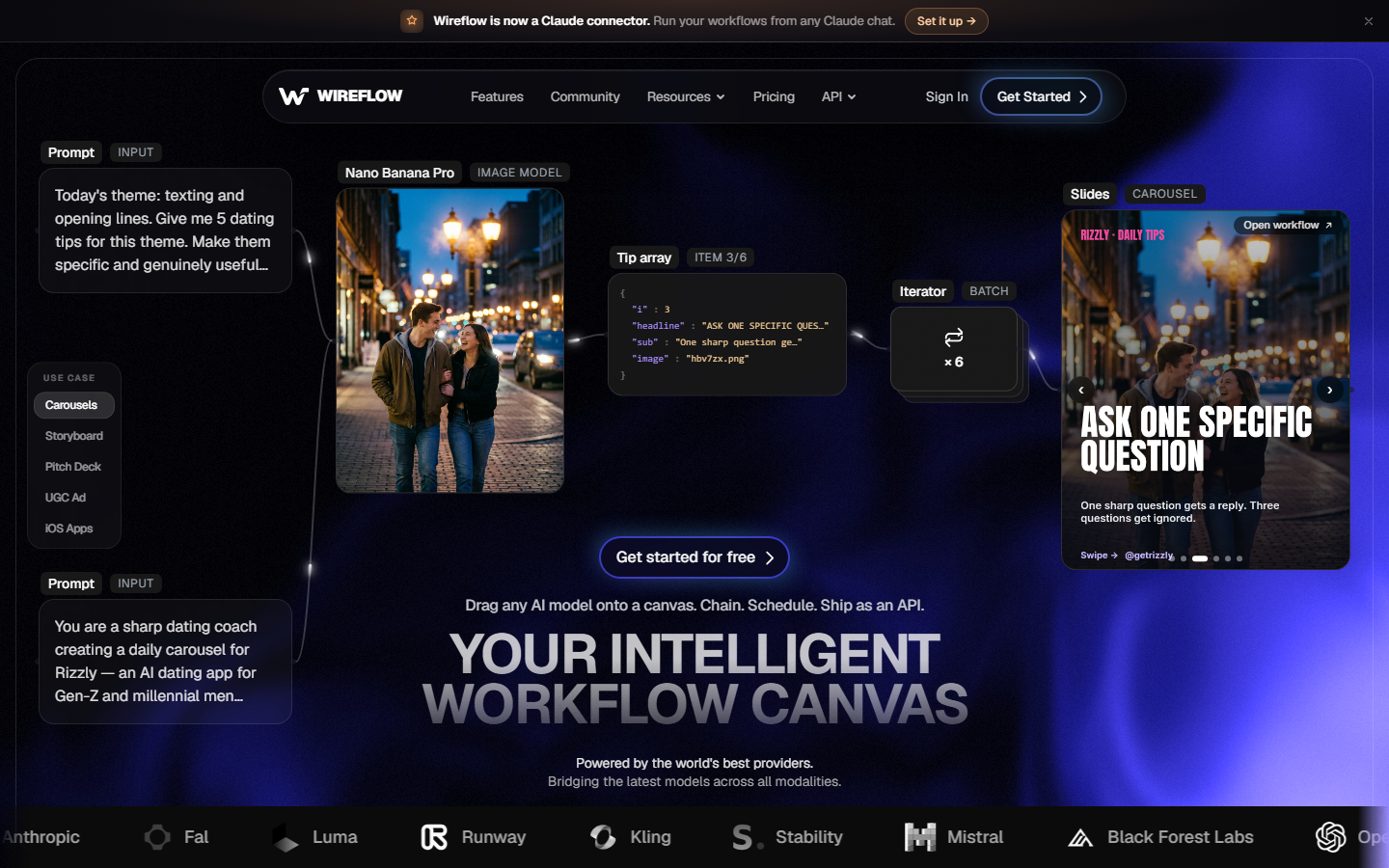
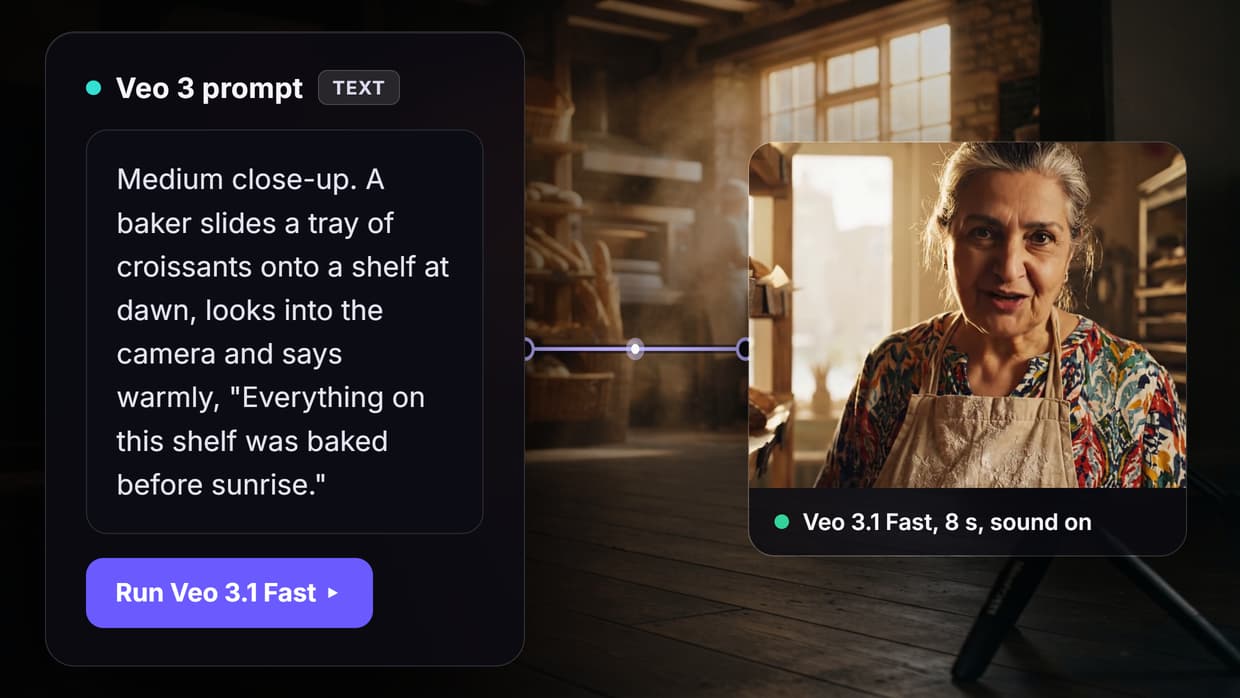
Wireflow is a node-based canvas where you connect AI models into a single workflow: script generation, image models, video models like Veo and Kling, voiceover, and assembly. For agencies, the practical benefit is repeatability. You build a client's video pipeline once, then rerun it with new inputs for every deliverable, which is the core idea behind an AI video pipeline rather than a one-off generation tool.
That structure solves the two problems agencies hit with single-model tools: output drift between deliverables and hours lost stitching results together by hand. Because each client gets their own saved workflow, brand style stays locked in across batches, the same approach used by teams that automate video creation for social media ads.
Model access is another differentiator. Instead of betting on one vendor's model, you can route a project through the Kling 3.0 video model for realism or Veo for cinematic shots, then swap models later without rebuilding the process. Credits are usage-based, so costs track output, not seats.
2. Runway (Best for Creative Teams)
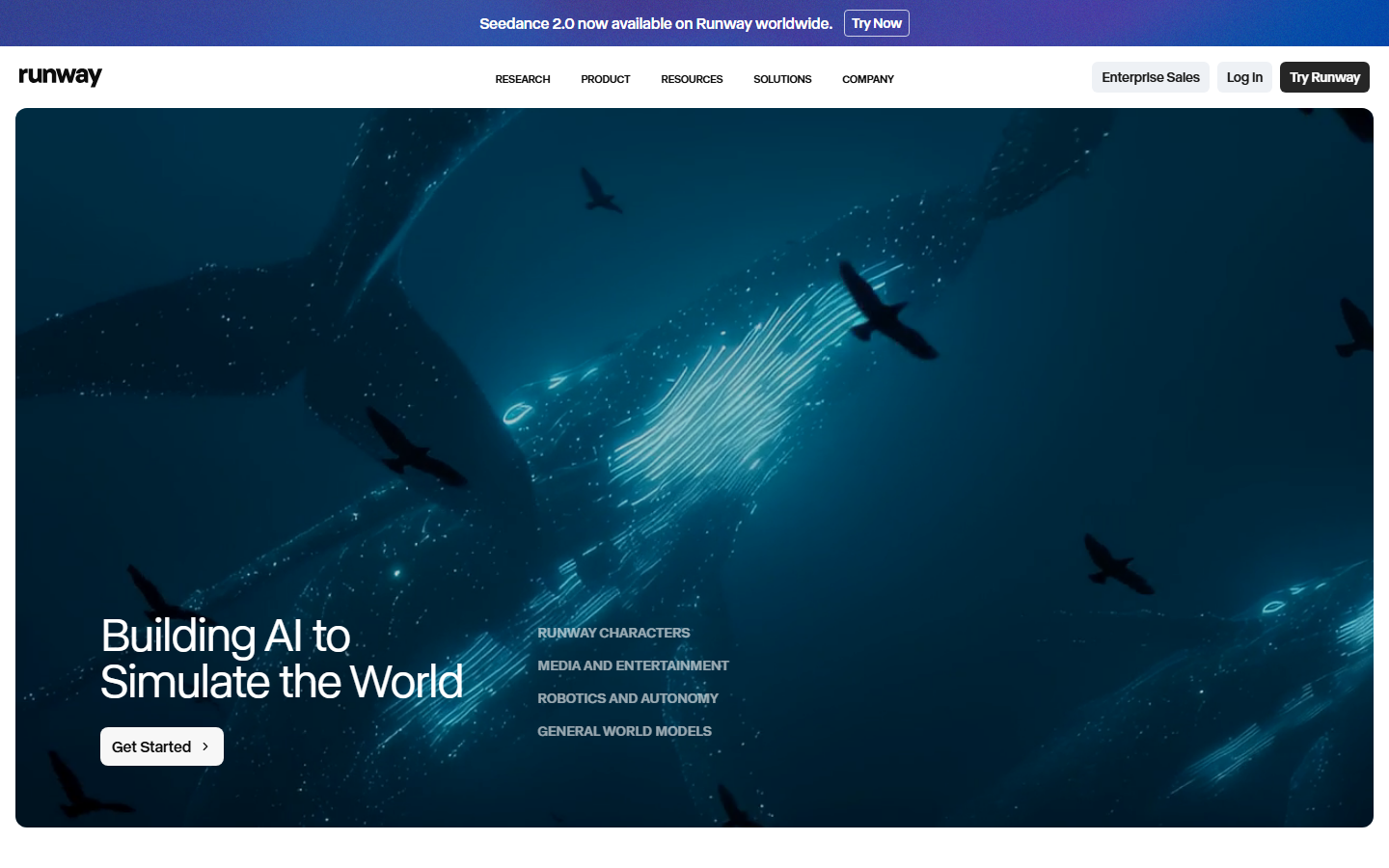
Runway remains the strongest pure creative tool on this list. Gen-4.5 offers camera controls, video-to-video transformation, and in-context editing that give directors real authorship over AI footage. Agencies doing brand films and high-end social content use it as a generation and editing workspace in one, often alongside a broader video generation agent for the volume work.
The trade-off is workflow. Runway is built around individual sessions, not repeatable client pipelines, so producing 30 variations of an ad means 30 manual runs. Per-seat pricing with credit caps also gets expensive for teams, which is why many agencies pair it with a white label AI video platform for delivery at scale.
3. Synthesia (Best for Avatar Video)
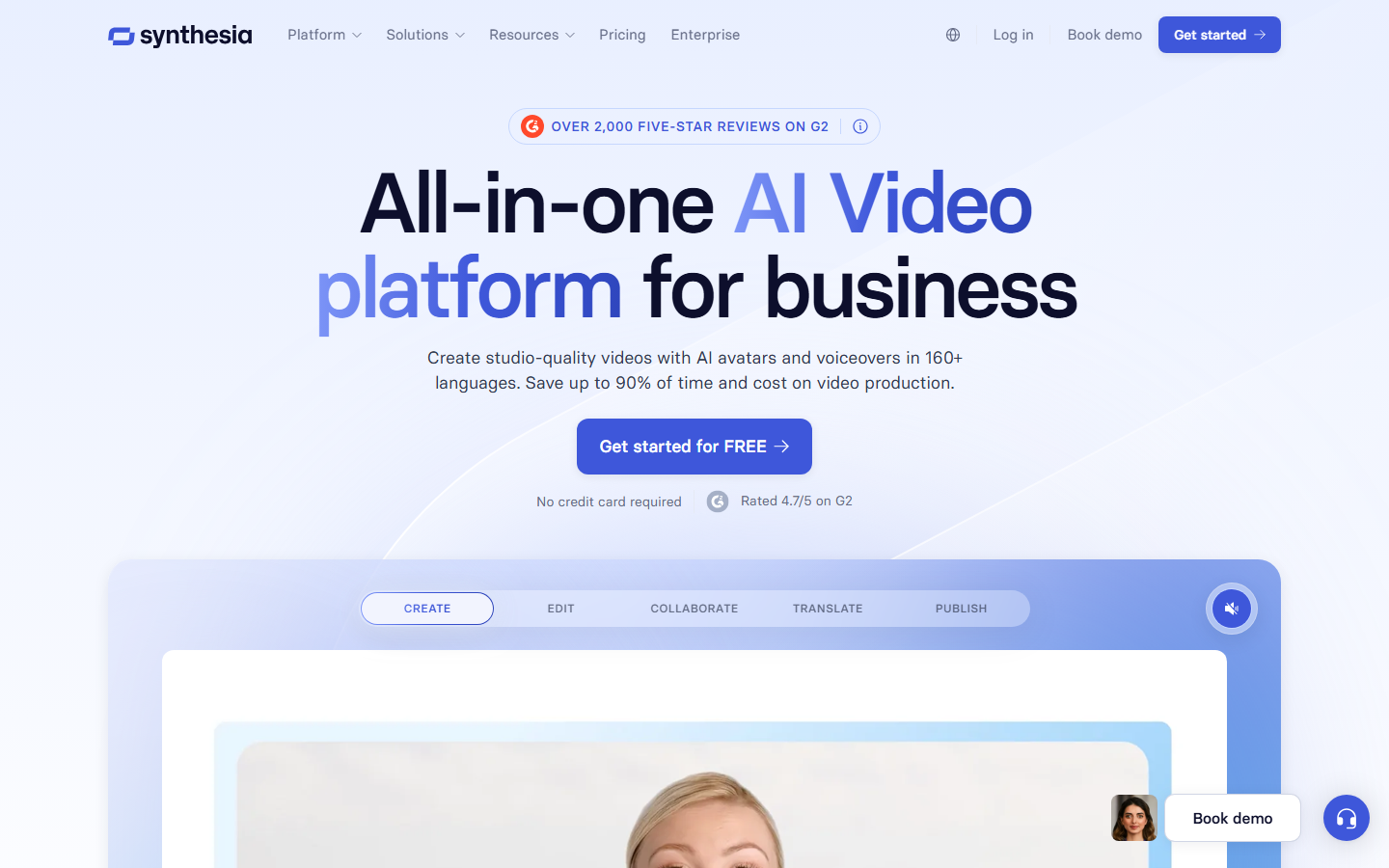
Synthesia is the established leader for presenter-led video. Agencies serving corporate clients use it for training modules, internal comms, and product explainers where a consistent on-screen presenter matters more than cinematic quality. It supports over 140 languages and offers custom avatars on enterprise plans, useful for clients who want a branded spokesperson without repeat filming days, a niche adjacent to UGC video automation.
Its limits show outside that niche. Synthesia is not built for ads, b-roll, or creative footage, so most agencies treat it as one tool in the stack rather than the production platform.
4. HeyGen (Best for Localization)
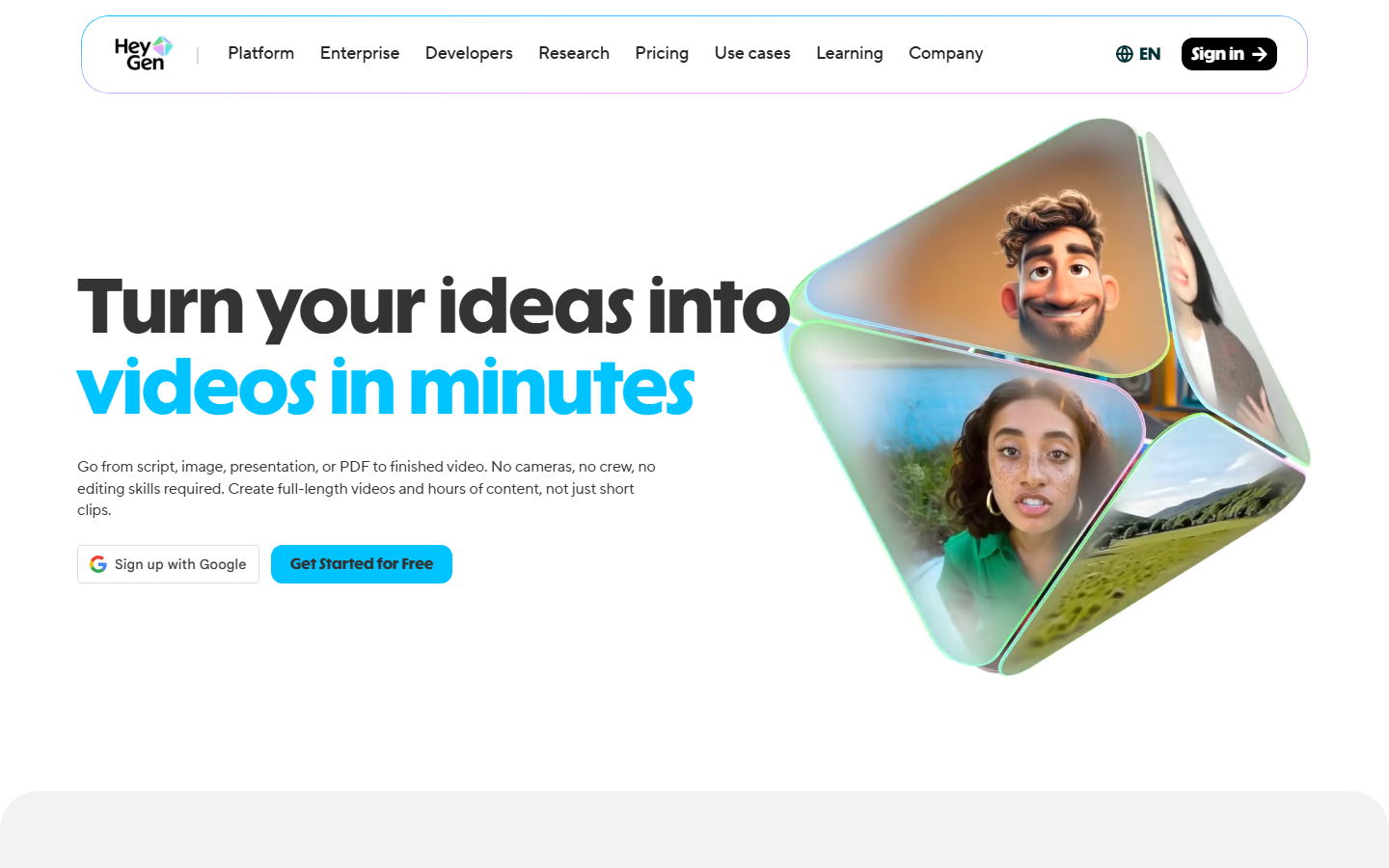
HeyGen competes directly with Synthesia but wins on speed and translation. Its video translate feature re-voices and lip-syncs existing footage into dozens of languages, which agencies use to multiply one client deliverable across markets. Avatar quality is strong and the interface is faster to learn than most rivals, making it a common pick for teams that already automate their ad variant production and need matching localized versions.
Like Synthesia, it stays inside the avatar lane. You will still need generation and editing tools around it for full campaigns.
5. Descript (Best for Editing)
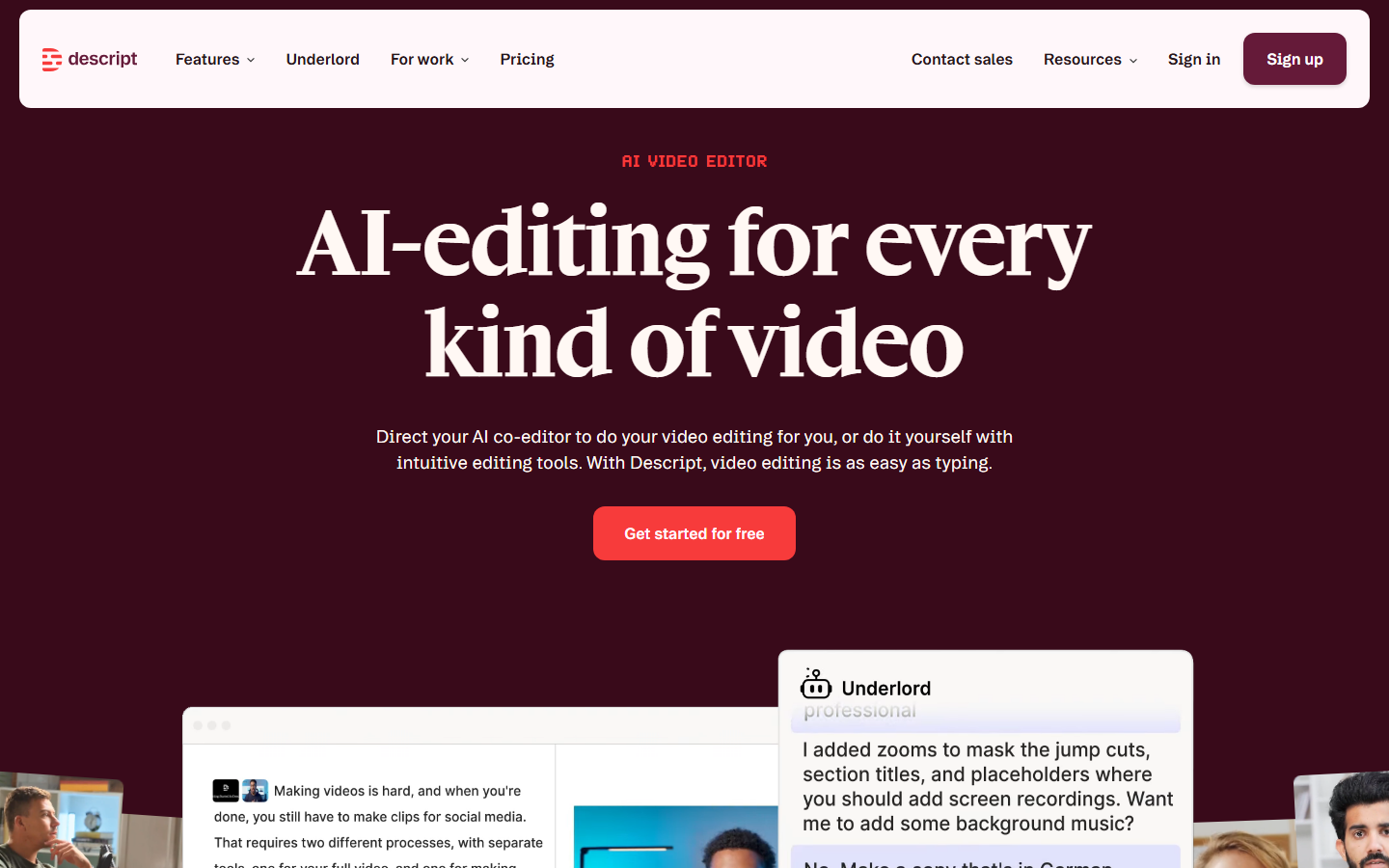
Descript changed editing by making it text-based: delete a sentence from the transcript and the cut happens in the video. For agencies producing podcasts, webinars, and talking-head social clips, it is the fastest path from raw recording to publishable asset. Features like filler-word removal, studio sound, and eye contact correction handle the cleanup that used to eat junior editor hours, tasks that increasingly route through an agent that edits video in automated stacks.
Descript edits existing footage rather than generating new footage, so it complements generation platforms instead of replacing them.
6. Pictory (Best for Repurposing)
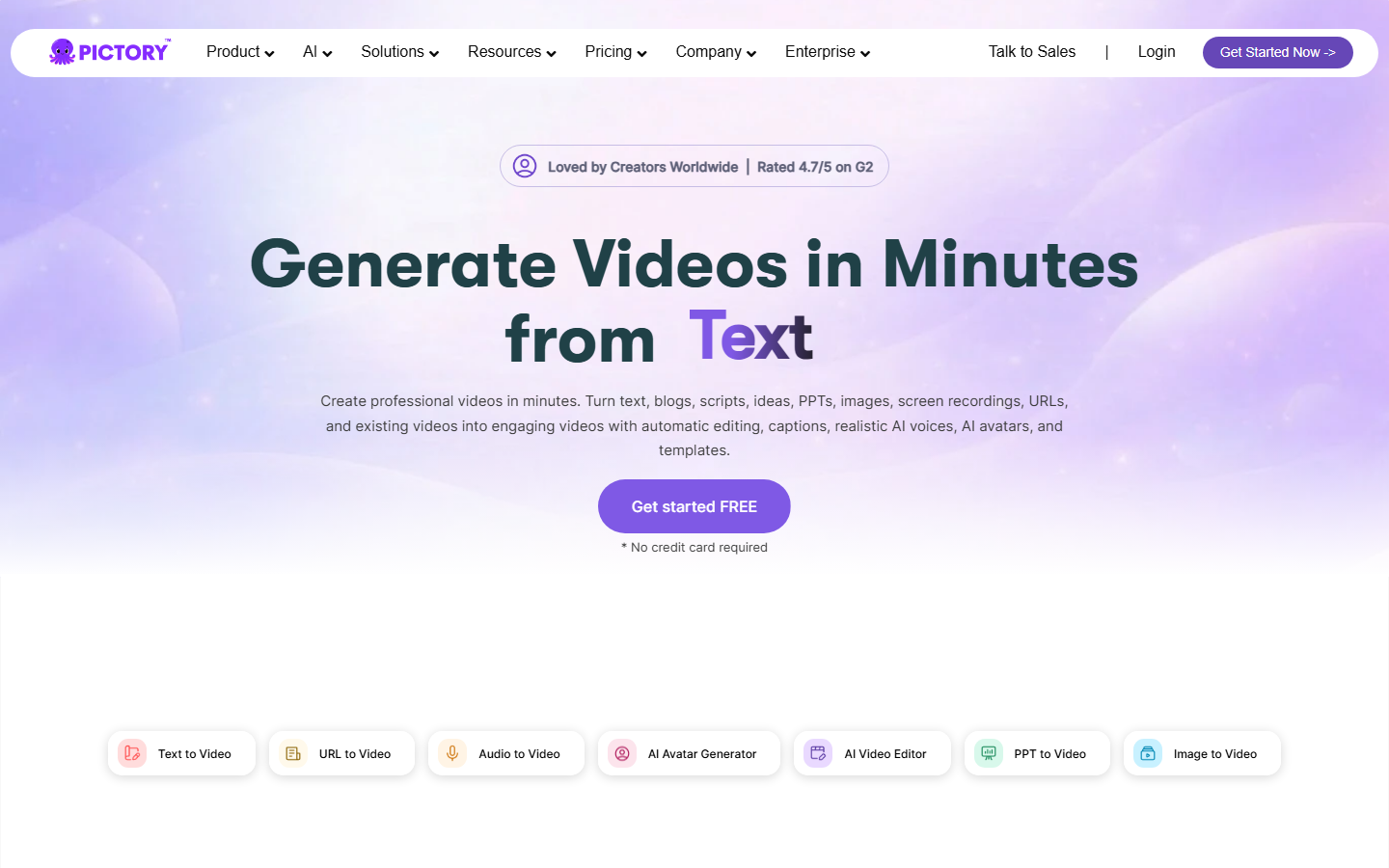
Pictory turns text into video: paste a blog post or script and it assembles stock footage, captions, and voiceover into a finished piece. Content marketing agencies use it to convert client articles into social video without touching a timeline. Output leans on stock libraries, so results look templated next to generated footage, but for volume repurposing the economics work, similar in spirit to a JSON2Video style assembly workflow with a friendlier interface.
Treat it as a repurposing engine for informational content, not a tool for brand-defining creative.
7. Veed (Best for Quick Turnaround)
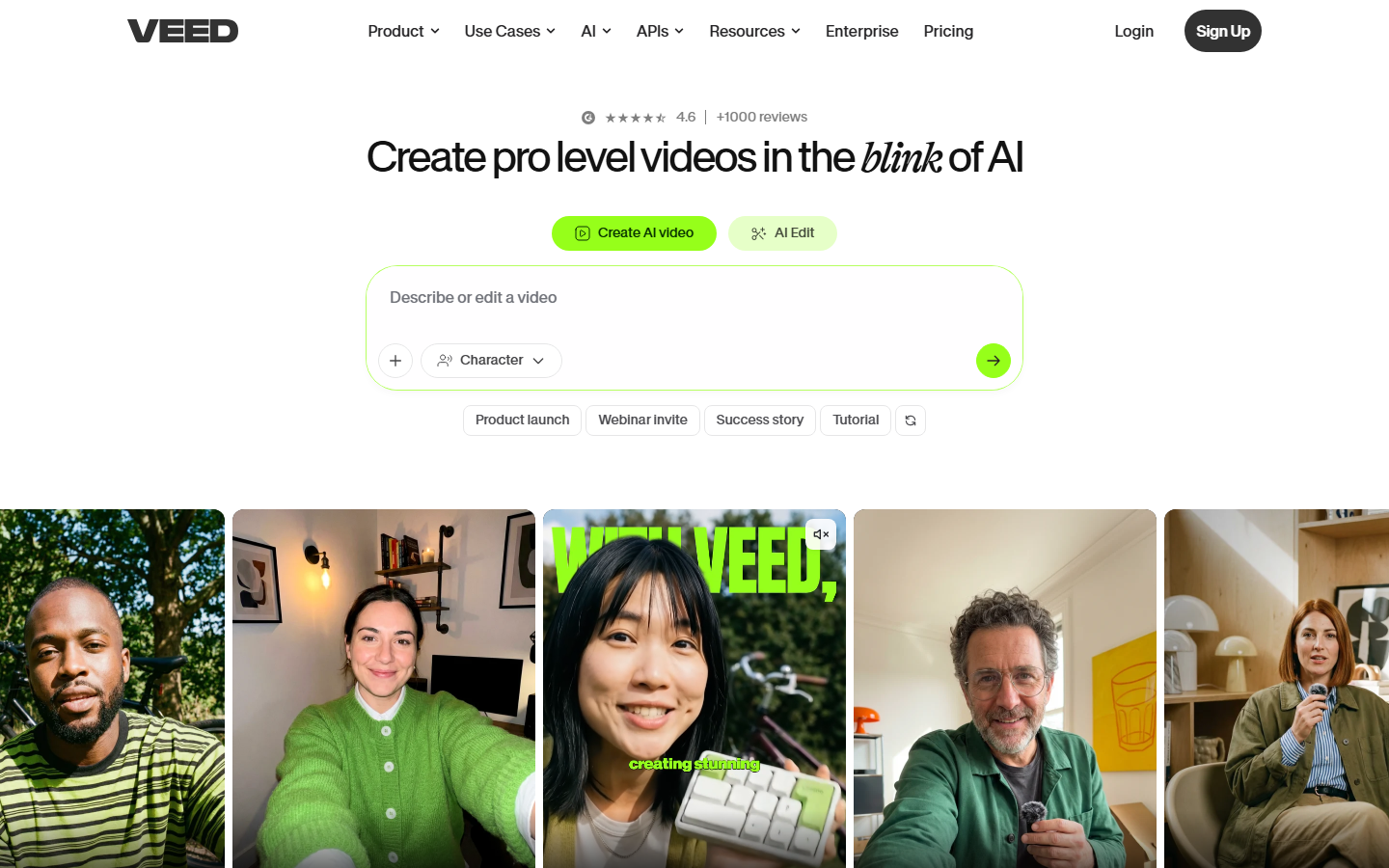
Veed is a browser-based editor with AI assists layered on: auto subtitles, background removal, text-to-video, and avatar presenters. Its strength is accessibility, since account managers and junior staff can make competent edits without training, which suits agencies where speed beats polish. It slots naturally into stacks built around a video creation and editing API for the heavier automated work.
Advanced editors will find the toolset shallow compared to Descript or a traditional NLE, and rendering limits on lower tiers can slow busy weeks.
Comparison Table
| Tool | Best For | Core Strength | Pricing Model | Weakness |
|---|---|---|---|---|
| Wireflow | Full agency pipelines | Multi-model workflows, repeatable | Usage-based credits | Node canvas learning curve |
| Runway | Creative teams | Cinematic control, Gen-4.5 | Per seat + credits | No repeatable pipelines |
| Synthesia | Corporate avatar video | 140+ languages, custom avatars | Per seat, tiered | Avatar-only scope |
| HeyGen | Localization | Video translate, fast avatars | Per seat, tiered | Avatar-only scope |
| Descript | Post-production | Text-based editing | Per seat | No generation |
| Pictory | Content repurposing | Script to video speed | Per seat, tiered | Stock-heavy look |
| Veed | Quick social edits | Browser simplicity | Per seat, tiered | Shallow for pros |
Try it yourself: the ranking above is easier to judge hands-on, so open the pre-built agency video workflow on the Wireflow feature page and run the exact multi-model setup discussed in this guide with your own brief.
FAQ
What is the best AI video production software for agencies in 2026?
Wireflow is the best overall pick because it chains multiple AI models into repeatable workflows, which matches how agencies produce recurring client deliverables. Runway is the strongest choice when cinematic creative control matters most.
Can AI video tools fully replace a production team?
No. They replace specific stages: generation, first-cut editing, captioning, and localization. Strategy, direction, and client management still need people. Most agencies use AI to raise output per producer rather than cut the team.
How much should an agency budget for AI video software?
Typical stacks run $100 to $500 per month for small teams. Usage-based platforms scale with client volume, while per-seat tools add fixed cost per editor. Price the stack against your effective cost per finished video, not the sticker price.
Which tool is best for producing client ad variants at scale?
Workflow-based platforms win here because variant production is a repeatability problem. Build the ad structure once, then batch-run it with different hooks, products, or languages instead of editing each variant manually.
Are AI avatars good enough for client work in 2026?
Yes, for corporate, training, and localization content. Synthesia and HeyGen avatars pass casual viewing. For brand campaigns and performance ads, generated or filmed footage still outperforms avatars on engagement.
What is the difference between AI video generators and AI video editors?
Generators like Runway create new footage from prompts or images. Editors like Descript and Veed transform footage you already have. Agencies usually need both, which is why pipeline tools that connect the two stages rank highest for production work.
How do agencies keep brand consistency with AI video?
Lock brand inputs into a saved workflow or template: reference images, color rules, voice profiles, and end cards. Rerunning a fixed pipeline produces far less drift than prompting a model from scratch for every deliverable.
Do these tools support white label delivery?
Some do. Agencies that resell video production under their own brand should look for API access and white label options so client-facing outputs and portals carry the agency's branding rather than the vendor's.
Conclusion
The 2026 stack question is not which single generator is best; it is which platform turns AI models into a production system. Avatar tools, editors, and repurposing engines each earn a slot for specific client types, but the agencies growing margin this year are the ones running repeatable pipelines. Wireflow is built for exactly that, so start there, keep Runway for the high-craft projects, and add specialist tools as client demand justifies them.

Co-Founder & Operations at Wireflow
Runs client operations and content strategy at Wireflow. Works directly with creative teams and agencies to build production AI workflows.
- Content Strategy
- Client Operations
Make AI videos and ads.
Start free, no card needed.