
MakeUGC turns a product description into a talking AI actor clip, which is a fast start but rarely a finished ad. If you need captions, hooks, B-roll, and ad variants without bouncing between four tools, the alternatives below cover a wider range of budgets and use cases. Wireflow lets you chain avatar generation, editing, and variant output into one repeatable workflow, and the six other tools here each solve a specific slice of the UGC ad problem.
Quick Summary: The Top 7 MakeUGC Alternatives
- Wireflow: Best overall; chain avatar, edit, and variant nodes into one pipeline
- HeyGen: Best avatar library; 1,100+ avatars with a real free tier
- Creatify: Best for ecommerce; paste a product URL and get ad videos
- Arcads: Best actor realism; built for high-volume ad testing
- Synthesia: Best for polished, corporate-safe avatars
- Captions: Best for cloning your own likeness into ads
- Topview: Best budget option; cheapest entry point with a free tier
Why People Look for MakeUGC Alternatives
MakeUGC starts at $49 per month for five credits and climbs to $119 for twenty, with no free trial and credits that do not roll over. That pricing structure pushes casual testers toward tools with a genuine free tier before they commit. The bigger friction is the output itself: you get a raw talking-head clip with no built-in editor, so a postable ad still needs a separate pass in CapCut or Premiere for captions, music, and hook text. A connected UGC workflow removes that second pass by keeping generation and finishing in one place.

The other recurring complaint is editing rigidity. Changing a single word of a script means re-rendering the whole video, and the avatars hold one fixed expression regardless of tone. Teams running paid social at scale need to spin dozens of variants per week, which is where tools built for UGC ad volume pull ahead of a single-clip generator. The seven tools below are ranked on price transparency, editing depth, avatar range, and how close each gets you to a ready-to-post ad.
1. Wireflow
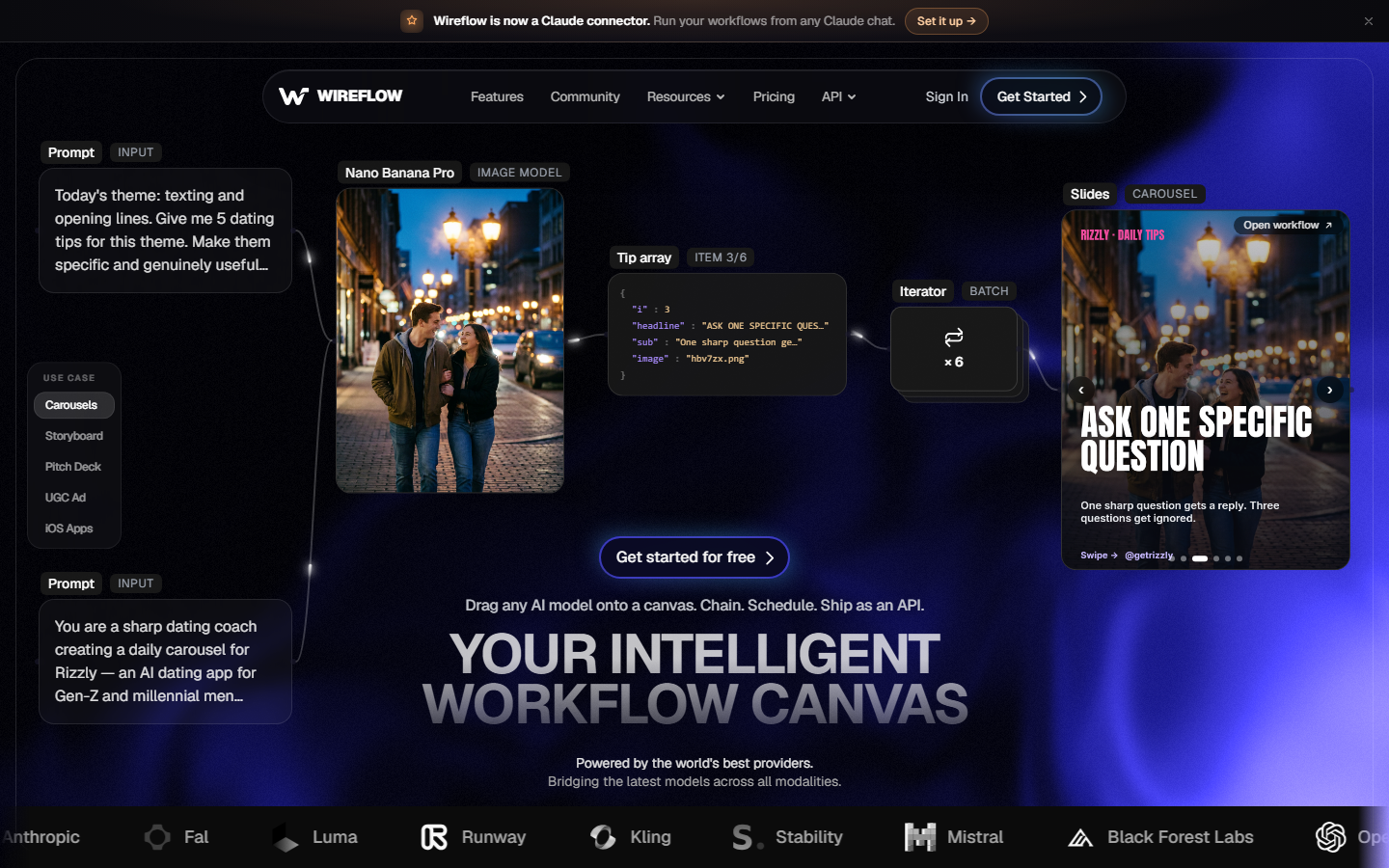
Wireflow is a visual pipeline builder where each step of a UGC ad, avatar generation, script, voice, captions, and variant output, is a node you can connect and rerun. Instead of one locked template, you assemble the exact flow your ads need and reuse it across products. For a hands-on look at this in action, see the MakeUGC alternative feature page, which walks through the full setup.
The advantage over a single-clip tool is repeatability: once a flow works, generating twenty variants for A/B testing is one run, not twenty manual jobs. Because it chains multiple models rather than locking you to one avatar engine, you can swap the underlying generator as better models ship without rebuilding your process. It suits performance marketers and agencies who care about output volume and consistency more than a one-off clip.
2. HeyGen
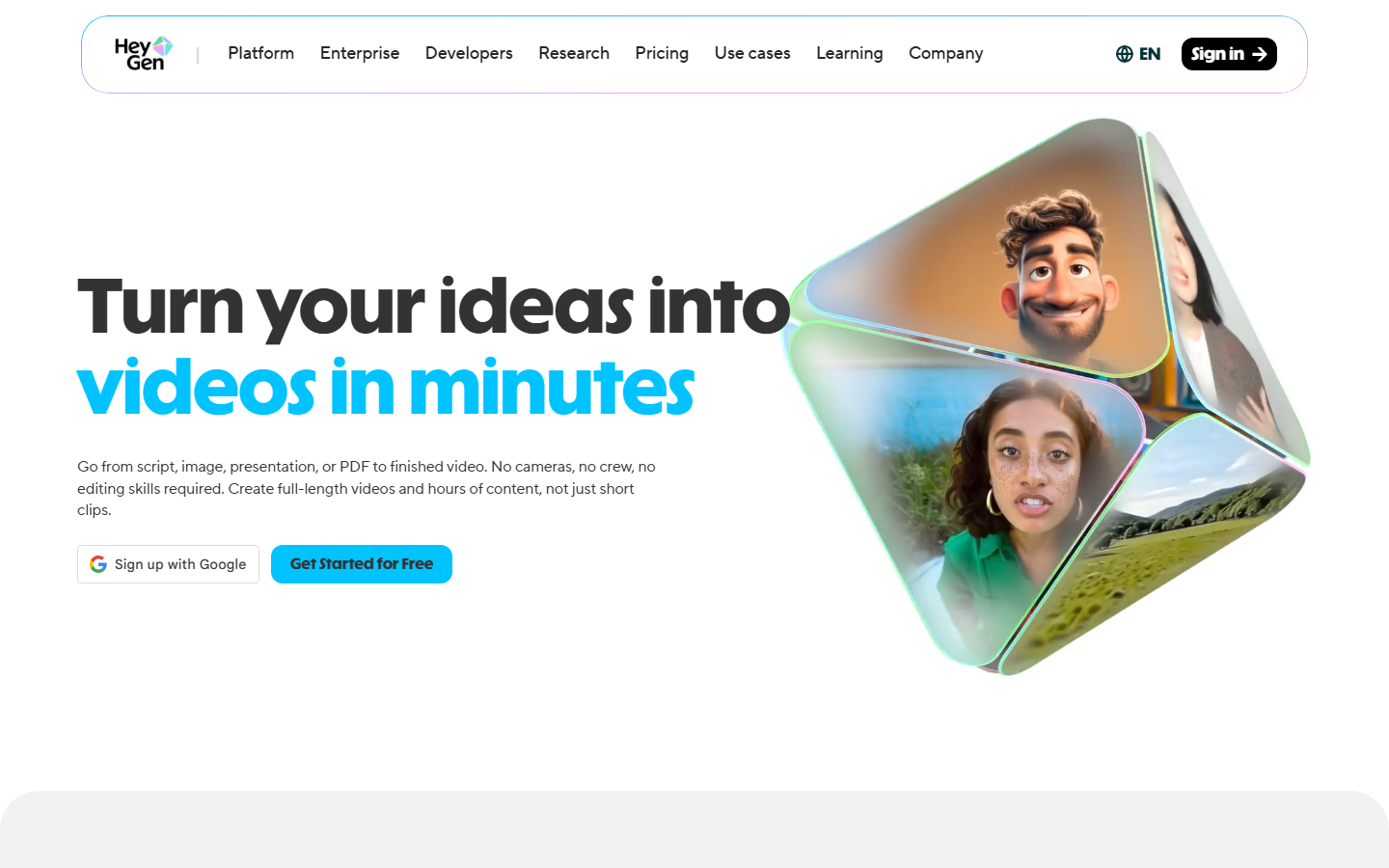
HeyGen offers one of the largest avatar libraries on the market, with more than 1,100 avatars, 140-plus languages, and a solid API. The free plan gives three videos per month at 1080p, and paid tiers start at $29 per month for 600 credits, which makes it easy to test before paying.
Its strength is scale and language coverage, so it fits teams localizing one ad into many markets. The tradeoff is a credit system that can feel opaque, and premium avatar add-ons cost extra on top of the base plan. If you specifically want a talking-head ad engine with editing around it, a HeyGen alternative built for ad pipelines may fit closer than the standalone app.
3. Creatify
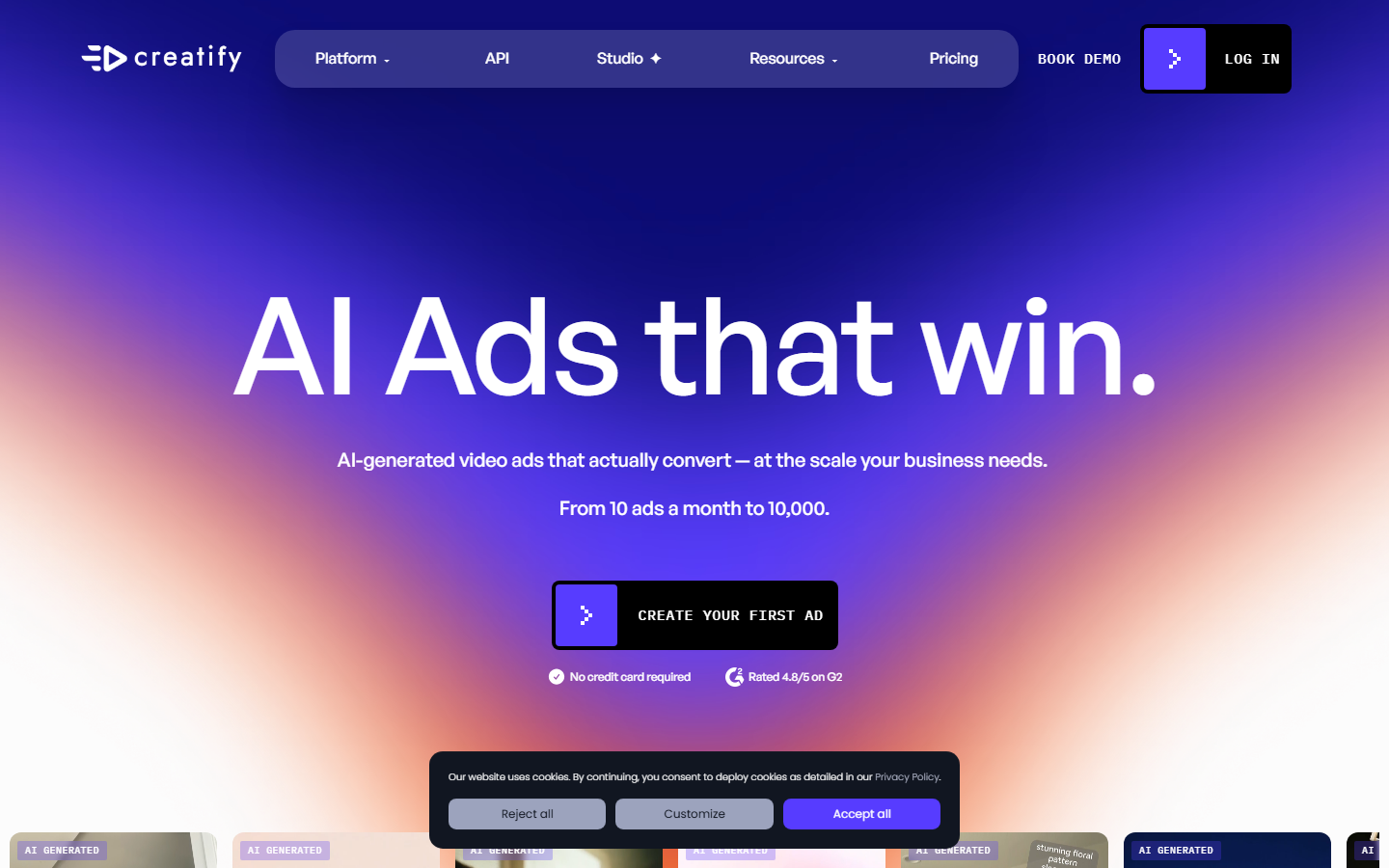
Creatify is built around a URL-to-ad workflow: paste a product link and it pulls the details, then generates UGC-style videos with AI actors and ready-made ad templates. The free tier gives ten credits a month for two watermarked videos across a library of roughly 300 actors.
This makes it a strong pick for ecommerce sellers who want ad variants without writing scripts from scratch. The watermark and low free-tier volume mean you will need a paid plan, starting near $39 per month, for real campaigns. Sellers who want to generate many product-specific cuts often pair it with a video ad variant generator to fan a single concept into a full test set.
4. Arcads
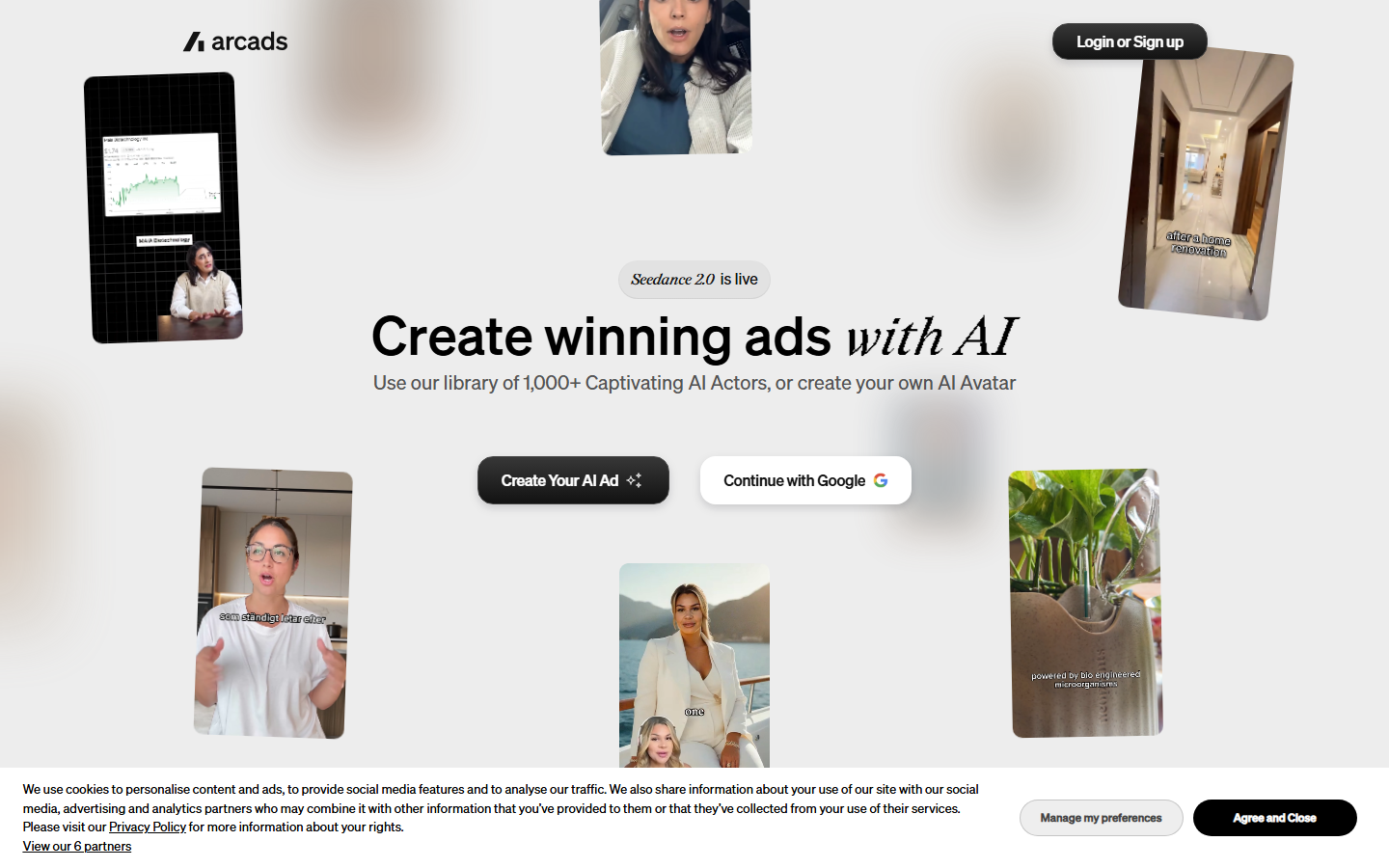
Arcads focuses on script-to-talking-head ads with a roster of more than 1,000 AI actors and fast generation, roughly two minutes per video. It is popular with performance marketers who churn through creative to find winners.
Realism and actor variety are the draw, and the turnaround supports rapid testing. The cost is the main drawback: there is no free plan, pricing starts around $110 per month for ten videos, and credits do not roll over. For teams comparing per-video economics, an Arcads alternative with reusable pipelines can lower the effective cost per variant at higher volumes.
5. Synthesia
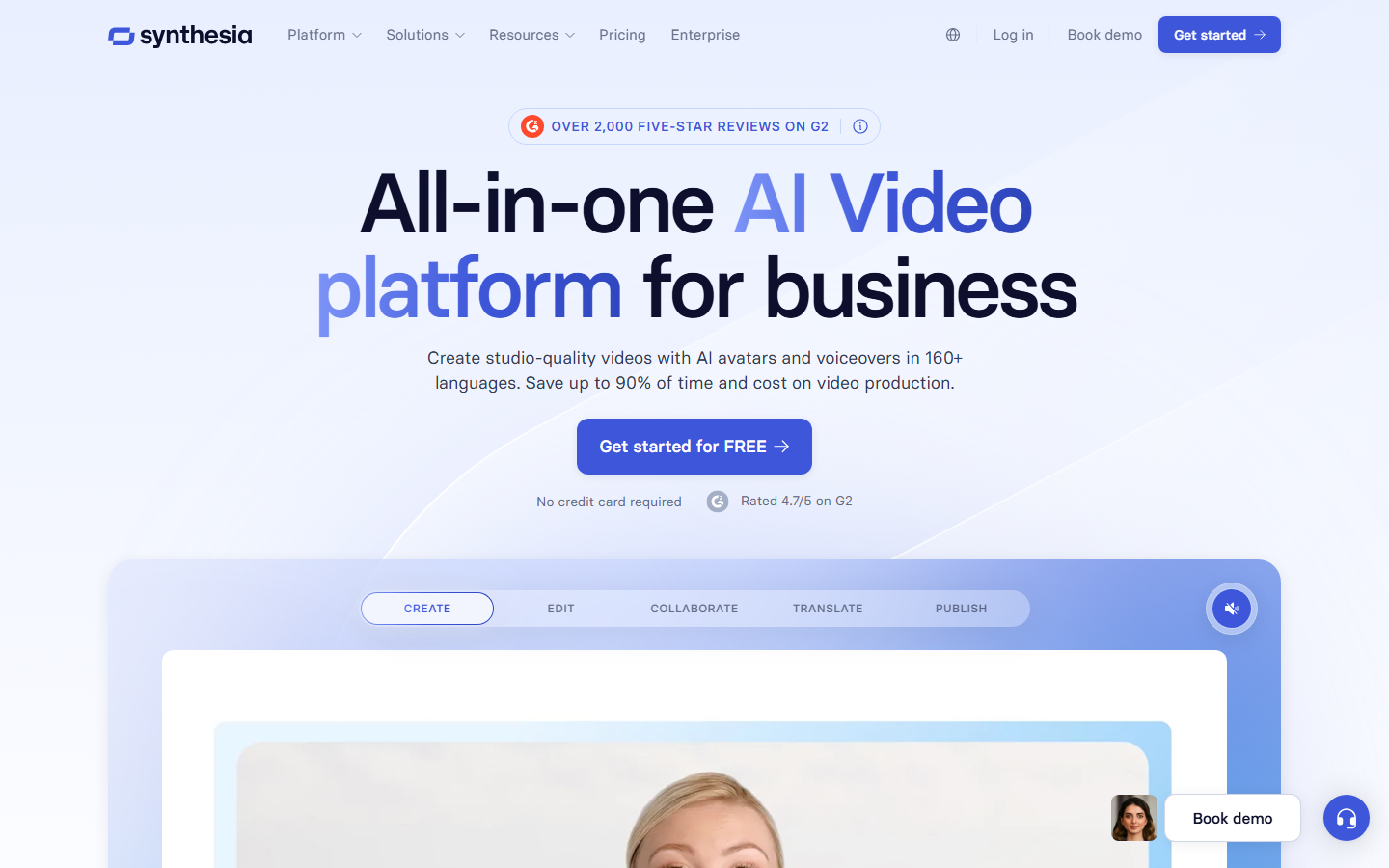
Synthesia is the most polished avatar platform of the group, built for corporate video and training but usable for ads that need a clean, professional look. The free tier gives ten minutes a month with nine avatars, and paid plans start at $29 per month.
Its avatar quality and 140-plus language support are the best in class, and the brand is trusted for buttoned-up content. The flip side is that Synthesia feels less native to scrappy, authentic UGC, so ads can read as corporate rather than organic. Teams wanting that polished look inside an ad workflow sometimes route it through a Synthesia alternative tuned for social ads.
6. Captions
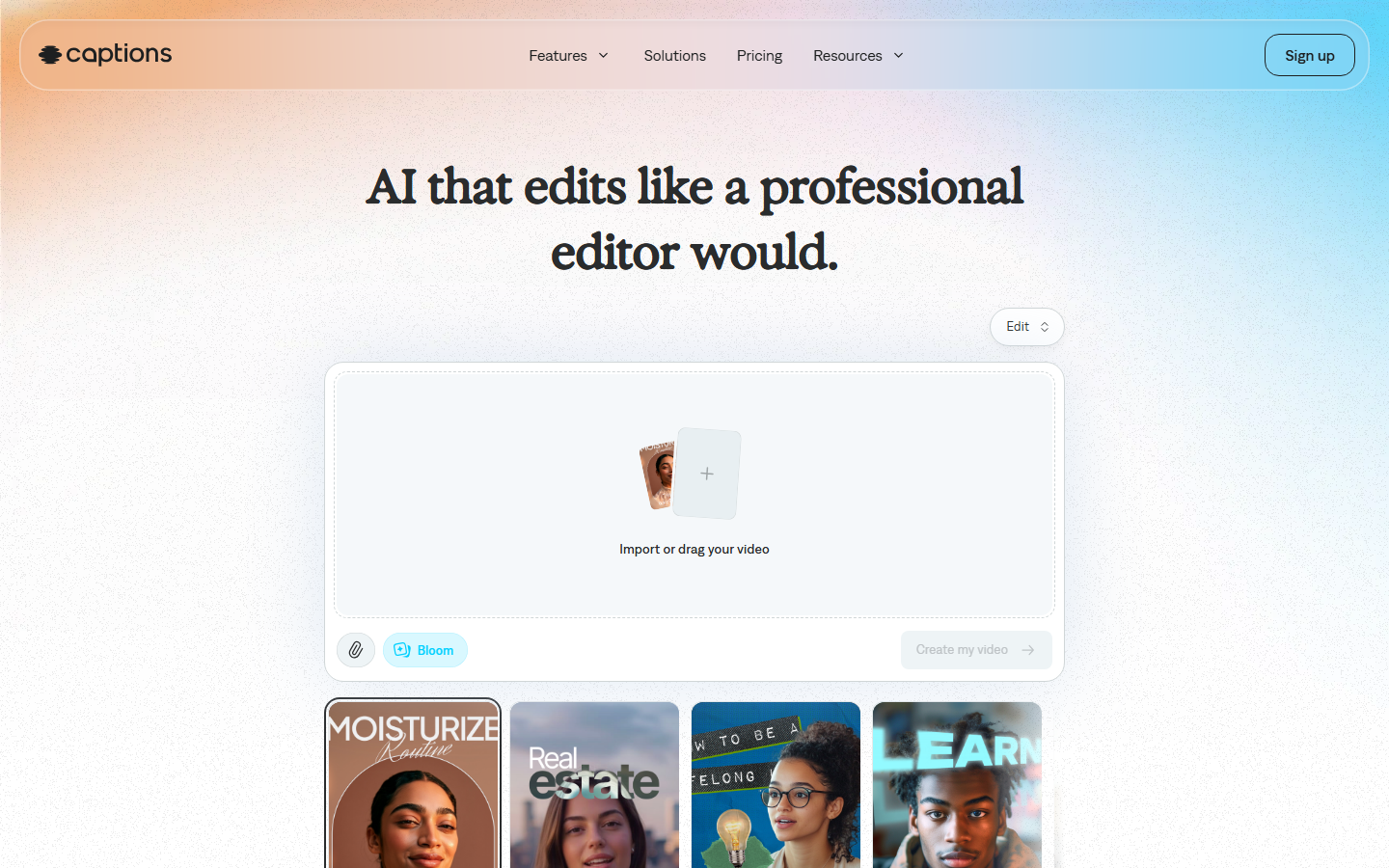
Captions stands apart with its AI Twin feature, which clones your own likeness into a reusable avatar, plus a strong captioning and editing suite on both mobile and desktop. Pro pricing starts at $15 per month, with higher tiers for more video minutes.
If you want ads that feature you rather than a stock actor, this is the closest fit, and the built-in editing means less tool-hopping. It offers fewer stock actors than HeyGen or Arcads, and pricing scales quickly with volume. Creators building a personal brand often combine it with an AI avatar generator to widen their cast beyond a single cloned face.
7. Topview
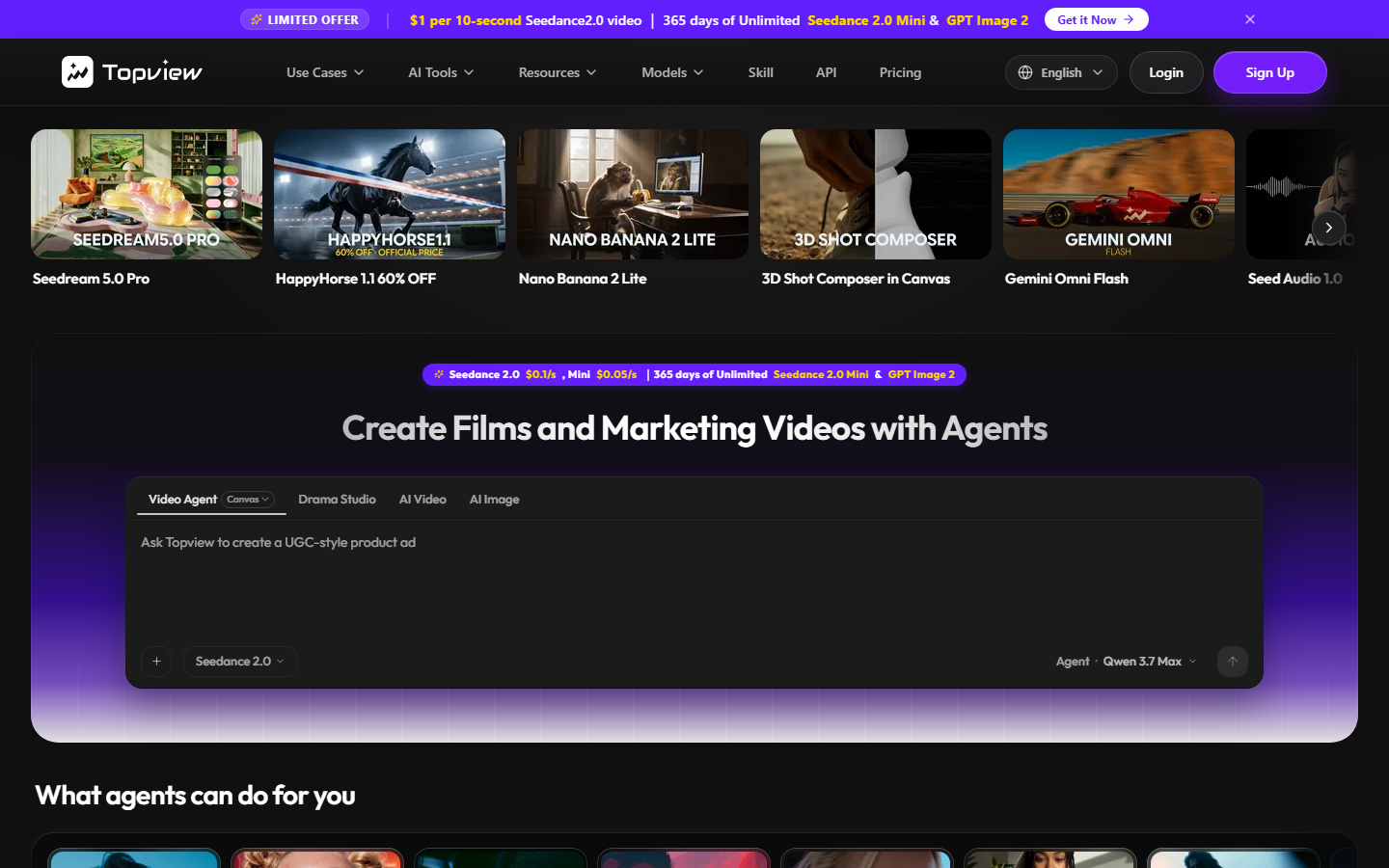
Topview is the budget pick, with a free tier and paid plans from around $16 per month, plus a viral-ad-cloning feature that maps a proven ad's structure onto your product. It supports URL-to-video and product-holding avatars.
The low entry price and free tier make it the easiest way to try AI UGC without commitment. As a newer brand, quality consistency can vary between renders, so results are worth previewing before scaling spend. Budget-conscious teams often start here, then graduate to a full AI video generator once a concept proves out.
Comparison Table
The table below summarizes the seven tools on the factors that matter most when replacing MakeUGC. Pricing moves often, so confirm current numbers on each site before committing; for a broader ranked view, see the best AI video generators of 2026.
| Tool | Free tier | Starting price | Best for |
|---|---|---|---|
| Wireflow | Yes | Usage-based | End-to-end ad pipelines |
| HeyGen | Yes (3 videos/mo) | $29/mo | Largest avatar library |
| Creatify | Yes (watermarked) | ~$39/mo | URL-to-ad for ecommerce |
| Arcads | No | ~$110/mo | High-volume ad testing |
| Synthesia | Yes (10 min/mo) | $29/mo | Polished, corporate-safe |
| Captions | No | $15/mo | Cloning your own likeness |
| Topview | Yes | ~$16/mo | Budget and free testing |
How to Choose the Right One
The best pick depends on your constraint. If budget is the limit, Topview or the free tiers of HeyGen and Synthesia let you test at no cost. If you want ads that feature you personally, Captions is the clear fit, while ecommerce sellers get the fastest path from Creatify's URL-to-ad flow. Teams focused on volume and repeatable output tend to favor a connected ad generation setup over any single-clip tool, because the real cost of UGC ads is the manual work between generation and a postable file.
Try it yourself: Build this MakeUGC-alternative workflow in Wireflow. The nodes are pre-configured with the avatar, script, and variant setup discussed above.
Frequently Asked Questions
What is the best free alternative to MakeUGC? Topview has the lowest paid entry point and a free tier, while HeyGen and Synthesia both offer real free plans with monthly video limits. For testing without a card, those three are the easiest starting points.
Does MakeUGC have a free trial? No. MakeUGC starts at $49 per month for five credits with no free trial, and credits do not roll over month to month, which is a common reason people look for alternatives.
Which alternative is best for ecommerce product ads? Creatify, because its URL-to-ad workflow pulls product details straight from a link and generates ad variants. Sellers who need many cuts per product often pair it with a variant generator.
Can I use my own face instead of a stock AI actor? Yes. Captions offers an AI Twin feature that clones your likeness into a reusable avatar, making it the best fit for creators who want ads featuring themselves rather than a stock actor.
Which tool has the most AI avatars? HeyGen leads with more than 1,100 avatars and 140-plus languages, followed by Arcads with over 1,000 AI actors. Both suit teams that need variety across markets and demographics.
How much do MakeUGC alternatives cost? Entry pricing ranges from about $15 per month for Captions and $16 for Topview up to roughly $110 per month for Arcads. Several tools, including HeyGen, Creatify, Synthesia, and Topview, have free tiers to test first.
Are AI UGC ads good enough to run as paid ads? For many product and ecommerce campaigns, yes, especially when you add captions, hooks, and B-roll around the raw clip. The tools that include editing or connect to a finishing step get you closer to a ready-to-run ad.
What is the main limitation of single-clip tools like MakeUGC? They output a raw talking-head video with no editor, so you still need a separate tool for captions, music, and hook text. Pipeline-based tools reduce that friction by keeping generation and finishing together.
Conclusion
MakeUGC is a quick way to get an AI actor reading your script, but a finished, postable ad usually needs more than one clip. HeyGen and Synthesia win on avatar range and polish, Creatify and Topview on ecommerce speed and price, Captions on cloning your own likeness, and Arcads on high-volume realism. If your bottleneck is the manual work between generation and a ready ad, a pipeline approach that chains those steps into one reusable flow will save the most time as you scale.
Would you rather we just built it?
We get on a call, learn your style, build the workflow, and ship the deliverables on a schedule. You keep the workflow either way.


