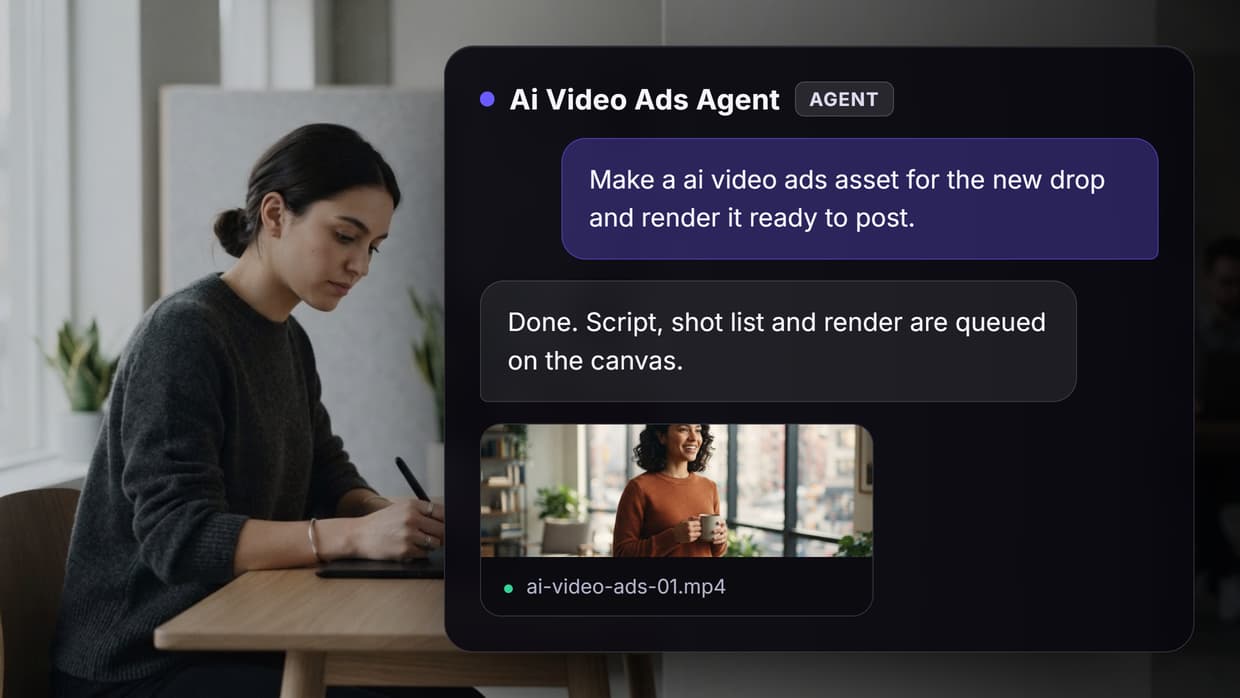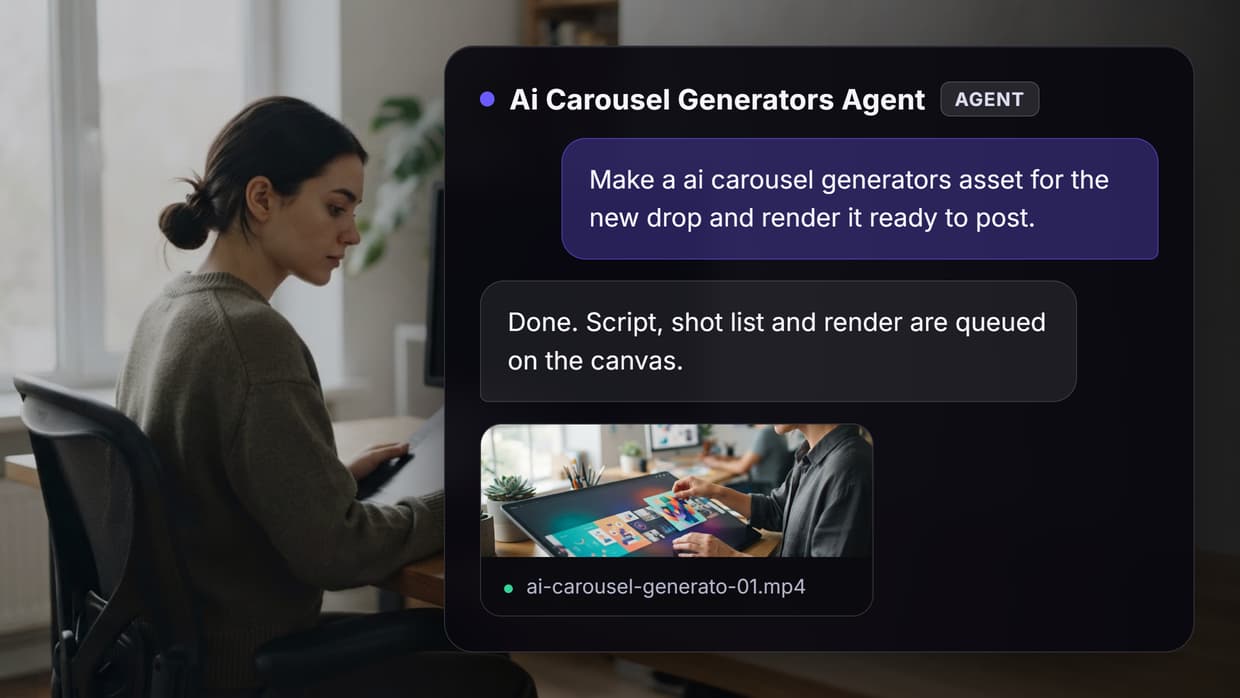
Editframe is a code-first video rendering API where you define a composition in HTML and CSS and render it deterministically, so the best Editframe alternatives in 2026 span everything from developer libraries to no-code platforms like Wireflow that generate and assemble video from a visual canvas. The right pick depends on one question: do you want to write and maintain code-defined layouts, or do you want a system that generates and edits video for you and still exposes a clean API? This guide breaks down eight tools, what each is actually good at, and where each one fits.
Every platform in this list follows the same core idea: you describe a video, send it to an endpoint, and get a finished file back. What separates them is what surrounds that call, namely pricing, whether there is a visual builder, whether they generate new content or only assemble supplied assets, and how much integration work stands between your data and a rendered video.
Quick Summary
- Wireflow: Best overall. Visual node canvas that chains AI models, published as both a REST endpoint and an MCP tool.
- Shotstack: Best for JSON-driven cloud rendering at scale.
- Creatomate: Best for templated marketing and social video.
- Remotion: Best for React developers who want full code control.
- Plainly: Best for teams already living in After Effects.
- JSON2Video: Best for a simple, low-cost JSON API.
- Cloudinary: Best for media asset transformation pipelines.
- Mux: Best for video infrastructure, streaming, and delivery.
Why Look for an Editframe Alternative
Editframe treats video as a web page that moves: compositions are written in HTML and CSS, often by an AI coding agent, and rendered exactly the same way every time. That is a genuine strength for brand-locked templates and reproducible output driven by data. It is also the reason many teams start looking elsewhere. Editframe assembles and renders content you already have; it does not generate new footage, images, or voiceover from a prompt. If your real job is creating video content rather than compositing existing assets, a rendering engine solves the wrong half of the problem, a gap covered in more depth in this look at going from code to video.
The second common reason is maintenance. Agent-written HTML and CSS still has to be reviewed, versioned, and debugged like any other codebase. Teams that want the same agent-driven automation without a code layer to maintain tend to move toward a visual builder that produces the same API surface. For a hands-on look at that approach in practice, see the Editframe alternative feature page, which walks through the no-code equivalent of a code-defined pipeline.
1. Wireflow: Best Overall
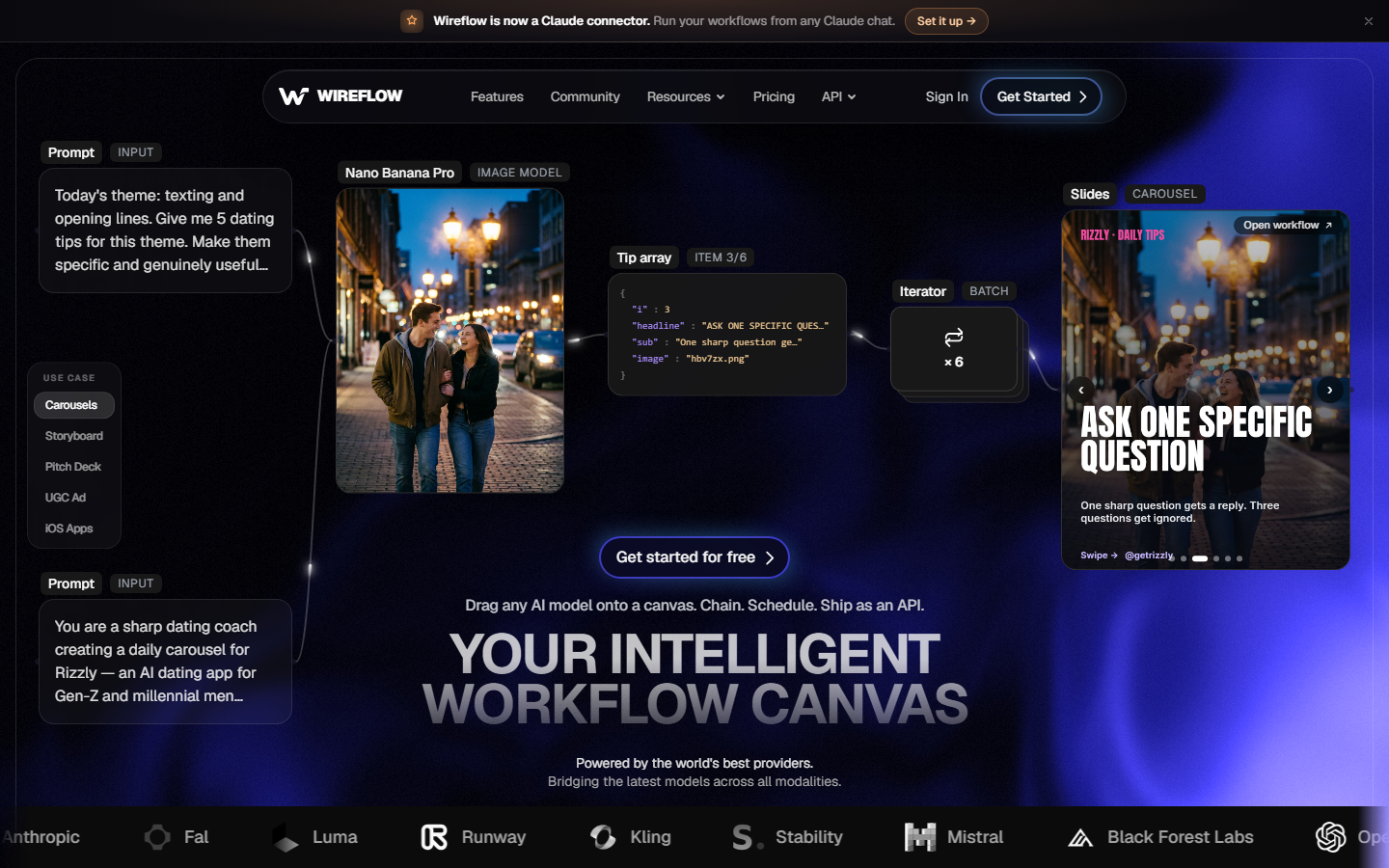
Wireflow is a visual pipeline builder for AI media. Instead of writing HTML and CSS layouts, you drag nodes onto a canvas, connect a model that generates a clip to a model that adds captions to a model that lays down music, and publish the whole graph as a single callable workflow. That workflow becomes both a REST endpoint and an MCP tool at once, so a coding agent like Claude or Cursor can call it the same way a backend service would, without a separate integration.
The distinction that matters against Editframe is generation versus assembly. Wireflow does not just composite assets you supply; it can generate the footage, images, and audio inside the same pipeline, then assemble them. You can also loop one call over a CSV or feed to batch-produce dozens of video variants. Developers who need to combine several models in one request can read how to chain multiple AI models in one API call for the underlying pattern. Pricing is pay-per-generation, so cost tracks output rather than seats.
2. Shotstack
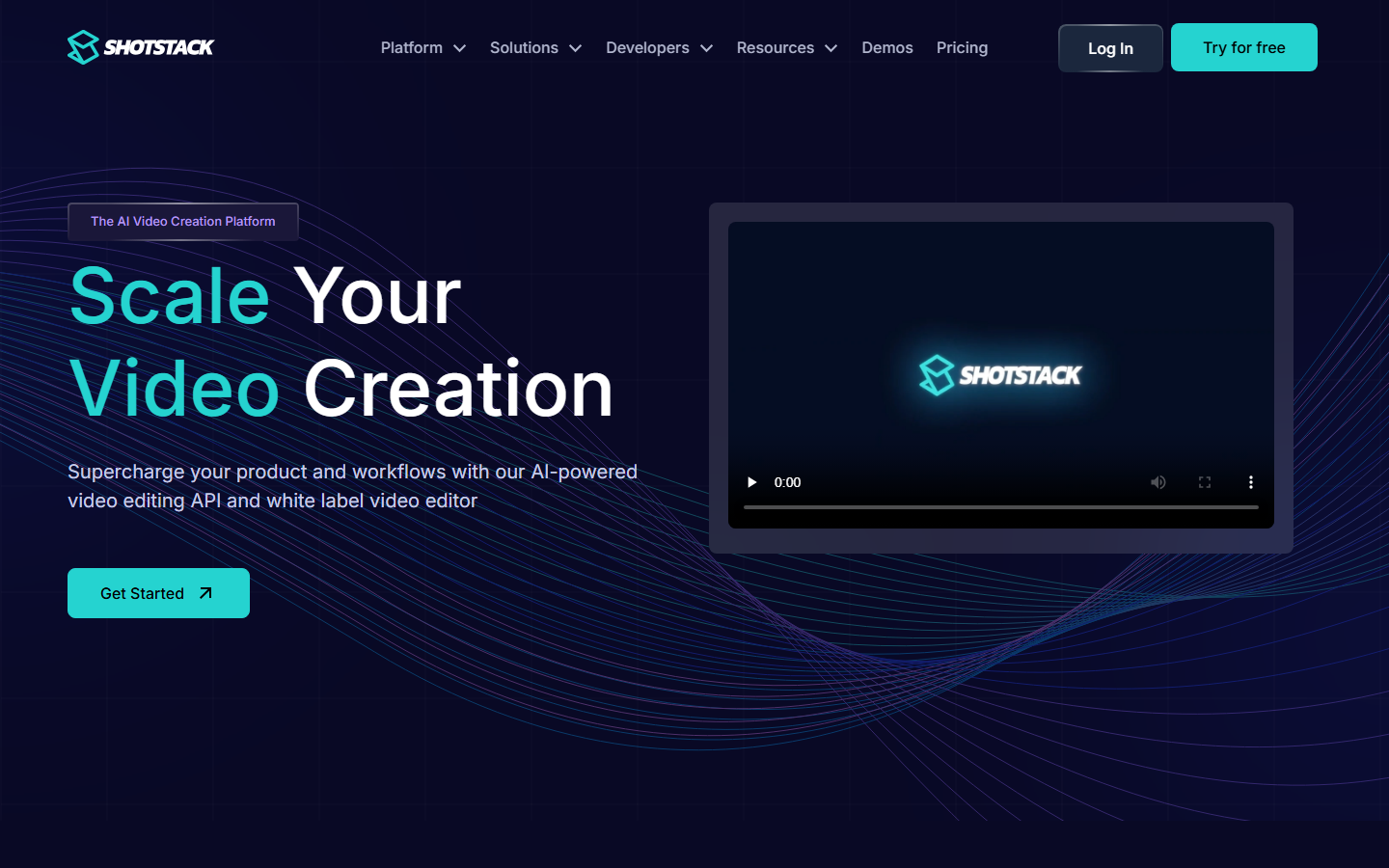
Shotstack is a cloud video editing API built for automation and bulk rendering rather than end-user editing. You describe an edit as JSON, covering clips, transitions, titles, and soundtrack, then post it to a render endpoint. In 2026 its notable addition is an open-source white-label editor SDK, a React component you can embed so your own users get a drag-and-drop timeline backed by the Shotstack render engine.
Shotstack is a strong fit when your assets already exist and the task is deterministic assembly at volume. It sits close to Editframe conceptually, since both are code-driven compositing engines, and the choice between them often comes down to JSON timelines versus HTML and CSS layouts. Teams comparing assembly-focused engines can review this rundown of video assembly API tools to see where it lands.
3. Creatomate
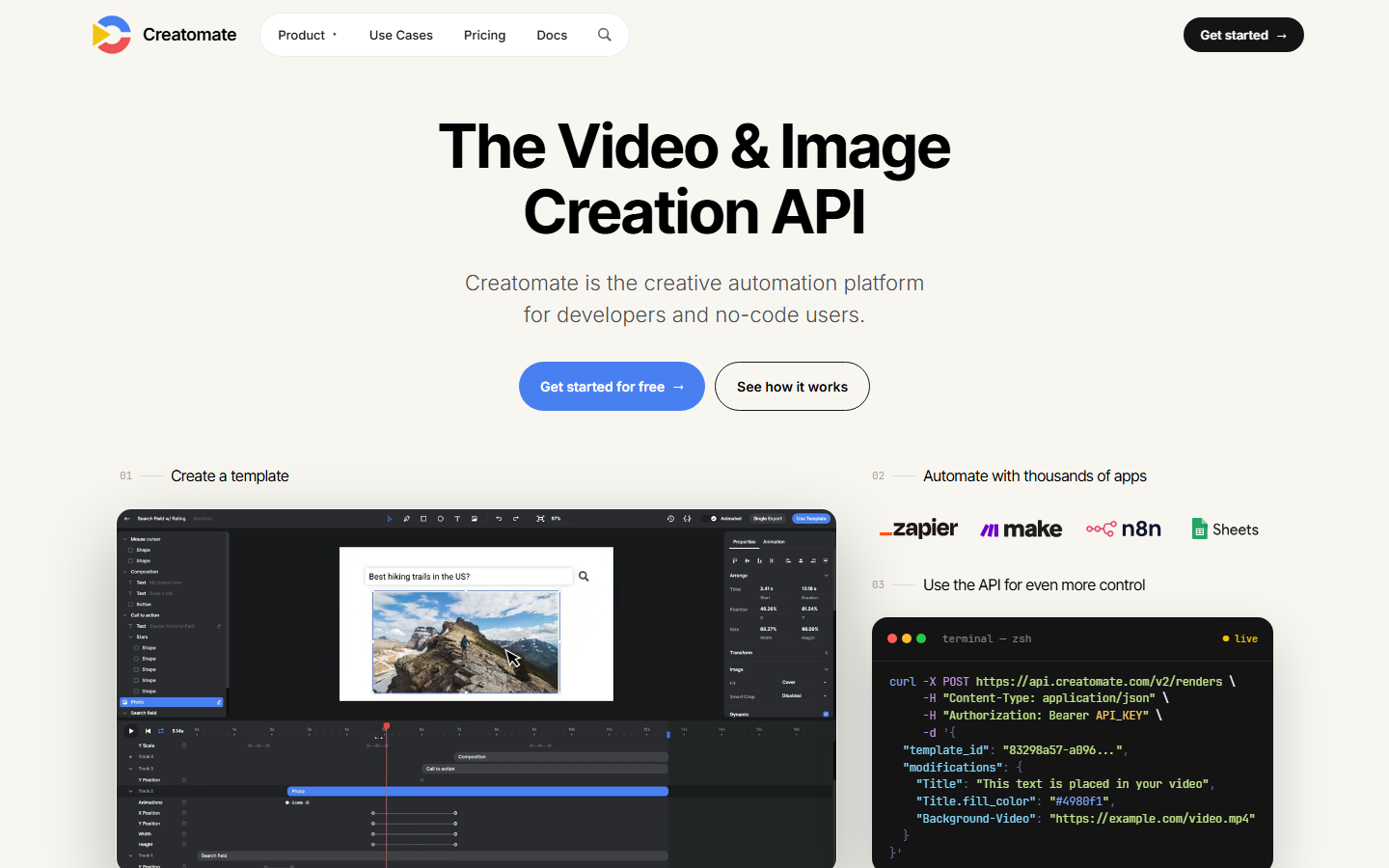
Creatomate is a video generation API aimed at automating templated content for marketing, social media, and product videos. It ships with a visual template editor where you design a layout once, then feed dynamic inputs such as text, images, or URLs through the API to produce variants at scale. That template-plus-data model makes it popular for teams pushing high volumes of near-identical social clips.
Compared with Editframe, Creatomate trades raw code control for an accessible template builder, which lowers the barrier for non-engineers. It still assembles supplied assets rather than generating new ones, so it pairs well with a separate generation step. If your goal is high-volume social output, this guide to automating video creation for social media ads covers the workflow end to end.
4. Remotion
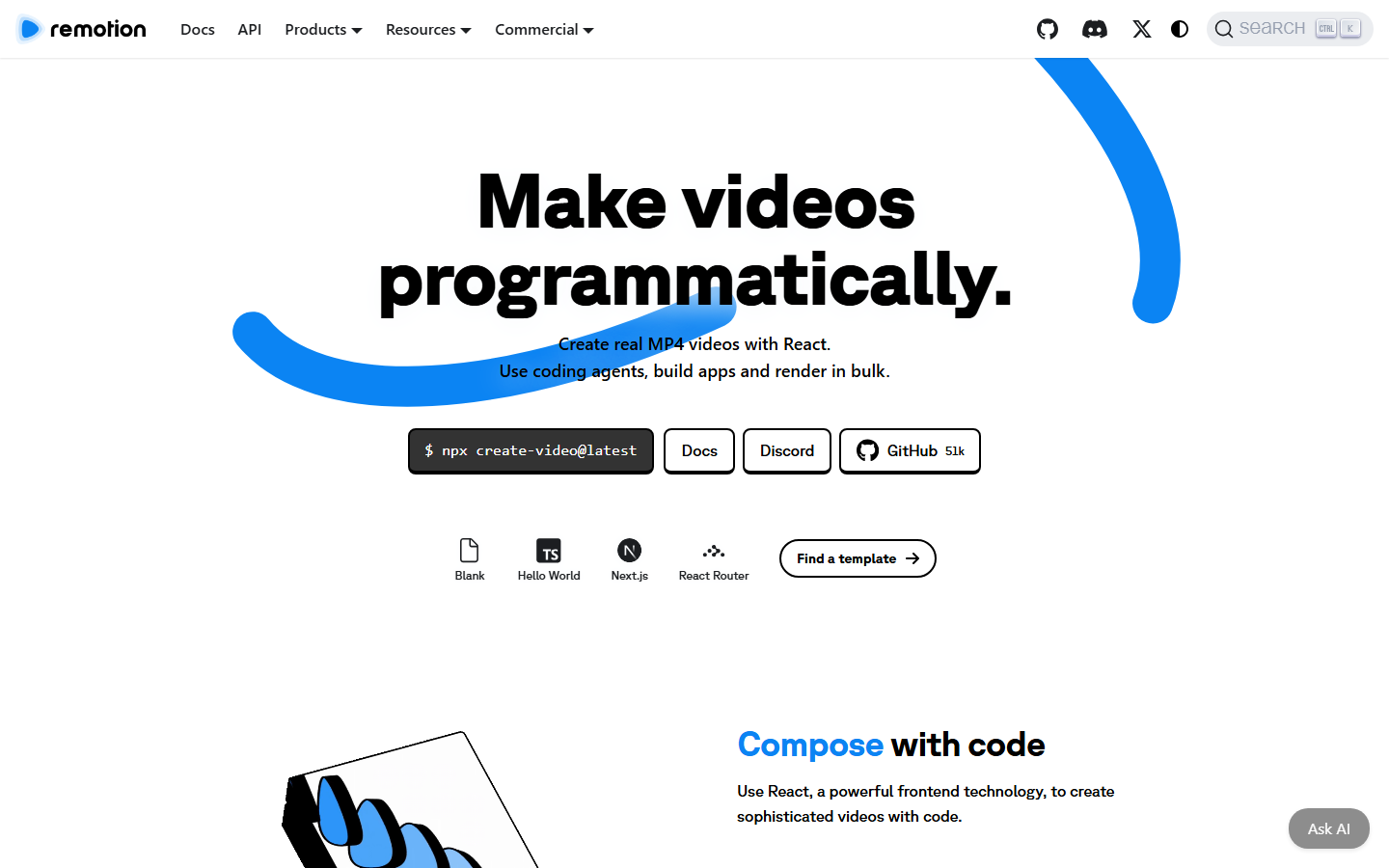
Remotion lets you build videos in React, using components, props, and standard web tooling to define every frame programmatically. For frontend teams it is the most natural fit on this list, because a video becomes just another React project that renders to MP4. It is the closest philosophical cousin to Editframe, since both express video as code, with Remotion favoring JSX and JavaScript over HTML and CSS templates.
The tradeoff is the same one Editframe carries: you own the code. Remotion gives you total control and total responsibility for maintaining the composition logic. Developers weighing a code-first library against an agent-callable service should look at what it takes to build a video generation agent before committing to a codebase they will maintain long term.
5. Plainly
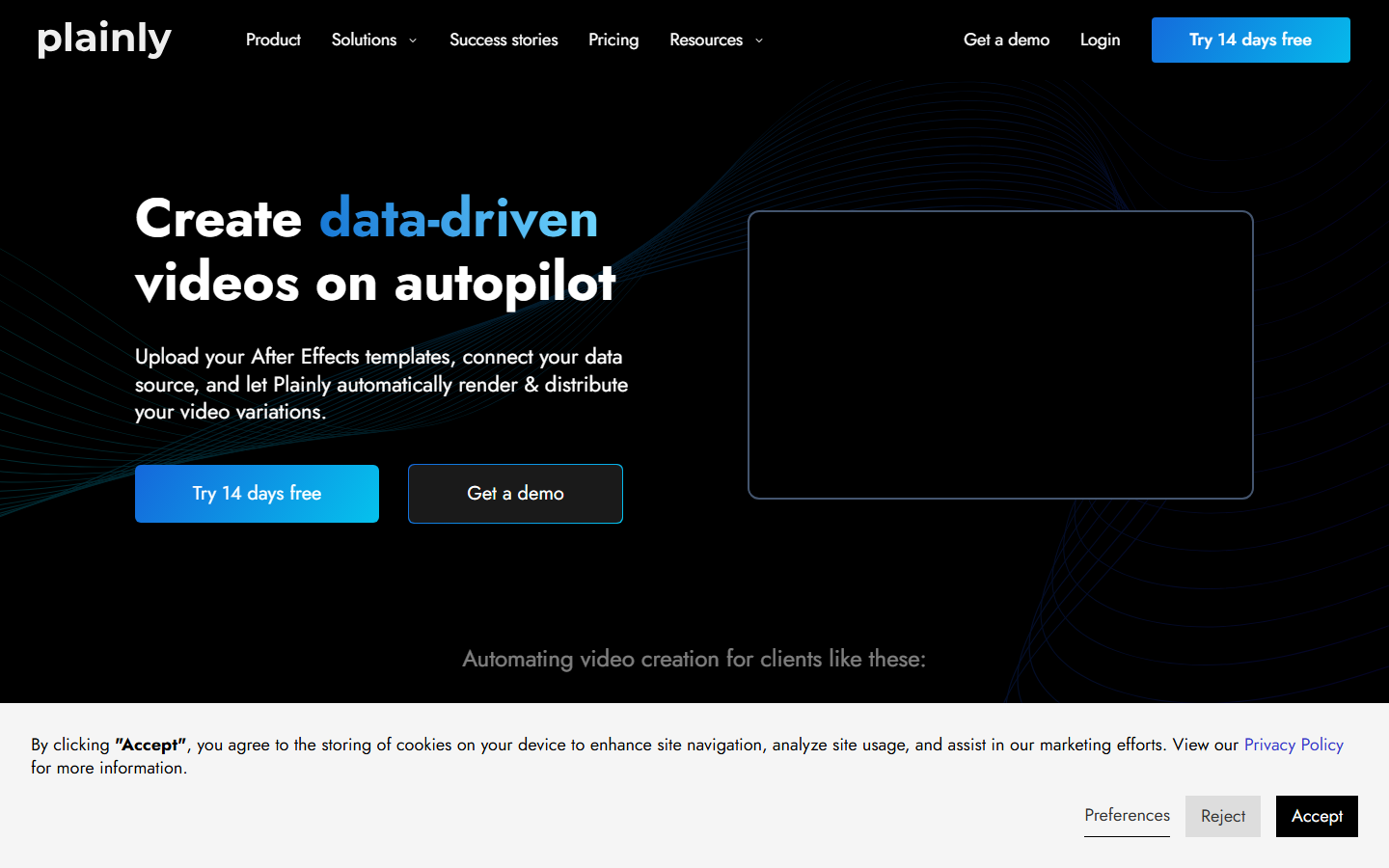
Plainly automates rendering from Adobe After Effects templates. You upload an existing .aep project, map its dynamic layers to variables, and Plainly renders personalized versions through its API. For studios and teams with a library of polished After Effects work, it turns that existing design investment into a programmatic pipeline without rebuilding anything.
Against Editframe, Plainly wins when your design language already lives in After Effects and you want motion-designer quality without hand-coding layouts. It is assembly rather than generation, and it is tied to the After Effects ecosystem, so it is less suited to teams that want to generate content from prompts. Those exploring an agent-driven route can compare it with this LLM video editing workflow.
6. JSON2Video
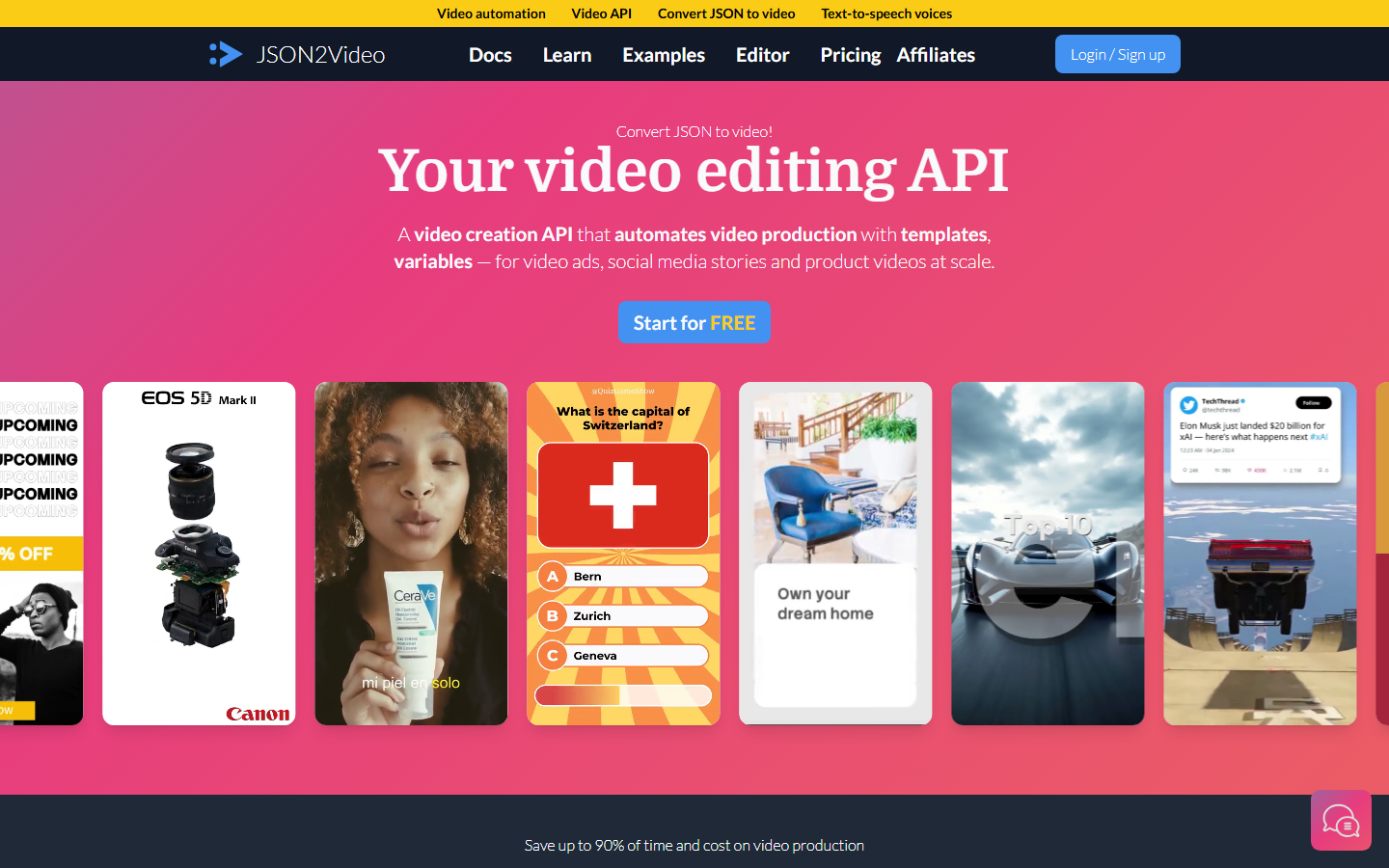
JSON2Video keeps things deliberately simple: you send a JSON document describing scenes, elements, and transitions, and it returns a rendered video. There is no heavy SDK or template studio to learn, which makes it a quick option for developers who just need programmatic video without adopting a larger platform.
It occupies the lightweight end of the spectrum. The simplicity is the selling point and also the ceiling, since complex multi-model generation is outside its scope. Teams evaluating it directly against a canvas-based approach can read this dedicated breakdown of JSON2Video alternatives.
7. Cloudinary
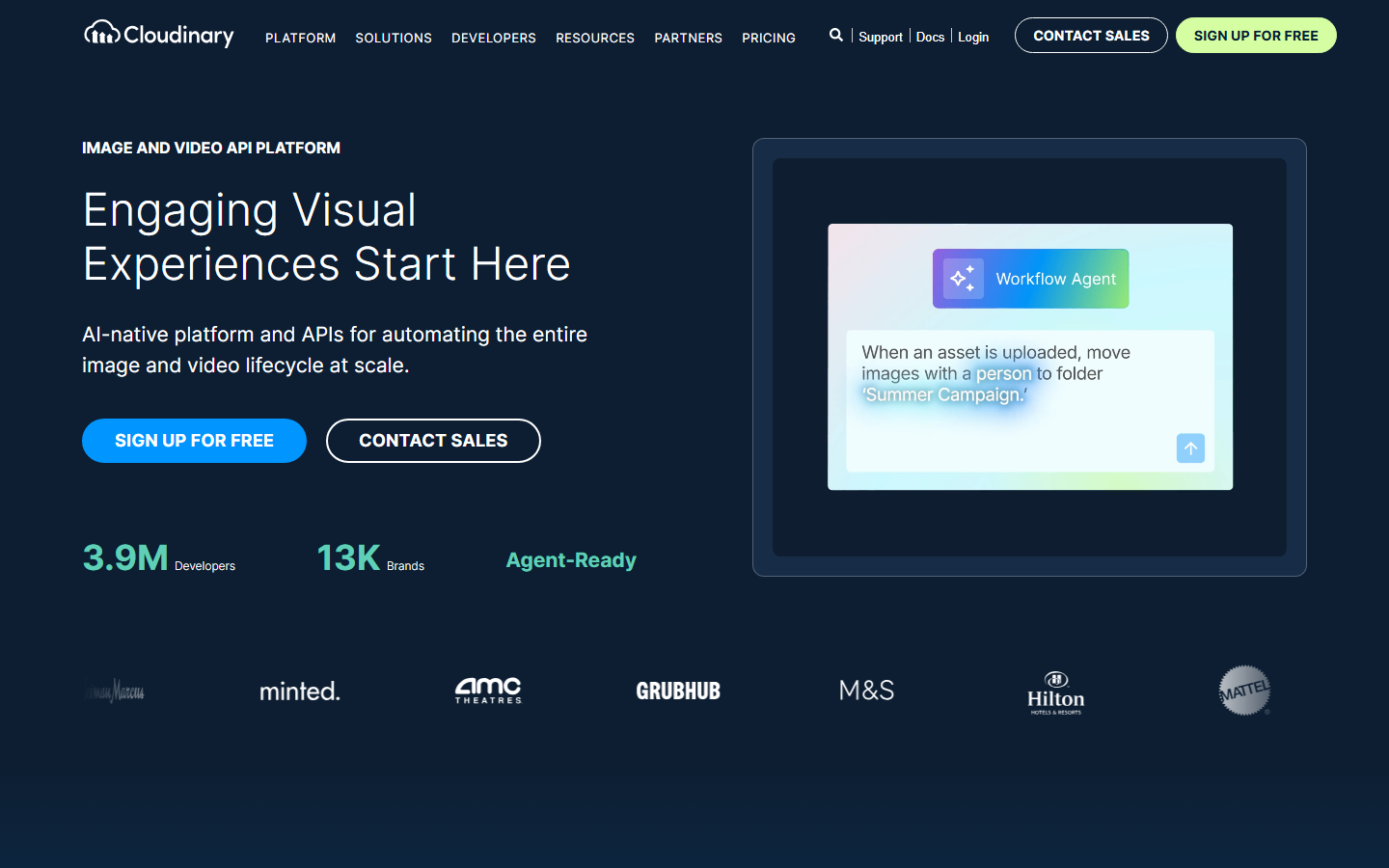
Cloudinary is a media management platform whose video API handles transformation, transcoding, and delivery through URL-based parameters and an SDK. It is less a compositing tool than an asset pipeline: resize, format, overlay, and optimize video at scale, then serve it fast through a CDN. For products that treat video as one media type among many, it consolidates the whole lifecycle.
Cloudinary is the right alternative when delivery and transformation matter more than authoring new edits. It is not built to generate content, so it usually sits alongside a generation or editing step rather than replacing one. Teams that also handle images will find this note on a self-hosted media generation API a useful counterpoint on control versus convenience.
8. Mux
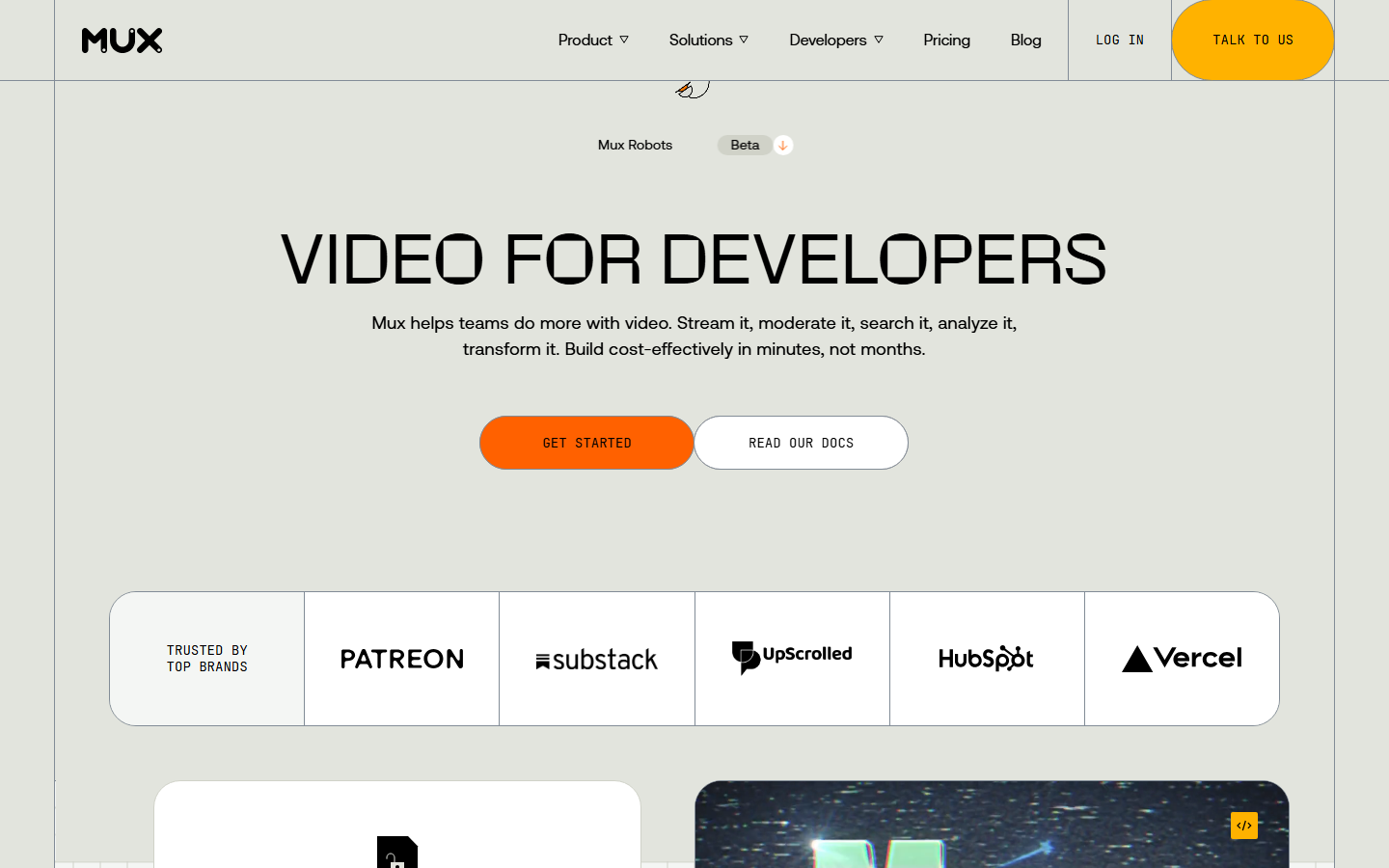
Mux is video infrastructure focused on streaming, encoding, and analytics. Its API handles the plumbing of getting video reliably from upload to playback at scale, with adaptive streaming and detailed performance data. It is not a compositing engine, but it frequently appears in the same evaluation because teams building video products need both authoring and delivery.
Mux is the pick when your challenge is hosting and streaming rather than editing. Pairing a rendering or generation tool with dedicated delivery infrastructure is a common architecture, and this guide to hosted video APIs for agents shows how the pieces fit together in an automated stack.
Comparison Table
| Tool | Core model | Generates content | Visual builder | Best for |
|---|---|---|---|---|
| Wireflow | Node canvas, REST + MCP | Yes | Yes | Multi-model AI pipelines |
| Shotstack | JSON timeline API | No | Embeddable SDK | Bulk cloud rendering |
| Creatomate | Template + data API | No | Yes | Templated social video |
| Remotion | React code | No | No | Frontend developers |
| Plainly | After Effects templates | No | Via AE | Motion-design studios |
| JSON2Video | JSON API | No | No | Simple programmatic video |
| Cloudinary | Media transformation | No | No | Asset delivery pipelines |
| Mux | Streaming infrastructure | No | No | Hosting and playback |
The clearest split in this table is generation versus assembly. Most Editframe alternatives, like Editframe itself, assemble content you already have. If your workflow needs new footage, captions, and audio produced on demand and then composited, a broader survey of video creation and editing API tools is worth reading before you lock in a stack.
How to Choose
Start with what you are actually producing. If you have polished assets and need deterministic, pixel-precise assembly, a code or template engine such as Shotstack, Remotion, or Plainly is a direct match. If you need to create the content itself and want automation without maintaining a codebase, a generation-first platform is the better foundation. Developers building for coding agents specifically should weigh how each option exposes itself as a callable tool, a topic covered in this comparison of video APIs for coding agents.
Try it yourself: Open this Editframe-alternative workflow in Wireflow to see a product brief turn into a captioned, music-backed video through a chain of pre-configured nodes, published as a REST endpoint and an MCP tool.
Frequently Asked Questions
What is Editframe used for? Editframe is a video rendering API where compositions are defined in HTML and CSS and rendered deterministically. It is designed for developers and AI coding agents who want reproducible, code-defined video output rather than generated content.
Why do people look for Editframe alternatives? Two reasons dominate: Editframe assembles supplied assets but does not generate new footage or audio from a prompt, and its code-defined compositions still need to be reviewed and maintained like any codebase. Teams wanting generation or a no-code path look elsewhere.
What is the best no-code Editframe alternative? For teams that want automation without maintaining code, a visual node canvas that publishes to a REST endpoint and an MCP tool covers the same agent-driven use case without HTML or CSS layouts to maintain.
Can these tools be called by AI agents? Yes. Several expose clean APIs, and some publish workflows directly as MCP tools, which lets agents like Claude and Cursor invoke a full pipeline as a single callable action rather than orchestrating multiple services.
Do Editframe alternatives generate video or just assemble it? Most, including Shotstack, Creatomate, Remotion, Plainly, JSON2Video, Cloudinary, and Mux, assemble or transform existing assets. Generation-first platforms are the exception and can produce new footage, images, and audio inside the same pipeline.
How much do these tools cost? Pricing models vary widely, from pay-per-generation to per-render, per-minute, or seat-based subscriptions. Pay-per-generation tends to be the most predictable for automated pipelines because cost scales directly with output.
Which alternative is best for React developers? Remotion, because it expresses video as React components and renders them to MP4, fitting naturally into an existing frontend codebase and toolchain.
Can I batch-generate video variants? Yes. Tools with a template-and-data model or a loopable workflow let you run one definition over a CSV or feed to produce many variants automatically, which is the standard approach for high-volume social and ad content.
Conclusion
The best Editframe alternative depends less on features and more on which half of the problem you are solving. If you need deterministic, code-defined assembly of assets you already own, Editframe and its closest peers like Shotstack and Remotion are strong. If you need to generate the content itself, automate it without a codebase to maintain, and expose it to coding agents as a single callable tool, a canvas-driven platform is the more complete answer, as this broader guide to video creation and editing API tools makes clear. Match the tool to the job, and the shortlist narrows quickly.
Would you rather we just built it?
We get on a call, learn your style, build the workflow, and ship the deliverables on a schedule. You keep the workflow either way.