Best JSON2Video Alternatives in 2026


In this article▾
JSON2Video made a name for itself by letting developers render videos from a JSON payload, but it is no longer the only option, and for many teams it is no longer the best one. Some alternatives render faster, some cost less at scale, and some add capabilities JSON2Video never had, like AI generation built into the pipeline. For animated titles and lower-thirds specifically, you can build animated graphics from a node graph instead of hand-writing a JSON scene. Wireflow sits in that last camp: it lets you chain multiple AI models into a single video pipeline you can trigger from an API. This guide compares the nine strongest JSON2Video alternatives in 2026, with real pricing and honest trade-offs for each.
Quick Summary
- Wireflow - Best overall for AI-native video pipelines
- Shotstack - Best JSON-schema match for existing JSON2Video users
- Creatomate - Best template editor with fast renders
- Plainly - Best production quality via After Effects
- Remotion - Best for React developers who want full control
- Bannerbear - Best for mixed image and video automation
- Placid - Best budget entry point for creative automation
- Editframe - Best for HTML-based video composition
- Rendi - Best raw FFmpeg power without servers
1. Wireflow
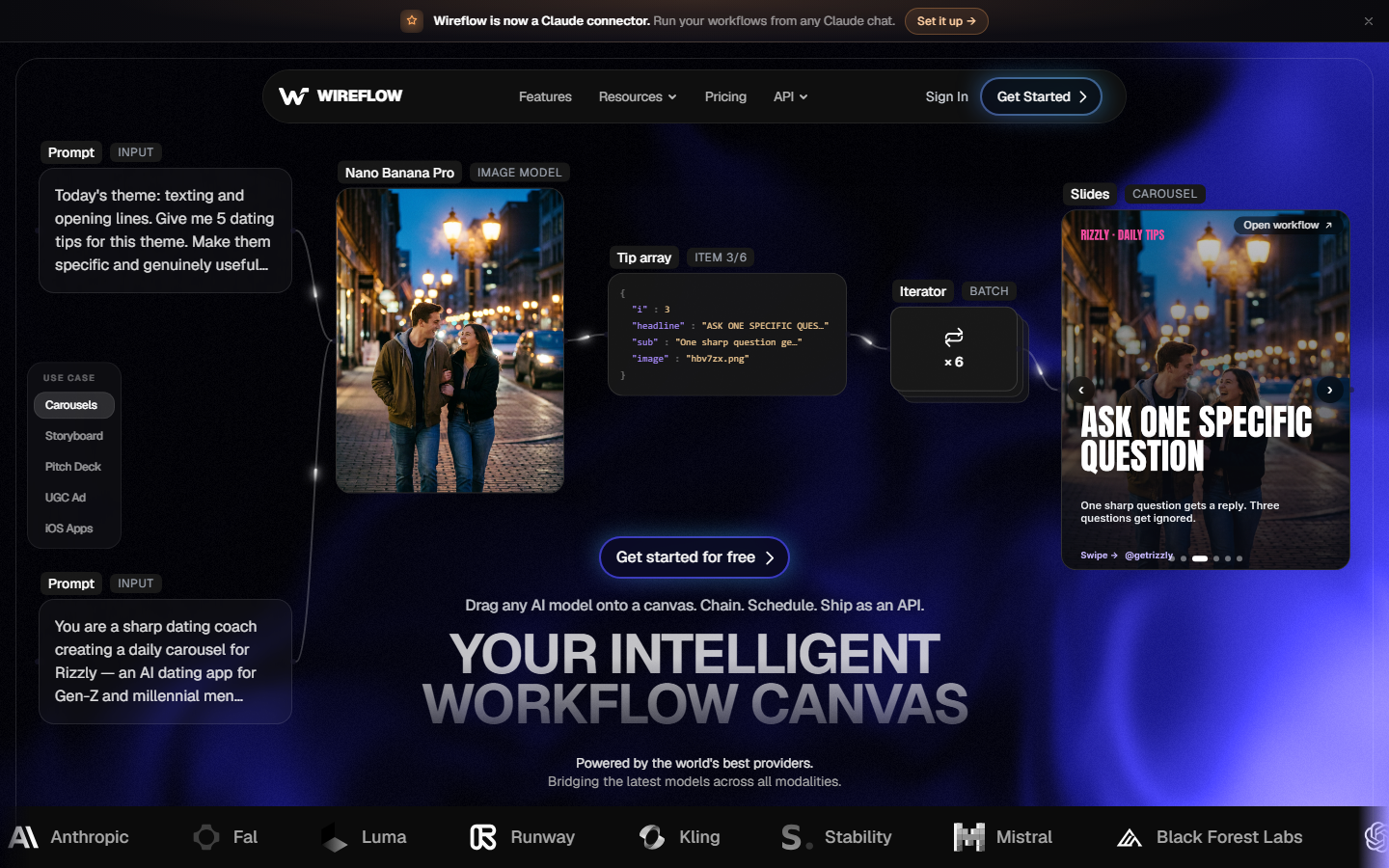
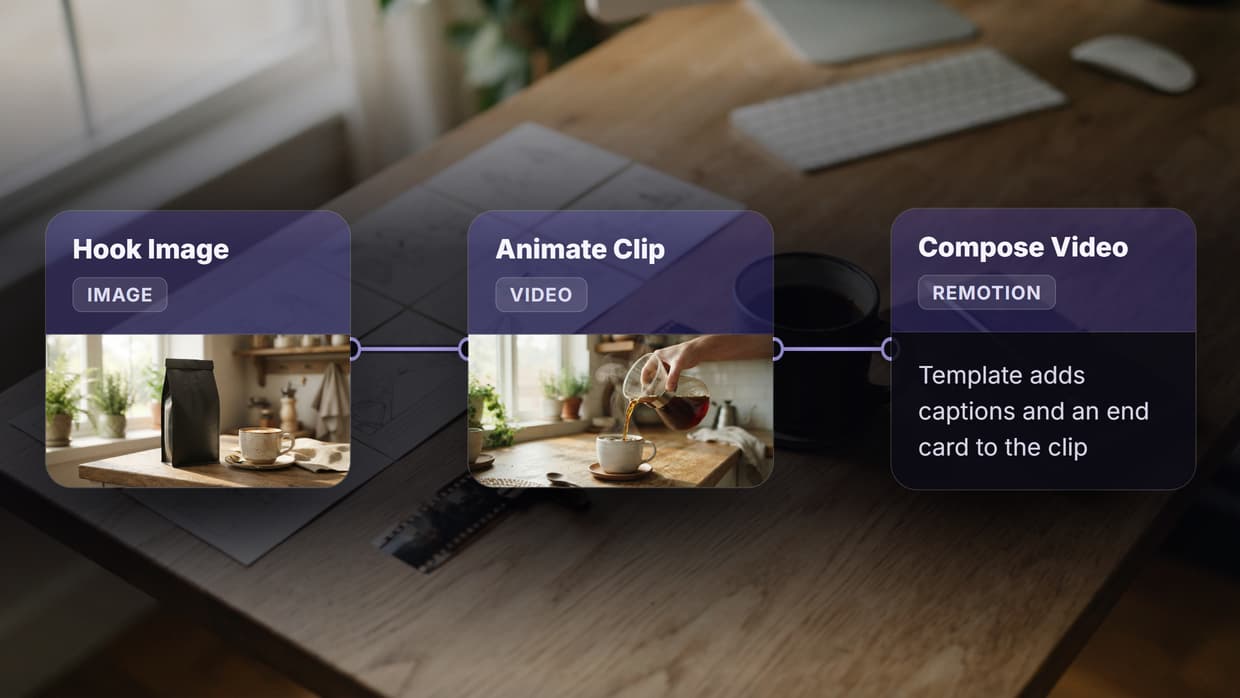
Most tools on this list automate one rendering step. Wireflow automates the whole creative pipeline: you build a workflow on a visual node canvas, chaining models that generate images, turn them into video, and add audio, then trigger the entire chain through a video generation API. That matters for JSON2Video users because the JSON payload approach assumes you already have your assets. Wireflow can create the assets and assemble them in one run.
Shotstack is the usual comparison point on cost, and our breakdown of Shotstack pricing in 2026 shows the per-minute rate at each volume.
There is a free tier, and paid usage is pay-per-use rather than a monthly credit bucket, so costs track actual volume. You also skip GPU management entirely, since every model runs hosted. For a hands-on look, check out the JSON2Video alternative feature page. The honest caveat: this is not a pure template-based renderer. If your only need is stamping data into a fixed template, a dedicated renderer may be simpler. If your pipeline involves any AI generation step, nothing else on this list combines a visual workflow builder with an API the same way.
Build this in Wireflow
Make the same kind of asset on a canvas you control, with a free account and no credit card.
2. Shotstack
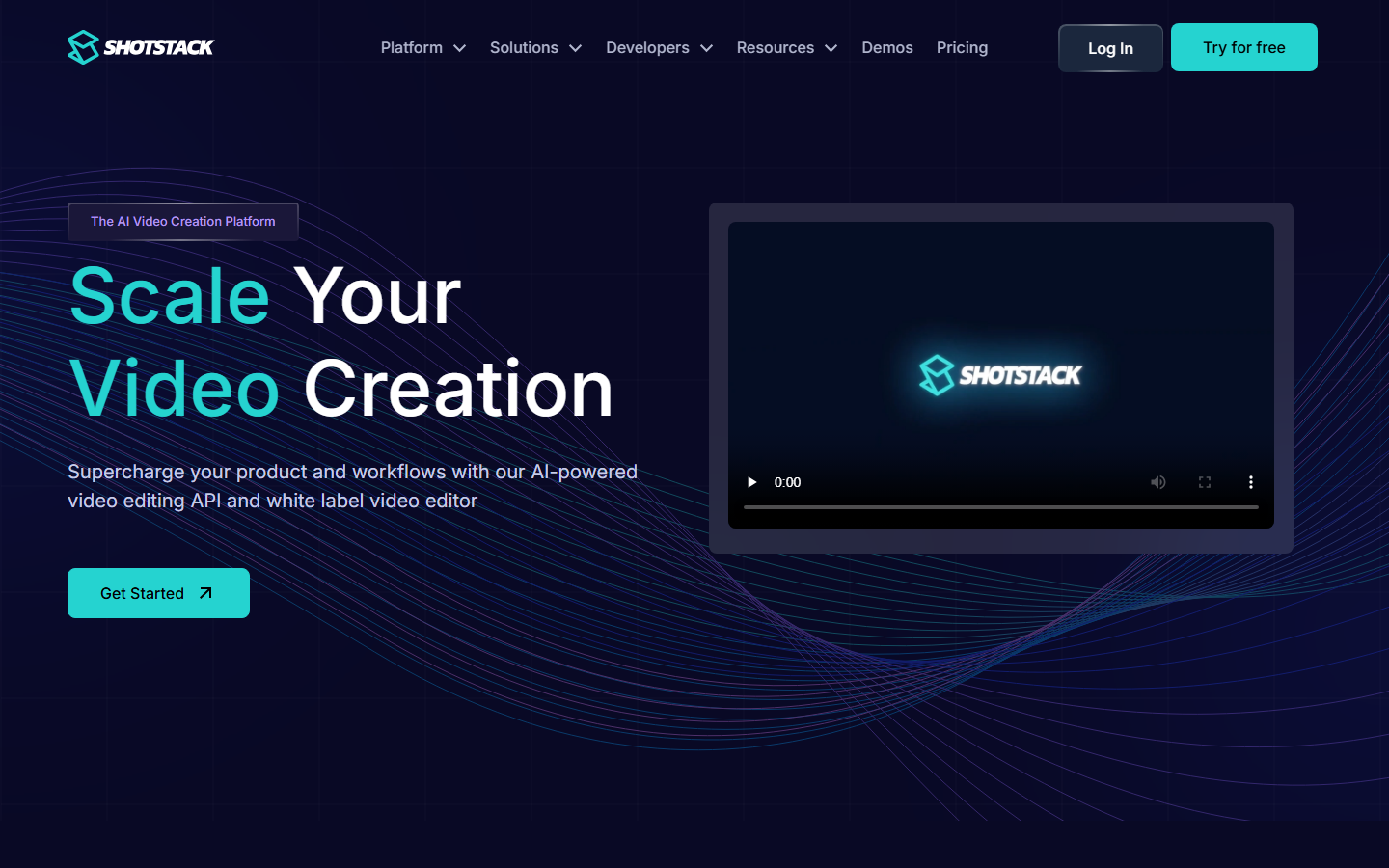
Shotstack is the closest like-for-like replacement for JSON2Video. It uses a JSON timeline schema for clips, overlays, transitions, and audio, so migrating an existing JSON2Video integration is mostly a matter of remapping fields. The REST API is mature and the documentation is among the best in the video assembly API category.
Pricing runs roughly $0.20 to $0.40 per rendered minute depending on plan, which is predictable but adds up on high volume. The free tier is only 10 credits, so evaluation time is short. The bigger limitation is that Shotstack is pure rendering: there is no AI generation built in, so any generated assets have to come from a separate upstream service before they hit the timeline.
3. Creatomate
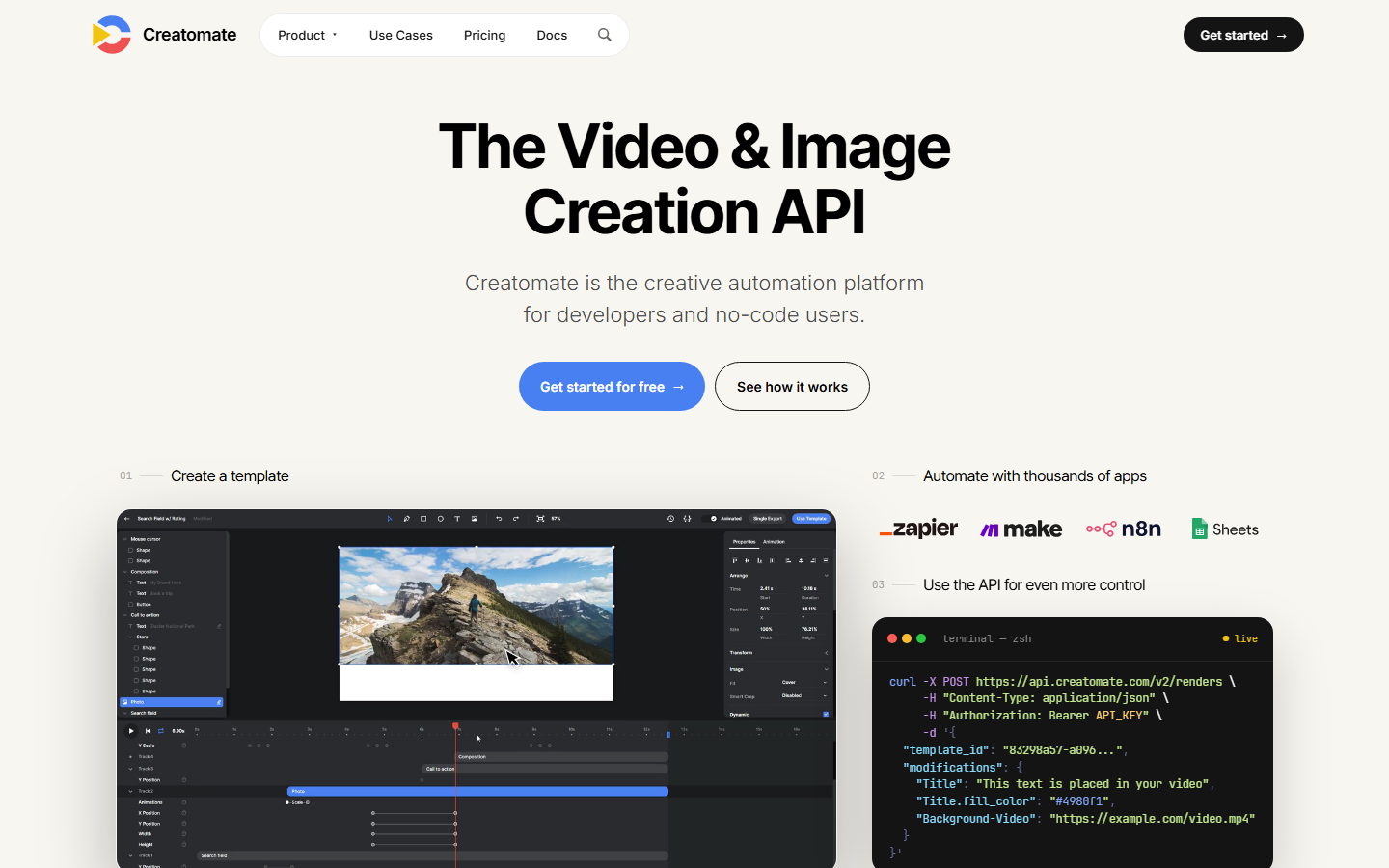
Creatomate pairs a polished visual template editor with a rendering API, covering both video and image output from one platform. Renders are fast, typically under 15 seconds for short clips, which makes it a good fit for user-facing products where people wait on output. Plans start at $54 per month on the Essential tier.
The main friction is the credit model: credits are monthly and do not roll over, so uneven usage means paying for capacity you never touch. Costs also climb quickly at scale compared with per-minute pricing. Teams that outgrow it usually look at the Creatomate alternatives landscape once monthly volume becomes spiky or heavy.
4. Plainly
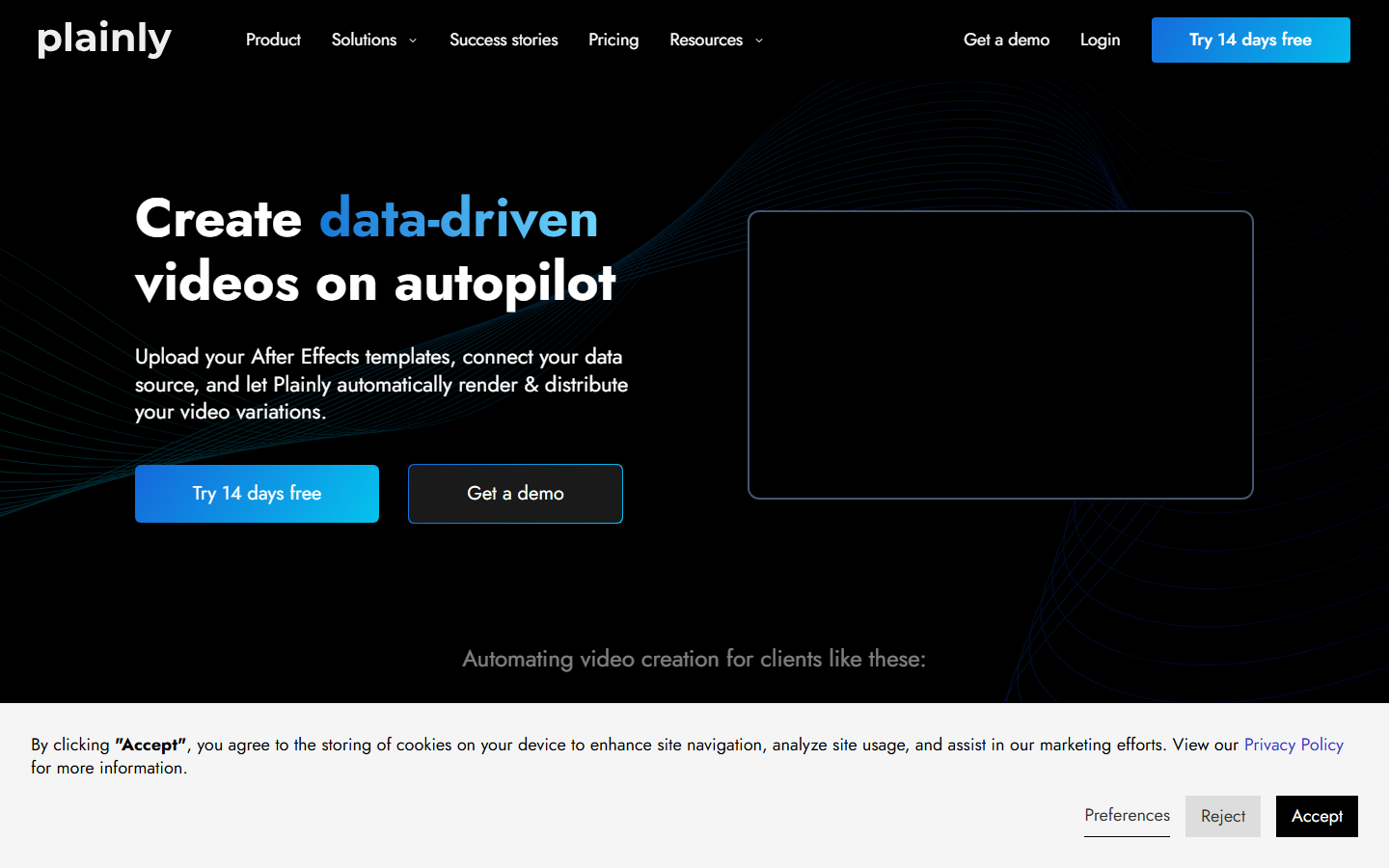
Plainly takes a different route: instead of a proprietary template format, it renders real After Effects projects through an API. If your team already produces AE templates, this gives you the highest production ceiling on this list, with motion design quality that JSON-schema tools cannot match. Plans start at $69 per month, and an unlimited-render plan exists for heavy users, which is rare in programmatic video generation.
The trade-off is the After Effects dependency. Someone has to build and maintain those templates, and the learning curve is steep if nobody on the team knows AE. There is also no built-in AI generation, so Plainly stays a rendering layer rather than a full pipeline.
5. Remotion
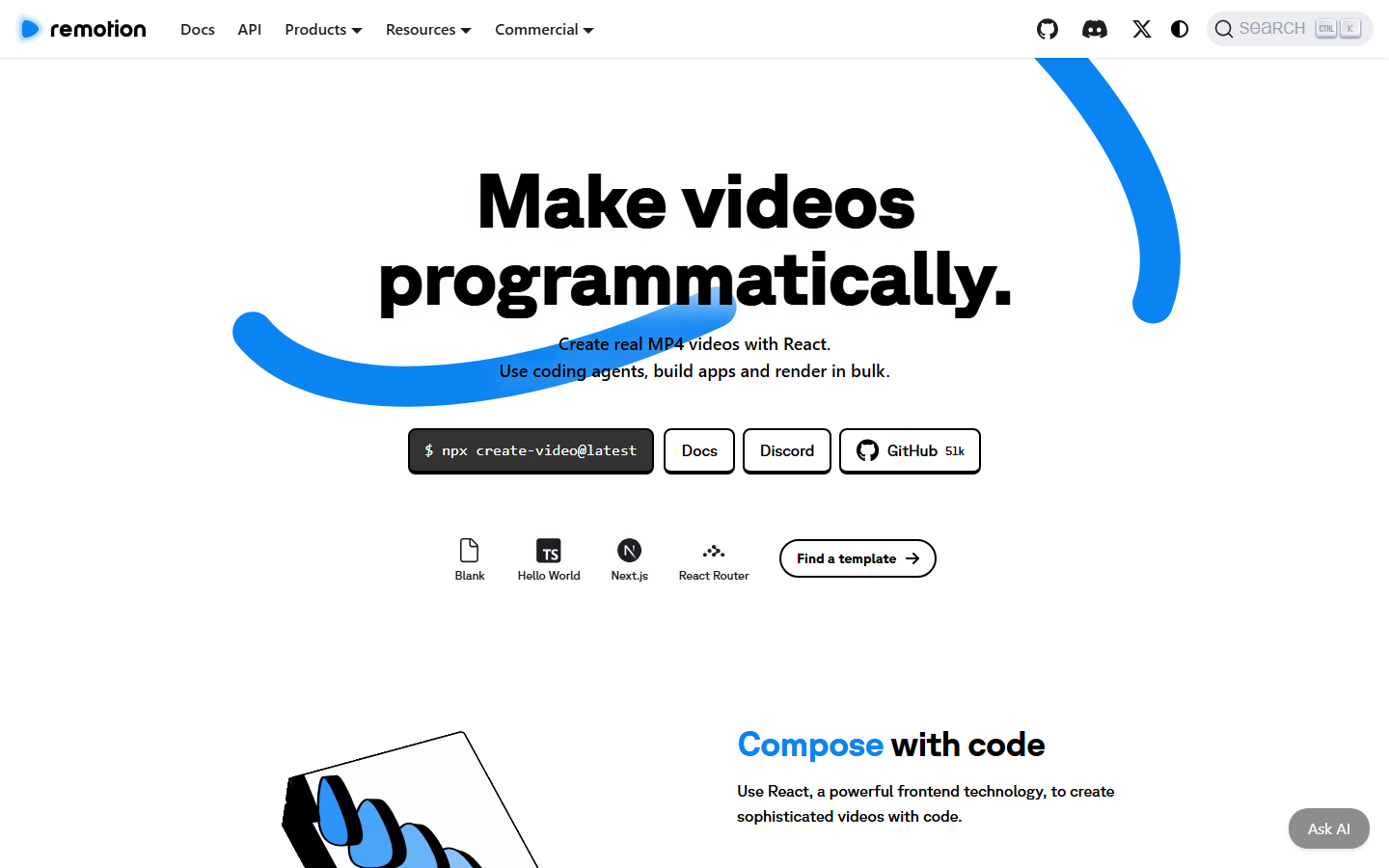
Remotion is the developer's answer: an open-source framework where videos are React components. Anything you can build in React, you can render to video, which makes it the most customizable option here by a wide margin. The core is free, companies above a size threshold pay a $100 per month license, and rendering can run on your own infrastructure or on Lambda.
The cost of that freedom is that Remotion is not a managed API. You own the rendering infrastructure, the scaling, and the debugging, and the learning curve assumes solid React experience. It fits teams that want a video creation and editing stack they fully control, not teams that want a service.
6. Bannerbear
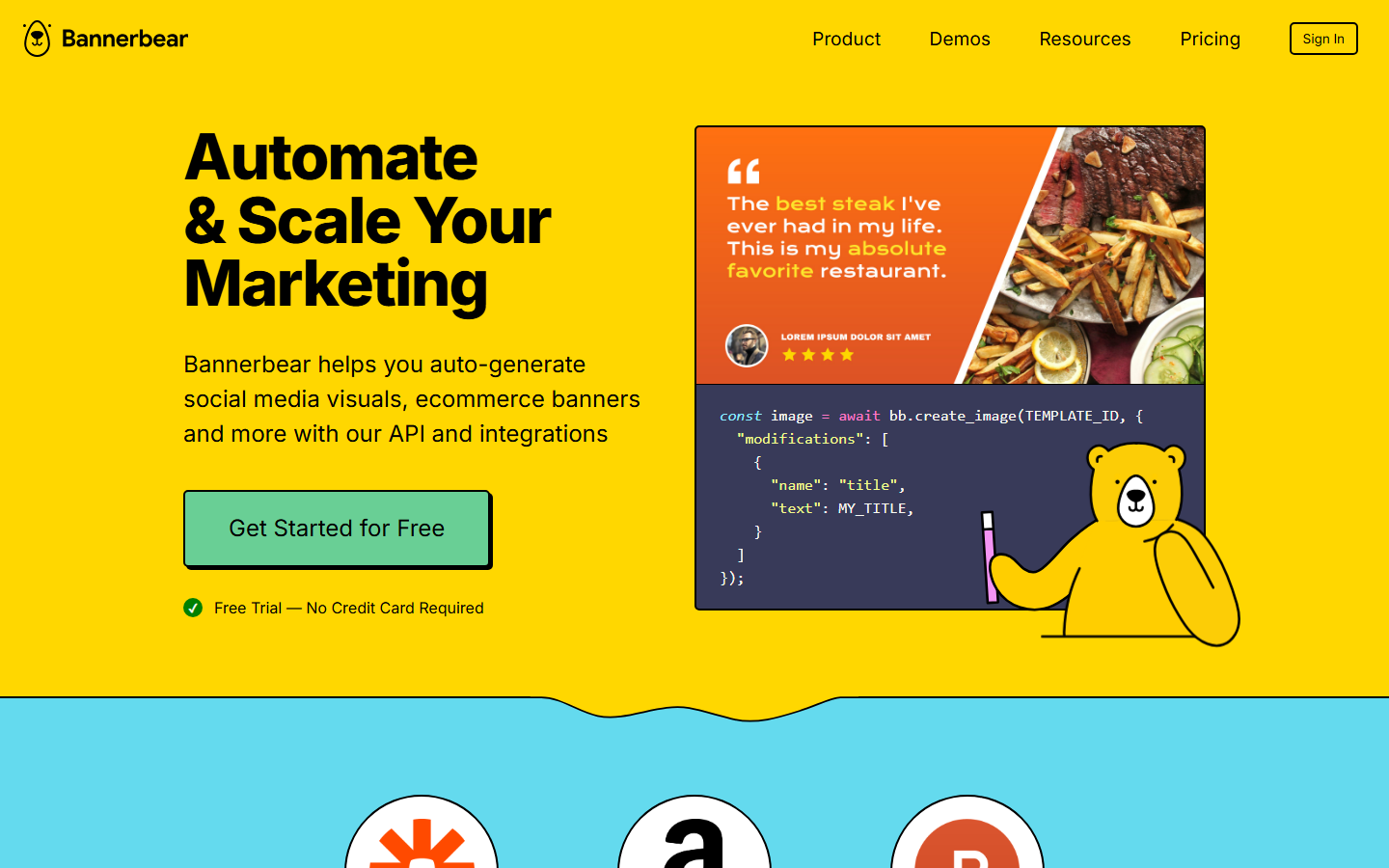
Bannerbear built its reputation on automated image generation, and video came later as an extension of the same template system. Plans start at $49 per month for 1,000 credits, and the Zapier and Make integrations are strong enough that non-developers can run real automations without touching the underlying API layer.
For social media assets that mix images and short clips, it is a practical one-stop tool. But video remains secondary: editing capabilities are limited compared with dedicated video APIs, and complex timelines are out of scope. Choose it when images are the main job and video is occasional.
7. Placid

Placid is the budget entry point, starting at $19 per month for template-based image, PDF, and video generation with API, Make, and Zapier support. The brand-kit approach keeps output consistent, which suits agencies producing repeatable creative for clients.
The catch is video economics: video credits cost five times what image credits cost, so video-heavy workloads get expensive fast despite the low entry price. Run the numbers against your expected volume and pricing requirements before committing, because the sticker price and the at-scale price are very different things here.
8. Editframe
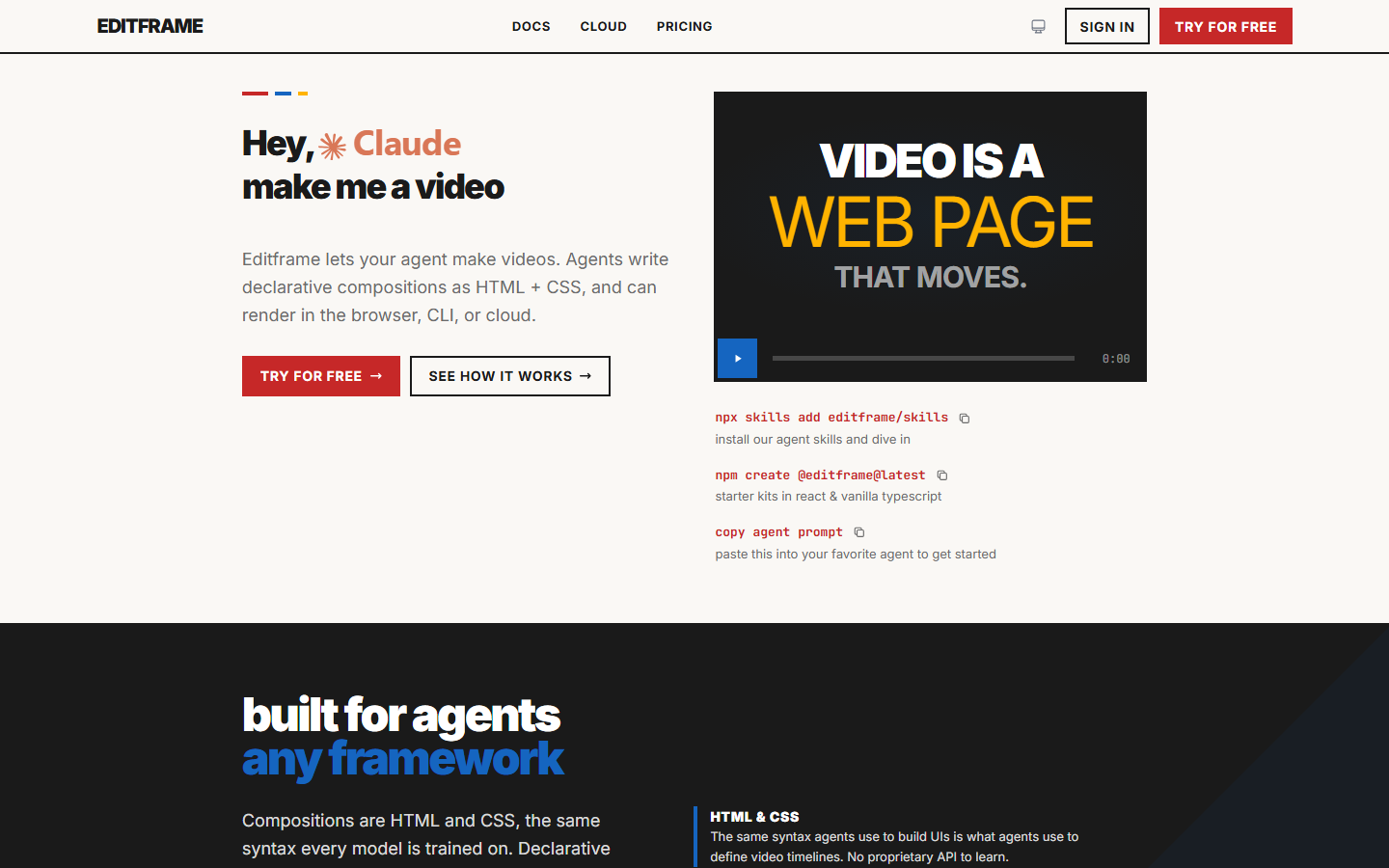
Editframe targets developers who want to compose video in code, including HTML-based composition, through an SDK rather than a JSON schema. That model is flexible for dynamic layouts that would be painful to express in a fixed template, and it slots cleanly into an AI video editing pipeline as the assembly step.
The concerns are maturity ones. Editframe is a smaller company, documentation is thinner than Shotstack's or Creatomate's, and pricing is contact-sales rather than published. It is worth a look for HTML-first composition needs, with eyes open about vendor size.
9. Rendi
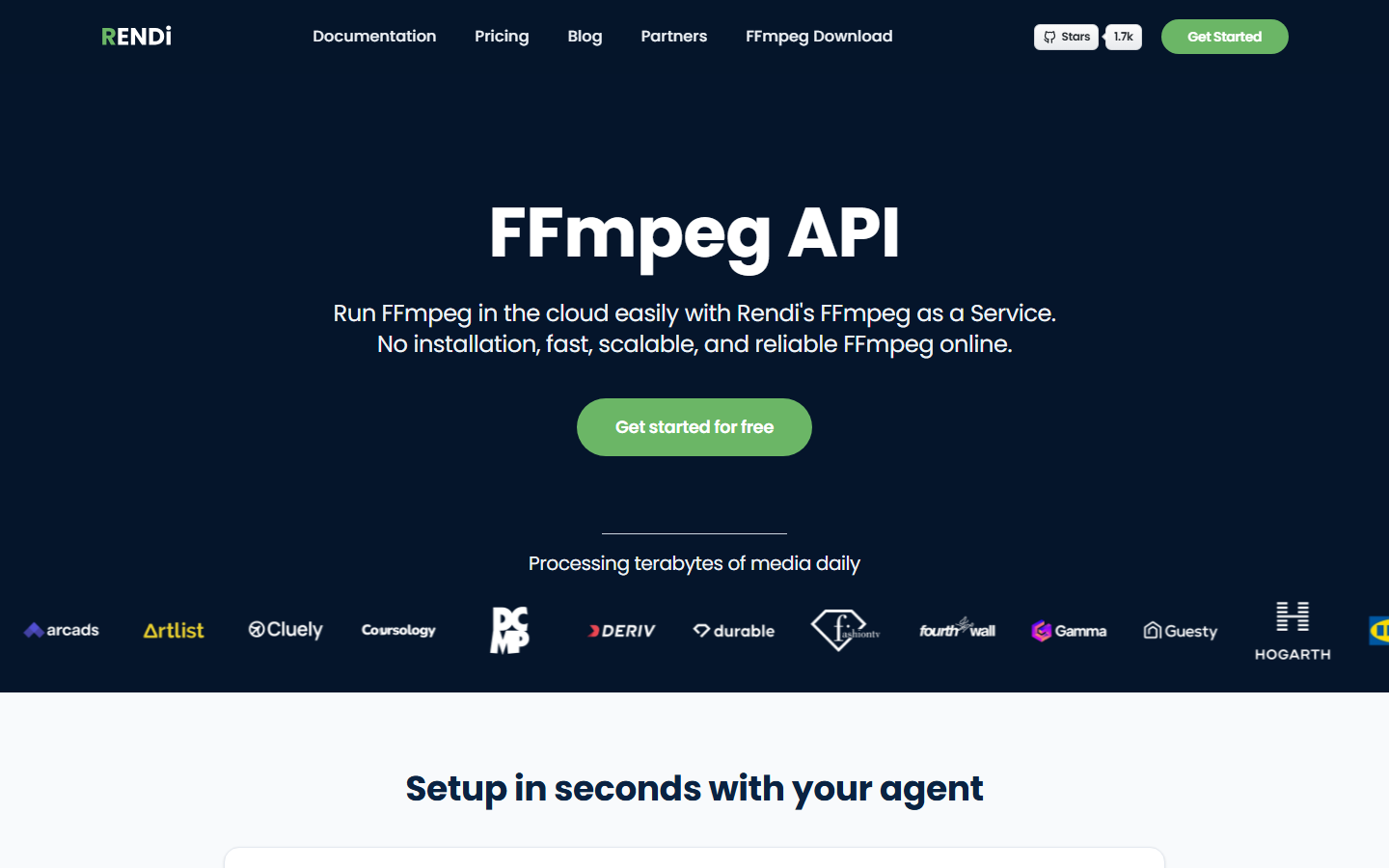
Rendi is FFmpeg-as-a-service: you send FFmpeg commands, it runs them on managed infrastructure. At roughly $0.15 per GB processed with a free tier and a $25 per month Pro plan, it is the cheapest raw processing on this list, and chained commands let you build real multi-step video pipelines without owning a single server.
There are no templates, no visual editor, and no abstractions: if you do not know FFmpeg, Rendi will not help you learn it. For teams with FFmpeg expertise that just want to stop babysitting encoding boxes, it is the pragmatic pick.
Comparison Table
| Tool | Starting Price | Rendering Model | Built-in AI | Best For |
|---|---|---|---|---|
| Wireflow | Free tier, pay-per-use | Node workflow + API | Yes | AI-native video pipelines |
| Shotstack | ~$0.20-0.40/min | JSON timeline API | No | JSON2Video migrations |
| Creatomate | $54/mo | Template + API | No | Fast templated renders |
| Plainly | $69/mo | After Effects + API | No | High-end production quality |
| Remotion | Free / $100/mo | React framework | No | Full developer control |
| Bannerbear | $49/mo | Template + API | No | Image-first automation |
| Placid | $19/mo | Template + API | No | Budget creative automation |
| Editframe | Contact sales | Code/HTML SDK | No | HTML-based composition |
| Rendi | Free / $25/mo | FFmpeg commands | No | Raw FFmpeg at scale |
Try it yourself: Build this workflow in Wireflow. The nodes are pre-configured with the exact setup discussed above, from text prompt to a generated video key frame.
FAQ
What is JSON2Video and why look for alternatives? JSON2Video is an API that renders videos from a JSON description of scenes, text, and media. Teams switch when they hit its ceiling: no built-in AI generation, template constraints, or pricing that does not fit their volume.
Which alternative is easiest to migrate to from JSON2Video? Shotstack. Its JSON timeline schema is conceptually the same, so most migrations are field remapping rather than rearchitecting.
What is the cheapest JSON2Video alternative? Rendi for raw processing at about $0.15 per GB, and Placid at $19 per month for templated output. Watch Placid's 5x video credit multiplier if video is your main workload.
Which alternative is best if I want AI-generated content in my videos? Wireflow is the only tool on this list with AI generation built into the pipeline itself, chaining image, video, and audio models in one workflow instead of bolting a generation API onto a renderer.
Do any of these require coding? Remotion requires React, Rendi requires FFmpeg knowledge, and Editframe assumes developers. Creatomate, Bannerbear, Placid, and Plainly work through visual editors plus no-code connectors like Zapier and Make.
Can I keep using After Effects templates? Yes, with Plainly. It renders genuine AE projects via API, which is why its production quality tops the template-based tools.
How do render speeds compare? Creatomate is the fastest managed option at under 15 seconds for short clips. Self-hosted Remotion depends entirely on your infrastructure, and FFmpeg-based Rendi depends on the complexity of your command chain.
Conclusion
The right JSON2Video alternative depends on where your bottleneck is. If it is migration effort, take Shotstack. If it is production polish, take Plainly. If it is budget, start with Placid or Rendi. If your roadmap includes AI-generated content feeding into automated video, Wireflow is the only option here that treats generation and assembly as one pipeline instead of two products, and its free tier makes that claim cheap to test.

Co-Founder & Operations at Wireflow
Runs client operations and content strategy at Wireflow. Works directly with creative teams and agencies to build production AI workflows.
- Content Strategy
- Client Operations
Get unlimited ad creatives today.
One call to see if we are a fit and scope the first ad. If it fits, your first batch lands inside week one.