 Andrew Adams · Co-Founder & Operations at Wireflow ·
 AI Motion Graphics
Most motion graphics tools are one prompt and one output you cannot reproduce.
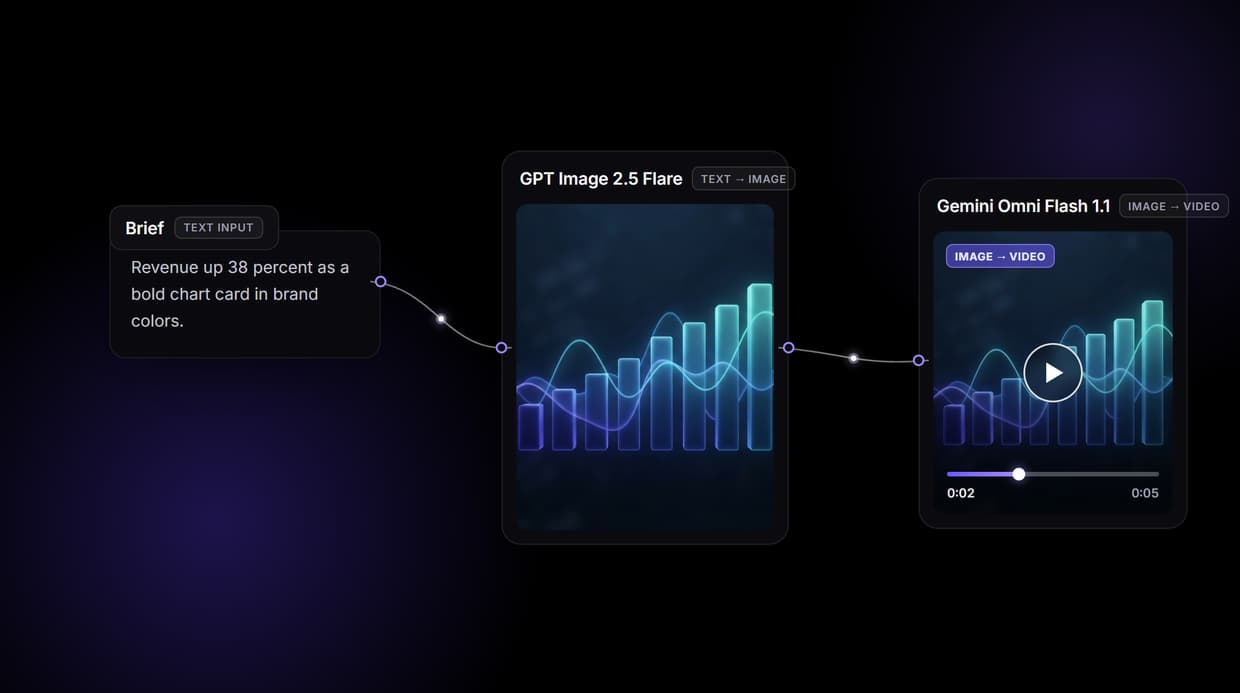
Wireflow makes AI motion graphics a node graph you own: a brief becomes a 16:9 graphic frame with GPT Image 2.5 Flare, then Gemini Omni Flash 1.1 animates that frame into a motion clip. Re-run it, batch it over a sheet, swap the model. Free to build, pay per generation.
Free to build · no credit card · See how it works ↓
How to Use AI Motion Graphics
Steps to get you started in Wireflow.
Type the motion graphic brief
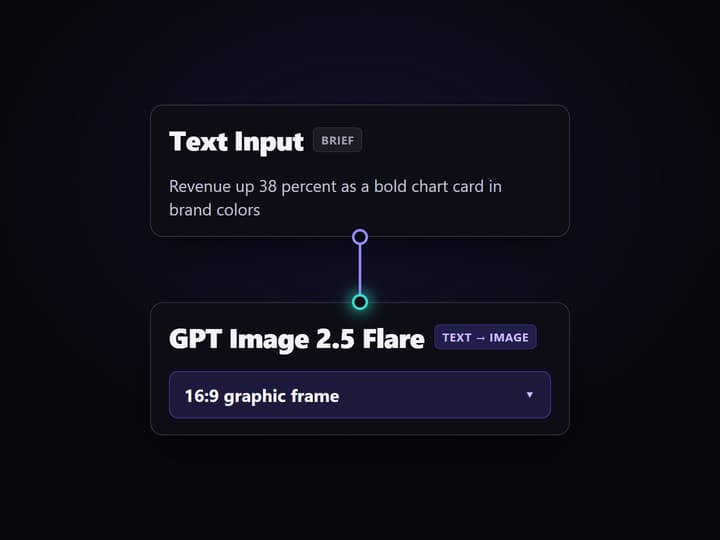
Open the flow and click the Text Input node. One line covers it: the headline, the data or logo, and the vibe, for example revenue up 38 percent as a bold chart card in brand colors.
Run the graph once
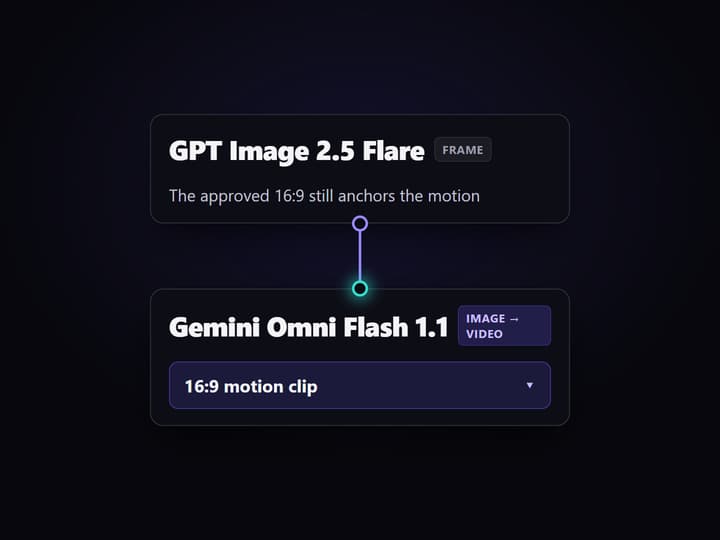
GPT Image 2.5 Flare renders the brief into a crisp 16:9 graphic frame with real headline text, then Gemini Omni Flash 1.1 animates that frame into a short motion clip you can preview in the canvas.
Change inputs, swap models, or batch
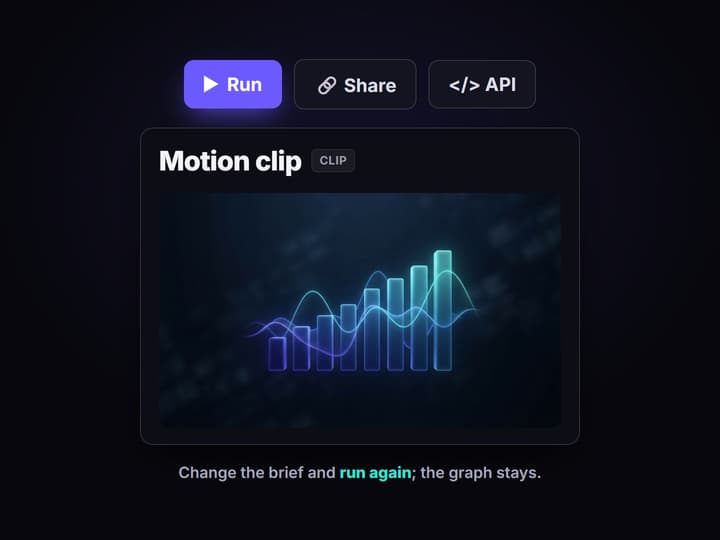
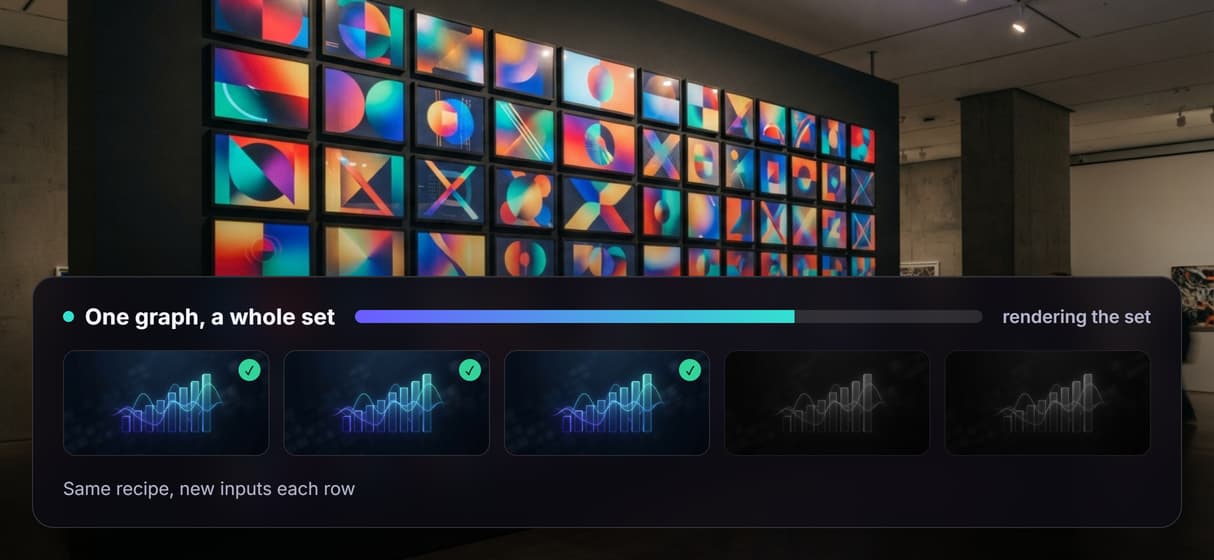
Edit the brief and run again for a new take, swap Gemini Omni Flash 1.1 for Seedance or Wan Animate in one node, or point the graph at a sheet to render a whole set of branded clips.
Why AI motion graphics keep hitting a ceiling
The current wave of AI motion graphics tools all work the same way: one prompt box, one output, and no way to reproduce it. You get a clip, but you cannot rerun the exact recipe next week, batch it across a campaign, or see which model made the motion. The moment you need forty branded lower-thirds instead of one, or a version with a different headline, you are back to prompting from scratch.
Wireflow answers with a different shape. A motion graphic is a small workflow you own on a node canvas: a Text Input holds the brief, GPT Image 2.5 Flare renders the graphic frame, and Gemini Omni Flash 1.1 animates that frame into a clip. It runs on hosted compute in the browser, nothing to install, and the same canvas drives every other AI video generator job your team has.
What replaces the template library
Brief intake
A Text Input node holds the headline, the data, and the vibe. Change the words and rerun; the graph never moves.
Graphic frames
GPT Image 2.5 Flare renders the 16:9 frame with real headline text, whether it is a stat card, a title, or a lower-third.
Vector and layered text
Swap in Recraft V4 Vector or Ideogram Layerize Text when you want crisp vector shapes or editable text layers.
Animate the frame
Kling, Seedance, Veo, or Wan Animate turn the still into motion. Any of them drops into the same video node.
Motion control
Kling Motion Control drives the animation from a reference move, so a logo swings the way you actually want.
Composite and caption
Add Video Composite, Merge Captions, and ElevenLabs Music nodes to stitch clips, burn captions, and score the cut.
How the graph actually runs
The workflow behind this page's button is deliberately small: a brief, a frame, and a clip.
- Text Input holds the brief. One line about the headline, the data or logo, and the look is enough; a sticky note in the flow walks a first run through it.
- GPT Image 2.5 Flare renders the frame. The brief becomes a 16:9 graphic still with real headline text, so you approve the design before paying for motion.
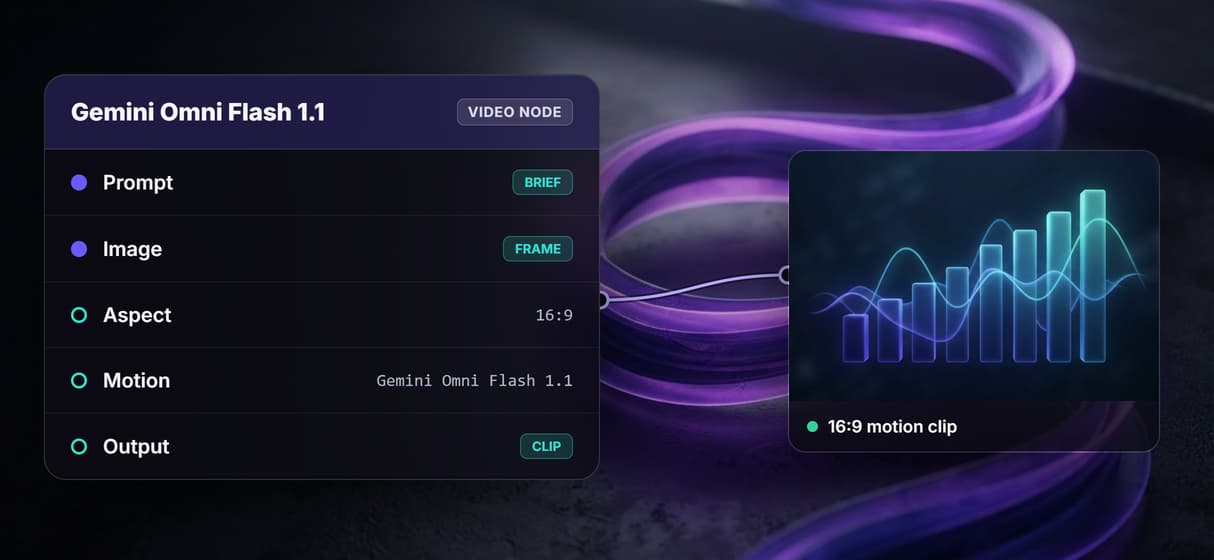
- Gemini Omni Flash 1.1 animates it. The video node takes the approved frame and returns a short 16:9 motion clip, image to video with the wiring done for you.
The brief wires to both hops, so the same words that design the frame also direct the motion and takes stay coherent. Because the graph lives among 90+ hosted model nodes, you can animate a still image you already have, swap the animate model, or feed the clip into a longer edit, all without leaving the browser.
When After Effects is still the right call
If you need frame-accurate keyframes, per-property easing curves, rigged character animation, or a plugin ecosystem, that is After Effects, and this page will not pretend otherwise. Wireflow has no scrubbable timeline and no bone rigs; motion comes from AI video models, which means run to run a clip varies slightly instead of matching a hand-keyed template exactly.
Wireflow is the generation layer, not a design suite: it will not write your script, hold your brand fonts, or export an alpha channel. What it offers instead is a repeatable, batchable pipeline for people who would otherwise skip motion graphics because a designer is too slow or After Effects is too much. Pair it with an AI animation maker flow when the job is closer to full animation than a moving graphic.
More Than Just AI Motion Graphics
A graph you own, not a one-shot box
Brief in, graphic frame, animated clip out, all open on a canvas. Rewire any hop like any node based video generation graph you can inspect.
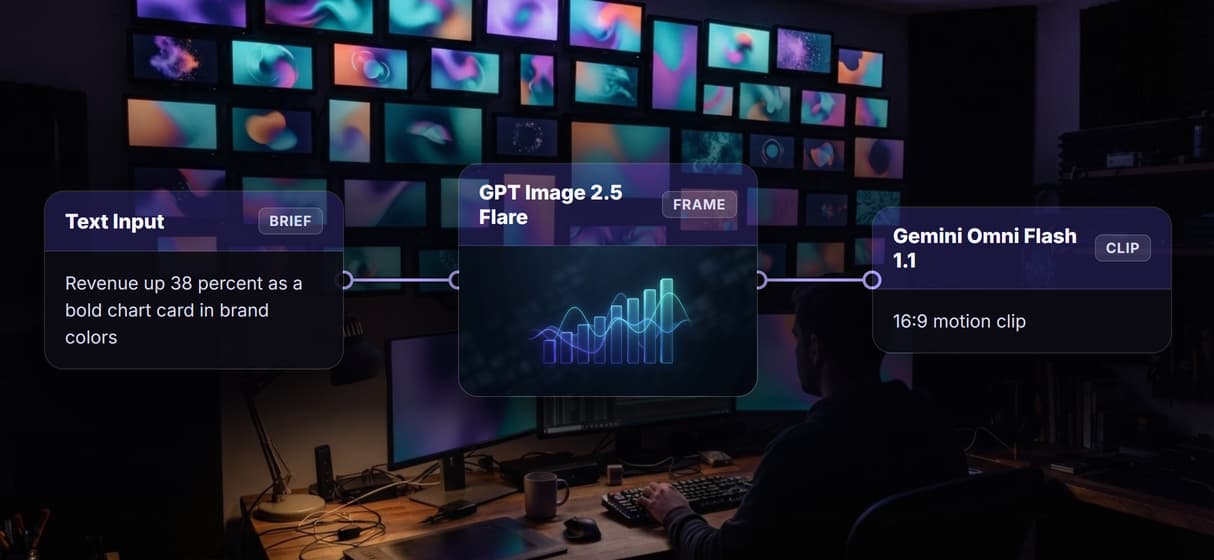
Real headline text on the frame
GPT Image 2.5 Flare turns your brief into a crisp frame with legible headline text, so you approve the design before you pay to animate it. Clean text to video AI.
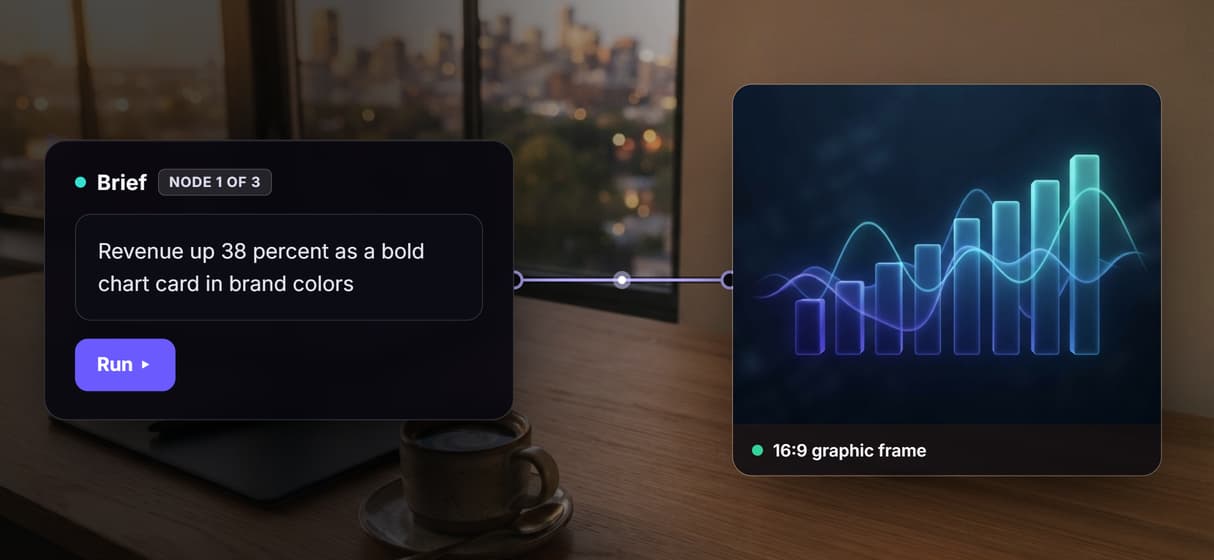
Gemini Omni Flash 1.1 animates the frame
The video node takes the approved frame and returns a short 16:9 motion clip. It is image to video AI with the wiring done, so the graphic moves. The same frame-then-animate pattern powers our AI logo animation tutorial.
Batch a whole set from one sheet
Point the same graph at a sheet and it renders one branded clip per row, scale a single prompt box cannot touch. Feed it into a longer AI video pipeline.
Reruns match, upgrades are one node
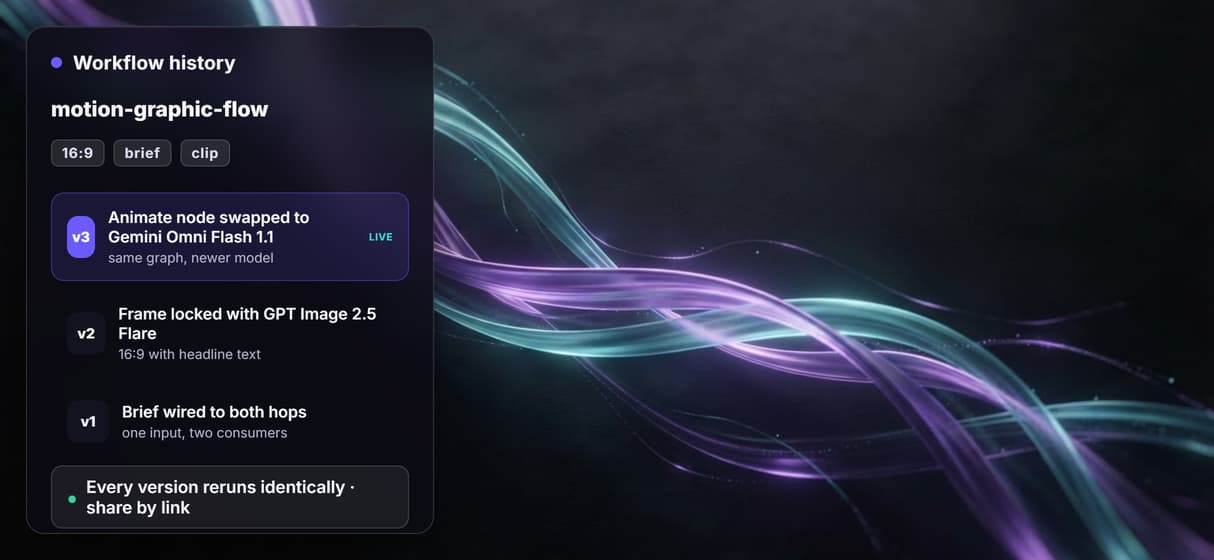
Workflows are versioned and shareable by link, so take fifty matches take one. Swap the node when a better animate model ships and keep the AI video workflow.
Motion graphics Workflows
No Code Required
API & Batch Processing
FAQs
It depends what you want to keep. For a template studio, single-output tools fit. To own and reproduce the recipe, Wireflow makes a motion graphic a node graph: a brief becomes a graphic frame and an animated clip, priced per generation.
Discover related AI tools
More From Wireflow
Written by
Andrew Adams · Co-Founder & Operations at Wireflow
Runs client operations and content strategy at Wireflow. Works directly with creative teams and agencies to build production AI workflows.
Own the motion graphics pipeline
Open the flow, type a brief, and run it: a graphic frame with real headline text and an animated clip from one graph. Building is free; you pay per generation, and the recipe reruns every time.