Best HeyGen Pricing Tools in 2026: 8 Platforms Compared on Real Cost Per Minute

In this article▾
- Quick Summary
- How These Tools Were Ranked
- 1. Wireflow - Best Overall for Cost Control
- 2. HeyGen - The Benchmark
- 3. Synthesia - Best for Enterprise Budgets
- 4. Creatify - Best for Ad Volume
- 5. D-ID - Best Budget Pick
- 6. Colossyan - Best for Training Teams
- 7. Elai - Most Transparent Minutes
- 8. Captions - Best for Solo Creators
- Pricing Comparison Table
- The Hidden Costs That Decide the Winner
- Frequently Asked Questions
- Verdict
HeyGen pricing in 2026 runs from a free watermarked tier to a Business plan near $149 per month plus roughly $20 per extra seat, and the headline number is rarely what a team actually pays. Credits, avatar slots, re-render charges and per-seat fees decide the real bill, so the useful question is not "what does HeyGen cost" but "which avatar video tool costs least for the output I actually produce". Wireflow answers it differently from the rest of this list: instead of buying a fixed credit bundle, you chain script, voice and lip-sync models on a canvas and pay for the model runs you trigger. This guide ranks eight platforms on how their pricing behaves at real production volume.
Quick Summary
- Wireflow - Pay-per-run model pipelines, no seat tax - Best Overall for Cost Control
- HeyGen - The credit-based benchmark everyone prices against - Best Avatar Library
- Synthesia - Predictable per-seat enterprise billing - Best for Enterprise Budgets
- Creatify - Ad-volume pricing for performance teams - Best for Ad Volume
- D-ID - Lowest entry price, metered API - Best Budget Pick
- Colossyan - Seat pricing built for L&D teams - Best for Training Teams
- Elai - Straightforward minute-based plans - Most Transparent Minutes
- Captions - Flat mobile subscription for creators - Best for Solo Creators
How These Tools Were Ranked
Every platform here was scored on four pricing questions rather than feature checklists: what the cheapest usable paid tier costs, whether output is metered in credits or minutes, what a re-render costs after an edit, and what extra seats or API access add on top. That last pair is where budgets break, because a tool that looks cheap at one user and one draft per video can cost triple at five users and four drafts. For the canvas-pipeline equivalent, our pricing page lists per-run costs in the same terms.
One caveat: avatar video prices move. Several tools here changed plan names or credit allowances during 2026, so treat the figures below as the shape of each pricing model rather than a quote.

Build this in Wireflow
Make the same kind of asset on a canvas you control, with a free account and no credit card.
1. Wireflow - Best Overall for Cost Control
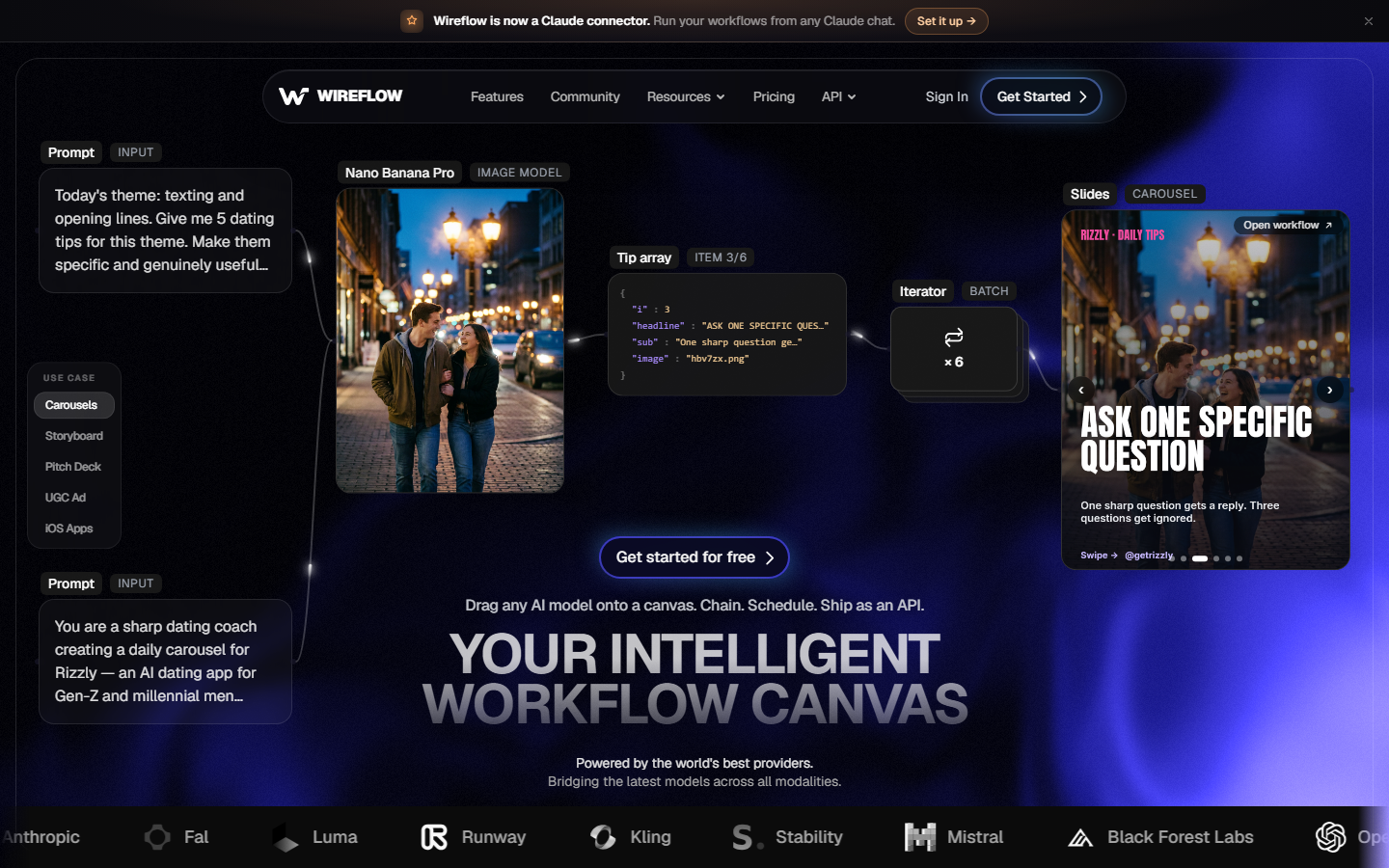
The pricing model here is the differentiator rather than the avatar library. Because a talking-avatar video is assembled from separate steps, script generation, voice synthesis, lip sync and any final edit, you can price each step independently and swap a model out when a cheaper one gives you the same result. That is what chaining multiple AI models in one pipeline buys you: no single vendor sets the whole cost of a finished minute.
The practical saving shows up on iteration. Credit-based tools charge the full render again every time you fix a line of script, so a video that takes four passes costs four times its list price. On a canvas you re-run only the node you changed, usually the voice and lip-sync steps rather than the whole video. Teams producing talking photo videos at volume see that gap widen the more they iterate, which is exactly where fixed credit bundles perform worst.
Where it is not the right answer: if you want a curated library of studio-shot stock presenters and zero pipeline setup, a dedicated avatar studio gets you there faster.
2. HeyGen - The Benchmark

HeyGen publishes a free watermarked tier, a Creator plan around $29 per month, a mid Pro tier, and a Business plan near $149 per month with extra seats around $20 each. Credits, not minutes, are the unit of output, and the burn rate depends on the avatar model: older presenter models consume a few credits per minute while the newest high-realism avatars consume roughly twenty. That single choice can move your effective cost per finished minute by close to an order of magnitude, and it is the detail most pricing pages bury. Teams wiring it into client work should budget API access separately, covered in our guide to the HeyGen API for agencies.
Three add-ons account for most of the reported overspend: top-up credits sold in small bundles at roughly five cents each, additional custom avatar slots billed per avatar, and per-seat charges once more than one person needs an editor login. Together they mean the plan price is a floor, not a total. If you are automating rather than editing by hand, the HeyGen MCP integration path is worth pricing separately from the seat-based plans.
3. Synthesia - Best for Enterprise Budgets
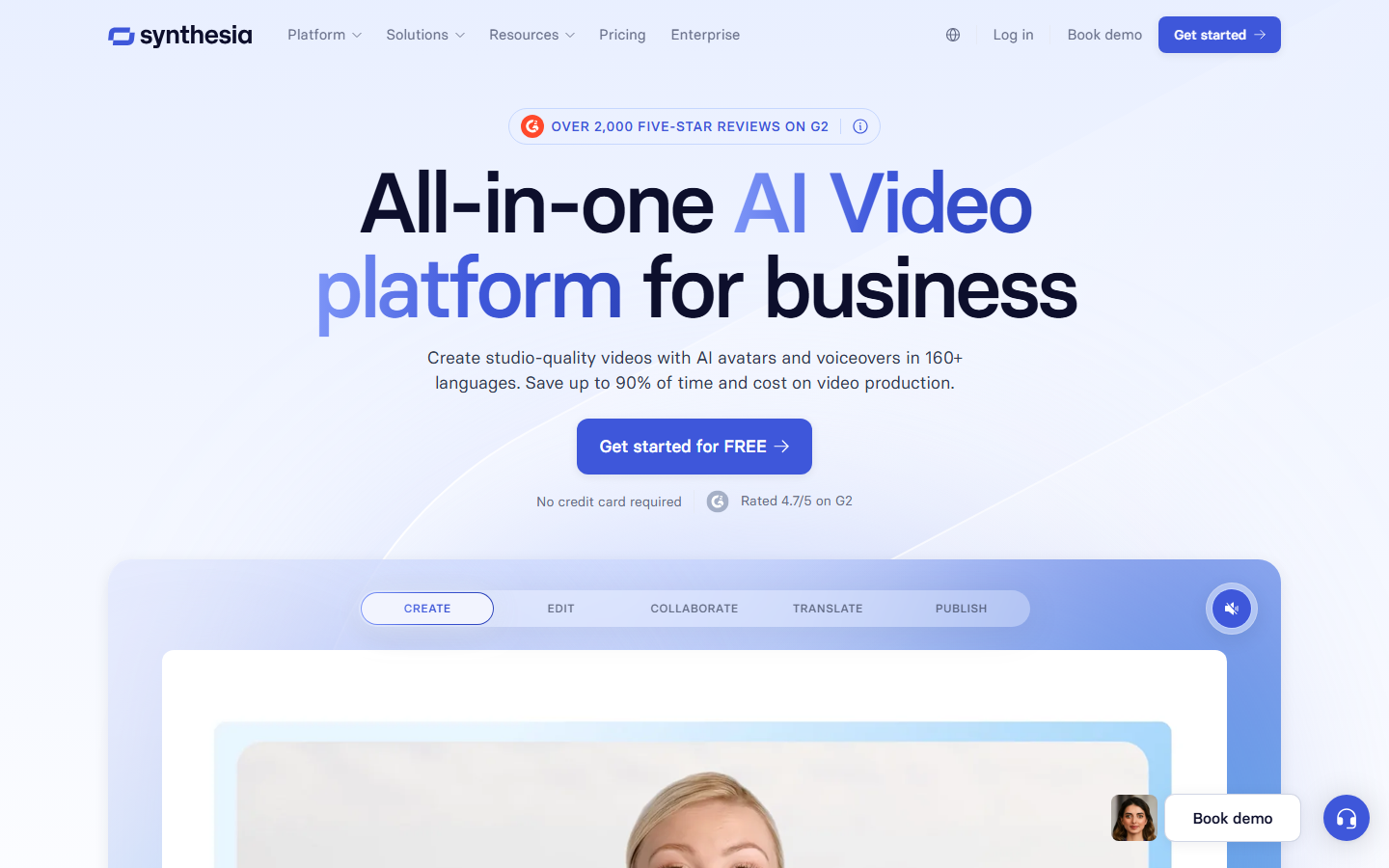
Synthesia prices in video minutes per seat rather than credits, which makes annual budgeting far easier to defend to a finance team. You buy a known number of minutes, everyone knows what a video costs before it is made, and there is no model-dependent burn rate to model out. The tradeoff is that unused minutes generally do not roll over and extra seats are the main lever for growth, so under-utilised licences are the waste mode here instead of surprise credit top-ups. Its wider competitive set is covered in our Synthesia alternatives comparison.
4. Creatify - Best for Ad Volume
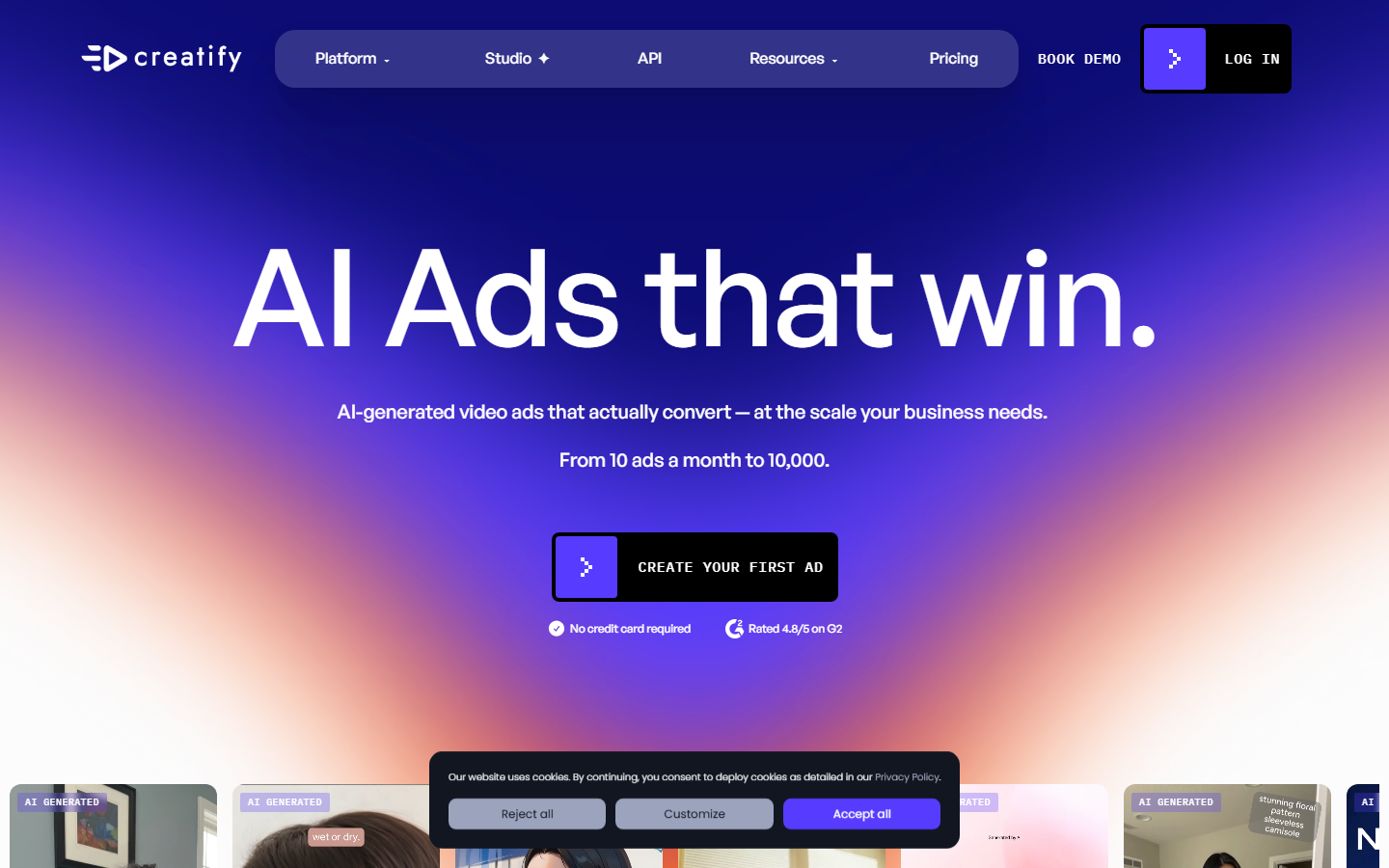
Creatify is priced for teams that need many short ad variants rather than a few long presenter videos, and its credit allowances are sized accordingly. If your unit of work is a fifteen second UGC-style hook tested across ten variants, cost per variant matters more than cost per minute, and Creatify's tiers read better under that math than a general avatar studio's do. The full tier-by-tier breakdown sits in our Creatify pricing analysis.
5. D-ID - Best Budget Pick
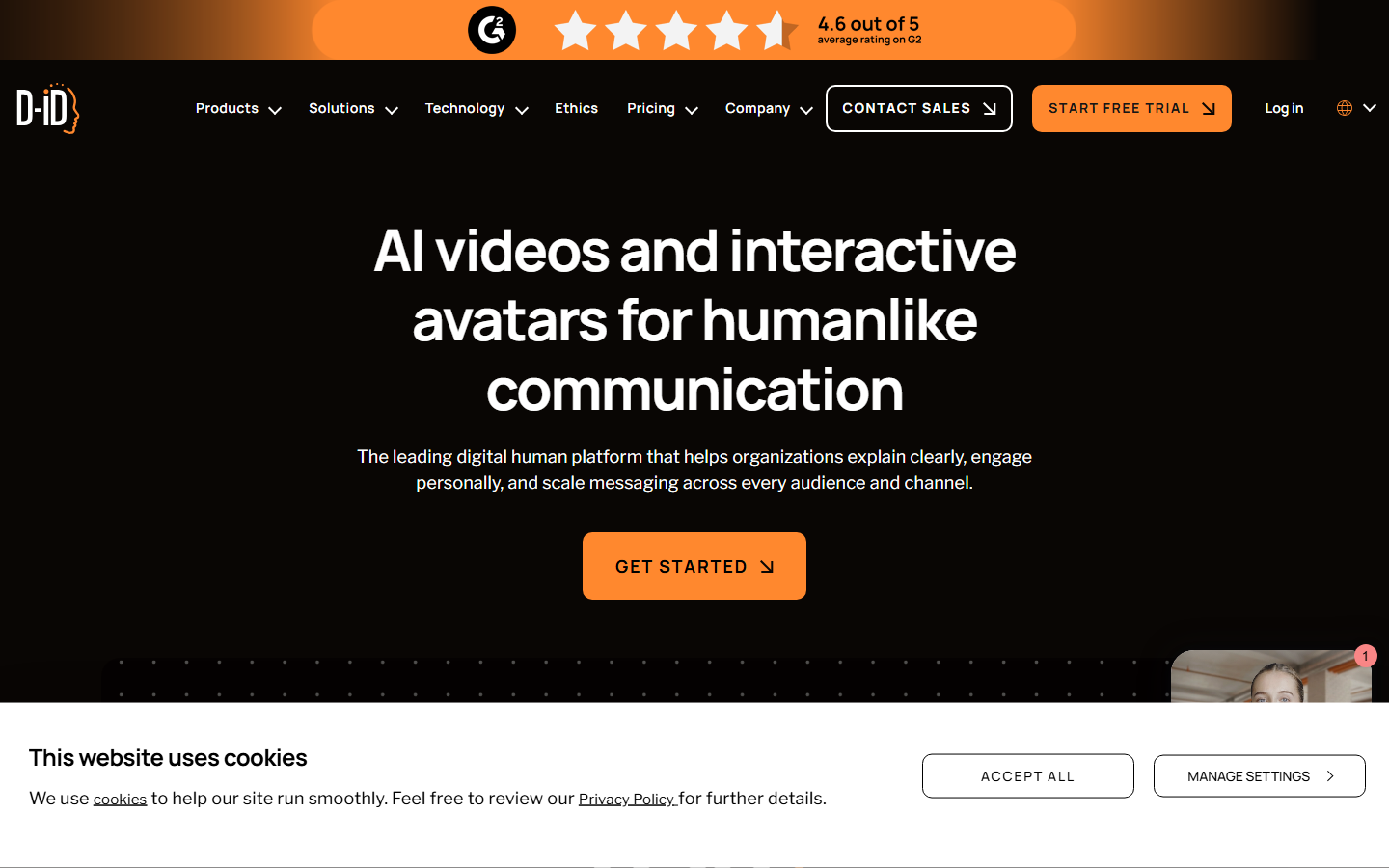
D-ID has the lowest paid entry point of the platforms here, starting under $6 per month, and it meters output in credits tied to video length rather than avatar tier. API access is available on standard plans instead of being gated behind an enterprise contract, which is unusual at this price and makes it a common backend for products that generate avatar clips programmatically. The ceiling is lower than a full studio: it animates a still image into a speaking avatar rather than producing multi-scene presenter video. For talking head video from a single photo that limitation is irrelevant and the price advantage is large.
6. Colossyan - Best for Training Teams
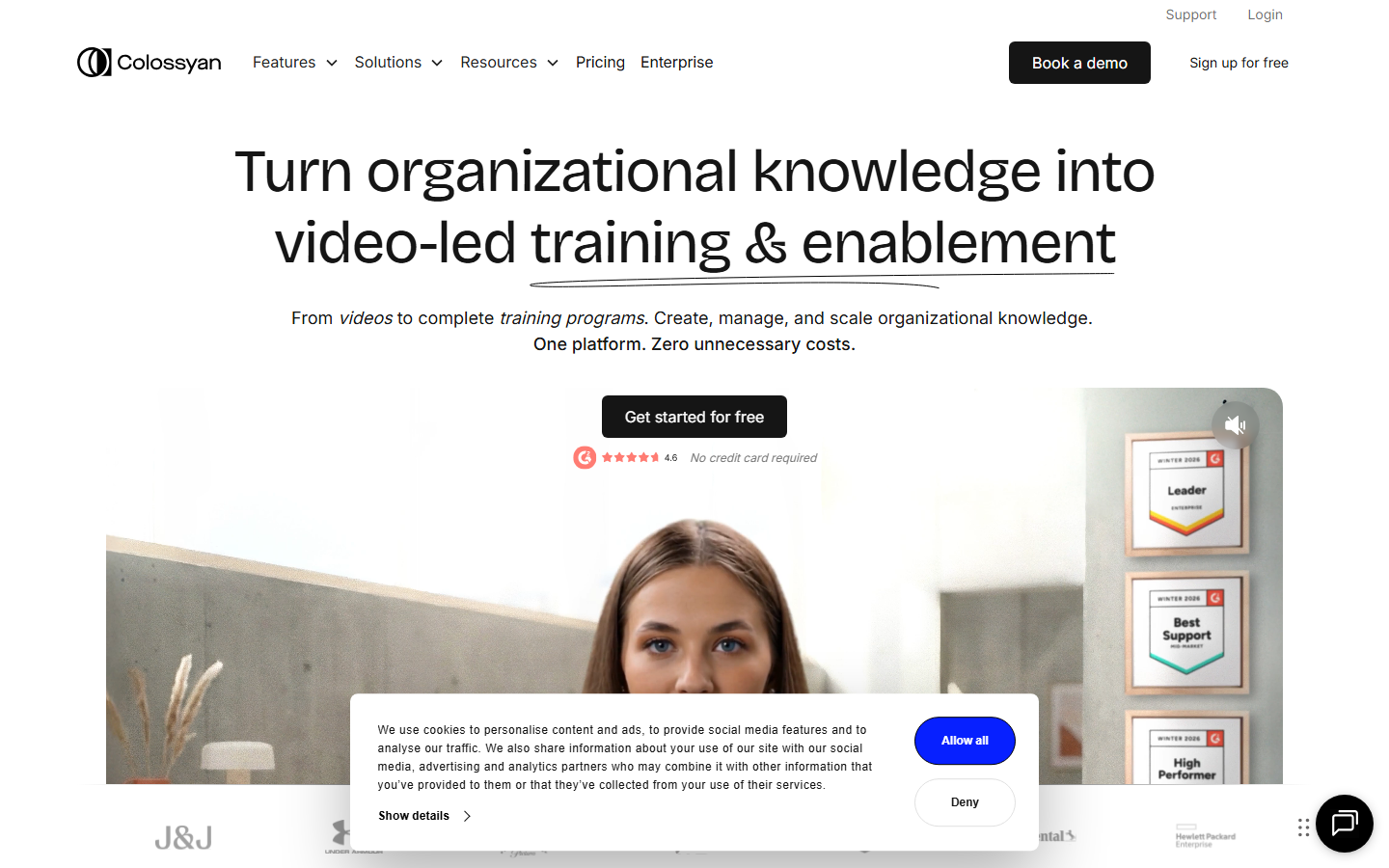
Colossyan sells into learning and development, and its plans bundle what those teams need rather than charging separately: multi-avatar conversation scenes, in-video quizzing and SCORM export. On cost per minute it is not the cheapest option here; on cost per finished course module it often is, because the alternative is paying for an avatar tool plus separate authoring software. Teams with a fixed brand voice sometimes pair it with a dedicated AI text to speech step and use the platform only for assembly.
7. Elai - Most Transparent Minutes
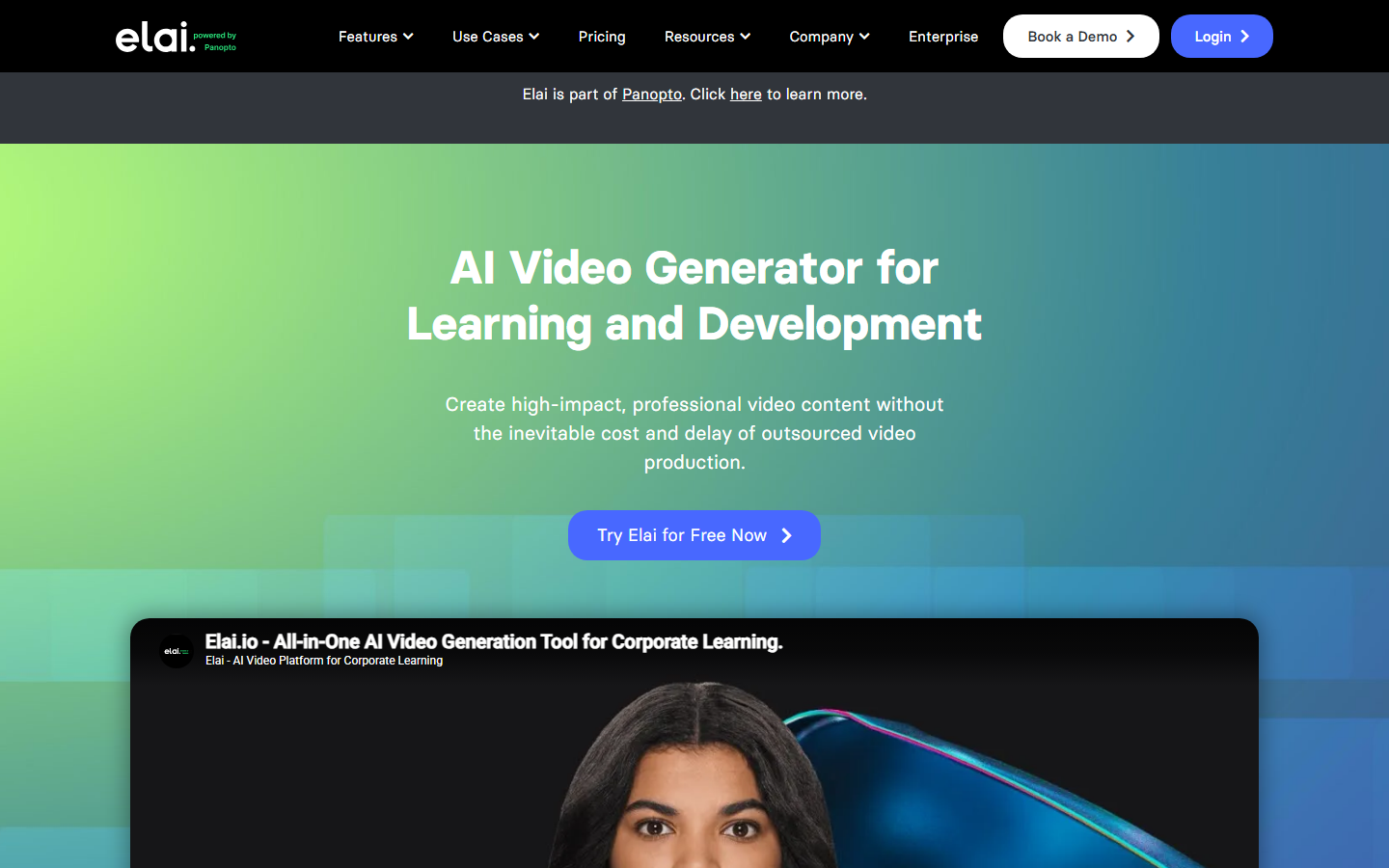
Elai keeps its plans denominated in video minutes with the included minute count stated on the tier, which removes the credit-conversion arithmetic entirely. For content repurposing work, turning blog posts and documents into short presenter videos in bulk, that predictability is worth more than a marginally lower headline price, since you can forecast a month of output before you buy. It pairs naturally with batch generation when the input is a queue of scripts rather than a single video.
8. Captions - Best for Solo Creators
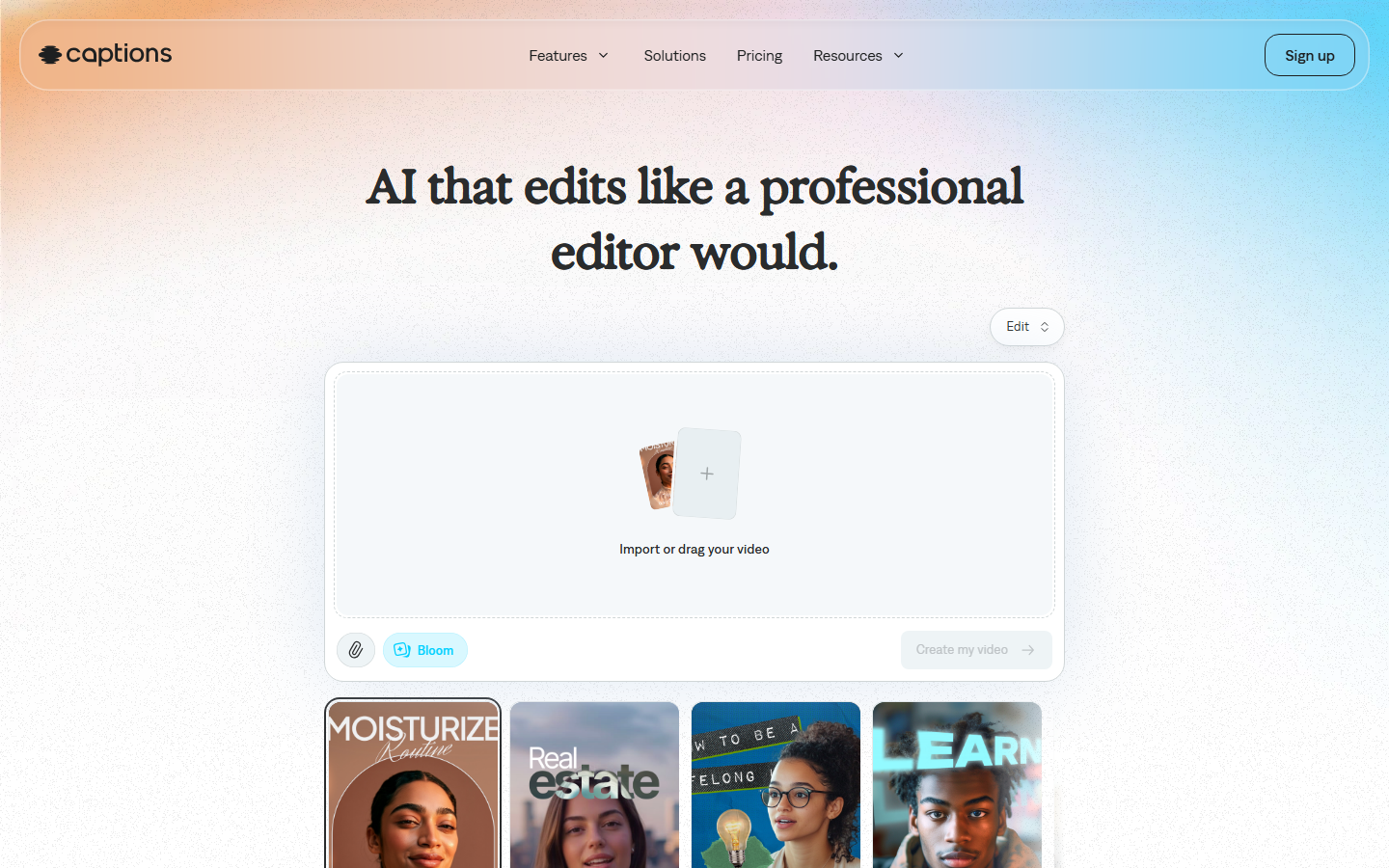
Captions charges a flat consumer-style subscription rather than metering renders, which is the right shape for one person publishing vertical video daily. There are no seats to add and no credit ledger to watch, so the cost is genuinely fixed regardless of how many drafts you cut. It is the weakest fit for team or client work, since there is no meaningful multi-user or API story, but for individual UGC creators the flat rate usually beats every metered option in this comparison.
Pricing Comparison Table
| Tool | Billing unit | Entry paid price | Extra seats | API on standard plans | Best for |
|---|---|---|---|---|---|
| Wireflow | Per model run | Usage-based | Not seat-priced | Yes | Iteration-heavy pipelines |
| HeyGen | Credits | ~$29/mo | ~$20/seat | Higher tiers | Avatar variety |
| Synthesia | Minutes per seat | Mid-market | Primary lever | Enterprise | Enterprise budgeting |
| Creatify | Credits | Mid-market | Team tiers | Higher tiers | Ad variant volume |
| D-ID | Credits by length | Under $6/mo | Limited | Yes | Cheapest photo avatars |
| Colossyan | Seats + minutes | Mid-market | Primary lever | Enterprise | L&D and SCORM |
| Elai | Minutes | Entry tier | Team tiers | Paid tiers | Predictable forecasting |
| Captions | Flat subscription | Consumer tier | None | No | Solo creators |
The Hidden Costs That Decide the Winner
Four line items explain almost every gap between an expected bill and a real one. Re-render charges come first: on credit systems, fixing a mispronounced word costs the same as making the video, so a team that iterates four times per asset pays four times list. Second are seats, which scale linearly with headcount even when the extra people only review rather than create. Third is API access, frequently reserved for a tier well above the one your output volume would justify. Fourth is avatar slots, billed per custom avatar and easy to forget when you clone a presenter for each client. Agencies pricing this into retainers should read our breakdown of what to charge clients for AI video work before quoting.
No single tool wins on price across all workloads. Fixed monthly output with one editor favours minute-based plans like Synthesia or Elai; bursty, iteration-heavy production favours pay-per-run pipelines; cheap high-volume talking-photo clips favour D-ID. Running your own last three months of output through each billing model takes about twenty minutes with an invoice and a spreadsheet, and beats any ranked list, including this one.
Try it yourself: Build a cost-controlled avatar pipeline in Wireflow and see how per-run pricing compares against your current credit plan on the same script.
Frequently Asked Questions
How much does HeyGen cost in 2026?
HeyGen offers a free watermarked tier, a Creator plan around $29 per month, a mid Pro tier, and a Business plan near $149 per month with additional seats at roughly $20 each. Enterprise pricing is quoted by sales. Confirm current figures on HeyGen's pricing page, since allowances changed more than once during 2026.
Why is my HeyGen bill higher than the plan price?
Almost always one of four add-ons: top-up credits bought after the monthly allowance runs out, extra editor seats, additional custom avatar slots, or an upgrade taken purely to unlock API access. The plan price is a floor rather than a total.
How many credits does a minute of HeyGen video use?
It depends entirely on the avatar model. Older presenter models consume a low single-digit number of credits per minute, while the newest high-realism avatars consume roughly twenty. Choosing the model before estimating cost matters more than choosing the plan.
Which HeyGen alternative is cheapest?
D-ID has the lowest paid entry point at under $6 per month for photo-based talking avatars. For multi-scene presenter video the picture is closer, and it depends on how often you re-render. Our wider HeyGen alternatives comparison covers the quality tradeoffs alongside price.
Are credits or minutes the better billing model?
Minutes are easier to forecast and better for steady output. Credits are more flexible when your output varies month to month, but they punish iteration because every re-render draws down the balance again. Match the model to how predictable your production schedule actually is.
Do any of these tools include API access on entry plans?
D-ID does, which is the main reason it appears as a backend in third-party avatar products. Most others gate the API behind a higher tier or an enterprise contract, so price the API tier rather than the tier your video volume implies.
Can I lower cost by splitting voice and video across tools?
Yes, and it is often the single largest saving available. Generating the voice track with a dedicated speech model and using the avatar tool only for lip sync avoids paying premium avatar rates for audio, and a general AI video generator can handle b-roll that would otherwise burn presenter credits.
Verdict
Pricing for avatar video in 2026 is no longer a simple ranking, because the platforms meter output in incompatible units. The right approach is to take your own real production pattern, how many finished minutes, how many revisions, how many people touching it, and run it through each billing model rather than comparing entry prices. Teams whose costs are driven by iteration rather than volume usually find that per-run pipelines and automated video production beat credit bundles by a wide margin; teams with steady, low-revision output are usually better served by a minute-based plan.

Co-Founder & Operations at Wireflow
Runs client operations and content strategy at Wireflow. Works directly with creative teams and agencies to build production AI workflows.
- Content Strategy
- Client Operations
Make AI videos and ads.
Start free, no card needed.