Best Image Generation API for Developers in 2026

In this article▾
Picking an image generation API in 2026 is less about finding the single best model and more about finding the right integration surface for your stack. Some teams want raw inference speed, some want the widest model catalog, and some want orchestration so they can chain models without gluing services together by hand. Wireflow sits in that last category: a node-based platform where you build an image pipeline visually, publish it, and call it as a single REST endpoint. This guide compares the eight APIs developers actually reach for this year, with pricing, model access, and integration notes for each.
Quick Summary
- Wireflow - Visual workflows exposed as REST endpoints ("Best Overall")
- fal.ai - Fastest inference for generative media ("Best for Speed")
- Replicate - Broadest open model catalog ("Best Model Variety")
- OpenAI Images API - GPT Image for complex scene composition ("Best Prompt Understanding")
- Stability AI - Stable Diffusion lineage with self-host options ("Best for Open Weights")
- Google Imagen (Gemini API) - Strong text rendering and speed ("Best for Text in Images")
- Ideogram - Typography and design-focused generation ("Best for Typographic Design")
- Together AI - Open models at aggressive per-image pricing ("Best Budget Option")
1. Wireflow
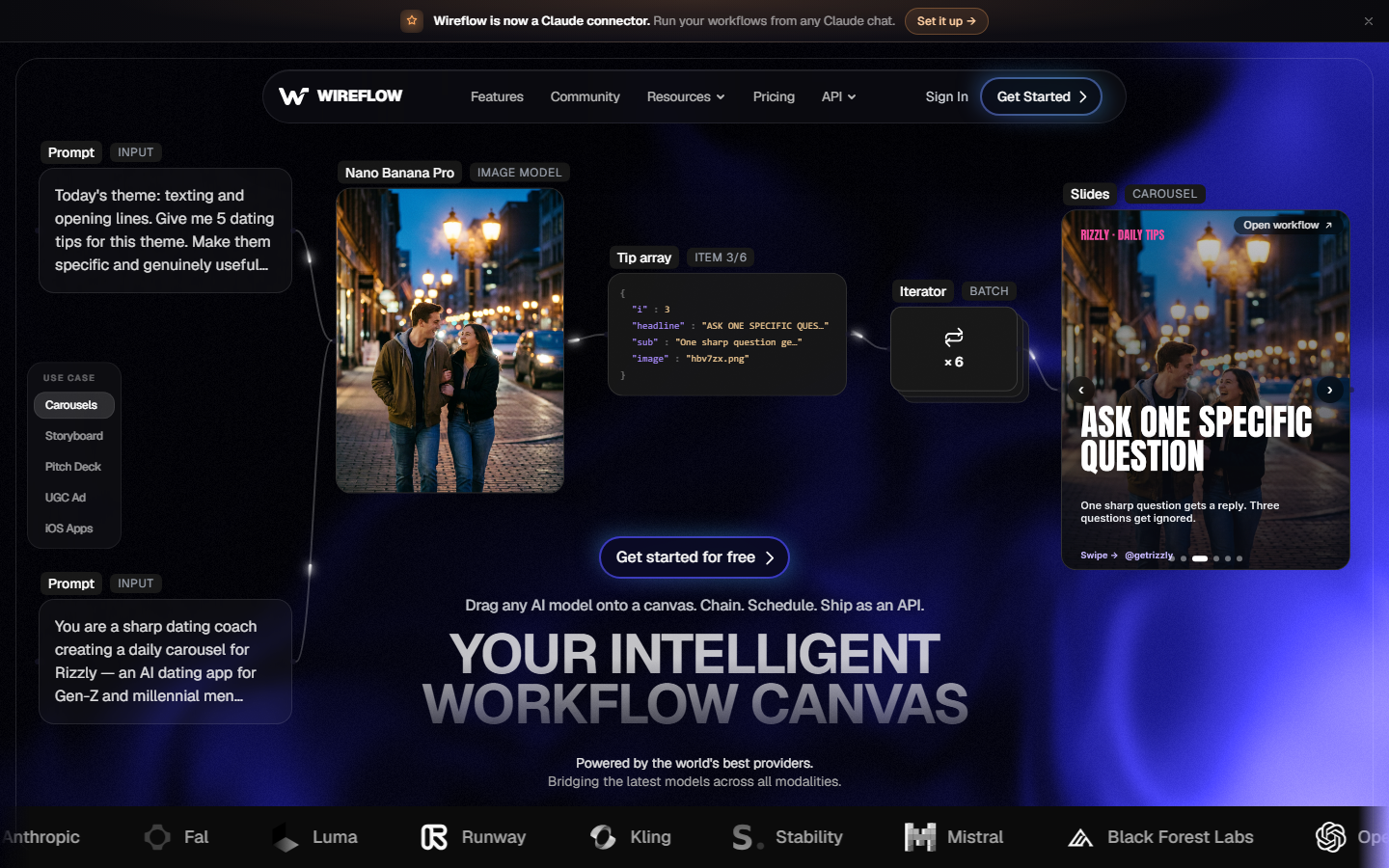
Wireflow takes a different approach than a raw inference endpoint: you compose a workflow on a node canvas, wire an input node into one or more model nodes (Flux 2, Nano Banana Pro, Imagen 4, Seedream v4, and about 150 other node types), and every published workflow becomes a callable app. Your application then hits one endpoint instead of juggling separate providers, and the full node catalog is documented on the models page.
Google shut Imagen 4 down in 2026, and our Imagen 4 pricing breakdown shows its last rates next to what Nano Banana 2.1 costs per image.
Developers comparing options can call the GPT Image 2.5 API behind the same endpoint as the other image models.
If you would rather assemble that integration surface visually, a text to image API you build on a canvas lets you wire a prompt into any image model and publish it as one REST or MCP endpoint.
For developers, the API surface is deliberately plain REST with no SDK required. You authenticate with a Bearer key, POST to /api/v1/workflows/{id}/execute, get back an executionId, and poll /workflows/executions/{id}/poll until the run reports COMPLETED with node outputs. There is also a no-auth webhook trigger (POST /workflow/{webhookId}/trigger) that returns 202 immediately, which is handy for form submissions, Zapier, or CI jobs where you do not want to ship an API key to the client. Full request and response shapes are in the API overview docs.
Two details matter for production use. First, idempotency: send an Idempotency-Key header on execute calls and identical keys within 24 hours replay the original response instead of double-billing a generation. Second, rate limits are explicit per plan (10 requests/min on Free up to 200 on Enterprise, with execution caps returned in X-RateLimit-* headers), so backoff logic is straightforward to write. For a hands-on breakdown of the platform side, see the best image generation api for developers feature page.
Best for: teams that want multi-model image pipelines behind one endpoint instead of managing several provider accounts.
Build this in Wireflow
Make the same kind of asset on a canvas you control, with a free account and no credit card.
2. fal.ai
fal.ai is an inference platform built around one thing: speed. It runs over a thousand generative models for image, video, and audio on optimized infrastructure, and Flux Schnell on fal routinely returns images in one to two seconds. The developer experience is strong, with typed clients for JavaScript and Python, queue and streaming modes, and per-request billing. If you are comparing raw endpoint costs, this fal.ai pricing comparison breaks down where the per-image economics land.
The tradeoff is that fal is a single-model-call service: chaining a generation into an upscale into a background edit means writing and maintaining that orchestration code yourself.
Best for: latency-sensitive products where a single fast model call is the whole job.
3. Replicate
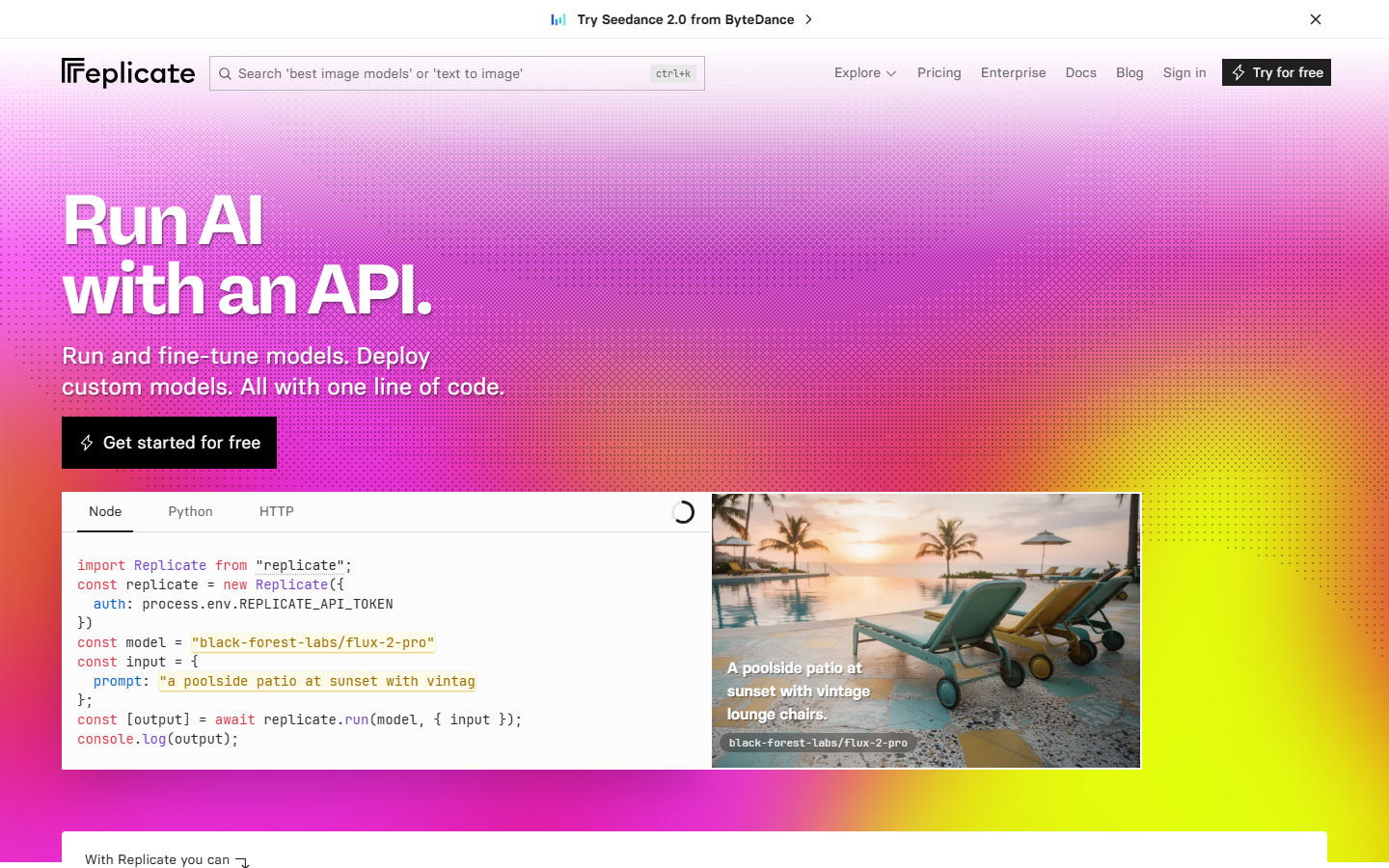
Replicate is the broadest catalog in the space: thousands of community and official models, each callable through the same predictable API. Cold starts on rarely used models can add seconds, but popular image models stay warm, and the version-pinning system means your integration does not silently change when a model updates. Costs are usage-based per second of compute or per output, which this Replicate pricing guide covers in detail.
Replicate is the natural pick when you want to test many models before committing, or when you need something niche that bigger providers do not host.
Best for: developers who want maximum model variety under one API contract.
4. OpenAI Images API
OpenAI's GPT Image models handle complex scene composition better than most rivals: multi-object prompts, spatial relationships, and instruction-following all benefit from the underlying language model. The API is stable and well documented, and if your product already uses OpenAI for text, adding image generation is a few lines. Teams wiring image generation into agentic coding tools often start here, as covered in this guide to adding image generation to Claude Code.
The downsides are price (medium and high quality tiers get expensive at volume) and generation speed, which trails dedicated inference platforms.
Best for: products that need reliable prompt adherence on complicated, instruction-heavy scenes.
5. Stability AI
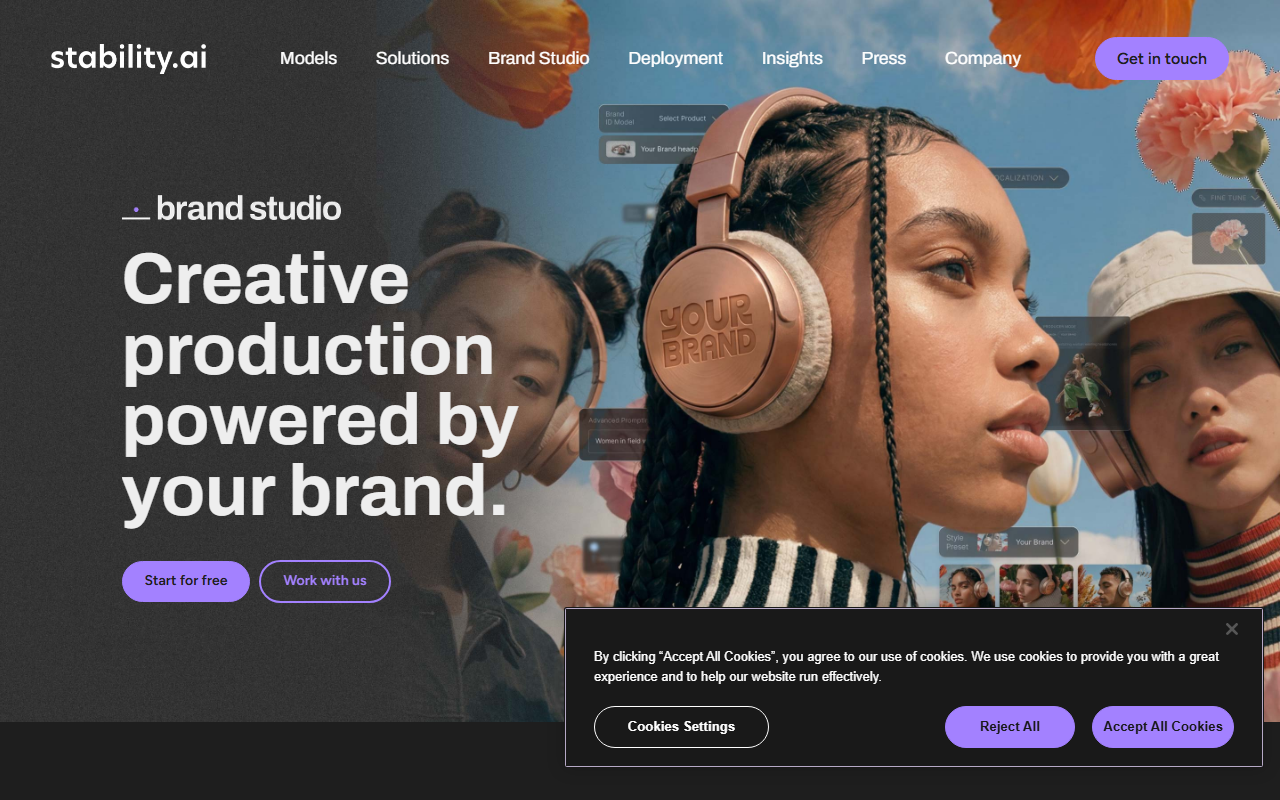
Stability AI remains the reference point for open-weight image generation. The hosted API serves the Stable Diffusion and Stable Image families with credit-based pricing, and the same weights can move on-premise when compliance or cost demands it. That portability is the real differentiator: no other provider on this list lets you prototype on a hosted endpoint and later migrate to your own GPUs, a path explored in this piece on self-hosted image generation APIs.
Output quality is competitive but no longer category-leading, so Stability makes the most sense when the open-weights escape hatch is part of your requirements.
Best for: teams that need the option to self-host the same models they call in the cloud.
6. Google Imagen (Gemini API)
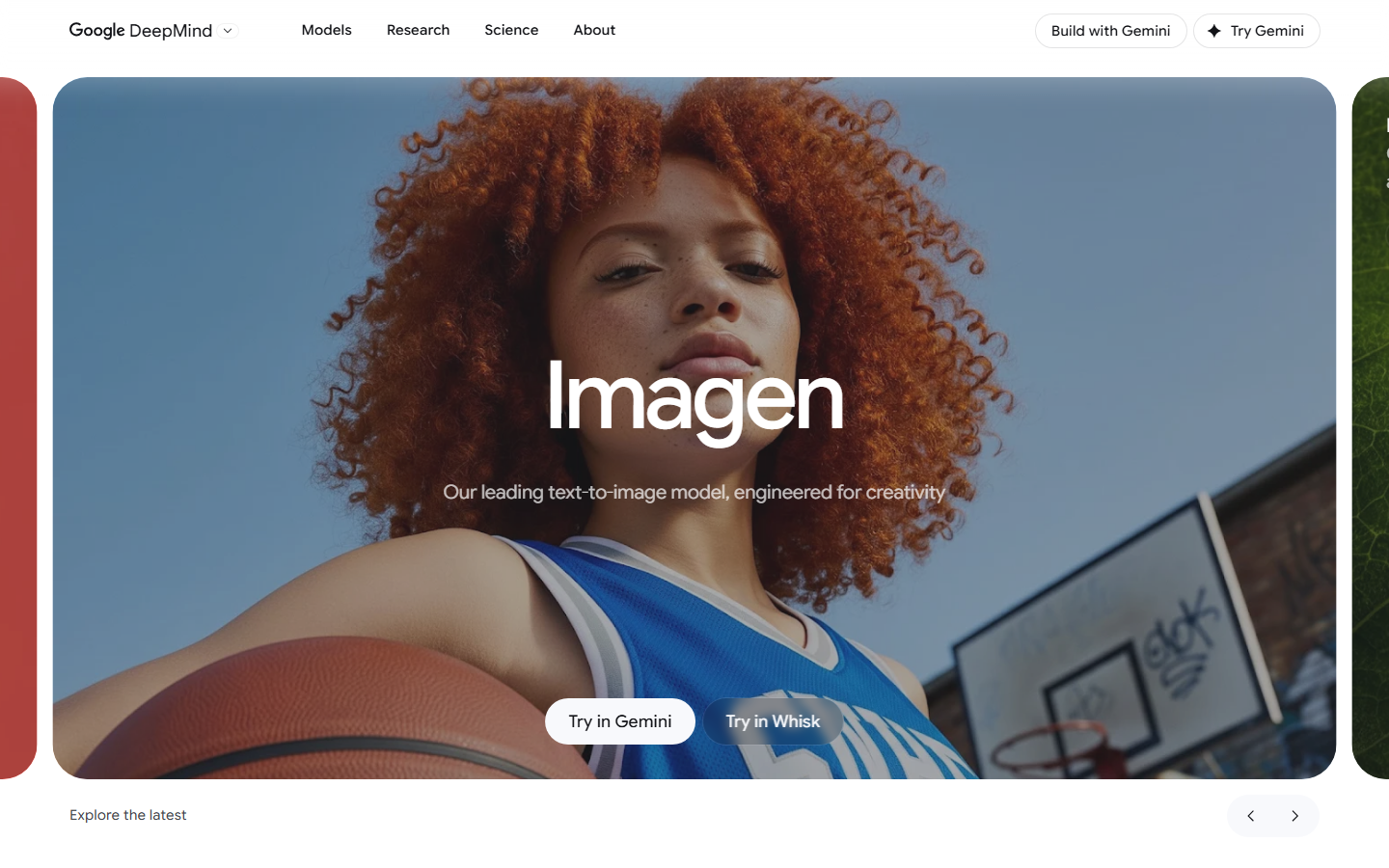
Google's Imagen models, served through the Gemini API and Vertex AI, lead on two axes: text rendering inside images and generation speed at quality. Imagen 4 produces legible signage, labels, and UI text more consistently than most competitors, which matters for marketing and product imagery. Google's Nano Banana editing models sit in the same API family, and this Nano Banana API guide for developers walks through practical calls.
Integration friction is the main complaint: Google Cloud auth and quota setup is heavier than a simple API key, especially on Vertex.
Best for: developers who need accurate in-image text and are comfortable in the Google Cloud ecosystem.
7. Ideogram
Ideogram owns the typographic niche. Its v3 models generate posters, logos, and layouts where the text is part of the design rather than an afterthought, and the API exposes style controls that designers actually use. For programmatic brand asset generation, feeding Ideogram outputs into a broader batch image generation pipeline is a common pattern.
The catalog is narrow by design; if your workload is general-purpose photorealism, other entries on this list will serve you better per dollar.
Best for: design-heavy products where typography quality decides the output.
8. Together AI
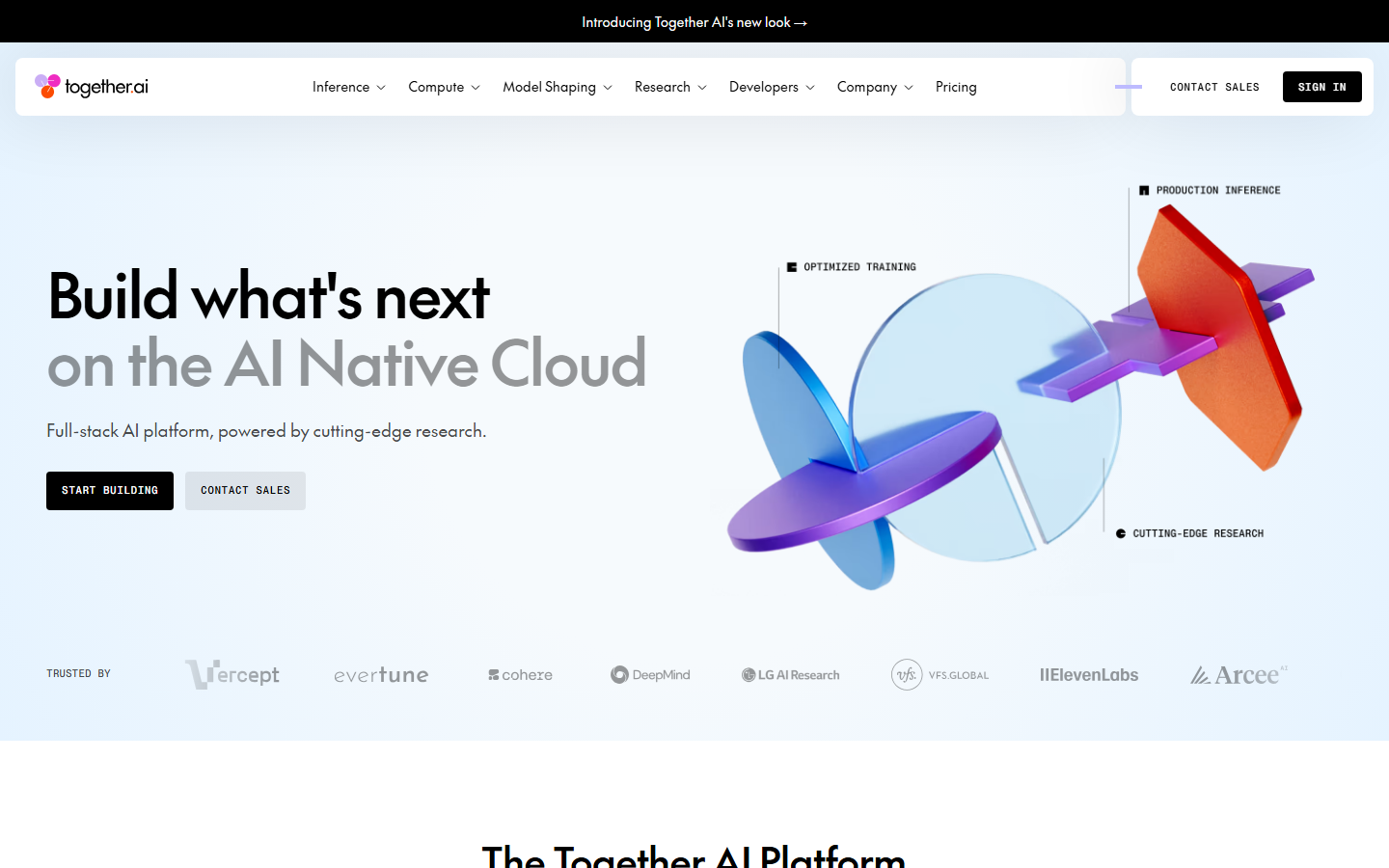
Together AI serves open models, including the Flux family, at some of the lowest per-image prices among hosted providers, with an OpenAI-compatible API shape that makes migration nearly copy-paste. Throughput is solid and the platform doubles as an LLM host, so teams consolidating billing across text and image inference land here often. If cost ceilings are a concern, pairing any provider with spend-limited generation keeps budgets predictable.
The model list is smaller than Replicate's and there is no orchestration layer, but as a budget workhorse it is hard to beat.
Best for: cost-sensitive workloads on open models at scale.

Comparison Table
| API | Model Access | Pricing Model | Orchestration | Standout Strength |
|---|---|---|---|---|
| Wireflow | 150+ nodes, multi-model | Credit-based plans | Built-in (node canvas) | Pipelines as single endpoints |
| fal.ai | 1,000+ media models | Per request | None | Fastest inference |
| Replicate | Thousands (community) | Per compute/output | None | Model variety |
| OpenAI | GPT Image family | Per image, tiered | None | Scene composition |
| Stability AI | SD / Stable Image | Credits | None | Open weights, self-host |
| Google Imagen | Imagen 4, Nano Banana | Per image (GCP) | None | In-image text |
| Ideogram | Ideogram v3 | Credits | None | Typography |
| Together AI | Open models (Flux etc.) | Per image, low cost | None | Price |
How to Choose
Start from your workload shape, not the leaderboard. A single fast call per user action points to fal.ai or Together AI. Heavy experimentation across models points to Replicate. Compliance or infrastructure control points to Stability AI. And if your feature is really a pipeline (generate, then edit, then upscale, then compose), an orchestration layer saves you the glue code, which is the argument made across AI content generation API comparisons generally.
Review Midjourney API options and limitations before adding it to an integration shortlist.
Also check the operational details that only show up in production: rate limit headers, idempotency support, webhook triggers, and how errors report insufficient credits. These vary widely between providers and matter more than a few percentage points of benchmark quality once real traffic arrives; embedding generation into a product has its own checklist, covered in this guide to AI generation APIs for SaaS apps.
Try it yourself: Open this text-to-image workflow in Wireflow - the nodes are pre-configured with a working prompt-to-image setup you can execute through the API using the exact endpoints described above.
FAQ
What is the fastest image generation API in 2026?
fal.ai currently holds the speed crown for hosted inference, with Flux Schnell returning images in roughly one to two seconds. Google's Imagen 4 is also notably fast at higher quality tiers.
Which image generation API is cheapest for high volume?
Together AI generally offers the lowest per-image prices on open models like Flux. For predictable budgets regardless of provider, put a hard spend cap in front of your generation layer.
Do I need an SDK to use an image generation API?
No. Most providers, Wireflow included, expose plain REST with JSON bodies, so curl, fetch, axios, or requests all work. Some platforms like fal.ai and Replicate offer optional typed clients for convenience.
How do I chain multiple image models in one pipeline?
Either write orchestration code that passes outputs between provider APIs yourself, or use a workflow platform where models are nodes on a canvas and the whole graph executes as one API call with a single execution to poll.
What is the difference between synchronous and async image APIs?
Synchronous APIs hold the connection open until the image is ready, which is simple but fragile for slow models. Async APIs return an execution ID immediately and you poll for status, which is the standard pattern for anything over a few seconds. Exponential backoff starting at one second is the usual polling strategy.
Can I trigger image generation without exposing an API key?
Yes, on platforms that support webhook triggers. Wireflow's webhook endpoint accepts a POST with no authentication and returns 202 with an execution ID, so browser forms and third-party automations can start runs safely; details are in the webhook docs.
Which API is best for rendering text inside images?
Google Imagen 4 leads for general text accuracy, while Ideogram v3 is the specialist for typographic design work like posters and logos where text is the centerpiece.
Are open-weight models good enough for production in 2026?
Yes for most workloads. The Flux family and Stable Image models are competitive with closed models on photorealism, and open weights add the option to self-host for compliance, latency, or cost reasons. If you would rather wire models on a canvas than write client code, a visual canvas with an API exposes each graph as a REST endpoint you call with a prompt.
Conclusion
The image generation API market in 2026 rewards matching the tool to the workload: fal.ai for speed, Replicate for variety, OpenAI for prompt understanding, Google for text rendering, Ideogram for typography, Stability for open weights, and Together for price. If your feature involves more than one model call per output, Wireflow's approach of publishing a visual pipeline as a single REST endpoint removes the orchestration burden entirely, and the workflow linked above is a working starting point you can execute today.

Co-Founder & Operations at Wireflow
Runs client operations and content strategy at Wireflow. Works directly with creative teams and agencies to build production AI workflows.
- Content Strategy
- Client Operations
Make AI videos and ads.
Start free, no card needed.