Best Replicate Pricing Tools in 2026

In this article▾
Replicate made running AI models simple with its pay-per-second GPU billing, but that pricing model can get expensive fast at scale. Wireflow takes a different approach with flat-rate, per-call API pricing and a visual node editor that lets you chain multiple models into a single workflow. Whether you need image generation, video synthesis, or upscaling, the platforms below offer competitive pricing structures that deserve a close look before you commit to a billing model.
Quick Summary
- Wireflow - Best overall for multi-model workflows with flat-rate pricing
- Replicate - Best for quick prototyping with broad model catalog
- Fal.ai - Best for high-volume image generation on a budget
- Modal - Best for custom model deployment with per-second billing
- RunPod - Best for raw GPU rental at low hourly rates
- Together AI - Best for LLM inference with per-token pricing
- Baseten - Best for production-grade model serving with autoscaling
- DeepInfra - Best for serverless inference with transparent pricing
1. Wireflow
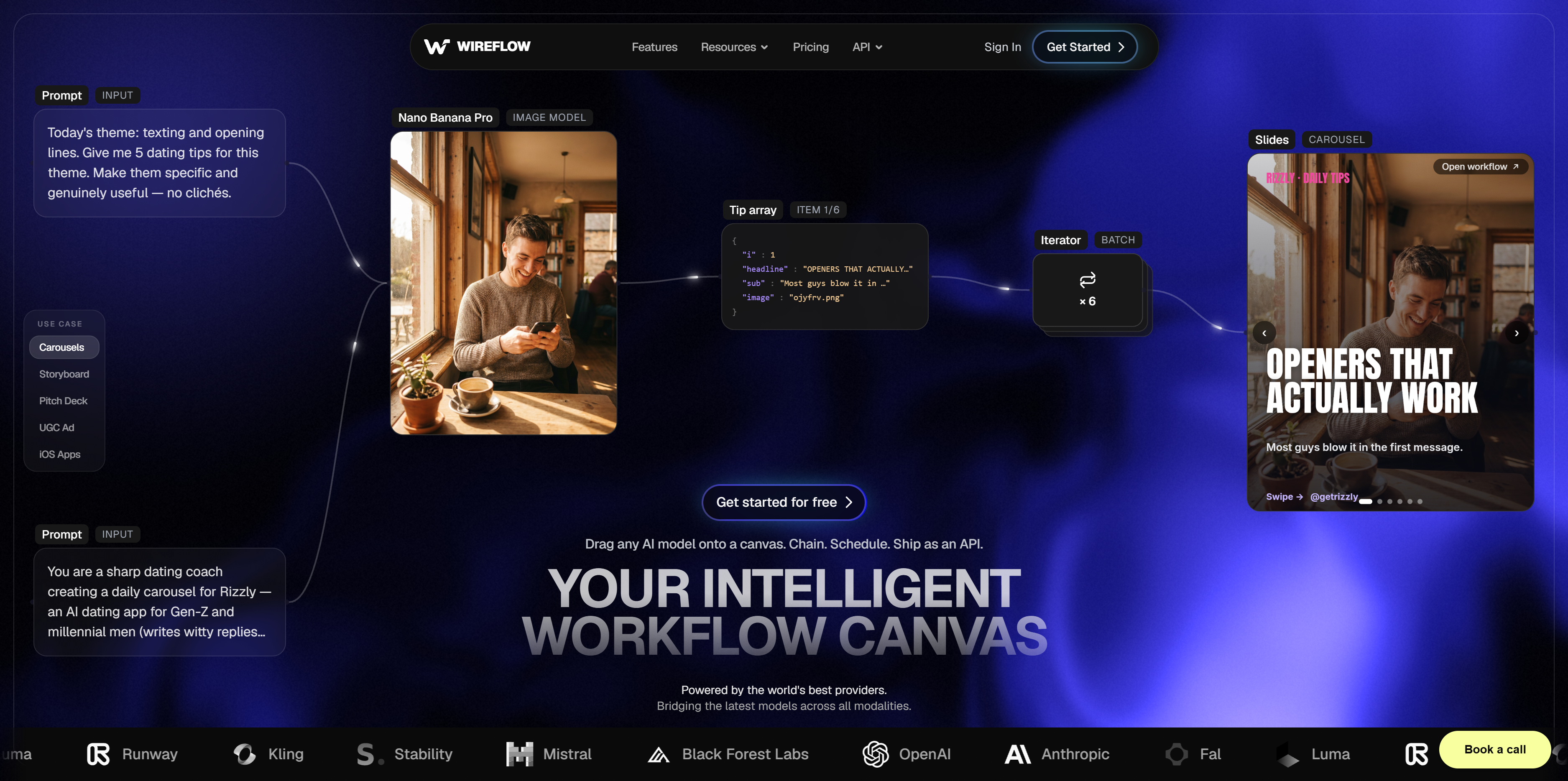
For a hands-on look at how flat-rate pricing works in practice, check out the Replicate pricing comparison feature page.
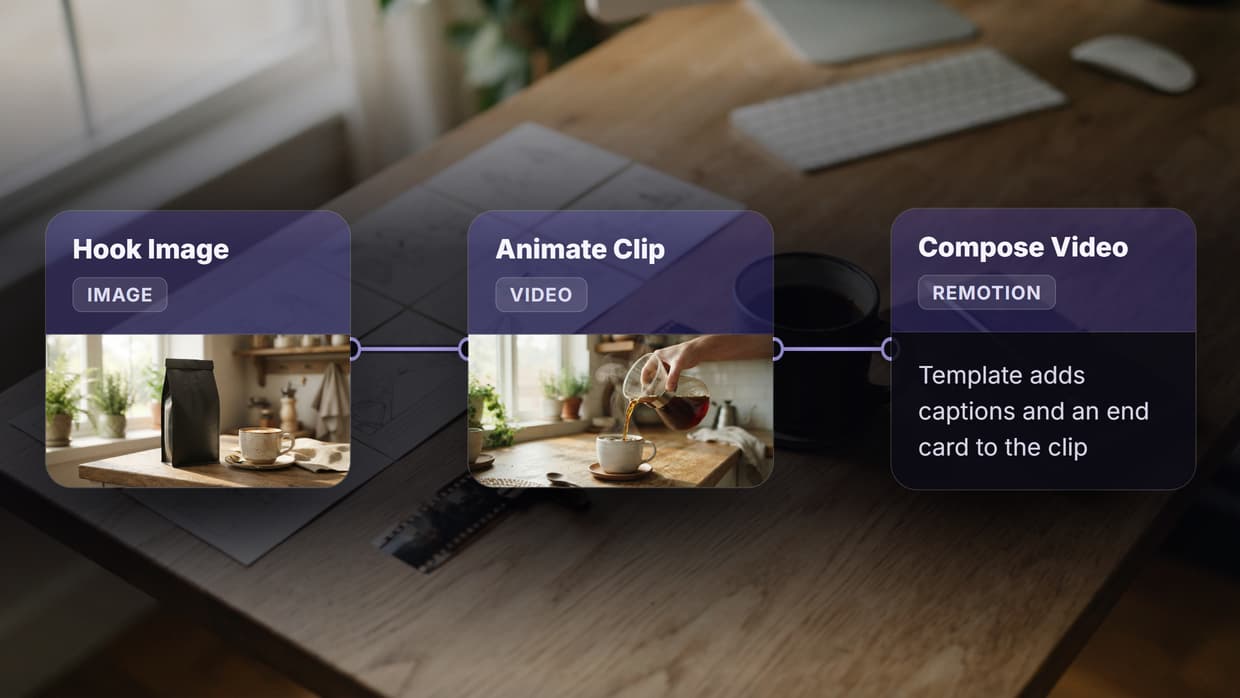
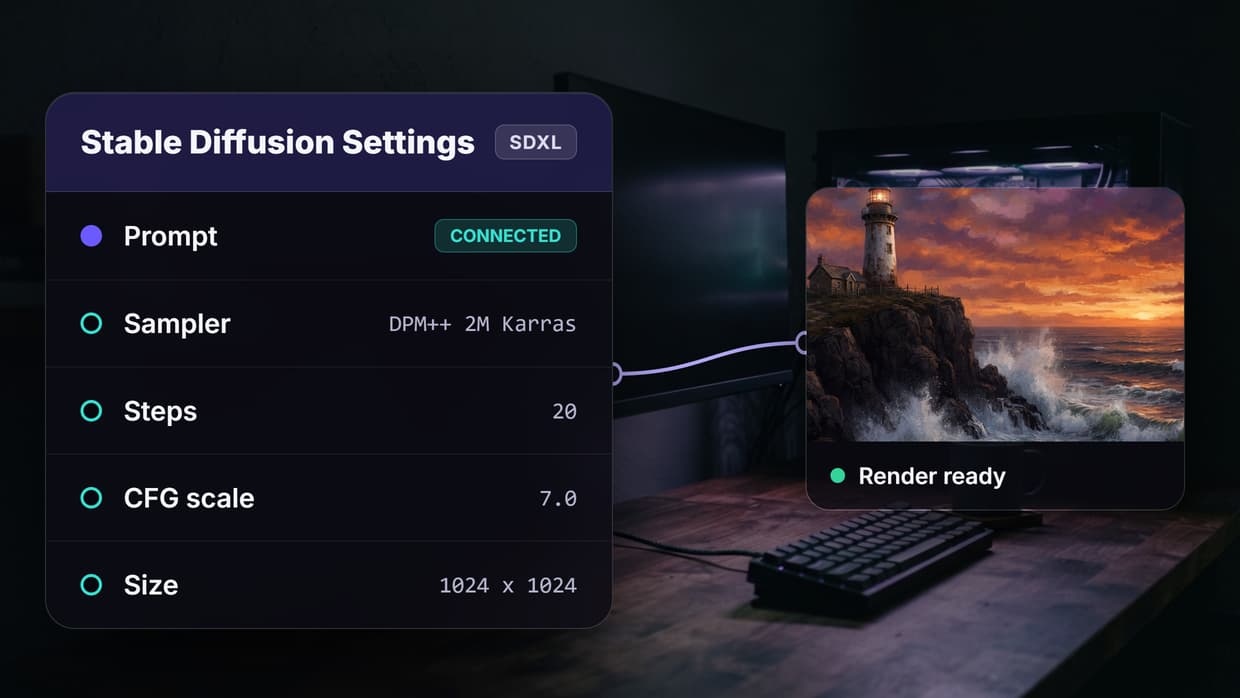
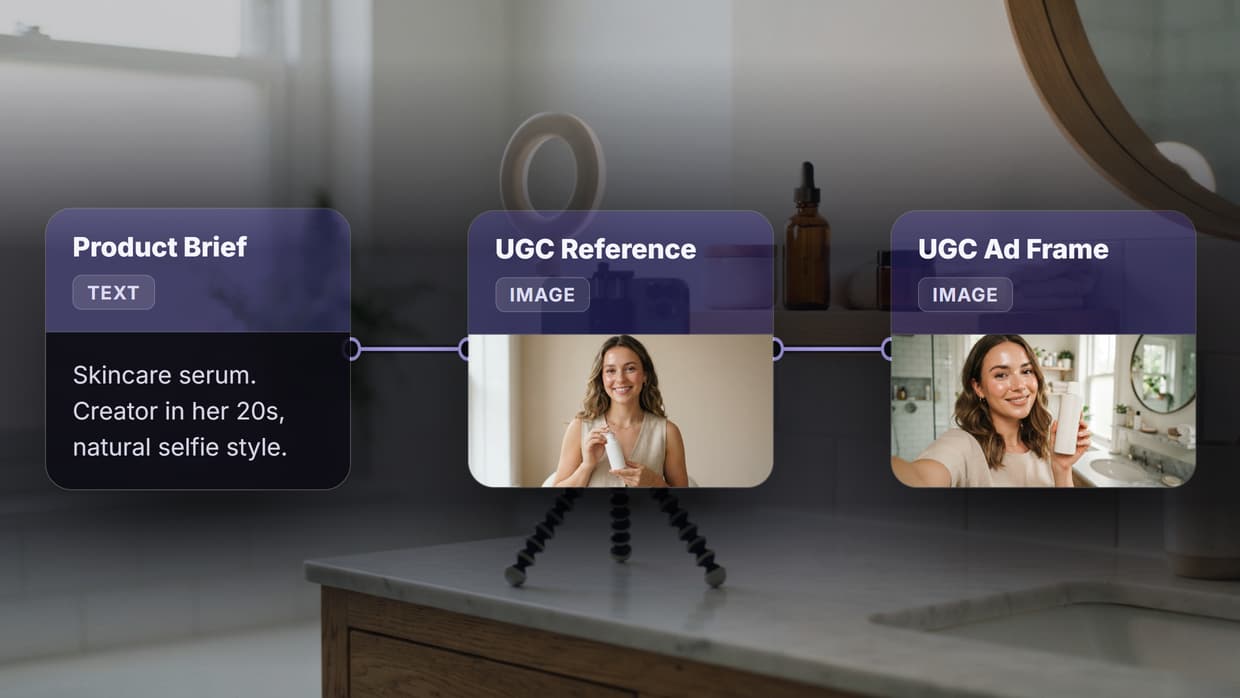
Wireflow is a visual AI workflow builder that lets you connect AI models in a drag-and-drop canvas and call them through a single API endpoint. Instead of paying per second of GPU time, you pay a flat rate per API call, which makes costs predictable when running multi-step pipelines.
The platform includes access to models like Flux 2 Pro, Kling, Recraft V4, and dozens of others without requiring separate API keys for each provider. You build a workflow once in the visual node editor, then trigger it via REST API or schedule it to run on a batch. For teams building production applications, the usage-based API pricing model means you only pay for what you generate, with no idle GPU costs.
Pricing: Free tier available. Pro plans start with per-call billing, volume discounts at scale.
Best for: Developers who chain multiple models (text-to-image, upscaling, background removal) into a single pipeline and want predictable costs.
Build this in Wireflow
Make the same kind of asset on a canvas you control, with a free account and no credit card.
2. Replicate
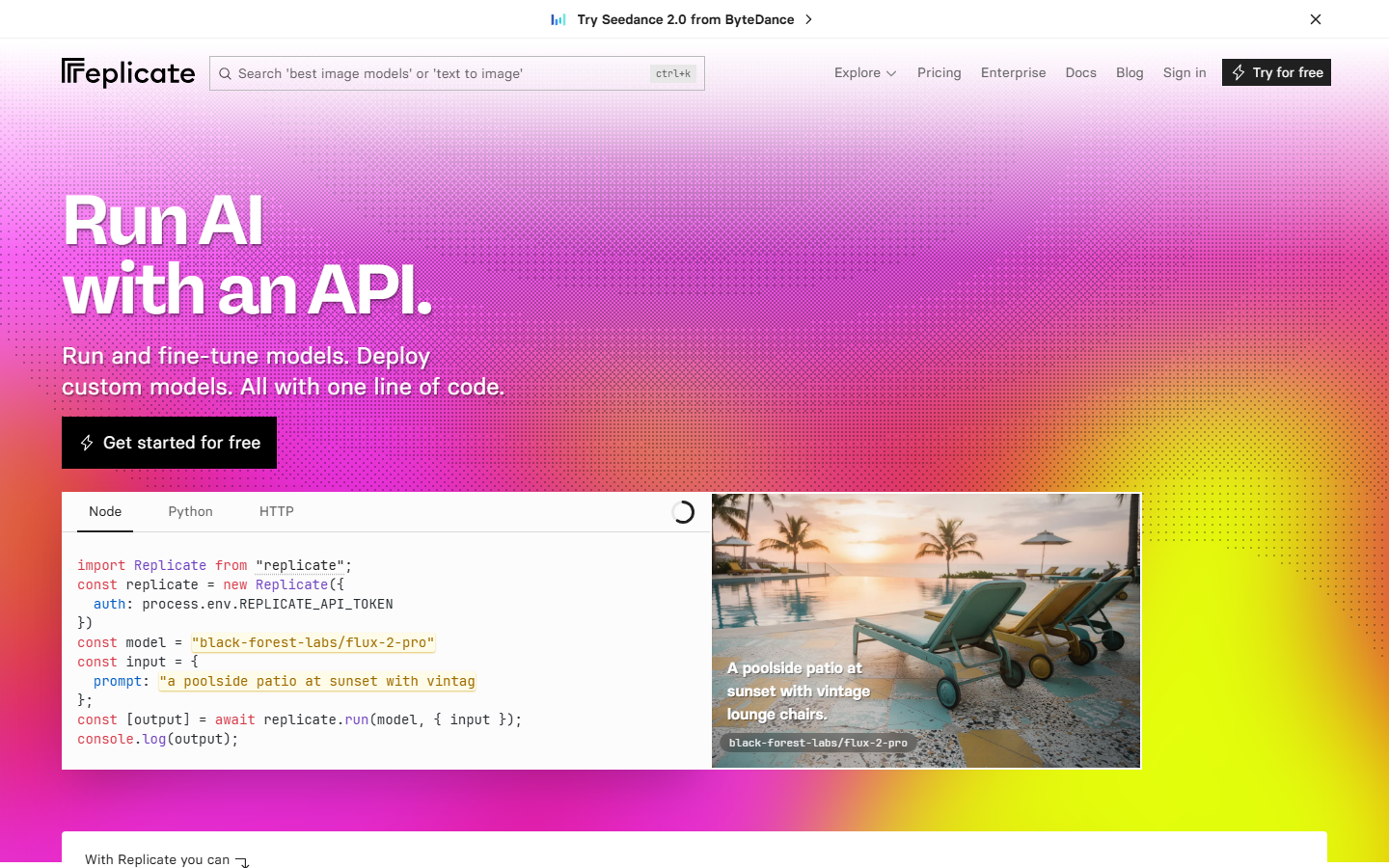
Replicate pioneered the "run any model via API" approach, and after its acquisition by Cloudflare in late 2025, the platform continues to operate with the same per-second GPU billing structure. Its catalog includes thousands of community-uploaded models alongside official integrations with FLUX, Stable Diffusion, and video generators.
The pricing is straightforward: CPU predictions cost $0.000115/sec, Nvidia T4 GPUs run $0.000225/sec, and A100 (80GB) costs $0.001400/sec. For occasional use, these rates are reasonable. At higher volumes, the per-second billing can stack up, especially for models with longer inference times like video generation.
Pricing: Pay-per-second. No minimum commitment. Free tier with limited predictions.
Best for: Prototyping and testing models quickly without managing infrastructure.
3. Fal.ai
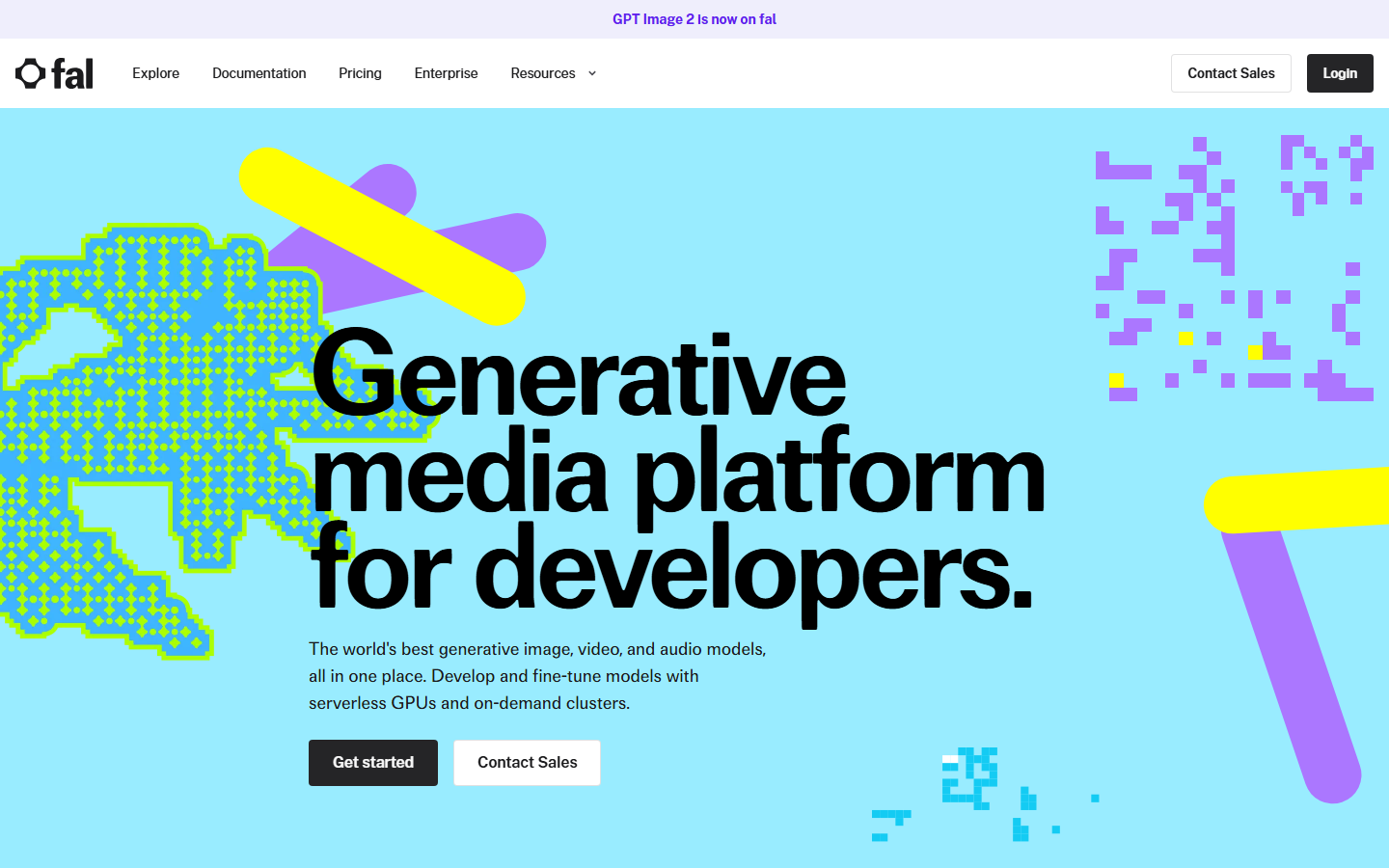
Fal.ai focuses on fast, affordable image and video generation with per-request pricing rather than per-second billing. Their rates for popular models like FLUX Pro tend to run 1.4x to 2.9x cheaper than equivalent runs on Replicate, making them a strong choice for batch image generation workloads.
The platform also offers queue-based processing and real-time endpoints, so you can optimize between cost and speed. Their infrastructure is built specifically for generative AI inference, which keeps latency low on popular models. The API is clean and well-documented, with SDKs for Python and JavaScript.
Pricing: Per-request. FLUX Pro from $0.025/image. Volume discounts available.
Best for: Teams running high-volume image generation who need lower costs than Replicate's GPU-second model.
4. Modal
Modal provides a serverless cloud platform for running custom Python code on GPUs. Unlike Replicate's pre-packaged model catalog, Modal lets you deploy your own models with custom preprocessing and postprocessing logic. You pay for compute time only when functions are running, with no idle costs.
GPU pricing starts at $0.000164/sec for T4s and goes up to $0.001472/sec for A100s, which is competitive with Replicate. The real savings come from scale: Modal's container cold-start times are under a second, and their scheduler efficiently packs workloads onto GPUs. You can also use spot instances for batch jobs at significant discounts.
Pricing: Pay-per-second compute. Free $30/month credit. Spot instances at ~50% discount.
Best for: ML engineers who want full control over their model deployment stack with serverless scaling.
5. RunPod
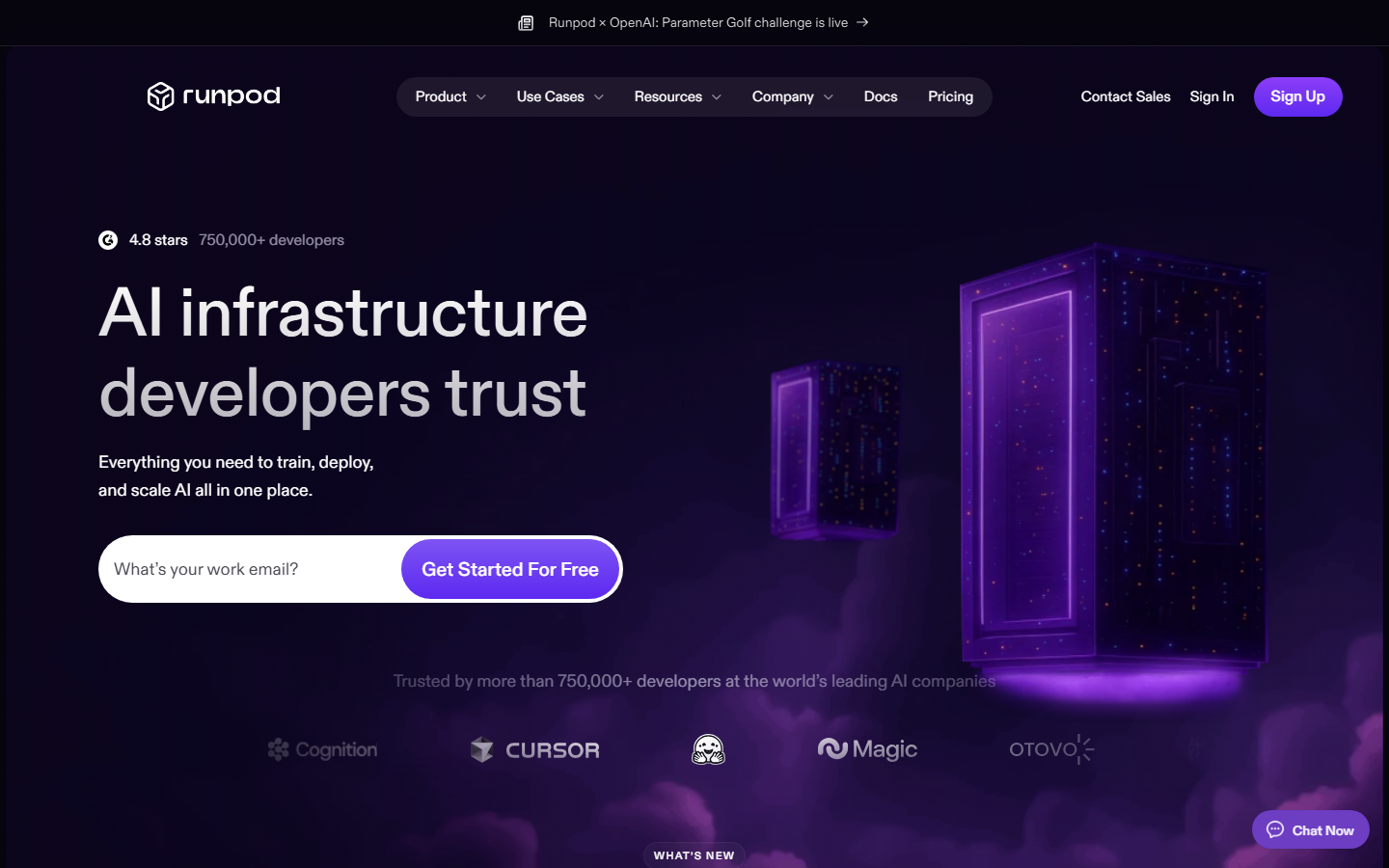
RunPod offers the most straightforward GPU rental model on this list. You rent GPUs by the hour or by the second, with community cloud options that bring A100 pricing as low as $0.69/hr. Their serverless endpoint feature competes directly with Replicate's API, but at lower per-second rates for most AI content generation use cases.
RunPod also provides persistent GPU pods for long-running workloads like fine-tuning, which Replicate does not support. The trade-off is that you manage more of the infrastructure yourself, including container images and scaling configuration.
Pricing: Community cloud A100 from $0.69/hr. Serverless endpoints billed per second.
Best for: Cost-conscious teams who need raw GPU access and are comfortable managing containers.
6. Together AI
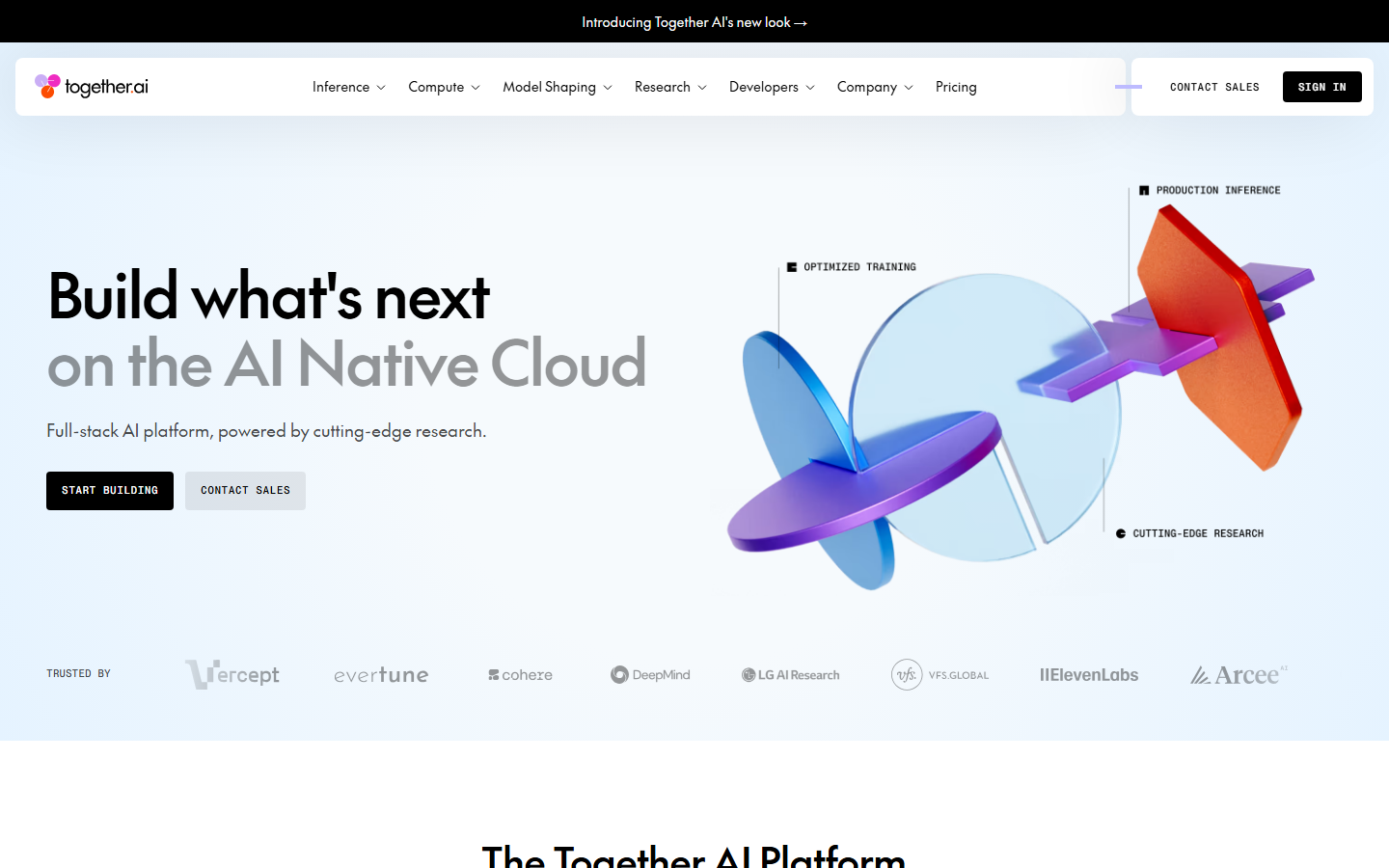
Together AI specializes in LLM inference with per-token pricing, which is fundamentally different from Replicate's per-second model. For text generation tasks, per-token billing is almost always cheaper because you pay for output, not compute time. Their image generation endpoints use per-image pricing as well.
The platform runs optimized versions of popular open models (Llama, Mistral, FLUX) on custom hardware, achieving competitive throughput. Together AI also offers fine-tuning services and dedicated endpoints for production API workloads that need consistent latency.
Pricing: Per-token for LLMs (from $0.10/M tokens). Per-image for generation. Free tier included.
Best for: Applications that primarily use LLMs and need per-token billing rather than GPU-second billing.
7. Baseten
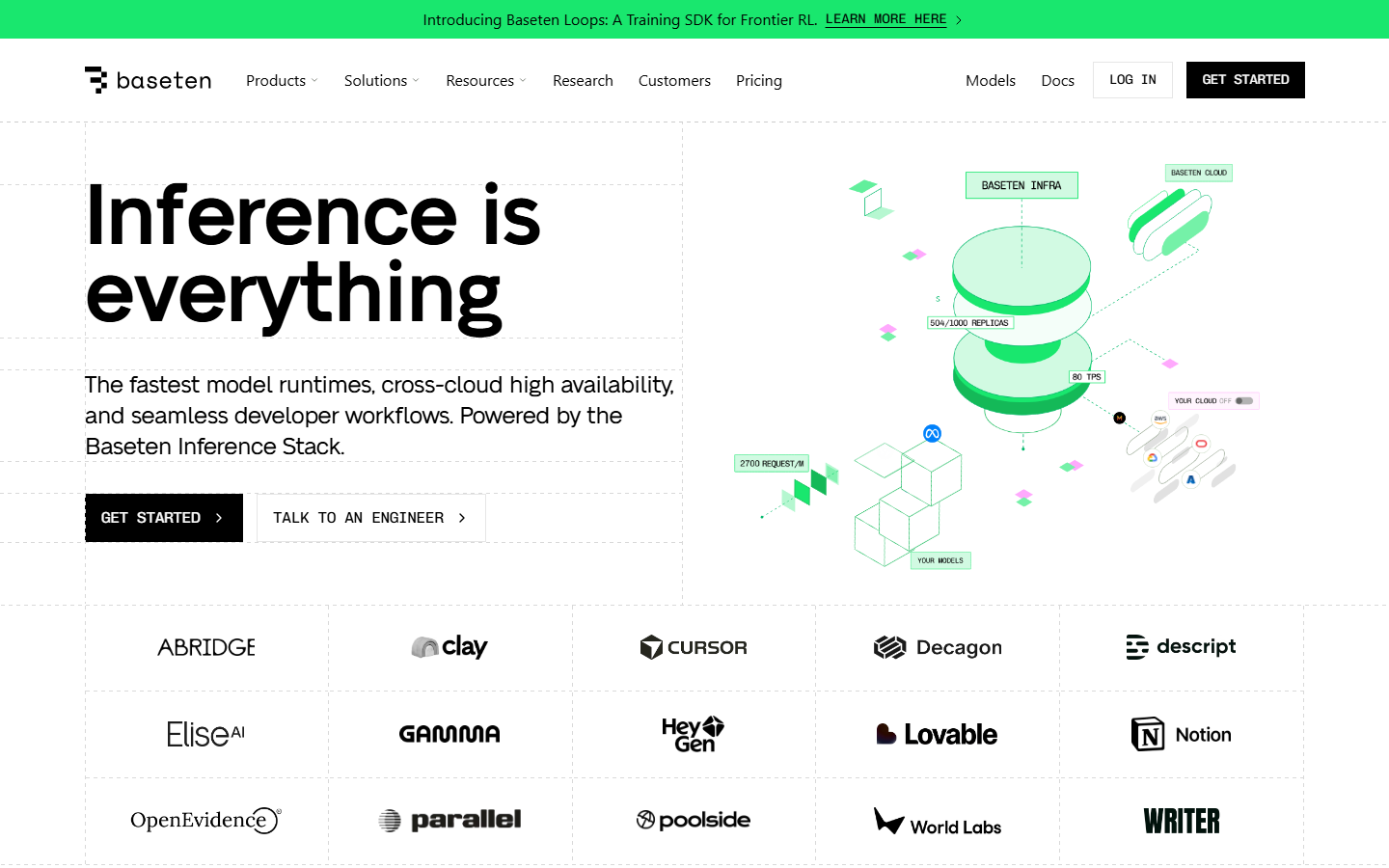
Baseten targets production ML teams who need autoscaling model serving with enterprise-grade SLAs. The platform uses a Truss packaging format that makes it straightforward to deploy custom models, and their inference engine optimizes GPU utilization automatically. Pricing is per-second of compute, similar to Replicate, but Baseten offers reserved capacity at lower rates for predictable workloads.
Their recent additions include multi-region deployments and async inference queues, which are useful for global applications. Baseten also provides built-in monitoring and A/B testing for model versions, reducing the operational overhead of running inference in production.
Pricing: Per-second compute. Reserved capacity discounts. Enterprise plans available.
Best for: Teams deploying custom models to production who need autoscaling and monitoring out of the box.
8. DeepInfra
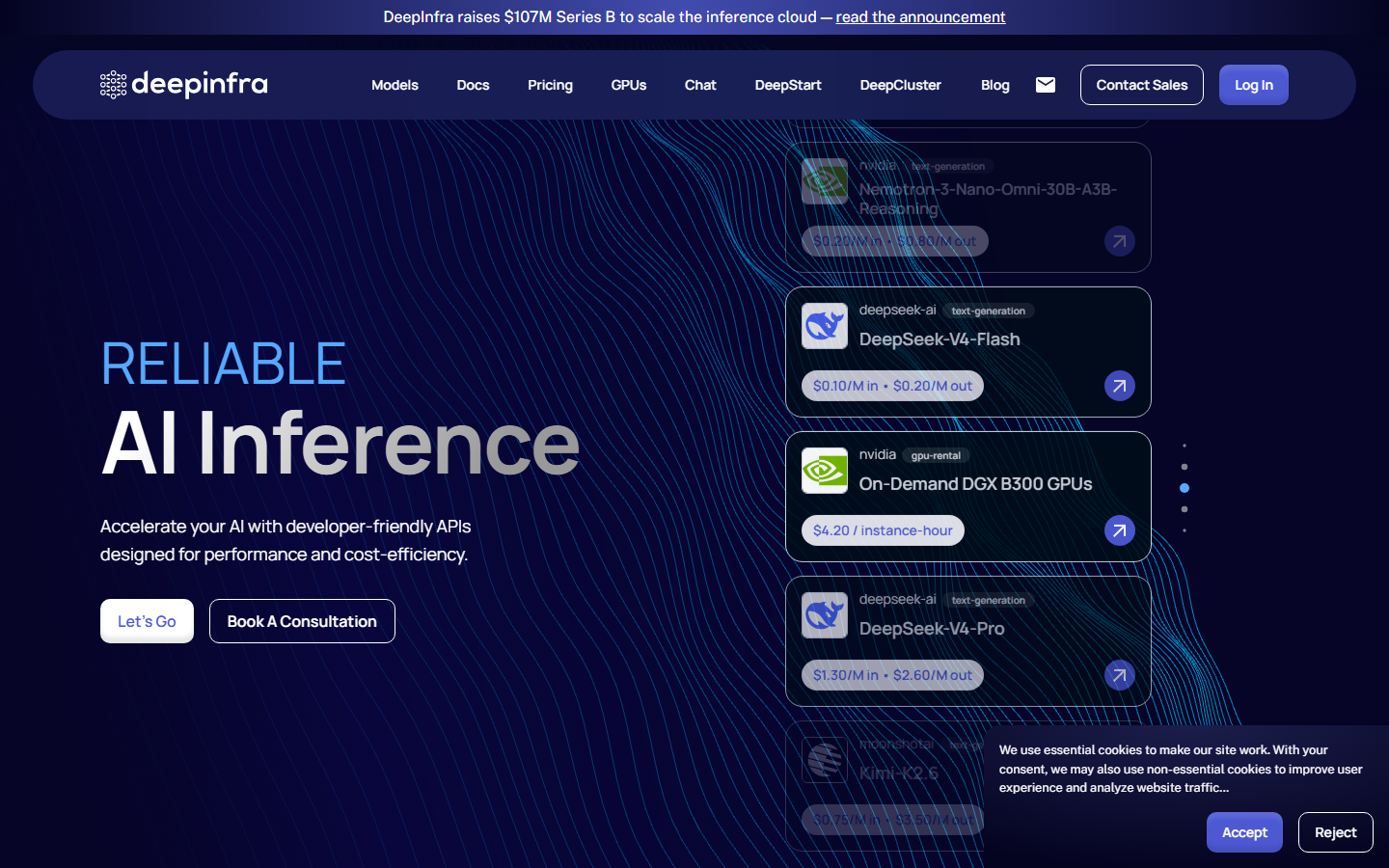
DeepInfra runs popular open-source models on optimized infrastructure with transparent per-token and per-image pricing. Their rates for Llama 3 and FLUX are among the lowest available, and they publish a real-time pricing page that makes cost comparison easy. The API is OpenAI-compatible, so switching from other providers requires minimal code changes.
DeepInfra also supports embedding models and speech-to-text at competitive rates. The platform lacks the custom model deployment flexibility of Modal or Baseten, but for teams using standard open models, the simplicity and pricing are hard to beat.
Pricing: Per-token for LLMs (from $0.06/M tokens). Per-image for generation. No minimum spend.
Best for: Teams using popular open-source models who want the lowest per-unit cost with minimal setup.
Comparison Table
| Platform | Billing Model | Image Gen Cost | GPU Access | Custom Models | Free Tier |
|---|---|---|---|---|---|
| Wireflow | Per API call | From $0.02/image | Managed | Via workflows | Yes |
| Replicate | Per GPU-second | ~$0.01-0.05/image | Managed | Community upload | Yes |
| Fal.ai | Per request | From $0.025/image | Managed | Limited | Yes |
| Modal | Per GPU-second | Varies | Serverless | Full support | $30/mo credit |
| RunPod | Per hour/second | Varies | Direct rental | Full support | No |
| Together AI | Per token/image | From $0.02/image | Managed | Fine-tuning only | Yes |
| Baseten | Per GPU-second | Varies | Managed | Full support | Yes |
| DeepInfra | Per token/image | From $0.01/image | Managed | No | Yes |
How to Choose the Right Platform
Picking the right pricing model depends on your workload pattern. Per-second billing (Replicate, Modal, RunPod) works well for unpredictable, bursty usage where jobs vary in duration. Per-call or per-token billing (Wireflow, Fal.ai, Together AI, DeepInfra) is better for production pipelines where you need cost predictability.
If you chain multiple models together, per-second billing on each step compounds quickly. A single workflow on Wireflow that runs text-to-image, upscaling, and background removal costs one flat fee rather than three separate GPU-second charges. For single-model inference at high volume, Fal.ai and DeepInfra offer the most aggressive per-unit pricing.
Try it yourself: Build this workflow in Wireflow - the nodes are pre-configured with a GPT Image 2.5 Flare image generation and upscaling pipeline that demonstrates flat-rate pricing in action.
FAQ
How does Replicate pricing work in 2026?
Replicate charges per second of GPU compute time. CPU predictions cost $0.000115/sec, T4 GPUs cost $0.000225/sec, and A100 (80GB) GPUs cost $0.001400/sec. You only pay while your prediction is running, with no minimum commitment.
Is Replicate still independent after the Cloudflare acquisition?
Cloudflare acquired Replicate in late 2025. The platform continues to operate under the Replicate brand with the same API and pricing structure. No Cloudflare-specific pricing tiers have been introduced as of mid-2026.
Which is cheaper, Replicate or Fal.ai?
For image generation workloads, Fal.ai is typically 1.4x to 2.9x cheaper than Replicate. Fal.ai uses per-request pricing rather than per-second billing, which removes the variability tied to inference time.
Can I run custom models on these platforms?
Modal and Baseten offer full custom model deployment. Replicate allows community model uploads via Cog packaging. RunPod supports any Docker container. Wireflow, Fal.ai, Together AI, and DeepInfra focus on curated model catalogs with managed infrastructure.
What is per-call pricing vs per-second pricing?
Per-call pricing charges a flat fee for each API request regardless of how long inference takes. Per-second pricing charges based on actual GPU compute time. Per-call is more predictable, while per-second can be cheaper for very fast inference jobs.
Which platform is best for multi-model pipelines?
Wireflow is built specifically for multi-model workflows. You connect models visually in a canvas and call the entire pipeline through one API endpoint. On per-second platforms, chaining models means paying GPU time for each step independently.
Do any of these platforms offer free tiers?
Yes. Wireflow, Replicate, Fal.ai, Together AI, Baseten, and DeepInfra all offer free tiers with limited usage. Modal provides a $30/month credit. RunPod does not have a free tier but offers community cloud pricing for budget-conscious users.
How do I estimate my monthly costs?
Calculate based on your expected volume: number of predictions per month multiplied by average cost per prediction. For per-second platforms, estimate average inference duration per model. For per-call platforms, multiply request count by the flat rate. Most platforms provide usage dashboards and spending alerts.

Co-Founder & Operations at Wireflow
Runs client operations and content strategy at Wireflow. Works directly with creative teams and agencies to build production AI workflows.
- Content Strategy
- Client Operations
Get unlimited ad creatives today.
One call to see if we are a fit and scope the first ad. If it fits, your first batch lands inside week one.