Best AI Generation API for SaaS Apps in 2026

In this article▾
Building AI features into a SaaS product no longer means training your own models or managing GPU clusters. Wireflow and a growing number of API platforms now let developers add image generation, text synthesis, video creation, and upscaling to their apps through simple REST calls. This guide ranks the seven strongest AI generation APIs available to SaaS teams in 2026, scored on latency, pricing transparency, model variety, and developer experience.
Quick summary:
- Wireflow - Best overall for multi-model orchestration and SaaS embedding
- Replicate - Best for open-source model variety
- FAL AI - Best for low-latency image generation
- OpenAI API - Best for text and multimodal generation
- Stability AI - Best for image customization and fine-tuning
- Fireworks AI - Best for high-throughput inference
- Together AI - Best for cost-effective open-source hosting
For a hands-on look at how these APIs work in practice, check out the AI generation API for SaaS apps feature page.
1. Wireflow
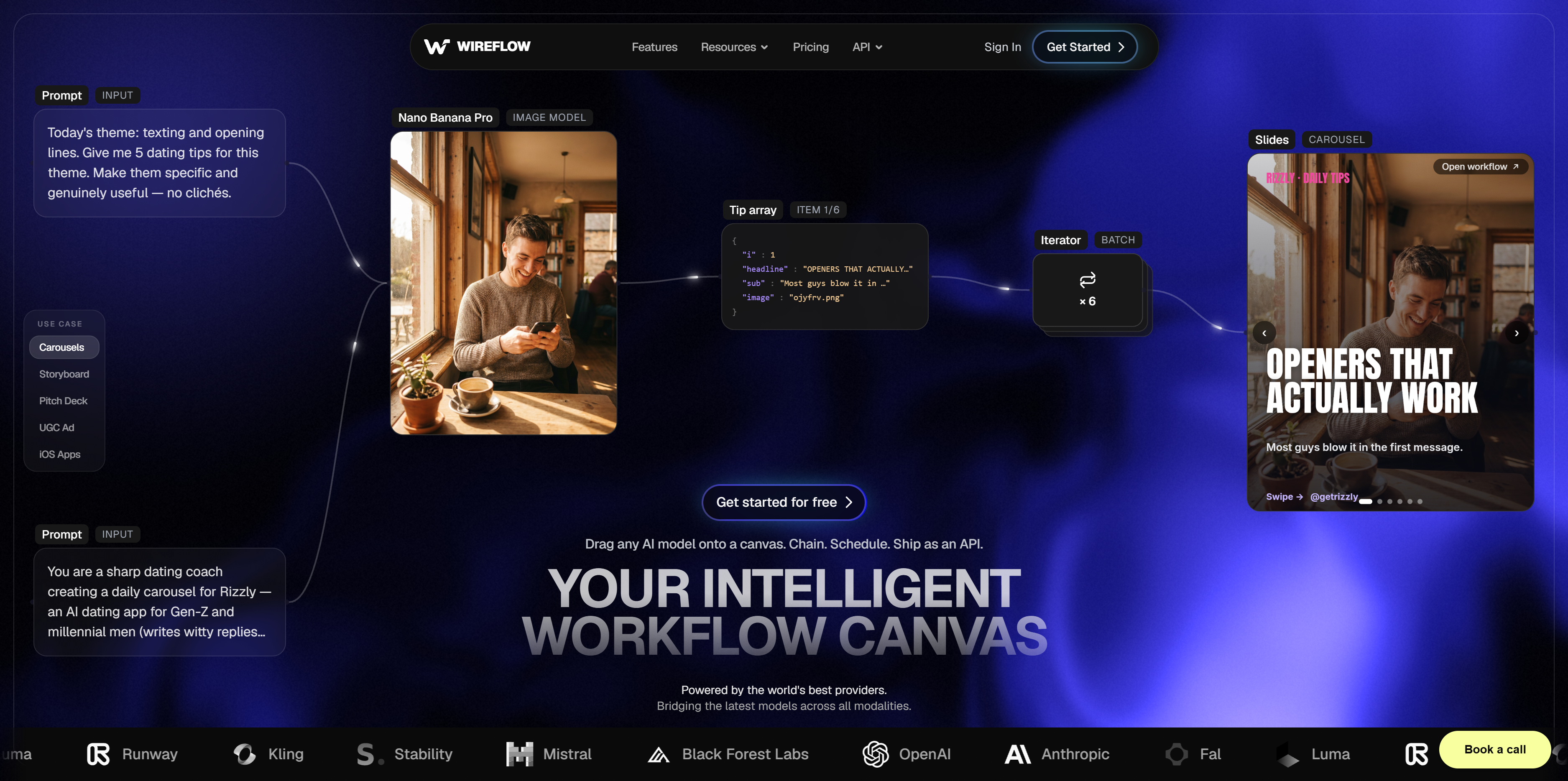
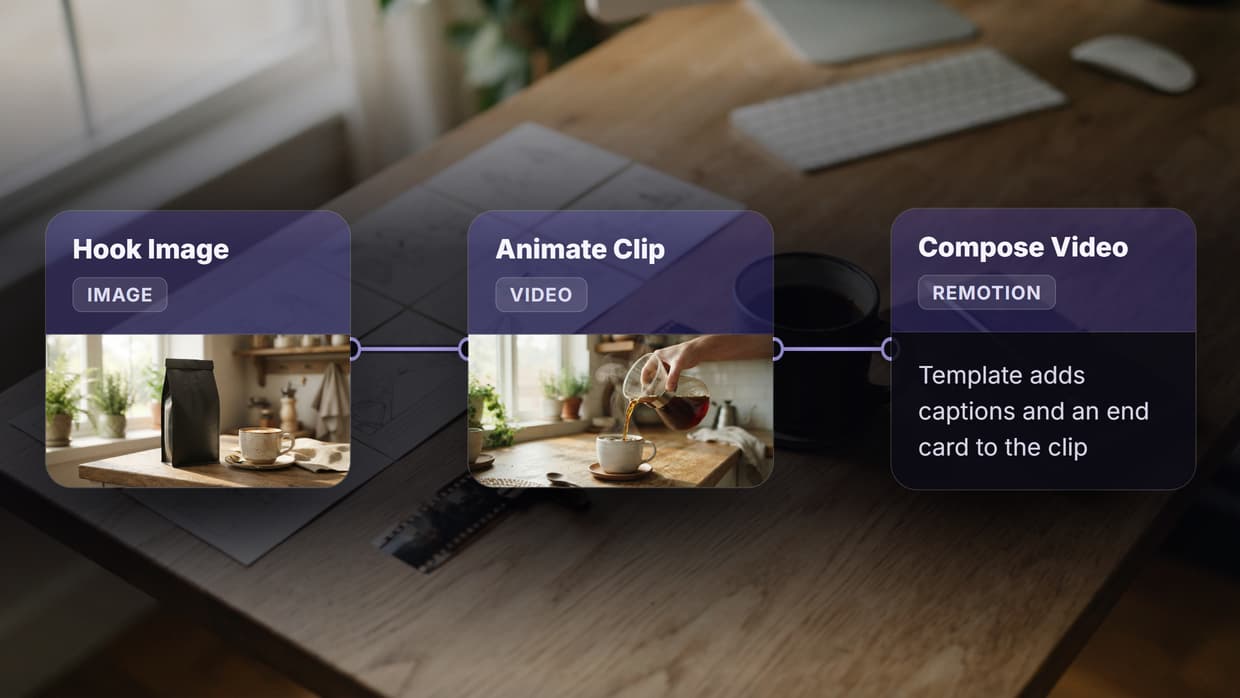
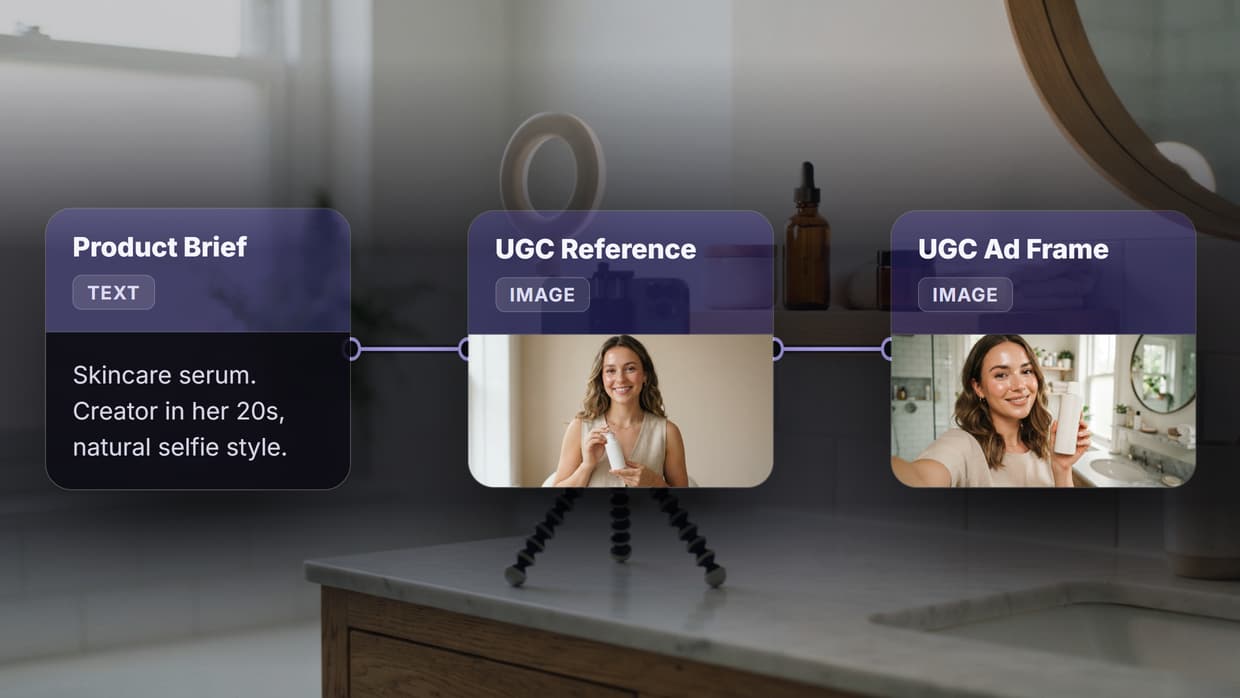
Wireflow stands apart as a full AI workflow API platform rather than a single-model endpoint. Its visual canvas lets you chain multiple AI models into pipelines (text to image to upscaler, for example), then expose the entire pipeline as a single API call. For SaaS teams, this means you can build complex generation flows without stitching together five different vendor SDKs.
Pricing follows a per-execution model with no markup on underlying model costs. The platform supports Recraft V4, Flux 2 Pro, Kling Video, and dozens of other models through a unified interface. Batch processing, webhook callbacks, and white-label embedding make it especially suited to B2B SaaS products that need AI content generation as a core feature.
Build this in Wireflow
Make the same kind of asset on a canvas you control, with a free account and no credit card.
2. Replicate
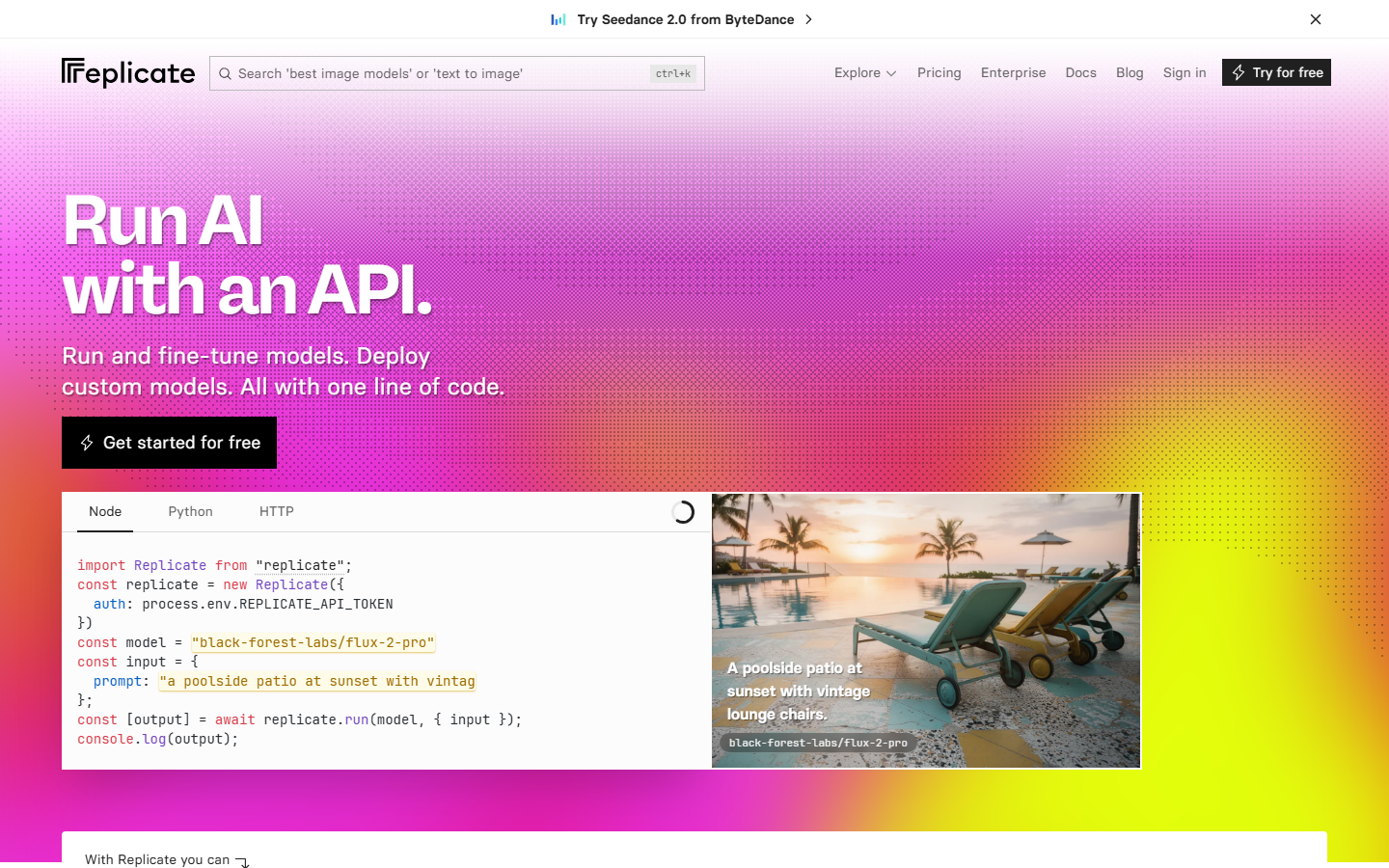
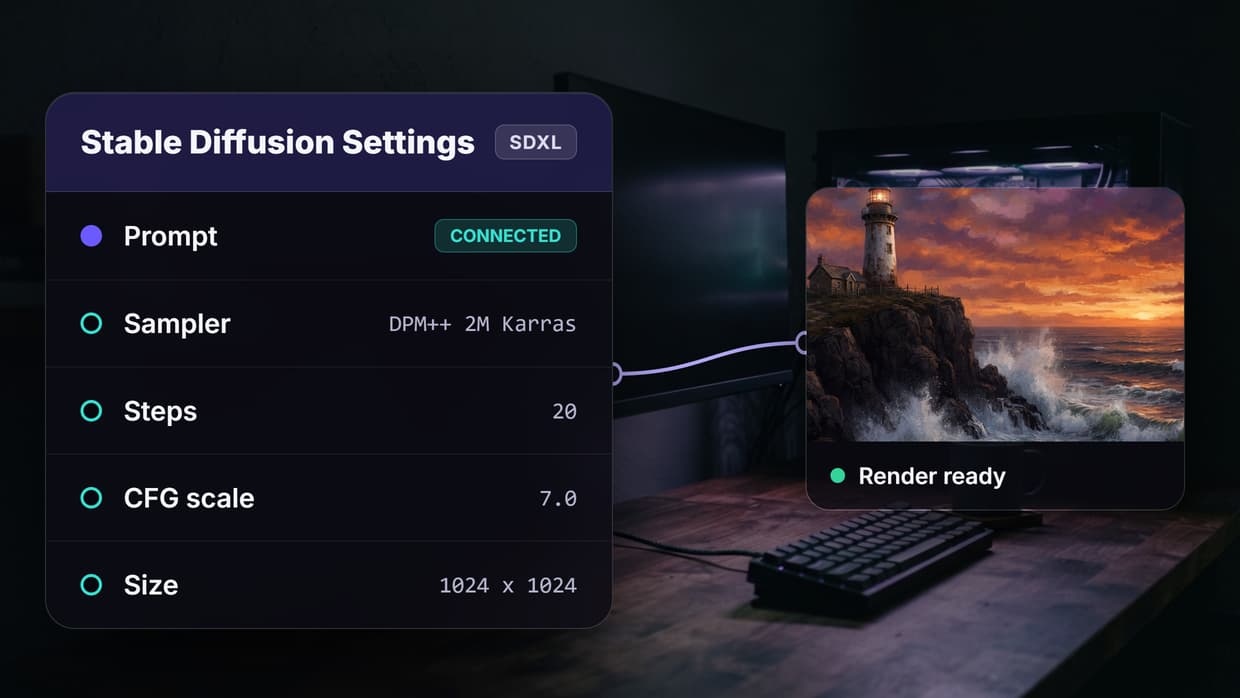
Replicate built its reputation on making open-source models accessible through a consistent API. You pick a model from their registry, send a prediction request, and get results back without managing any infrastructure. The platform hosts thousands of community models alongside flagship options like SDXL and LLaMA variants.
Replicate charges per second of compute time, which keeps costs predictable for variable workloads. Cold start times can be a concern for latency-sensitive applications, though their "always on" tier addresses this for production use cases. The API design is clean, with a batch generation pattern that works well for background processing jobs in SaaS products.
3. FAL AI
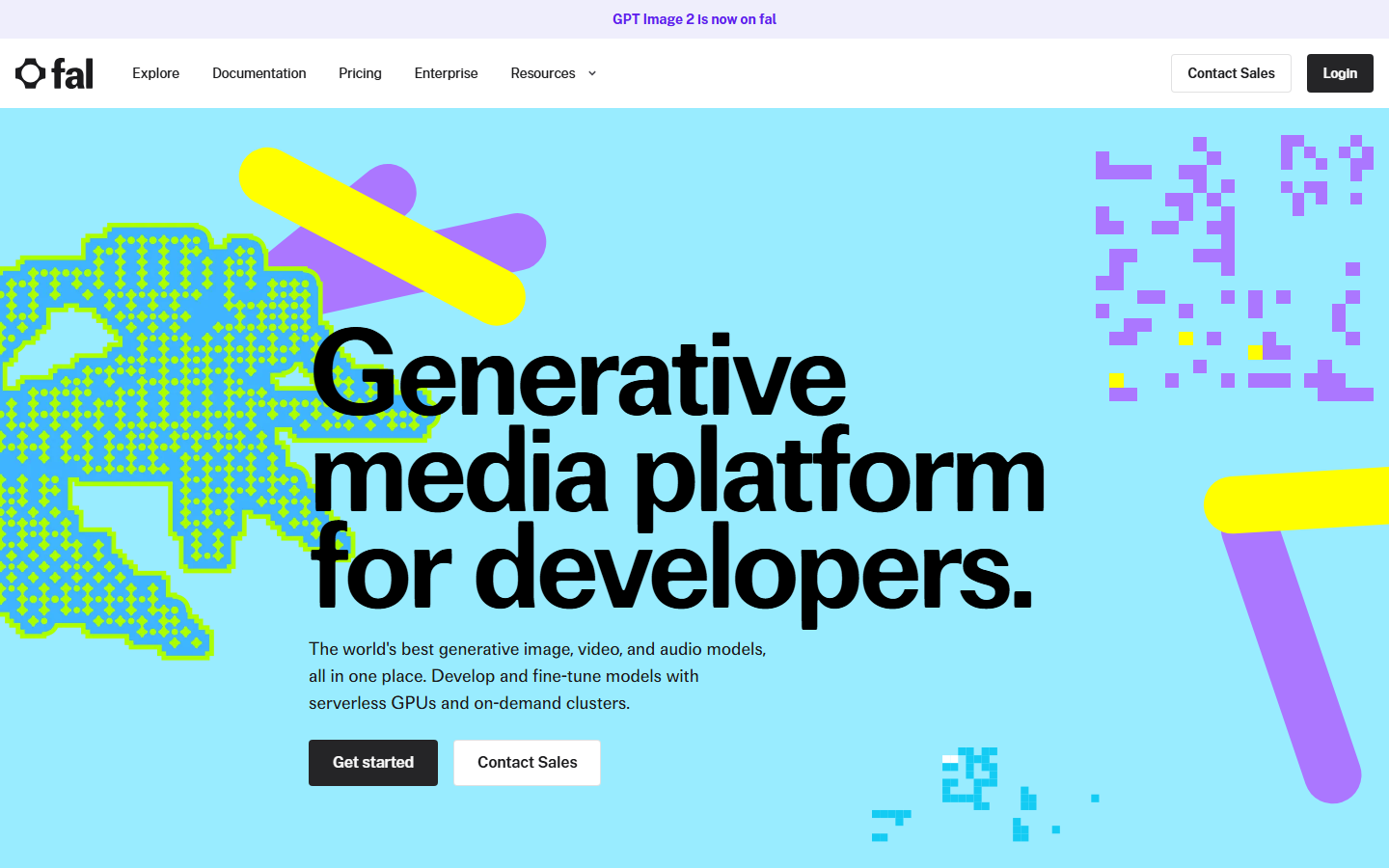
FAL AI focuses on speed. Their optimized inference stack delivers image generation results in under two seconds for most models, making it a strong choice for SaaS features that need real-time or near-real-time generation. The platform supports both synchronous and queue-based request patterns.
FAL provides native SDKs for Python, JavaScript, and Swift, which simplifies integration for mobile and web SaaS products. Their pricing is per-request with clear per-model rates. The platform excels at image and video generation tasks, and their support for model chaining through sequential API calls lets you build multi-step pipelines when needed.
4. OpenAI API
OpenAI remains the default choice for SaaS teams that need text generation alongside image creation. GPT-4o handles text, code, and reasoning tasks, while the image generation endpoints (gpt-image-1) produce high-quality visuals from text prompts. The unified billing and consistent API design across modalities reduce integration overhead.
Rate limits and pricing can scale quickly for high-volume SaaS applications. OpenAI's structured output mode and function calling features make it particularly useful for SaaS products that need AI pipeline automation with deterministic JSON responses. Enterprise agreements include dedicated capacity and custom fine-tuning options.
5. Stability AI
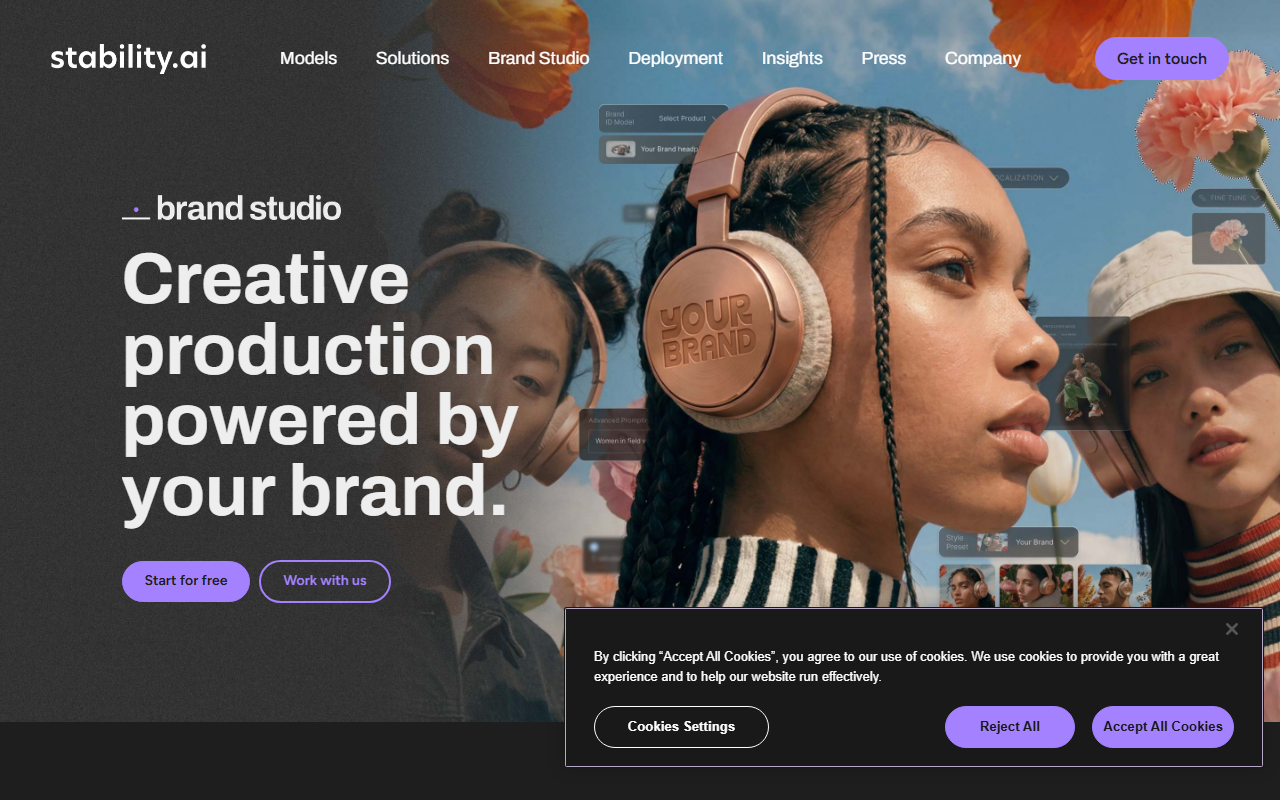
Stability AI offers the most granular control over image generation of any API on this list. Their Stable Diffusion 3.5 and SDXL models support img2img, inpainting, outpainting, and ControlNet conditioning, which makes them ideal for SaaS products that need fine-grained editing workflows rather than simple prompt-to-image generation.
The API supports custom model fine-tuning through their platform, letting SaaS teams train domain-specific models (product photography, architectural renders, medical imaging) and serve them through the same endpoint. Credit-based pricing applies, with volume discounts available. For teams building programmatic image generation features, Stability provides the deepest customization layer.
6. Fireworks AI
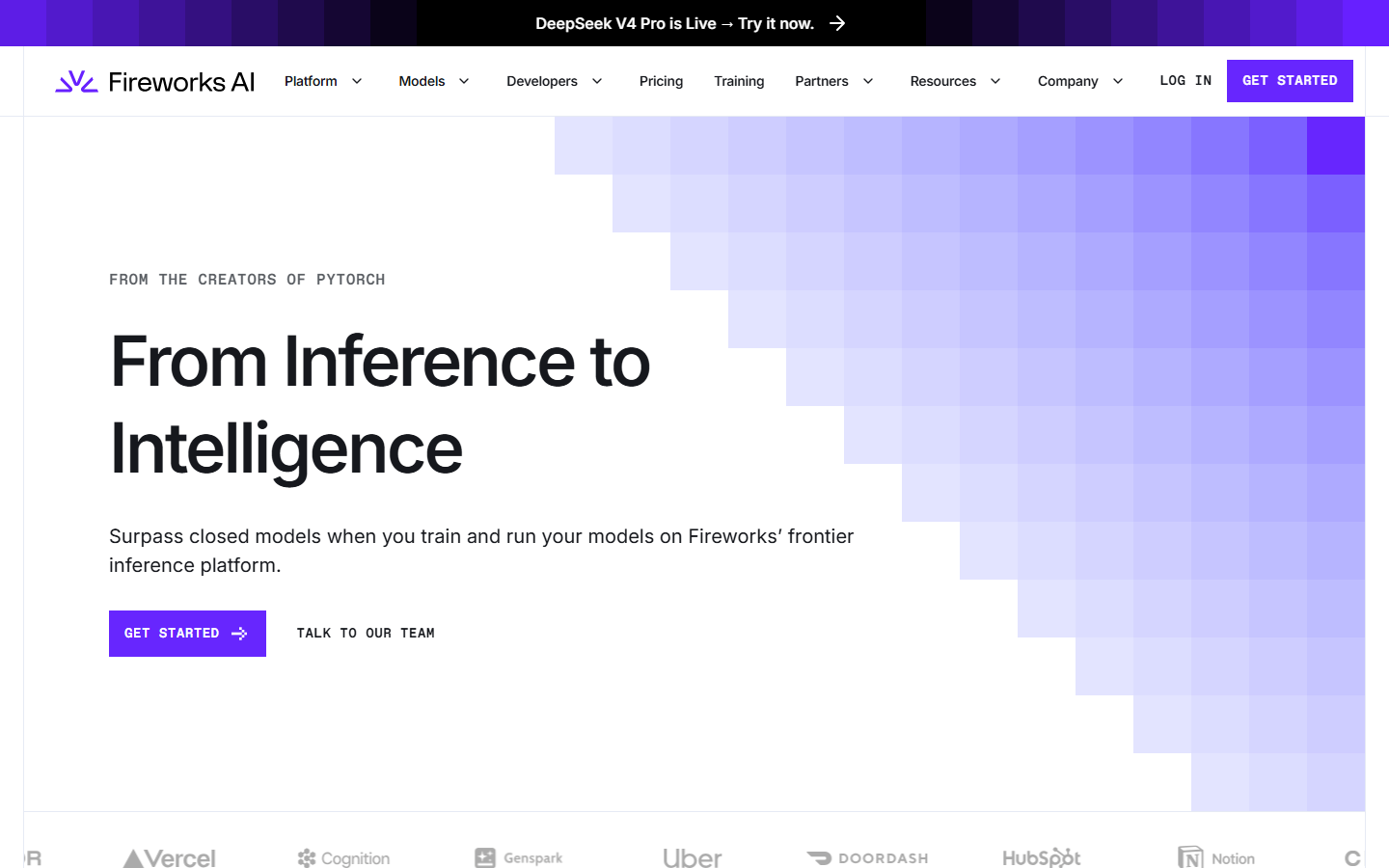
Fireworks AI optimizes for throughput and cost at scale. Their inference engine is built around FireAttention, a custom kernel that delivers consistently low latency even under heavy load. For SaaS products processing thousands of generation requests per hour, Fireworks offers some of the best price-per-token economics available.
The platform supports both text and image models, with an OpenAI-compatible API that makes migration straightforward. Fireworks also offers on-demand fine-tuning and model hosting, which appeals to SaaS teams that want to run proprietary models without maintaining their own GPU fleet. Their API-first approach means minimal abstraction between your code and the model.
7. Together AI
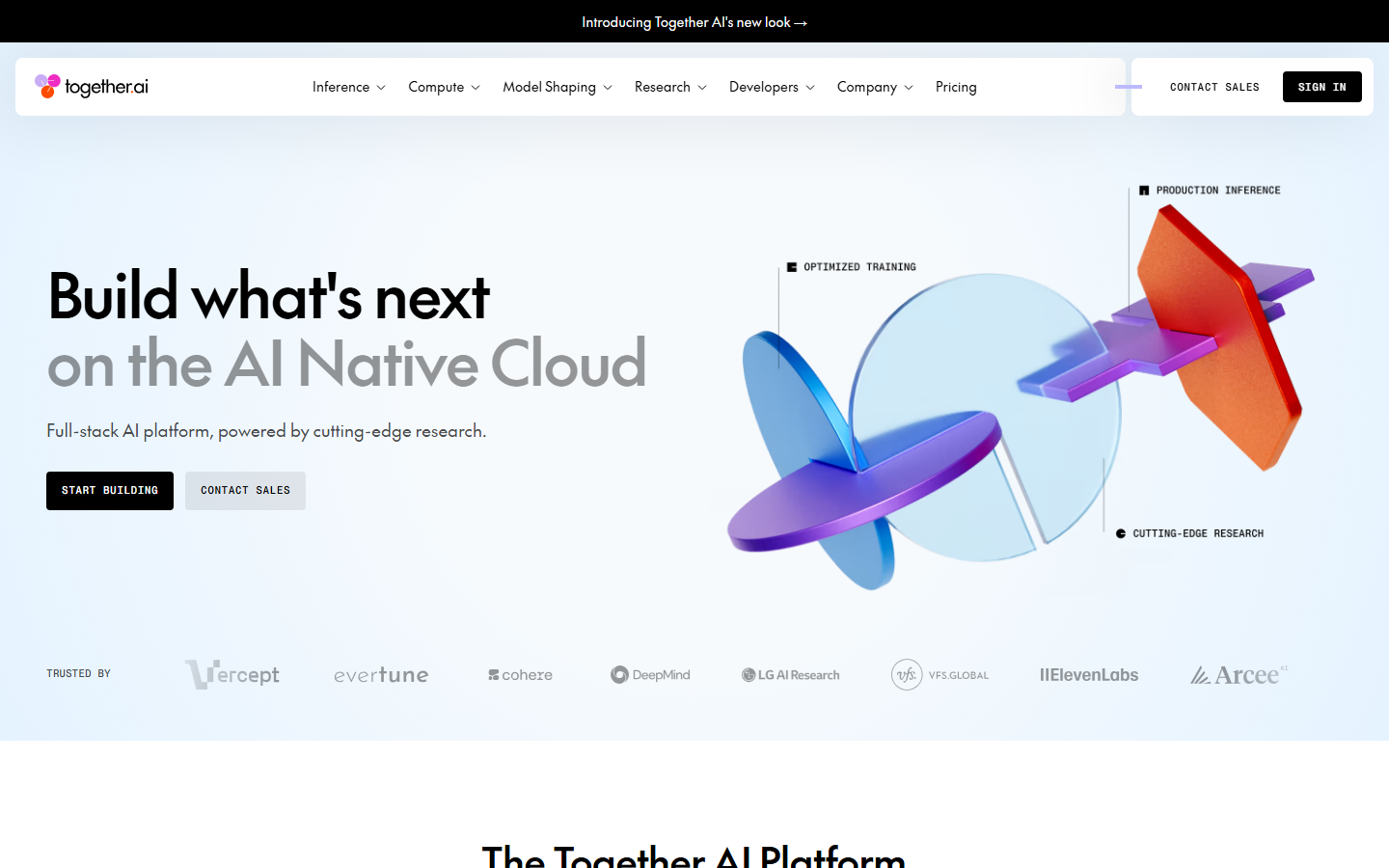
Together AI positions itself as the cost-effective path to open-source model inference. Their serverless endpoints host popular models like Llama 3, Mixtral, and SDXL at prices significantly below proprietary alternatives. For SaaS startups watching their margins, Together often delivers the lowest per-request cost.
Together also offers dedicated GPU clusters for teams that need guaranteed capacity and custom model deployments. Their API follows OpenAI conventions, which reduces switching costs. The platform works well for SaaS products that need headless AI workflow capabilities where generation runs in the background without user-facing latency requirements.
Comparison Table
| Platform | Best For | Pricing Model | Latency | Multi-Model | Fine-Tuning |
|---|---|---|---|---|---|
| Wireflow | Multi-model orchestration | Per-execution | Medium | Yes (30+) | Via models |
| Replicate | Open-source variety | Per-second | Variable | Yes (1000+) | Community |
| FAL AI | Low-latency image gen | Per-request | Fast | Yes (50+) | No |
| OpenAI | Text + multimodal | Per-token/request | Medium | Limited | Yes |
| Stability AI | Image customization | Credits | Medium | Limited | Yes |
| Fireworks AI | High throughput | Per-token | Fast | Yes (100+) | Yes |
| Together AI | Cost-effective inference | Per-token | Medium | Yes (100+) | Yes |
How to Choose the Right API for Your SaaS
Selecting the right API depends on your product's specific needs. If your SaaS requires chaining multiple AI models together (text to image to upscale, for instance), a visual node editor approach saves months of custom integration work. If you need raw speed for a single model type, FAL AI or Fireworks AI will serve you better.
Consider your volume trajectory. Platforms with per-token pricing (Fireworks, Together) become more economical at scale, while per-request models (FAL, Replicate) offer more predictable costs for variable workloads. Also evaluate whether you need no-code canvas tools for non-technical team members to modify generation workflows, or if pure API access is sufficient.
Try it yourself: Build this workflow in Wireflow - the nodes are pre-configured with the exact setup discussed above.
FAQ
What is an AI generation API?
An AI generation API is a cloud-hosted service that lets developers create content (images, text, video, audio) by sending HTTP requests to pre-trained AI models. Instead of running models locally, your SaaS product calls the API and receives generated output in the response.
Which AI generation API has the lowest latency?
FAL AI and Fireworks AI consistently deliver the fastest response times. FAL AI achieves sub-two-second image generation for most models, while Fireworks AI optimizes for low latency at high concurrency through their custom inference engine.
Can I use multiple AI models through a single API?
Yes. Platforms like Wireflow, Replicate, and Together AI host dozens or hundreds of models behind a unified API. Wireflow goes further by letting you chain multiple models into a single pipeline that executes as one API call.
How much does an AI generation API cost for a SaaS product?
Costs vary widely. Text generation typically ranges from $0.50 to $15 per million tokens. Image generation runs from $0.01 to $0.08 per image depending on resolution and model. Volume discounts and committed-use agreements can reduce costs by 30-50% at scale.
Is it possible to fine-tune models through these APIs?
OpenAI, Stability AI, Fireworks AI, and Together AI all offer fine-tuning capabilities. This lets SaaS teams train models on domain-specific data to improve output quality for their particular use case, such as generating product photography or brand-consistent marketing assets.
What should I look for in an AI generation API for production SaaS?
Prioritize uptime SLAs (99.9%+), rate limit headroom, webhook support for async generation, clear error codes, and transparent pricing. Also check whether the provider offers SOC 2 compliance and data processing agreements if your SaaS handles sensitive customer data.
How do I handle rate limits when integrating an AI generation API?
Most APIs enforce per-minute or per-second rate limits. Implement exponential backoff, use queue-based architectures for non-urgent requests, and consider batch generation endpoints when processing large volumes. Some providers offer dedicated capacity tiers that remove rate limits entirely.
Can I white-label AI generation in my SaaS product?
Several platforms support white-label integration. Wireflow offers embeddable generation that runs under your brand. Stability AI and Fireworks AI provide API access that can be wrapped in your own UI without attribution requirements, depending on your plan tier.

Co-Founder & Operations at Wireflow
Runs client operations and content strategy at Wireflow. Works directly with creative teams and agencies to build production AI workflows.
- Content Strategy
- Client Operations
Get unlimited ad creatives today.
One call to see if we are a fit and scope the first ad. If it fits, your first batch lands inside week one.