Best Usage-Based AI API Pricing Tools in 2026

In this article▾
AI API costs can spiral fast when you scale from prototype to production. Wireflow provides usage-based pricing that lets you chain multiple AI models in a single workflow and pay only for what you run, but choosing the right pricing model across providers requires the right comparison tools. This guide covers the best usage-based AI API pricing tools available in 2026, from free calculators to unified gateways that consolidate billing across providers.
Quick Summary
- Wireflow:Best overall for usage-based visual AI workflows with per-run pricing
- Price Per Token:Best free pricing comparison across 300+ AI models
- CostGoat:Best for value scoring across LLM APIs
- Artificial Analysis:Best for benchmarking models by cost and performance
- YourGPT:Best calculator for estimating monthly API spend
- AnyAPI.ai:Best unified gateway with single-balance billing
- Fireworks AI:Best low-cost inference for high-volume workloads
For a hands-on look at how usage-based pricing works in practice, check out the usage-based AI API pricing tools feature page.
1. Wireflow
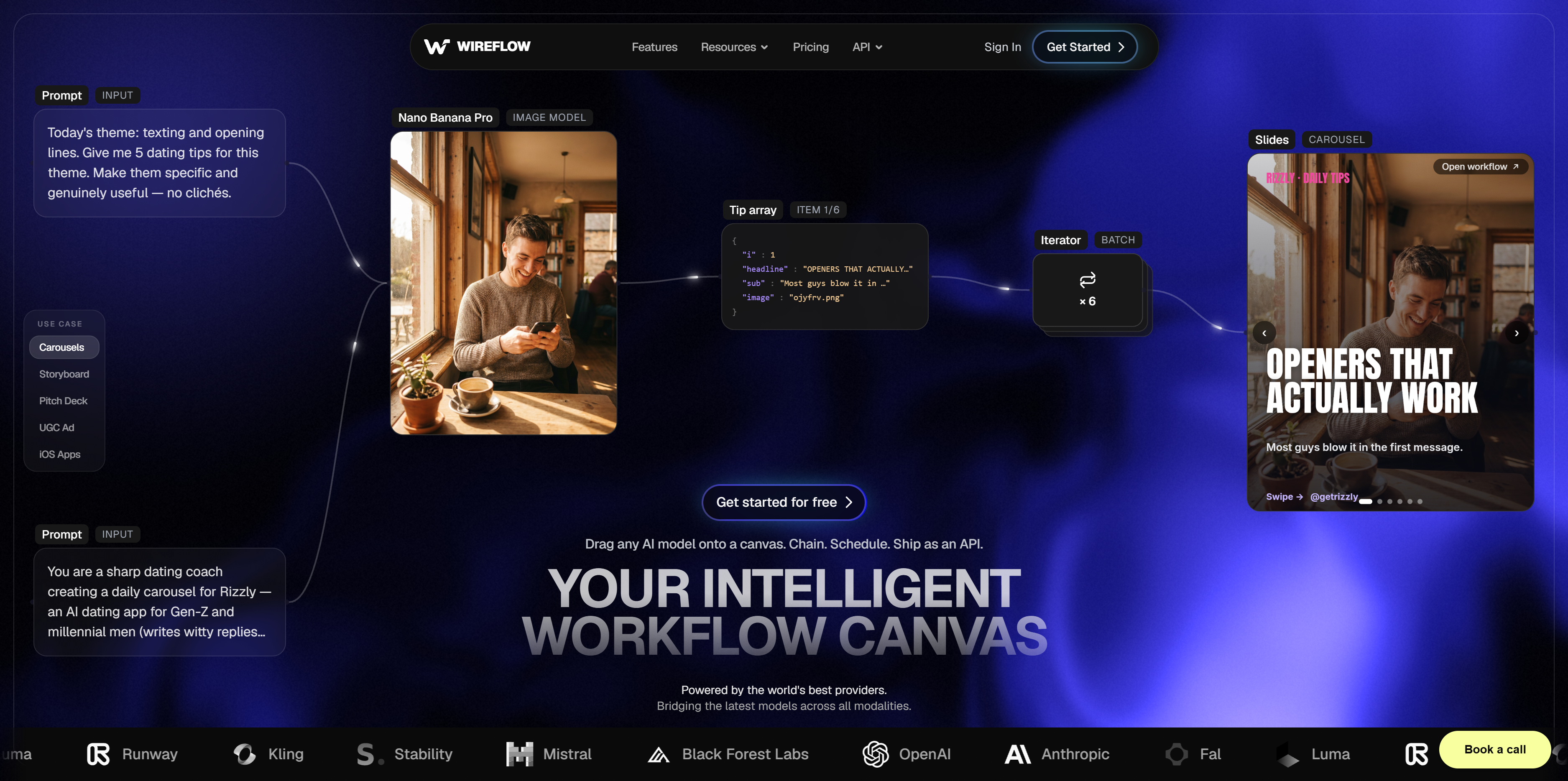
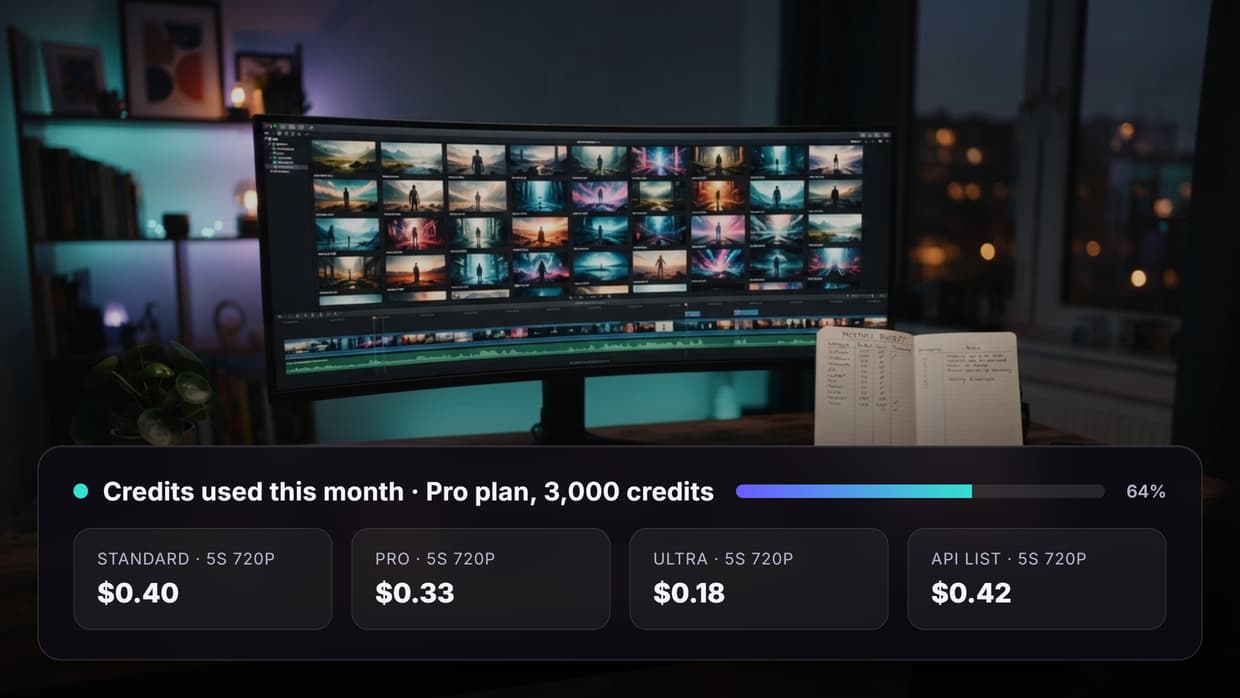
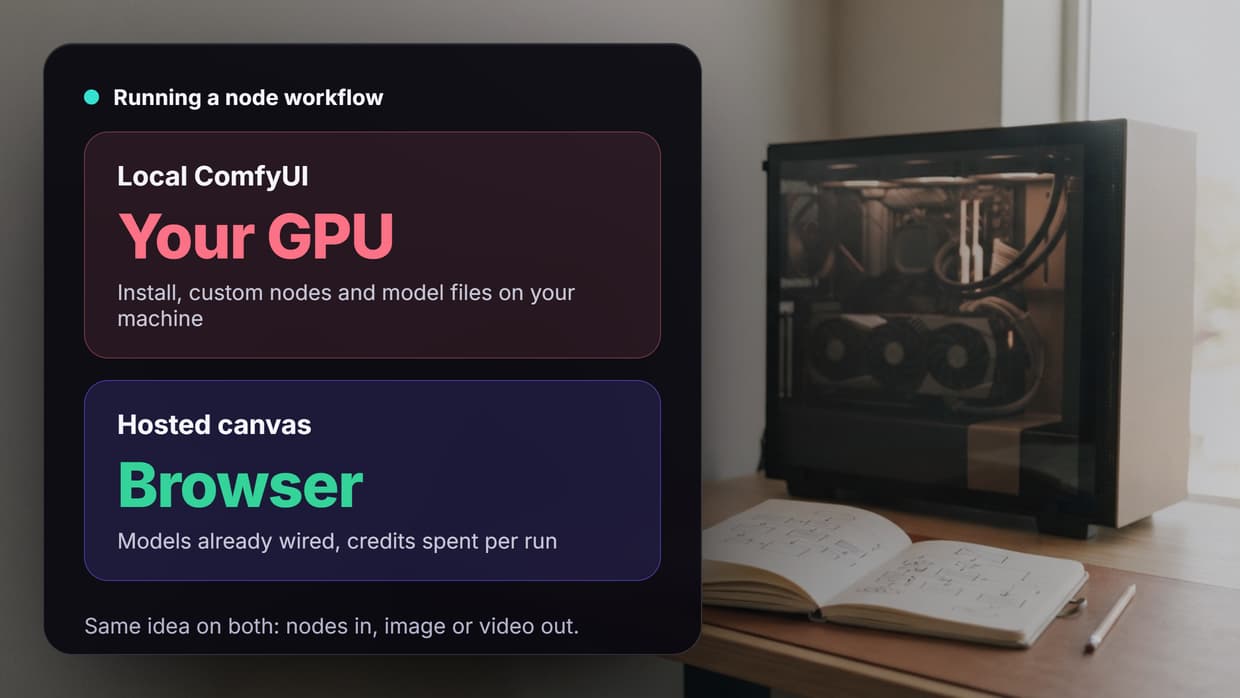
Wireflow takes a different approach to AI API pricing by bundling model access into a visual node editor where you build workflows and pay per execution. Instead of managing separate API keys for image generation, LLMs, video models, and upscalers, you connect nodes on a canvas and each run bills only the models that fire. This makes cost tracking straightforward because every workflow execution maps to a single line item. Developers can run any Wireflow workflow through an API from their own code.
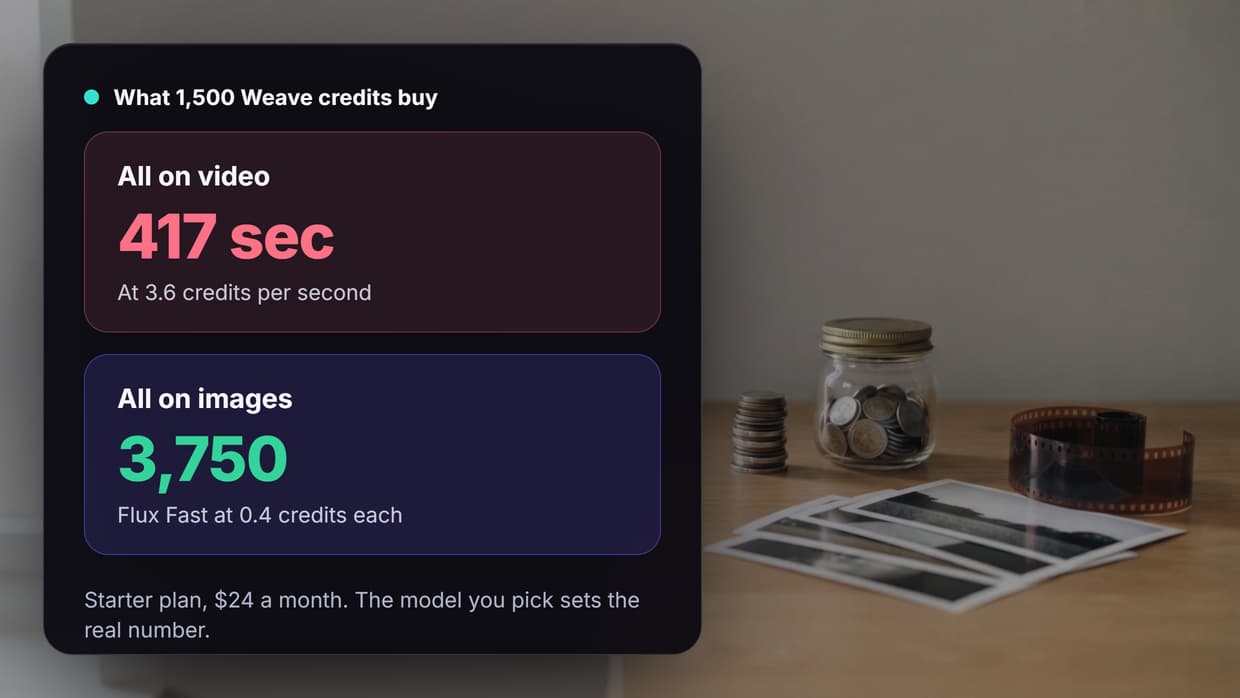
The platform includes access to models like Recraft V4, Kling, Veo 3, and dozens of others through one subscription. Usage-based tiers start with a free plan and scale through Growth and Enterprise levels based on monthly generation credits. For teams building AI pipelines, the consolidated billing removes the overhead of tracking spend across five or six different provider dashboards.
Build this in Wireflow
Make the same kind of asset on a canvas you control, with a free account and no credit card.
2. Price Per Token
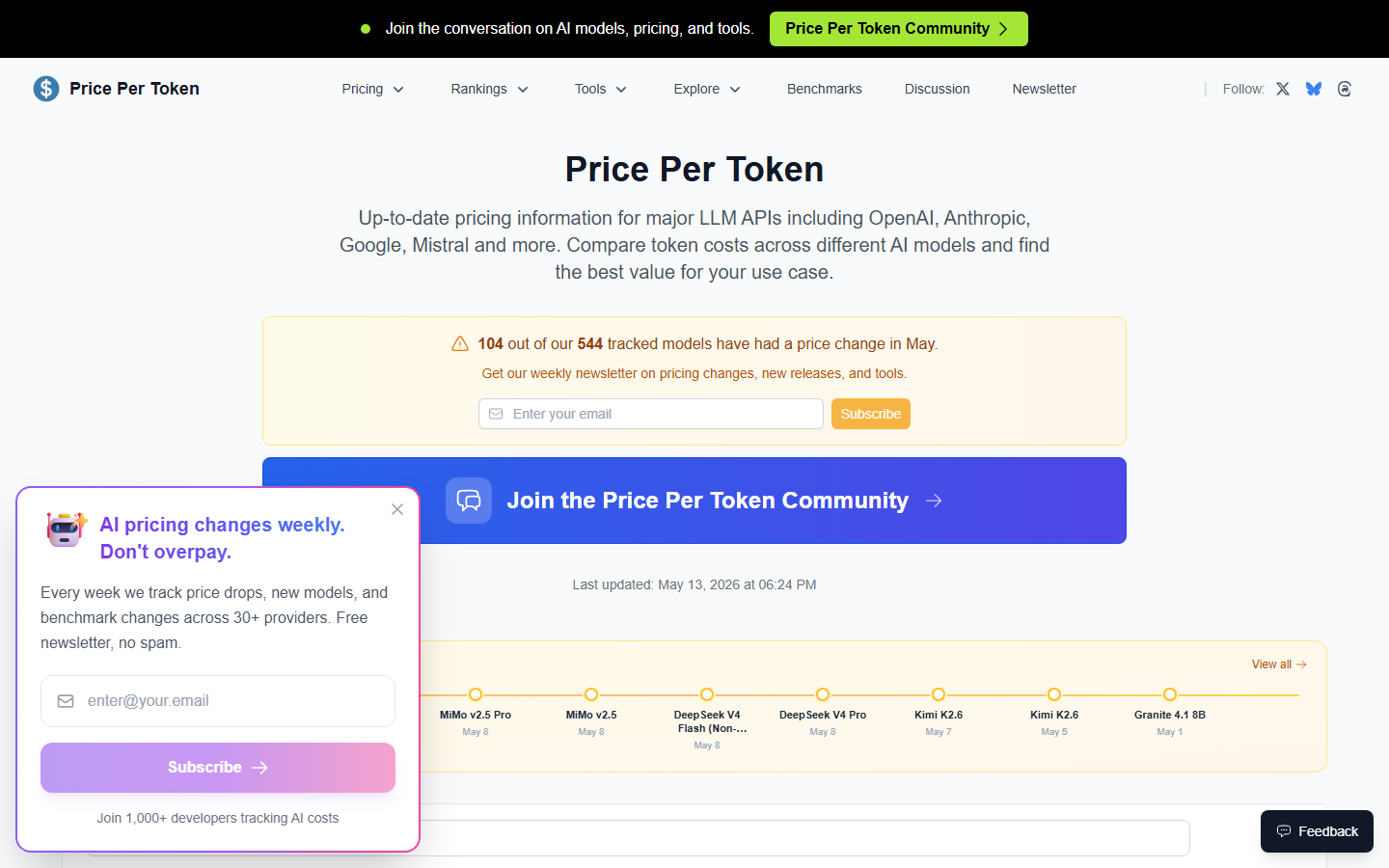
Price Per Token is a free comparison tool that tracks pricing for over 300 AI models updated daily. It pulls official rates from OpenAI, Anthropic, Google, Mistral, Cohere, and smaller providers, then displays input and output costs per million tokens side by side. The site also maintains a "cheapest LLM" ranking that filters by quality tier so you can find the best value API without sacrificing output quality.
What sets Price Per Token apart is its transparency. Every price links back to the provider's official documentation, and historical pricing changes are logged so you can track whether a model got cheaper or more expensive over time. For developers running batch generation workloads, knowing exact per-token costs before committing to a provider can save thousands per month.
3. CostGoat
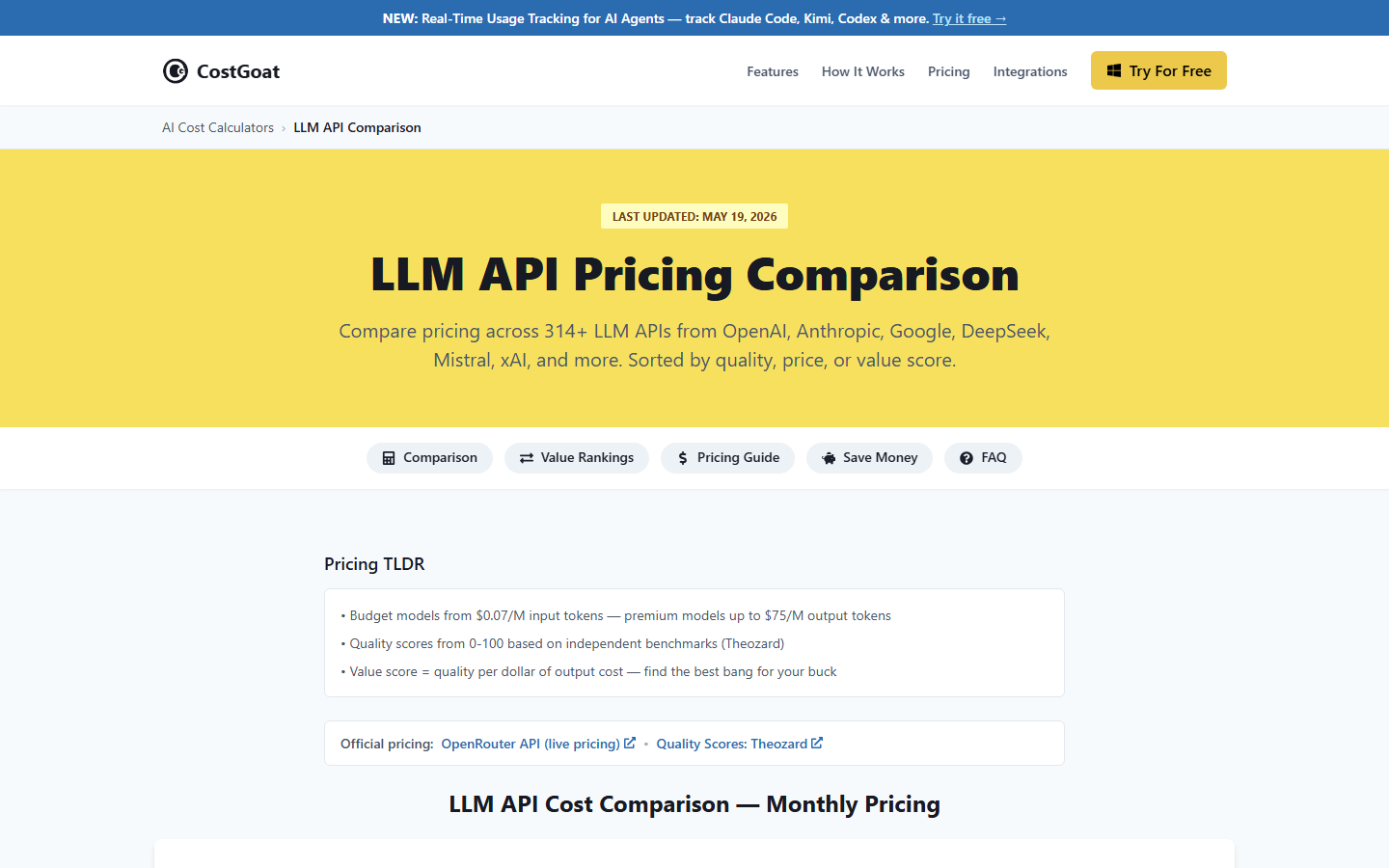
CostGoat compares pricing across 314+ LLM APIs and adds a value score that combines cost with output quality. You can sort by raw price, quality benchmarks, or the combined value metric, which helps when choosing between a cheap model that produces mediocre output and a more expensive one that nails your use case. The tool covers OpenAI, Anthropic, Google, DeepSeek, Mistral, and xAI among others.
CostGoat is particularly useful for teams evaluating AI orchestration APIs where you need to balance throughput cost against latency and accuracy. The comparison tables break down context window sizes alongside pricing, so you can estimate total cost for long-document workloads where context length directly impacts billing.
4. Artificial Analysis
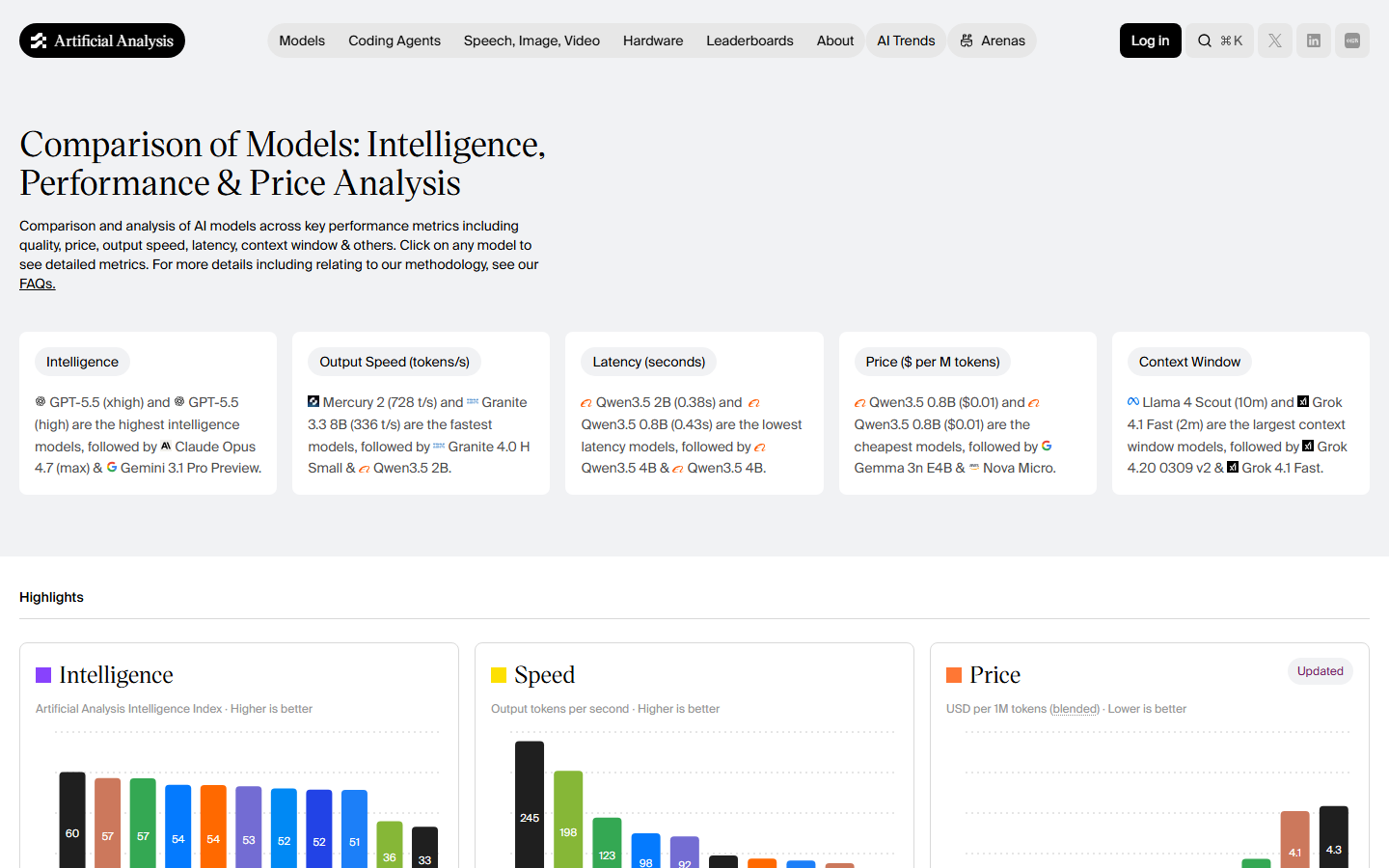
Artificial Analysis approaches pricing from a benchmarking angle. Rather than just listing costs, it plots models on a price-versus-performance chart so you can visually identify which models sit on the efficient frontier. The platform runs standardized tests across intelligence metrics, speed (tokens per second), and cost, then displays interactive scatter plots that make tradeoffs immediately visible.
For developers building AI content generation pipelines, Artificial Analysis helps answer the question "which model gives me the best output quality per dollar?" The tool also tracks hosting provider differences, showing that the same model can cost significantly different amounts depending on whether you access it through the original provider or a third-party inference platform.
5. YourGPT
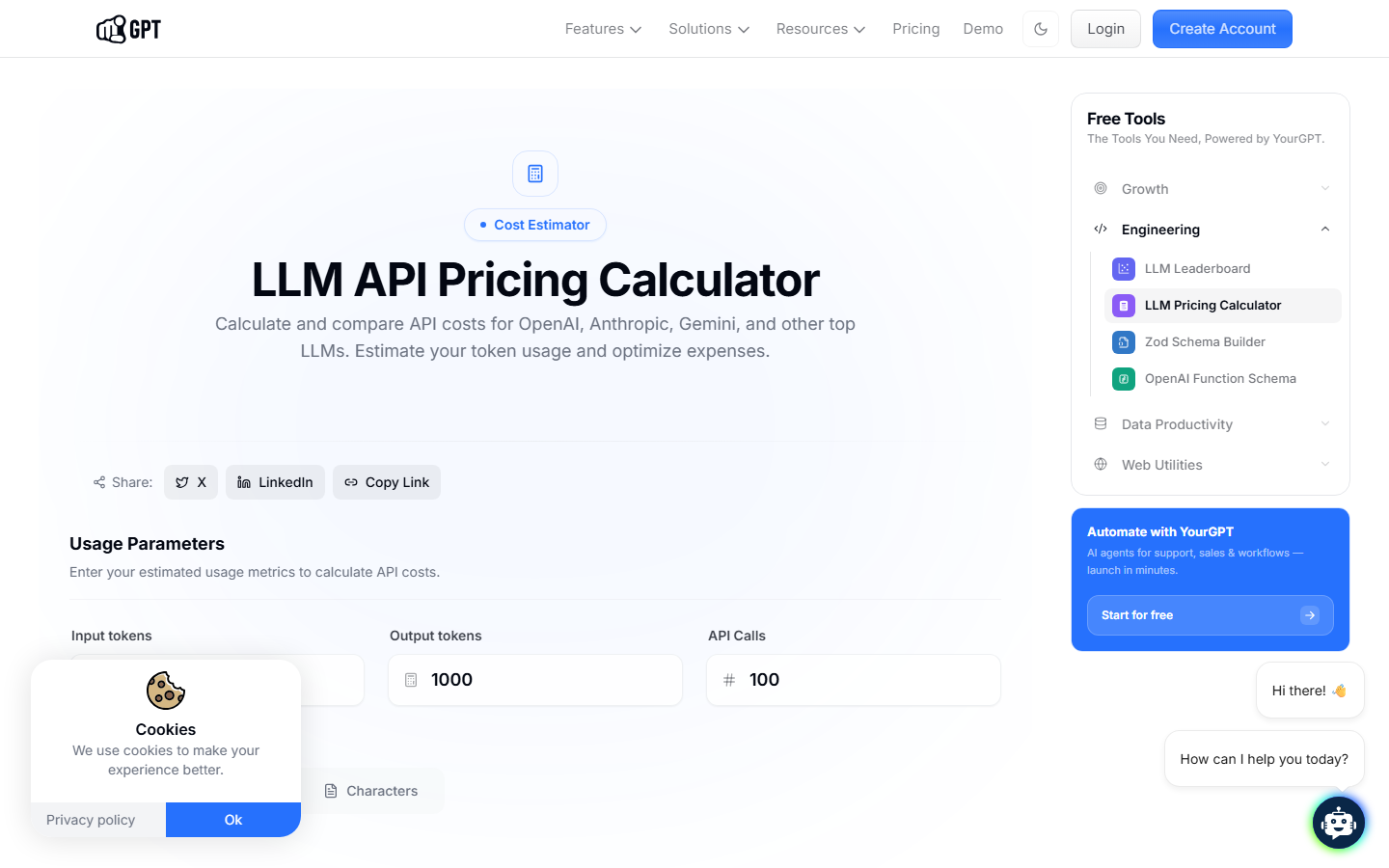
YourGPT provides a calculator-style interface where you input your expected monthly token volume and it estimates costs across multiple providers simultaneously. It supports OpenAI, Anthropic, Google, Mistral, and Amazon Bedrock models, and includes separate calculations for embeddings and fine-tuning costs alongside standard inference.
The calculator is especially helpful for planning budgets on AI workflow platforms where you chain multiple models together. You can model scenarios like "1M input tokens on Claude Sonnet for summarization plus 500K output tokens on GPT-4o for generation" and see the combined monthly estimate. This scenario-based approach beats manually multiplying rates from each provider's pricing page.
6. AnyAPI.ai
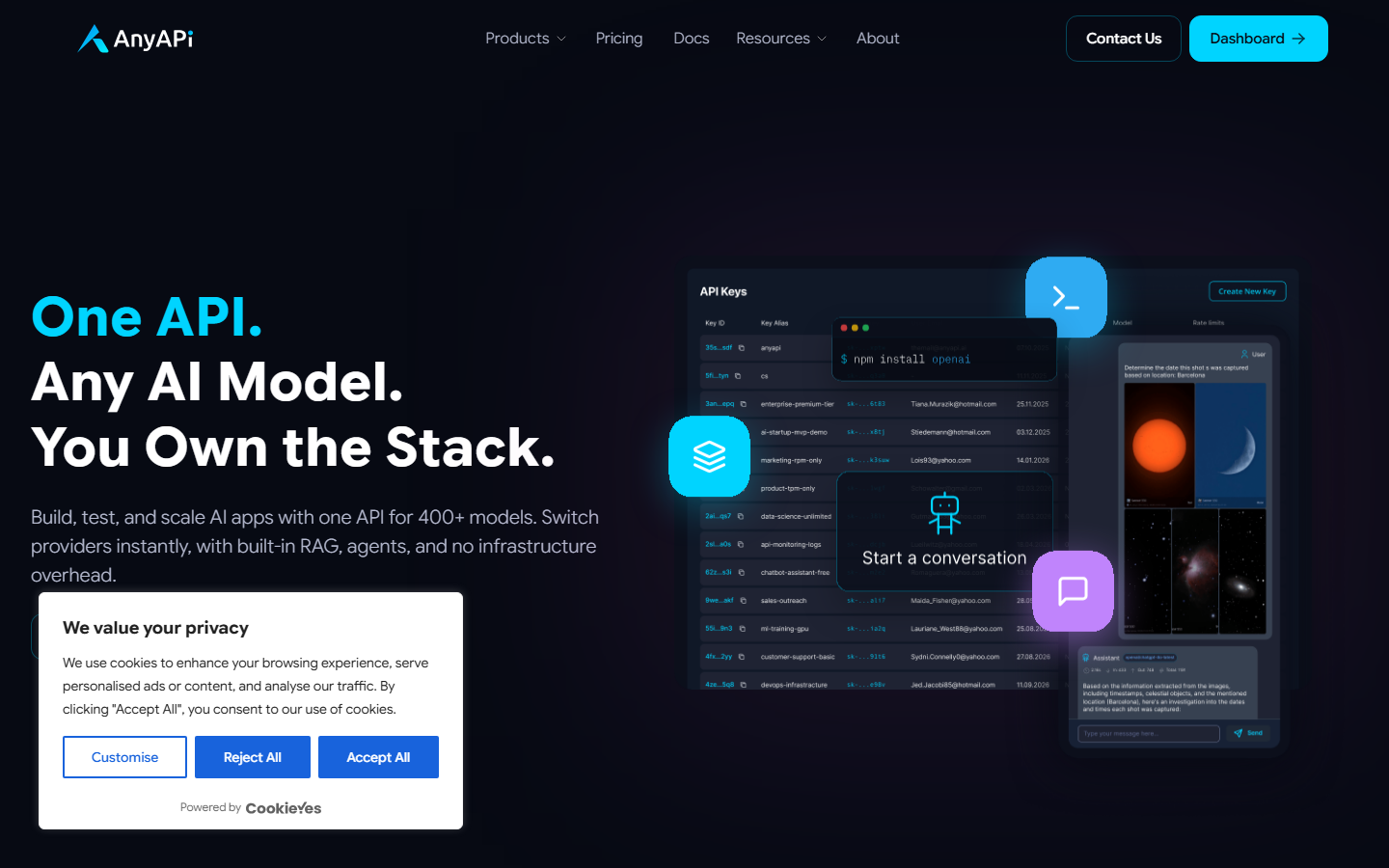
AnyAPI.ai is a unified gateway that consolidates access to OpenAI, Google, Anthropic, and DeepSeek models through a single API key and one balance. Rather than tracking usage across four separate dashboards, you deposit funds into one account and route requests to whichever model suits each task. The gateway adds minimal latency overhead while simplifying both integration code and accounting.
For teams that already use headless AI workflow platforms for production workloads, AnyAPI reduces vendor lock-in. If Anthropic raises prices or OpenAI launches a cheaper model, you switch providers by changing a single parameter in your API call rather than rewriting integration code. The unified billing also makes it easier to set organization-wide spend caps and allocate costs per project.
7. Fireworks AI
Fireworks AI is an inference platform optimized for high-throughput, low-cost model serving. It offers usage-based pricing with rates significantly below direct provider APIs for many models, achieving this through custom serving infrastructure that batches requests efficiently. DeepSeek V3.2 on Fireworks, for example, runs at a fraction of the cost of hosting the same model yourself.
Fireworks is a strong fit for applications built on programmatic generation platforms where volume discounts matter. The platform provides dedicated capacity options for enterprise workloads alongside pay-per-token pricing for smaller projects, and its serverless architecture means you pay nothing when your application is idle.
Comparison Table
| Tool | Type | Models Covered | Free Tier | Best For |
|---|---|---|---|---|
| Wireflow | Workflow platform | 50+ (image, video, LLM, audio) | Yes | Visual AI pipelines with per-run billing |
| Price Per Token | Comparison site | 300+ LLMs | Yes (fully free) | Quick price lookups |
| CostGoat | Comparison site | 314+ LLMs | Yes (fully free) | Value-score rankings |
| Artificial Analysis | Benchmarking tool | 100+ LLMs | Yes (fully free) | Performance-per-dollar analysis |
| YourGPT | Calculator | 30+ LLMs | Yes (fully free) | Budget forecasting |
| AnyAPI.ai | Unified gateway | 20+ LLMs | Limited | Single-key multi-provider access |
| Fireworks AI | Inference platform | 50+ LLMs + open models | Yes | High-volume low-cost inference |
How to Choose the Right Pricing Tool
Selecting the right tool depends on where you are in your development cycle. If you are still evaluating which model to use, start with Price Per Token or Artificial Analysis for raw pricing data and benchmarks. If you already know your models and need to forecast monthly costs, YourGPT's calculator gives quick estimates.
For production workloads, the decision shifts to operational simplicity. AnyAPI.ai and Fireworks AI both reduce the complexity of managing multiple provider relationships, while Wireflow's visual canvas lets you build and iterate on multi-model pipelines without writing integration code. Teams running batch processing workloads should prioritize platforms that offer volume discounts or credit-based pricing over strict per-token models. As hiring operations become more data-driven, businesses are paying closer attention to ATS pricing, automation capabilities, and scalability when evaluating modern recruiting solutions.
Try it yourself: Build this workflow in Wireflow. The nodes are pre-configured to generate an API pricing comparison chart using an LLM prompt engineer connected to Recraft V4.
Frequently Asked Questions
What is usage-based AI API pricing?
Usage-based pricing means you pay only for the API calls you make rather than a flat monthly fee. Most AI APIs charge per token (for LLMs), per image (for generation models), or per second (for video models). Your bill scales directly with your consumption.
How do I estimate my monthly AI API costs?
Count your expected input and output tokens per request, multiply by your projected request volume, then apply the provider's per-token rate. Tools like YourGPT and CostGoat automate this calculation across multiple providers simultaneously.
Is it cheaper to use a unified gateway or direct provider APIs?
Unified gateways like AnyAPI.ai typically add a small markup over direct pricing, but they save engineering time on integration and billing management. For teams using three or more providers, the operational savings usually outweigh the price difference.
What is the cheapest LLM API in 2026?
As of May 2026, DeepSeek V3.2 offers some of the lowest rates at approximately $0.14 per million input tokens. However, the cheapest option depends on your quality requirements. Sorting by value score on CostGoat or Artificial Analysis helps find the best balance.
Can I use multiple AI models without managing separate API keys?
Yes. Platforms like Wireflow and AnyAPI.ai let you access multiple models through a single account. Wireflow goes further by letting you chain models visually in workflows, while AnyAPI provides a drop-in API replacement that routes to different backends.
How do free tiers work for AI APIs?
Most providers offer a free tier with a monthly token or credit allowance. OpenAI, Google, and Anthropic all provide limited free access for testing. Comparison tools like Price Per Token track which providers currently offer free tiers and what limits apply.
What factors besides price should I consider when choosing an AI API?
Latency, throughput limits, context window size, output quality, and uptime SLAs all affect total cost of ownership. A cheaper model that requires twice as many retries or produces lower quality output may cost more in practice than a premium option.
How often do AI API prices change?
Prices shift frequently in this market. Major providers like OpenAI and Anthropic have adjusted rates multiple times in the past year, generally trending downward. Price Per Token and CostGoat both track pricing changes over time so you can spot trends.

Co-Founder & Operations at Wireflow
Runs client operations and content strategy at Wireflow. Works directly with creative teams and agencies to build production AI workflows.
- Content Strategy
- Client Operations
Get unlimited ad creatives today.
One call to see if we are a fit and scope the first ad. If it fits, your first batch lands inside week one.