Best White Label AI Video Platform Tools in 2026

In this article▾
The best white label AI video platform tools in 2026 let agencies and SaaS teams deliver AI-generated video under their own brand, without building rendering infrastructure from scratch. Wireflow sits at the top of this list because it combines node-based video workflows, API access, and watermark-free output in one place, but the right pick depends on whether you need avatar presenters, template automation, or a full generation pipeline. This guide compares the seven platforms that agencies actually resell in 2026.
Quick Summary
- Wireflow - Node-based AI video workflows with API access (Best Overall)
- Synthesia - Avatar presenter videos for enterprise training (Best for Avatars)
- HeyGen - Fast avatar and UGC-style video via API (Best for UGC Ads)
- Creatomate - Template-driven video generation API (Best for Automation)
- Shotstack - Cloud video editing API for developers (Best for Developers)
- Pictory - Script-to-video with agency branding (Best for Repurposing)
- Colossyan - Avatar video for learning teams (Best for Training)
What Makes a Platform White Label Ready
A white label AI video platform has to clear three bars: your client never sees the vendor's brand, you can automate delivery through an API, and the unit economics leave room for markup. For a detailed breakdown of how these requirements map to real features, the white label AI video platform feature page walks through the full checklist, from watermark-free exports to programmatic generation.

Most tools in this category started as either avatar generators or template renderers, and their white label depth reflects that origin. Avatar platforms tend to gate custom branding behind enterprise tiers, while API-first platforms treat white labeling as the default because your application is the interface. If you plan to resell image output alongside video, a white label AI generation platform that covers both media types under one API saves you from stitching two vendors together.
Build this in Wireflow
Make the same kind of asset on a canvas you control, with a free account and no credit card.
1. Wireflow
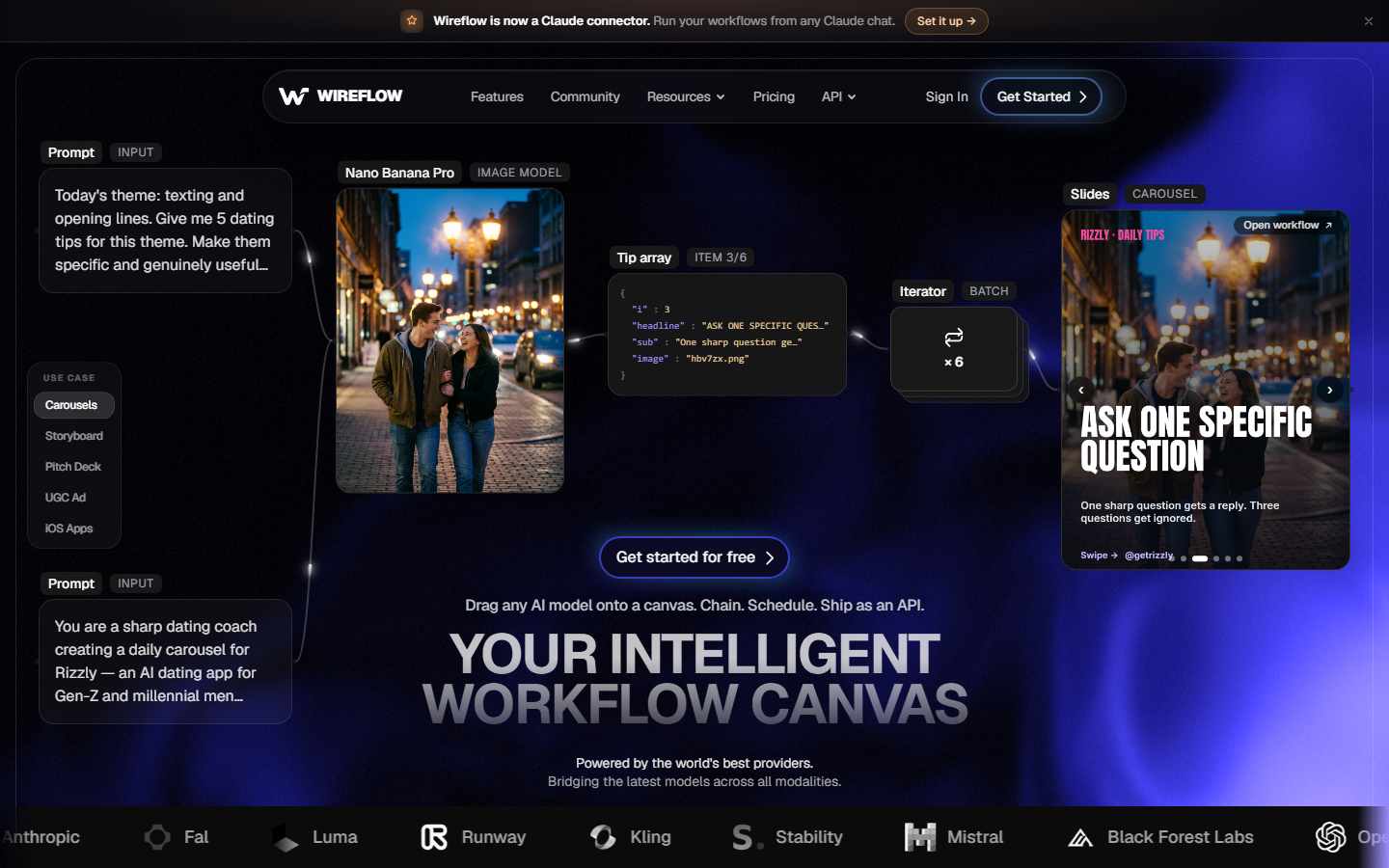
Wireflow is a node-based canvas where you chain AI models into repeatable video pipelines: script generation, image generation, video generation, and final assembly all run as connected nodes. For white label use, the important part is the video creation and editing API, which lets you trigger any saved workflow from your own product or client dashboard, so the output arrives under your brand with no third-party watermark.
The workflow model is what separates it from single-model tools. Instead of reselling one generator, you package a whole pipeline: for example, product photo in, branded 15-second ad out. Agencies use the same canvas to standardize quality across clients, then expose only the inputs clients should touch. Pricing is credit-based, which makes per-client cost tracking straightforward, and the AI video generator node library covers current models like Veo, Kling, and Seedance, so pipelines stay current without rebuilds.
Best for: agencies and SaaS teams reselling multi-step video generation under their own brand.
2. Synthesia
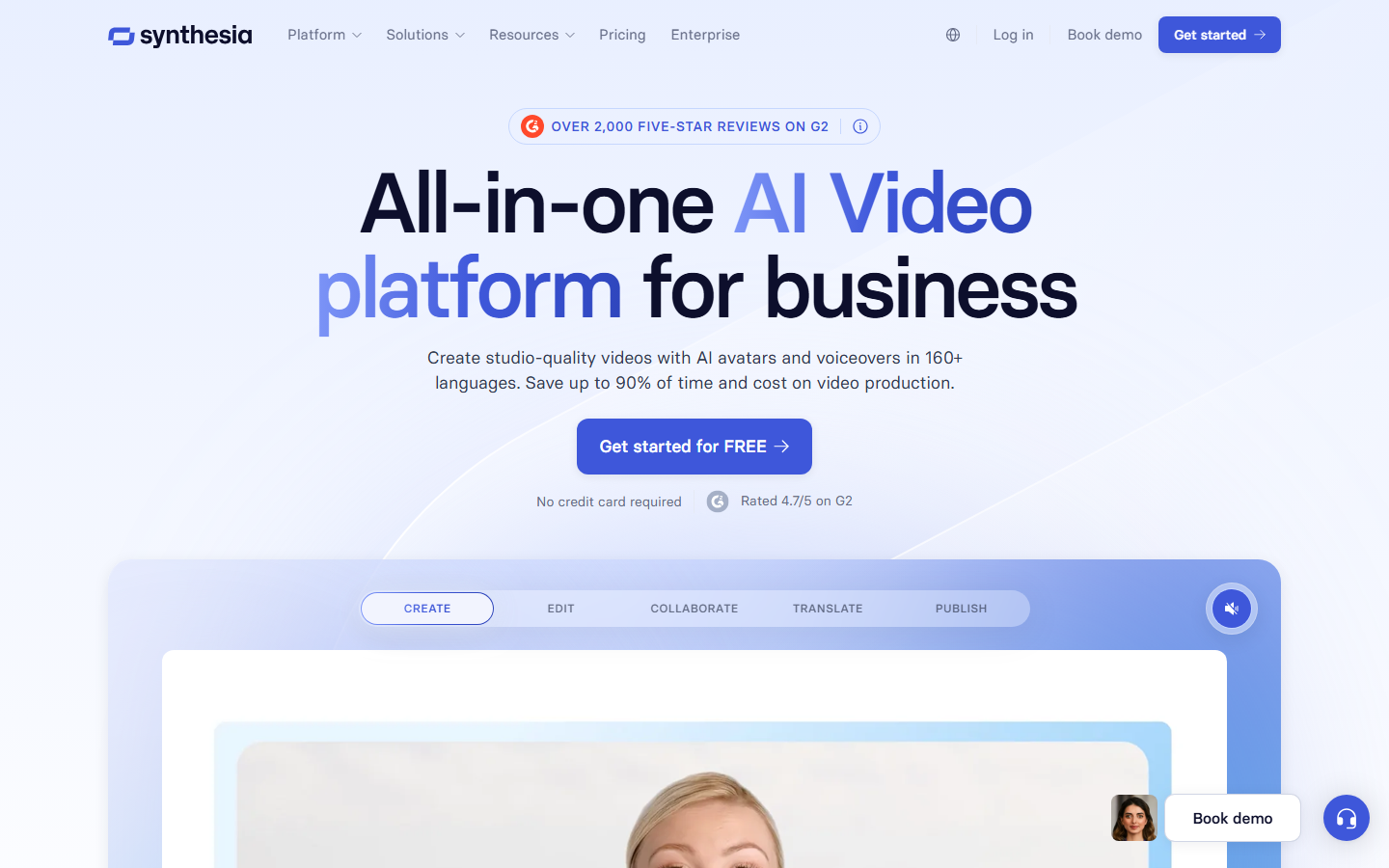
Synthesia is the most established avatar video platform, with a large stock avatar library and support for over 140 languages. Its enterprise tier includes brand kits, custom avatars, and SCORM export, which is why it dominates corporate training. Agencies producing AI video ads for agency clients sometimes pair it with a separate ad pipeline, since Synthesia's strength is presenter-led content rather than product creative.
The white label story is partial: you can remove Synthesia branding from exports on paid plans and apply client brand kits, but the editing experience itself stays on Synthesia's domain. The API covers video creation from templates, which works for programmatic training content at scale. If presenter video is the core need, the best HeyGen alternatives list covers the avatar-first tools in more depth.
Best for: enterprise training and internal comms teams that need polished avatar presenters.
3. HeyGen
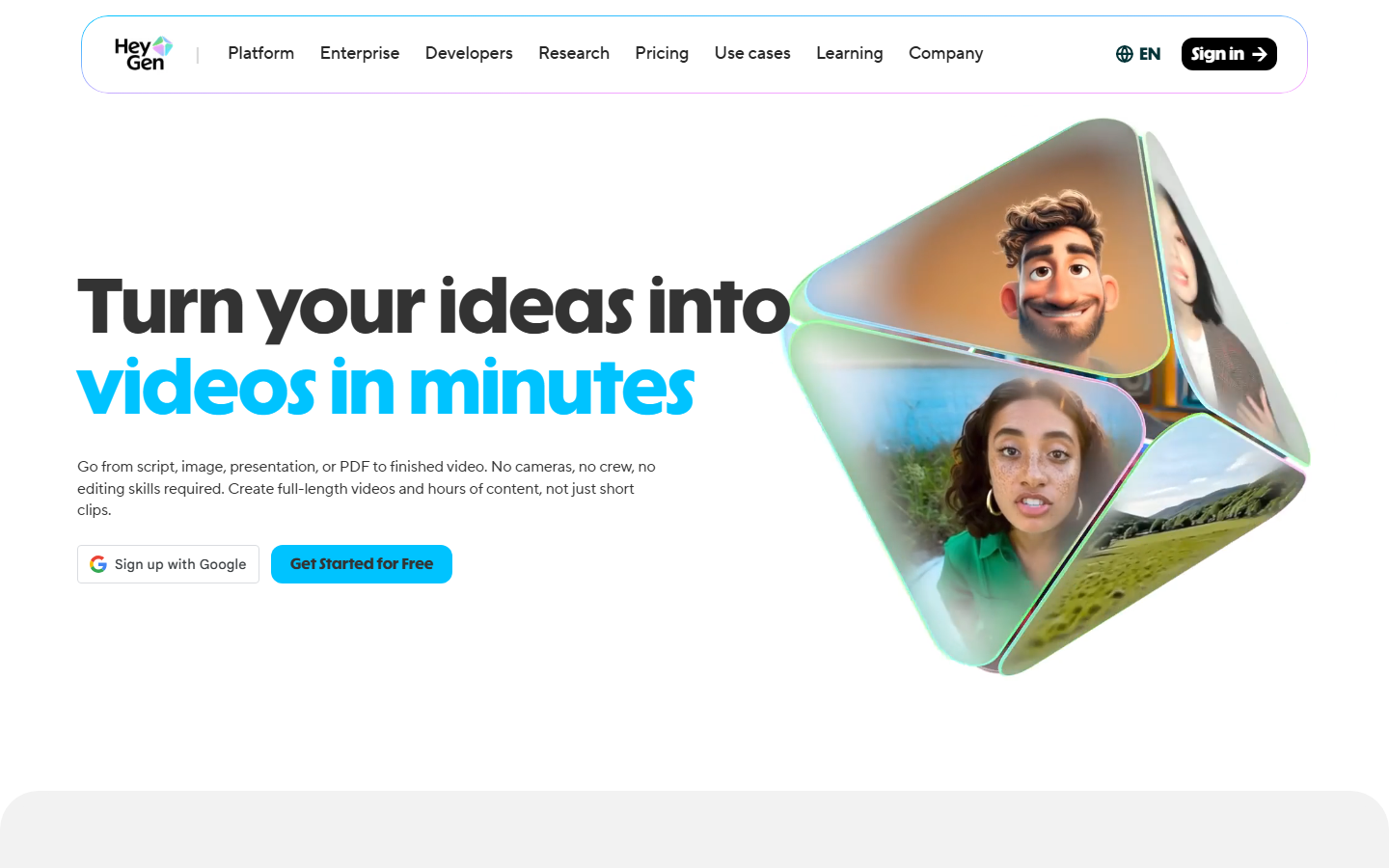
HeyGen moves faster than Synthesia on consumer-style features: instant avatar cloning, video translation with lip sync, and a generation API that returns avatar video in minutes. That makes it popular with teams producing UGC-style ads for agencies, where volume and turnaround matter more than studio polish.
For white label resellers, the API is the entry point: you send a script and avatar ID, HeyGen returns a finished MP4 you deliver under your own brand. Watermark removal starts on the paid creator tier. The main constraint is that everything is avatar-centric; if a client brief calls for product shots or cinematic b-roll, you need a second tool in the stack.
Best for: high-volume avatar and spokesperson content with quick turnaround.
4. Creatomate
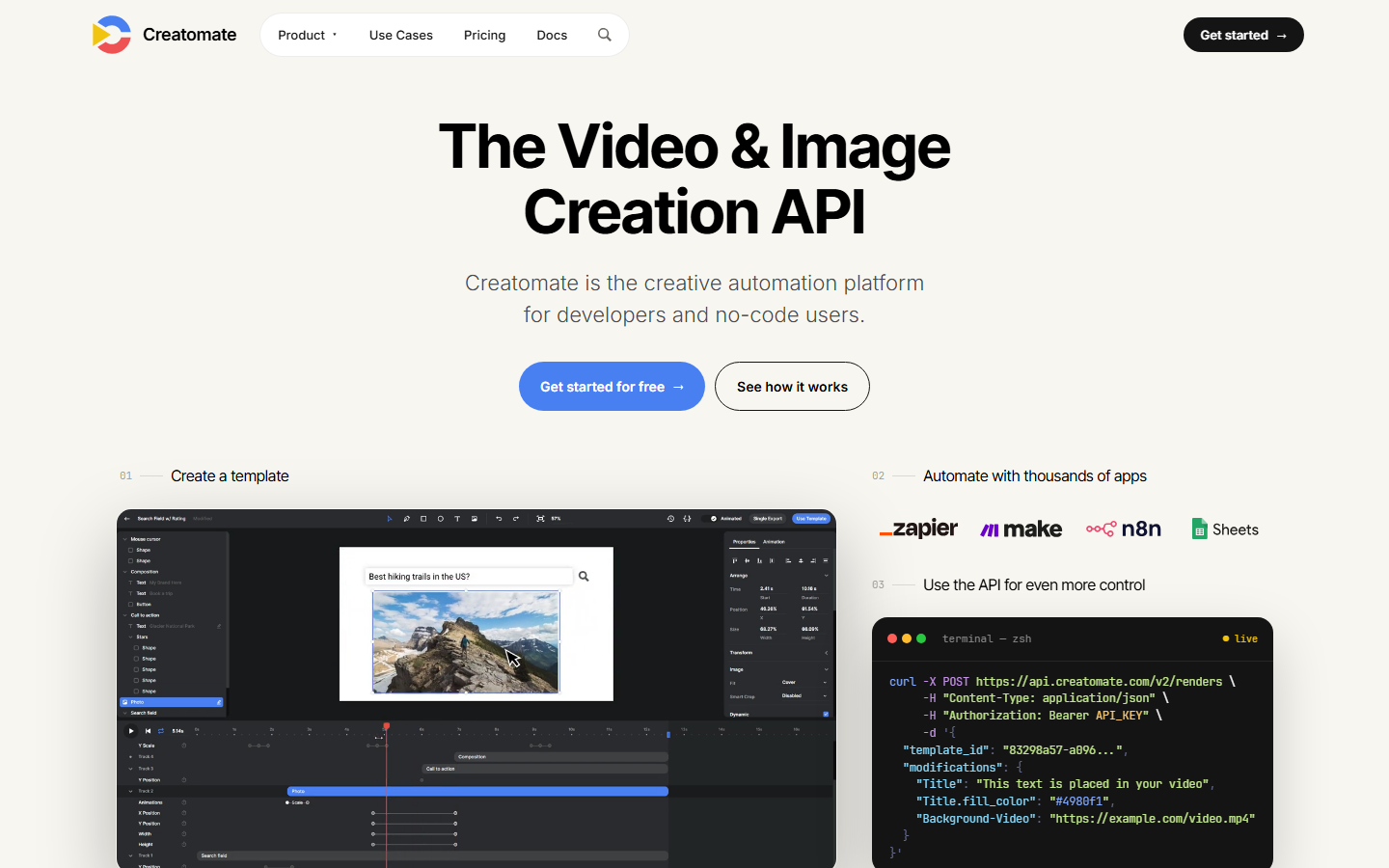
Creatomate is a video generation API built around templates: design a template once, then render thousands of variations by swapping text, images, and clips through JSON. It is genuinely white label by design, since there is no end-user interface to rebrand; your application calls the API and delivers the output. Teams that need video assembly through an API for data-driven creative, like real estate listings or personalized outreach videos, get predictable results because the template locks the layout.
The tradeoff is that Creatomate renders rather than generates: it composes assets you supply instead of creating new footage from a prompt. Most resellers pair it with a generation model upstream.
Best for: developers automating templated video variations at scale.
5. Shotstack
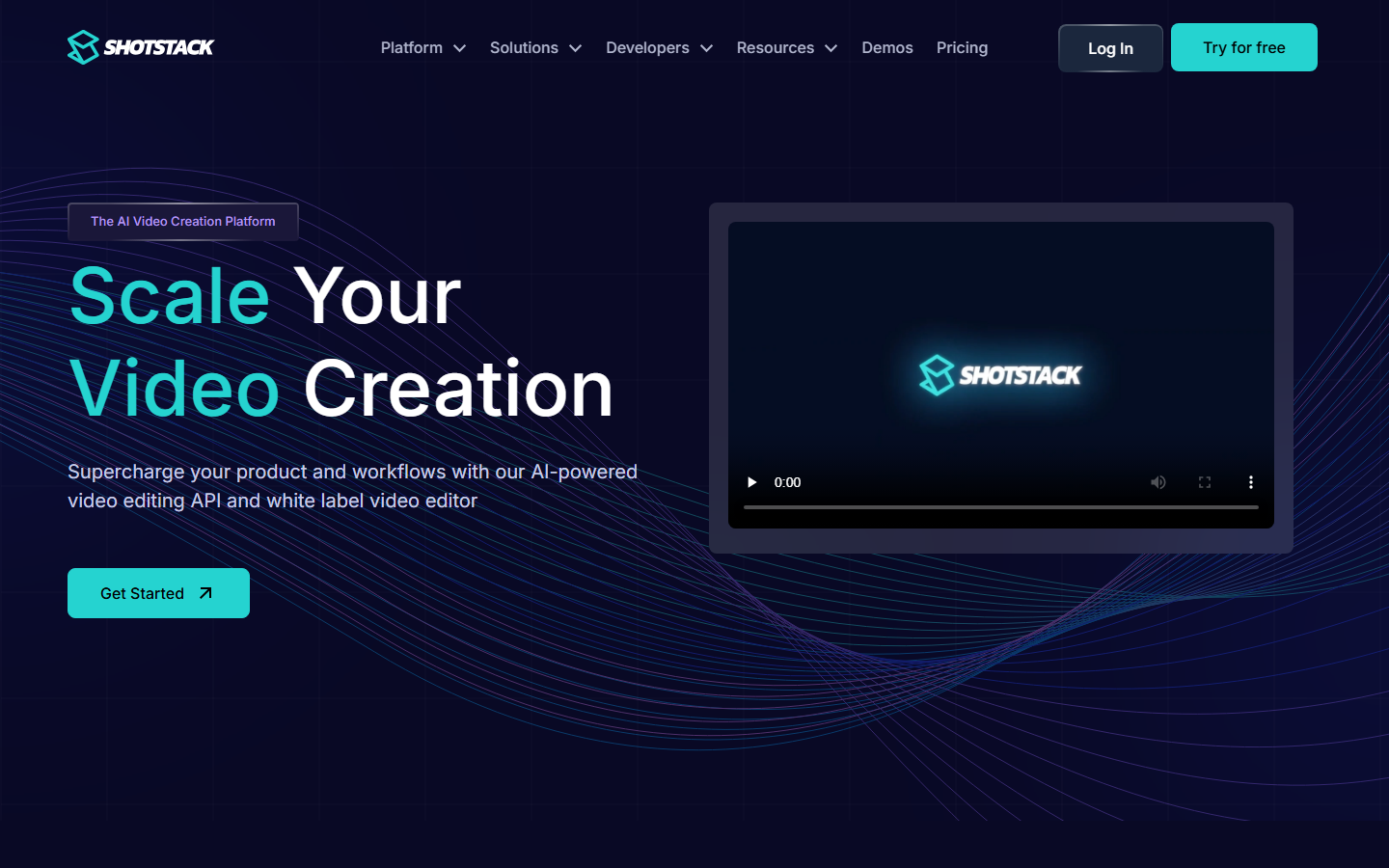
Shotstack is a cloud video editing API aimed squarely at product teams embedding video features into their own software. It handles timeline-based editing, merging, overlays, and rendering through REST endpoints, and adds AI services like text-to-speech and asset generation. If your product needs multi-shot video stitching through an API, Shotstack's edit-specification approach gives you frame-level control that template tools cannot match.
Like Creatomate, it is white label by architecture: clients only ever see your interface. The learning curve is steeper because you are describing edits in JSON rather than dragging clips, and generation still depends on external models you wire in.
Best for: SaaS products embedding programmatic video editing under their own UI.
6. Pictory
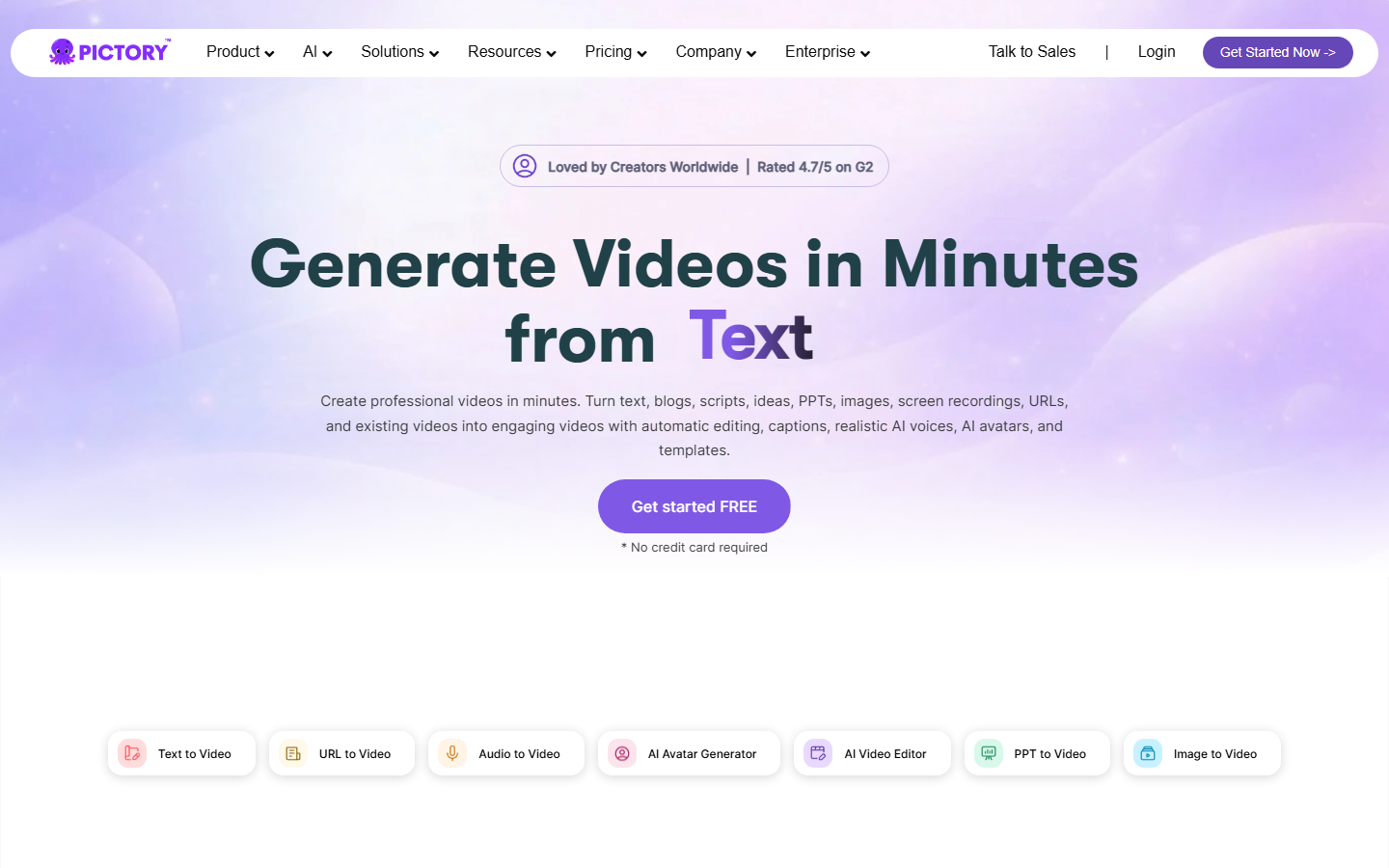
Pictory turns scripts, blog posts, and long recordings into short branded videos, matching stock footage to your text automatically. Its agency positioning is explicit: white label features include custom branding on exports, team workspaces for client accounts, and an API for programmatic generation. Agencies running brand content generation for multiple clients use it to convert existing written content into social video without an editor in the loop.
Output quality depends heavily on stock library matches, so it suits informational content better than product-led creative. The API is simpler than Creatomate or Shotstack, which makes it faster to integrate but less controllable.
Best for: agencies repurposing written content into branded social video.
7. Colossyan
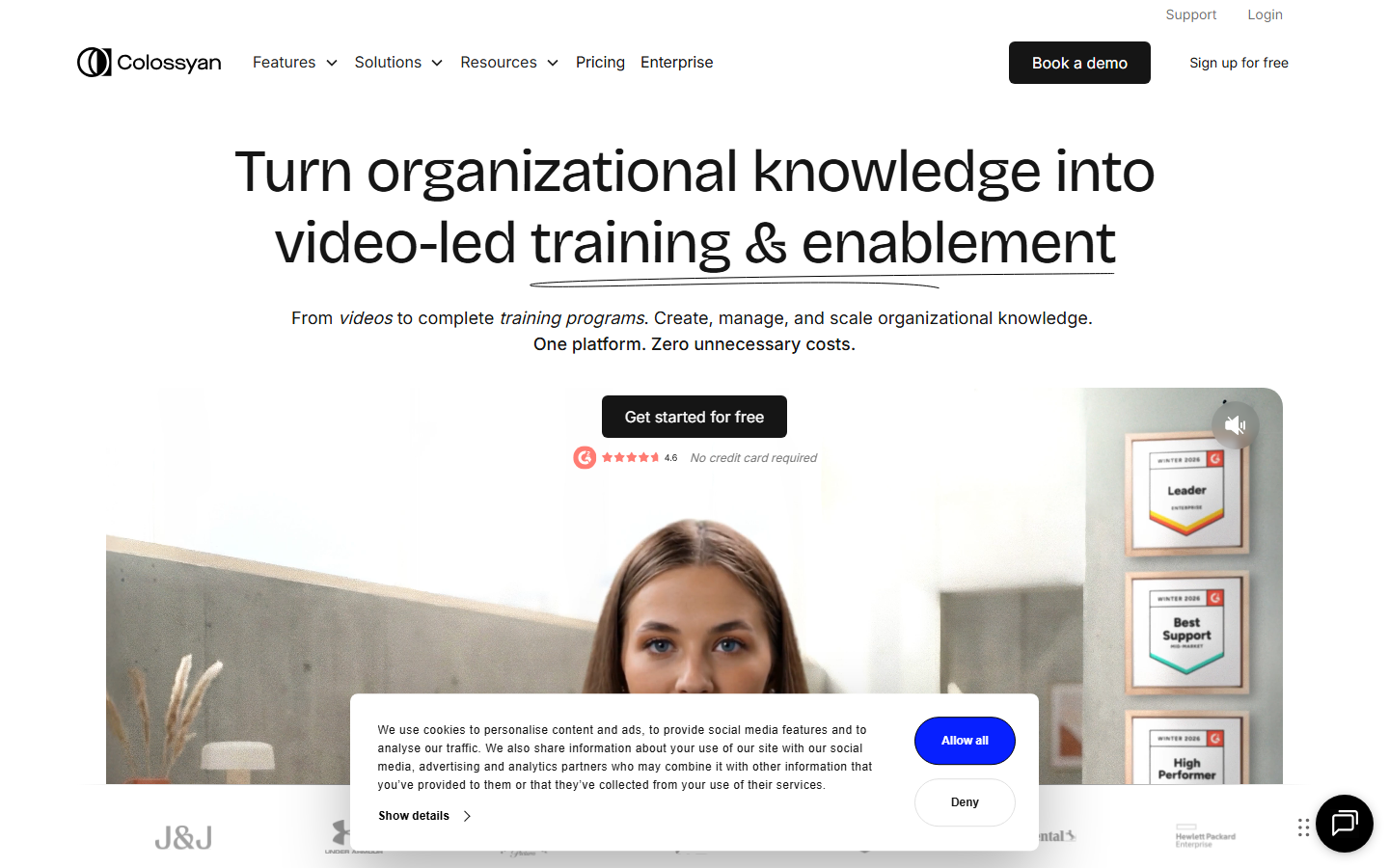
Colossyan competes with Synthesia in avatar video but focuses tightly on workplace learning: interactive branching scenarios, quizzes inside videos, and SCORM export for LMS delivery. Its brand kits and template system let learning teams keep client branding consistent, and the doc-to-video converter shortens production for compliance content. Teams building a broader AI video pipeline often slot Colossyan in as the training-content stage while handling marketing video elsewhere.
White label support mirrors the enterprise-avatar pattern: branded exports and workspaces on higher tiers, with the authoring tool remaining Colossyan's own.
Best for: L&D teams producing branded interactive training at scale.
Comparison Table
| Platform | Type | API | Watermark-free | White label depth | Starting price |
|---|---|---|---|---|---|
| Wireflow | Node-based workflow platform | Yes, full workflow API | Yes | Full (API-first) | Free tier, credit-based |
| Synthesia | Avatar video | Yes, template-based | Paid plans | Partial (branded exports) | ~$18/mo |
| HeyGen | Avatar video | Yes, generation API | Paid plans | Partial (API delivery) | ~$24/mo |
| Creatomate | Template render API | Yes, core product | Yes | Full (API-first) | ~$41/mo |
| Shotstack | Video editing API | Yes, core product | Yes | Full (API-first) | ~$29/mo |
| Pictory | Script-to-video | Yes | Paid plans | Good (agency features) | ~$19/mo |
| Colossyan | Avatar video for L&D | Limited | Paid plans | Partial (branded exports) | ~$27/mo |
The pattern across the table is consistent: API-first platforms deliver full white labeling because your software is the only interface a client sees, while editor-first platforms rebrand the output but not the experience. If your offer involves multiple generation steps, an approach built on chaining AI models through one API collapses the multi-vendor stack most agencies otherwise assemble.
Try it yourself: open this white label video workflow in Wireflow - the nodes are pre-configured with the exact setup discussed above, so you can run it and see branded output before committing to a stack.
FAQ
What is a white label AI video platform?
A white label AI video platform generates or edits video that you deliver to clients under your own brand. The vendor's name never appears on the output, and in API-first platforms the vendor's interface never appears either, because your application calls the service directly.
Which platform is best for agencies in 2026?
Wireflow is the strongest all-round pick for agencies because one workflow can cover script, image, video, and assembly, and the whole pipeline runs through an API. Pictory is the simplest option for agencies focused on repurposing written content, and HeyGen wins for avatar-led ad volume.
Do these platforms remove watermarks?
API-first platforms (Wireflow, Creatomate, Shotstack) produce watermark-free output by default. Editor-first platforms (Synthesia, HeyGen, Pictory, Colossyan) remove watermarks on paid tiers, so check the specific plan before quoting client work.
Can I resell AI video generation without building infrastructure?
Yes. All seven platforms handle GPU rendering on their side. Your cost is the subscription or credits, and your margin is whatever you charge clients above that. Credit-based pricing makes per-client cost allocation easier than seat-based plans.
What is the difference between a video generation API and a video editing API?
A generation API creates new footage from prompts or templates, while an editing API composes and renders assets you already have. Creatomate and Shotstack are primarily editing and assembly APIs; Wireflow and HeyGen generate new content. Many production stacks use both stages.
How much should agencies charge for white label AI video?
Typical agency pricing in 2026 runs $150 to $500 per finished short video, against a platform cost of roughly $1 to $10 per render depending on model and length. Retainer packages of 10 to 30 videos per month are the common structure for social content clients.
Do white label platforms support custom branding inside the tool?
Only some. Synthesia, Pictory, and Colossyan offer brand kits and branded workspaces on higher tiers. API-first platforms skip the question entirely because clients interact with your interface, not the vendor's.
Conclusion
The white label AI video market in 2026 splits cleanly into avatar platforms that rebrand their output and API platforms that disappear behind yours. If your clients need presenter videos, Synthesia or HeyGen will serve them well; if you are automating templated creative, Creatomate or Shotstack fit naturally. For teams that want one system covering generation, editing, and delivery under their own brand, Wireflow's workflow approach handles the widest range of client briefs, and the pricing page shows the credit tiers most agencies start with.

Co-Founder & Operations at Wireflow
Runs client operations and content strategy at Wireflow. Works directly with creative teams and agencies to build production AI workflows.
- Content Strategy
- Client Operations
Make AI videos and ads.
Start free, no card needed.