 Andrew Adams · Co-Founder & Operations at Wireflow ·
 Chain AI Models API
Chain AI models into one API: wire a prompt, an LLM, and an image model into a single pipeline on a node canvas, publish it, and get one REST endpoint that runs the whole chain.
No glue code, no async orchestration, no REST wrapper to write. The live chain is on this page.
Free to build · no credit card · See how it works ↓
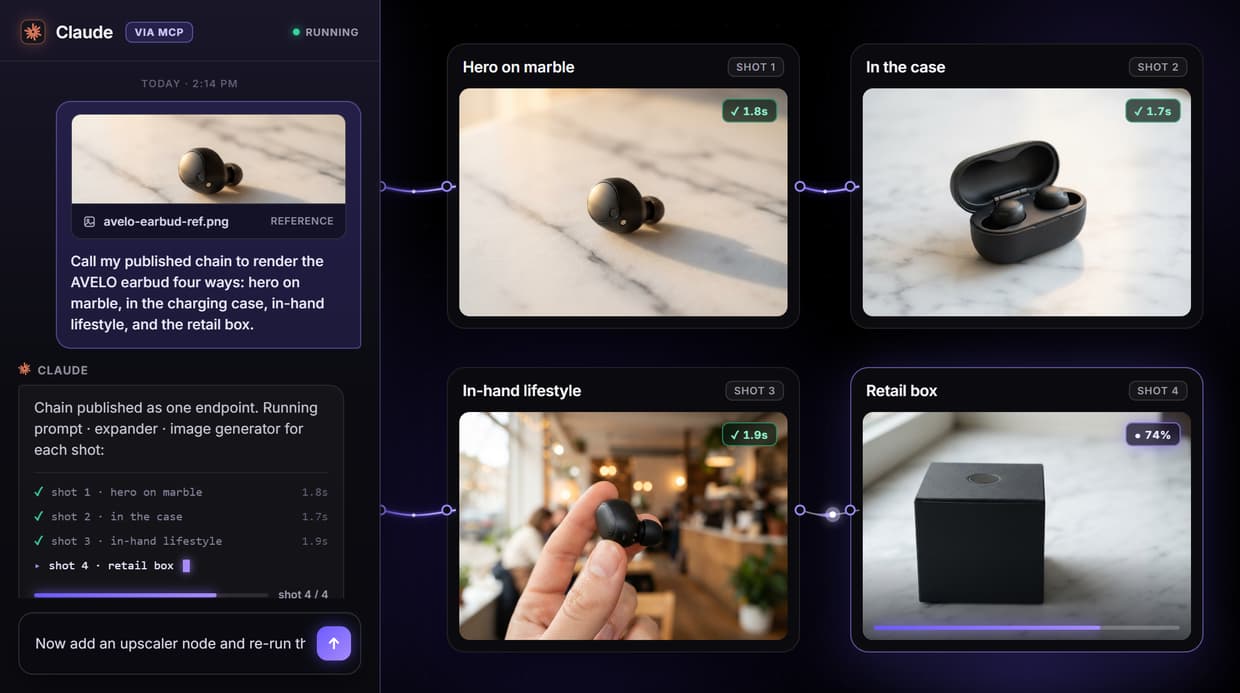
How to Use Chain AI Models API
Steps to get you started in Wireflow.
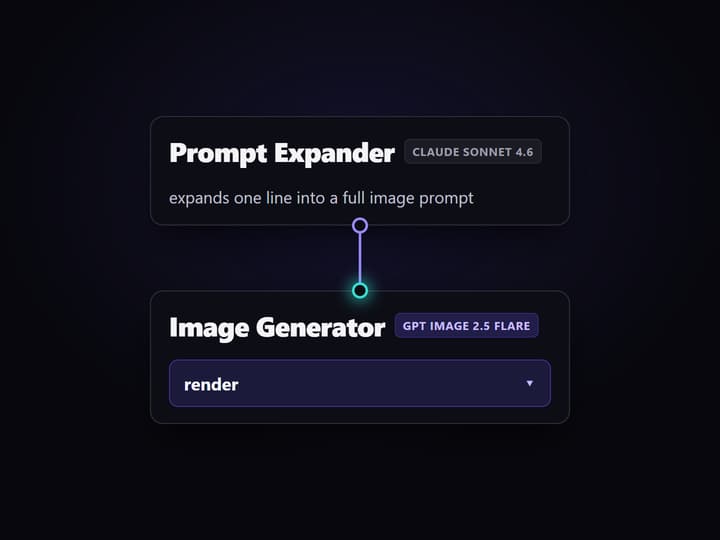
Wire the models into a chain
Drop the nodes on the canvas and connect them: a Text Input into a Run any LLM node, then into GPT Image 2.5 Flare. Each edge is one model feeding the next.
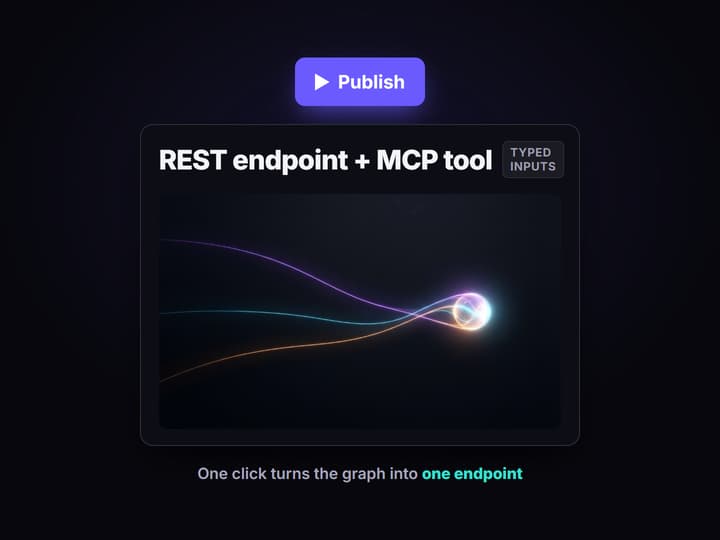
Publish the chain as an endpoint
Press publish and the whole graph becomes one REST endpoint and an MCP tool with typed inputs. Nothing to wrap, no orchestration service to deploy.
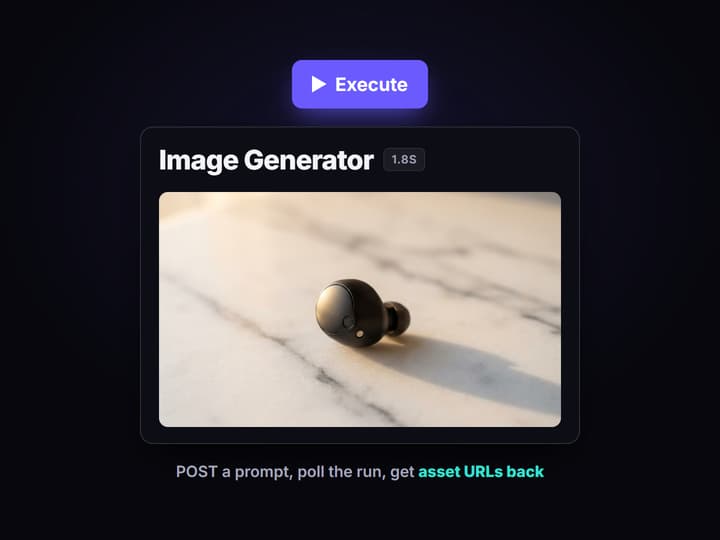
Call it with one request
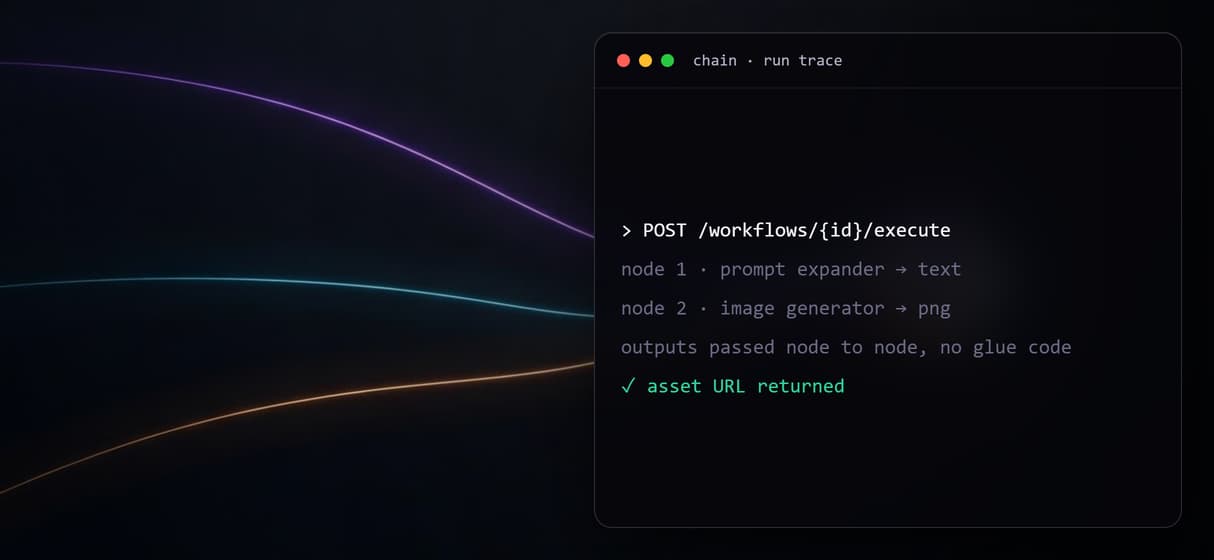
POST your prompt to the endpoint, then poll for the run. The chain executes on hosted compute and returns the final asset URLs in the response.
What chaining AI models through an API usually costs you
Chaining AI models is rarely the hard part. Passing model A's output into model B's input, handling the async waits, retrying the flaky provider, and then wrapping the whole sequence in a REST service your app can call is where the days go. Most approaches make you own all of it: an SDK gives you the calls but leaves you the orchestration, a YAML pipeline config still needs a runtime and a server, and a model aggregator hands you one key for many models but not a single endpoint that runs a multi-step chain.
Wireflow removes the wrapper. You wire the chain as a graph on a canvas, so the connection between two models is a line, not a function you write. When you publish, the graph becomes one REST endpoint and one MCP tool with typed inputs. That is the same pipeline your team can run by hand on the canvas and that an external service or agent can call over HTTP, which is the property behind a headless AI workflow platform: one call in, a finished asset out.
What a chained-model endpoint gives you
Wire the chain visually
Each edge on the canvas is one model handing its output to the next. The connection is a line, not orchestration code you maintain.
Publish to a REST endpoint
One click turns the whole graph into a POST endpoint with typed inputs. No wrapper service, no async plumbing on your side.
Media chains, not just text
Chain a prompt into an LLM, an image model, an upscaler, a video model, and a voice model. The chain is not limited to LLM text steps.
Also an MCP tool
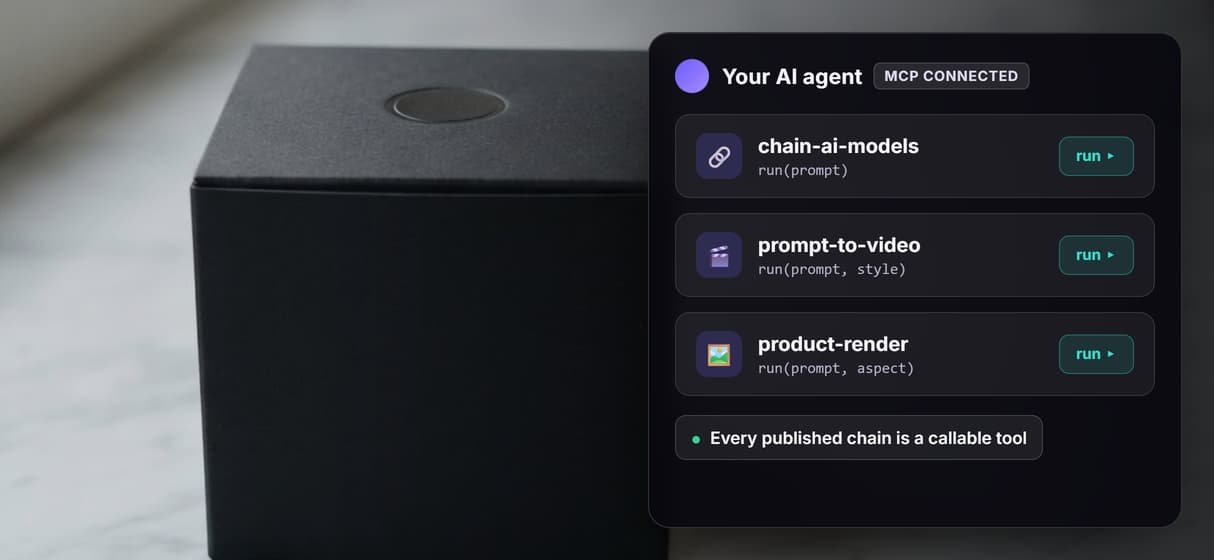
The same published chain lists as an MCP tool, so an AI agent can call your pipeline with typed inputs and read the asset URLs back.
Runs on hosted compute
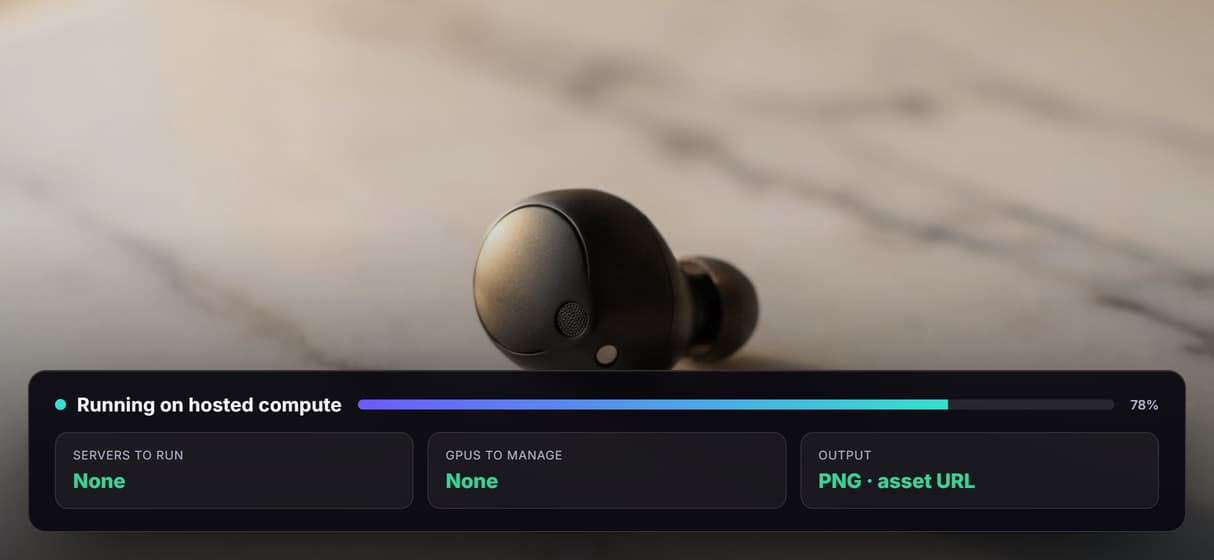
The chain executes on Wireflow infrastructure. You POST a request and poll for the result; there are no servers or GPUs to run yourself.
Swap any model in place
The graph is model-agnostic. Replace GPT Image 2.5 Flare with Flux 2 or add a step without rewriting the rest of the chain or the endpoint.
The chain on this page, node by node
Open the flow linked here and you are looking at a two-model chain with nothing hidden behind an SDK.
- Product Prompt holds the input. A Text Input node with one line describing the asset you want. This is the typed input the endpoint accepts.
- Prompt Expander does the language work. A Run any LLM node on Claude Sonnet 4.6, system-prompted to expand that one line into a detailed image prompt covering subject, composition, lighting, palette, and finish. Its text output is wired straight into the next node.
- Image Generator renders the asset. GPT Image 2.5 Flare takes the expanded prompt and returns a PNG in sub-2s latency across 14 aspect ratios. Its output is the endpoint's response.
That is two models chained: an LLM call feeds an image call, and publishing the graph exposes the pair as one endpoint. To make it a longer media pipeline you add nodes, not code: wire the image into a Crystal Upscaler for a sharper master, or into a video model to animate it, or add an ElevenLabs step for a voiceover. Each new node extends the same endpoint. The trade to be honest about: this is media orchestration, so if your chain is pure text tool-calling with no generation step, a code-first framework may suit you better than a canvas. That is the same reasoning behind building multi-model AI workflows on a canvas instead of a hand-written pipeline: the graph is the source of truth, and improving one node improves every call.
When chaining models on Wireflow is not the right call
Wireflow chains AI generation models, so it fits text-to-image, image-to-video, upscale, and voice pipelines. It is not a classical machine-learning platform: if you are chaining LSTM models, regression steps, or your own trained checkpoints, this is the wrong tool. It is also not the reasoning brain. The Run any LLM node runs a hosted model inside the chain, but the product logic, the strategy, and the decisions about what to build still come from your code or your agent.
Execution is hosted and metered: building the chain on the canvas is free, but every run of the endpoint costs credits, so an agent hammering the URL unattended is a spend decision you should cap deliberately. And there is no offline mode, no custom Python nodes, and no bringing your own GPUs; you trade that control for never running a server. If your requirement is a pure-code chain with no visual layer, compare the field first: the roundup of the best AI APIs for developers shows where a publish-a-canvas model wins and where a framework does.
More Than Just Chain AI Models API
One endpoint for the whole chain
Publishing a graph turns every wired model into a single POST endpoint, the pipeline half of a workflow API so you call one URL instead of sequencing model calls yourself.
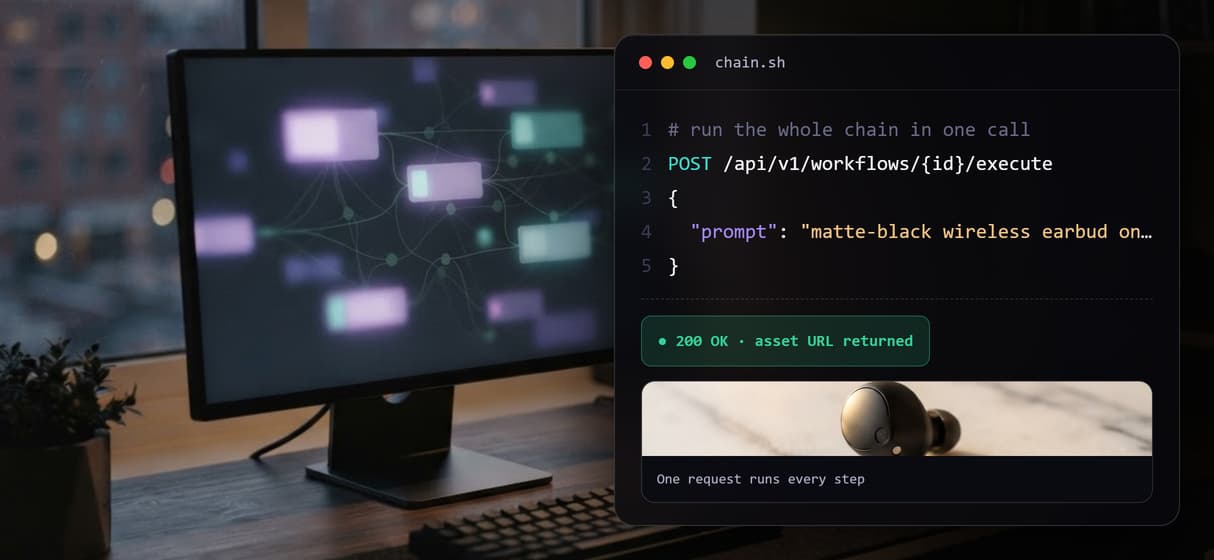
Media chains, not just text
Wire a prompt into an LLM, an image model, an upscaler, and a video model in one graph, a visible media chain beyond text.
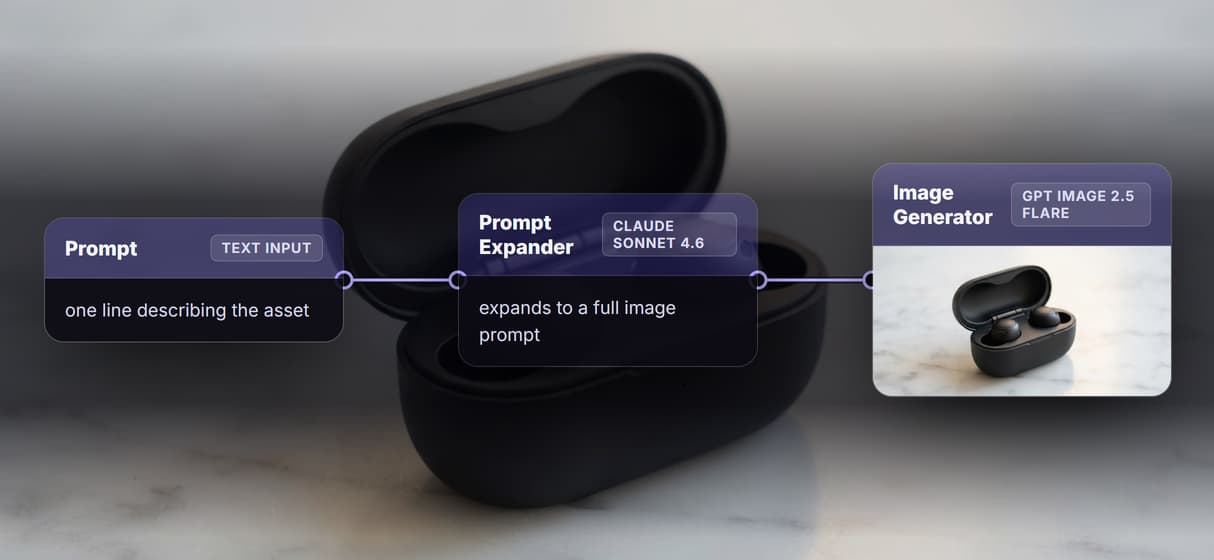
Draw the chain, skip the glue code
Each edge on the canvas is one model handing output to the next, so chaining AI models is a line you draw, not an orchestration layer you write, test, and keep running.
The same chain is an MCP tool
Every published chain lists as an MCP tool with typed inputs, so an agent runs your pipeline the same way it would any MCP server: send inputs, get asset URLs back.
Hosted, serverless from your side
The chain runs on Wireflow compute, so a REST API canvas means you POST a request and poll for the result with zero servers, GPUs, or scaling to manage yourself.
Build Any AI Workflow
AI Models Integrated
Full Commercial License
FAQs
Wire the models into a pipeline on the Wireflow canvas so each output feeds the next input, then publish. The published graph becomes one REST endpoint you call with a single request, and the chain runs on hosted compute.
Discover related AI tools
- AI Pipeline Automation
- AI Workflow Templates
- AI Video Pipeline: Build One on a Node Canvas
- Batch AI Generation: Many Assets, One Run
- AI Model Chaining
- AI Asset Pipeline
- AI Workflow Builder
- AI Content Generation API
- AI Workflow API
- AI Orchestration API
- Headless AI Workflow Platform
- Krea AI API Alternative: Image and Video From One REST Endpoint
More From Wireflow
Written by
Andrew Adams · Co-Founder & Operations at Wireflow
Runs client operations and content strategy at Wireflow. Works directly with creative teams and agencies to build production AI workflows.
Chain your models behind one endpoint
Wire the models into a pipeline, publish, and you get a single REST endpoint and MCP tool that runs the whole chain on hosted compute. The API docs show the publish, execute, and poll calls end to end, with a curl example that returns the final asset URL.