Best Luma Dream Machine API Tools in 2026

In this article▾
If you need to generate AI video from code, Luma Dream Machine remains one of the most capable text-to-video models available today. But accessing it through an API means choosing the right platform for reliability, pricing, and workflow integration. Wireflow lets you chain Luma Dream Machine with other AI models in a visual pipeline, while several standalone API providers offer direct access at varying price points. Here is a breakdown of the best tools for accessing Luma Dream Machine via API in 2026.
Quick Summary
- Wireflow - Best overall (visual workflow + API access)
- Luma AI - Official API with full feature set
- fal.ai - Fast inference with pay-per-second pricing
- Replicate - Community-driven with simple REST API
- DeepInfra - Low-cost GPU inference at scale
- Segmind - Serverless API with workflow chaining
- ModelsLab - Budget-friendly with batch support
- WaveSpeed AI - Multi-model aggregator with Luma access
1. Wireflow
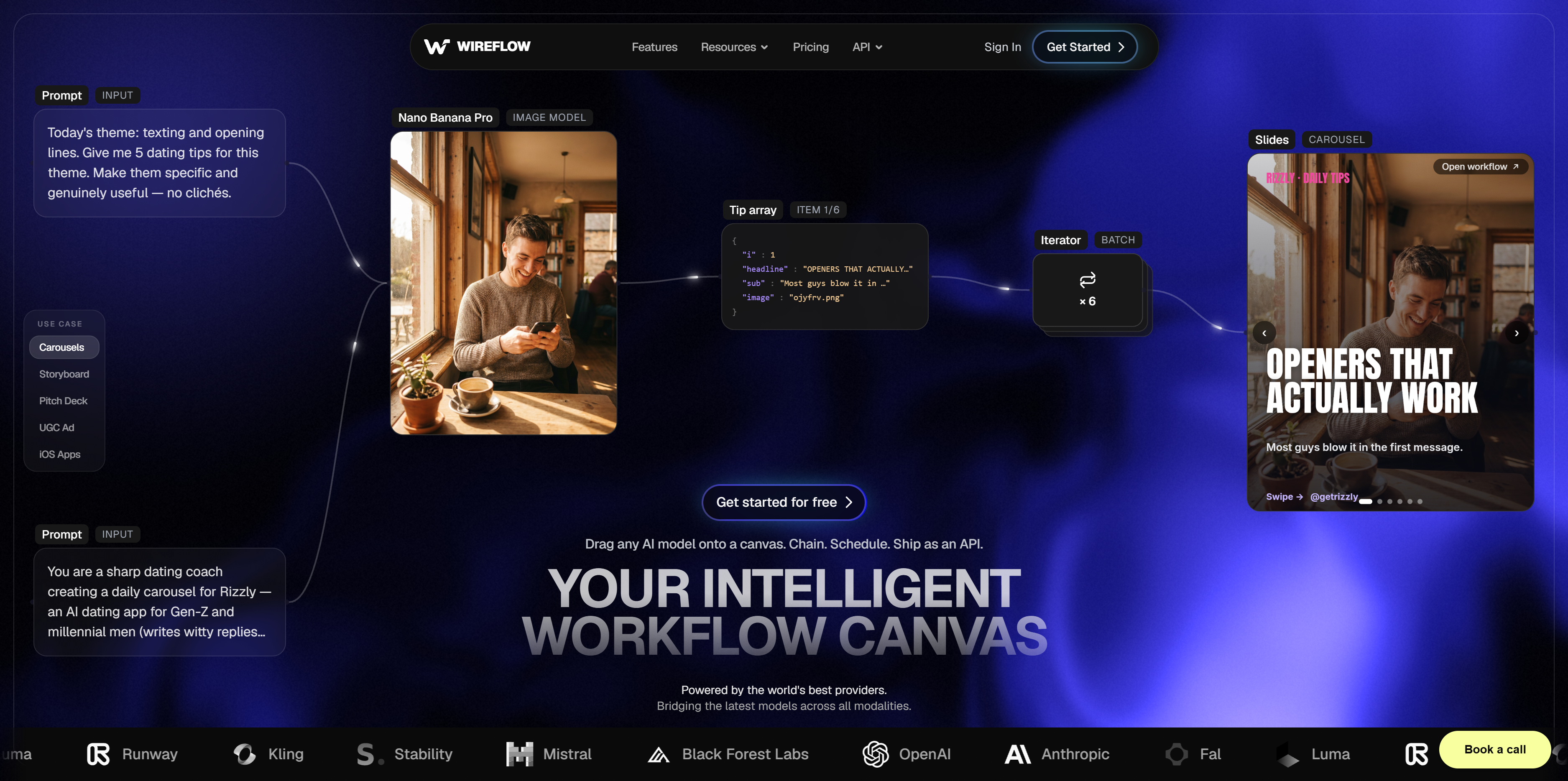
Wireflow is a visual node editor that gives you both a drag-and-drop canvas and a full REST API. Instead of writing boilerplate code to call Luma Dream Machine, you build a workflow visually: connect a text prompt node to the Luma Dream Machine video node, add post-processing steps like upscaling or background removal, and run the entire chain with one API call.
The platform supports batch generation, so you can process hundreds of video prompts in a single request. Pricing is usage-based with no idle GPU costs, and every workflow is shareable via a unique URL.
Key strengths: Visual pipeline builder, API and no-code access, multi-model chaining, usage-based pricing
Build this in Wireflow
Make the same kind of asset on a canvas you control, with a free account and no credit card.
2. Luma AI (Official API)
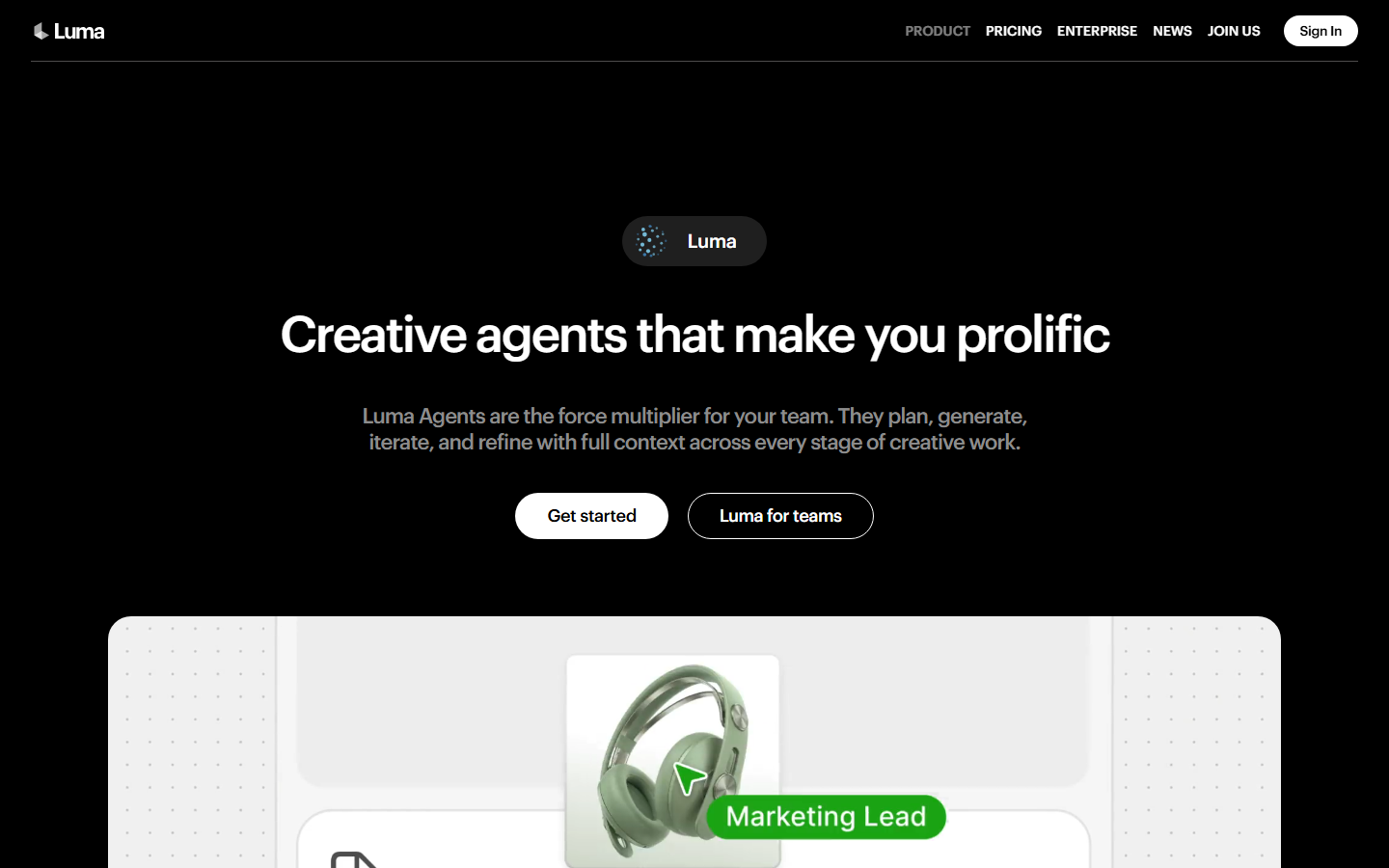
Luma AI offers the official Dream Machine API through their Build and Scale plans. The Build plan gives you pay-per-generation pricing, while the Scale plan provides provisioned throughput for high-volume use cases. Their UNI-1.1 model is the latest iteration, supporting text-to-video, image-to-video, and keyframe control.
The official SDK is available in Python and Node.js, with webhook support for async video generation workflows. Character Seeds let you lock identity consistency across multiple clips, and Audio-Reactive Lip Sync enables dialogue-driven generation.
Key strengths: Full feature access, Character Seeds, keyframe control, official SDKs in Python/Node.js
3. fal.ai
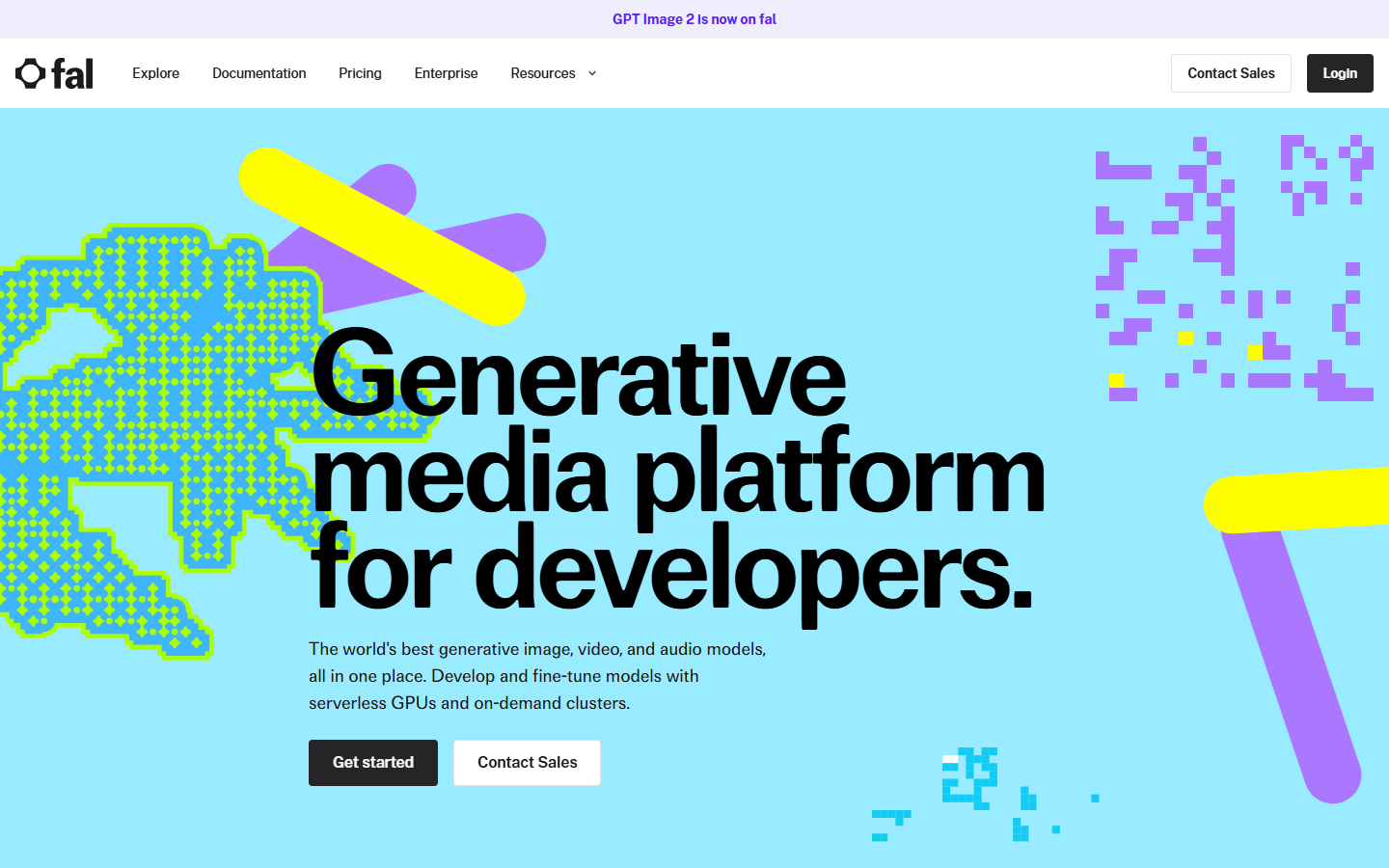
fal.ai hosts Luma Dream Machine with pay-per-second billing and fast cold-start times. Their infrastructure is optimized for low-latency inference, making it a solid choice for applications that need near-real-time video generation. The API follows a straightforward REST pattern with webhook callbacks for completed jobs.
fal.ai also supports no-code canvas workflows through their web interface, though the primary appeal is raw API speed. Queue-based processing handles burst traffic without dropped requests.
Key strengths: Fast inference, pay-per-second pricing, low cold-start latency, queue-based processing
4. Replicate
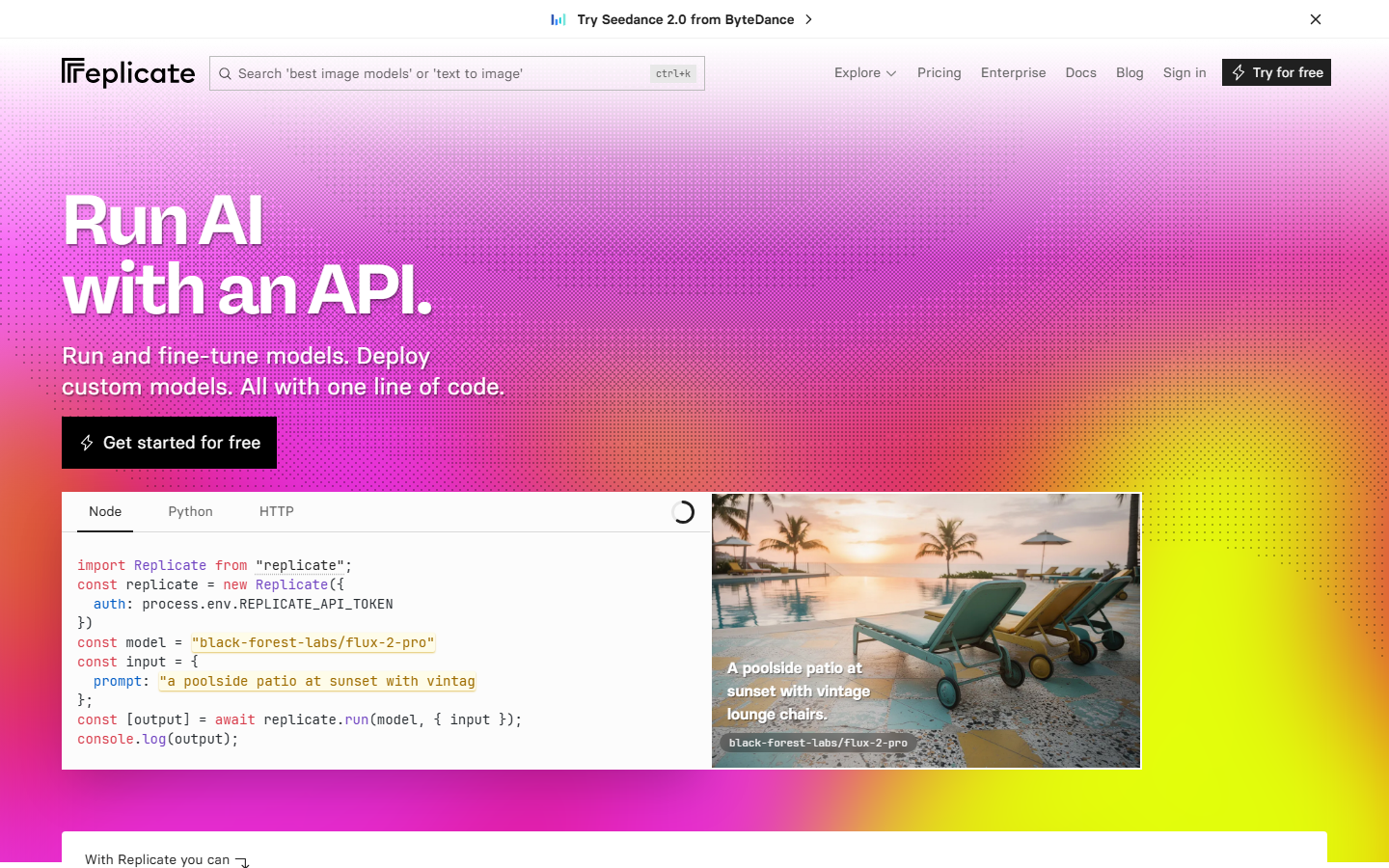
Replicate provides access to Luma Dream Machine through their community model registry. The API is simple: send a POST request with your prompt, get a prediction URL back, and poll or use webhooks for the result. Replicate's versioning system lets you pin specific model versions for production stability.
Pricing follows a per-prediction model with no minimum commitment. The platform integrates well with existing AI pipeline automation setups through their Python and JavaScript clients.
Key strengths: Simple REST API, model versioning, community ecosystem, no minimum spend
5. DeepInfra
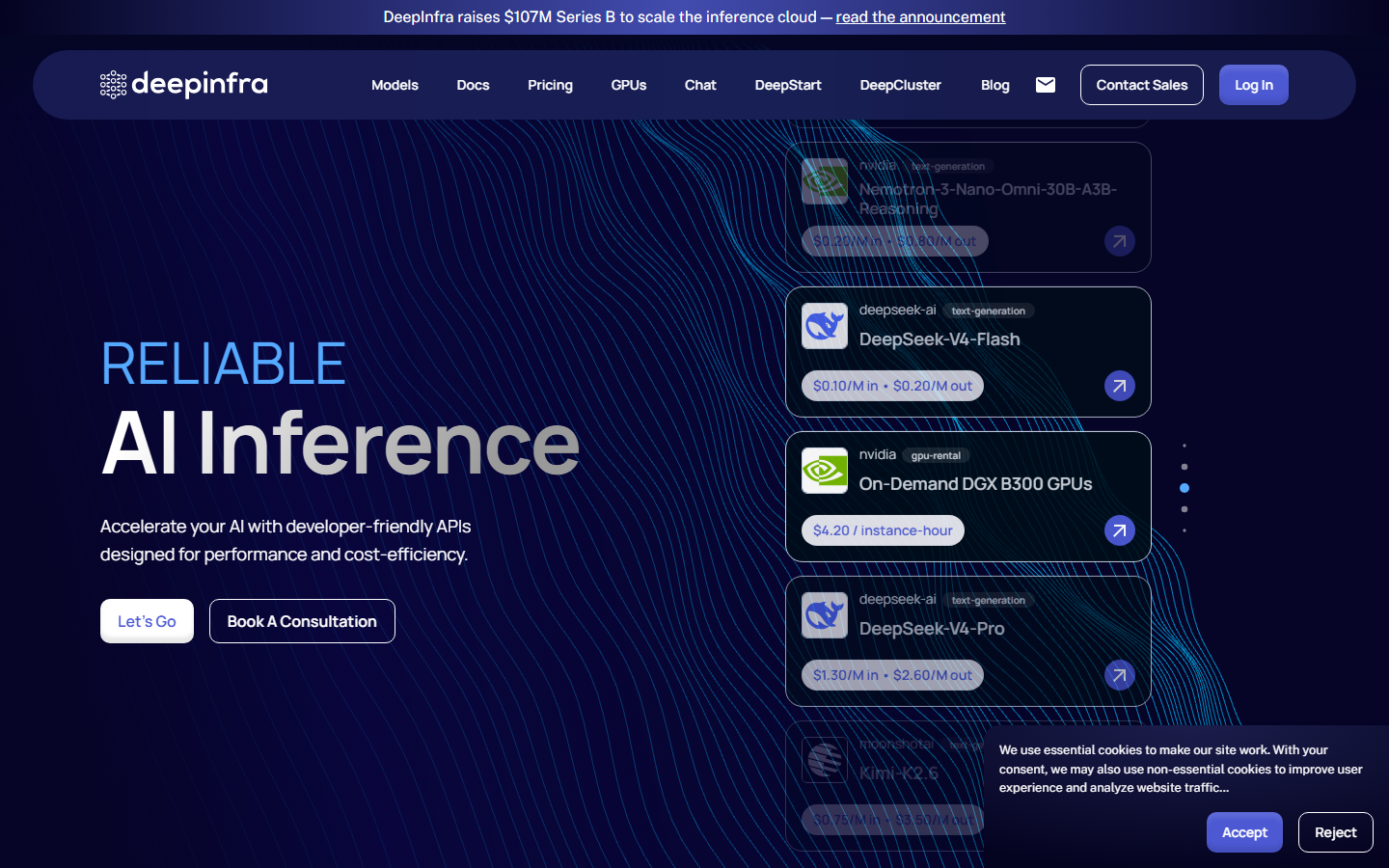
DeepInfra runs Luma Dream Machine on their GPU cluster at some of the lowest per-generation costs available. Their API is OpenAI-compatible, so if you have existing code that calls other models through the OpenAI format, switching to DeepInfra requires minimal changes. Dedicated deployments are available for teams needing guaranteed throughput.
The platform supports headless AI workflows with no UI requirement, making it a good fit for backend services that generate video programmatically.
Key strengths: Low cost per generation, OpenAI-compatible API, dedicated GPU deployments, high throughput
6. Segmind
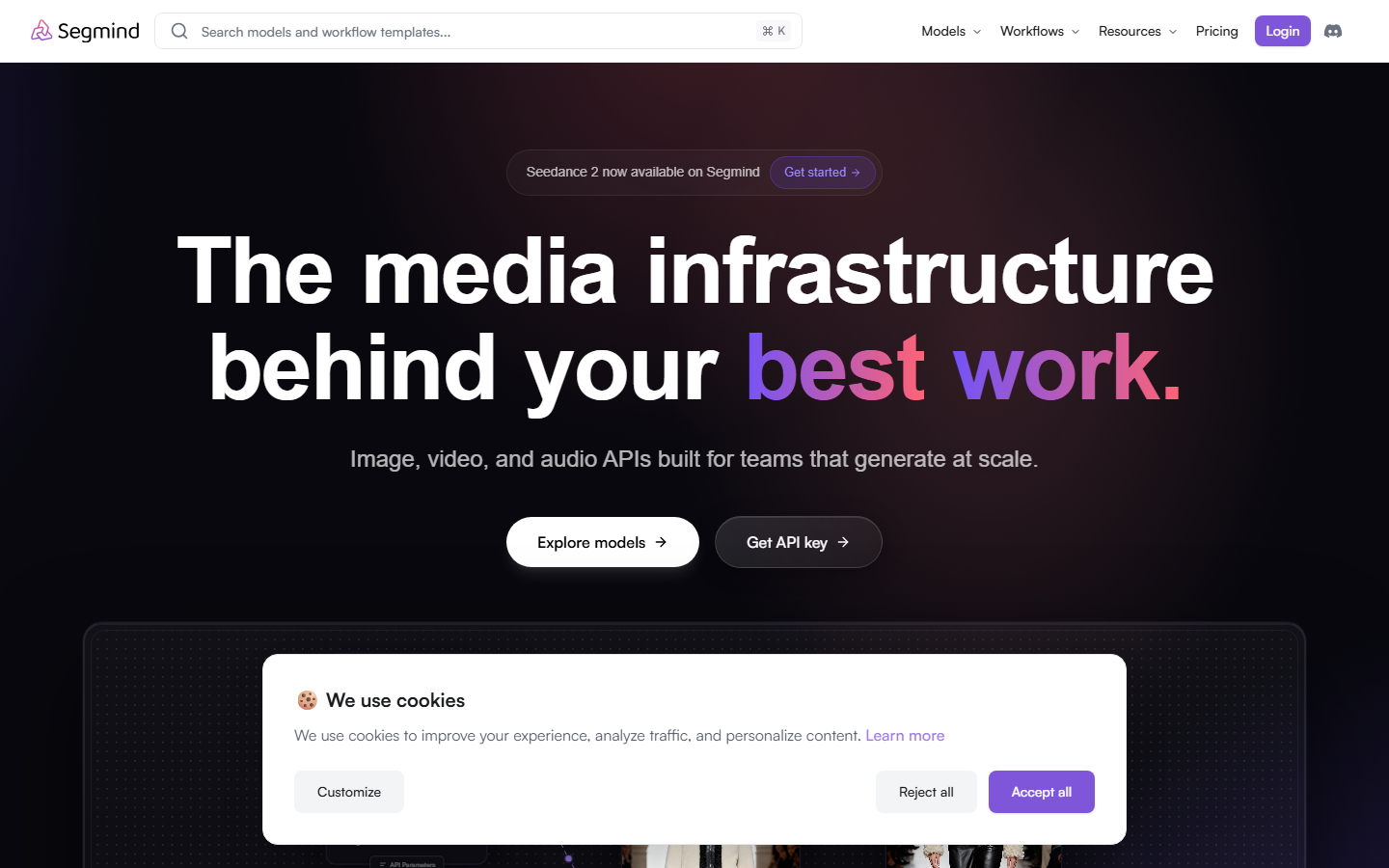
Segmind offers serverless Luma Dream Machine access with built-in workflow chaining. You can combine video generation with other models in a single API call, similar to how AI model chaining works in visual editors. Their PixelFlow feature provides a no-code interface for building multi-step pipelines.
Pricing is credit-based with a free tier for testing. Segmind supports both synchronous and asynchronous content generation API patterns.
Key strengths: Serverless, built-in workflow chaining, PixelFlow no-code builder, free tier available
7. ModelsLab
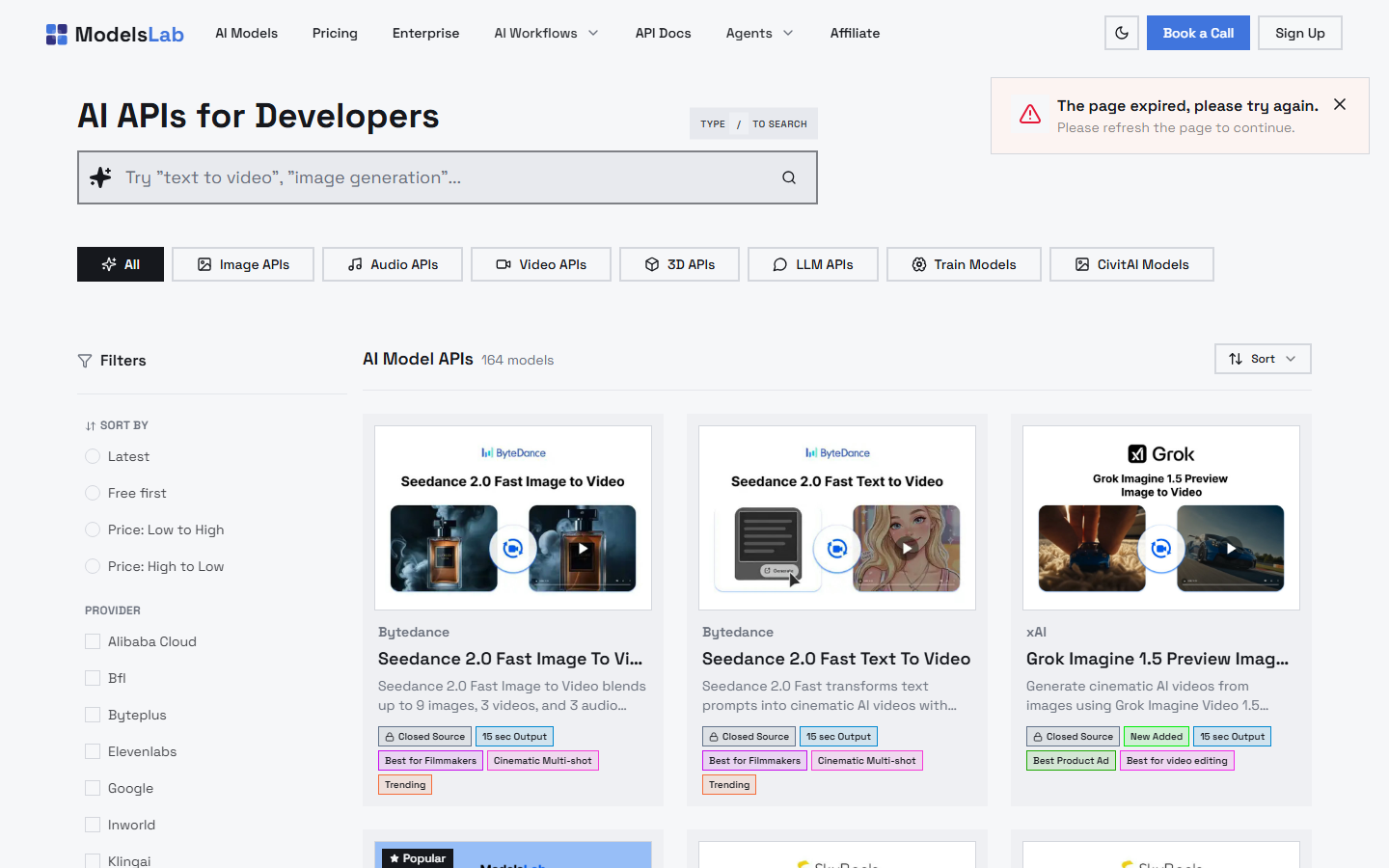
ModelsLab (formerly Stable Diffusion API) provides Luma Dream Machine access at budget-friendly rates. Their API supports batch processing, letting you queue multiple video generations and retrieve results when ready. The platform targets developers building AI video pipelines who need affordable per-call pricing.
Enterprise plans include priority queuing and higher rate limits. The API documentation is straightforward with Postman collections for quick testing.
Key strengths: Budget pricing, batch processing, enterprise plans, simple API documentation
8. WaveSpeed AI
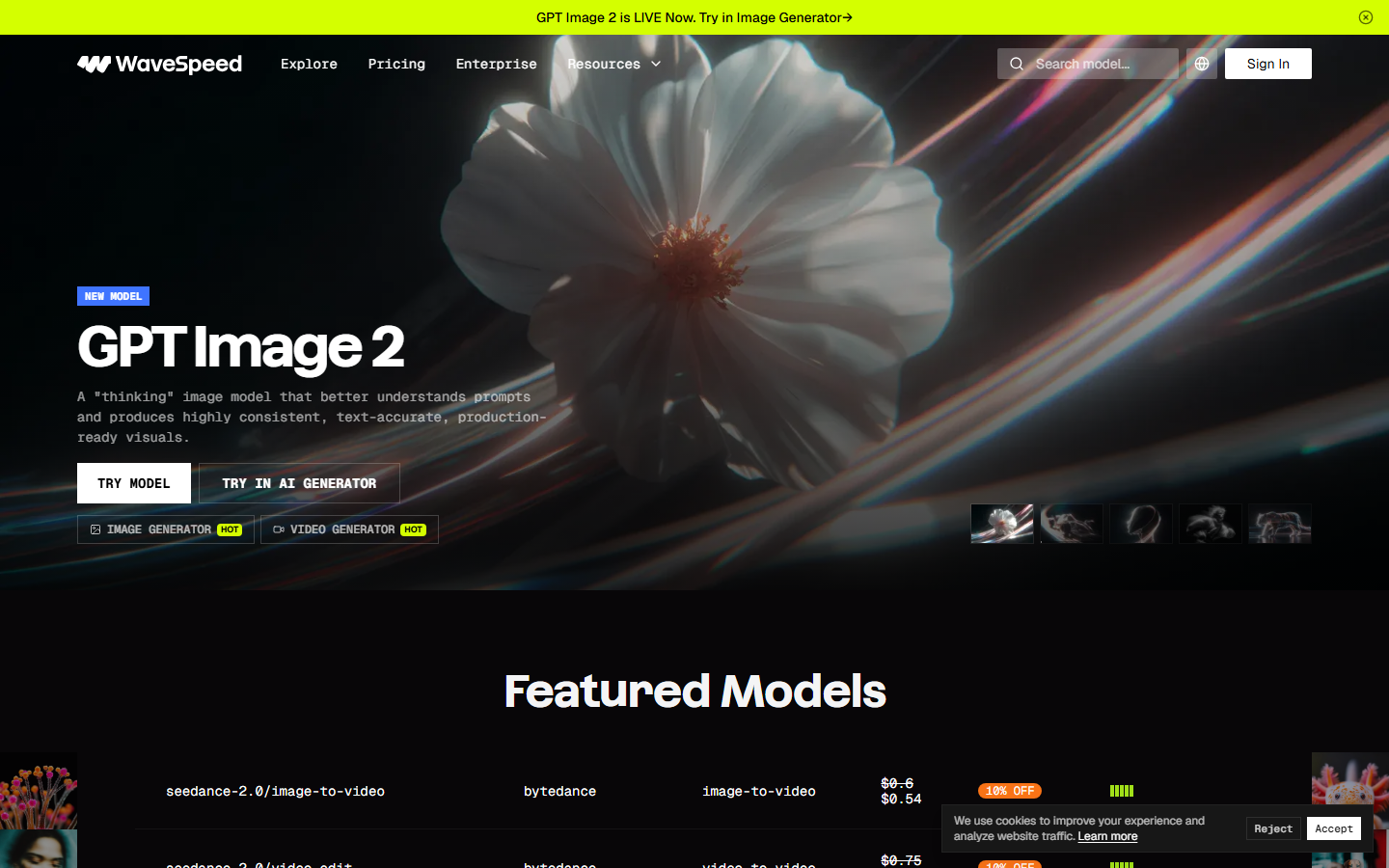
WaveSpeed AI aggregates multiple video generation models, including Luma Dream Machine, under a single API endpoint. This lets you switch between models like Kling, Seedance, and Luma without changing your integration code. Their multi-model approach is useful for A/B testing different video generators in production AI workflows.
WaveSpeed includes a built-in comparison tool for evaluating output quality across models before committing to one.
Key strengths: Multi-model aggregator, single API for multiple generators, model comparison tooling
Comparison Table
| Platform | Pricing Model | Official SDK | Batch Support | Workflow Chaining | Free Tier |
|---|---|---|---|---|---|
| Wireflow | Usage-based | REST API | Yes | Yes (visual + API) | Yes |
| Luma AI | Per-generation / provisioned | Python, Node.js | Yes | No | Limited |
| fal.ai | Per-second | REST + webhooks | Yes | Limited | Yes |
| Replicate | Per-prediction | Python, JS | Yes | No | Yes |
| DeepInfra | Per-generation | OpenAI-compatible | Yes | No | Yes |
| Segmind | Credit-based | REST API | Yes | Yes (PixelFlow) | Yes |
| ModelsLab | Per-call | REST API | Yes | No | Limited |
| WaveSpeed AI | Per-generation | REST API | Yes | No | Yes |
Try it yourself: Build this workflow in Wireflow - the nodes are pre-configured with a cinematic text prompt feeding directly into Luma Dream Machine for instant video generation.
FAQ
What is the Luma Dream Machine API?
The Luma Dream Machine API lets developers generate AI videos programmatically using text prompts or reference images. It is available through Luma's official platform and several third-party API providers that host the model on their own infrastructure.
How much does Luma Dream Machine API access cost?
Pricing varies by provider. Luma's official Build plan charges per generation, while third-party providers like DeepInfra and ModelsLab offer lower per-call rates. Most platforms include a free tier for testing.
Can I use Luma Dream Machine for commercial projects?
Yes. Luma's terms of service allow commercial use of generated content. Check each API platform's licensing terms for any additional restrictions.
What is the best Luma Dream Machine API for high-volume production?
For high-volume use, Luma's official Scale plan with provisioned throughput or DeepInfra's dedicated GPU deployments offer the most consistent performance. Wireflow's batch generation handles parallel processing at scale.
Does Luma Dream Machine support image-to-video generation?
Yes. The API accepts a reference image along with a text prompt to generate video that starts from the provided frame. This is supported through both the official API and most third-party video generation platforms.
Can I chain Luma Dream Machine with other AI models?
Yes. Platforms like Wireflow and Segmind support AI workflow builders that let you connect Luma Dream Machine output to upscalers, audio generators, or image post-processing models in a single pipeline.
What video formats does Luma Dream Machine output?
The API typically returns MP4 files in 16:9 or custom aspect ratios, depending on the parameters you set. Most programmatic video generation platforms pass through the native output format.
How long does it take to generate a video with Luma Dream Machine?
Generation time ranges from 30 seconds to 3 minutes depending on resolution, duration, and the provider's GPU capacity. Providers like fal.ai optimize for faster inference with reduced cold-start times.

Co-Founder & Operations at Wireflow
Runs client operations and content strategy at Wireflow. Works directly with creative teams and agencies to build production AI workflows.
- Content Strategy
- Client Operations
Get unlimited ad creatives today.
One call to see if we are a fit and scope the first ad. If it fits, your first batch lands inside week one.