Best Pika Labs API Tools in 2026

In this article▾
If you need to integrate AI video generation into your product, Pika Labs is one of many options on the table. Wireflow does not run Pika, but it lets you chain other video and image models in a single visual pipeline, so you can compare outputs and switch providers without rewriting code. This guide ranks the seven best platforms for accessing Pika Labs and similar video generation APIs in 2026.
Quick Summary
- Wireflow - Best overall for multi-model video API workflows
- Pika Labs (Direct API) - Best for native Pika 2.2 features
- Fal.ai - Best for serverless Pika inference
- Runway - Best for creative video editing via API
- Replicate - Best for open-source model flexibility
- Kling AI - Best for photorealistic video output
- Luma Dream Machine - Best for fast video prototyping
For a hands-on look at how a video API fits into a broader workflow, check out the video generation API page on Wireflow.
1. Wireflow
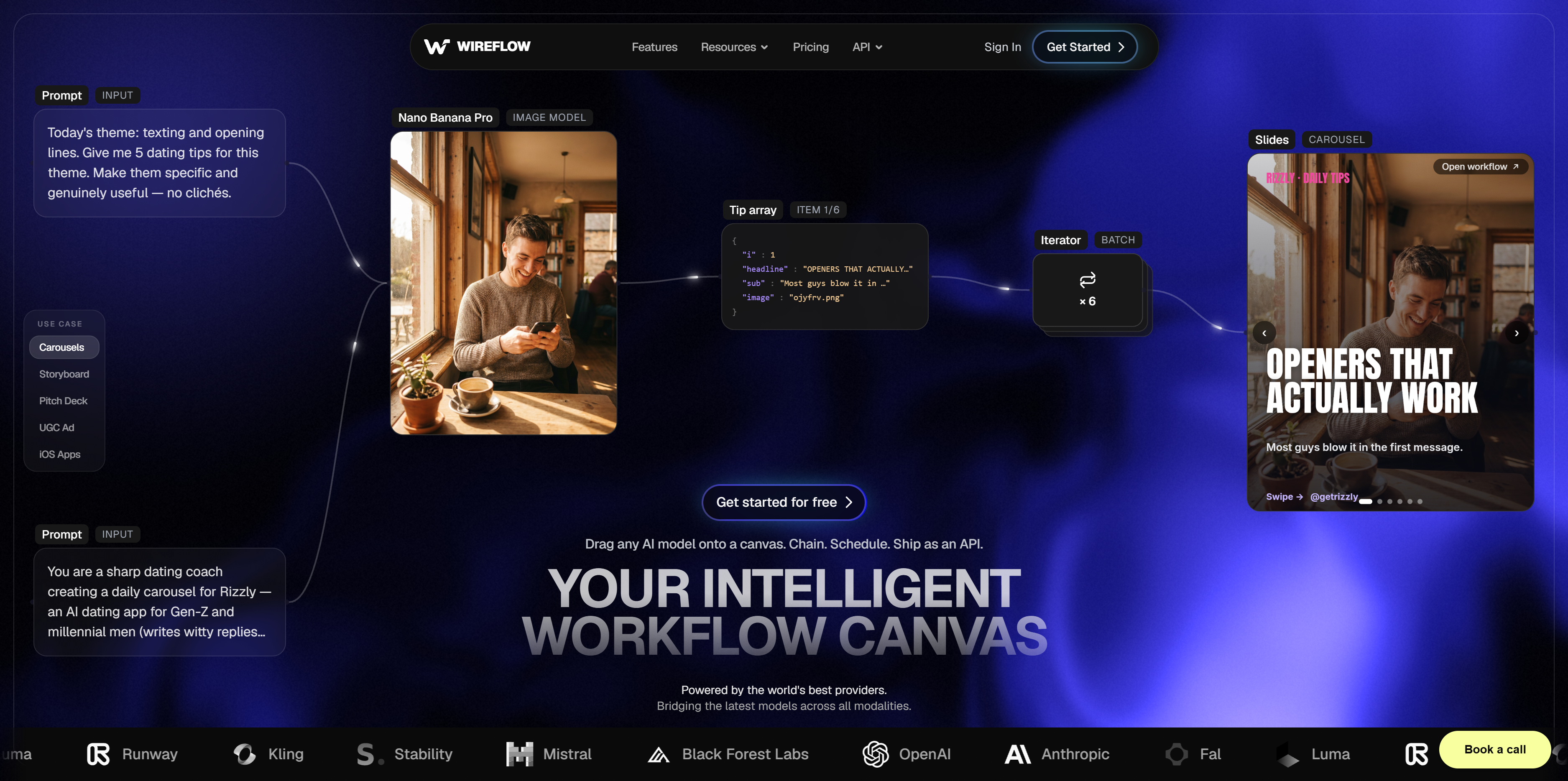
Wireflow is a visual node-based platform that connects multiple AI models into a single workflow. Instead of committing to one video API, you wire models such as Kling, Veo 3.1, and Gemini Omni Flash 1.1 together on a drag-and-drop canvas. Pika and Runway are not available on Wireflow. Each node runs independently, so you can A/B test outputs or chain image generation into video generation in one pipeline. The REST API exposes every workflow as a single endpoint, which means your application calls one URL and gets back results from however many models you configured.
Pricing is usage-based with no per-seat fees. You pay only for the compute each node consumes. The platform supports batch processing, so you can queue hundreds of video generations without managing infrastructure.
Best for: Teams that want several video models in one production pipeline without building custom orchestration, and do not need Pika itself.
Build this in Wireflow
Make the same kind of asset on a canvas you control, with a free account and no credit card.
2. Pika Labs (Direct API)
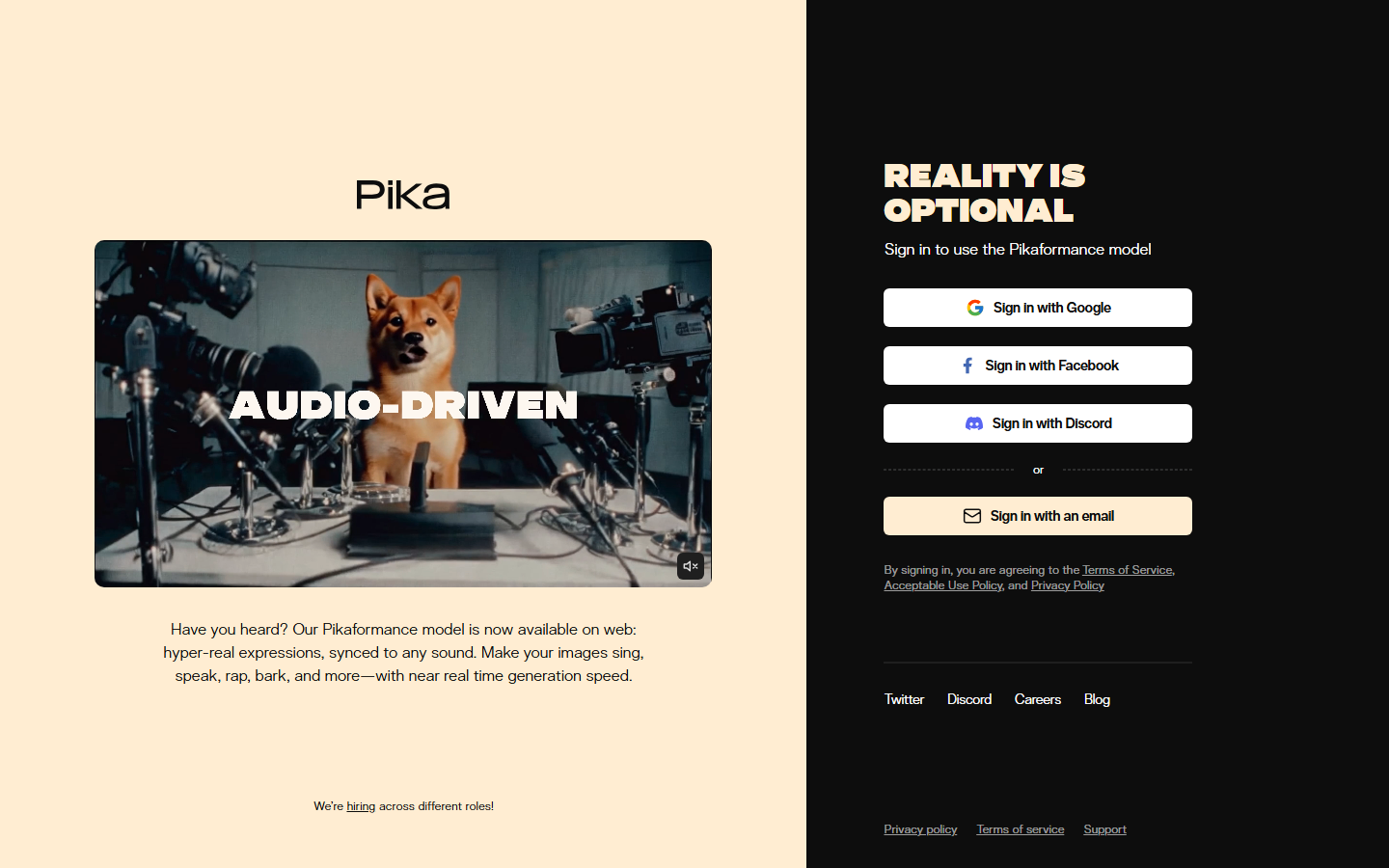
Pika Labs offers its own API program, giving developers direct access to Pika 2.2 text-to-video and image-to-video capabilities. The API supports custom aspect ratios, motion control parameters, and style presets. Documentation includes a sandbox environment for testing before you commit to production traffic. Response times vary depending on queue depth, but standard generations complete in 30 to 90 seconds.
The direct API gives you the most control over Pika-specific parameters like camera motion presets and negative prompts. If your product is built specifically around Pika's output style, the native API avoids the overhead of third-party wrappers.
Best for: Developers who want full access to every Pika-specific feature and parameter.
3. Fal.ai
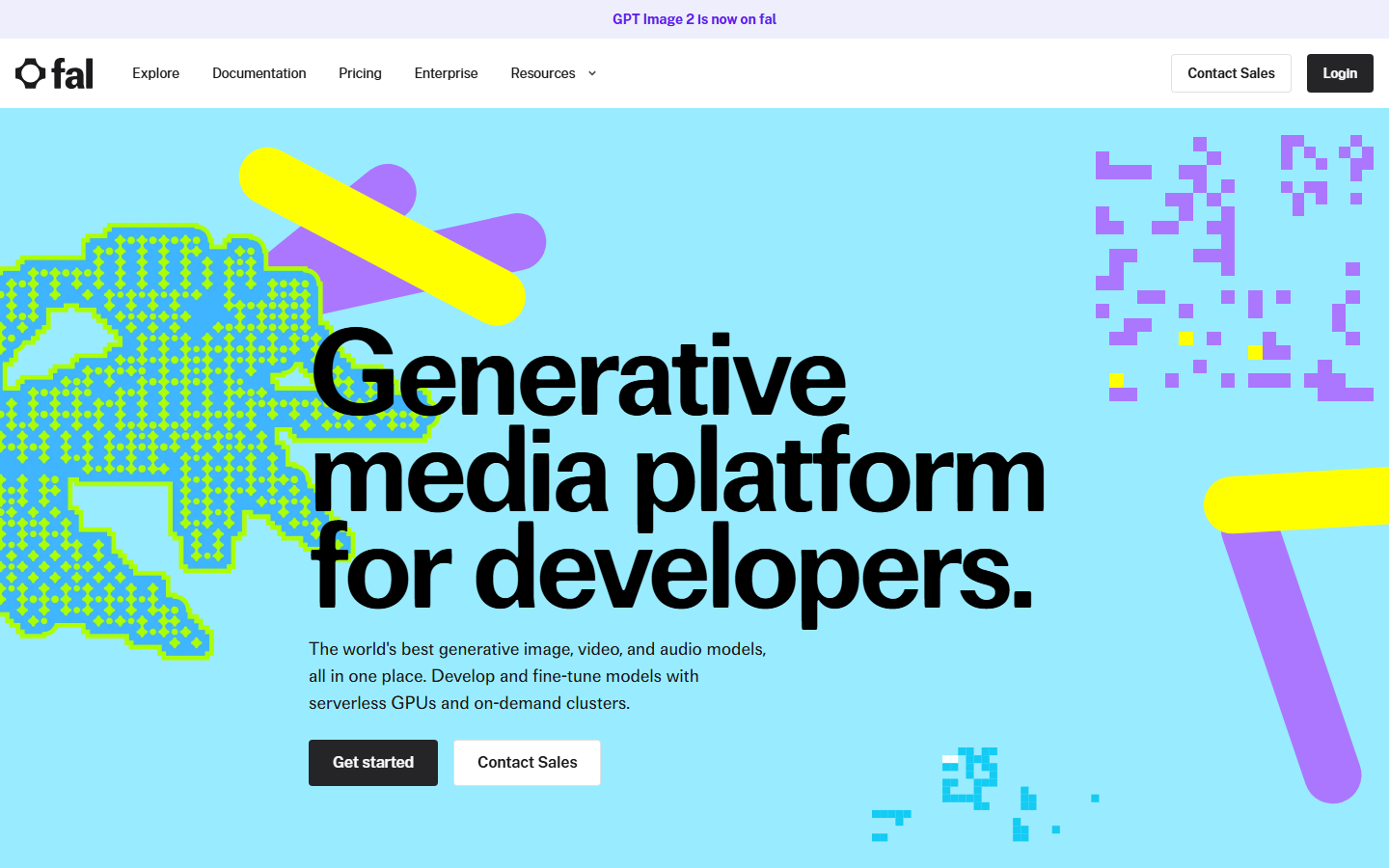
Fal.ai hosts Pika 2.2 models on its serverless inference platform. You get a clean REST API with a usage dashboard, automatic scaling, and per-second billing. The cold start times are minimal because Fal keeps popular models warm. For teams already using Fal for image models like Flux 2 Pro or Recraft, adding Pika video generation is a single API call away.
Fal handles the GPU infrastructure, so you skip the DevOps overhead of self-hosting. The platform also supports webhooks for async video generation, which is useful when you need to process large batches without holding connections open.
Best for: Teams already on the Fal ecosystem who want Pika access without a separate billing relationship.
4. Runway
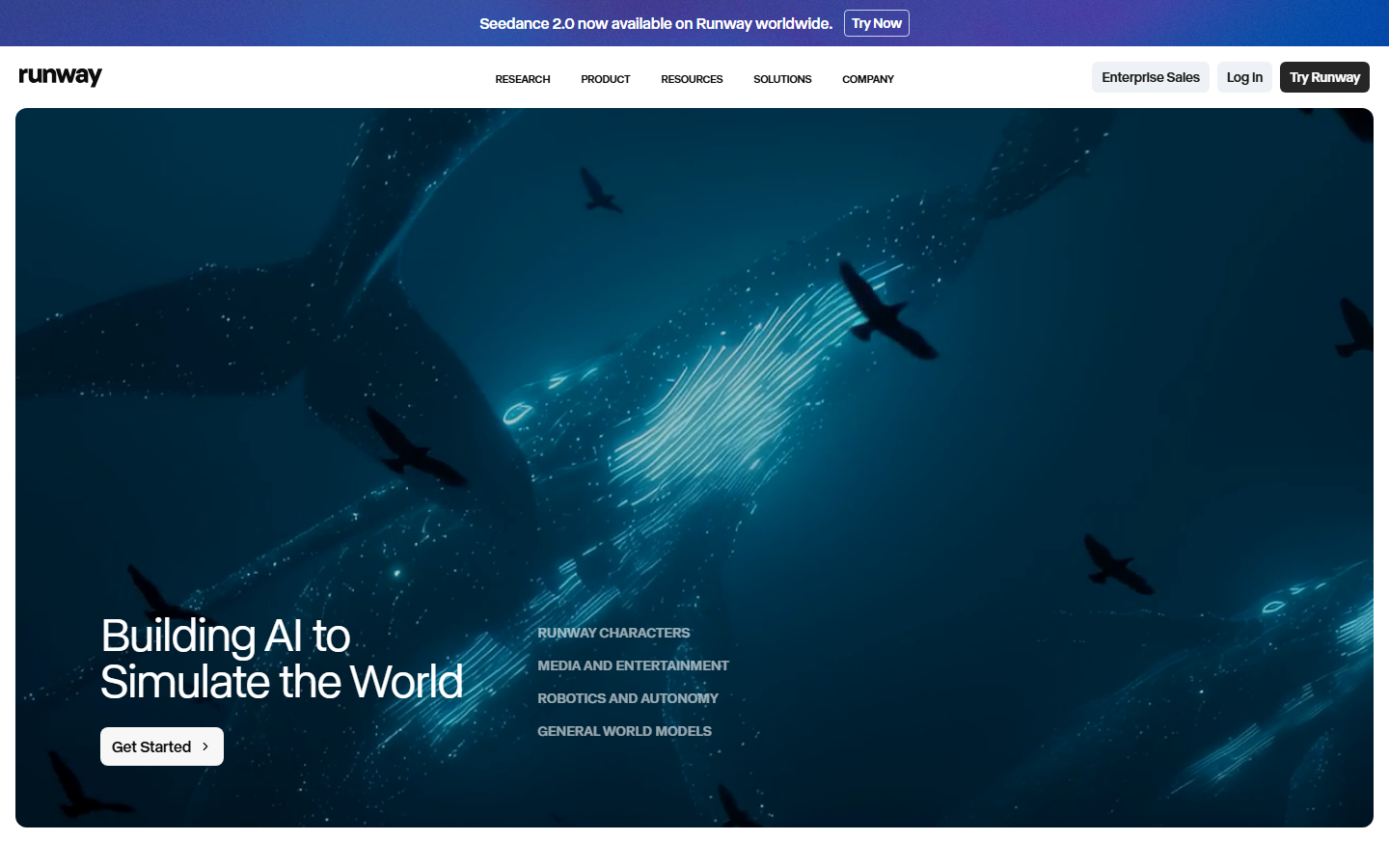
Runway provides its own video generation API through Gen-3 Alpha and Gen-4, competing directly with Pika on output quality. The API supports text-to-video, image-to-video, and video-to-video transformations. Runway's strength is in creative editing, with features like motion brushing and camera control that go beyond simple generation. For teams evaluating Runway alternatives, comparing API capabilities side-by-side with Pika is straightforward.
The pricing model uses credits, with different costs depending on resolution and duration. Enterprise plans include priority queuing and dedicated support.
Best for: Creative teams that need advanced video editing features alongside generation.
5. Replicate
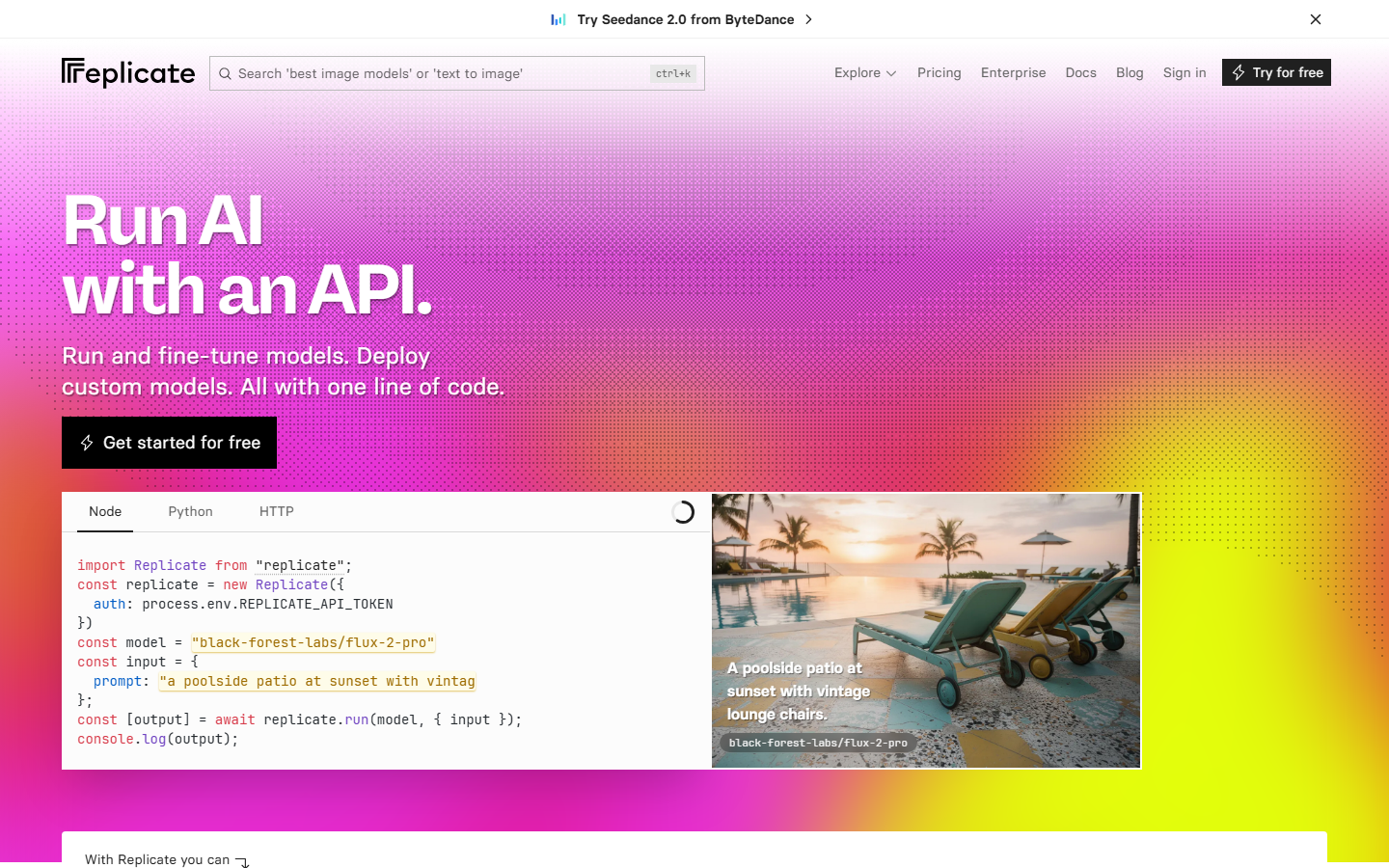
Replicate runs community-hosted versions of video generation models with a consistent API interface. While it may not always have the latest Pika release on day one, the platform shines for flexibility. You can run Stable Diffusion video models, open-source alternatives, and commercial models through the same SDK. Replicate charges per-second of compute, and you can set spending caps to avoid surprises.
The platform includes version pinning, so your production integrations stay stable even as model maintainers push updates. Webhook support and async predictions fit well into event-driven architectures.
Best for: Developers who want a unified API across many models with transparent per-second pricing.
6. Kling AI
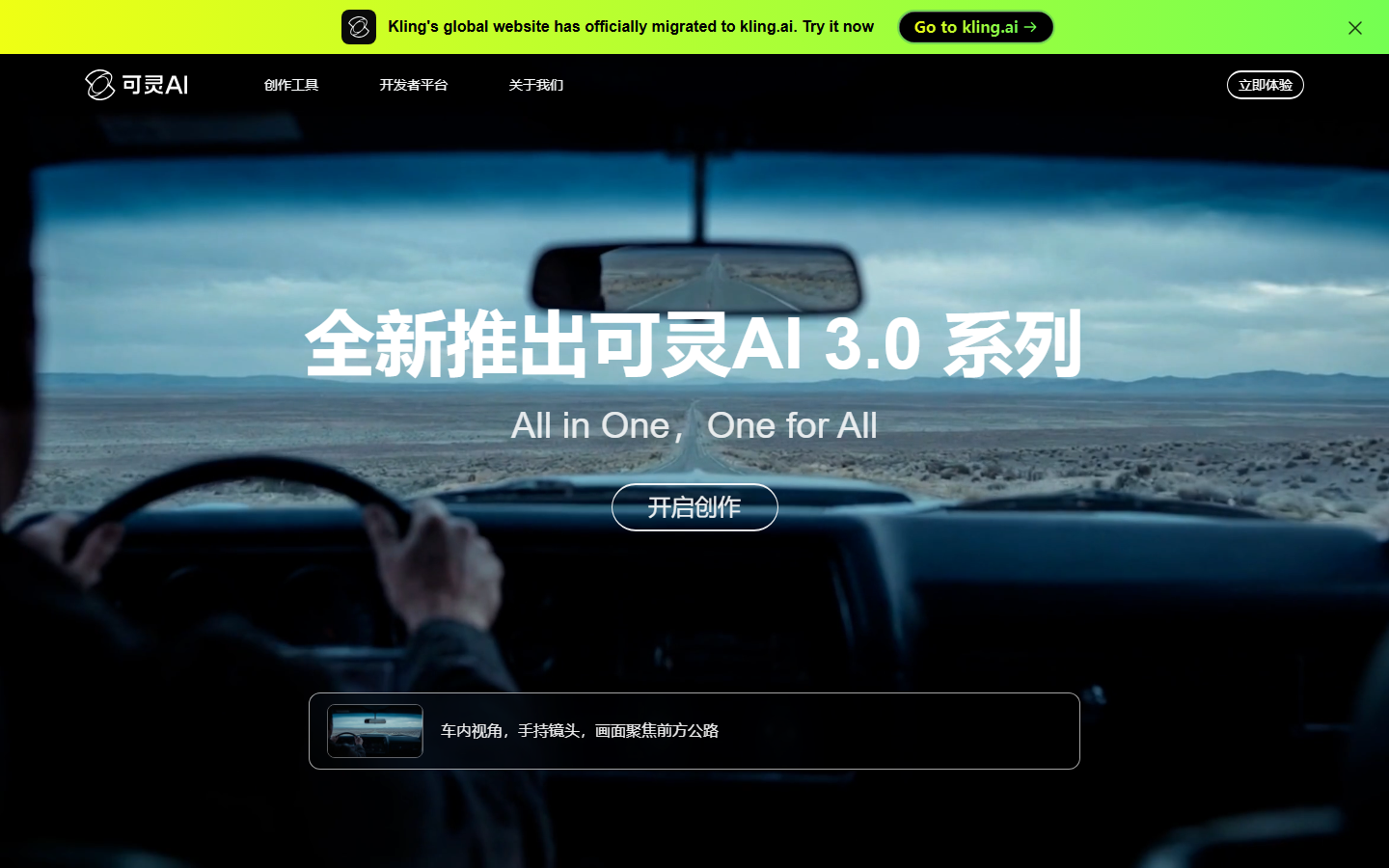
Kling AI from Kuaishou has emerged as one of the strongest video generation APIs in 2026. Kling 3.0 produces photorealistic output with strong temporal consistency, and the API supports text-to-video, image-to-video, and lip-sync generation. Motion quality often matches or exceeds Pika, especially for realistic human subjects and complex camera movements.
The API pricing is competitive, with tiered plans based on resolution and video length. Enterprise customers get priority GPU allocation and SLA guarantees.
Best for: Teams prioritizing photorealistic video quality and motion consistency.
7. Luma Dream Machine
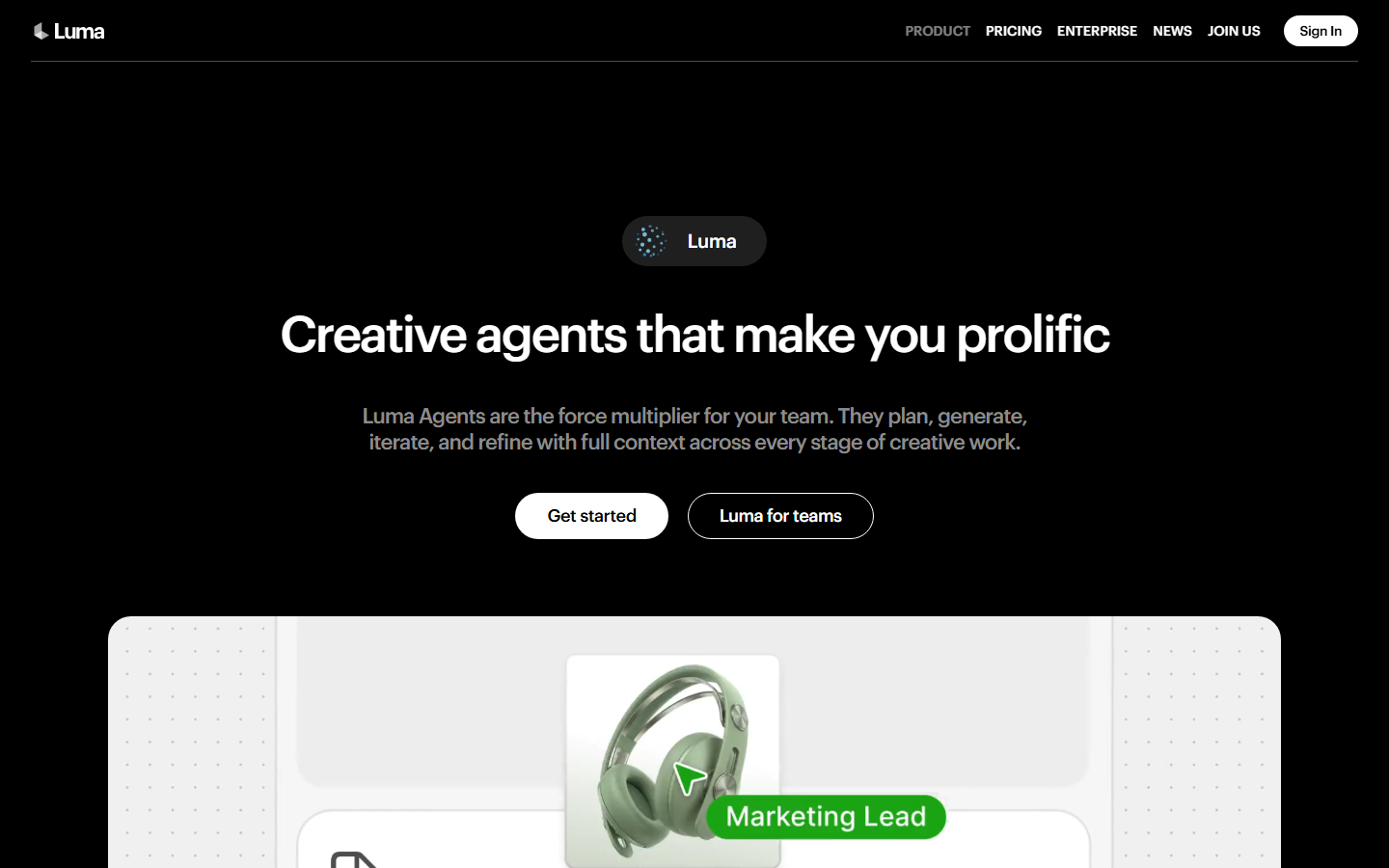
Luma Dream Machine offers a fast video generation API that excels at rapid prototyping. Generation times are among the fastest in the market, making it practical for real-time or near-real-time use cases. The API supports text-to-video and image-to-video with built-in upscaling options.
Luma's pricing is straightforward with credit-based billing. The Ray 2 model produces consistent results with good prompt adherence, though it trades some visual fidelity for speed compared to Pika or Kling.
Best for: Applications that need fast turnaround times over maximum visual quality.
Comparison Table
| Platform | Pika Access | Text-to-Video | Image-to-Video | Async/Webhooks | Pricing Model |
|---|---|---|---|---|---|
| Wireflow | Not available | Yes | Yes | Yes | Usage-based |
| Pika Labs | Native | Yes | Yes | Yes | Credits |
| Fal.ai | Hosted | Yes | Yes | Yes | Per-second |
| Runway | Own models | Yes | Yes | Yes | Credits |
| Replicate | Community | Yes | Yes | Yes | Per-second |
| Kling AI | Own models | Yes | Yes | Yes | Tiered |
| Luma | Own models | Yes | Yes | Yes | Credits |
How to Choose the Right Tool
Picking the right platform depends on your specific requirements. If you need orchestration across multiple video models, a platform like Wireflow that connects several providers in one workflow saves significant integration time. If you are committed to Pika's specific output style, going direct or through Fal gives you the most control.
For cost-sensitive projects, Replicate's per-second billing and spending caps provide predictability. For quality-first projects, Kling's photorealistic output and Runway's creative editing tools offer capabilities Pika alone does not cover. Consider also whether you need no-code canvas access for non-technical team members to experiment before your developers lock down the API integration.
Try it yourself: Pika is not available on Wireflow, so this workflow in Wireflow uses the closest option, Gemini Omni Flash 1.1. The nodes are pre-configured with a text-to-video pipeline you can extend with other video models on the canvas.
FAQ
What is the Pika Labs API?
The Pika Labs API is a programmatic interface that lets developers generate AI videos from text prompts or images without using the Pika web app. It supports text-to-video and image-to-video generation with parameters for aspect ratio, motion style, and duration.
Is the Pika Labs API free?
Pika Labs offers limited free credits for testing, but production use requires a paid plan. Third-party hosts like Fal.ai and Replicate charge per-second of compute. Free video generation tools exist, but API access typically carries costs.
How does Pika compare to Kling for API use?
Kling 3.0 generally produces more photorealistic output with better temporal consistency, while Pika excels at stylized and creative video effects. For API integration, both offer similar endpoint structures. The choice depends on your target output style and whether you need features like lip-sync generation.
Can I use Pika Labs API with other AI models?
Yes. Fal.ai lets you chain Pika with image generators, upscalers, and other video models. This is useful for multi-step pipelines where you generate an image first and then animate it with Pika. Wireflow offers the same kind of chaining with its own video models, but Pika is not one of them.
What programming languages work with the Pika Labs API?
The Pika API uses standard REST endpoints, so any language with HTTP support works. Python and JavaScript/Node.js have the most community examples. Third-party SDKs from Fal and Replicate simplify authentication and async handling.
What is the typical generation time for Pika API?
Standard text-to-video generations take 30 to 90 seconds depending on queue depth and resolution. Async webhooks let you avoid blocking while waiting. For faster results, Luma Dream Machine offers shorter generation times at the cost of some visual quality.
Is Pika Labs API suitable for production apps?
Yes, with caveats. The API handles moderate traffic well, but high-volume production use benefits from a managed orchestration layer that handles retries, rate limiting, and failover to alternative models when Pika's queue is full.
How do I get started with Pika Labs API?
Sign up at pika.art, request API access through their developer portal, and start with the sandbox environment. Alternatively, access Pika through Fal.ai or Replicate for a faster onboarding process with usage dashboards included.

Co-Founder & Operations at Wireflow
Runs client operations and content strategy at Wireflow. Works directly with creative teams and agencies to build production AI workflows.
- Content Strategy
- Client Operations
Get unlimited ad creatives today.
One call to see if we are a fit and scope the first ad. If it fits, your first batch lands inside week one.