How to Animate Still Images With AI (2026 Step-by-Step)

In this article▾
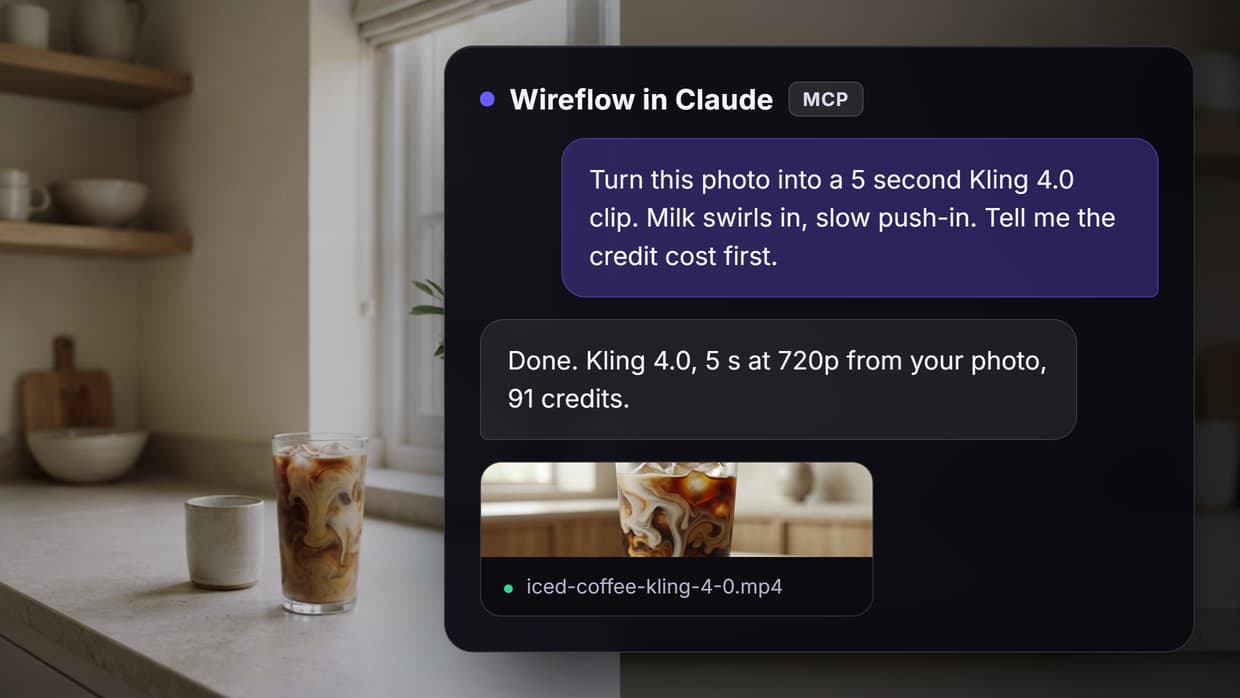
Turning a static photo into a moving clip used to require frame-by-frame work in After Effects or hours of rotoscoping. In 2026, AI image-to-video models handle that process in seconds. Wireflow lets you chain an image input directly into models like Kling, Seedance, or Veo so you can animate any still photo inside a single visual workflow. This guide walks through the full process, from preparing your source image to exporting a polished clip.
An animated product shot can also be the start of a product explainer from a photo, with a voiceover and captions.
What You Need Before You Start
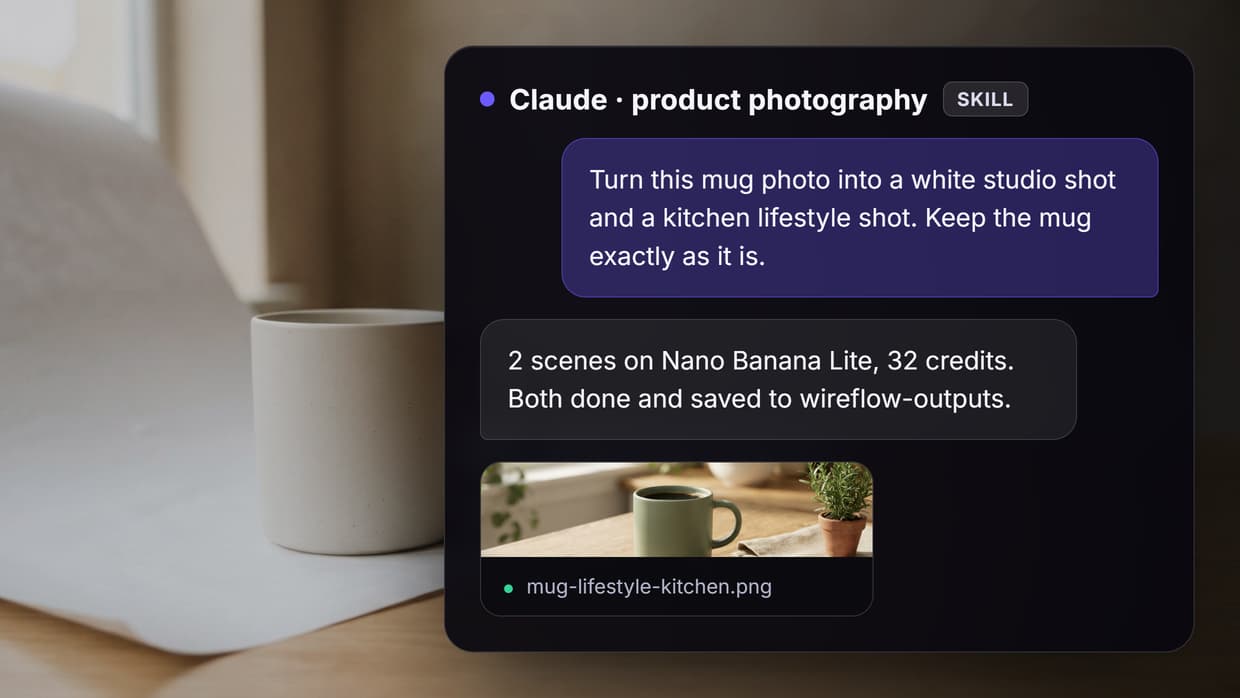
Before jumping into animation, gather a few things. You need a high-resolution source image, ideally 1024x1024 or larger, with a clear subject and minimal compression artifacts. JPEG and PNG both work, though PNG preserves more detail in areas with subtle gradients like skies or water surfaces. If your source image is low resolution, run it through an upscaler first to avoid blurry output.
For a hands-on look at this process in action, check out the image-to-video AI feature page where you can test it directly.
You should also prepare a short motion prompt that describes the animation you want. Think about what elements should move and how. "Clouds drifting left, water rippling gently, camera slowly pushing forward" gives the model specific instructions rather than leaving it to guess. The more precise your text prompt, the more controlled the output.
The same still-to-motion idea drives an AI logo animation workflow, where the source frame is a brand mark instead of a photo.
To wire that same still-to-motion step into your own stack, an image to video API turns a start frame into a clip from one hosted call.
Build this in Wireflow
Make the same kind of asset on a canvas you control, with a free account and no credit card.
Step 1: Choose the Right AI Model
Not all image-to-video models produce the same results. Each has strengths depending on your source material and desired output style.
Kling Video 3.0 handles natural scenes well, producing smooth motion for landscapes, portraits, and product shots. It supports 16:9 aspect ratios and generates clips up to 10 seconds. It works best when the source image has clear depth separation between foreground and background elements, making it a reliable choice for AI video generation.
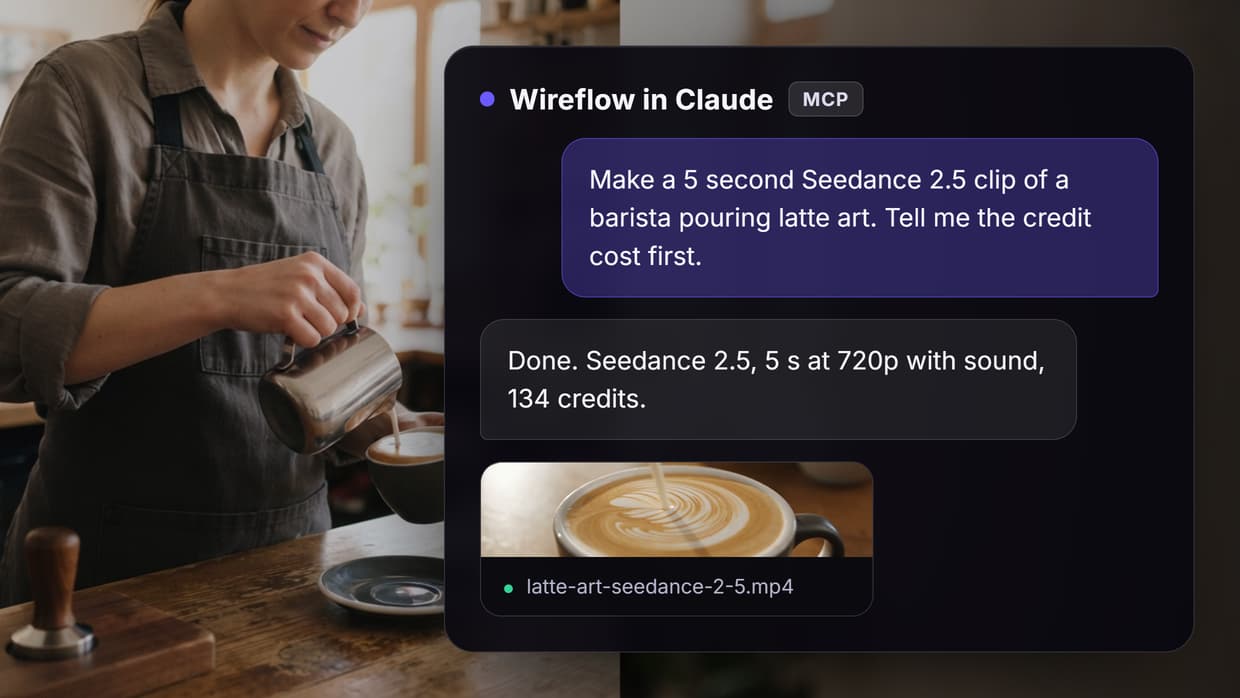
Seedance 2.0 excels at character animation and scenes with complex motion. If your still image features a person or animal, Seedance tends to produce more natural body movement than other models. Read the Seedance 2.0 model page for supported input formats and resolution limits.
Veo 3 from Google DeepMind produces high-fidelity clips with accurate physics simulation. It handles reflections, fabric movement, and particle effects better than most alternatives, though generation times are longer. For projects requiring premium quality, the AI video pipeline setup makes batch processing practical.
Step 2: Prepare Your Source Image
Image quality directly affects animation quality. Start by checking your source for common issues that cause problems during animation.
Resolution matters. Models downsample internally, but starting with a higher resolution gives the model more detail to work with. If your image is under 1024px on any side, use an AI image upscaler to increase resolution before animating.
Remove distracting elements. Watermarks, heavy text overlays, or compression blocks in the image will animate along with everything else, creating visual artifacts. Clean these up beforehand using an AI image editor or inpainting tool.
Consider composition. Images with clear foreground, midground, and background layers animate more convincingly because the model can apply different motion speeds to each layer, creating parallax depth. A flat composition with everything at the same distance tends to produce less convincing results.
Step 3: Write an Effective Motion Prompt
The motion prompt tells the model what to animate and how. A generic prompt like "make this move" produces generic results. Specific prompts produce controlled, intentional animation.
Structure your prompt around three elements:
- Subject motion - what the main subject does ("woman turns head slightly left, hair moves with the turn")
- Environmental motion - what happens in the background ("leaves sway gently, clouds drift right")
- Camera motion - how the virtual camera moves ("slow push forward" or "subtle parallax shift")
Keep prompts under 75 words. Most models weight the first few tokens heavily, so put the most important motion instruction first. Avoid contradictory instructions like "fast zoom in, slow dolly out" which confuse the model and produce jittery output. The AI workflow templates library includes pre-written motion prompts for common animation types that you can use as starting points.
Step 4: Generate and Iterate
Run your first generation with default settings. Review the output for three things: motion accuracy (did the right elements move?), temporal consistency (does the subject's shape stay stable frame to frame?), and overall smoothness (are there any sudden jumps or flickers?).
If the motion is too aggressive, reduce the motion intensity or add "subtle" and "gentle" to your prompt. If the subject warps or distorts, try a different model or crop the image tighter around the subject. Running multiple generations with slight prompt variations and comparing results is the fastest way to land on the right output. Using a batch generation setup saves time when testing several prompt variations at once.
Most professional workflows involve 2-3 iterations before arriving at a final clip. Do not expect the first generation to be publish-ready, especially with complex scenes involving multiple moving elements or human faces.
Step 5: Chain Models for Better Results
Single-model animation works for simple scenes, but chaining multiple models together produces significantly better results for complex projects. A common pipeline looks like this:
- Upscale the source image to maximum resolution
- Remove background or isolate the subject if needed
- Generate the animation with your chosen video model
- Enhance the output with a video upscaler or frame interpolation model
This multi-step approach lets each model focus on what it does best rather than asking one model to handle everything. AI model chaining connects these steps visually so you can adjust any stage without rebuilding the entire pipeline. The concept is similar to how creative workflow platforms operate, where each node handles a specialized task.
Step 6: Export and Use Your Animated Clip
Once you have a final clip, consider the output format. Most models export MP4 with H.264 encoding, which works for web, social media, and most editing software. If you need higher quality for professional editing, check whether your model supports ProRes or PNG sequence export.
Common use cases for animated still images include social media content (animated product photos get 2-3x more engagement than static posts), website hero sections, email marketing visuals, and video content creation for platforms like TikTok and Instagram Reels. For commercial projects, verify the licensing terms of the AI model you used, as some restrict commercial use of generated content. Check pricing plans to confirm commercial usage rights for your specific workflow.
Try it yourself: Build this workflow in Wireflow - the nodes are pre-configured with the exact image-to-video setup discussed above, including the Gemini Omni Flash 1.1 model with optimized motion prompt settings.
Frequently Asked Questions
What types of images work best for AI animation?
Photos with clear depth layers, good lighting, and minimal noise produce the best results. Landscape photos, portraits, and product shots with clean backgrounds are ideal candidates. Heavily compressed images, screenshots with text, or very dark photos tend to produce lower quality animations.
How long are the generated video clips?
Most image-to-video models generate clips between 3 and 10 seconds. Kling Video supports up to 10 seconds, while Seedance typically produces 4-5 second clips. For longer animations, you can chain multiple generations together or use video extension models.
Can I control which parts of the image move?
Yes, through careful prompt engineering. Specifying "only the clouds move, the building stays static" helps models isolate motion to specific regions. Some models also support motion masks where you paint which areas should animate, giving you pixel-level control.
Do I need a powerful computer to animate images with AI?
No. Cloud-based platforms handle all the GPU processing on their servers. You only need a browser and a stable internet connection. Generation typically takes 30-90 seconds depending on the model and output resolution.
What resolution should my output video be?
For social media, 1080x1920 (vertical) or 1920x1080 (horizontal) is standard. For web headers and presentations, match the display resolution of your target platform. Starting with a high-resolution source image gives you flexibility to export at multiple sizes.
Can I animate AI-generated images, or only real photos?
Both work. AI-generated images from tools like Midjourney, DALL-E, or Recraft actually animate well because they tend to have clean lines and consistent lighting. Real photos work equally well as long as they meet the resolution and quality guidelines outlined in Step 2.
Is there a free way to try image-to-video AI?
Several platforms offer free tiers or trial credits. Look for services that provide 3-5 free generations so you can test different models with your specific images before committing to a paid plan.
How do I fix flickering or warping in the generated video?
Flickering usually comes from low-resolution source images or overly aggressive motion prompts. Try reducing the motion intensity, increasing source image resolution, or switching to a model better suited for your content type. Running frame interpolation on the output can also smooth out minor flickering.

Co-Founder & Operations at Wireflow
Runs client operations and content strategy at Wireflow. Works directly with creative teams and agencies to build production AI workflows.
- Content Strategy
- Client Operations
Make AI videos and ads.
Start free, no card needed.