Choosing the right AI voice generator can save content creators hours of recording, editing, and re-recording voiceovers. Whether you produce YouTube videos, podcasts, e-learning courses, or social media clips, today's text-to-speech tools deliver voices that sound remarkably human. Wireflow lets you chain multiple AI models into a single pipeline, including TTS nodes that plug directly into your video and audio workflows. This guide covers the eight best AI voice generators available right now, with honest comparisons on quality, pricing, and creator-specific features.
Quick Summary
- Wireflow AI - Best for multi-model AI workflows with built-in TTS
- ElevenLabs - Best overall voice quality and cloning
- Murf AI - Best for enterprise teams and compliance
- Fish Audio - Best value with top benchmark scores
- LOVO AI (Genny) - Best for YouTube automation
- Descript - Best for podcast and video editors
- Speechify - Best consumer read-aloud platform
- Hume AI (Octave) - Best for emotionally expressive voices
1. Wireflow AI
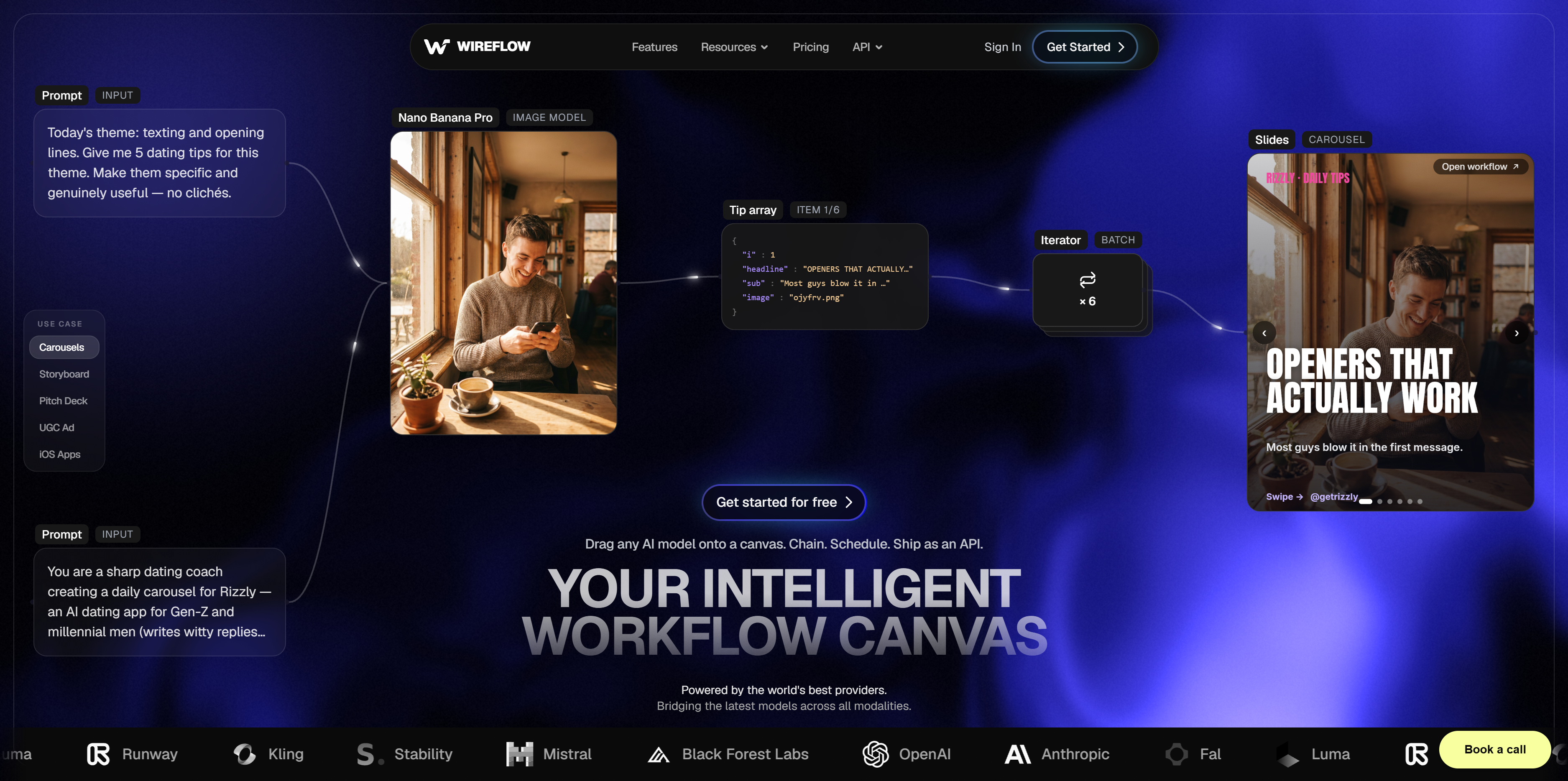
Wireflow takes a different approach to voice generation by embedding TTS as one node in a larger AI creative workflow. Instead of generating audio in isolation, you can connect a text-to-speech model directly to video generation, image creation, or subtitle rendering inside a single visual canvas. For a hands-on look at this in action, check out the best ai voice generators for content creators 2026 feature page.
The platform supports multiple TTS providers through its model chaining system, so you can swap between ElevenLabs, OpenAI TTS, or other providers without rebuilding your pipeline. This makes Wireflow particularly useful for creators who need voiceovers as part of a larger production process rather than as a standalone task.
Best for: Creators who want TTS integrated into automated content pipelines Pricing: Free tier available, paid plans from $9/month
2. ElevenLabs
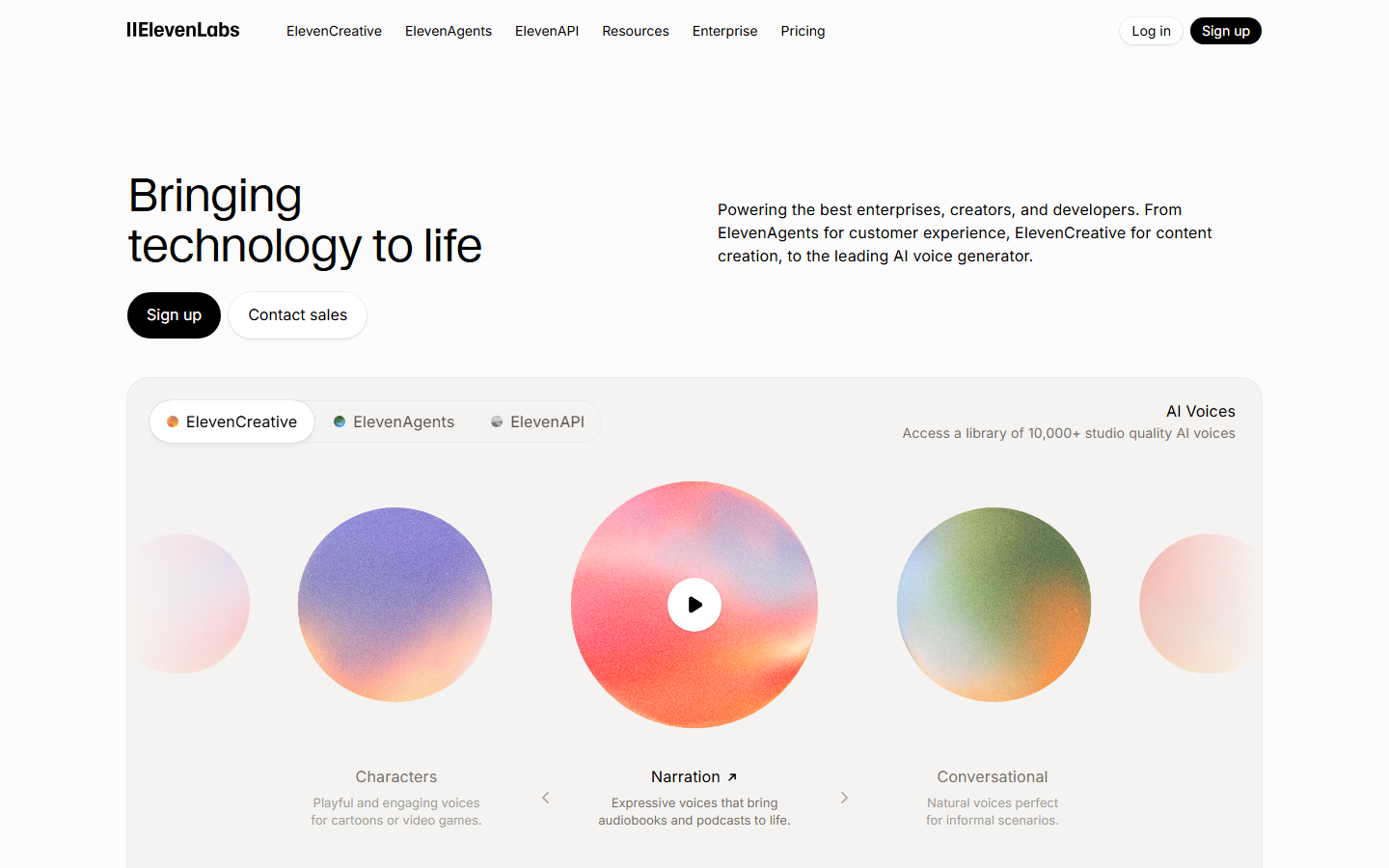
ElevenLabs remains the benchmark for AI voice quality in 2026. Their latest models produce speech with natural pauses, breath sounds, and emotional variation that consistently ranks at or near the top of blind listening tests. Voice cloning requires just one minute of sample audio and supports 128 languages, making it the go-to choice for creators with multilingual video content needs.
The platform offers granular controls for stability, clarity, and style exaggeration. Creators can adjust how closely the output matches the original voice versus how expressive it sounds. The API is well-documented and integrates with most workflow automation tools, including Zapier, Make, and direct REST calls.
Best for: Creators who prioritize voice quality above all else Pricing: Free (10K chars/month), Starter $5/month, Creator $22/month, Pro $99/month
3. Murf AI
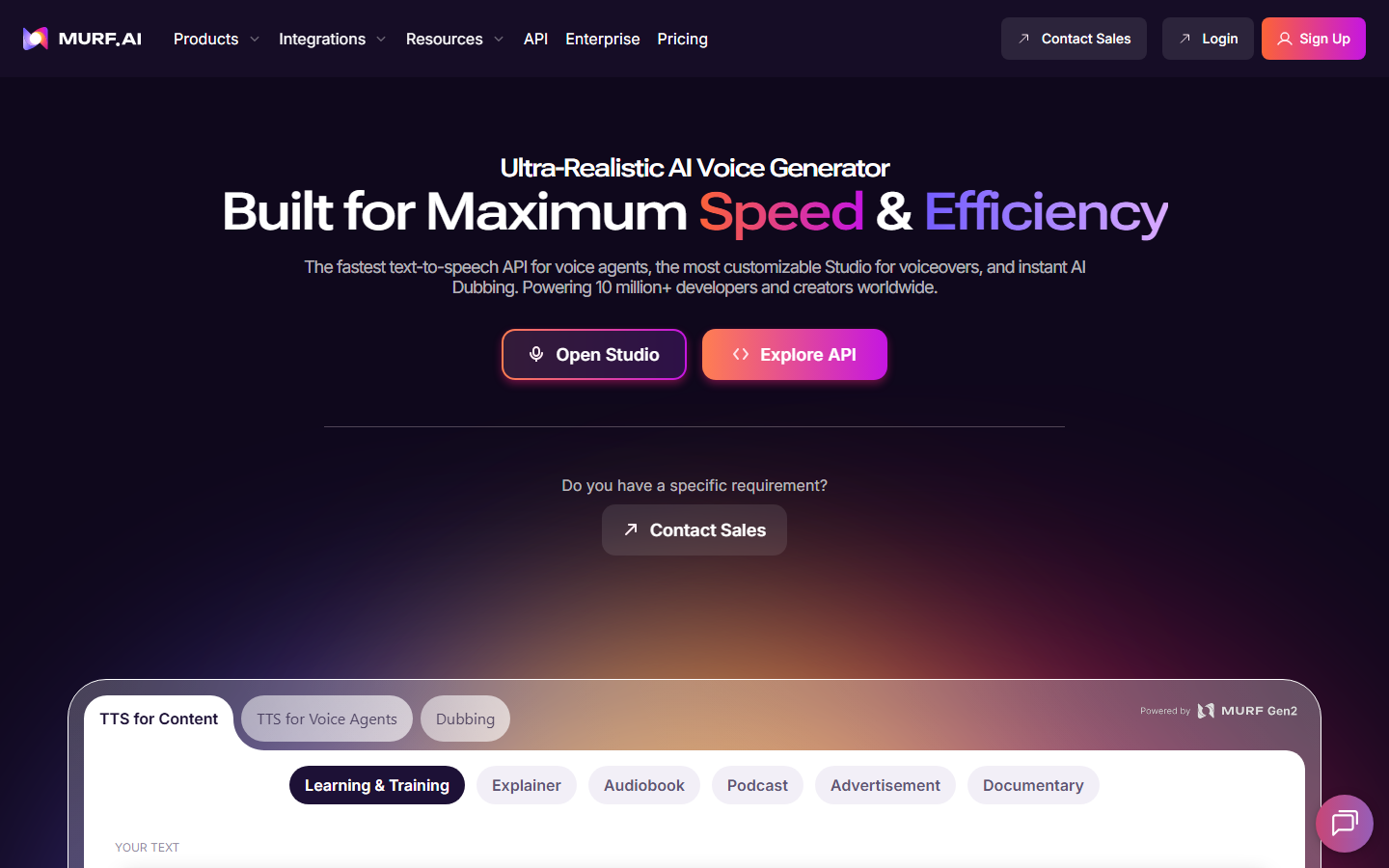
Murf AI focuses on professional and enterprise use cases with SOC 2 Type II, HIPAA, and GDPR certifications. Their Falcon model delivers 55ms latency, which matters for real-time applications and interactive content. The built-in video editor lets you sync voiceovers directly to a timeline without exporting to a separate tool, streamlining the video production process.
With 200+ voices across 35+ languages, Murf covers most content creation scenarios. The AI dubbing feature automatically translates and re-voices content, preserving the original speaker's tone and cadence. This is especially valuable for creators looking to repurpose content across multiple language markets.
Best for: Teams needing compliance certifications and built-in video editing Pricing: Free (10 min total), Creator $29/month, Business $99/month
4. Fish Audio
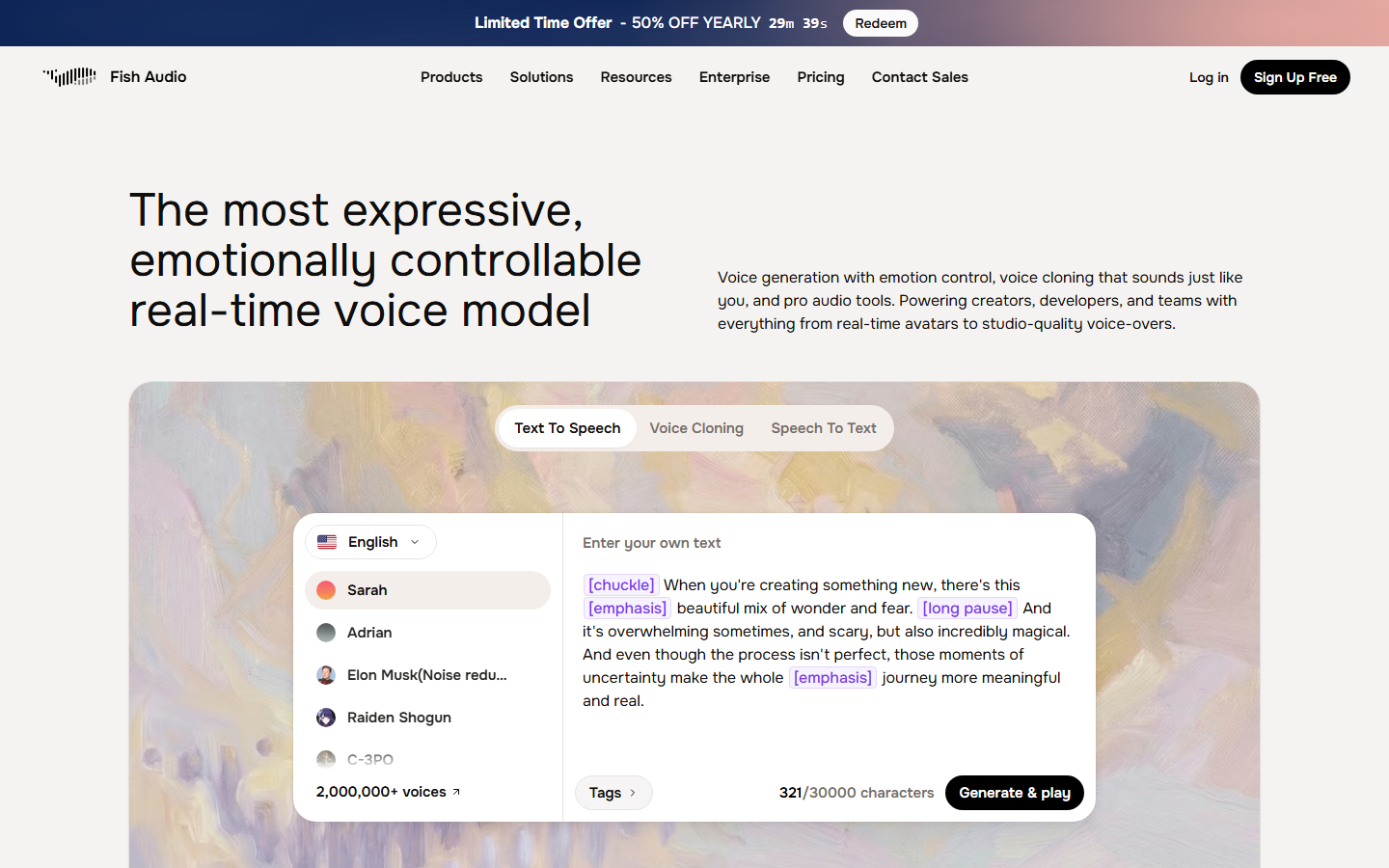
Fish Audio has quietly climbed to the top of ELO benchmarks with their S2 Pro model, trained on over 10 million hours of audio data. Voice cloning needs just 15 seconds of sample audio, the lowest requirement among major providers. Their emotion tags system lets you mark specific words or phrases with emotional cues like excitement, sadness, or whisper, giving creators fine-grained control over delivery without re-recording audio content.
At $5.50/month for paid access (with a free tier offering 7 minutes/month), Fish Audio is the strongest value proposition on this list. The quality-to-price ratio makes it particularly appealing for independent creators and small teams who need professional output on a limited production budget.
Best for: Budget-conscious creators who want top-tier voice quality Pricing: Free (7 min/month), Paid from $5.50/month
5. LOVO AI (Genny)
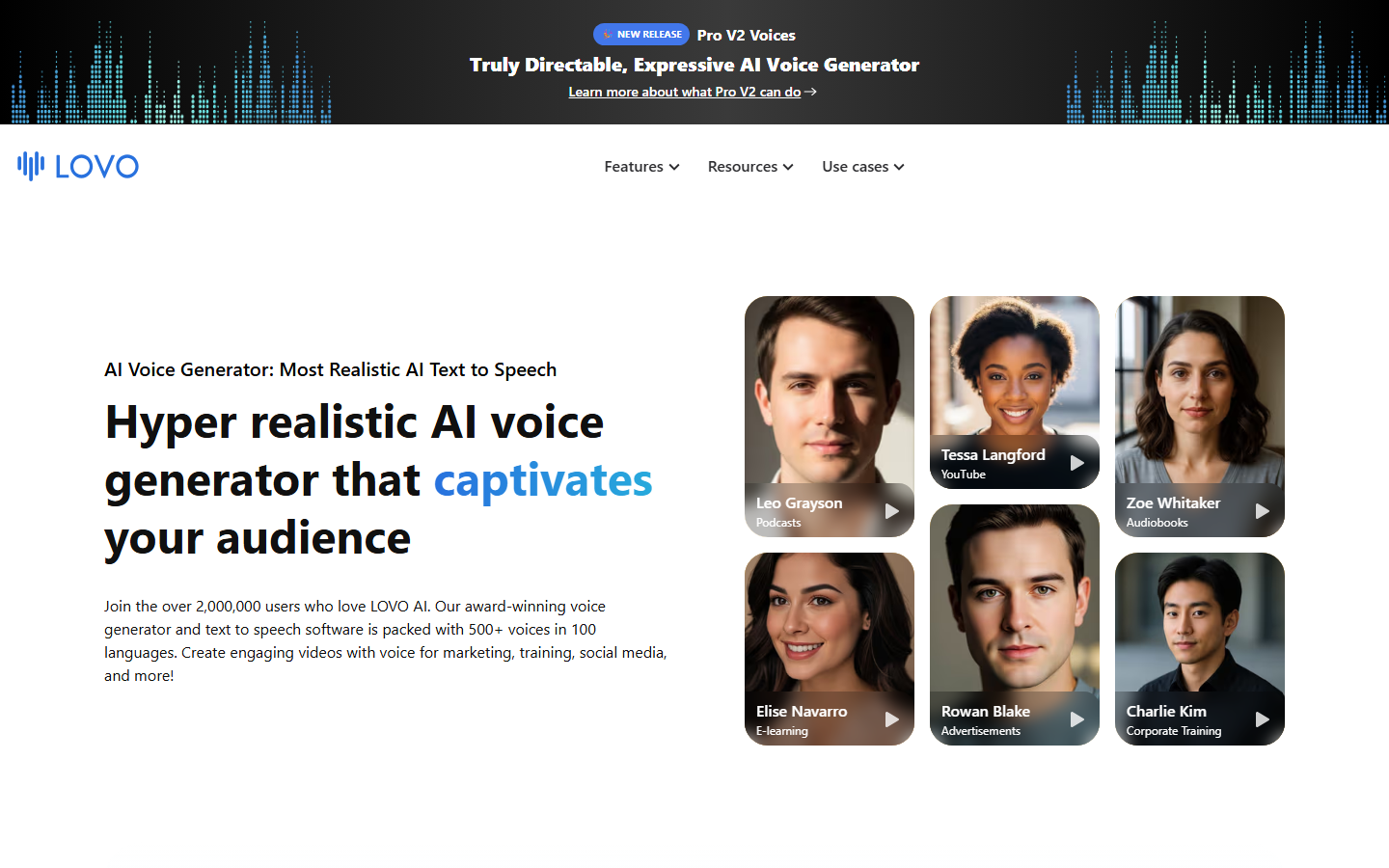
LOVO's Genny platform combines TTS with a video editor and AI script writer in one interface. With 500+ voices, 100+ languages, and 30 distinct voice emotions, it covers a wide range of content styles. The script-to-video pipeline is particularly useful for YouTube creators who want to go from an outline to a finished voiceover video without switching between multiple AI generation tools.
The platform's batch processing feature lets you queue multiple scripts and generate all voiceovers in parallel. This saves significant time for creators producing daily or weekly content series. LOVO also offers a pronunciation editor for technical terms and brand names that TTS models commonly mispronounce, which is a detail that matters for professional video output.
Best for: YouTube creators who need script-to-video automation Pricing: Free tier, Basic $24/month, Pro $48/month, Pro+ $149/month
6. Descript

Descript approaches voice generation differently by embedding it inside a full audio and video editor. Their Overdub feature lets you clone your own voice and then edit your script like a text document. Delete a word from the transcript and the audio updates automatically. This makes Descript the natural choice for podcast editors and video creators who need TTS as a correction tool rather than a full replacement.
Voice cloning works in 14 languages, and the filler word removal, studio sound enhancement, and automatic transcription features round out the editing toolkit. The main limitation is that Descript's TTS quality, while good, doesn't match dedicated providers like ElevenLabs or Fish Audio for standalone voiceover generation.
Best for: Podcast and video editors who want TTS built into their editing workflow Pricing: Free (1 hr), Hobbyist $24/month, Creator $35/month, Business $65/month
7. Speechify
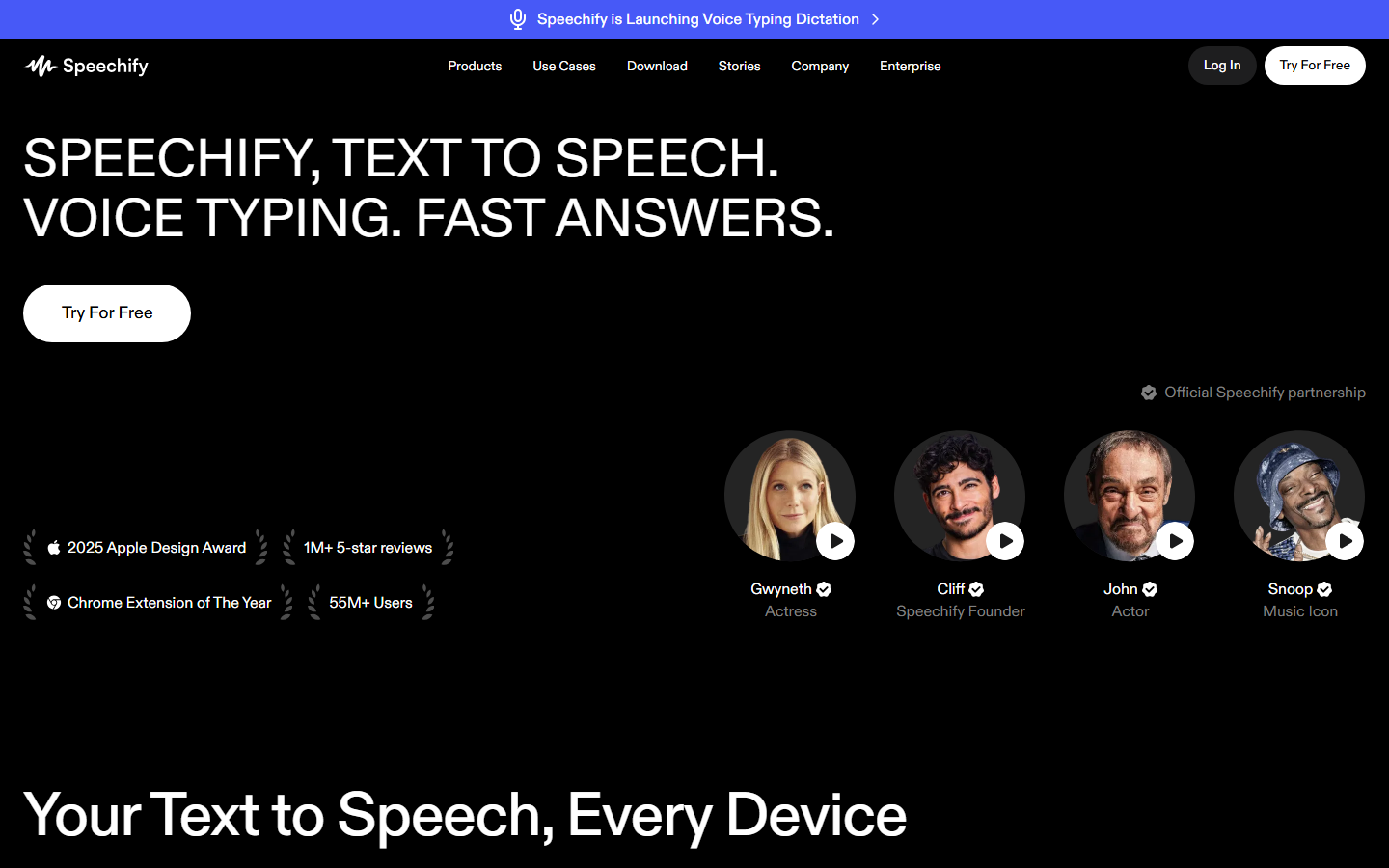
Speechify started as a read-aloud app and has expanded into a full TTS studio with 1,000+ voices across 60+ languages. The consumer-facing product excels at converting articles, PDFs, and documents into natural-sounding audio, with playback speeds up to 5x. Their OCR scanning feature can read text from images and screenshots, a unique capability among AI content tools.
Speechify Studio, their creator-focused product, offers voice cloning and longer-form audio generation. The platform has attracted 55 million+ users, largely through its browser extension and mobile app. For content creators, the main draw is repurposing written content into audio formats for podcasts or accessibility, though dedicated studio users may find the voice customization options more limited than ElevenLabs or Murf.
Best for: Creators who repurpose written content into audio Pricing: Free, Premium $29/month, Studio Starter $19/month, Studio Creator $49/month
8. Hume AI (Octave)
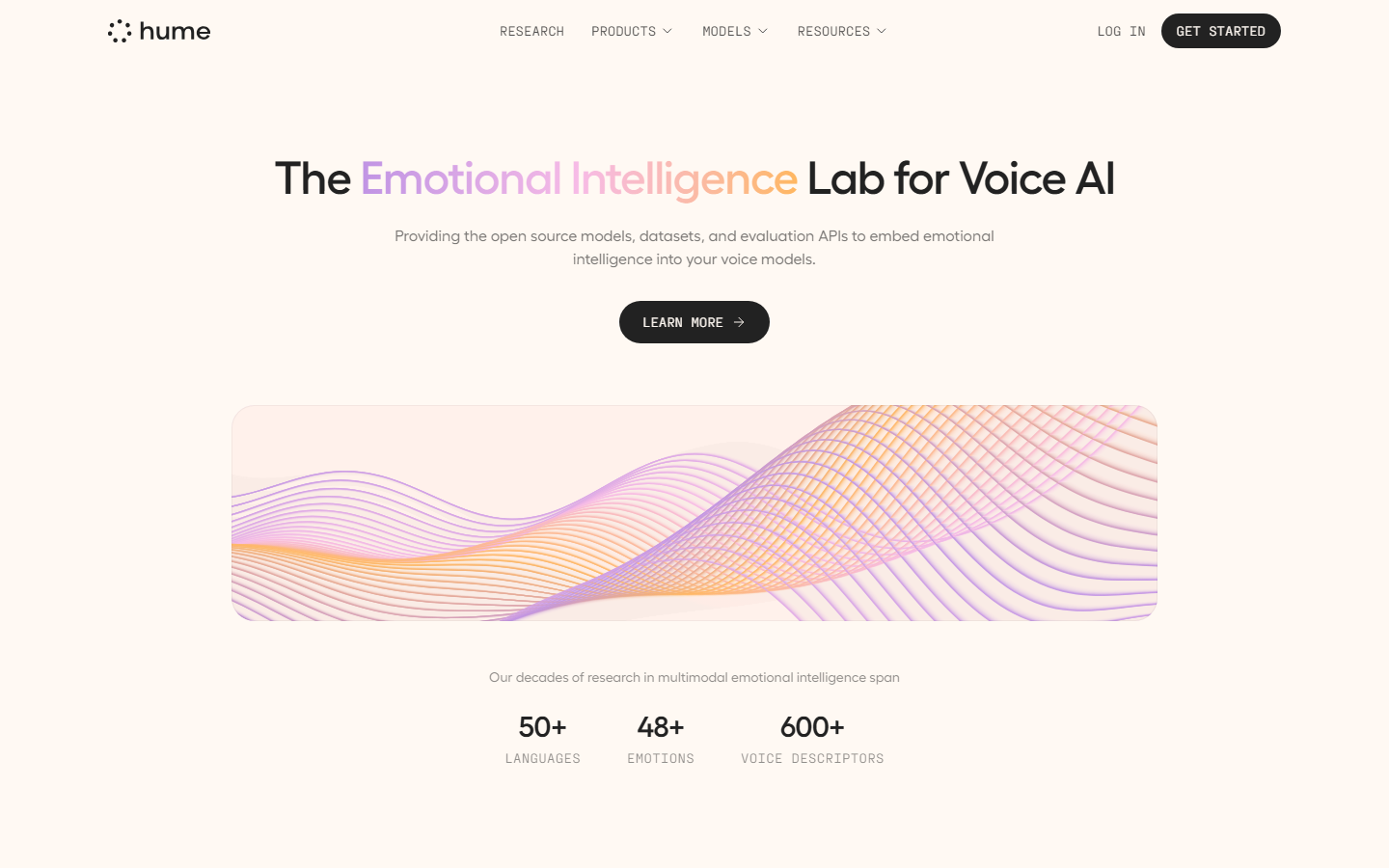
Hume AI's Octave 2 model stands apart by understanding context and generating emotionally appropriate speech without explicit instruction. You can also direct emotions using natural language prompts like "speak with gentle excitement" or "whisper fearfully." The model supports 11 languages with under 200ms latency, positioning it for both pre-recorded and real-time voice applications.
Octave is primarily developer-focused with API-first pricing under 1 cent per minute for dedicated deployments. Content creators who can work with APIs or use integration platforms will find Hume's emotional range unmatched. For creators who prefer a GUI, pairing Hume's API with a visual workflow builder bridges the gap between technical capability and practical usability.
Best for: Developers and technical creators building emotionally expressive voice applications Pricing: API-based, under 1 cent/minute with dedicated deployments
Comparison Table
| Tool | Best For | Voice Cloning | Languages | Free Tier | Starting Price |
|---|---|---|---|---|---|
| Wireflow AI | Multi-model pipelines | Via integrations | Multiple | Yes | $9/mo |
| ElevenLabs | Voice quality | Yes (1 min sample) | 128 | Yes (10K chars) | $5/mo |
| Murf AI | Enterprise/compliance | Yes | 35+ | Yes (10 min) | $29/mo |
| Fish Audio | Value + quality | Yes (15 sec sample) | 80+ | Yes (7 min) | $5.50/mo |
| LOVO AI | YouTube automation | Yes | 100+ | Yes | $24/mo |
| Descript | Podcast editing | Yes (14 languages) | 14 | Yes (1 hr) | $24/mo |
| Speechify | Read-aloud + repurposing | Yes (Studio) | 60+ | Yes | $19/mo |
| Hume AI | Emotional expression | No | 11 | API credits | ~$0.01/min |
Frequently Asked Questions
What is the most realistic AI voice generator in 2026?
ElevenLabs and Fish Audio consistently score highest in blind listening tests. ElevenLabs offers the widest language support at 128 languages, while Fish Audio achieves comparable quality at a lower price point. Both support voice cloning for personalized output.
Can I clone my own voice with AI?
Yes, most platforms on this list support voice cloning. ElevenLabs needs about 1 minute of sample audio, Fish Audio requires just 15 seconds, and Descript's Overdub creates a clone from a training script. Always check each platform's terms of service regarding commercial use of cloned voices.
Are free AI voice generators good enough for YouTube?
Free tiers work for testing and short-form content. ElevenLabs offers 10,000 characters per month free, and Fish Audio provides 7 minutes. For regular YouTube publishing, you'll likely need a paid plan to avoid watermarks, character limits, or restricted commercial licensing.
How do AI voice generators handle multiple languages?
Most tools support multilingual output, but quality varies by language. ElevenLabs leads with 128 languages, followed by LOVO AI at 100+ and Fish Audio at 80+. For non-English content, test your specific language before committing to a paid plan, as quality drops significantly for less common languages.
What is voice cloning and is it legal?
Voice cloning uses a short audio sample to create a synthetic replica of a specific voice. It is legal when you have consent from the voice owner. Several U.S. states and the EU have enacted laws requiring disclosure of AI-generated audio. Always obtain written permission before cloning someone else's voice.
Can I use AI-generated voices for commercial content?
Yes, but licensing terms differ by platform and plan tier. Free tiers often restrict commercial use or require attribution. Paid plans on ElevenLabs, Murf, and LOVO explicitly grant commercial rights. Check each platform's license agreement for your specific use case.
How do I make AI voices sound more natural?
Use punctuation and formatting to control pacing. Add commas for short pauses and periods for longer breaks. Fish Audio's emotion tags and Hume AI's natural language prompts give you direct control over tone. Breaking long scripts into shorter paragraphs also helps maintain consistent quality across the output.
What is the cheapest AI voice generator with good quality?
Fish Audio at $5.50/month offers the best quality-to-price ratio, scoring at or near the top of independent benchmarks. ElevenLabs Starter at $5/month is another strong option, though with tighter usage limits. For zero-cost options, the open-source Kokoro 82M model produces surprisingly good results if you can self-host it.
Try it yourself: Build this workflow in Wireflow - the nodes are pre-configured with a text-to-speech pipeline using ElevenLabs, ready to generate voiceovers from any script you provide.
Whatever voice generator you choose from this list, the ability to integrate it into a repeatable, automated process is what separates occasional use from a scalable content operation. Wireflow brings together TTS, image generation, video creation, and more inside one visual canvas, so you connect nodes and let the workflow handle the rest.