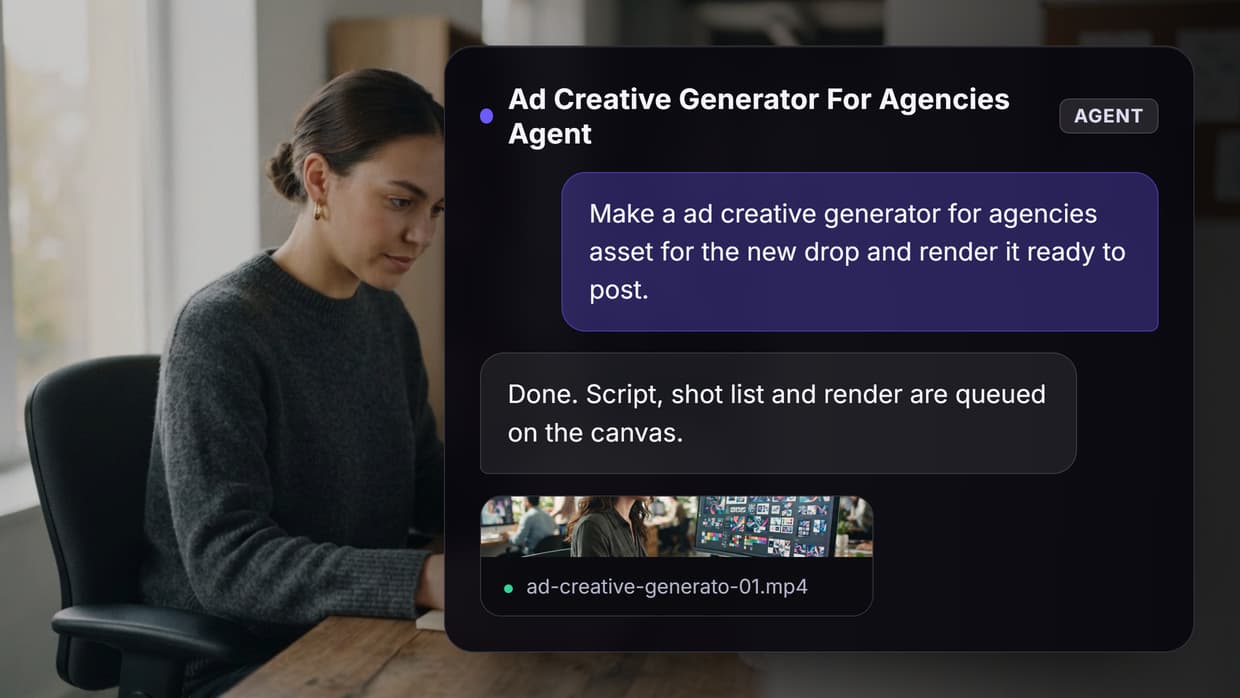
AI ad agency software splits into two camps in 2026: ad ops suites that manage clients, budgets and reporting, and generation engines that produce the creative itself. We ranked eight tools on what matters when ads are billable work across several accounts: client separation, what 500 assets a month costs, automation you can trigger without opening a browser, and whether the finished asset ships under your brand or the vendor's. Wireflow takes the top spot because the ad pipeline is a node graph the agency owns and can call as an API, rather than a seat rented per client.
Quick summary: the 8 tools ranked
- Wireflow: chain any AI models into an ad pipeline you own. Best overall for agencies.
- AdCreative.ai: scored statics, video and copy from a short brief. Best for variant volume.
- The Brief (formerly Creatopy): on brand ad sets published to 40+ networks. Best for display and banner work.
- Smartly: creative production and media buying in one system. Best for enterprise retainers.
- Omneky: generates, launches and optimises across channels. Best for managed performance accounts.
- Madgicx: AI ads manager built around Meta accounts. Best for Meta buying and reporting.
- Pencil: model aggregation with enterprise governance. Best for regulated brand clients.
- Predis.ai: social first ad and UGC generation. Best for small social retainers.
How we ranked these tools
Agency criteria are not solo marketer criteria. A tool that makes one excellent ad is useless if it cannot make four hundred across six clients without leaking one brand kit into another, and per seat billing gets expensive the moment you win a fourth account. This ranking therefore weighs operations as heavily as output quality, like our guide to creative automation software.
For a hands on look at what an owned pipeline involves, see the 'AI ad agency software' feature page.
The six criteria:
- Client separation: distinct brand kits, assets and workspaces per account
- Volume economics: the real cost of 500 assets a month, seats included
- Automation: whether the tool runs without a human in the interface
- Format coverage: statics, video, copy, or only one of the three
- Delivery: watermark free files you can hand over under your own brand
- Media loop: publish and reporting built in, or handled elsewhere
1. Wireflow
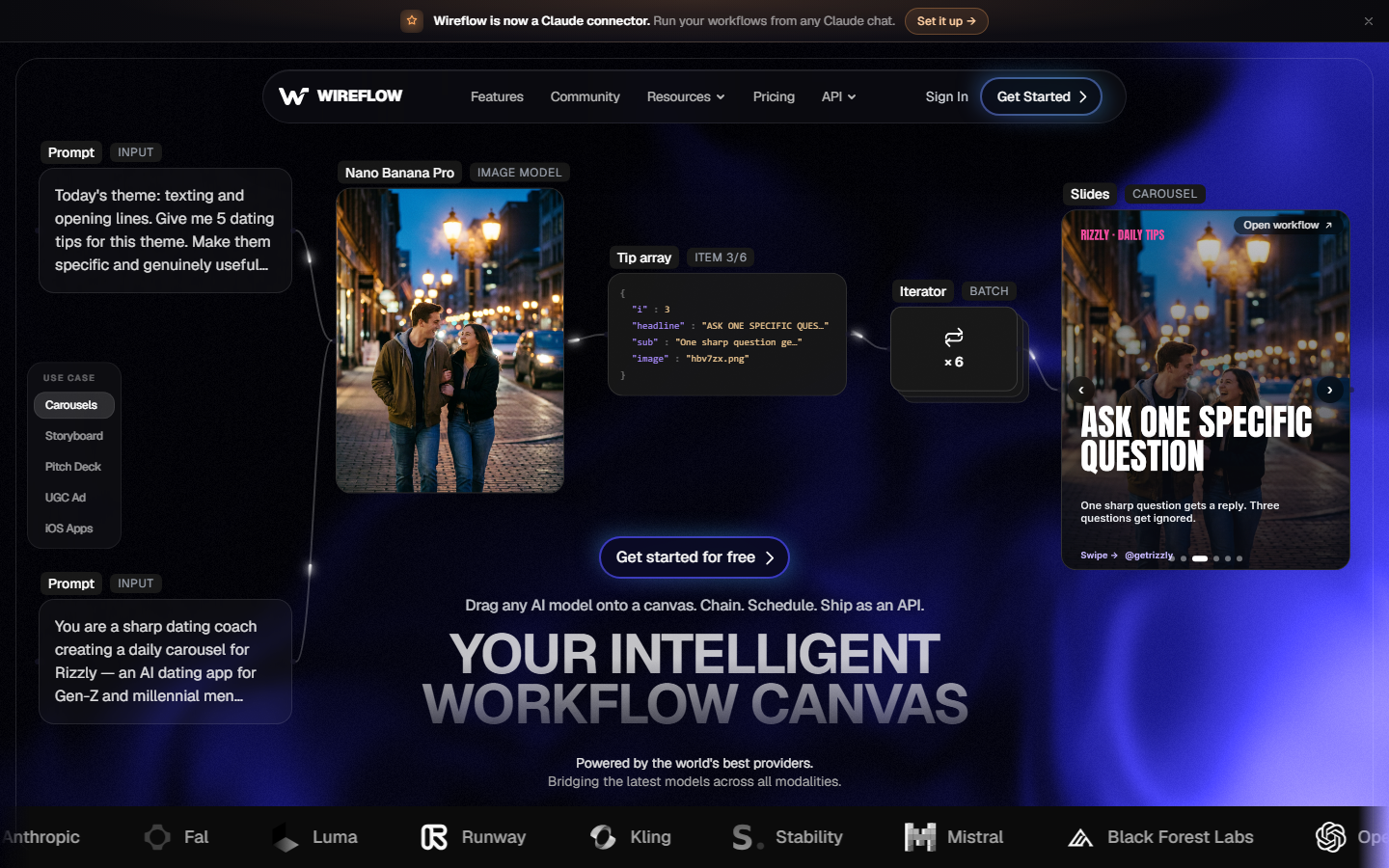
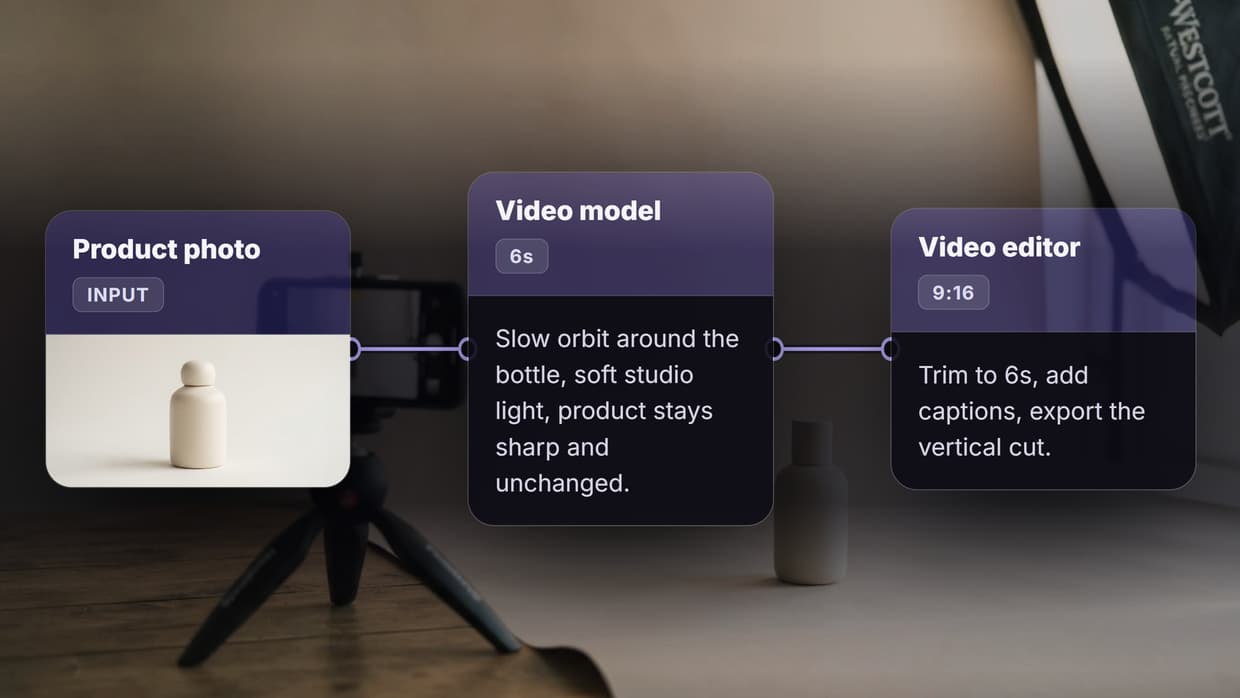
Wireflow is a node based canvas where every AI model is a node and the connections are your production line. An agency drops a client brief into a text node, routes it into an image model such as Nano Banana Pro for the static, branches the same brief into a video model, and gets both from one run. Because the canvas belongs to the agency, it encodes your process instead of a vendor's template library, which is the difference between ad creative automation you can change and a black box you file tickets against.
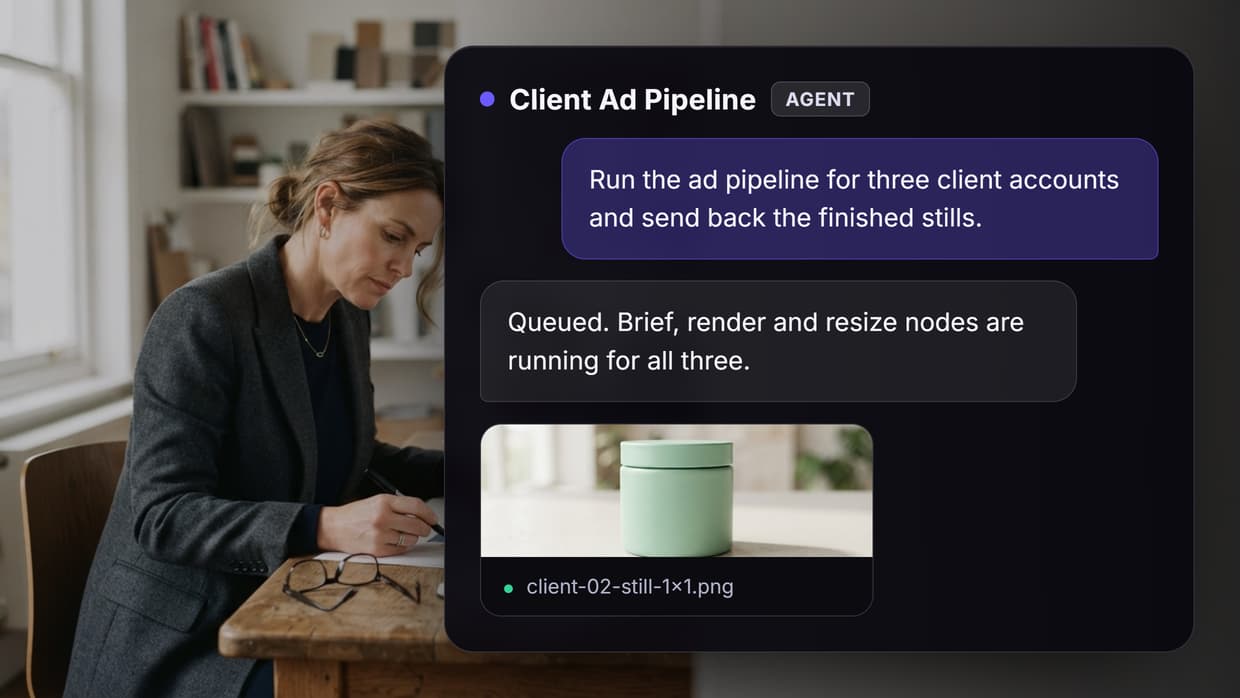
The operational advantage is the API. Any published canvas becomes a REST endpoint and an MCP tool, so a client roster in a spreadsheet can loop through the same generator overnight. That turns multi client workflow management into a scheduled job rather than a person clicking through accounts.
Pricing works per generation rather than per seat, so ten teammates on one flow cost the same as one, and output arrives as plain image and video URLs with no watermark for delivery under a white label arrangement. Building is free and paid plans start at $24 a month.
The honest limit: this is a generation layer, not an ad platform. It does not buy media, target audiences or publish to Meta and Google, and there is no per client seat dashboard, so agencies pair it with the buying stack they already run.
Verdict: best overall for agencies that want to own the pipeline and bill on output.
2. AdCreative.ai
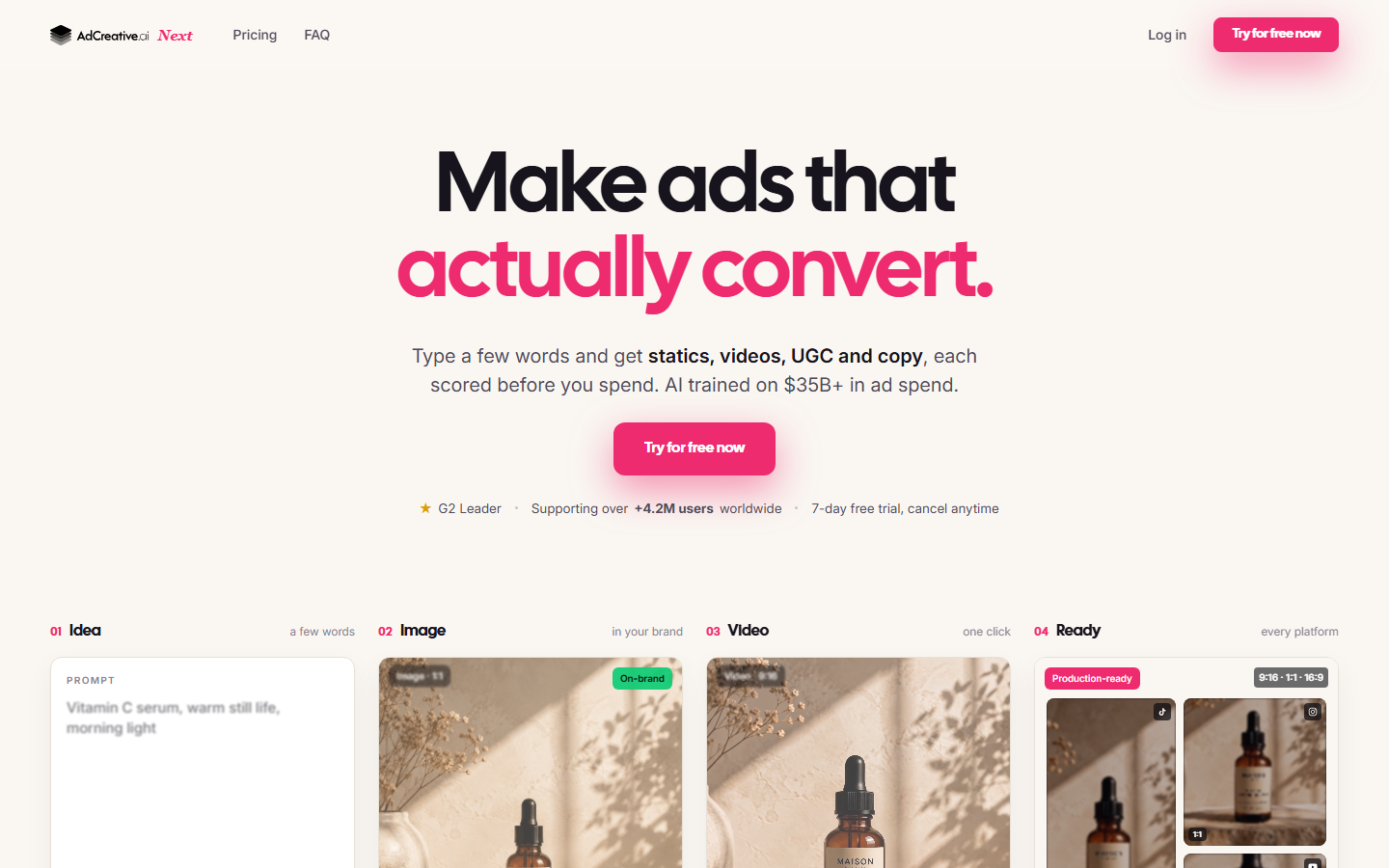
AdCreative.ai turns a few words into statics, videos, UGC style clips and ad copy, then scores each variant before any budget touches it. The company says its models are trained on more than $35 billion in ad spend and that it supports over 4.2 million users. For account managers the score is the useful part, because it gives a client a reason for the pick that is not personal taste.
The tradeoff is house style: output is consistent and quickly recognisable as AdCreative, which suits direct response more than brand led work. Agencies often route hero assets through a separate static ad creative generator and keep this for volume.
Verdict: best for producing many scored variants quickly.
3. The Brief (formerly Creatopy)
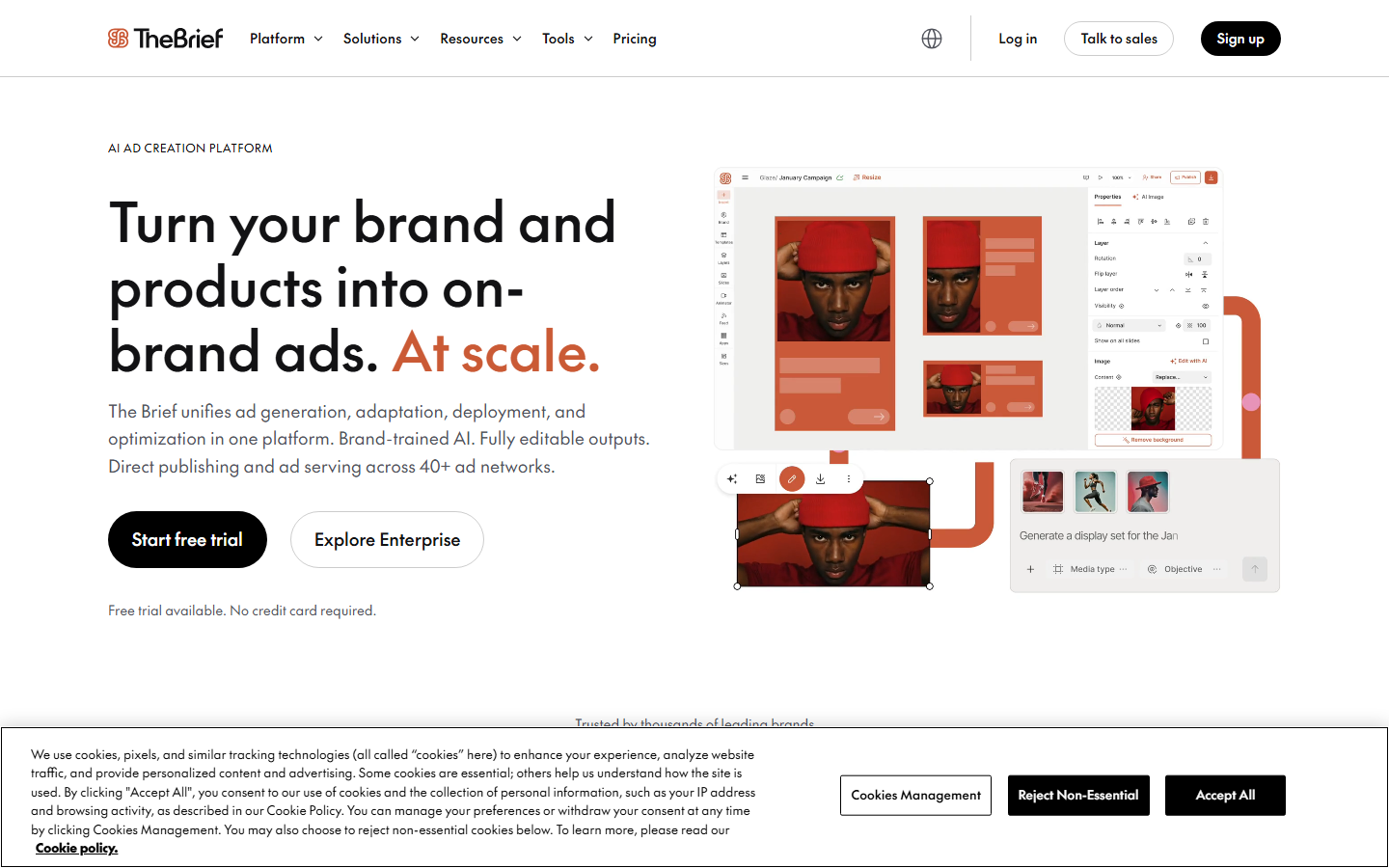
The Brief unifies ad generation, adaptation, deployment and optimisation in one platform, with brand trained AI, fully editable outputs and direct publishing across more than 40 ad networks. Its strongest suit is the expensive part of display work: one concept resized into every placement without a designer rebuilding each frame.
Banner and display retainers get the most from it, because the editable layer means a client revision does not force a regeneration. Teams shipping mostly paid social will find the network breadth less useful than a dedicated Facebook ad creative tool.
Verdict: best for display, banner and multi placement versioning.
4. Smartly
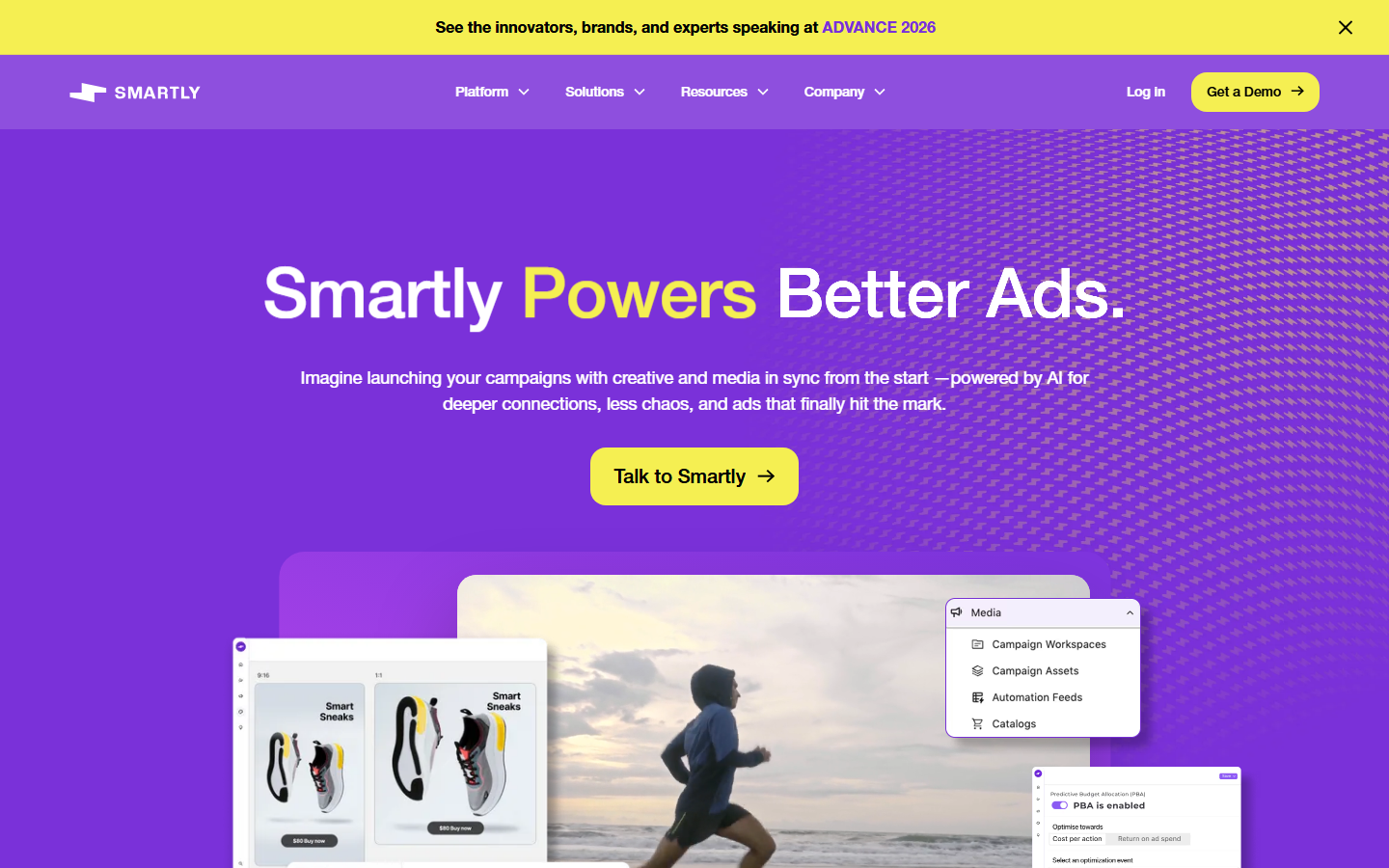
Smartly puts creative and media in one system, which is the pitch enterprise agencies respond to: the platform that produces the asset also allocates the budget behind it. Automation feeds, campaign workspaces and predictive budget allocation are core features rather than add ons.
It is priced and staffed for six figure monthly budgets, so a five person shop will feel the weight of it. If only the creative automation half appeals, the same production result can be assembled from lighter parts, an approach covered in AI solutions for marketing agencies.
Verdict: best for enterprise retainers where creative and media sit on one contract.
5. Omneky
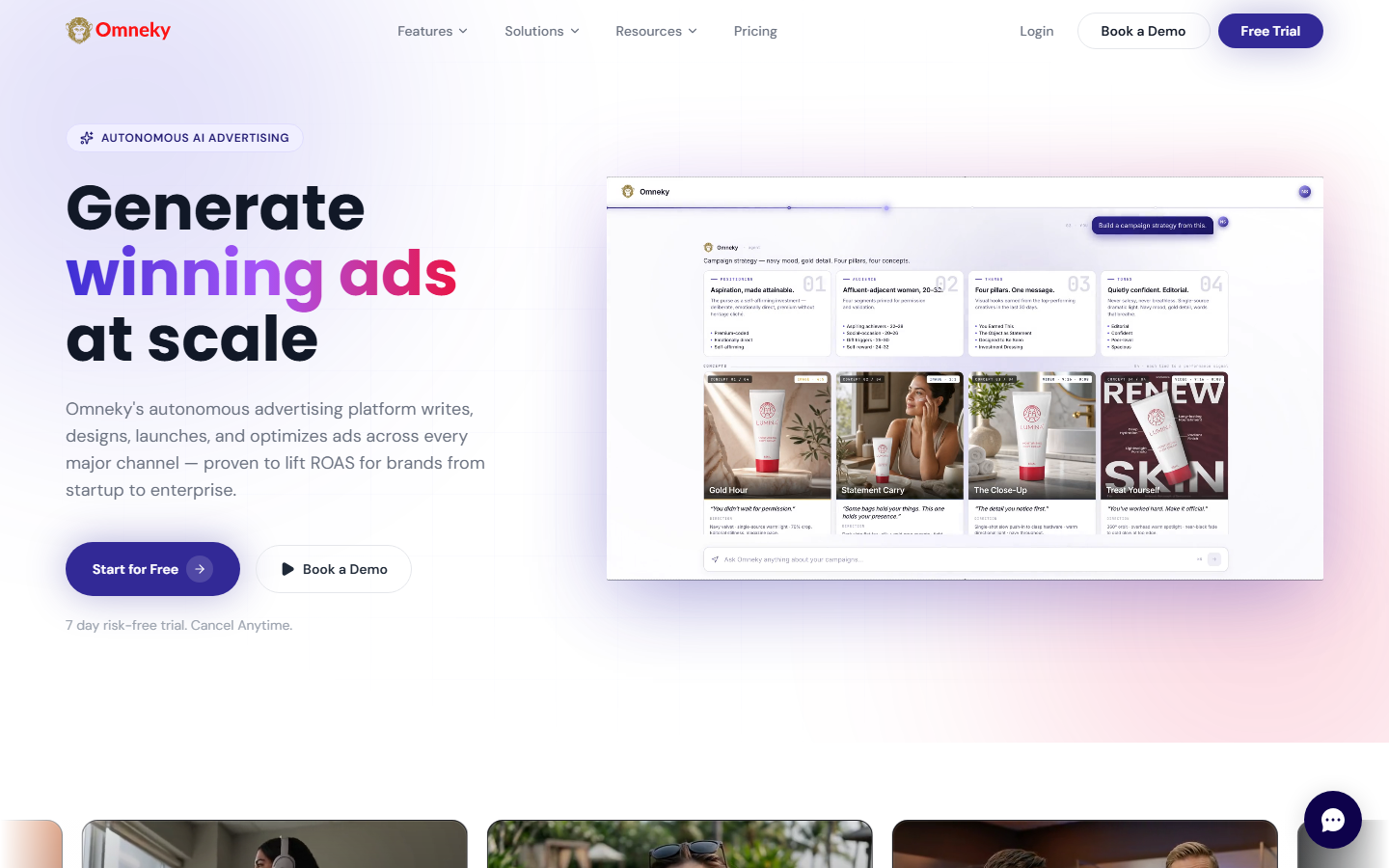
Omneky describes itself as an autonomous advertising platform that writes, designs, launches and optimises ads across major channels. The pitch is the full loop: concepts, creative and performance feedback in one place rather than a generator handing files to a separate buying team.
That loop is convenient and it is also the lock in, because creative, targeting logic and performance history all live inside the vendor. Weigh it against the UGC ads for agencies stacks that keep generation and buying separate.
Verdict: best for agencies that want generation and channel management handled together.
6. Madgicx
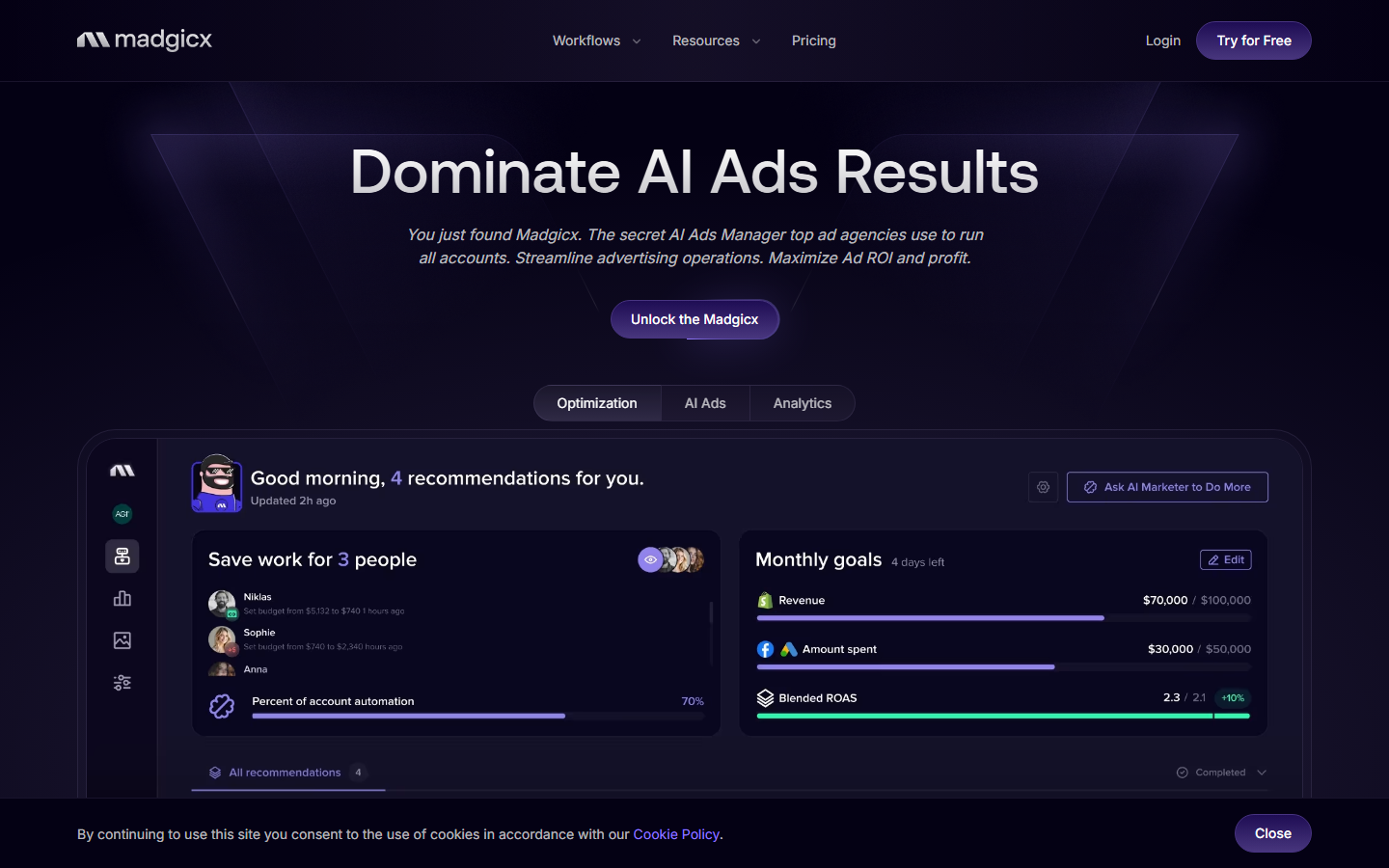
Madgicx is an AI ads manager aimed squarely at Meta accounts, organised around three jobs: optimisation, AI ads and analytics. Daily recommendations, budget automation and blended ROAS tracking are why agencies keep it in the stack, and the account view is built for someone managing several at once.
Creative generation is present but secondary, so it works next to a production tool rather than instead of one. Most agencies pair it with whatever they already use for ad creative automation and let Madgicx handle spend.
Verdict: best for Meta buying, optimisation and client reporting.
7. Pencil
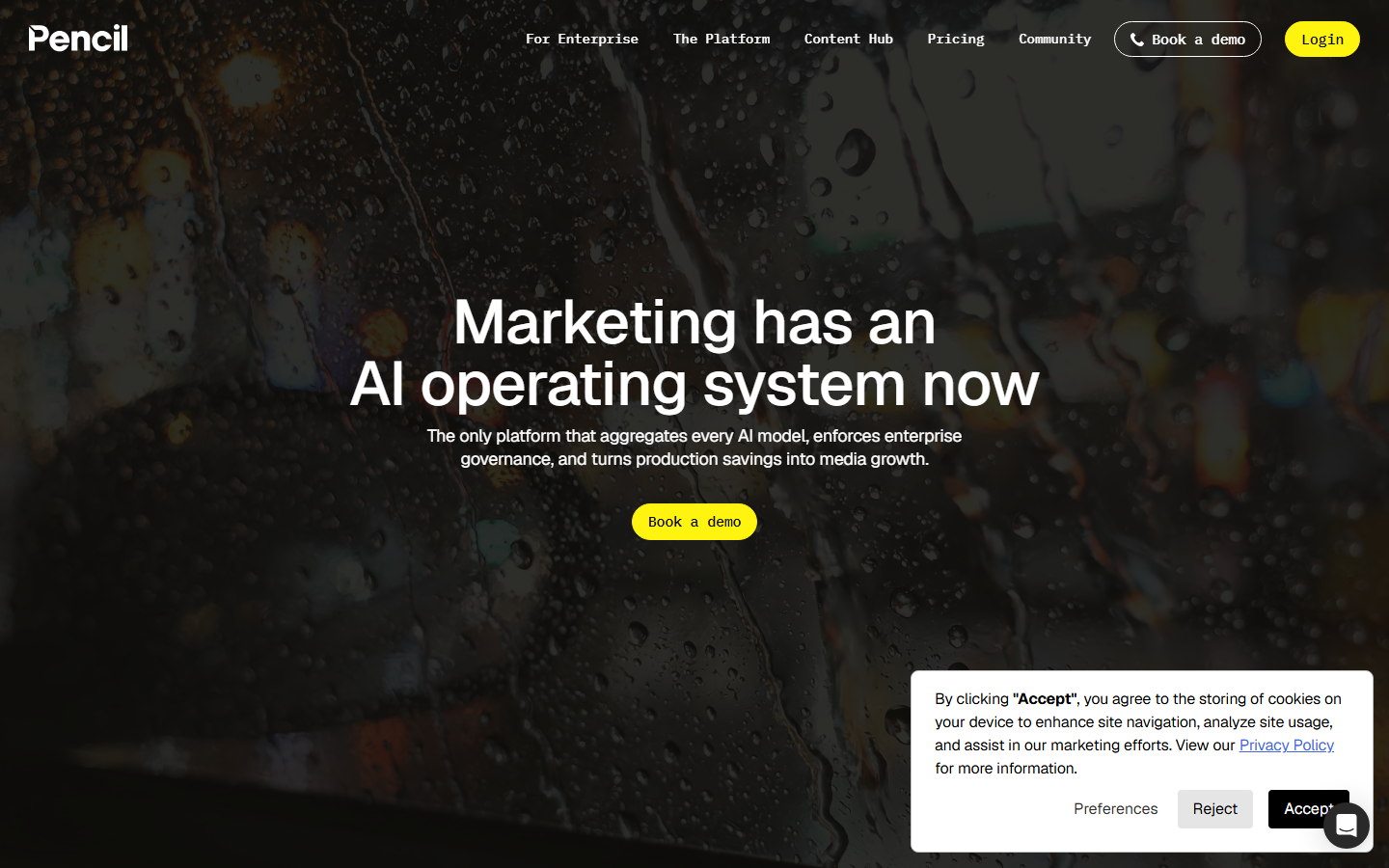
Pencil positions itself as an AI operating system for marketing that aggregates AI models, enforces enterprise governance and turns production savings into media budget. Governance is the differentiator: approvals, permissions and model controls that legal teams at large brands ask for before anything generates.
That fits regulated categories and holding company work, and is a heavy choice for an independent shop with four clients. Routing many models through one controlled layer is also what AI tools for creative agencies do at lower commitment.
Verdict: best for enterprise and regulated clients that need governance around generation.
8. Predis.ai
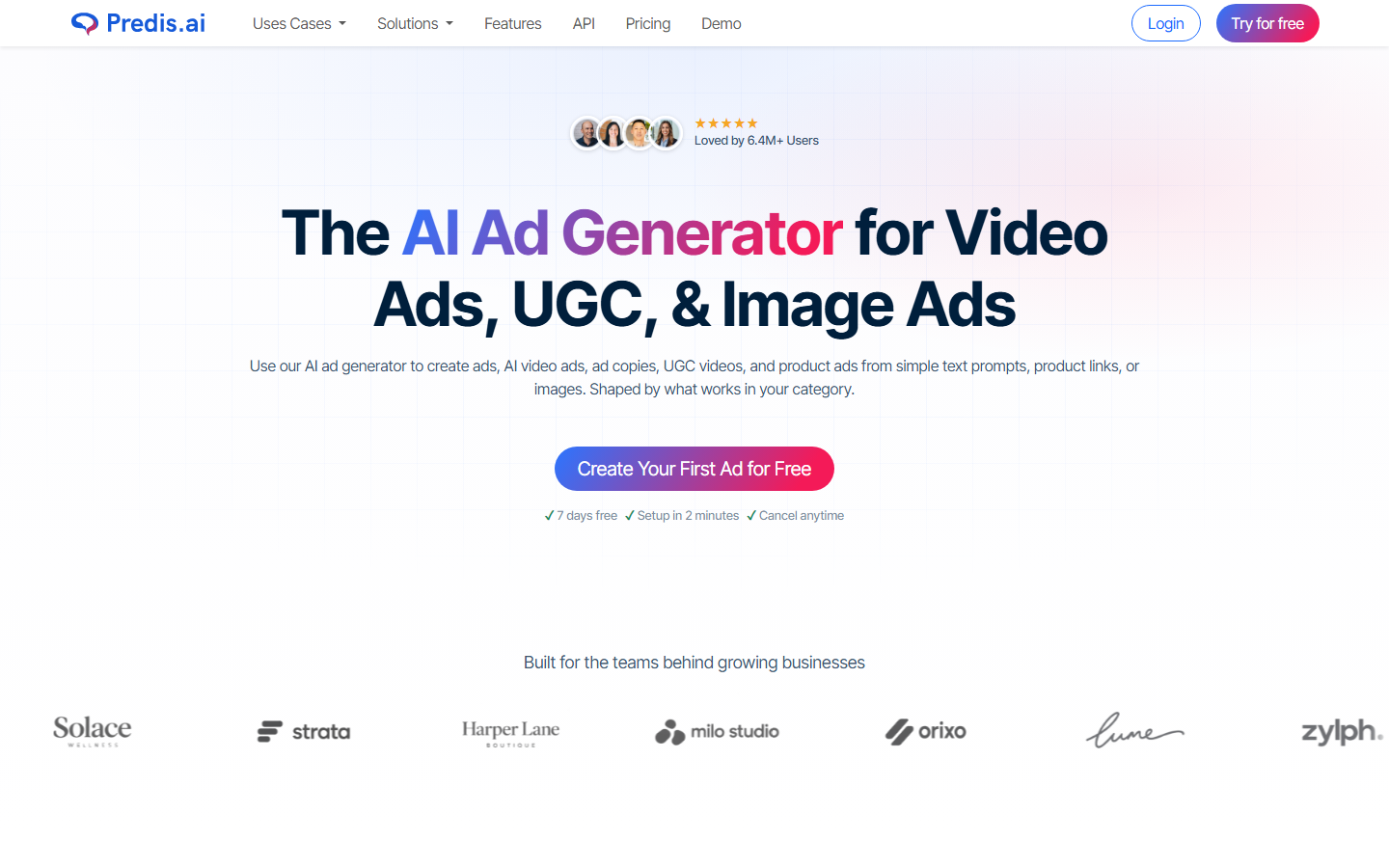
Predis.ai generates video ads, UGC style clips, image ads and ad copy from a text prompt, a product link or an image, and says it is used by more than 6.4 million people. For a small agency on social retainers, the appeal is going from a product URL to a posted ad with no production step in between.
It is built for social placements rather than campaign infrastructure, so client separation and reporting stay lighter than the suites above. That is the right trade at small retainer sizes and the wrong one once a client needs video production at agency scale.
Verdict: best for small social first retainers that need output today.
Comparison table
| Tool | Main job | Client separation | Automation | Best for |
|---|---|---|---|---|
| Wireflow | Custom generation pipeline | Separate flow per client | REST API and MCP tool | Owning the pipeline |
| AdCreative.ai | Scored ad variants | Brand kits per account | API available | Variant volume |
| The Brief | Ad sets and versioning | Brand controlled templates | Publishing to 40+ networks | Display and banners |
| Smartly | Creative plus media buying | Enterprise workspaces | Automation feeds | Large retainers |
| Omneky | Generation plus launch | Per brand accounts | Autonomous campaign loop | Managed performance |
| Madgicx | Meta ads management | Multi account dashboard | Rule based automation | Meta buying |
| Pencil | Governed model access | Enterprise permissions | Model orchestration | Regulated brands |
| Predis.ai | Social ad generation | Workspace per brand | API available | Small social retainers |
How to choose in one pass
Start with who buys the media. If the agency buys it, a suite that merges creative and spend removes a handoff and earns its price. If the client or a separate team buys it, a generation engine plus a reporting tool covers the same work for less.
Then check the seat maths against your roster and the published pricing. Per user per account charging punishes exactly what an agency wants, which is more accounts and more people in them.
Try it yourself: Build this workflow in Wireflow. The nodes come pre configured with the client brief and render setup described above, so you can run it on a real brief before committing to anything.
FAQ
What is AI ad agency software?
It is software an agency uses to produce, manage or buy advertising with AI doing part of the work. The category covers three different products: generation engines that make the creative, ad ops suites that manage campaigns and reporting, and platforms that handle projects, resourcing and approvals.
Which AI ad software is best for a small agency?
A generation engine plus the ad platform's own reporting is usually enough under about six clients. Wireflow, Predis.ai and AdCreative.ai all work at that size without an enterprise contract or a seat per client.
Do these tools replace a creative team?
No. They remove production time, not judgement. Someone still picks the concept, writes the offer and rejects the output that is close but wrong, and that review step is what keeps the work sellable.
How much does AI ad agency software cost?
Roughly $20 a month for social first generators up to five figures a month for enterprise suites with media buying attached. The number that matters is cost per finished asset at your real monthly volume, not the headline subscription.
Can these tools handle multiple client brands at once?
Most support brand kits or separate workspaces per client. The practical differences are whether assets can leak between accounts, whether usage data is clean enough to bill from, and whether adding an account costs another seat.
Which tools have an API?
AdCreative.ai, Predis.ai and Wireflow all expose APIs, and Wireflow also publishes each flow as an MCP tool so an agent can call it directly. An API is what separates software you can schedule from software someone has to sit in.
Is AI generated advertising allowed on Meta and Google?
Yes, both platforms accept AI generated creative and offer their own generation features. The rules that matter are accurate claims, disclosure where a person appears to endorse something, and rights to the assets you feed in.
Conclusion
The right pick comes down to where the agency makes its money. Shops billing for media management should buy a suite that merges creative and spend, because the handoff between the two is where hours disappear. Shops billing for the work itself do better with an owned pipeline, usage based pricing and an API, the case Wireflow makes, and it gets stronger with every client added to the roster.
Would you rather we just built it?
We get on a call, learn your style, build the workflow, and ship the deliverables on a schedule. You keep the workflow either way.