Best White Label AI Video Software Tools in 2026

In this article▾
- Quick summary
- What counts as white label in 2026
- 1. Wireflow - best overall
- 2. Banuba - best SDK
- 3. Creatomate - best for templated output
- 4. Shotstack - best for developers
- 5. Viddyoze - best for agency resale
- 6. Pictory - best for repurposing
- 7. Synthesia - best for training content
- 8. HeyGen - best for volume UGC
- Comparison table
- How to choose
- FAQ
- Conclusion
White label AI video software lets you sell video generation under your own brand, with no vendor logo on the export and no third-party login for your clients. Wireflow sits at the top of this list because it packages an entire generation pipeline behind one API instead of renting you a single model, but eight tools are worth comparing depending on whether you are reselling finished videos, embedding an editor in your own app, or licensing software to other agencies.
The eight tools below are ranked on how completely the vendor disappears: watermark-free output, custom branding, API or SDK access, per-client separation, and whether the licensing terms actually permit resale. That last point eliminates more tools than agencies expect, since many "agency plans" allow client work but forbid reselling the software itself. For the platform-level view of the same market, the white label AI video platform feature page covers the hosting and delivery side in more depth.
Quick summary
- Wireflow - node-based pipelines behind your own API. Best overall
- Banuba - embeddable video editor SDK for your app. Best SDK
- Creatomate - template rendering API at volume. Best for templated output
- Shotstack - programmatic timeline editing. Best for developers
- Viddyoze - branded template animations for agencies. Best for agency resale
- Pictory - text and long video into branded clips. Best for repurposing
- Synthesia - avatar video with enterprise brand kits. Best for training content
- HeyGen - fast avatar cloning and translation. Best for volume UGC
What counts as white label in 2026
The term covers three different products, and confusing them is how agencies end up paying for the wrong tier. Rebranded output means the file carries no watermark and uses your fonts and colors, which almost every paid plan now includes. Rebranded interface means your client logs into something that looks like your product, which usually requires an API or an SDK rather than a reseller checkbox. Full resale rights mean you can license the software onward as your own, which is rare and is typically negotiated rather than bought off a pricing page. Teams selling software rather than services should read the same distinction applied to white label AI SaaS tools, where the licensing terms matter more than the feature list.
Pricing structure matters as much as features. Per-seat pricing punishes agencies that add client accounts, while credit or render-minute pricing scales with actual delivery and keeps margin predictable. Check whether client workspaces are billed separately before you quote a retainer.
Build this in Wireflow
Make the same kind of asset on a canvas you control, with a free account and no credit card.
1. Wireflow - best overall
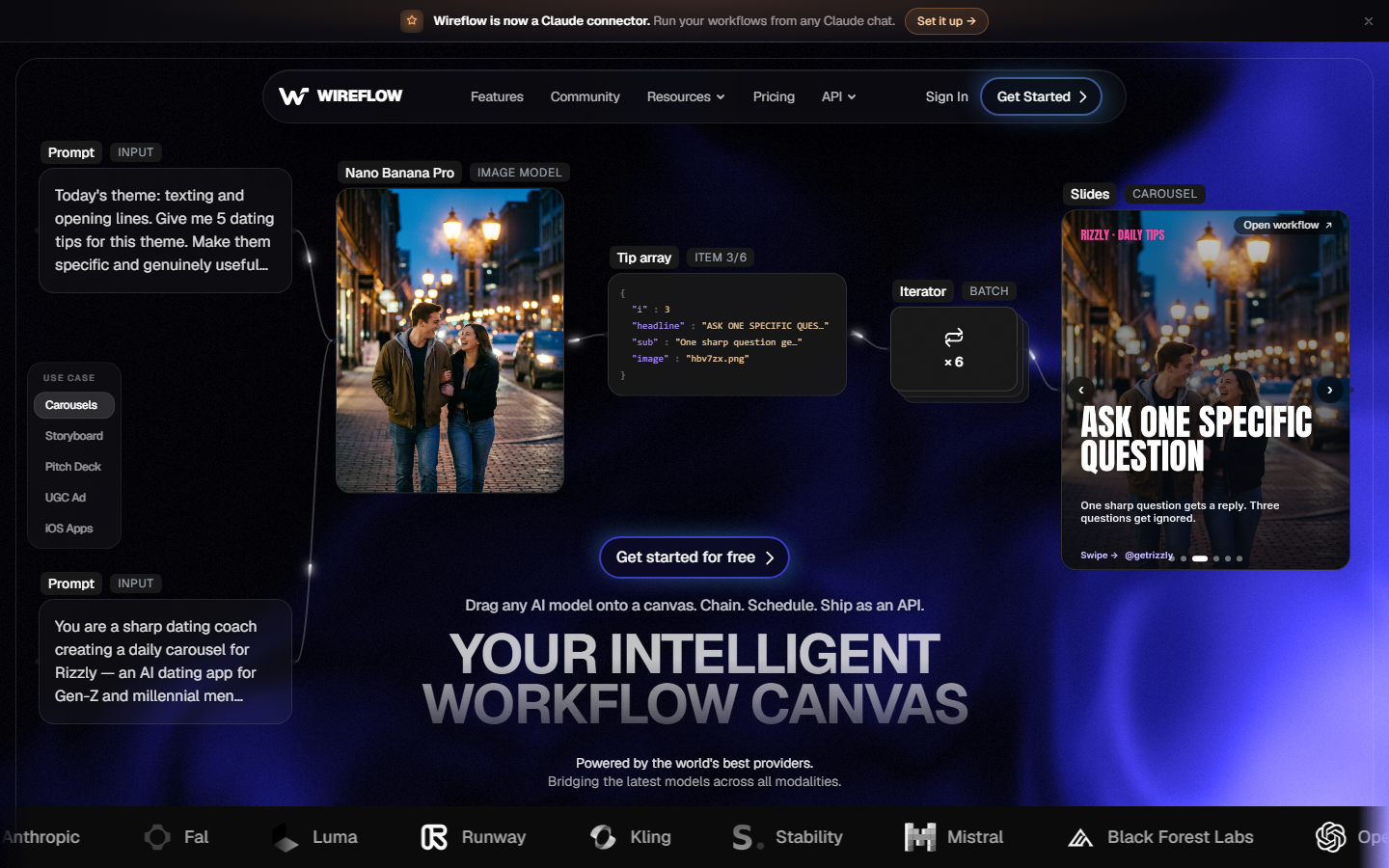
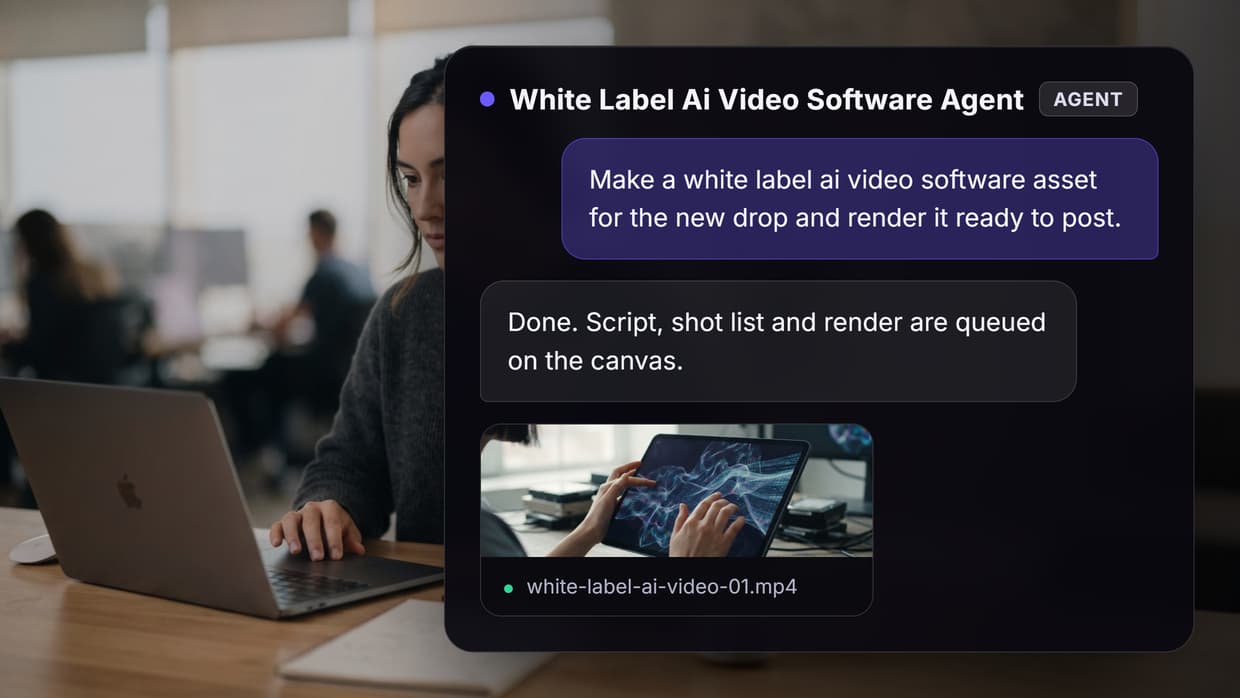
Wireflow is a node canvas where you chain models into a repeatable pipeline: script, image, video generation, and assembly connected as nodes you configure once. The white label part is that no client ever opens the canvas. You save a workflow, expose its inputs through your own dashboard, and trigger it through the API, so the finished file arrives under your brand with nothing to strip out. Teams comparing this pattern to raw rendering endpoints often start with video assembly API options and find the workflow layer removes most of the orchestration code.
The practical advantage over single-model tools is packaging. Instead of reselling access to one generator, you sell an outcome: product photo in, branded 15-second ad out, at a fixed cost per run. Because the node library tracks current models like Veo, Kling, and Seedance, a pipeline keeps improving without a rebuild, and credit-based billing makes per-client cost tracking straightforward. The pricing page lists the credit tiers most agencies start on.
Verdict: the strongest option when you want one system covering generation, editing, and delivery behind your own brand.
2. Banuba - best SDK
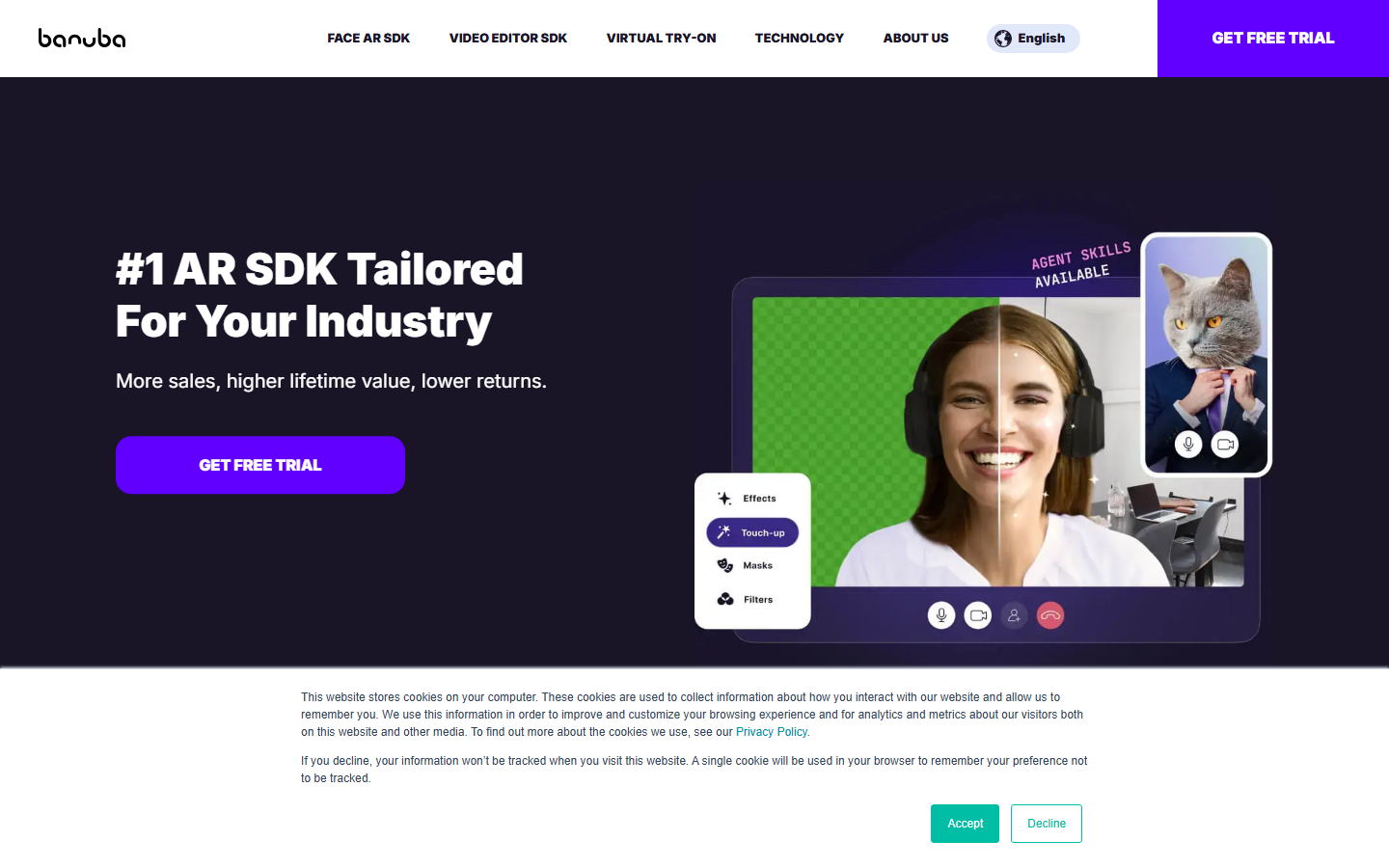
Banuba licenses a video editor SDK you drop into an iOS, Android, or web app, with AR effects, background removal, and AI-assisted editing already built. Nothing about it is branded Banuba once it ships, which makes it the most literal interpretation of white label on this list. Development teams running multi-client video workflow management use it when the client needs to edit inside the product rather than receive a finished render.
The tradeoff is scope. Banuba gives your users editing tools; it does not generate video for them, so you still need a generation layer behind it. Pricing is quote-based annual licensing, which suits funded products more than small agencies.
Verdict: the right choice when video editing belongs inside your own application.
3. Creatomate - best for templated output
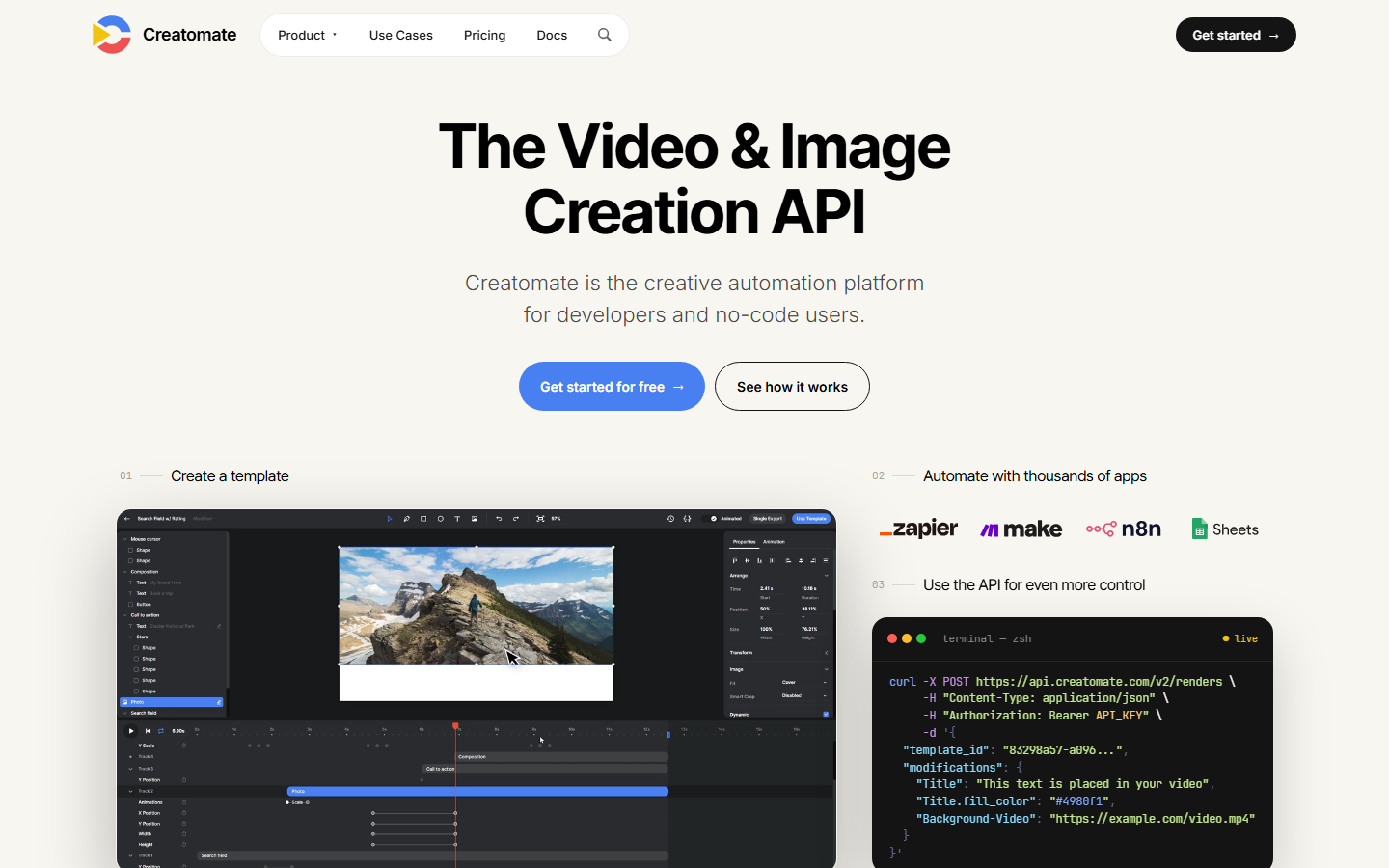
Creatomate is a rendering API built on templates: design a layout once, then produce thousands of variants by posting JSON with different text, images, and clips. There is no end-user interface to rebrand because there is no end-user interface at all, which makes white labeling automatic. Teams already evaluating a headless video editor for automation will recognize the model immediately.
It excels at data-driven creative such as property listings, personalized outreach, or catalog videos, where the layout must stay fixed and only the content changes. It is less suited to creative work that needs a different structure per client, since every output inherits the template.
Verdict: best when volume and consistency matter more than per-video art direction.
4. Shotstack - best for developers
Shotstack exposes timeline-based editing through REST: tracks, clips, transitions, overlays, and audio described in an edit specification and rendered in the cloud. It also bundles text-to-speech and asset generation, so a full video can be produced from a single request. Engineering teams that already wire generation into agent pipelines usually evaluate it alongside other video APIs for coding agents.
Frame-level control is the reason to choose it, and the learning curve is the reason not to. Expect real development time before the first client-ready render, and budget for render minutes rather than seats.
Verdict: the most controllable option if you have engineers and want editing rather than generation.
5. Viddyoze - best for agency resale
Viddyoze produces animated logo stings, intros, promos, and social clips from a large template library, and its agency tier is explicitly built for resale: client accounts, commercial rights, and unbranded exports. It is the least technical entry here, which is the point, since a non-developer team can deliver branded assets the same day. Agencies pairing it with paid media often run it next to a dedicated AI video ad creator workflow for the performance creative itself.
The limitation is that template output looks like template output. It is strong for brand furniture and weak for anything requiring original footage or a custom narrative.
Verdict: good margin on quick branded assets, limited ceiling on creative range.
6. Pictory - best for repurposing
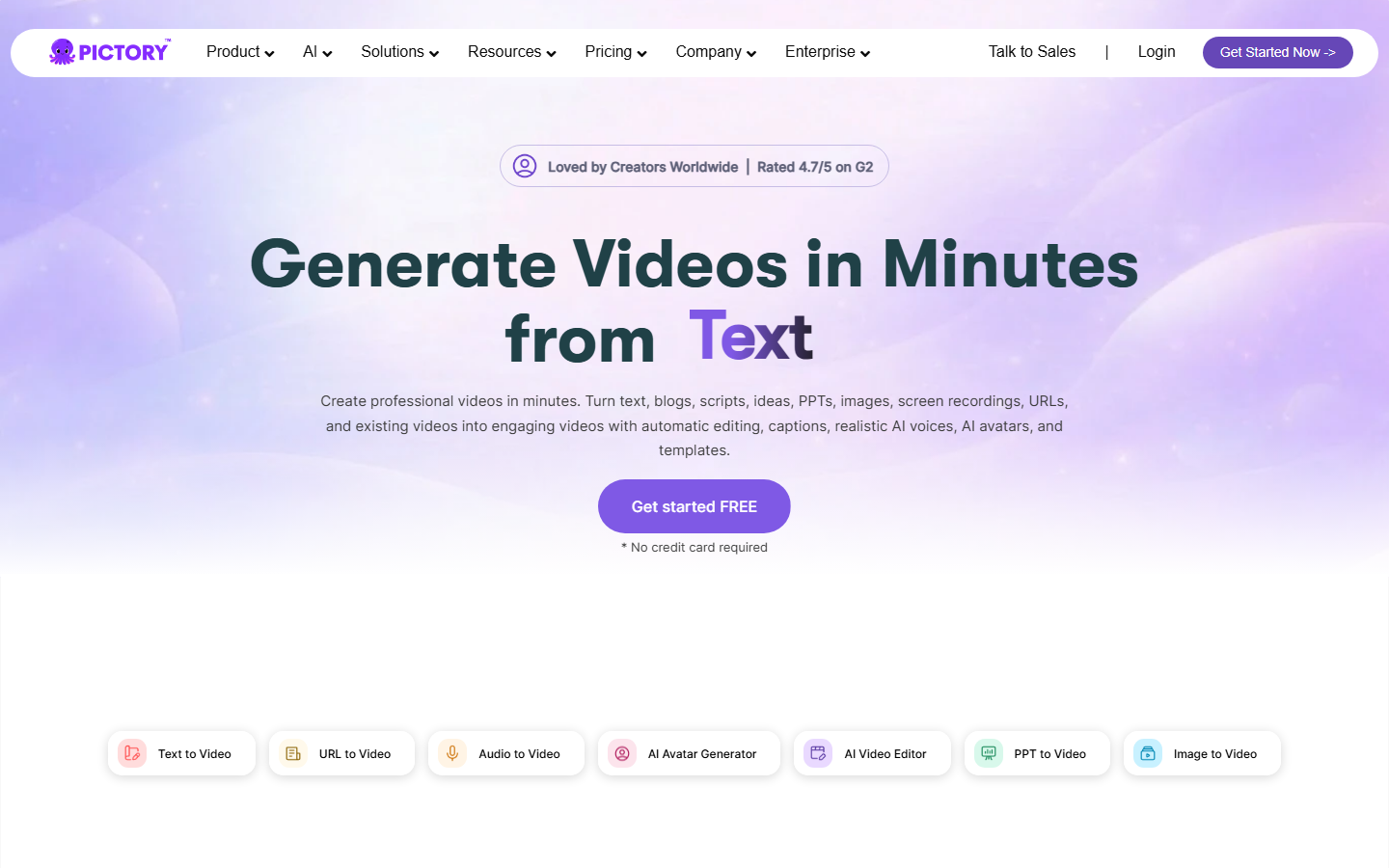
Pictory converts scripts, articles, and long recordings into short branded videos by matching stock footage and captions to the text automatically. Its higher tiers add custom branding on exports, team workspaces for separate client accounts, and API access for programmatic runs. It fits neatly into video content automation for agency clients where the raw material is written content that already exists.
Output quality depends heavily on the stock library, so results are dependable rather than distinctive. Treat it as a repurposing engine, not a creative tool.
Verdict: the fastest way to turn existing written or recorded material into client-ready clips.
7. Synthesia - best for training content
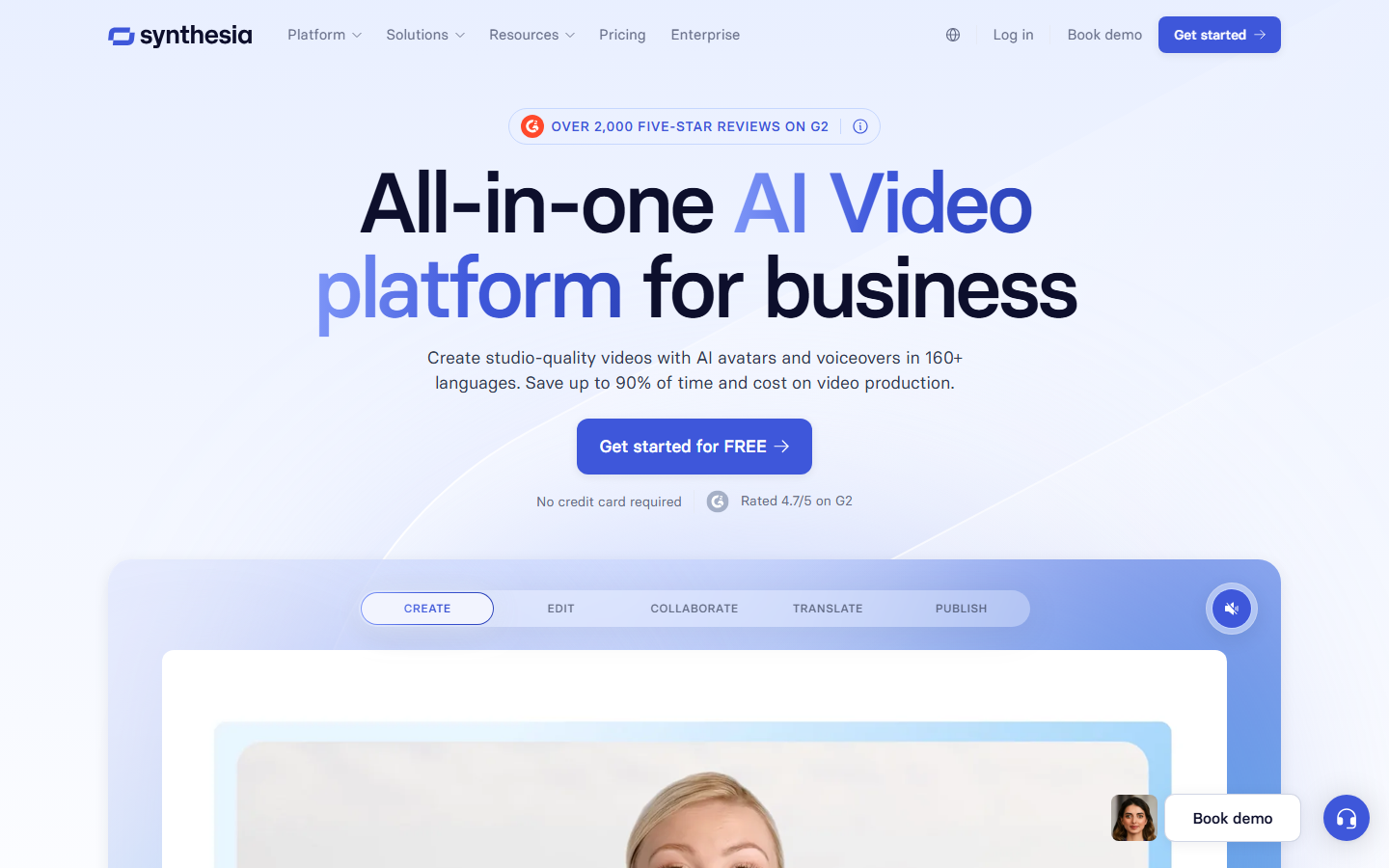
Synthesia is the most established avatar platform, with a large stock avatar library, support for well over 100 languages, and enterprise features like brand kits, custom avatars, and SCORM export. Corporate learning is where it dominates, and the branding controls are genuine as long as you are on a tier that includes them. Agencies weighing it against broader stacks usually compare it with other video creative software for agencies before committing.
White labeling stops at the output. Clients who need to log in and generate their own videos will see Synthesia's interface unless you build a wrapper around the API.
Verdict: the safe choice for presenter-led training and internal comms at scale.
8. HeyGen - best for volume UGC
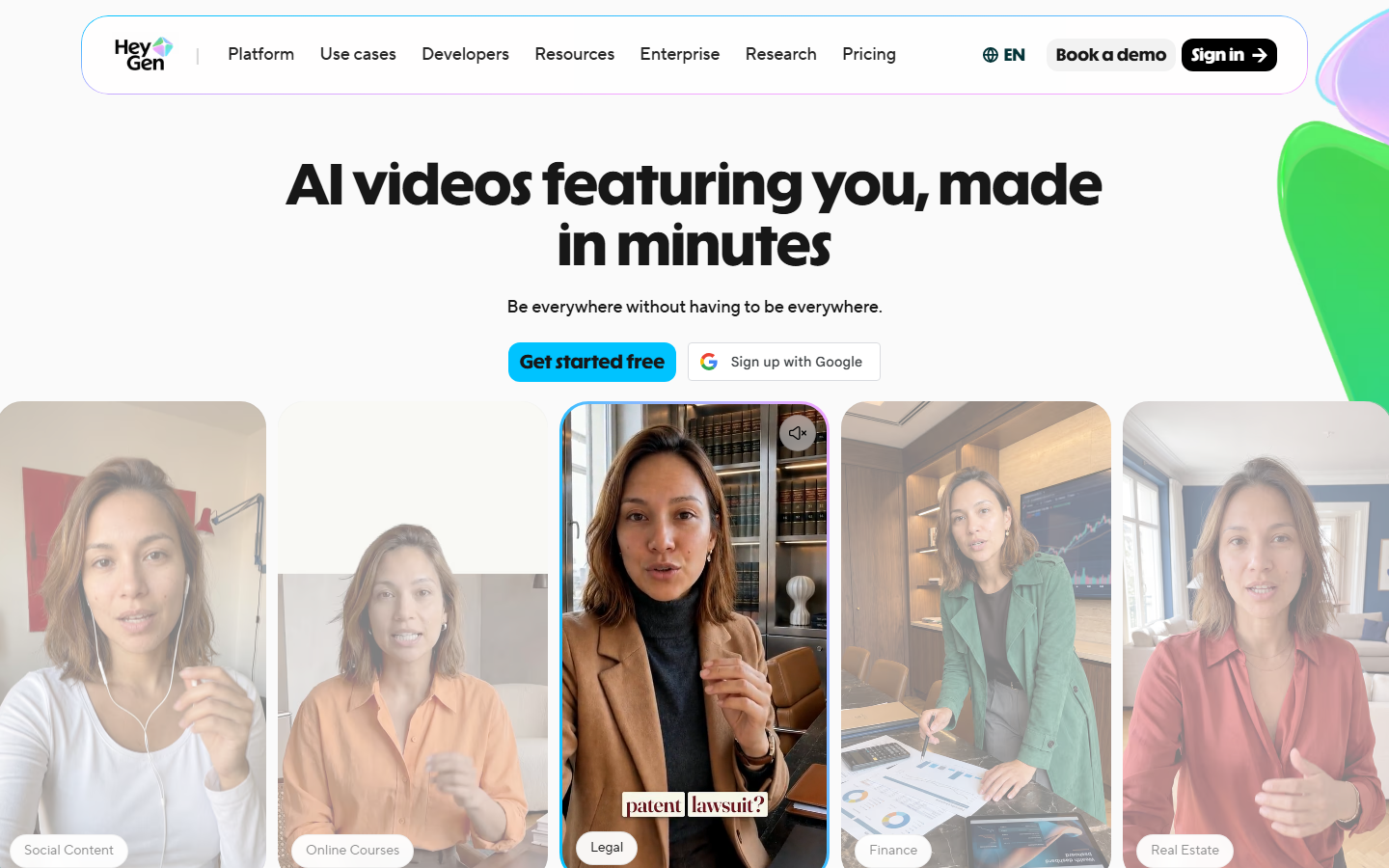
HeyGen ships consumer-facing features faster than its rivals: instant avatar cloning from a phone recording, translation with lip sync, and an API that returns avatar video in minutes. That combination suits teams running UGC video automation for agencies where turnaround and volume beat studio polish.
Check the licensing before reselling. Avatar rights, translation usage, and API rate limits vary by plan, and the cheaper tiers are not intended for client delivery.
Verdict: best throughput for avatar and spokesperson content when speed is the constraint.
Comparison table
| Tool | White label depth | Access model | Pricing model | Best for |
|---|---|---|---|---|
| Wireflow | Full (API, no client UI) | Workflow API | Credits | End-to-end branded pipelines |
| Banuba | Full (embedded SDK) | SDK | Annual licence | Editing inside your own app |
| Creatomate | Full (API only) | REST API | Render volume | Templated variants at scale |
| Shotstack | Full (API only) | REST API | Render minutes | Custom programmatic editing |
| Viddyoze | Output and client accounts | Web app | Subscription | Fast branded assets |
| Pictory | Output and workspaces | Web app plus API | Subscription | Repurposing written content |
| Synthesia | Output only | Web app plus API | Seats plus minutes | Training and internal comms |
| HeyGen | Output only | Web app plus API | Credits | High-volume avatar video |
The split is consistent: API and SDK products white label completely because your software is the only interface anyone sees, while editor-first products rebrand the file but not the experience. The same divide shows up in adjacent categories, including white label AI image software, where the interface question decides the tier you need.
How to choose
Start from what the client touches. If they only receive files, an editor-first tool on an agency plan is enough and cheaper to run. If they log in, you need an API or SDK and a front end of your own, which shifts the cost from subscriptions to development. If you are packaging repeatable outcomes rather than tools, a workflow layer keeps the vendor stack invisible and the margin intact. Agencies building the delivery side around this decision often review AI video production software for agencies alongside the white label shortlist.
Then check three contract details before you commit: whether resale is permitted in writing, whether client accounts are billed separately, and whether generated assets carry usage restrictions. Any one of them can erase the margin you planned around.
Try it yourself: open this white label video workflow in Wireflow - the nodes are pre-configured with the exact setup discussed above, so you can run it and see branded output before choosing a stack.
FAQ
What is white label AI video software? It is video generation software you can sell under your own brand. At minimum the exports carry no vendor watermark and use your branding; at the deeper end, your clients interact only with your interface while the vendor runs invisibly behind an API.
Can I resell AI video software to other agencies? Only if the licence says so. Most agency plans permit client work but prohibit reselling the software itself, so full resale usually requires an API or SDK licence, or a negotiated reseller agreement.
Do white label plans remove watermarks? Paid tiers almost always do. Free and entry tiers usually do not, and some vendors keep watermark removal on a higher plan than the one that advertises branding controls, so confirm it on the specific tier you intend to buy.
Which is cheaper, per-seat or credit pricing? Credit or render-based pricing is usually cheaper for agencies because cost tracks delivery rather than headcount. Per-seat pricing becomes expensive as soon as you add client accounts that generate very little.
Do I need developers to white label AI video? For output-only rebranding, no. For a client-facing interface under your own brand, yes, since that requires an API integration and a front end, although a workflow platform reduces the work to authentication and a form.
How do I keep client assets separate? Use per-client workspaces where the vendor supports them, or per-client API keys and storage prefixes where it does not. Separation matters for both confidentiality and accurate per-client cost reporting.
Can white label video tools use my brand fonts and colors? Template and avatar platforms typically support brand kits with fonts, colors, and logos. API-first tools let you specify styling per request, which is more flexible but means you maintain the brand definition yourself.
What is the fastest way to start reselling AI video? Pick one repeatable output, such as a 15-second product ad, build the pipeline once, and price it per delivery. A fixed pipeline makes cost and turnaround predictable, which is what lets you quote confidently.
Conclusion
The 2026 market splits between tools that rebrand a file and tools that disappear entirely behind your own product. Avatar platforms like Synthesia and HeyGen handle presenter content well but keep their interface; Creatomate, Shotstack, and Banuba vanish completely but expect you to build around them. For teams that want repeatable branded delivery without assembling a multi-vendor stack, a workflow-based approach covers generation, editing, and delivery in one place, and the same logic extends to a white label AI generation platform when images and video ship together.

Co-Founder & Operations at Wireflow
Runs client operations and content strategy at Wireflow. Works directly with creative teams and agencies to build production AI workflows.
- Content Strategy
- Client Operations
Get unlimited ad creatives today.
One call to see if we are a fit and scope the first ad. If it fits, your first batch lands inside week one.