White label AI image software lets you sell AI image generation under your own brand, domain, and pricing instead of reselling a vendor's logo. This guide ranks the seven best options for 2026 on the three things that decide the build: how much branding you can remove, how complete the API is, and whether per-image cost survives a resale margin. Wireflow takes the top spot for exposing multi-model image workflows through a REST API you can wrap in your own interface.
Quick Summary
- Wireflow - Best Overall (30+ image models, one API, no vendor branding in output)
- Bria AI - Best for Licensed Data (IP indemnification, on-prem deployment)
- Scenario - Best for Custom Brand Models (train on your own asset library)
- Leonardo.ai - Best for Creative Suites (mature production API, large model catalog)
- Picsart - Best for Embedded Editors (Creative APIs plus editor SDK)
- Photoroom - Best for Product Photography (background and object APIs)
- Segmind - Best for Cost Control (serverless pricing, model chaining)
What Makes Image Software Genuinely White Label
Most tools that market themselves as white label only let you change a logo in a dashboard. Genuine white label means three separate things, and a platform can pass one while failing the others.
Output neutrality comes first: no watermark, no provenance branding you cannot disable, and commercial rights that transfer to your customer. Interface control is second, meaning an API complete enough that you never have to send a customer to the vendor's own UI; a platform that gates batch jobs or model selection behind its dashboard forces a branding leak, and teams building a multi-tenant AI image generation stack hit that wall early.
Commercial structure is third. Usage-based pricing with no per-seat fee is what makes resale viable, because your margin is the gap between wholesale inference cost and the price you set. Per-seat pricing kills that math as your client base grows, which is why the shortlists for white label AI SaaS tools and image tools rarely overlap much.
Build this in Wireflow
Make the same kind of asset on a canvas you control, with a free account and no credit card.
1. Wireflow
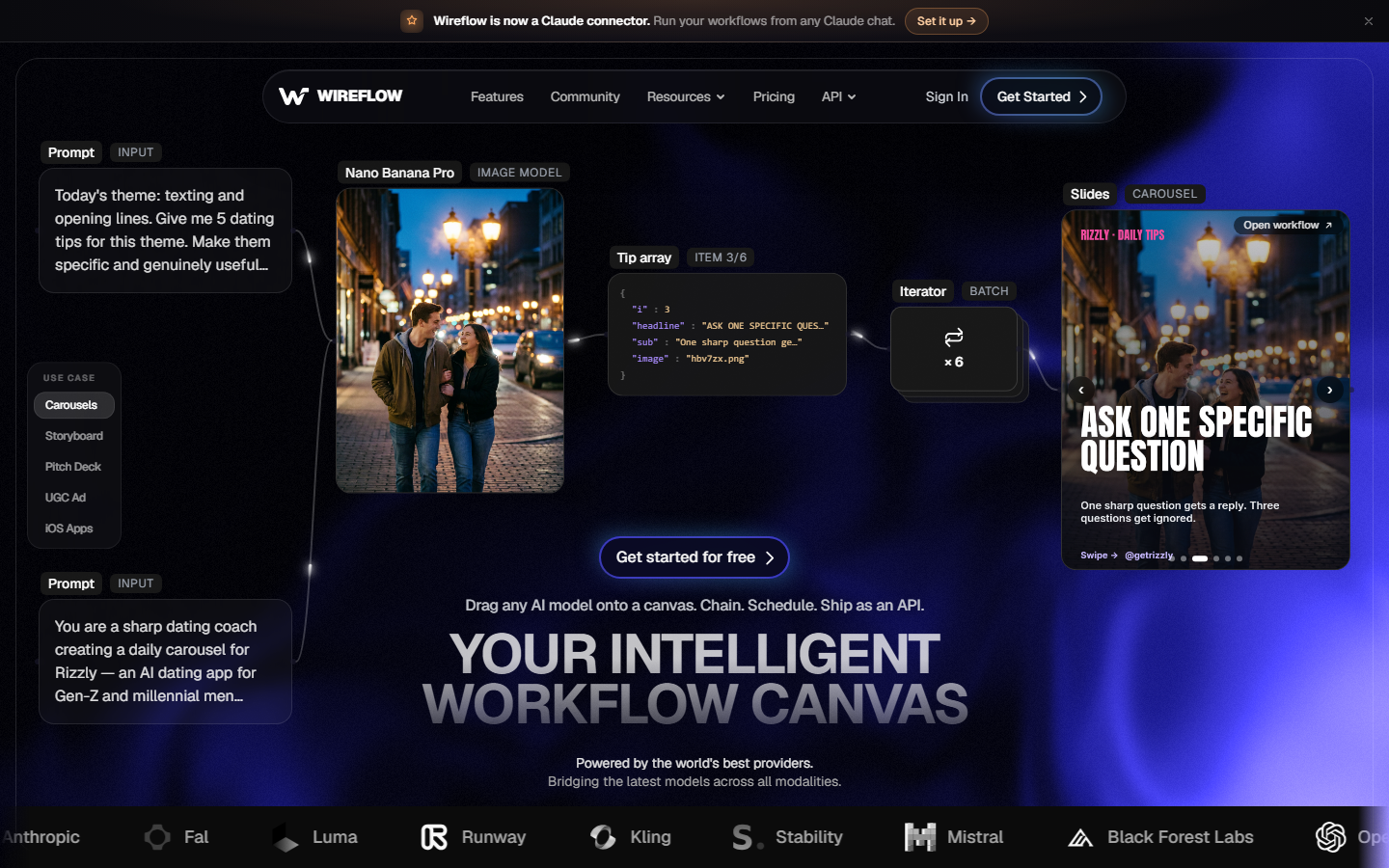
Wireflow is a node-based canvas where you connect image models, prompts, and transforms into a workflow, then publish it as an API endpoint. Product logic lives in the workflow rather than your application code, so you can swap the model behind a customer-facing feature without shipping a release. The node-based image generation approach also collapses multi-step pipelines (generate, upscale, remove background, composite) into one call.
The catalog covers 30+ image models including Recraft V4, Flux 2 Pro, Nano Banana, Seedream, and Ideogram, all behind one authentication scheme and one billing line, which removes the usual white label tax of separate integrations and separate invoices per provider. Scoped API keys with per-key spend limits give you cost attribution per client, and bulk image generation runs in parallel without you provisioning GPUs.
Output carries no Wireflow branding or watermark, and pricing is usage-based with no per-seat component, so reseller margin is yours to set. The gap worth naming: there is no drop-in customer-facing editor widget, so you build the front end. Teams that want a hosted UI out of the box should look at Picsart or Leonardo instead. See pricing for current per-generation rates.
2. Bria AI
Bria AI trains its models only on licensed data and attaches IP indemnification to commercial output, which is the single strongest reason to pick it. If your customers are agencies, retailers, or regulated brands, the legal question comes up in procurement and most consumer-grade generators cannot answer it. Bria can, and it holds SOC 2 Type II and ISO 27001.
Deployment is the other differentiator: source-available weights plus on-premise or private-cloud hosting, so a client with data residency requirements can run generation inside their own boundary while you keep the branded layer. The API covers text-to-image, background generation, object removal, and product placement, overlapping usefully with transparent background workflows. Pricing sits above the commodity tier and the aesthetic range is narrower than Leonardo or Flux. You trade creative ceiling for legal certainty.
3. Scenario
Scenario trains models on your own asset library so output matches a defined visual style rather than a generic model average. For a white label product serving one vertical, such as game studios, furniture retail, or a franchise brand system, this is what makes the output look like yours instead of like everyone's.
You upload reference assets, train a custom generator, and expose it through the API or MCP interface, with composition controls and reference image conditioning available programmatically. The tradeoff is setup cost: a usable custom model needs a curated dataset and a training cycle, so time to first revenue is longer than with a general AI image generator. Pricing scales with generation volume plus training runs, and enterprise tiers add SSO and private deployment.
4. Leonardo.ai
Leonardo.ai runs one of the more mature production APIs in the category: a large catalog of fine-tuned models, ControlNet-style guidance, upscaling, and motion, with documentation complete enough to build against without support tickets.
For white label use, output is clean and commercial rights come with paid plans. Credits pool at the account level rather than per seat, so one contract serves many end customers. What you do not get is tenant isolation as a first-class concept, so per-client usage tracking lands in your application layer. Teams comparing developer experience usually shortlist it alongside the options in our image generation API roundup.
5. Picsart
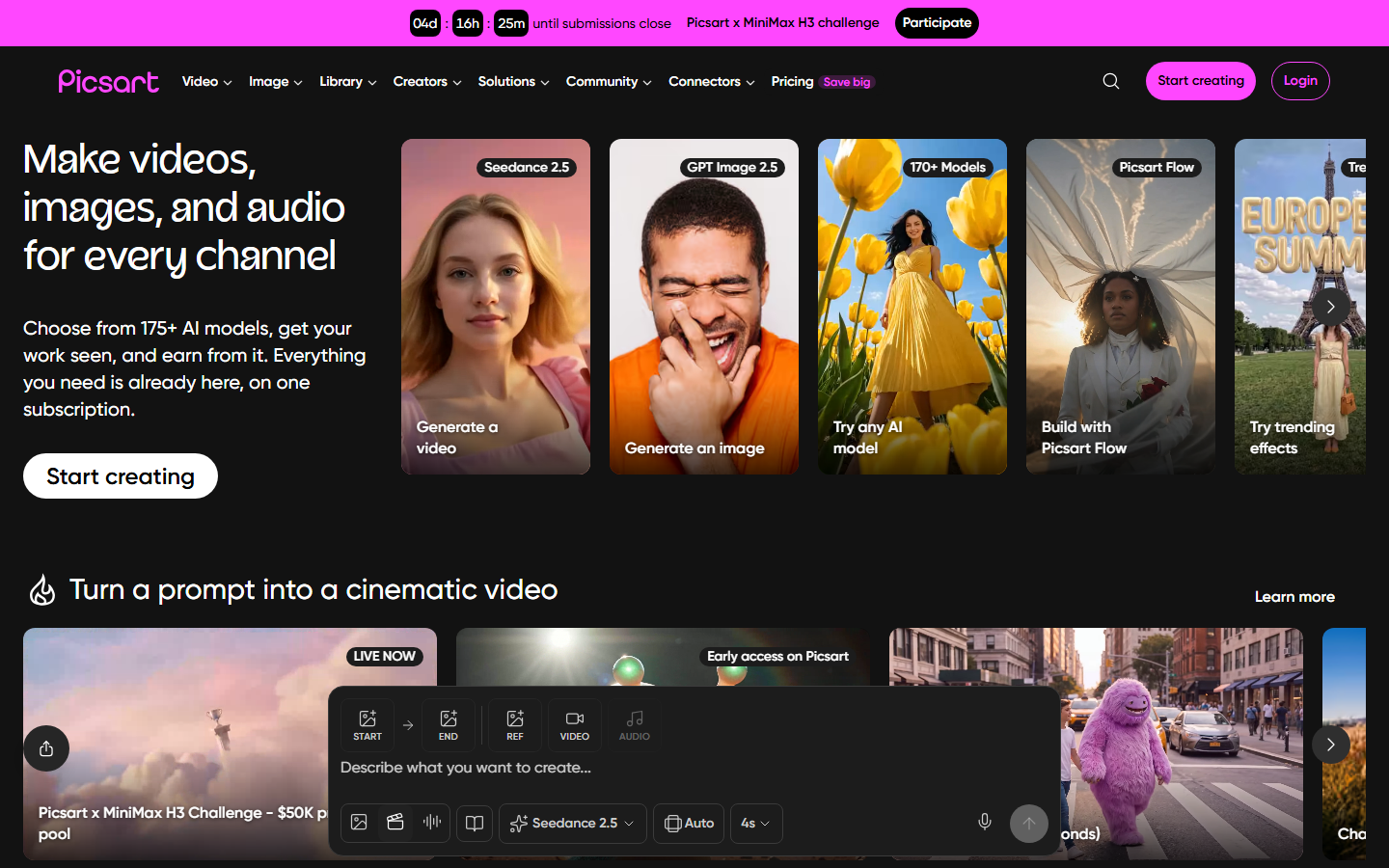
Picsart sells Creative APIs plus an embeddable editor SDK, and the SDK is why it appears here. If your product needs an in-app editing surface (crop, retouch, background swap, text, effects) and you do not want to build one, you get a themeable component to drop in under your own styling.
The API side covers background removal, upscaling, style transfer, and generation. Editing quality is strong; raw text-to-image is behind the frontier models. A realistic architecture uses Picsart for the editor and a separate generation provider behind it, which is what a programmatic image generation platform is for. Pricing is tiered by monthly API calls, with enterprise agreements above that.
6. Photoroom
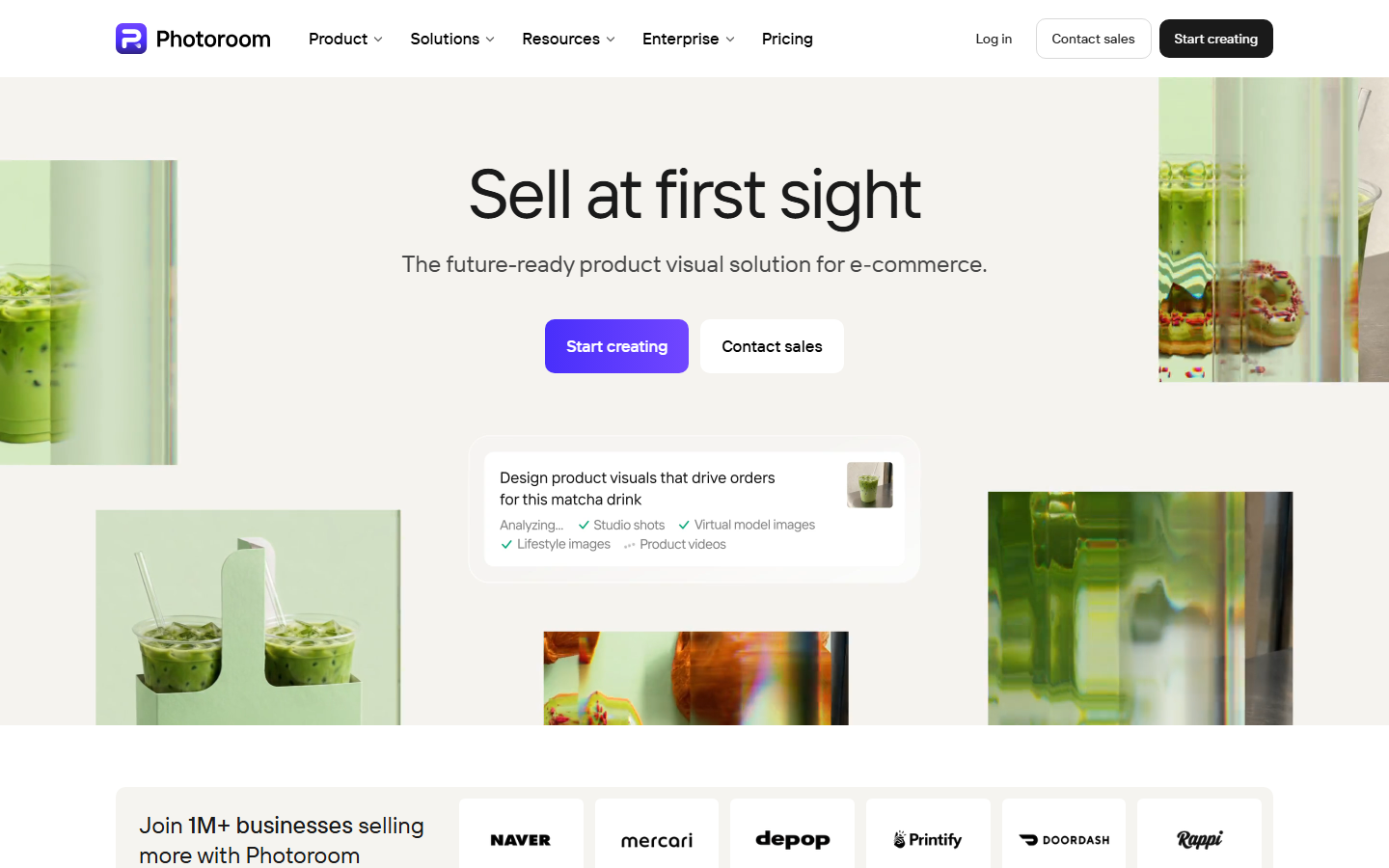
Photoroom is narrow on purpose. Its API does background removal, background generation, shadow synthesis, and product staging better than general-purpose tools do. For a white label catalog product aimed at ecommerce sellers or marketplaces, that narrowness is an advantage because output stays predictable at scale.
Latency is low enough for interactive use, batch endpoints handle catalog-sized jobs, and per-image pricing drops sharply with volume, which protects resale margin. The limit is obvious: no general text-to-image model, so Photoroom is a component rather than a platform. Pair it with a generator if your roadmap goes beyond product imagery, as in a standard ecommerce image workflow.
7. Segmind
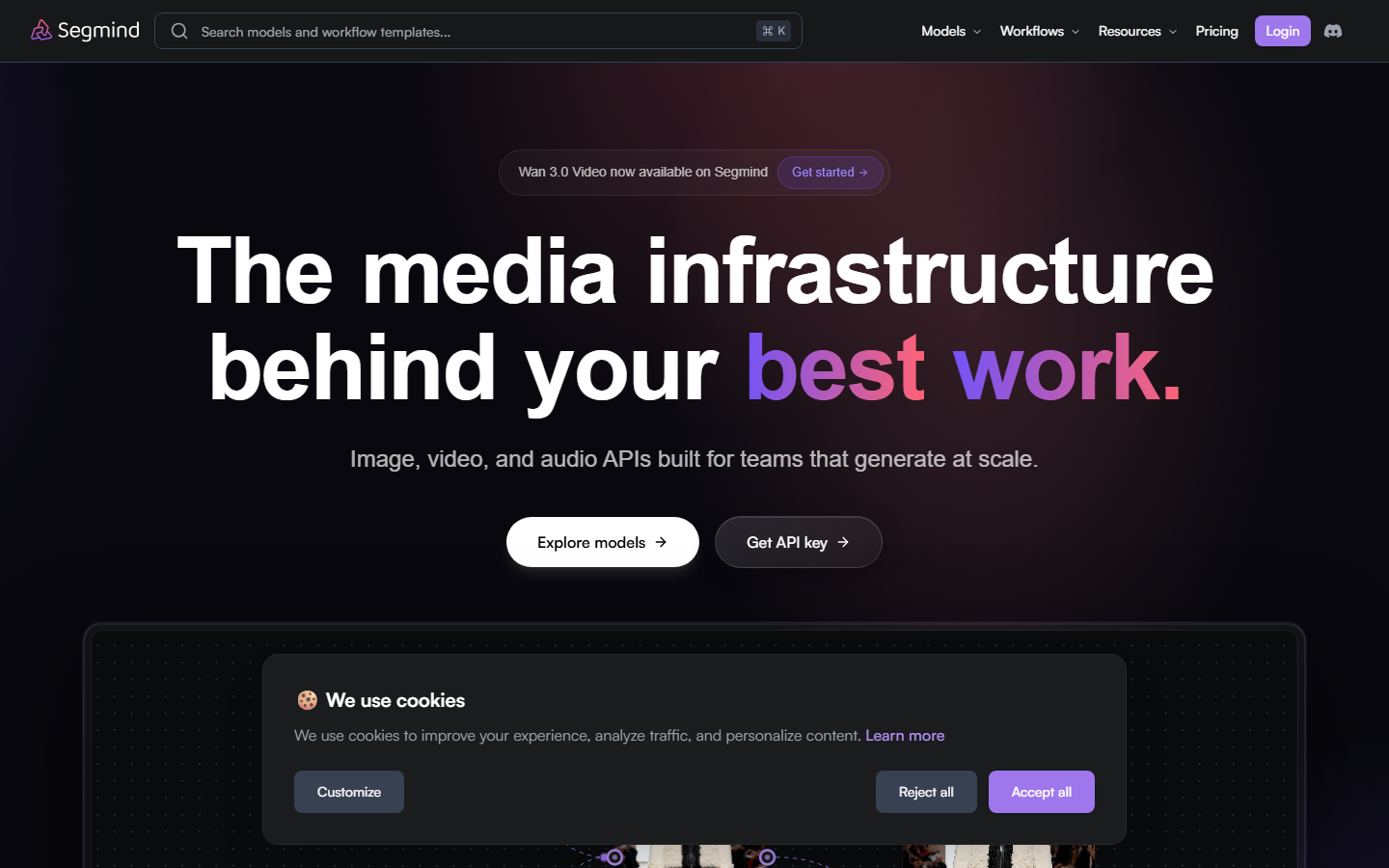
Segmind is serverless inference across a broad open-model catalog, with a pipeline builder for chaining steps. Its appeal for white label work is cost: you pay per second of compute rather than a flat per-image rate, so an optimized pipeline running a smaller model lands well under the price of a hosted frontier API.
That flexibility comes with responsibility. You choose models, tune steps and resolution, and own quality control, so it suits teams with some ML familiarity rather than a founder shipping fast. Cold starts on less common models add latency, and the enterprise wrapper (SLAs, compliance docs) is thinner than Bria's. Good fit when you want batch image generation at a defensible unit cost.
Comparison Table
| Tool | Best For | White Label Output | API Depth | Pricing Model |
|---|---|---|---|---|
| Wireflow | Overall | Unbranded, no watermark | Full workflow API, scoped keys | Usage-based, no seats |
| Bria AI | Licensed data | Unbranded, indemnified | Generation plus editing | Volume tiers, on-prem option |
| Scenario | Custom brand models | Unbranded | API plus MCP, training | Generation plus training |
| Leonardo.ai | Creative suites | Unbranded on paid plans | Broad, well documented | Pooled credits |
| Picsart | Embedded editors | Themeable SDK | Editing strong, gen average | Monthly API call tiers |
| Photoroom | Product photography | Unbranded | Narrow, deep | Per image, volume discounts |
| Segmind | Cost control | Unbranded | Serverless plus pipelines | Per second of compute |
How to Choose
Start with the constraint that is hardest to fix later. If procurement will ask about training data, that is Bria, and no amount of API convenience elsewhere changes the answer. If your differentiator is a house visual style, Scenario's training loop is the product and everything else is plumbing.
If neither binds, the deciding factor is the shape of your cost curve rather than image quality, since output from the top models has converged. Prefer the platform where one integration covers generation, editing, and batch work, because every extra provider adds an invoice, an SLA, and a failure mode. That argues for a consolidated white label AI generation platform over stitching four vendors together.
Then test at your real volume before signing. Free tiers hide the cliff, and these platforms price very differently at 1,000 images per month than at 100,000. Run fifty prompts through both finalists, measure cost and latency, and treat that as the decision. The same test applies to white label AI video platforms.
Try it yourself: Build this white-label image workflow in Wireflow to see the branded generation pipeline described above, with the nodes already configured.
Frequently Asked Questions
What does white label AI image software actually mean?
It means the images carry your brand rather than the vendor's. That takes three things together: no watermark or forced attribution, commercial rights you can pass to your own customers, and an API complete enough that customers never see the vendor's interface.
Can I resell AI generated images under my own brand?
Yes, on the paid tiers of every platform here. Free tiers usually restrict commercial use, so check the terms first. Bria is the only one that adds IP indemnification, covering you if a copyright claim is made against the training data.
Do white label image platforms charge per seat?
The better ones do not. Wireflow, Segmind, and Photoroom price on usage, which is what makes resale margin possible. Per-seat pricing breaks the model because your cost scales with your client's headcount while your revenue scales with their image volume.
How much does white label AI image generation cost per image?
Commodity models run roughly $0.01 to $0.04 per image, frontier models such as Flux 2 Pro and Recraft V4 closer to $0.04 to $0.08, and editing calls like background removal usually under $0.02. Serverless pricing can go lower if you tune the pipeline, at the cost of engineering time.
Do I need to build my own front end?
For most of these, yes. Picsart is the exception, since its editor SDK is a themeable component you embed directly. Everything else assumes you own the interface, which is the point: the interface is where your brand lives.
Can these platforms handle multiple clients from one account?
Partially. Wireflow supports scoped API keys with per-key spend limits, giving you real cost attribution per client. Leonardo and Scenario pool credits at the account level, so client usage tracking lands in your application layer, a gap most developer-friendly AI image platforms leave to you. Full tenant isolation with separate billing is something you build on top.
What about self-hosting?
Bria offers source-available weights and on-premise deployment, and Segmind runs open models you could host yourself. A self-hosted image generation API removes vendor risk but adds GPU operations to your cost base, so the break-even usually sits above 100,000 images per month.
Conclusion
The category splits cleanly in 2026. Bria and Scenario each win on one constraint, legal safety and brand-specific style. Photoroom and Picsart are components you assemble into something larger. Segmind holds the cost-control end of the commodity tier, Leonardo the breadth end. If you need one integration covering generation, editing, and batch work under your own brand on usage-based pricing, a consolidated multi-model canvas is the shorter path, and the comparison of node-based image tools explains that architecture. Whichever you pick, run your real volume through it first.
Would you rather we just built it?
We get on a call, learn your style, build the workflow, and ship the deliverables on a schedule. You keep the workflow either way.