 Andrew Adams · Co-Founder & Operations at Wireflow ·
 Agentic Marketing
Build the content pipeline once on a node canvas, then let agents and loops run it.
Brief in, on-brand assets and channel variants out, publishing included in the graph.
Free to build · no credit card · See how it works ↓
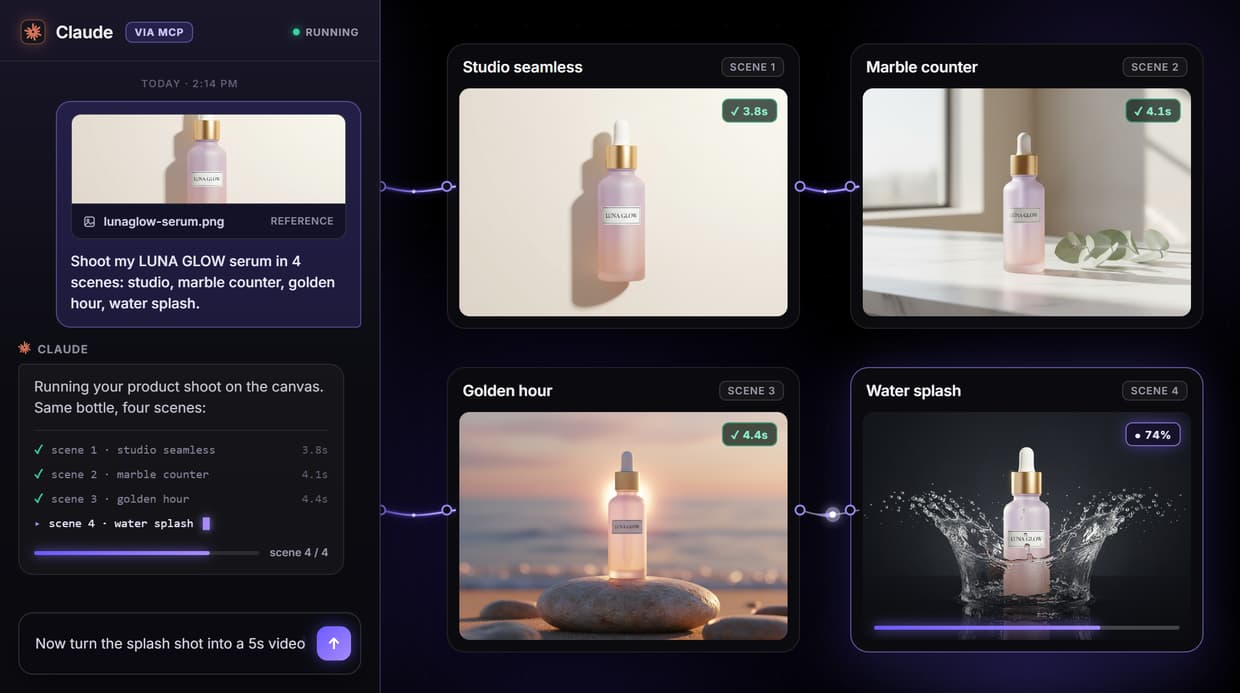
How to Use Agentic Marketing
Steps to get you started in Wireflow.
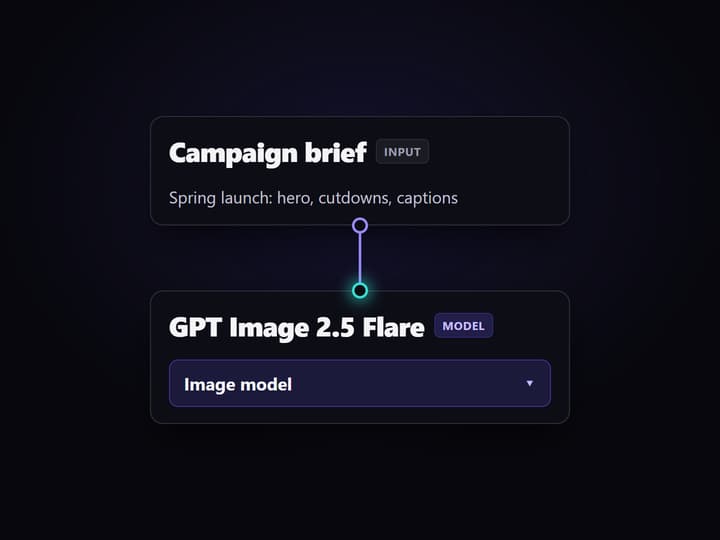
Wire the campaign pipeline
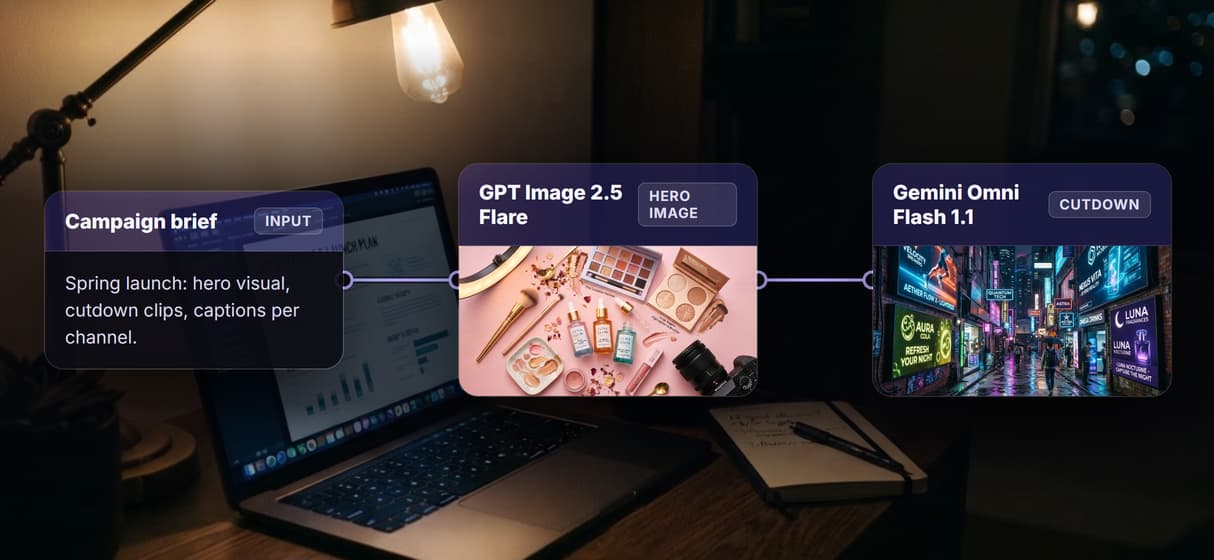
Start from the brief: a text input, an Enhance Prompt node, then GPT Image 2.5 Flare for the hero visual and Gemini Omni Flash 1.1 for the cutdown clip.
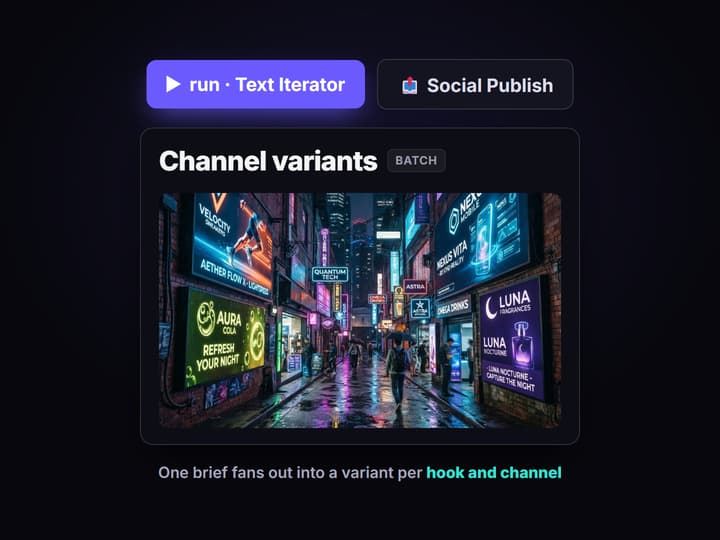
Fan out the variants
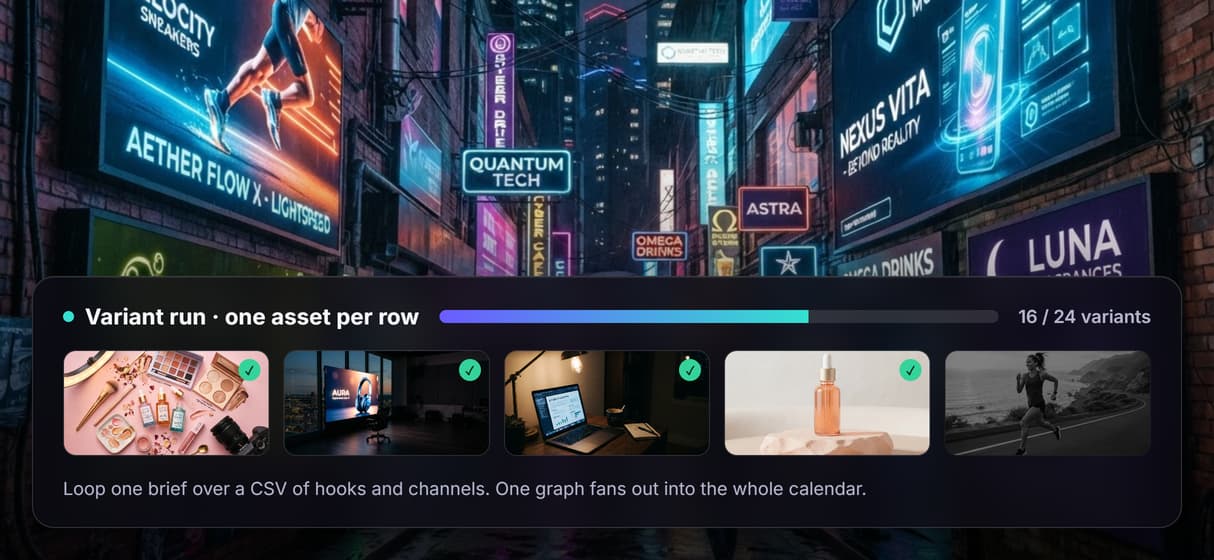
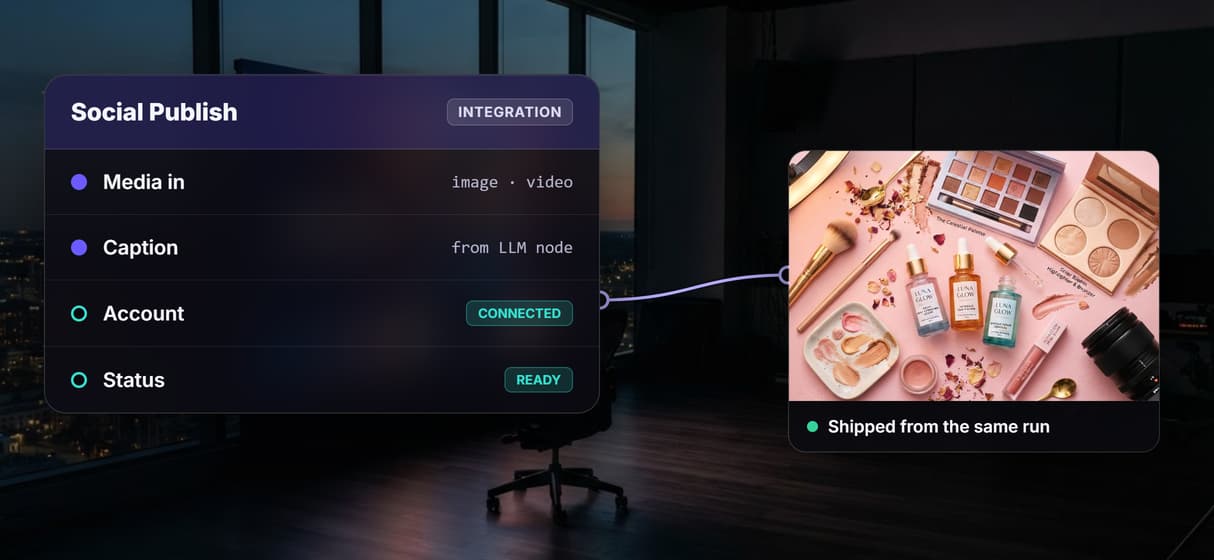
Add a Text Iterator over your hooks or channels and the graph renders a variant per row. Finish with a Social Publish node so assets ship, not sit.
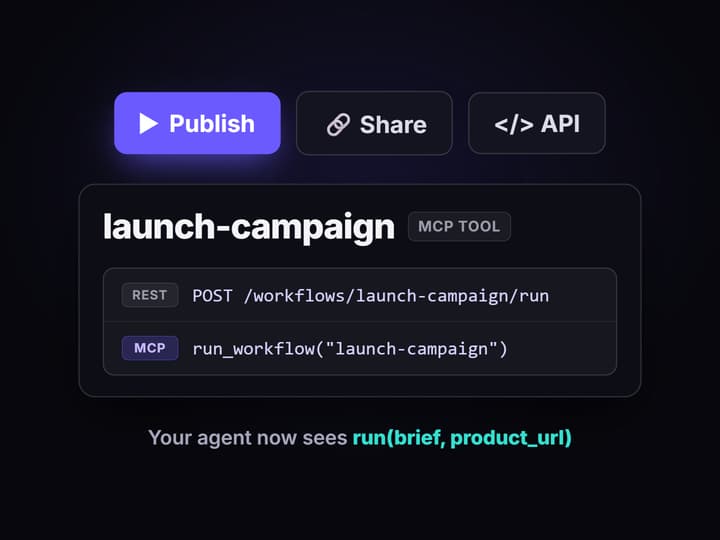
Hand the pipeline to agents
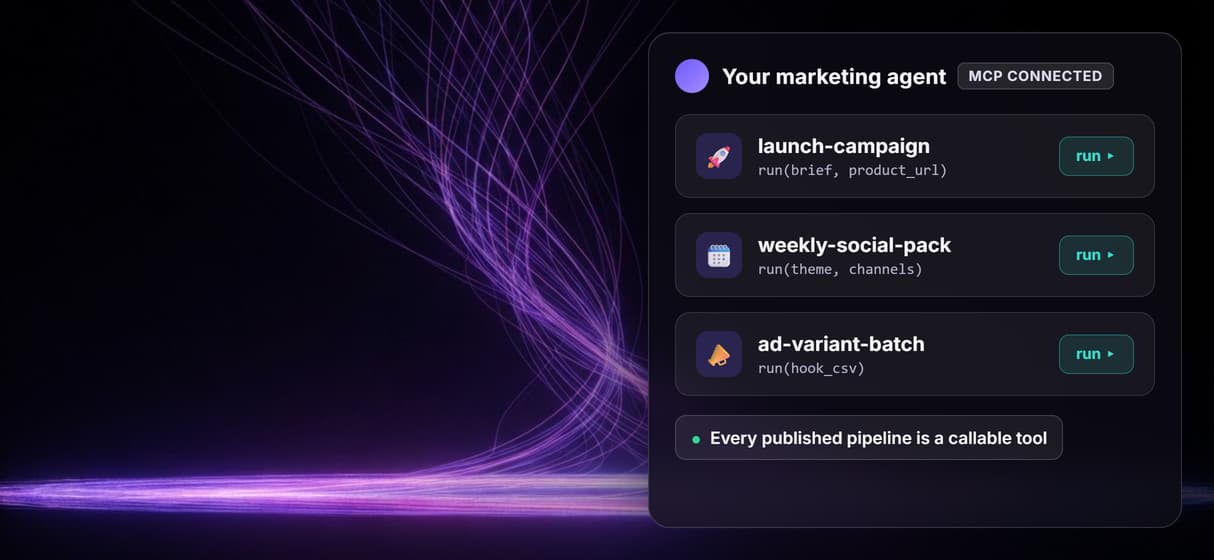
Publish the graph and it becomes an MCP tool with typed inputs. An agent fills the brief, runs the pipeline, and returns asset URLs your team reviews.
The practice, not another tool
Agentic marketing usually gets pitched as replacing the team with software. The teams actually shipping with it do something narrower and more useful: marketers design one content pipeline, then agents and loops do the running. The brief is the input; finished, on-brand assets are the output; nobody re-prompts a chat window all week.
Wireflow is where that pipeline lives. You wire it once on a node canvas: brief intake, an image model for the hero visual, a video model for cutdowns, an iterator for channel variants, and a Social Publish step at the end. It runs on hosted compute in the browser, no GPU and no install, and the same graph later becomes the tool your agents call. That is AI pipeline automation applied to the weekly content grind.
What the campaign pipeline can do
Brief intake
Pull briefs from Notion pages or Google Drive, or paste text directly.
Hero visuals
Generate with Nano Banana Pro, Flux 2, Seedream V4.5, or GPT Image 2 from the brief.
Video cutdowns
Veo 3.1, Kling O3, Sora 2, and Seedance 2.0 turn the hero frame into channel-ready clips.
Voice and avatars
ElevenLabs voice-over, HeyGen Avatar4, and Sync Lipsync v3 make spokesperson variants in-graph.
Variant fan-out
Text and Image Iterators loop one brief over hooks, channels, or a product CSV.
Publish and polish
Topaz upscaling, background removal, and a Social Publish node finish the run.
How the loop runs, and who does what
An agentic marketing workflow is a division of labor, not a hand-over of judgment.
- Marketers design. You choose the models, lock the brand inputs, and decide what a variant is allowed to change. That happens once, on the canvas.
- The pipeline produces. Brief in, the graph renders the hero image, cutdowns, and channel variants on hosted compute, the same way every run.
- Agents operate. Over the hosted MCP server an agent lists your published workflows, fills the typed inputs from this week's brief, and returns asset URLs for review.
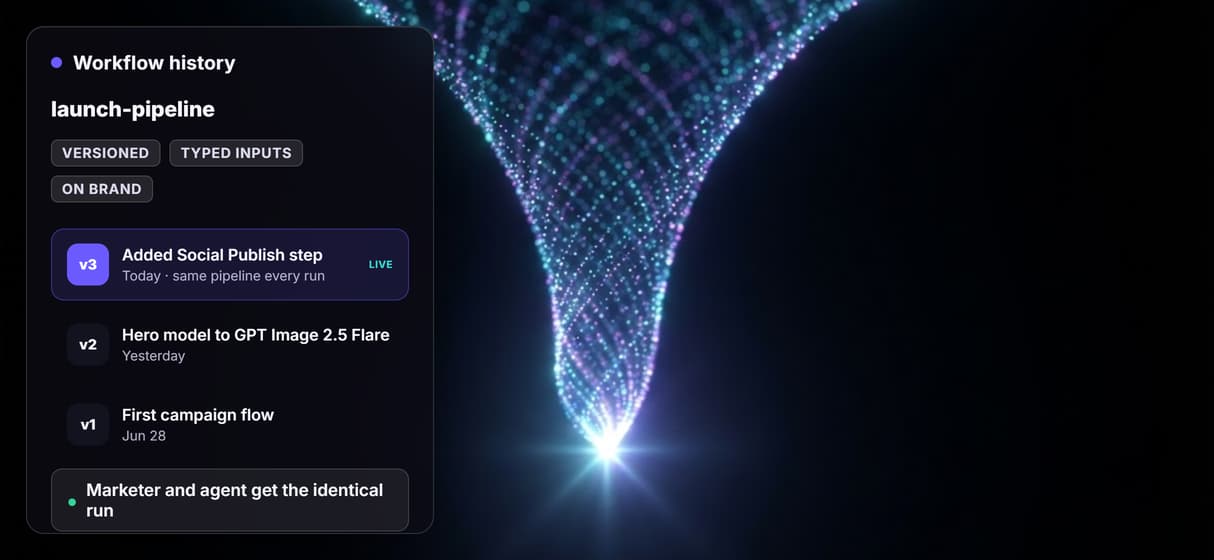
Delegation only works because runs are reproducible: workflows are versioned server-side, so the difference between two runs is the inputs, never the pipeline. That property is what separates AI creative workflows you can hand to an agent from prompt sessions you cannot. The tradeoff: every run spends credits, so an agent looping through variants is a metered decision, not a free one.
What agentic marketing on Wireflow is not
Wireflow is the production and publishing layer, not the strategy brain. Positioning, budget, audience, and channel choices come from your team or the agent you bring; an LLM node can rewrite prompts and caption variants inside the graph, but it will not plan your quarter.
It is not an ad platform either: there is no audience targeting, no attribution dashboard, and no media buying. And every generation costs credits, so an agent looping over hundreds of rows is a spend decision to cap deliberately. If your marketing is one-off assets with no repeatable shape, a pipeline has nothing to automate. If the same campaign structure ships every week with new inputs, this is exactly the practice for it.
More Than Just Agentic Marketing
One graph from brief to asset
Chain the brief, an image model like GPT Image 2.5 Flare, and Gemini Omni Flash 1.1 for video in one canvas, the pattern behind every AI brand content generator run.
Variants scale by loop
A Text Iterator turns one brief into a variant per hook, channel, or product row, the same fan-out that powers batch AI generation on the canvas.
Publishing is a node
A Social Publish node sits at the end of the graph, so finished social media video and images ship from the same run that made them.
Agents run what you designed
Publish the workflow and any MCP agent can list it, read its typed inputs, fill the brief, and run it, the working model of the agentic canvas.
Reproducible keeps it on brand
Workflows are versioned server-side, so the fiftieth asset follows the same pipeline as the first. That discipline is what makes creative workflow automation safe to delegate.
Agentic marketing Workflows
No Code Required
API & Batch Processing
FAQs
It is a way of running marketing where agents execute repeatable content work by calling pipelines the team designed, instead of a marketer driving every generation by hand. The team keeps strategy; agents keep production moving.
Discover related AI tools
- AI Pipeline Automation
- AI Workflow Templates
- AI Video Pipeline: Build One on a Node Canvas
- Batch AI Generation: Many Assets, One Run
- AI Model Chaining
- AI Asset Pipeline
- AI Workflow Builder
- AI Content Generation API
- AI Workflow API
- AI Orchestration API
- Headless AI Workflow Platform
- Krea AI API Alternative: Image and Video From One REST Endpoint
More From Wireflow
Written by
Andrew Adams · Co-Founder & Operations at Wireflow
Runs client operations and content strategy at Wireflow. Works directly with creative teams and agencies to build production AI workflows.
Build the pipeline your agents will run
Wire your campaign workflow once on the canvas: brief in, on-brand assets, channel variants, and publishing out. Run it by hand today, hand it to an agent when you are ready. Building is free, generations are pay per run.