 Andrew Adams · Co-Founder & Operations at Wireflow ·
 Character Design Generator
Wire one canvas that turns a character brief into a finished design: an expanded prompt, a base render, a style pass into the art direction you pick, and a portfolio upscale, all re-runnable, swappable, and callable as an API.
Free to build · no credit card · See how it works ↓
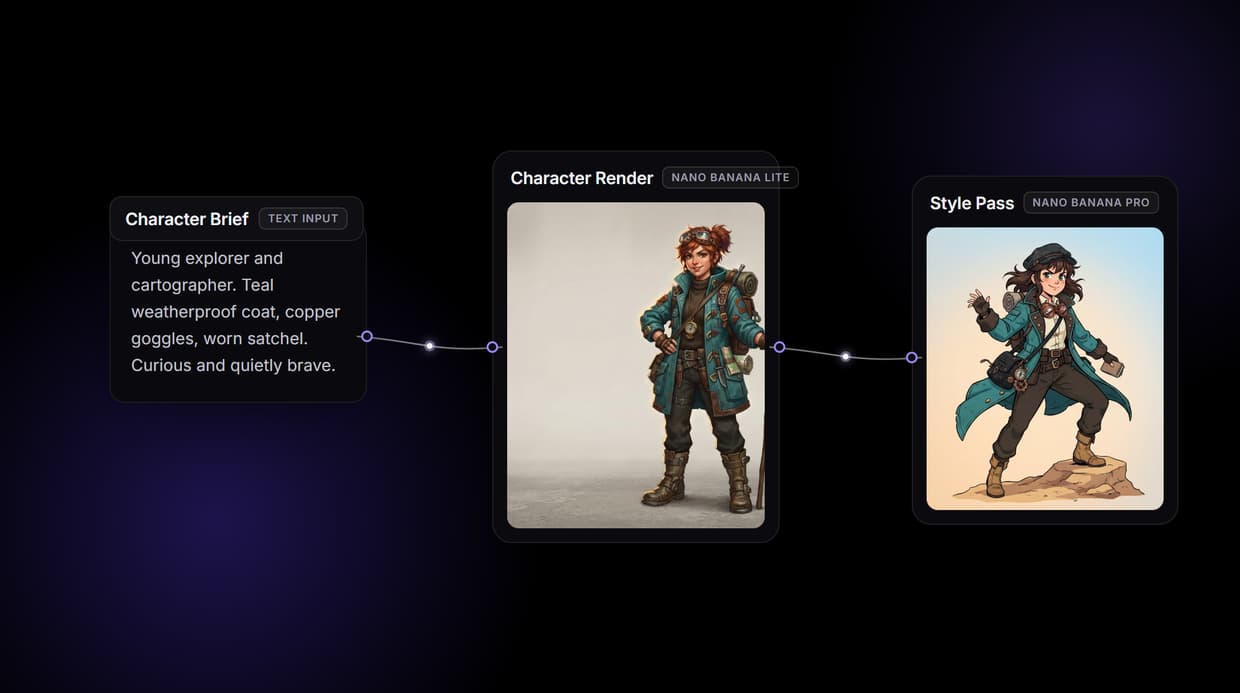
How to Use Character Design Generator
Steps to get you started in Wireflow.
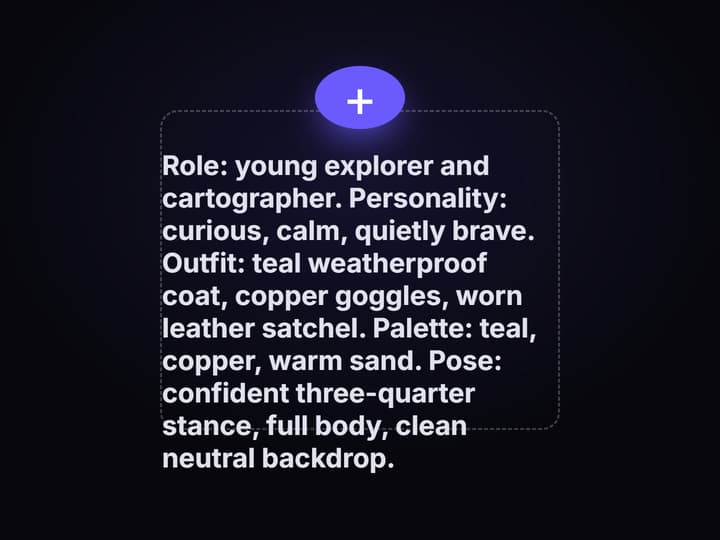
Write the character brief once
Drop a Text Input node and describe the character: role, personality, outfit, and palette. An Enhance Prompt node reads it and expands it into a detailed character prompt you can see on the canvas, so the direction lives in one place instead of a lost prompt box.
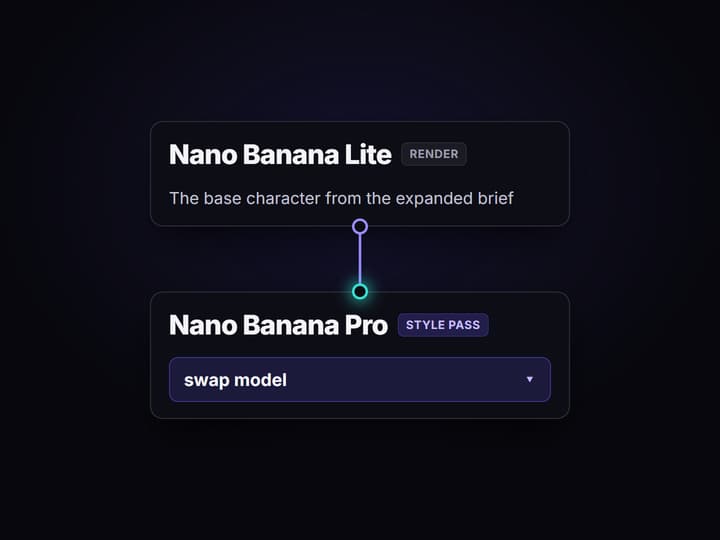
Render, then style the character
Send the expanded prompt into GPT Image 2.5 Flare for the base render, then feed that character into a GPT Image 2.5 Flare style pass with a style instruction. Swap the render model for Flux Pro or Ideogram V4 without touching the rest.
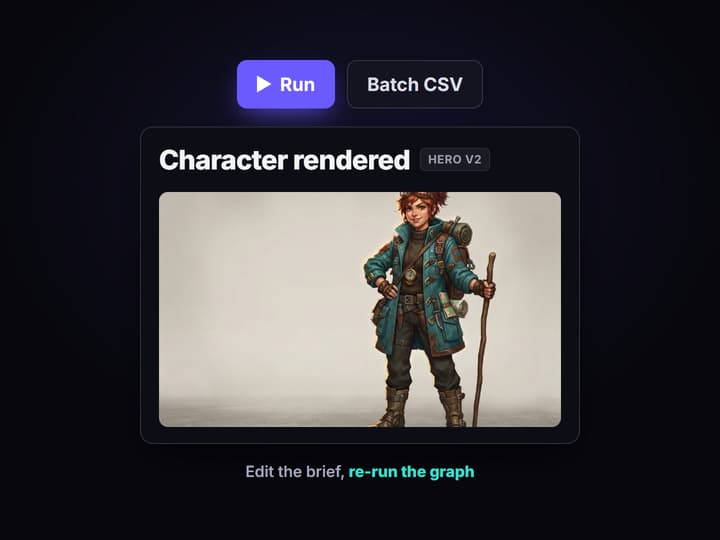
Upscale, re-run, or batch a roster
Run a Crystal Upscaler to make the design portfolio ready, then publish the graph. It is versioned server side, live as a REST endpoint and an MCP tool. Change the brief and run again, or loop the graph over a CSV of characters to build a whole roster.
Character design is a pipeline, not a single button
Most character design generators hand you one image and hide the machine behind a single Generate button. You type a line, you get one character, and when you need the same hero in a new pose, or a whole cast in the same style, you are back typing the same prompt and hoping the face holds. The character was never built as a pipeline, so it never behaves like one.
A character design generator should solve the cast, not the single portrait. On Wireflow the design is a node graph: one brief feeds an expanded prompt, the render, the style pass, and the upscale, all off the same words. Nothing downstream has to remember what the character looked like, because the brief and the base render are still wired to it, and the whole graph is a saved endpoint you re-run, batch, or call from your own app.
What the character design graph produces
Expanded prompt
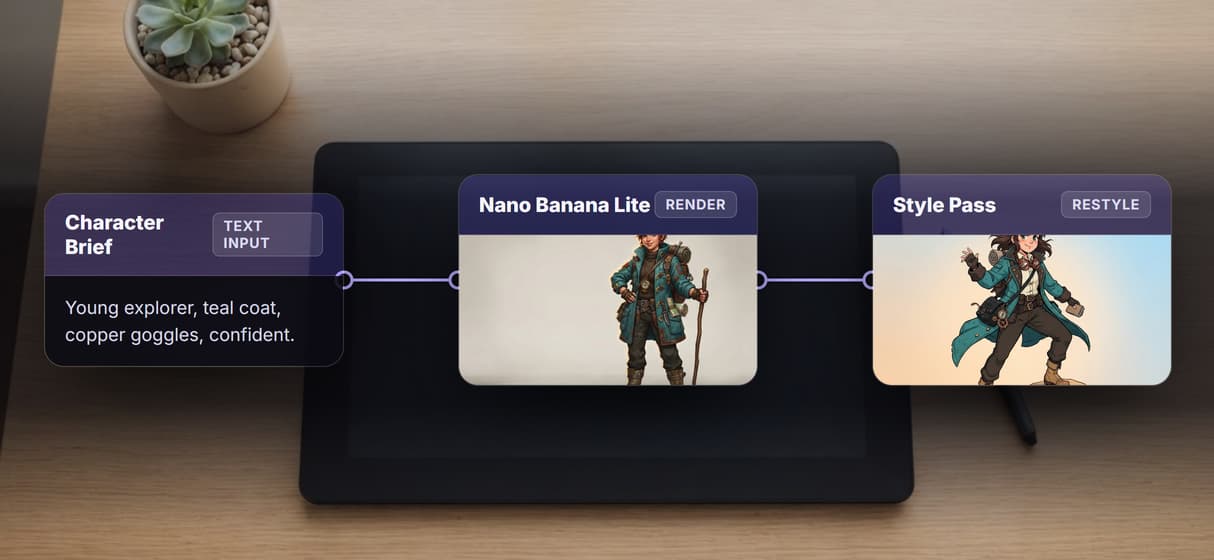
An Enhance Prompt node reads the brief and writes a detailed character prompt, shown on canvas so you can see the direction before it renders.
Base render
GPT Image 2.5 Flare renders the character from the expanded prompt, the anchor image every later step builds on.
Styled design
A GPT Image 2.5 Flare style pass pushes the render into a chosen art direction, anime cel, painterly, ink, or stylized 3D.
Portfolio upscale
A Crystal Upscaler takes the approved design to high resolution so it holds up in a portfolio, a pitch deck, or a print.
A whole cast
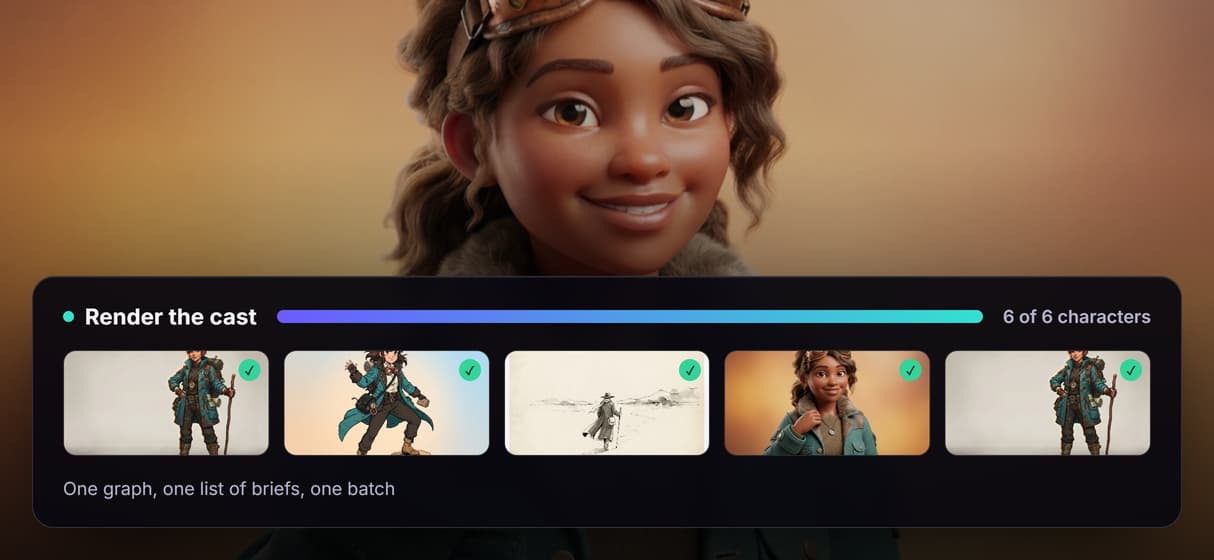
Loop the graph over a CSV of briefs and it renders one character per row, the same style reused across the roster.
A reusable endpoint
The finished graph is a REST endpoint and an MCP tool, so a script or an agent can make the next character on demand.
How the character design graph is wired
The graph is small. Four ideas do all the work.
- One source of truth. A Text Input node holds the character brief. Every other node reads from it, so the direction exists in exactly one place on the canvas.
- A model per job. An Enhance Prompt node expands the brief, GPT Image 2.5 Flare renders it, and a style pass sets the look. Picking the right model per step is the whole point of a multi-model AI workflow instead of one black box.
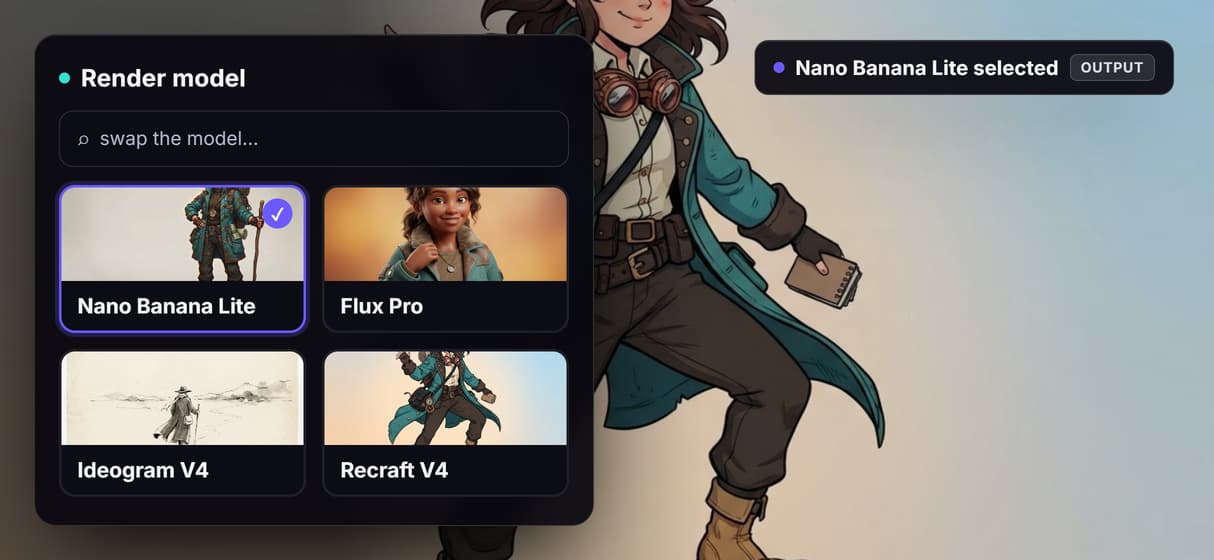
- Swap without rebuilding. The render node is just a node on a node based image generation canvas, so GPT Image 2.5 Flare comes out and Flux Pro or Ideogram V4 goes in, and the brief, style pass, and upscale stay wired.
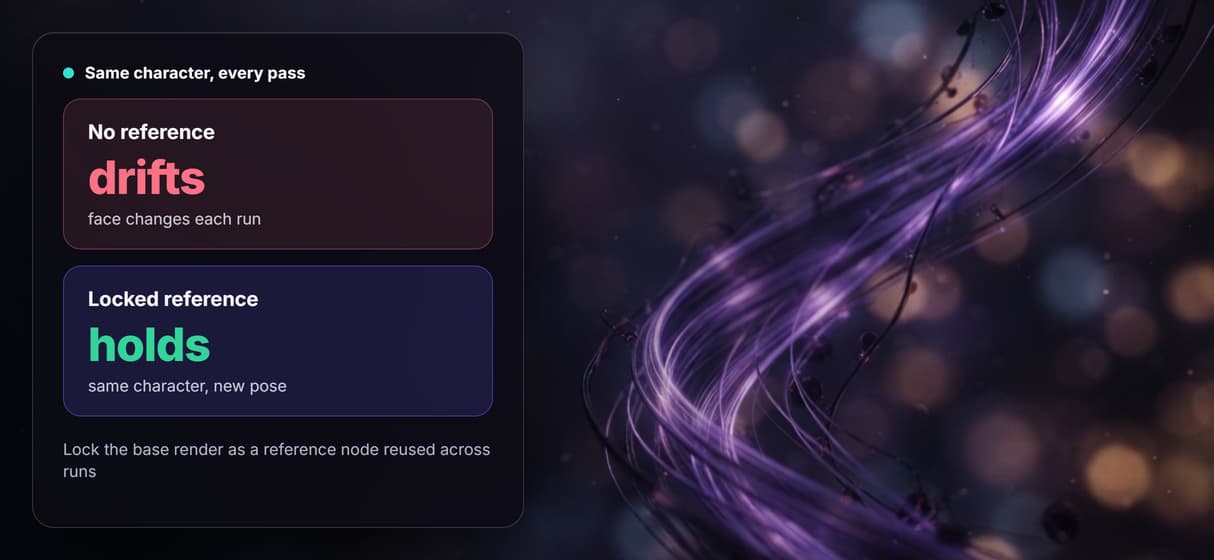
- Consistency by reference. Lock the approved base render as a node reused across every run, so character forty matches character one instead of drifting design to design.
Finishing nodes hang off the end when a design needs them: send the result through image upscaling for delivery, or into the AI image editor for a targeted fix. None of it needs a GPU, because the whole canvas runs on hosted compute.
What it is, and what it is not
This renders and chains the character art, not the idea. It will not invent your character, decide the personality, or tell you which design is good. Bring the concept, put it in the brief, and the canvas renders it. If you want an LLM node to expand a rough brief into a fuller character prompt, that is already wired in, but the creative call is yours.
Two more honest limits. This is not a rigging or game-asset tool. It renders character art, not rigged skeletons, animation-ready sprite sheets, or 3D model files, so for a playable asset you still take the design into a modeling or rigging pipeline. And it exports raster images, PNG and JPG, not vector SVG source, editable PSDs, print-ready PDFs, or fonts.
If you want a one-button consumer app that promises a finished hero from a sentence, that is a different product. If you want the pipeline behind the character, visible, swappable, batchable, and callable, that is what this canvas is for.
More Than Just Character Design Generator
Art direction is a node you control
Set the look as an explicit GPT Image 2.5 Flare style pass node, so anime, painterly, or stylized 3D is a wired choice, never a hidden preset.
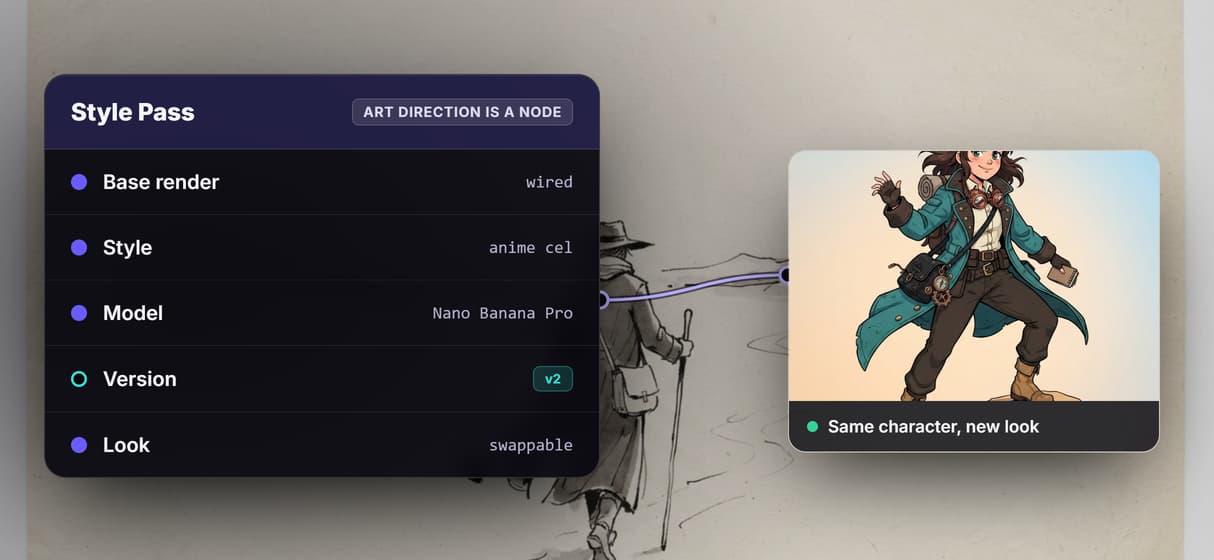
One brief becomes the whole design
One character brief fans out to an expanded prompt, the GPT Image 2.5 Flare render, a style pass, and a portfolio upscale on one canvas, built as one design.
Keep one character consistent
Lock the approved base render as a reference node reused on every pass, so the same character holds across new poses and styles instead of drifting.
Batch a whole cast at once
Loop the one graph over a CSV of character briefs and it renders a design per row, the roster output a single-shot character button never actually gives you.
Swap the render model, keep the wiring
Pick the render model as a node, Nano Banana Lite, Flux Pro, or Ideogram V4, and the brief, style pass, and upscale stay wired when you change your mind.
Build Any AI Workflow
AI Models Integrated
Full Commercial License
FAQs
It is a tool that turns a character brief into a finished design rather than a single guessed image. On Wireflow it is a node graph that produces an expanded prompt, a base render, a style pass into a chosen art direction, and a portfolio upscale from the same brief, with the render model swappable and the whole graph saved as a reusable endpoint.
Discover related AI tools
- AI Image Upscaler: Upscale to 4K in a Visual Workflow
- AI Background Remover
- AI Image Generator: Flow-Based Canvas, 31 Models
- ComfyUI Alternative
- AI Face Swap Online: Photos and Video in Your Browser
- Virtual Try On
- AI Thumbnail Generator
- AI Photo Generator
- AI Image Editor
- AI Art Generator
- Midjourney Alternative
- AI Headshot Generator
More From Wireflow
Written by
Andrew Adams · Co-Founder & Operations at Wireflow
Runs client operations and content strategy at Wireflow. Works directly with creative teams and agencies to build production AI workflows.
Build your character design pipeline on one canvas
Write the character brief once, wire the expanded prompt, the render, the style pass, and the portfolio upscale into a single graph, pick the model per step, then re-run, batch a roster, or call it as an API whenever the brief changes. No GPU, no install, building the canvas is free.