 Andrew Adams · Co-Founder & Operations at Wireflow ·
 Agentic Design
Agentic design is a loop you can actually inspect: a one-line brief goes in, an LLM design director expands it into composition, palette, and type direction, and an image model renders the result.
The whole pattern is three nodes on a canvas, and it is live on this page.
Free to build · no credit card
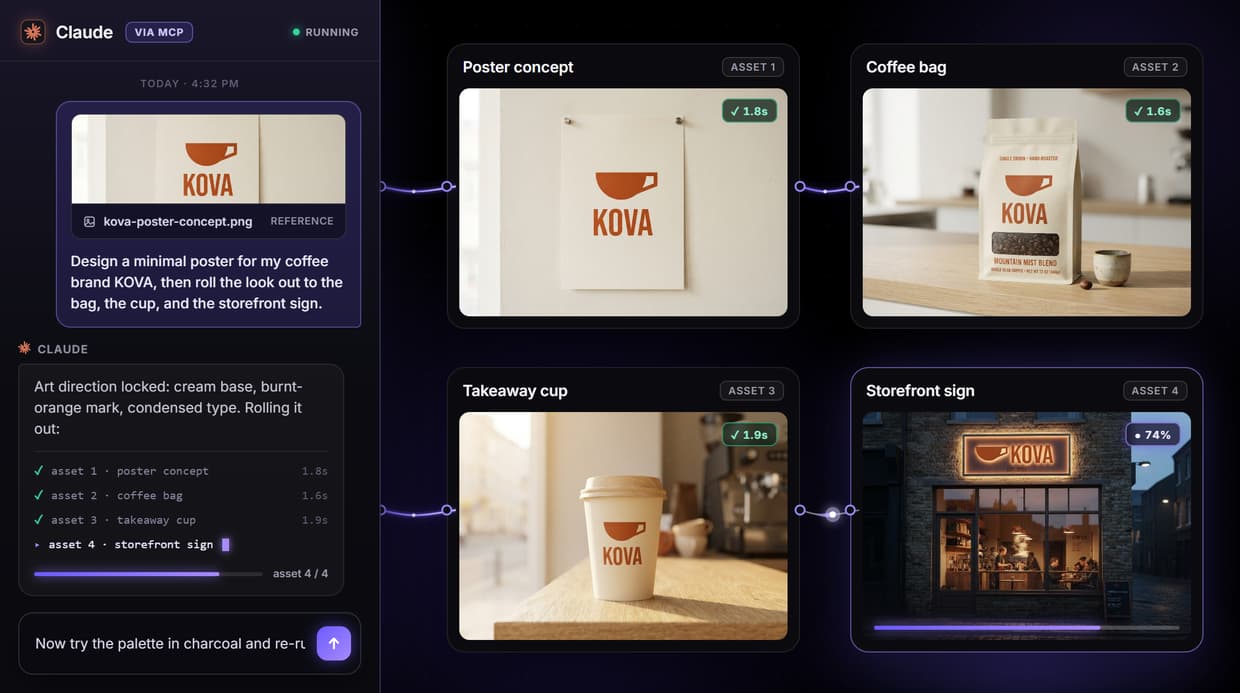
What agentic design actually is
Agentic design gets used two ways. Engineers mean the architecture: planner-executor splits, sequential pipelines, reflection loops, human-in-the-loop checkpoints. Designers mean the practice: an AI agent taking a brief and doing real design work, planning the direction and producing the asset. Both meanings describe the same loop from different ends, and both fall apart at the same point: an agent that designs is only trustworthy when the pipeline it runs is visible.
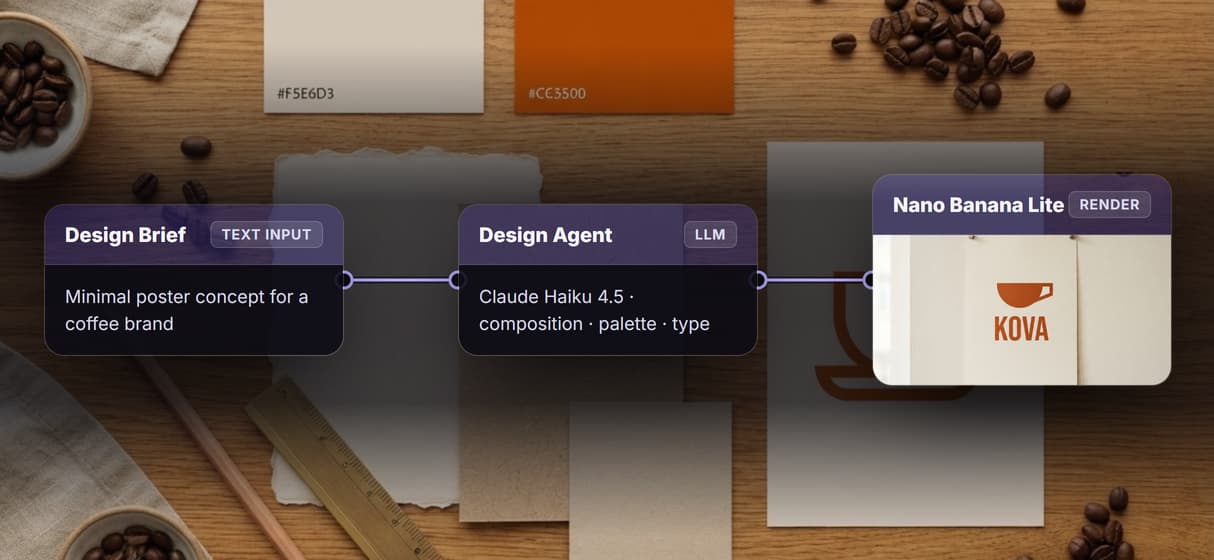
That is why this page is built around a workflow, not a metaphor. The flow on this page is the minimal agentic design pattern as a literal graph: a Design Brief text node, a Design Agent LLM node that turns one line into production-ready art direction, and GPT Image 2.5 Flare rendering the result. It is the same division of labor that agentic marketing applies to campaign pipelines, pointed at design work: the agent handles expansion and execution, the graph keeps every step inspectable.
What the agentic design loop can do
Brief in plain words
A Text Input node holds the brief. One line about subject, style, and format is enough to run.
Art direction on demand
The Design Agent node runs Claude Haiku 4.5 and returns composition, a specific palette, and type hierarchy.
Sub-2s renders
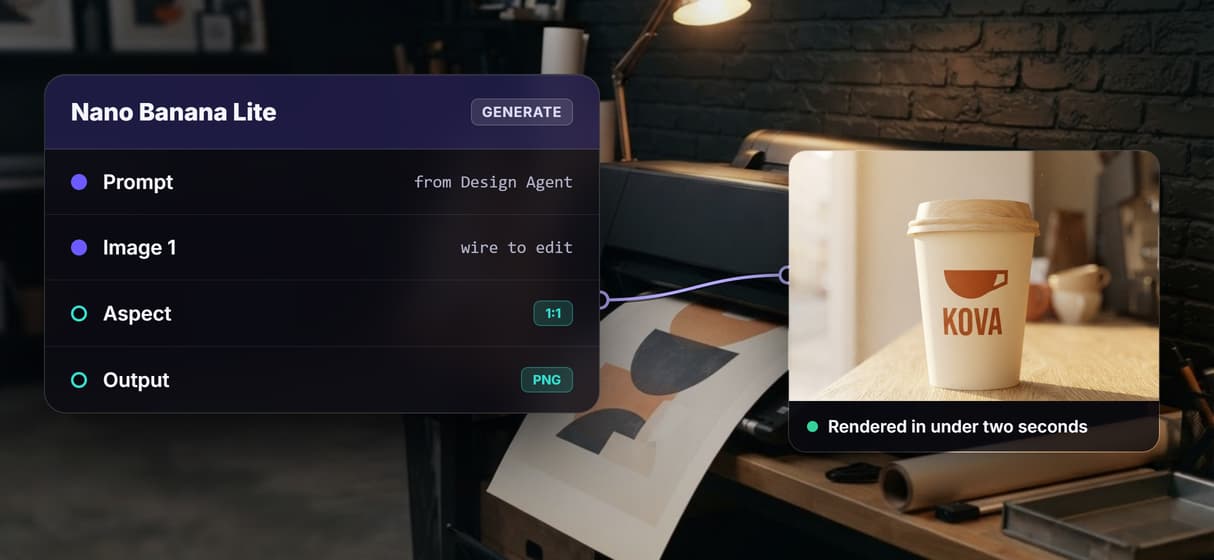
GPT Image 2.5 Flare turns the expanded prompt into an image in under two seconds, across 14 aspect ratios.
Edit by wiring an image
Wire an image into the same render node and it switches to editing, so revision rounds stay in the graph.
Swap the renderer
The graph is model-agnostic: replace GPT Image 2.5 Flare with Flux 2, Seedream V4.5, or GPT Image 2 without touching the agent.
Agent-callable
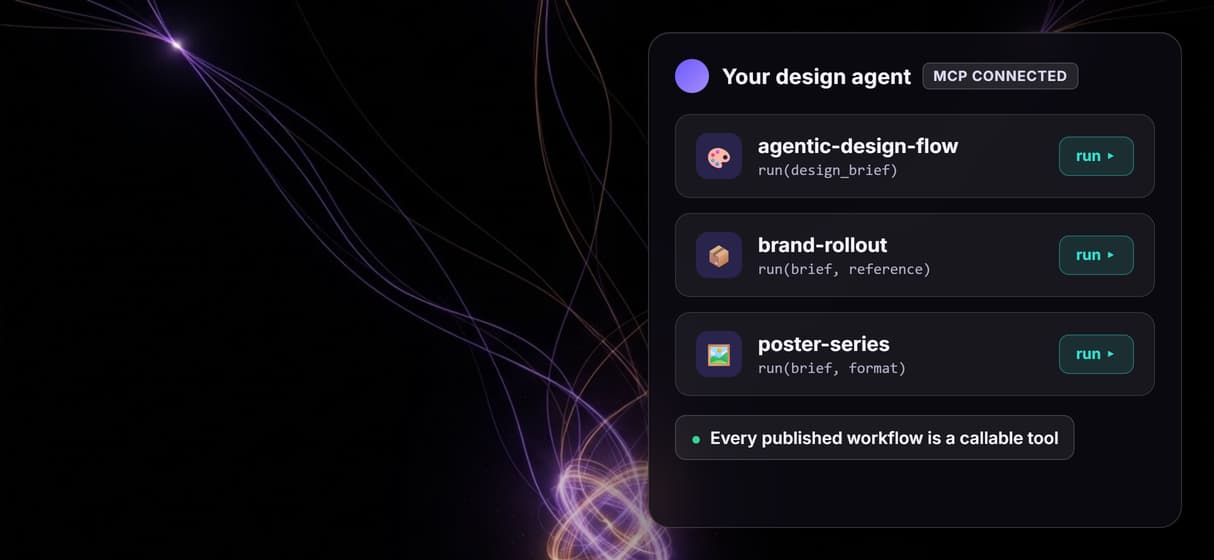
Publish the graph and it becomes an MCP tool and REST endpoint with typed inputs any agent can run.
The agentic design pattern, node by node
Open the flow and you are looking at a planner-executor pattern with nothing hidden.
- Design Brief holds the intent. A Text Input node with one line, the default reads: minimal poster concept for a coffee brand. This is the only part a human has to touch.
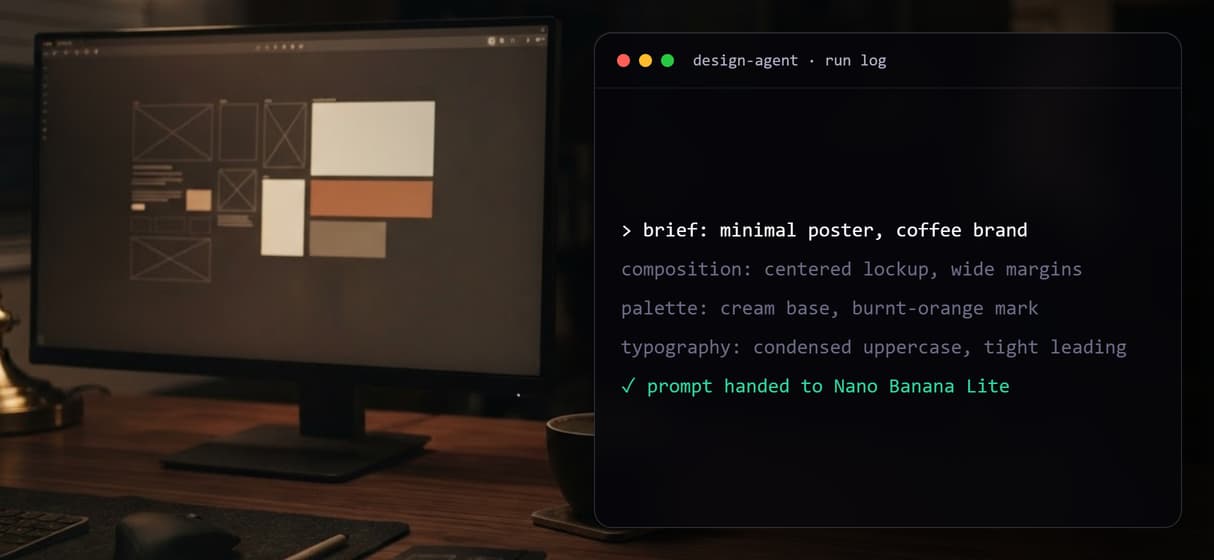
- Design Agent does the planning. A Run any LLM node on Claude Haiku 4.5, system-prompted as a design director. It returns a single production-ready image prompt: overall composition, a specific color palette, typography style and hierarchy, mood and finishing.
- GPT Image 2.5 Flare executes. The expanded prompt renders on hosted compute and the output lands on the canvas, next to the reasoning that produced it.
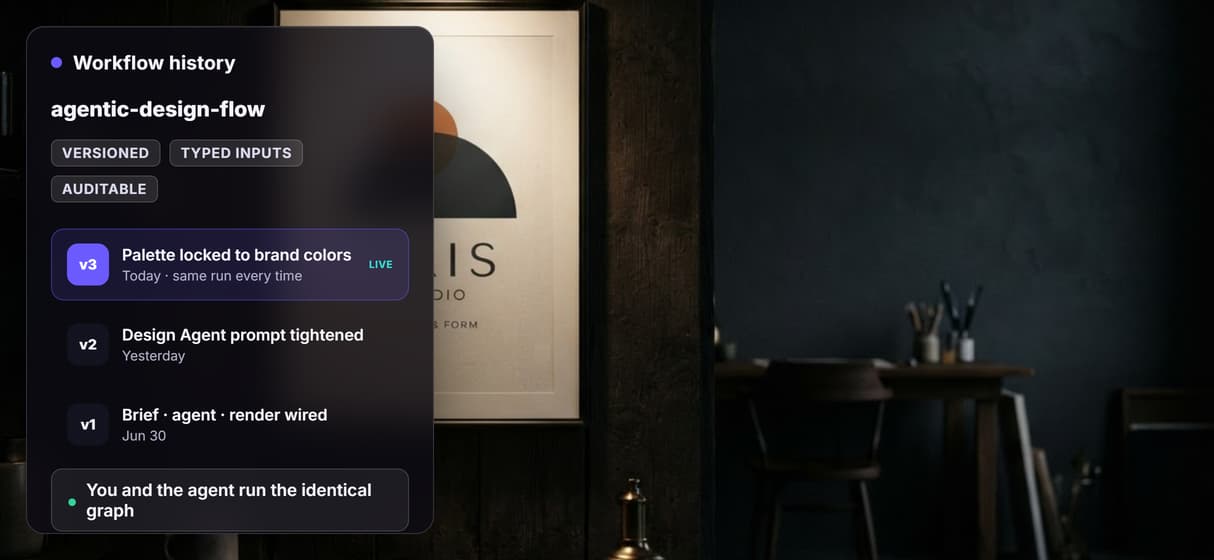
Putting the planner inside the graph is the point. A prompt you crafted by hand lives in a chat scroll; a Design Agent node is versioned with the workflow, so every render can be traced to the exact direction that made it, and improving the system prompt improves every future run. That is what makes the loop safe to hand over, the same property that separates no-code workflows with API access from one-off prompt sessions. The honest tradeoff: the agent's expansion is opinionated, and when you already know the exact art direction, the planner is a step you should delete, not automate.
What agentic design on Wireflow is not
Wireflow is the generation layer of the loop, not the taste. The Design Agent expands briefs into art direction, but your brand, positioning, and judgment about what is good still come from a person or the agent you bring. It is also not a design suite: the output is finished images, posters, concepts, and brand visuals, not editable vector files, artboards, or a design system. If your deliverable is a Figma file, this loop feeds it references rather than replacing it.
Runs are metered too: building on the canvas is free, but every generation costs credits, so an agent iterating unattended is a spend decision to cap deliberately. And when a brief is truly one-off with the direction already locked in your head, skip the agent and prompt the model directly. Comparing this approach against the rest of the field first is a fair move: see the best agentic design tools roundup for where a canvas-first loop wins and where it does not.
More Than Just Agentic Design
The whole pattern in three nodes
A Design Brief feeds a Design Agent that feeds a render model, the planner-executor loop laid out as a graph on the agentic canvas, small enough to audit in one glance.
An art director in the graph
The Design Agent's Claude Haiku 4.5 system prompt plans every brief's composition, specific palette, and type hierarchy.
Renders fast enough to iterate
GPT Image 2.5 Flare returns an image in under two seconds and switches to editing when you wire an image in, so a multi-model workflow can afford real revision rounds.
Your agent runs it as a tool
Publish the flow and it becomes an MCP tool and a workflow API endpoint with typed inputs: an agent sends the brief, the loop runs, asset URLs come back.
Auditable beats autonomous
The agent's plan lands on the same AI workflow builder canvas your team edits: open the graph, fix the direction, re-run, and the workflow stays versioned server-side.
Agentic design Workflows
No Code Required
API & Batch Processing
FAQs
It is the practice of delegating design production to an AI agent that plans and executes the work: the agent expands a brief into art direction, runs generation models, and returns finished assets, while people keep the brief and the review.
More From Wireflow
Written by
Andrew Adams · Co-Founder & Operations at Wireflow
Runs client operations and content strategy at Wireflow. Works directly with creative teams and agencies to build production AI workflows.
Run the agentic design loop yourself
The flow behind this page is public: a design brief, a Claude-powered Design Agent, and GPT Image 2.5 Flare in one graph. Type one line, press Run, and watch the art direction happen before the render does. The canvas is free to explore; generations are pay per run.