Best Visual Generative AI Tools with API Access in 2026

In this article▾
If you build apps that need on-demand image or video generation, choosing the right visual AI platform with a production-ready API matters more than raw model quality alone. Wireflow gives developers a visual canvas for chaining multiple generative models into a single API-callable pipeline, combining flexibility with the speed teams need to ship. Below is a ranked breakdown of the strongest options available today, evaluated on API design, output quality, pricing transparency, and developer experience.
Quick Summary
- Wireflow - Best overall visual AI platform with full REST API and node-based canvas
- fal.ai - Best for fast inference and open-source model hosting
- Leonardo AI - Best for creative asset generation at scale
- DALL-E 3 (OpenAI) - Best for prompt adherence and text rendering
- Krea AI - Best for real-time generation and design iteration
- Runway - Best for video generation via API
- Ideogram - Best for typography and logo generation
For a hands-on look at how visual generative AI tools work in practice, check out the visual AI canvas editor feature page.
1. Wireflow
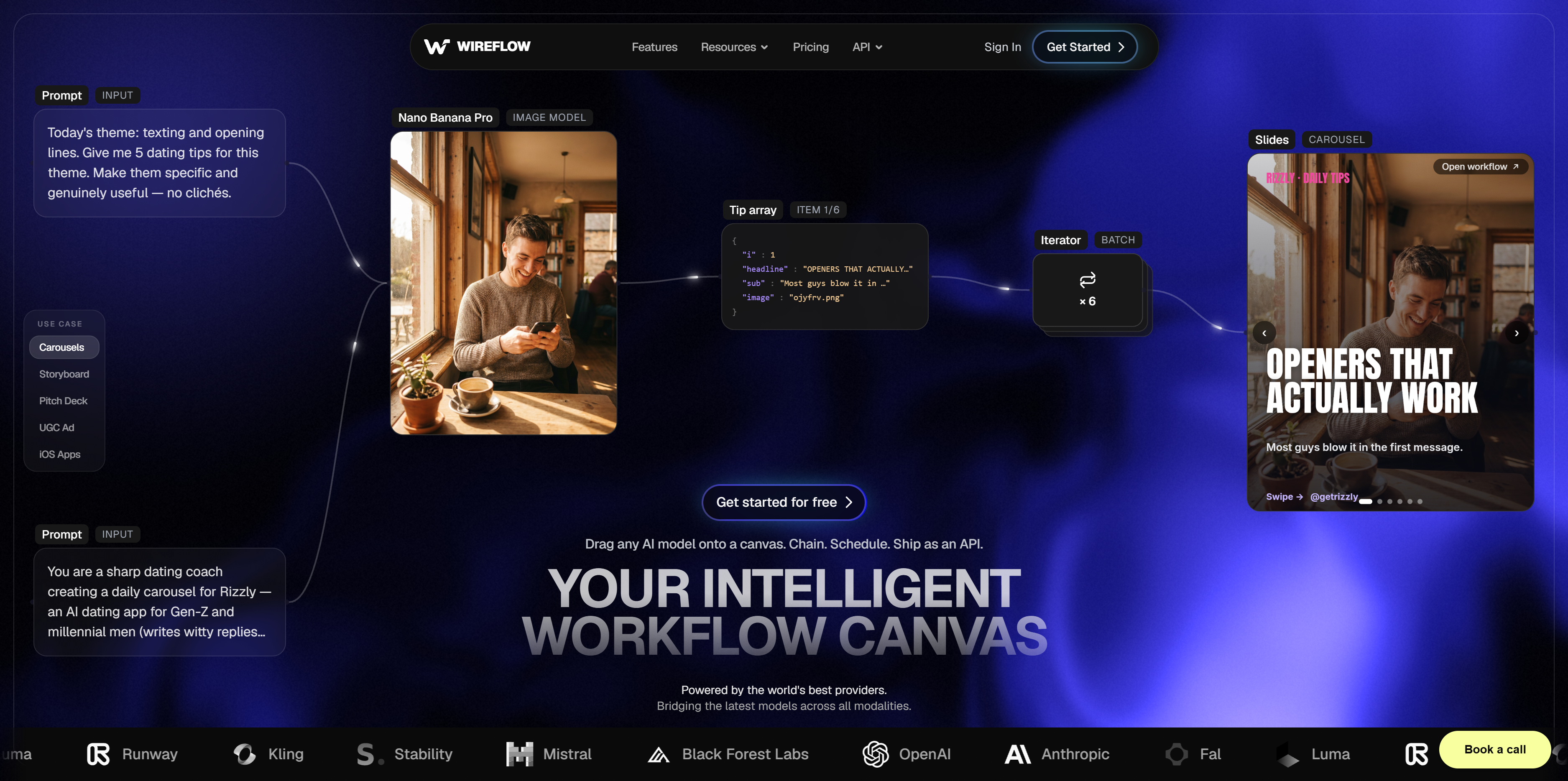
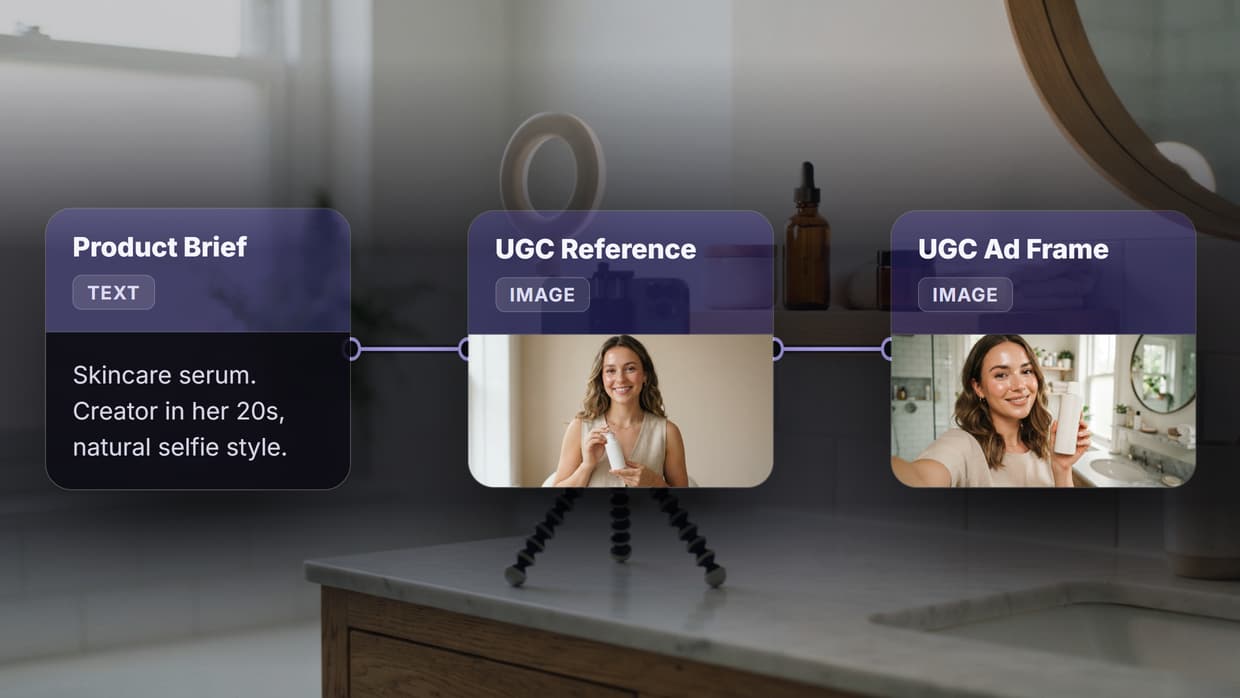
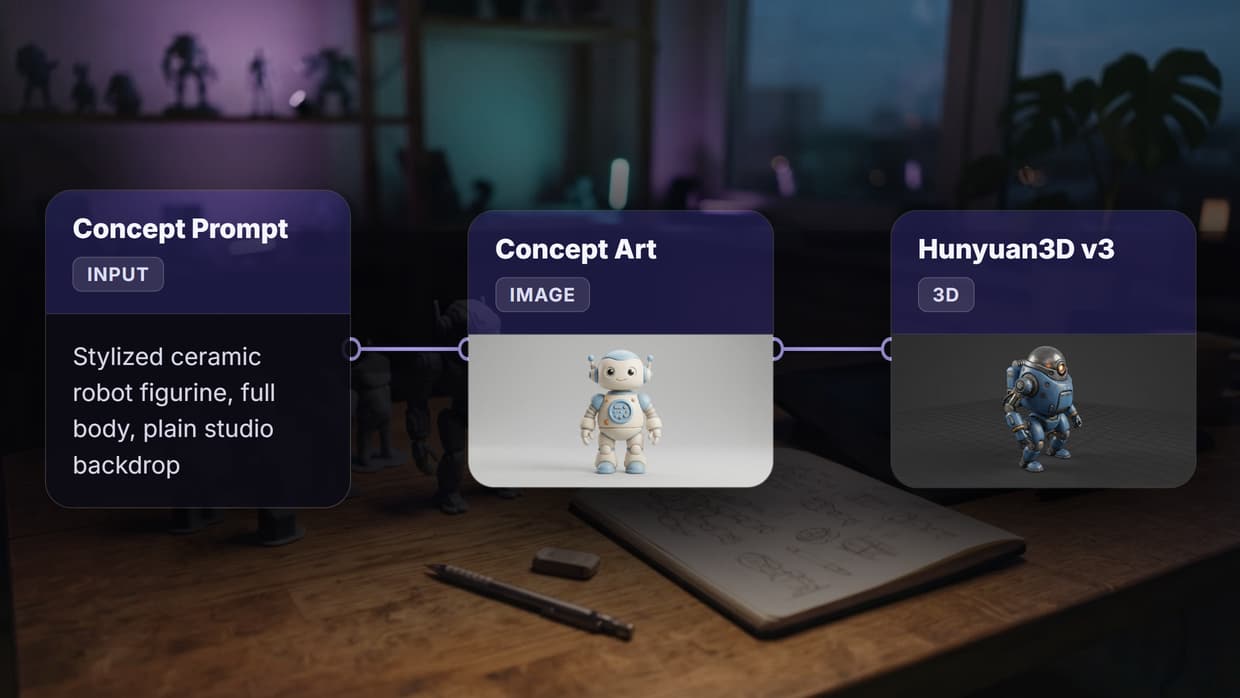
Wireflow combines a drag-and-drop visual node editor with a headless REST API that lets you trigger any workflow programmatically. You connect input nodes (text prompts, uploaded images) to generation nodes (Recraft V4, Flux 2 Pro, Kling Video) and the platform handles queuing, scaling, and output delivery.
Key strengths:
- Visual canvas doubles as API builder; every workflow gets a callable endpoint
- Supports 30+ AI models across image, video, audio, and text
- Batch processing for bulk asset generation
- No GPU management required
Pricing: Free to sign up, build workflows, and browse the public gallery. Generating images, video, or audio requires a paid plan; Pro starts at $29/month with API access included.
API format: REST with JSON payloads, webhook callbacks for async jobs, SDK support for Python and JavaScript.
Build this in Wireflow
Make the same kind of asset on a canvas you control, with a free account and no credit card.
2. fal.ai
fal.ai focuses on serverless inference for open-source models. Their infrastructure runs optimized versions of Stable Diffusion, Flux, and dozens of community models with sub-second cold starts. The API follows a simple prompt-in, image-out pattern that works well for teams migrating from local GPU setups to cloud-based AI pipelines.
Key strengths:
- Extremely fast inference (often under 2 seconds for SDXL)
- Pay-per-call pricing with no idle costs
- Support for LoRA adapters and custom checkpoints
- Streaming output for real-time applications
Pricing: Pay-per-second GPU billing. Typical image generation costs $0.01-0.05 per image depending on model and resolution.
3. Leonardo AI
Leonardo AI targets creative teams and game studios that need consistent visual assets at volume. Their API provides access to proprietary models trained on specific art styles, making it useful for teams that need stylistic consistency across batch generation runs.
Key strengths:
- Fine-tuned models for game assets, marketing visuals, and product photography
- Built-in style consistency features
- Image editing endpoints (inpainting, outpainting, upscaling)
- Texture and 3D asset generation
Pricing: API credits start at $24/month for 8,500 tokens. Enterprise pricing available for high-volume usage.
4. DALL-E 3 (OpenAI)
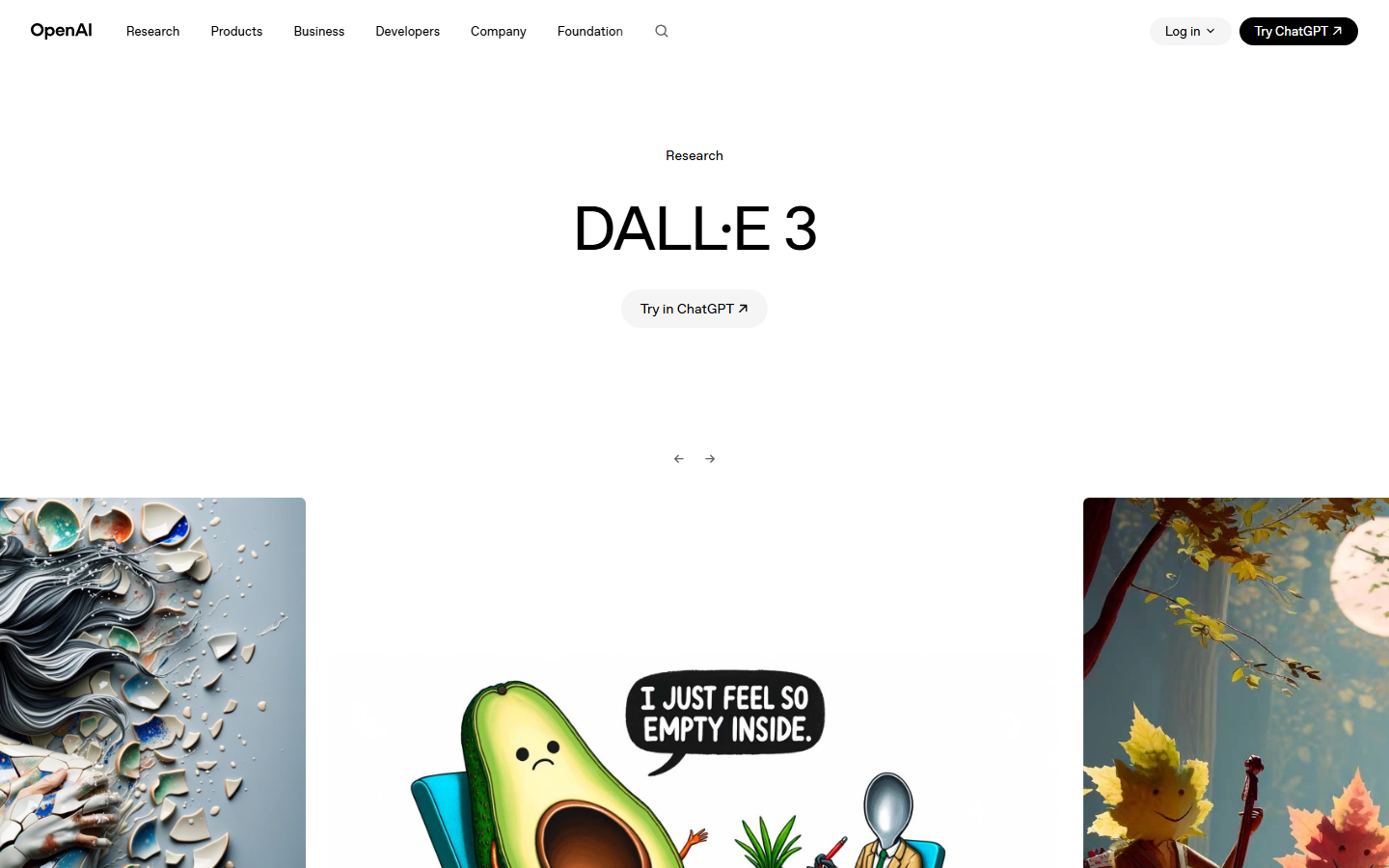
DALL-E 3 remains the strongest option for prompt adherence and text rendering within images. Accessible through the OpenAI API, it integrates directly with the same infrastructure teams already use for GPT. The simplicity of one unified API key covering text, image, and vision makes onboarding straightforward for teams already building AI workflow automations.
Key strengths:
- Industry-leading prompt fidelity; generates exactly what you describe
- Native text rendering within images (logos, signs, labels)
- Unified billing and API key with other OpenAI services
- Built-in safety guardrails
Pricing: $0.040 per image (1024x1024, standard quality). HD quality at $0.080 per image.
5. Krea AI
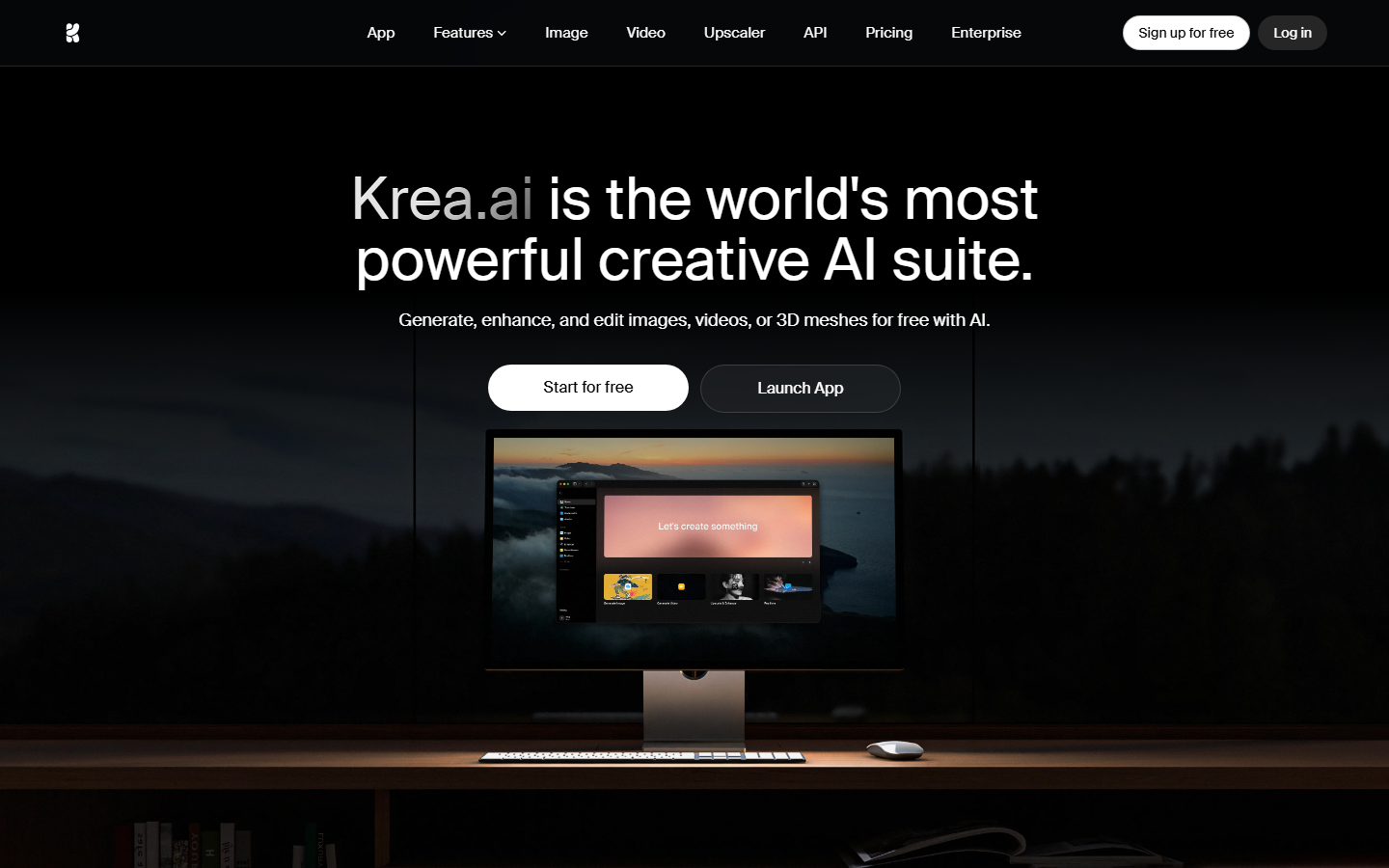
Krea AI specializes in real-time generation where you see results updating as you modify prompts or reference images. Their API supports streaming partial outputs, which is useful for building interactive design tools or no-code AI canvas experiences where users expect instant feedback.
Key strengths:
- Real-time streaming generation (results in under 1 second)
- Style transfer and image-to-image capabilities
- Design-focused UI with API access for automation
- Reference image support for brand consistency
Pricing: Pro plan at $30/month includes API access. Usage-based pricing for high-volume callers.
6. Runway
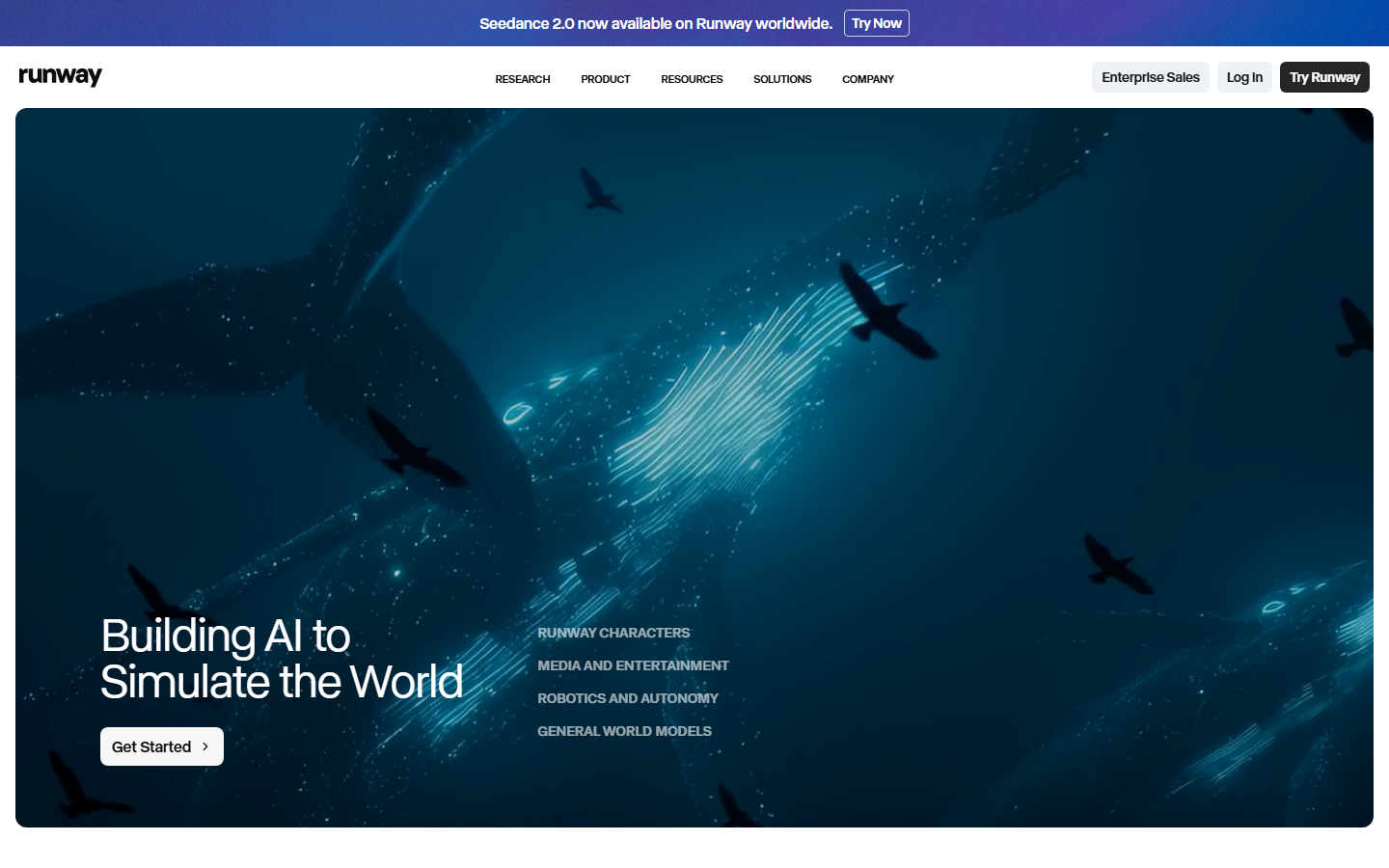
Runway leads in video generation quality with Gen-3 Alpha and Gen-4 models. Their API provides text-to-video and image-to-video endpoints that produce production-quality clips. For teams building video-first content pipelines or programmatic video generation platforms, Runway's quality is difficult to match.
Key strengths:
- Best-in-class video generation (Gen-4 at 1080p, 10-second clips)
- Image-to-video for product animations and marketing content
- Video editing APIs (inpainting, motion brush, extend)
- Consistent character appearance across multiple generations
Pricing: API access from $0.05/second of video generated. Enterprise tiers available for volume discounts.
7. Ideogram
Ideogram excels at rendering readable text within images and producing clean logo-style outputs. Their API is straightforward for teams that need AI-generated content for branding materials, social posts with embedded copy, or product mockups where typography accuracy matters.
Key strengths:
- Best text rendering accuracy among image generators
- Logo and poster generation with clean vector-style output
- Color palette control for brand consistency
- Magic Prompt for automatic prompt enhancement
Pricing: API access included in Pro ($20/month, 2000 generations). Pay-as-you-go at $0.02-0.08 per image.
Comparison Table
| Platform | Best For | API Type | Image Gen | Video Gen | Real-time | Starting Price |
|---|---|---|---|---|---|---|
| Wireflow | Full pipelines | REST + webhooks | Yes | Yes | No | $29/mo (build free) |
| fal.ai | Fast inference | REST | Yes | Yes | Yes | Pay-per-call |
| Leonardo AI | Creative assets | REST | Yes | No | No | $24/mo |
| DALL-E 3 | Prompt accuracy | REST | Yes | No | No | $0.04/image |
| Krea AI | Real-time design | REST + streaming | Yes | No | Yes | $30/mo |
| Runway | Video generation | REST + webhooks | Yes | Yes | No | $0.05/sec |
| Ideogram | Typography | REST | Yes | No | No | $20/mo |
How to Choose the Right Visual AI API
Selecting between these platforms depends on three factors: what media types you generate, how you integrate generation into your product, and whether you need multi-model orchestration or single-model access.
If your use case requires chaining multiple models together (for example, generating an image, upscaling it, then removing the background), a workflow-based platform like Wireflow reduces the integration overhead of connecting separate APIs manually.
For single-model use cases where speed is the priority, fal.ai or Krea AI provide the lowest latency. For video-specific workloads, Runway remains the quality leader.
Consider these factors when making your decision:
- Volume: Pay-per-call (fal.ai, DALL-E 3) vs subscription (Leonardo, Krea) impacts cost at scale differently
- Latency requirements: Real-time apps need streaming support (Krea, fal.ai); batch jobs tolerate webhook callbacks
- Model diversity: Single-model APIs lock you in; multi-model platforms like Wireflow's AI model chaining let you swap models without code changes
- Output types: If you need image + video + audio from one platform, filter for multi-modal options
Try it yourself: Build this workflow in Wireflow — the nodes are pre-configured with the exact setup discussed above.
FAQ
What is a visual generative AI tool with API access?
A visual generative AI tool with API access is a platform that creates images, videos, or other visual content from text prompts or reference inputs, and exposes this capability through a programmatic REST API that developers can call from their own applications.
Which visual AI API has the fastest inference speed?
fal.ai and Krea AI offer the fastest inference times, with fal.ai delivering SDXL images in under 2 seconds and Krea providing real-time streaming generation in under 1 second for certain models.
Can I use multiple AI models in a single API call?
Yes. Platforms like Wireflow support model chaining, where you connect multiple generation steps (text-to-image, upscale, background removal) into a single workflow that executes with one API call and returns the final output.
What is the cheapest visual AI API for image generation?
DALL-E 3 offers straightforward per-image pricing at $0.04 for standard quality. fal.ai can be cheaper for high volumes since you pay per GPU-second rather than per image. Wireflow is pay-per-generation; you can build workflows for free, but generating requires a paid plan starting at $29/month.
Do these tools support custom model fine-tuning?
fal.ai supports LoRA adapters and custom checkpoints for Stable Diffusion variants. Leonardo AI offers model fine-tuning within their platform. Wireflow supports connecting to custom models hosted on fal.ai or Replicate through its node system.
Which platform is best for generating product photos via API?
For product photography, Leonardo AI and DALL-E 3 provide strong single-image generation. Wireflow is better when you need a multi-step pipeline (generate, upscale, remove background, composite) automated through one endpoint.
How do webhook callbacks work for async generation?
Webhook callbacks let your application receive a notification when a generation job completes, instead of polling. You provide a callback URL in your API request, and the platform POSTs the result (image URL, metadata) to that endpoint when processing finishes. Wireflow and Runway both support this pattern.
Is there a free visual AI API I can use for prototyping?
Wireflow lets you sign up and build workflows for free, but generating requires a paid plan (Pro from $29/month) with full API access. fal.ai provides a free tier with limited credits. DALL-E 3 through the OpenAI API has no free tier but offers $5 in initial credits for new accounts.

Co-Founder & Operations at Wireflow
Runs client operations and content strategy at Wireflow. Works directly with creative teams and agencies to build production AI workflows.
- Content Strategy
- Client Operations
Get unlimited ad creatives today.
One call to see if we are a fit and scope the first ad. If it fits, your first batch lands inside week one.