 Andrew Adams · Co-Founder & Operations at Wireflow ·
 Amazon Listing Image Generator
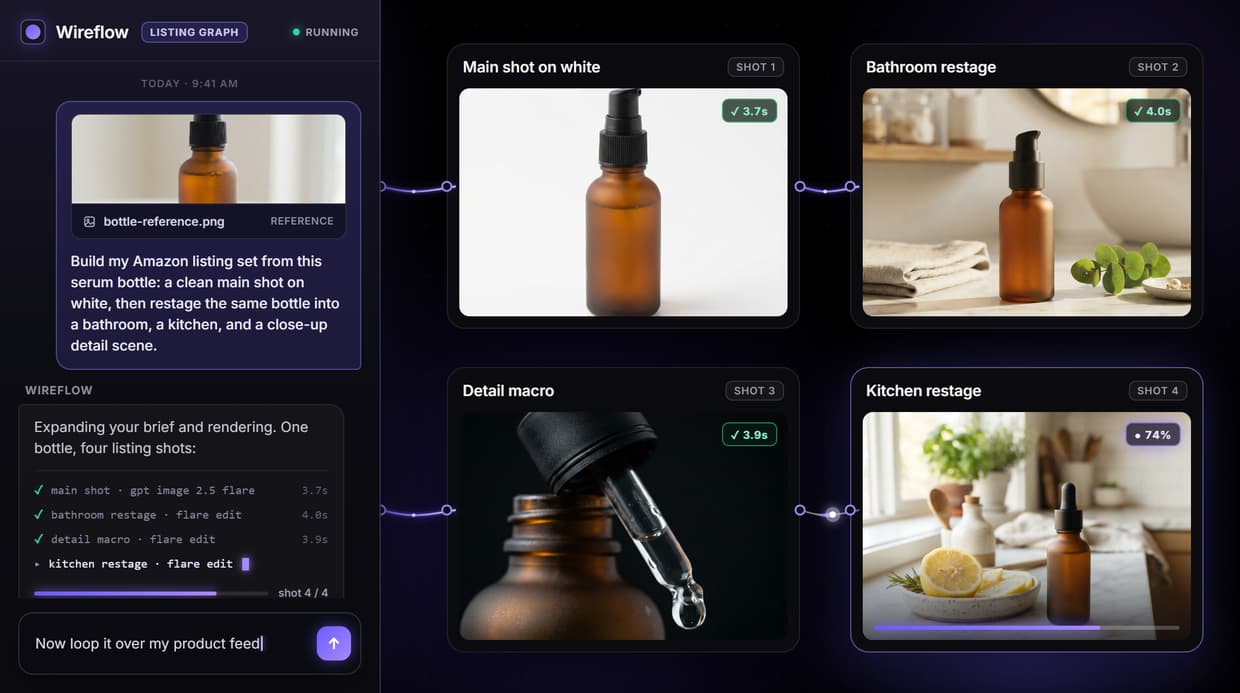
Wireflow is an Amazon listing image generator built on a node canvas: feed one product photo, Claude Sonnet 4.5 writes the prompt, and GPT Image 2.5 Flare renders a clean main shot plus restaged lifestyle scenes you build into a full listing set.
Free to build · no credit card · See how it works ↓
How to Use Amazon Listing Image Generator
Steps to get you started in Wireflow.
Drop in your product photo and brief
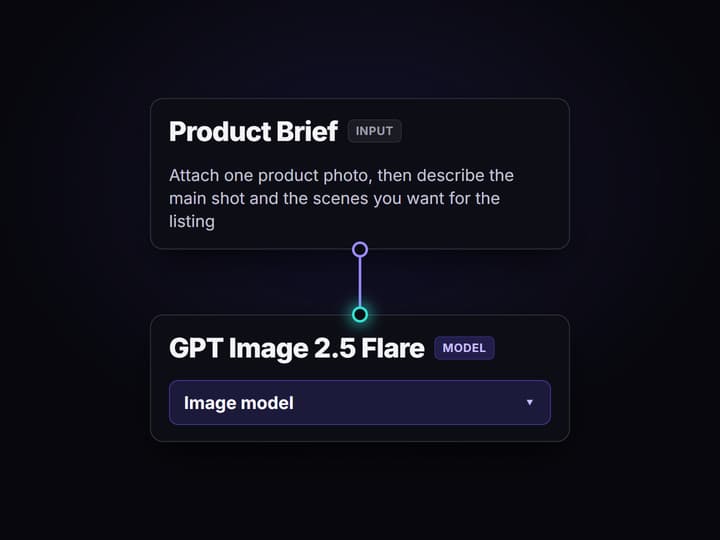
Attach one product photo and type a short brief in the Product Brief node: the item, the mood, and the clean background you want behind the main shot. That one node feeds the whole graph.
Let the graph expand and render
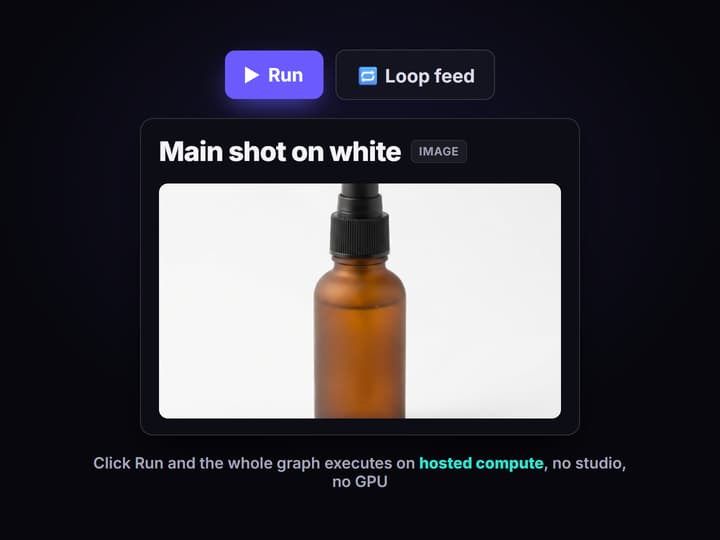
Claude Sonnet 4.5 expands the brief into a detailed image prompt, GPT Image 2.5 Flare renders a clean main shot, and a Flare Edit node restages the same product into a lifestyle scene. Click Run and both come back on hosted compute.
Re-prompt, swap, and build the pack
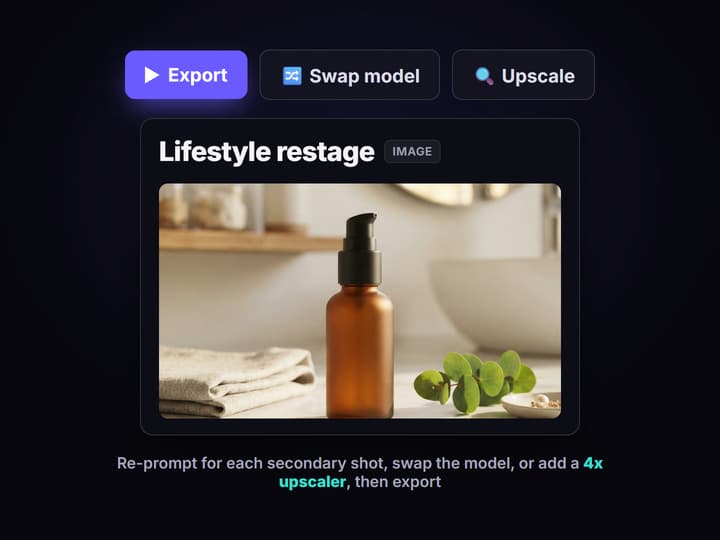
Re-run the edit node with a new scene prompt for each secondary image, swap the image model when a shot needs a different look, add a 4x upscaler, then export each image at the size your listing needs.
The whole listing set from one product photo
An Amazon listing is carried by its images: a clean main shot on a white background, then lifestyle scenes, detail close-ups, and scale references that answer a buyer's questions before they read a word. Shooting all of that means a studio, a photographer, and hours of retouching before a single image goes live. An Amazon listing image generator removes that wall: you give it one product photo, and the model renders the set in minutes instead of days.
Wireflow does this as a node graph rather than a single black-box button. You feed one product photo and a short brief, Claude Sonnet 4.5 expands it into a detailed image prompt, and GPT Image 2.5 Flare renders a clean main shot while a Flare Edit node restages the same product into a lifestyle scene. Each shot is a node you can see and re-run, so you build out the rest of the listing pack by re-prompting, not by starting over.
What the graph produces
Brief to prompt
Claude Sonnet 4.5 turns a one line brief plus your photo into a detailed, shootable image prompt.
Clean main shot
GPT Image 2.5 Flare renders the product evenly lit on a seamless white background.
Lifestyle scene
A Flare Edit node restages the same product in a real-world context for the secondary slots.
Any scene you describe
Kitchen counter, outdoor set, or soft gradient: the scene is set by the prompt, not a physical set.
Swappable models
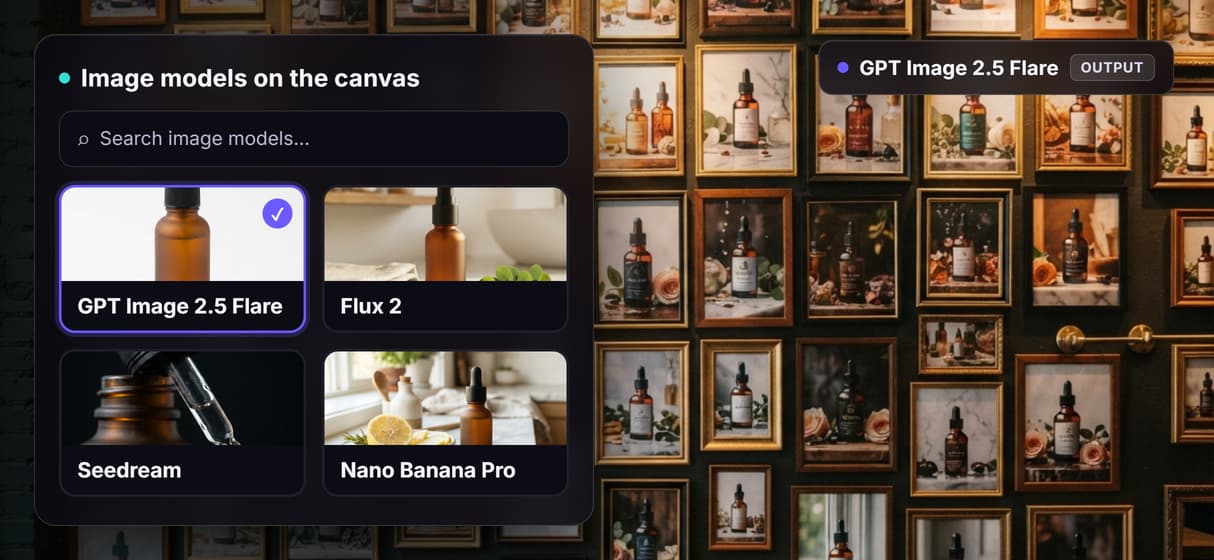
Every image node is a swap: drop in Flux, Seedream, or Nano Banana Pro without rewiring.
Upscale and clean
Chain a 4x upscaler or a background remover onto any image before it ships to the listing.
How one photo becomes a listing pack
The pipeline is a real graph, not a template. Each node does one job and passes its output to the next, so you can open any step and see exactly what it produced.
- Brief. You attach one product photo and write a short brief in a single text node: the item, the mood, and the clean background you have in mind.
- Expand. Claude Sonnet 4.5 reads that brief and writes a detailed image prompt, filling in lighting, surface, and composition so you do not have to prompt-engineer by hand.
- Render. GPT Image 2.5 Flare renders a clean main shot, and a Flare Edit node restages the product into a lifestyle scene, both from the same expanded prompt.
This is the same graph behind our AI product photo generator, framed for Amazon listings. For the single product shots you re-run the render node with fresh scene prompts, one per secondary image, until you have the full nine-image pack. Because the graph is published, you can loop it over a product feed to render the same set for a whole catalog, or swap any image node when a particular shot needs a different look.
What it does, and what it does not
Wireflow is the generation layer. It renders the listing images; it does not upload them to Seller Central, manage your inventory, auto-size a listing, or check Amazon's image rules for you. You set the aspect ratio and resolution, confirm the main image meets the marketplace requirements, and export each shot for the listing yourself.
It is hosted by design, so there is no offline mode, no custom Python nodes, and no local checkpoints. That is the honest trade for never touching a GPU. If your product is highly tactile, like fine jewelry, a real shoot may still win on the closest crops. For everything else, feeding one photo and rendering the set on the canvas is faster than booking a studio.
More Than Just Amazon Listing Image Generator
One photo in, a listing set out
Feed a single product photo and the graph renders a clean main shot, then restages the same item into lifestyle and detail scenes for the rest of the listing.
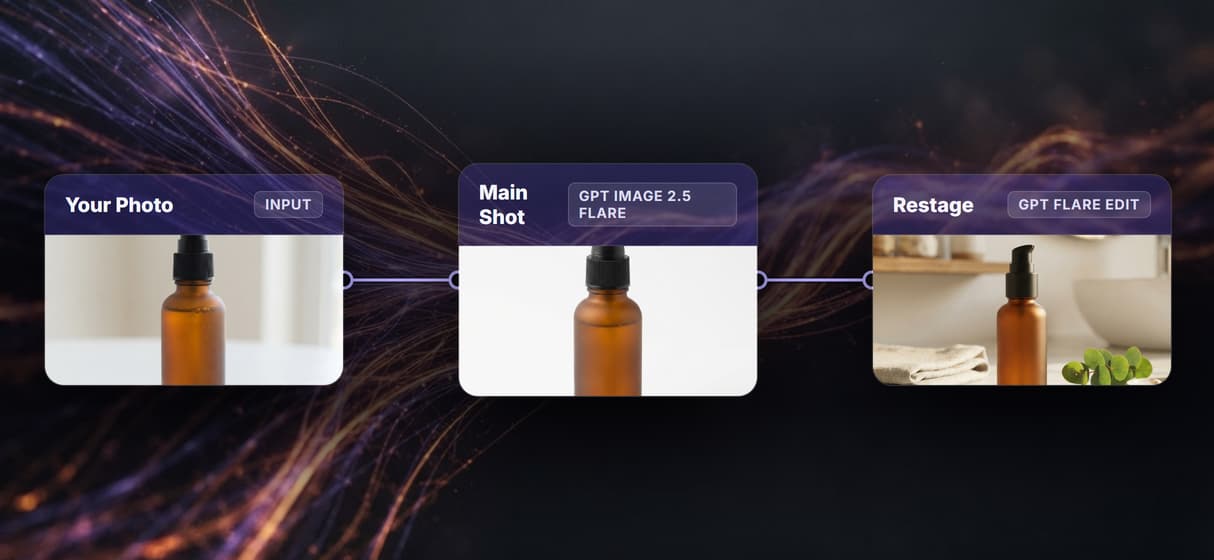
A main shot on clean white
Render the product evenly lit on a seamless white background, the anchor image a listing opens on. You set the resolution and verify the marketplace rules before you publish.
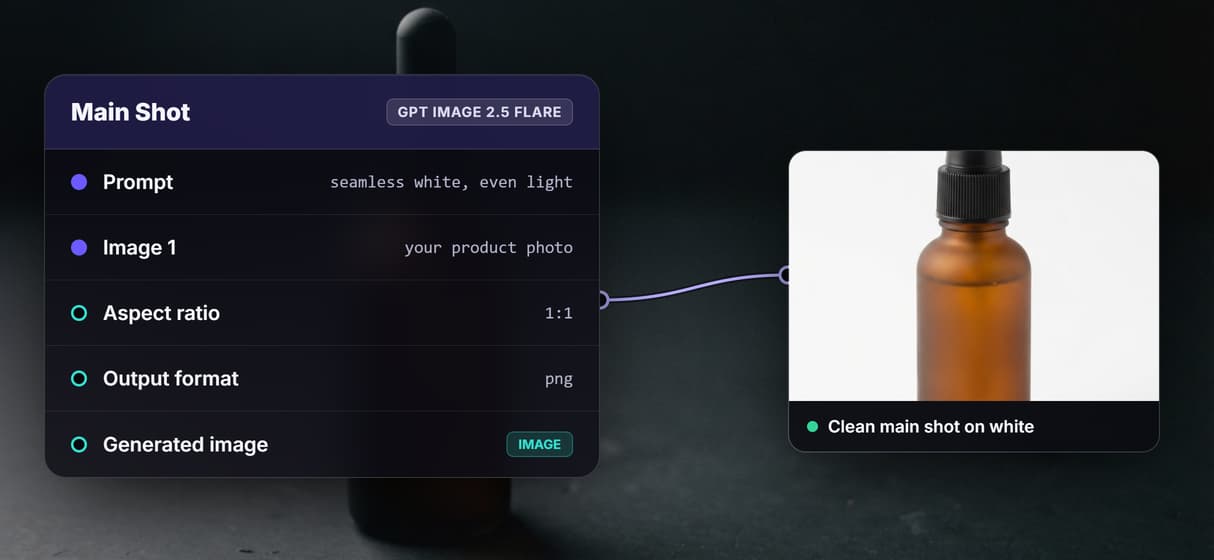
Every scene is a node you control
Each shot is its own node you can re-run or re-prompt, so the lifestyle, detail, and scene variants stay consistent with the main shot instead of being one-off lucky renders.
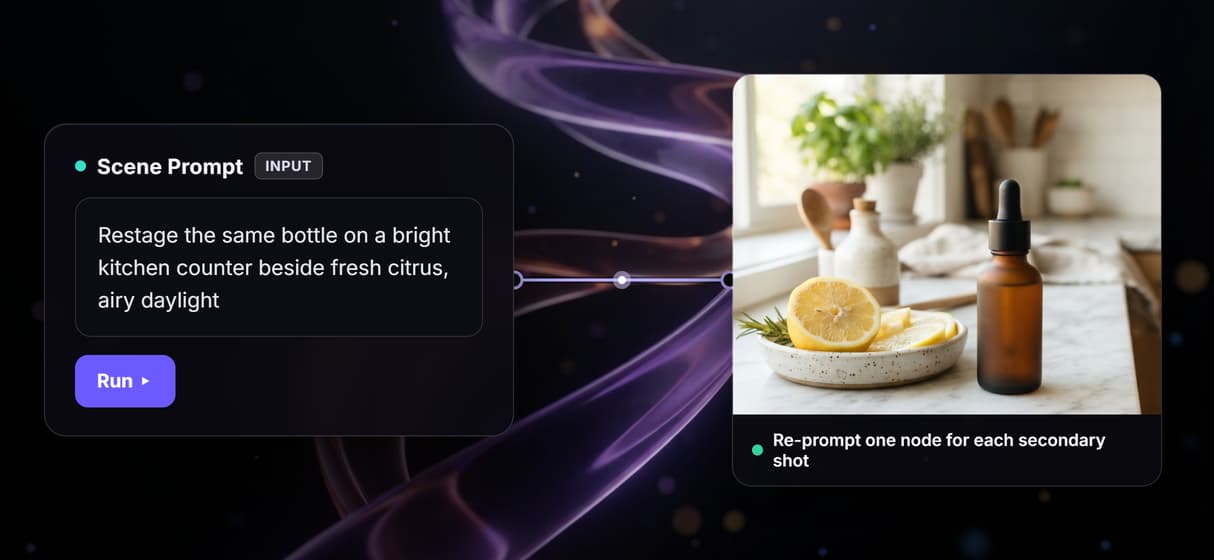
Swap the model per shot
GPT Image 2.5 Flare is wired by default, but each image node is a swap. Drop in Flux, Seedream, or Nano Banana Pro, or clean edges with a transparent background pass.
Batch the pack across every SKU
Publish the graph as a REST and MCP endpoint and loop it over a product feed, so an agent or a script renders the same listing set for a whole catalog in one run.

AI Models Available
Automate Any Workflow
Included in Every Plan
FAQs
It turns one product photo into the images a listing needs, a clean main shot on white plus lifestyle and detail scenes, instead of a studio shoot. Wireflow runs it as a node graph: Claude Sonnet 4.5 expands your brief and GPT Image 2.5 Flare renders the shots.
Discover related AI tools
- AI Image Upscaler: Upscale to 4K in a Visual Workflow
- AI Background Remover
- AI Image Generator: Flow-Based Canvas, 31 Models
- ComfyUI Alternative
- AI Face Swap Online: Photos and Video in Your Browser
- Virtual Try On
- AI Thumbnail Generator
- AI Photo Generator
- AI Image Editor
- AI Art Generator
- Midjourney Alternative
- AI Headshot Generator
More From Wireflow
Written by
Andrew Adams · Co-Founder & Operations at Wireflow
Runs client operations and content strategy at Wireflow. Works directly with creative teams and agencies to build production AI workflows.
Render your first listing image
Feed one product photo and let the graph do the rest: Claude Sonnet 4.5 expands your brief into a prompt, and GPT Image 2.5 Flare renders a clean main shot and a lifestyle scene from one run. No studio, no GPU.