 Andrew Adams · Co-Founder & Operations at Wireflow ·
 Leonardo AI alternative
Most people hunting for a Leonardo AI alternative want to stop being locked to one vendor's models.
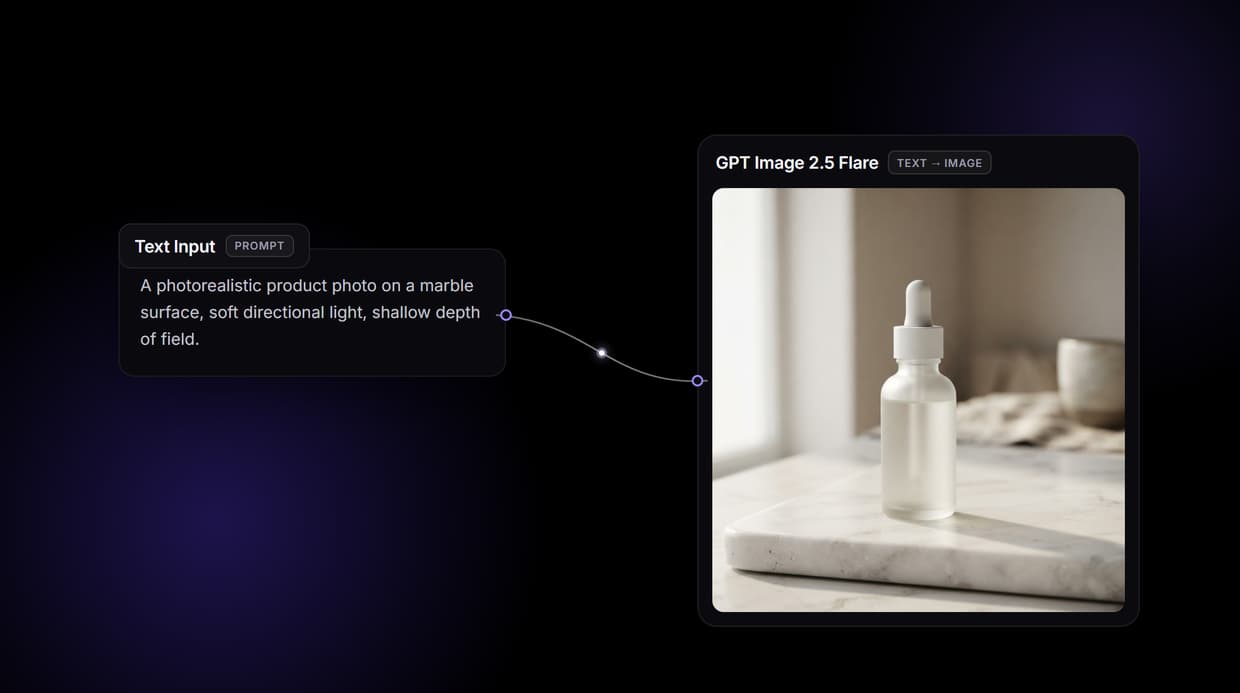
Wireflow runs frontier image models as swappable nodes on one canvas, and the flow on this page is a Text Input wired into GPT Image 2.5 Flare and Nano Banana 2.
Free to build · no credit card · See how it works ↓
How to Use Leonardo AI alternative
Steps to get you started in Wireflow.
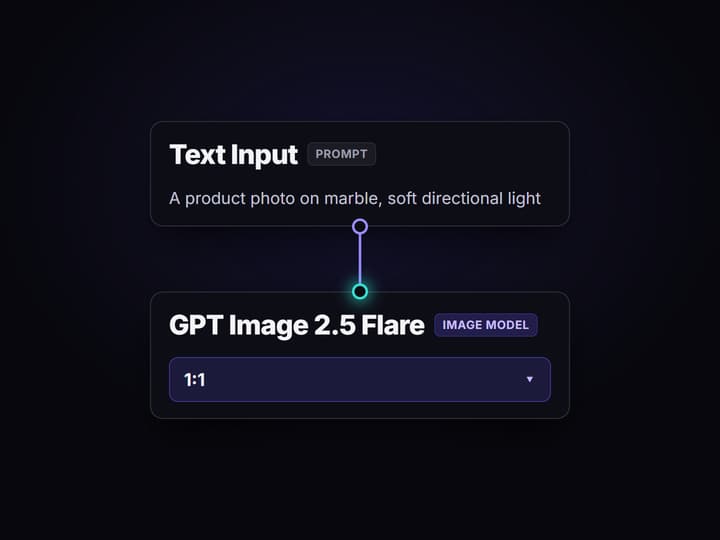
Describe the image you want
Type a prompt into the Text Input node. Its output feeds a GPT Image 2.5 Flare node and a Nano Banana 2 node, both set to a square aspect. That is the whole starting graph.
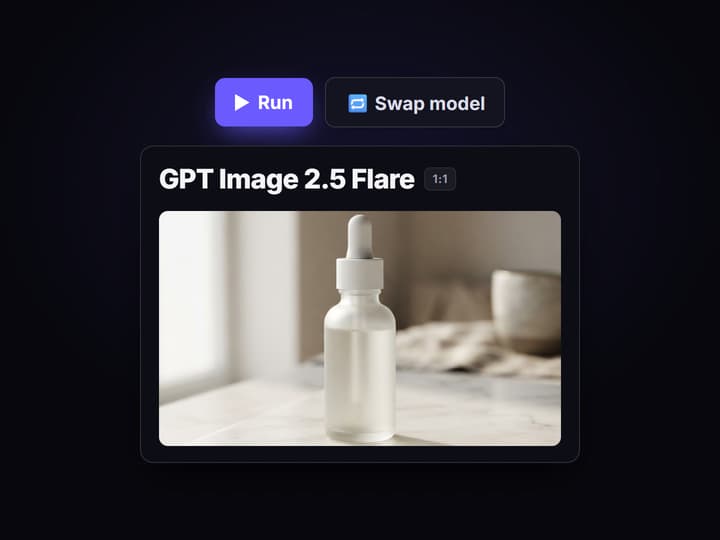
Run it and swap models freely
Press Run and the two renders land on their model nodes. Not happy with them? Swap either model for Flux 2 or Seedream and run again, no rewiring needed.
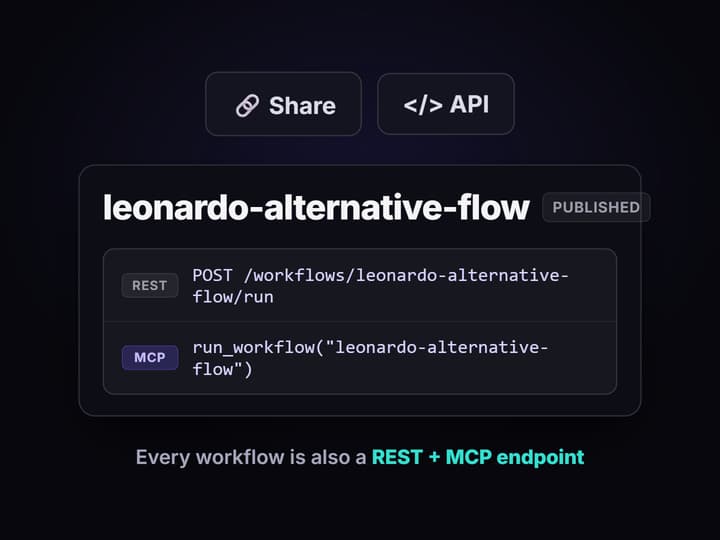
Publish it as an API
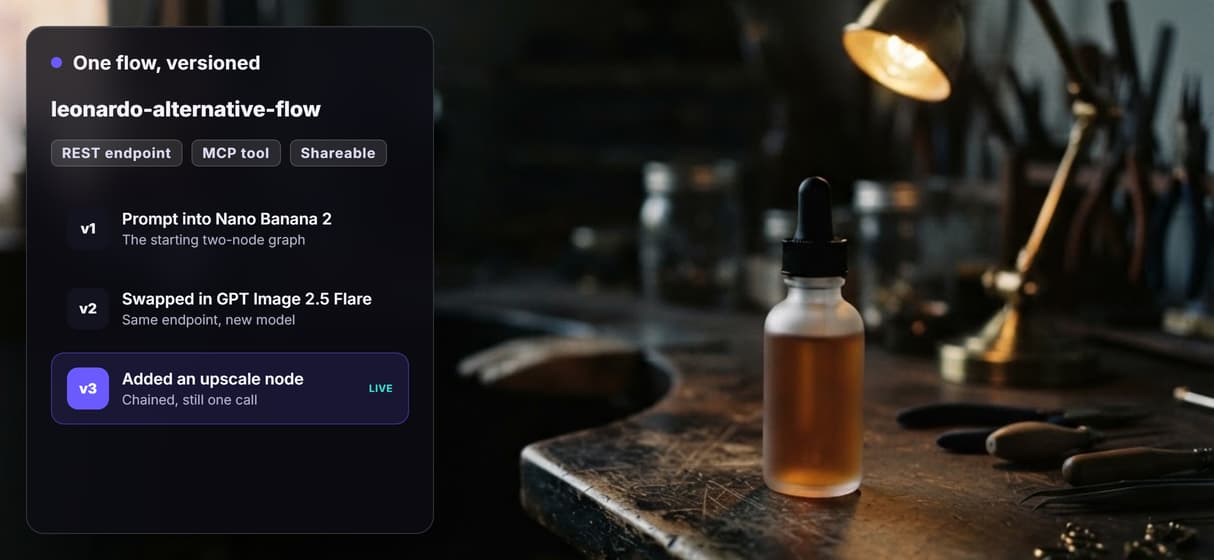
Publish the flow and it becomes a REST endpoint and an MCP tool. Your app or agent posts a prompt and gets the finished image URL back.
An honest take on Leonardo AI alternatives
Leonardo AI is a self-contained creative app: you generate inside its own interface, with its own models and community. If that is what you want, it is a fine tool, and Wireflow will not pretend to be a drop-in copy of it.
What most people searching for a Leonardo AI alternative actually want is to stop being tied to one vendor's models. Wireflow is a visual canvas where frontier image models run as nodes you can swap, chain and publish as an API, so the same graph works as an AI concept art generator or a product-photo pipeline without switching tools.
What the canvas does that a single-model app cannot
70+ hosted models
Nano Banana 2, Flux 2 Pro, Seedream V4.5, GPT Image 2, Ideogram V4 and Recraft V4 all run as canvas nodes.
Swap without a rebuild
Change the generate node and the rest of your graph and its published endpoint stay exactly as they were.
Chain in one graph
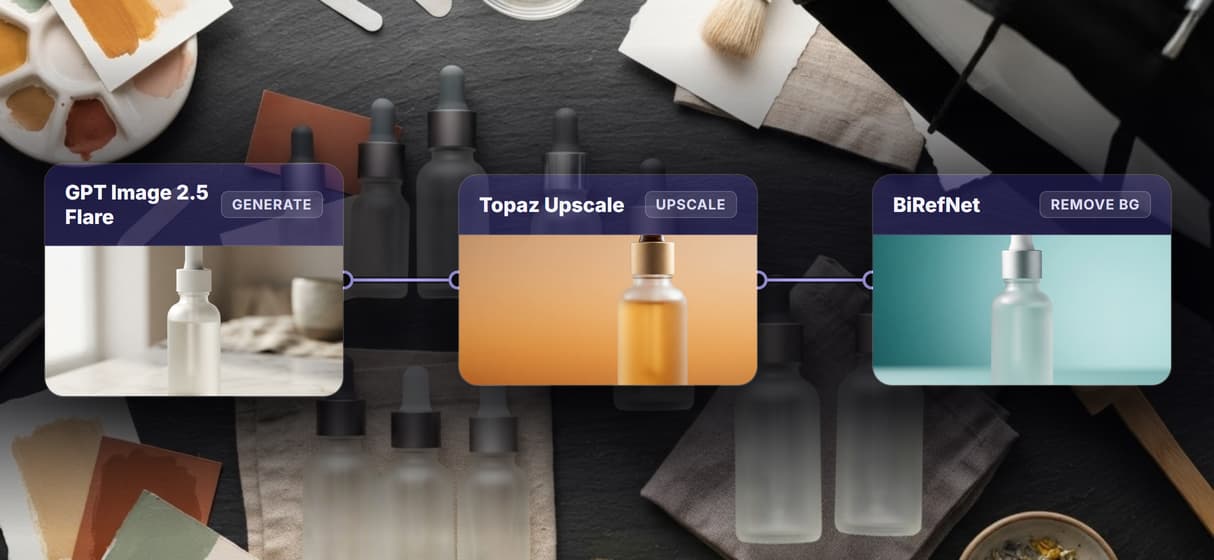
Wire generate into upscaling or background removal so a single run does the whole job.
No local GPU
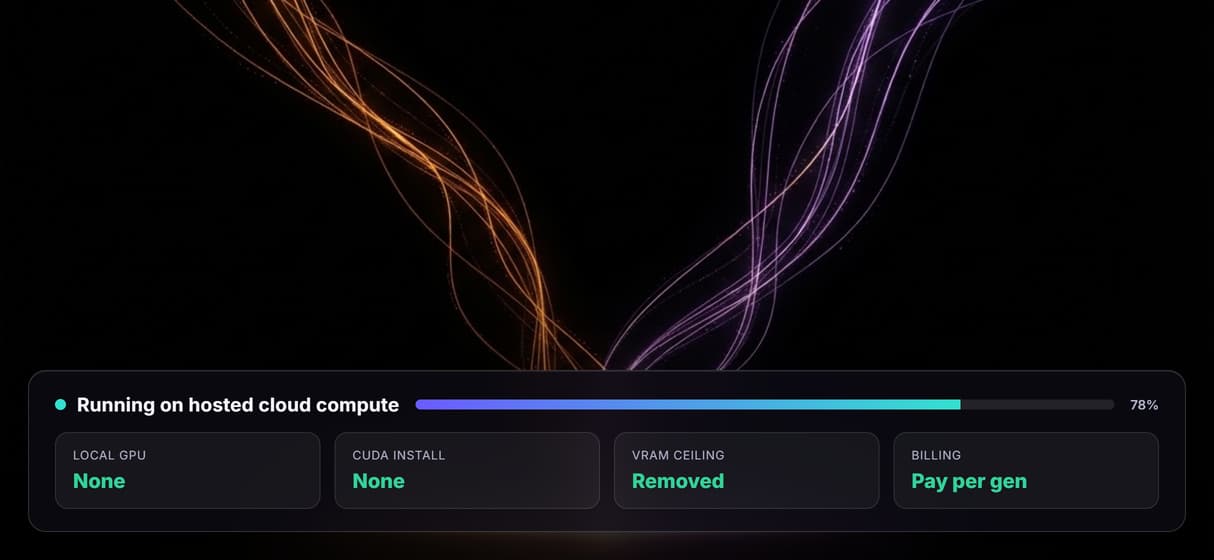
Runs on hosted cloud compute. No CUDA install, no VRAM ceiling, and you pay per generation.
REST and MCP built in
Every published workflow is a REST endpoint and an MCP tool with typed inputs and asset URLs back.
Batch over a feed
Loop one workflow across a CSV or product feed and render every row through the same graph.
Why the model should be a node, not a lock-in
Image models age in months. A tool welded to one model inherits that decay, while on a canvas the model is just one node: unplug it, drop in Flux 2 or GPT Image 2, run the same prompt and keep whichever wins.
Reproducibility makes the swap safe. Workflows are versioned server-side, so a model change is a deliberate new version instead of silent drift. The honest tradeoff: every generation spends credits, while building the graph itself is free.
When Leonardo AI is the better choice
If you want one self-contained creative app with a community feed, its own fine-tuning and model training, and a real-time editing canvas, Leonardo is built for that and Wireflow is not. Wireflow is a generation layer, not a standalone creative suite and not the reasoning brain.
Wireflow earns its place when the job is bigger than one fixed model: swapping models without a rebuild, chaining generation into upscaling or background removal, keeping one endpoint while models rotate underneath it, or handing the whole workflow to an agent as an MCP tool. It does not run offline or support custom Python nodes.
More Than Just Leonardo AI alternative
Every model on one canvas
Leonardo locks you to its own models. Wireflow runs Nano Banana 2, Flux 2 and Seedream as swappable nodes on one multi-model AI workflow.
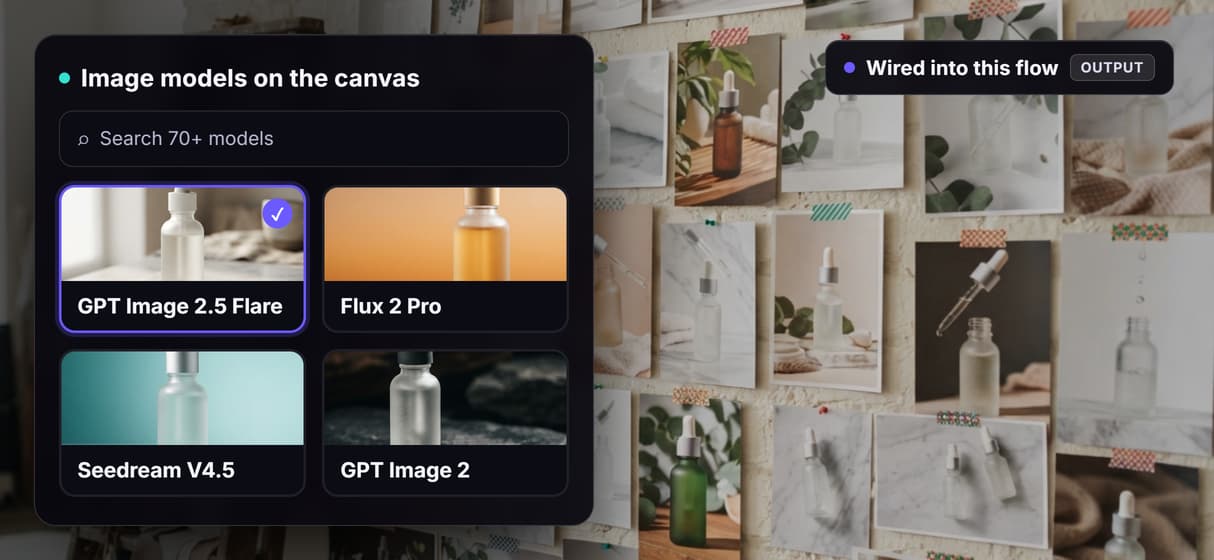
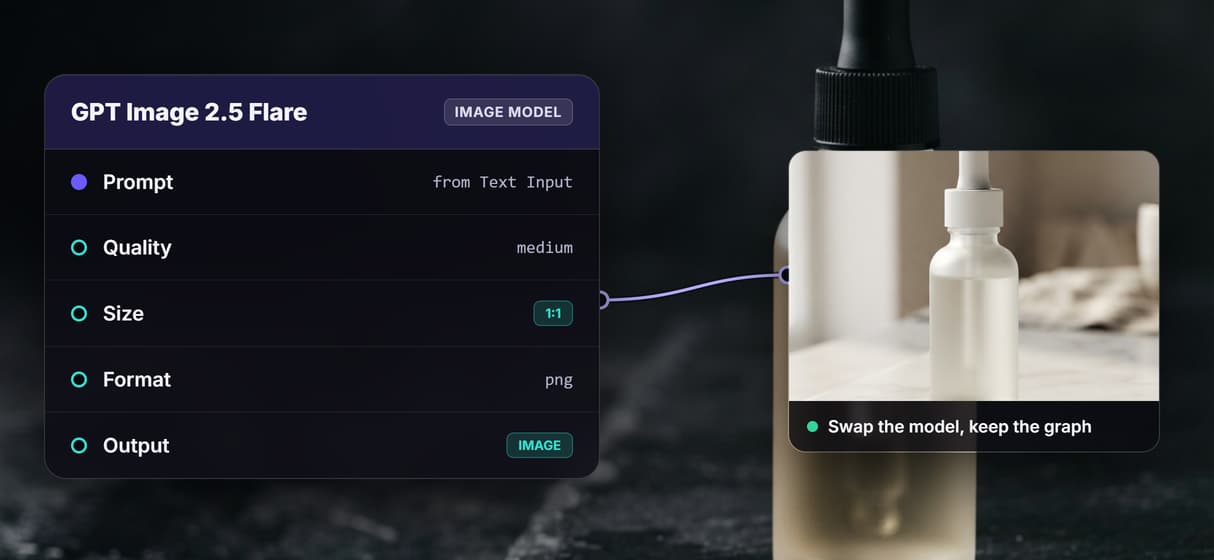
Swap the generate node
The model is a node, not a lock-in. Trade GPT Image 2.5 Flare for Flux 2 Pro or GPT Image 2 on a node-based image generation canvas without a rebuild.
Chain models in one graph
Wire generate into upscaling and background removal so one run does the whole job, instead of round-tripping tools. That is AI model chaining.
No local GPU to babysit
No CUDA install, no VRAM ceiling, nothing to host. Renders run on hosted compute and you pay per generation on a developer-friendly AI image platform.
One flow becomes an endpoint
Publish once and the canvas becomes a versioned REST endpoint and MCP tool, a reusable AI canvas with a REST API you can share or loop.
Leonardo alternative Workflows
No Code Required
API & Batch Processing
FAQs
For generating images, yes. Wireflow does not use Leonardo's models; it runs its own roster like Nano Banana 2, Flux 2 and Seedream on a visual canvas you can also call as an API.
Discover related AI tools
- AI Image Upscaler: Upscale to 4K in a Visual Workflow
- AI Background Remover
- AI Image Generator: Flow-Based Canvas, 31 Models
- ComfyUI Alternative
- AI Face Swap Online: Photos and Video in Your Browser
- Virtual Try On
- AI Thumbnail Generator
- AI Photo Generator
- AI Image Editor
- AI Art Generator
- Midjourney Alternative
- AI Headshot Generator
More From Wireflow
Written by
Andrew Adams · Co-Founder & Operations at Wireflow
Runs client operations and content strategy at Wireflow. Works directly with creative teams and agencies to build production AI workflows.
Open the text-to-image flow behind this page
It is live on the canvas: a Text Input wired into GPT Image 2.5 Flare and Nano Banana 2, side by side. Run a prompt, swap the model if you like, then publish your own copy as an API. Building is free; generations are pay per run.