 Andrew Adams · Co-Founder & Operations at Wireflow ·
 Visual Electric Alternative
Visual Electric gives designers a polished style studio.
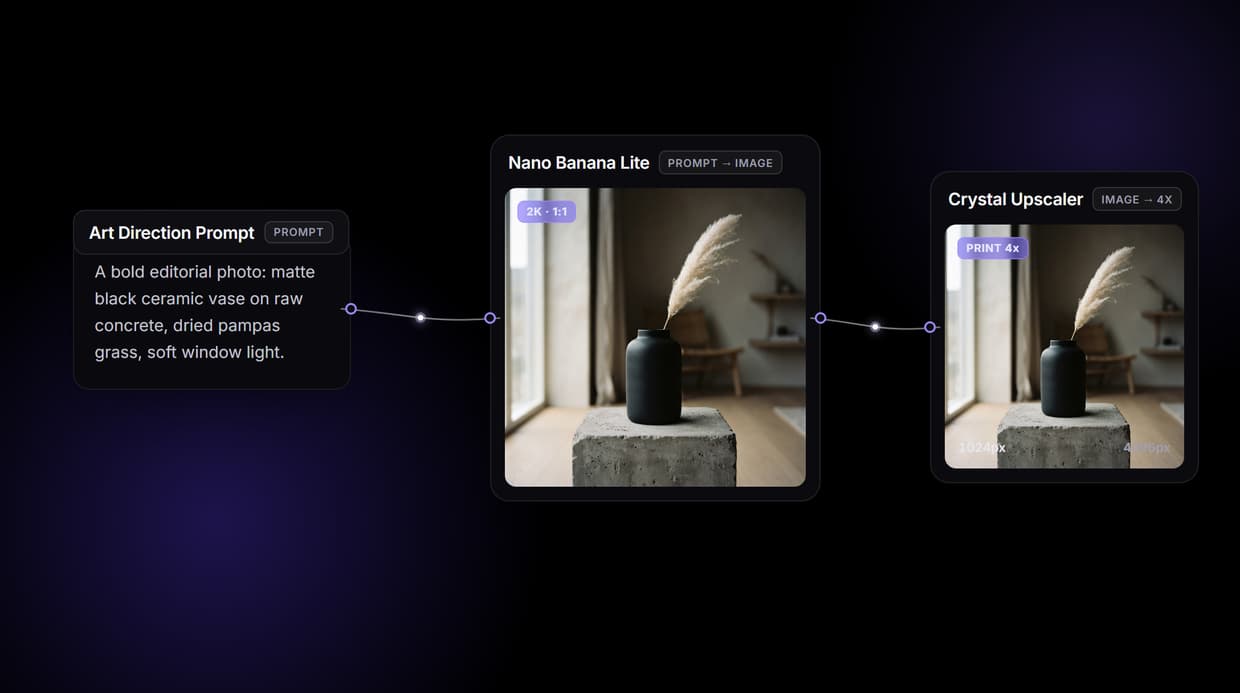
Wireflow hands you the pipeline: a node canvas where art direction becomes a hero visual with GPT Image 2.5 Flare, then Crystal Upscaler finishes it at print resolution. Free to build, pay per generation.
Free to build · no credit card · See how it works ↓
How to Use Visual Electric Alternative
Steps to get you started in Wireflow.
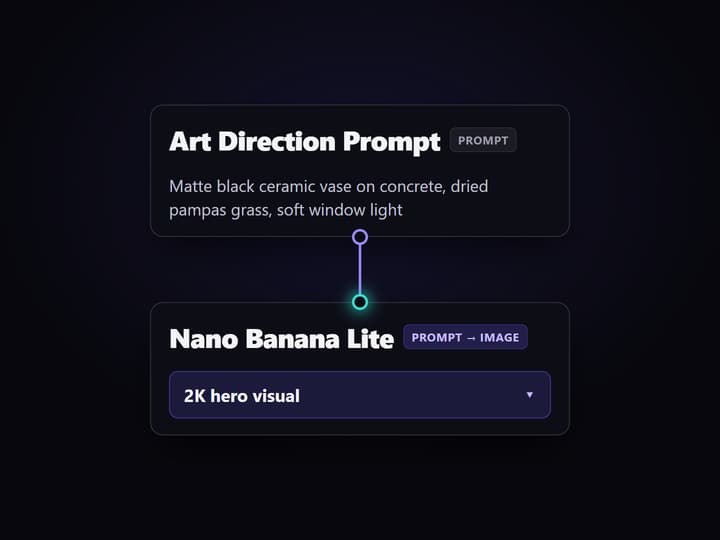
Write the art direction once
Open the flow and click the Art Direction Prompt node. One sentence covers it: the subject, the setting, the light, for example a matte black ceramic vase on raw concrete with dried pampas grass in soft window light.
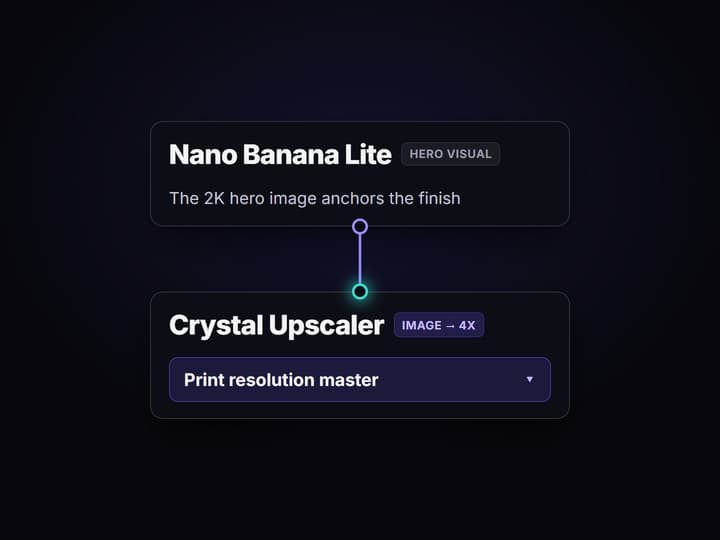
Run the graph
GPT Image 2.5 Flare renders a 2K hero visual from the prompt, then Crystal Upscaler takes that image and returns a print resolution master. A run finishes in a minute or two.
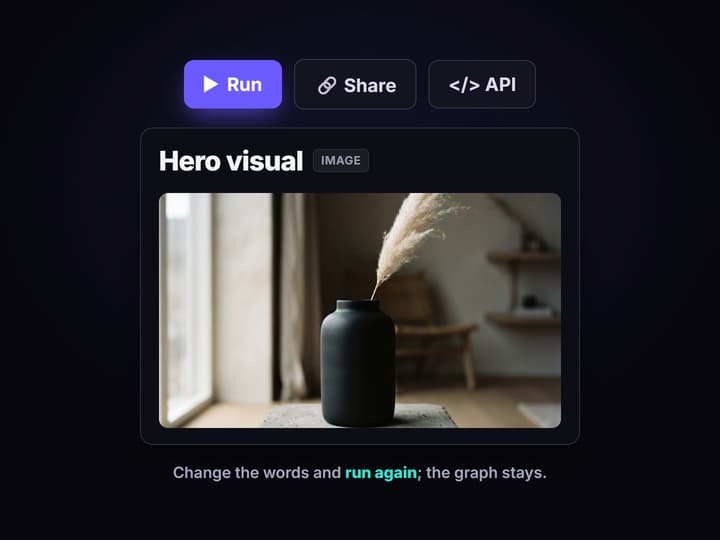
Change the words, keep the pipeline
Edit the prompt and run again for a new visual, or swap the model node for another of the 70+ hosted models. Share the flow link and the whole team runs the exact same graph.
Why designers look for a Visual Electric alternative
Visual Electric earned its fans. It is a subscription-based, image-focused studio built for designers: an infinite canvas, a library of preset styles, natural language prompt refinement, and integrations with the design tools people already use. For polished exploration it is a genuinely nice place to work, and this page will not pretend otherwise.
The friction shows up when the image is one step in a bigger machine. You cannot see or rewire the pipeline, no public API is documented for calling it from code, and every seat is a recurring bill whether you ship one visual or fifty. Wireflow answers with a different shape: image generation is a small workflow you own on a node canvas. An Art Direction Prompt feeds GPT Image 2.5 Flare, which renders the visual, and Crystal Upscaler finishes it at print resolution. It runs on hosted compute in the browser, and the same canvas drives every other AI image editor job your team has.
What replaces the Visual Electric studio
Art direction intake
An Art Direction Prompt node holds the brief. Change the words and rerun; the graph never moves.
Hero visual node
GPT Image 2.5 Flare renders the 2K hero image that sets subject, light, and composition.
Print resolution finish
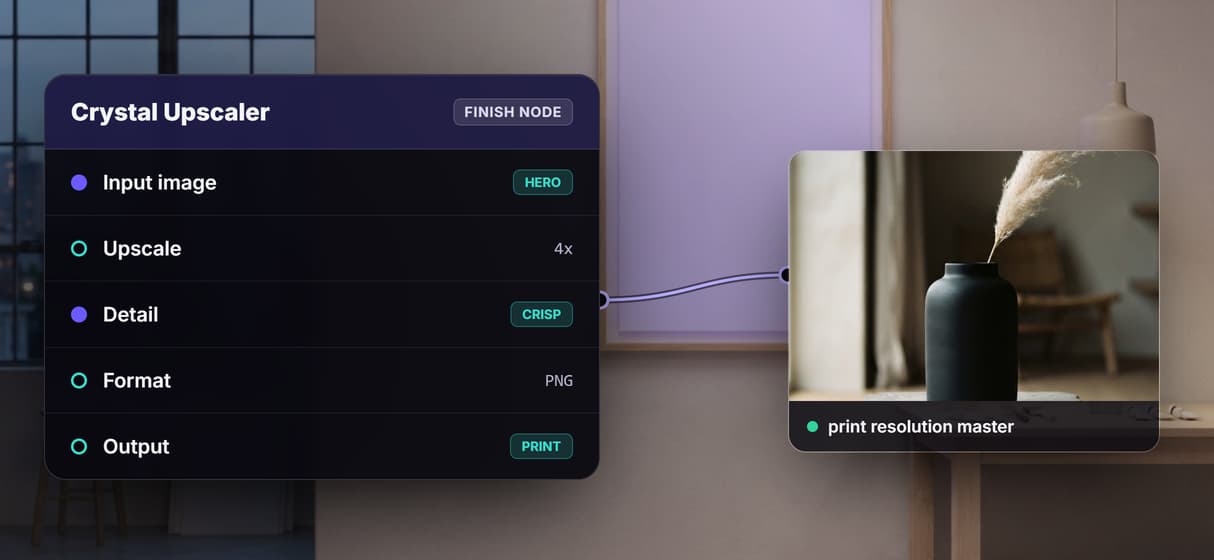
Crystal Upscaler takes the visual and returns a master clean enough for print output.
Swappable models
Trade the generator for Flux 2 Pro, GPT Image 2, Recraft V4, or Ideogram V4 as a node.
Reference image ports
Feed a product shot into the model's image ports so every scene keeps the same object.
REST and MCP built in
Every published workflow is a REST endpoint and an MCP tool with typed inputs and asset URLs.
How the three node graph actually runs
The workflow behind this page's button is deliberately small: three nodes and two wires.
- Art Direction Prompt holds the brief. One sentence about the subject, the setting, and the light is enough; a sticky note in the flow walks a first run through it.
- GPT Image 2.5 Flare renders the visual. The prompt becomes a 2K hero image, so you approve the look before finishing it.
- Crystal Upscaler finishes the frame. It takes that image and returns a print resolution master, the step most tools make you do somewhere else.
That last hop is the detail worth copying: the upscale lives inside the same graph, so the master comes out reproducible instead of hand-exported. And because the flow sits among 70+ hosted model nodes, you can extend it into a longer visual AI pipeline builder graph, or swap the generator for a stronger one, without leaving the browser.
When Visual Electric is the better pick
If your day is freehand visual exploration on an infinite canvas, arranging boards, nudging mockups, and pulling from a curated library of preset styles, Visual Electric is built around exactly that, and Wireflow is not trying to be a design-polish studio. Wireflow gives you a wiring diagram, not a freeform art board, and it will not lay out a moodboard or decide the art direction for you.
Wireflow is the generation layer: it renders and finishes images from a graph you can rerun, publish, and call from code. It does not offer real-time multiplayer co-editing, offline runs, or a built-in preset-style library the way Visual Electric markets one. If image generation is an ingredient in a bigger content system, build here, and pair the flow with an AI image upscaler or a background remover when the job needs one.
More Than Just Visual Electric Alternative
The pipeline is yours, not a rented studio
The whole studio sits on one canvas you can read: art direction in, node based image generation out, upscaled to print. Rewire any hop yourself.
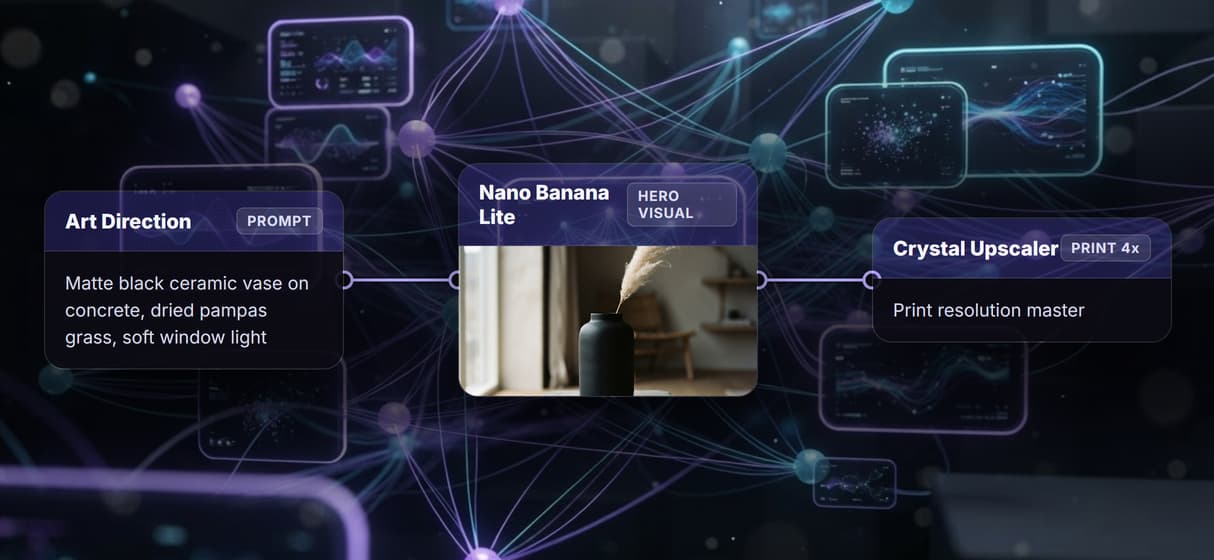
Art direction in, hero visual out
Type the shot once and GPT Image 2.5 Flare renders the hero visual at 2K, the same first hop behind any AI image generator you would build here.
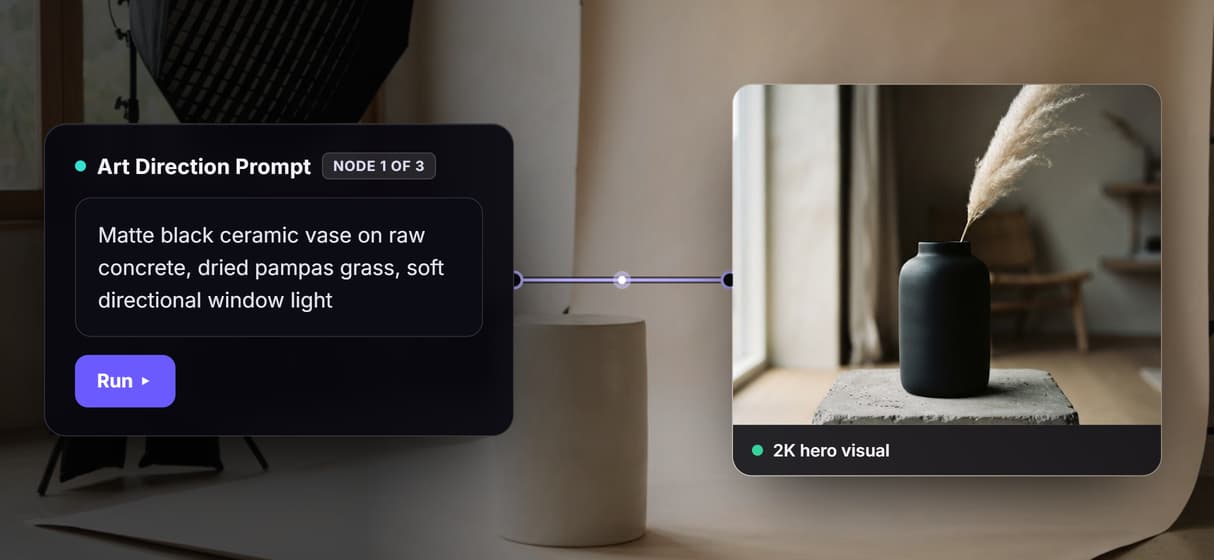
Finish at print resolution with Crystal Upscaler
The last node hands the visual to Crystal Upscaler and returns a print resolution master, the AI image upscaler step wired in, not bolted on later.
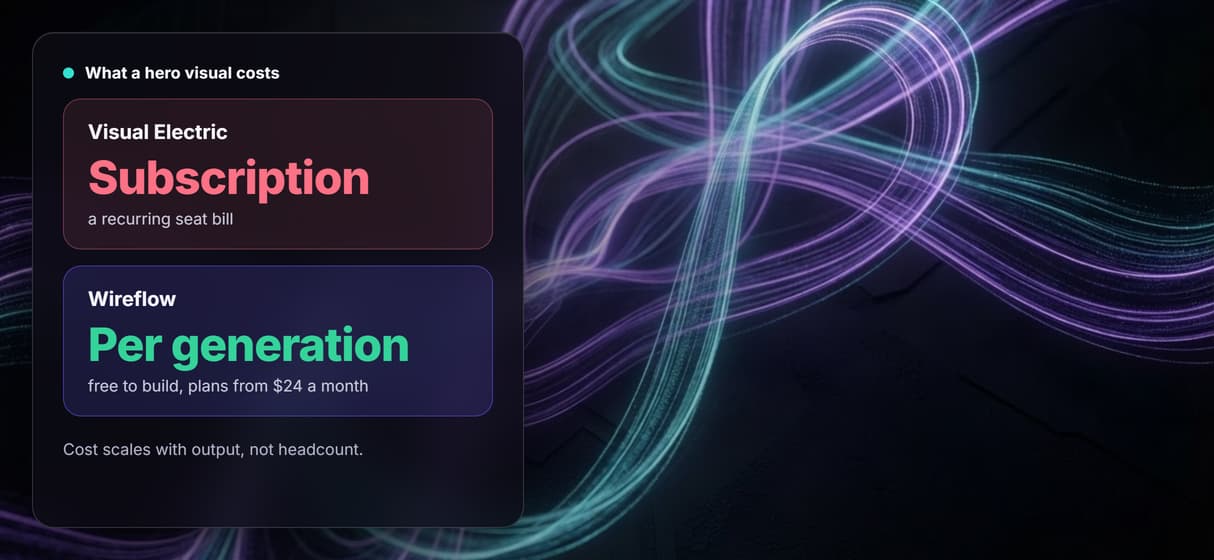
Pay per generation, not a monthly seat
Building on the canvas is free and every render is metered, so a small team pays per visual on a visual AI canvas editor, never for an idle seat.
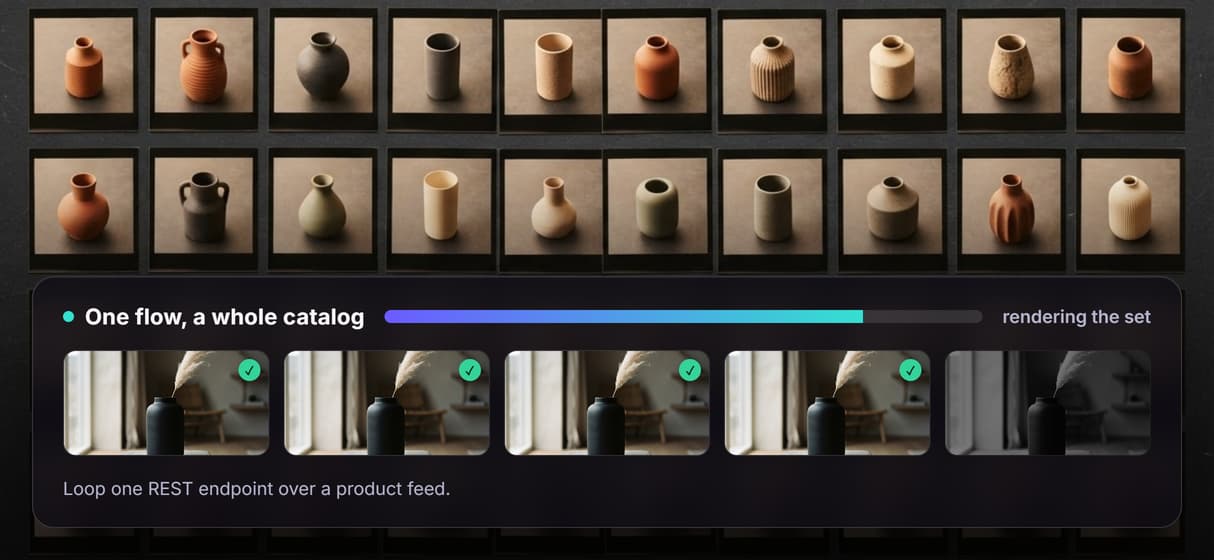
One flow, a whole product series
Publish the graph as a REST endpoint and loop it over a product feed, the reproducible way to run batch image generation across a catalog.
AI Models Available
Automate Any Workflow
Included in Every Plan
FAQs
It depends on what you want to keep. If you want the infinite-canvas design studio experience, other image-design tools are closer. If you want to own the pipeline, Wireflow replaces the studio with a three node canvas workflow: art direction in, hero visual, print resolution master out, priced per generation.
Discover related AI tools
- AI Image Upscaler: Upscale to 4K in a Visual Workflow
- AI Background Remover
- AI Image Generator: Flow-Based Canvas, 31 Models
- ComfyUI Alternative
- AI Face Swap Online: Photos and Video in Your Browser
- Virtual Try On
- AI Thumbnail Generator
- AI Photo Generator
- AI Image Editor
- AI Art Generator
- Midjourney Alternative
- AI Headshot Generator
More From Wireflow
Written by
Andrew Adams · Co-Founder & Operations at Wireflow
Runs client operations and content strategy at Wireflow. Works directly with creative teams and agencies to build production AI workflows.
Own the image pipeline, not a subscription
Open the flow, write the art direction, and run it: a hero visual and a print resolution master from one graph. Building is free; you pay per generation, not per seat.