 Andrew Adams · Co-Founder & Operations at Wireflow ·
 Free AI Video Generator Online
Turn a scene idea into a video workflow you can reuse.
Open the ready-wired Kling template, change the prompt, and shape the motion on one visual canvas. Free to build; video generation uses a paid plan and credits.
Free to build · no credit card
A video generator you build, not a black box
Start with a scene you can picture: a product turning in soft light, a slow push into a landscape, or a still image with a little movement. The template already connects a text prompt to a Kling video node, so your first decision is what the clip should show.
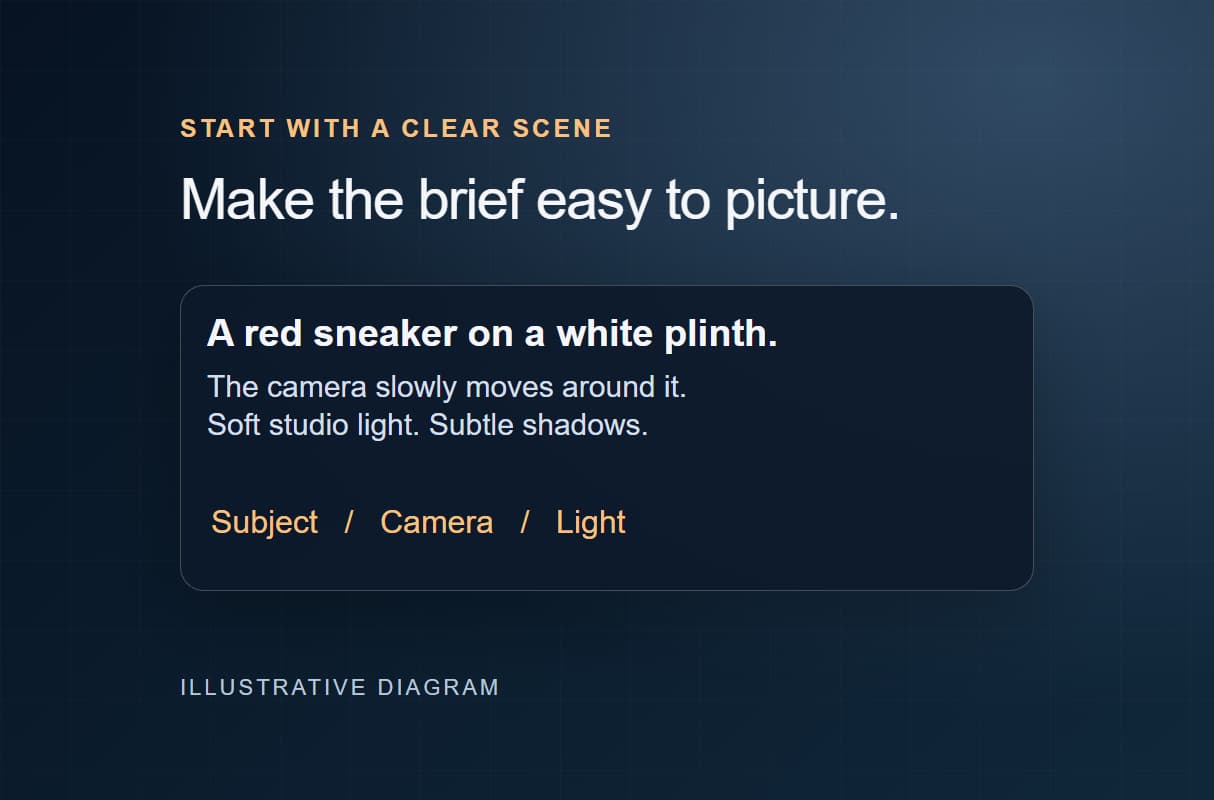
Keep the subject, action, and camera movement clear. For example: "A red sneaker on a white plinth. The camera slowly moves around it. Soft studio light, subtle shadows." Change one detail between versions so you can see what helps. The canvas keeps the prompt and model together for your next brief.
What the video graph gives you
Text to video on a canvas
A Kling node renders a clip from your text prompt on a visual graph.
Image to video
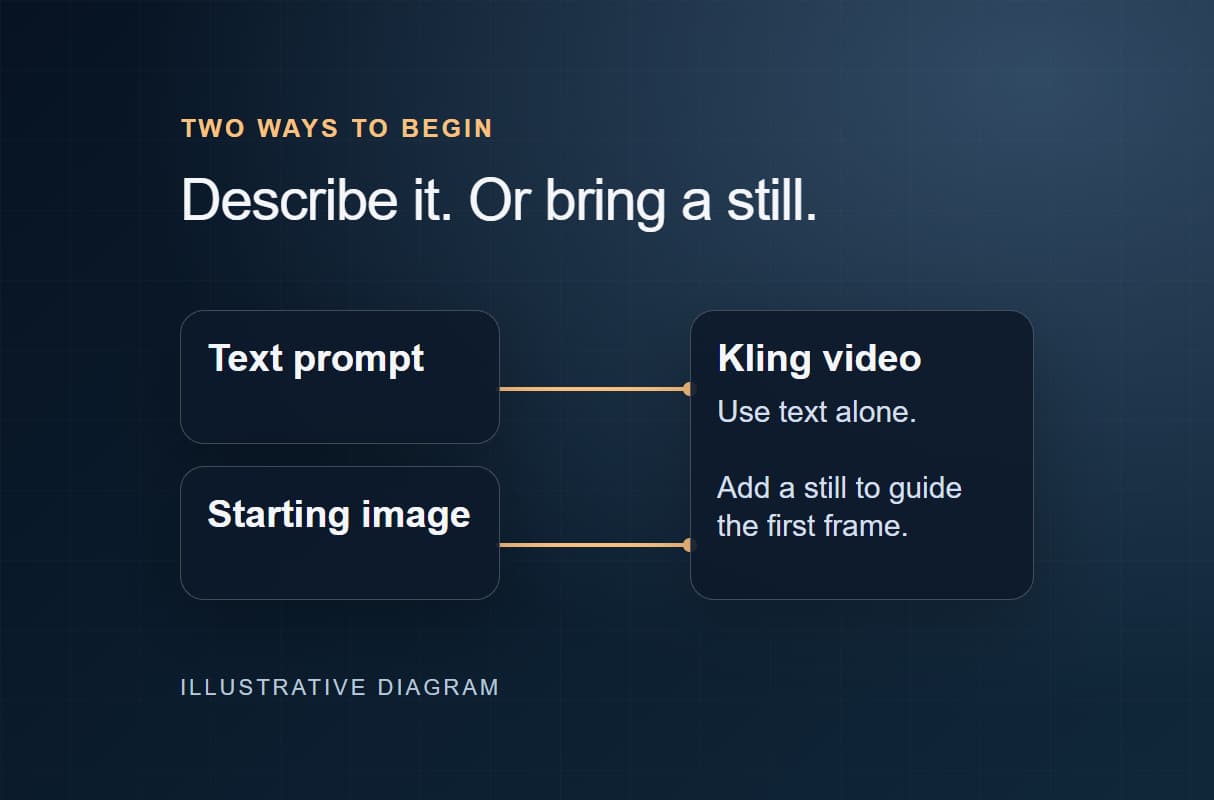
Wire a still into the Start Frame port to animate it into motion.
Compare video models
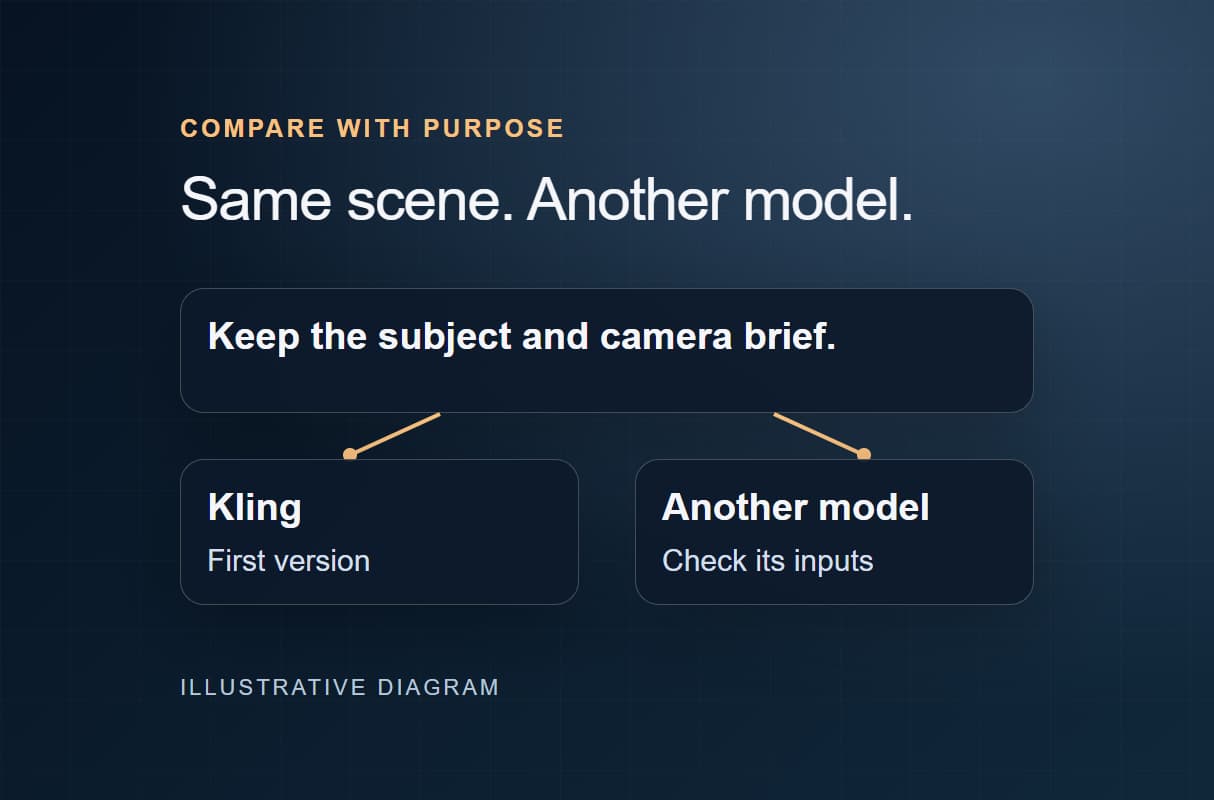
Try another video node with the same brief, adapting its inputs and settings as needed.
Batch with iterators
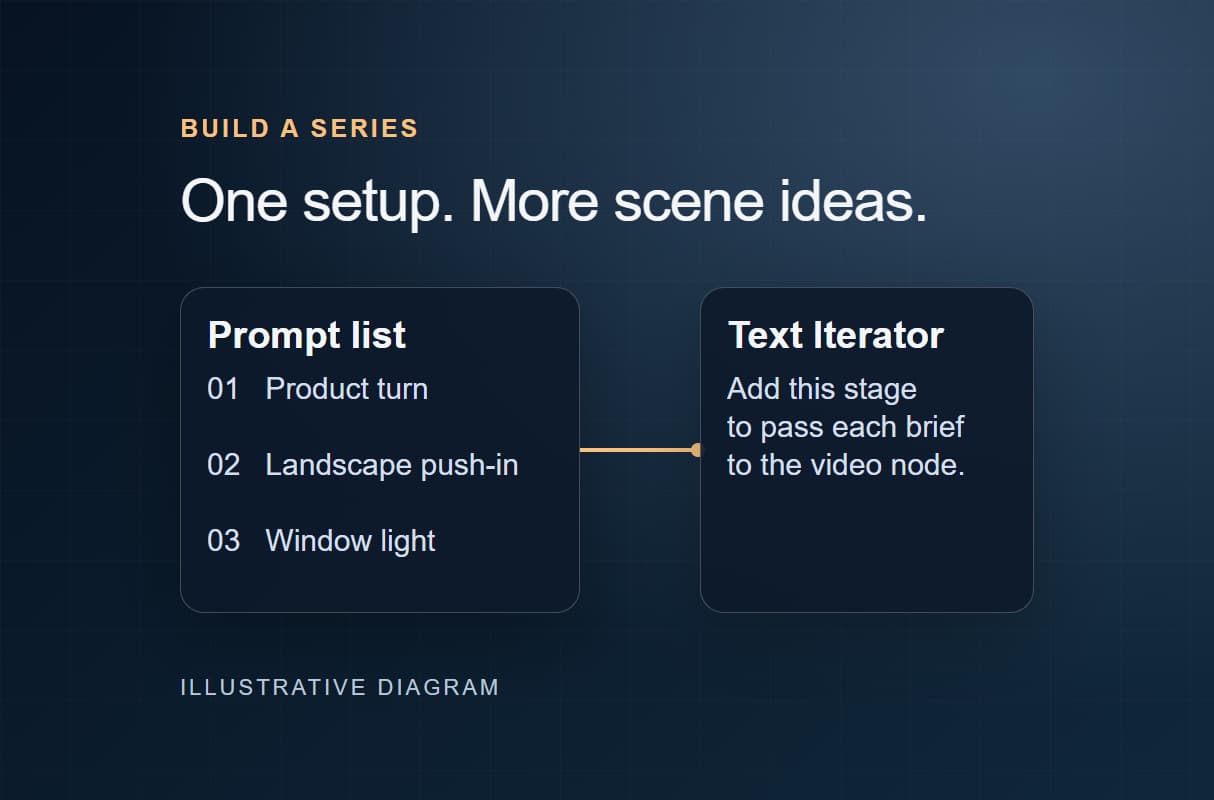
A Text Iterator loops one graph over a list of prompts.
REST and MCP access
Use authenticated REST or MCP access to run an accessible workflow and retrieve its execution results.
Reusable templates
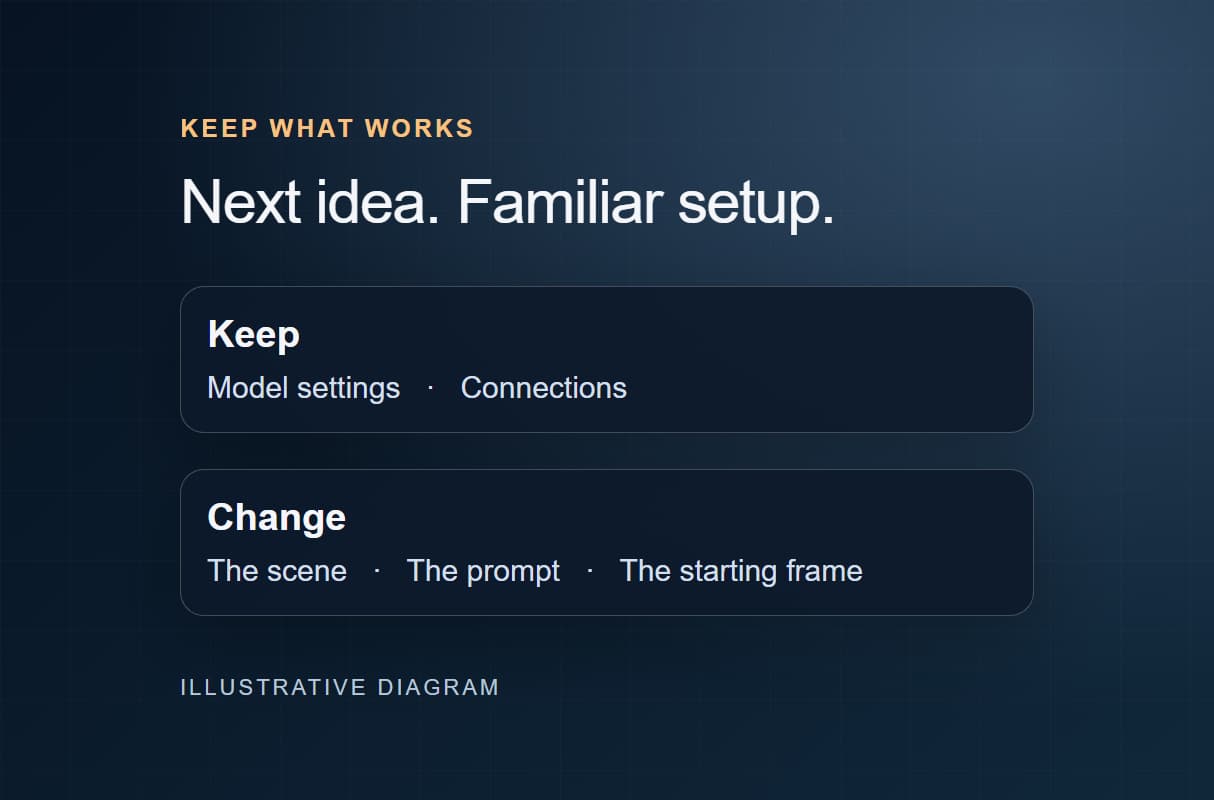
Keep your prompt, model settings, and connections ready for the next brief.
How the video workflow is wired
The template contains a Text Input connected to the Kling video node. Replace its sunset prompt with your scene. The node also has optional Start Frame and End Frame inputs: connect a starting image when its composition or subject should guide the clip.
Begin with that short path. Once you have a useful version, you can add an upscaler, combine clips, or explore another video model. Different models have different inputs and settings, so check the new node when you change families. For app or agent use, authenticated REST and MCP access can run workflows you have permission to use; public publishing is a separate choice.
What free means here, and what it does not
You can sign up, build workflows, and browse the public gallery free. Plan for a paid subscription and credits when generating video; the model, duration, and settings affect the cost. Start by shaping the prompt and choosing your model, then review the generation cost before running.
Wireflow runs the models on hosted compute, so you do not need a local GPU or model installation. Use the canvas to generate and connect media stages. For commercial projects, check the chosen model's terms and the rights to any images or other material you provide.
More Than Just Free AI Video Generator Online
Multiple video models, one canvas
Keep your brief while comparing motion on one canvas. Shortlist tools with our free video guide.
Animate a still image
Wire an image into the Kling node's Start Frame port to animate a still into motion. Make the still first with the AI photo generator.
Compare video models
Try the same scene with another video model. Check its inputs as you connect the stages, then compare the motion.
Batch a list of prompts
Turn a list of scene ideas into a repeatable series. Add a Text Iterator for batch AI generation.
Save it as a reusable template
Keep the setup that works and change the brief for your next clip. Build from a reusable template.
Video Workflows
No Code Required
API & Batch Processing
FAQs
Signing up, building workflows, and browsing templates are free. Video generation uses credits and is covered by paid plans. Check your account for any current introductory allowance; ongoing generation costs depend on the model and settings.
More From Wireflow
Written by
Andrew Adams · Co-Founder & Operations at Wireflow
Runs client operations and content strategy at Wireflow. Works directly with creative teams and agencies to build production AI workflows.
Build your AI video workflow
Start with the connected Kling template and replace the sunset prompt with your own scene. Keep the setup for your next idea, then add image inputs or more stages as your project grows.