Best ElevenLabs MCP Tools in 2026

In this article▾
- Quick Summary
- How These Tools Were Ranked
- 1. Wireflow: Best Overall
- 2. ElevenLabs Official MCP Server: Best Official Option
- 3. Composio ElevenLabs Toolkit: Best for App Routing
- 4. Cursor: Best for Developers
- 5. Smithery: Best for Discovery
- 6. Zapier MCP: Best No-Code Route
- 7. n8n: Best Self-Hosted
- 8. Pipedream MCP: Best for Event Triggers
- 9. OpenAI Agents SDK: Best for Custom Agents
- Comparison Table
- Picking the Right One
- FAQ
- Conclusion
The best ElevenLabs MCP tools in 2026 let an AI agent write a script, pick a voice, and return a finished audio file in one conversation, with no glue code in between. This guide ranks nine options by what they actually control, where the audio is produced, and how much setup each one costs you. Wireflow sits at the top because it exposes a hosted node graph over MCP, so an agent can chain a voice model to the rest of a media pipeline in a single call.
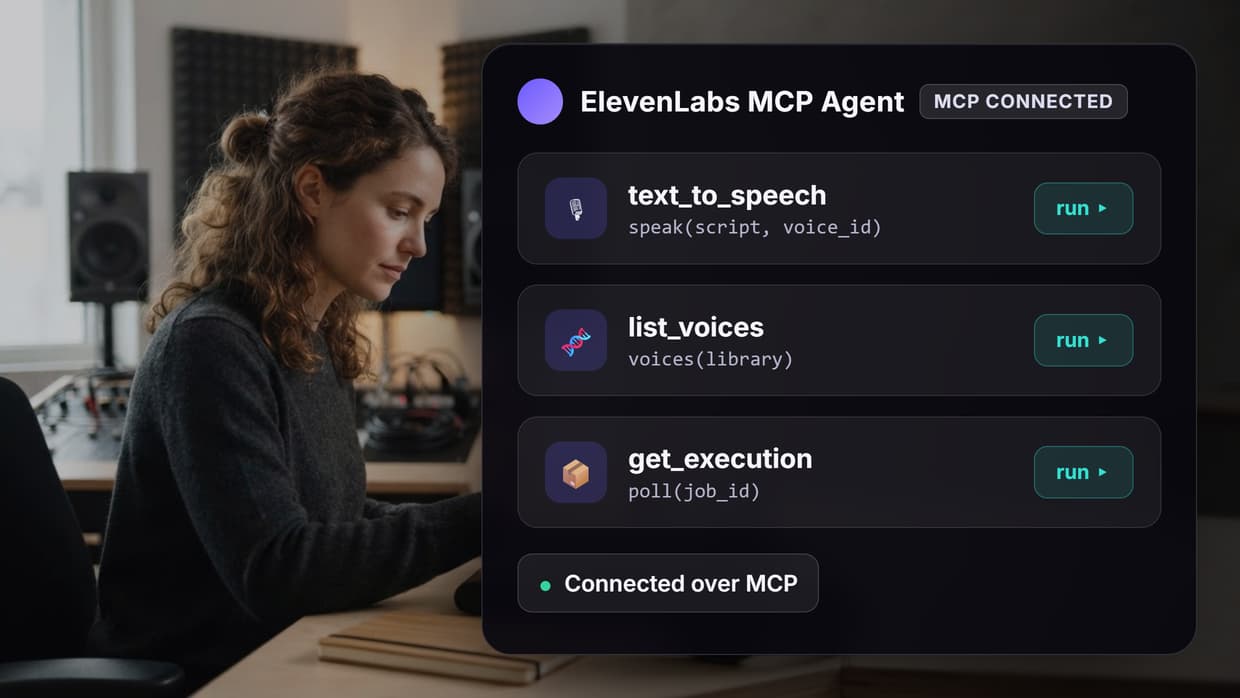
Model Context Protocol turned ElevenLabs from an API you integrate into a service an agent can simply call. The gap between the options is wider than the marketing suggests: some are true MCP servers that expose text to speech, voice cloning, and transcription as tools, while others are clients, registries, or orchestrators that make those servers usable in production. Knowing which category a tool belongs to saves you from installing the wrong thing.
Quick Summary
- Wireflow: hosted node graph exposed over MCP, chains voice with image and video. Best Overall
- ElevenLabs Official MCP Server: 20+ first-party tools straight from the vendor. Best Official Option
- Composio ElevenLabs Toolkit: managed auth and routing into 1,000+ apps. Best for App Routing
- Cursor: MCP client built into a coding environment. Best for Developers
- Smithery: registry and hosted runtime for MCP servers. Best for Discovery
- Zapier MCP: voice steps inside no-code automations. Best No-Code Route
- n8n: self-hosted workflow engine with MCP nodes. Best Self-Hosted
- Pipedream MCP: event-driven triggers for voice jobs. Best for Event Triggers
- OpenAI Agents SDK: programmatic agents that mount MCP servers. Best for Custom Agents
How These Tools Were Ranked
Four criteria decided the order. First, tool coverage: does it expose the full ElevenLabs surface, or just text to speech? Second, where the work runs, since a local server means your machine holds the audio files and your API key. Third, chaining, because most real jobs need the voice track joined to a script, a caption file, or a video. Fourth, setup cost measured in minutes, not marketing claims. If you are still choosing a voice engine rather than a protocol layer, our roundup of the most realistic AI voice generators covers that decision separately.
One clarification before the list. An MCP server publishes tools, an MCP client consumes them, and a registry distributes them. Several entries below are not servers at all, which is deliberate: the server alone rarely gets you to a shipped audio asset.
Build this in Wireflow
Make the same kind of asset on a canvas you control, with a free account and no credit card.
1. Wireflow: Best Overall
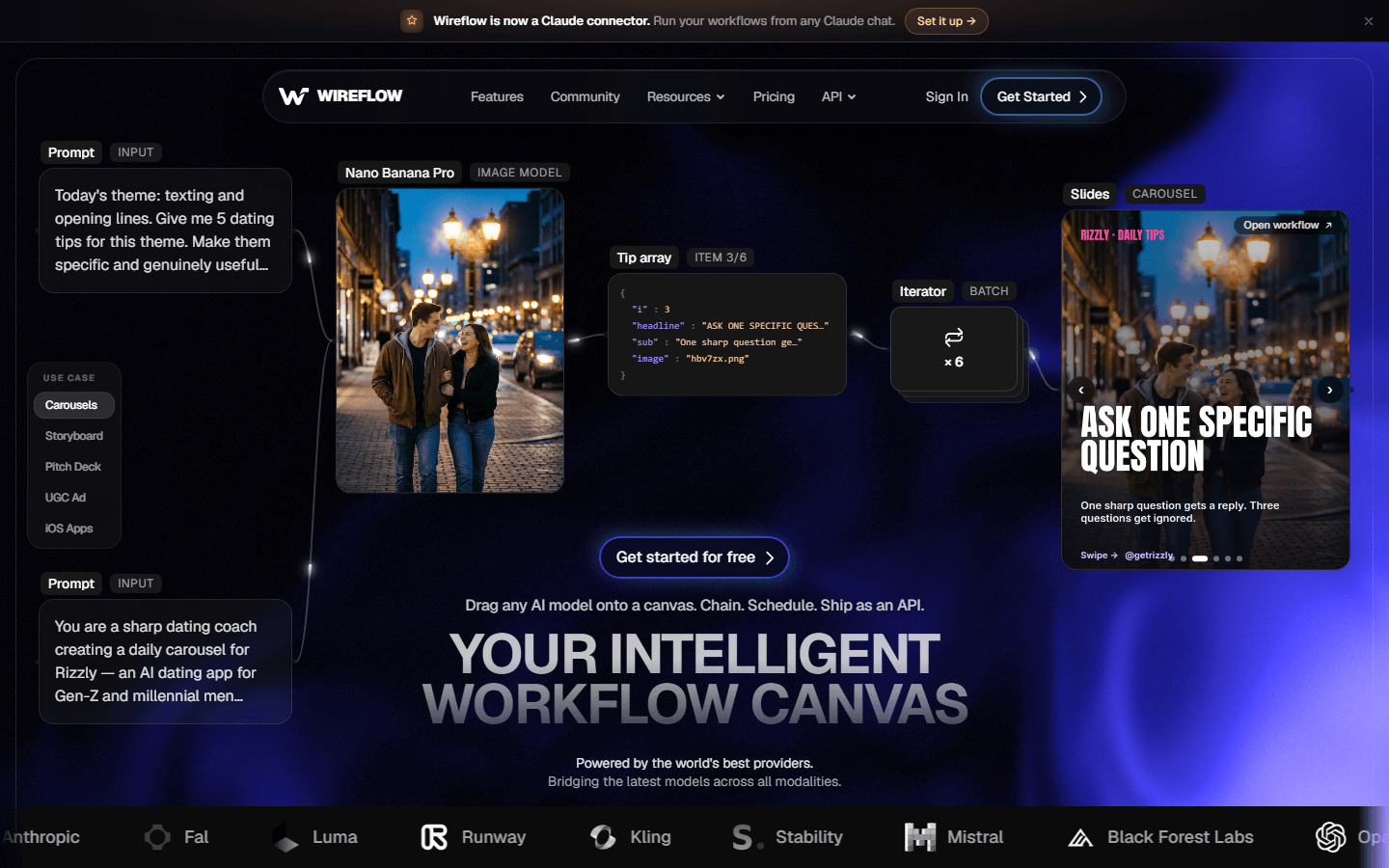
Wireflow is a node-based AI workflow platform whose graphs are callable over MCP, so an agent triggers a whole pipeline instead of a single model call. That matters for voice work, because a narration job is rarely just narration: it is a script step, a voice step, and usually a render or caption step that must run in order. For a hands-on look at this in action, check out the ElevenLabs MCP feature page.
You build the graph once on the canvas, then publish it. The agent calls run_workflow, passes a script and a voice id, polls, and receives a hosted audio URL. Nothing depends on a local runtime staying awake, and the same workflow is reachable from Claude, Cursor, or a cron job without being rebuilt three times.
Strengths: hosted execution, multi-model chaining, one graph reusable from any MCP client, outputs stored as durable URLs. Limits: you build the graph first, which is a few extra minutes before the first call. Credit-based pricing means high-volume batch narration needs a quick cost check.
2. ElevenLabs Official MCP Server: Best Official Option
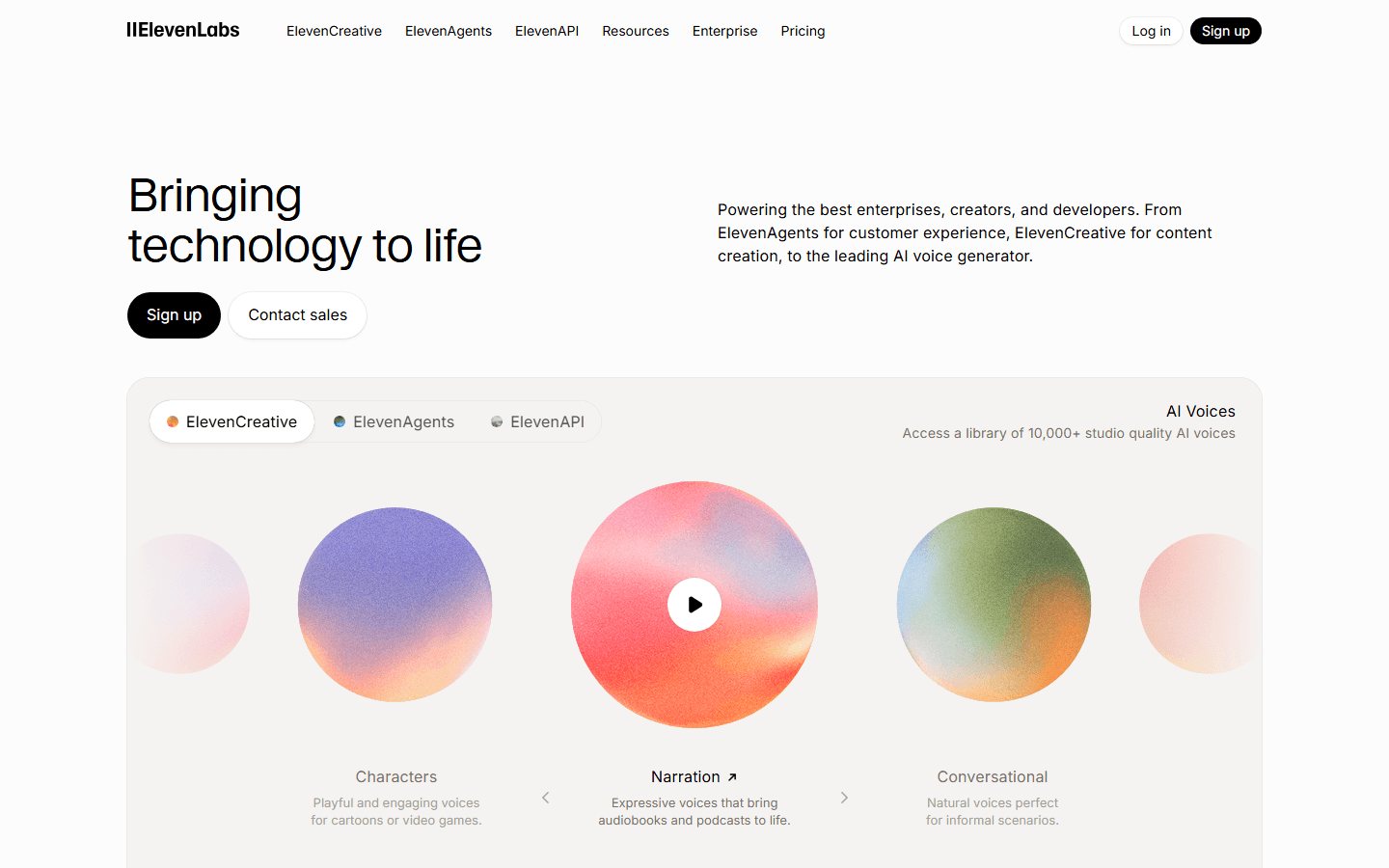
The official ElevenLabs MCP server is the reference implementation and the first thing most people should install. It exposes more than twenty tools: text to speech, speech to text with speaker diarization, voice cloning and design, speech to speech conversion, audio isolation, sound effects, voice library search, agent management, and usage checks. Installation is a single uvx elevenlabs-mcp command with your API key in the environment.
Coverage is its real advantage. Because the tool list mirrors the API, an agent can do things most wrappers never expose, such as designing a voice from a text description, or transcribing an interview and re-voicing a section. Anyone evaluating cloning specifically should read our guide on cloning a voice safely and legally before pointing an agent at real recordings.
Strengths: complete tool surface, maintained by the vendor, trivial install, works with Claude Desktop, Cursor, Windsurf, and OpenAI Agents. Limits: it runs locally, so files land on your machine and long jobs are tied to your session. It also does one vendor only, so any chaining to image or video happens elsewhere.
3. Composio ElevenLabs Toolkit: Best for App Routing
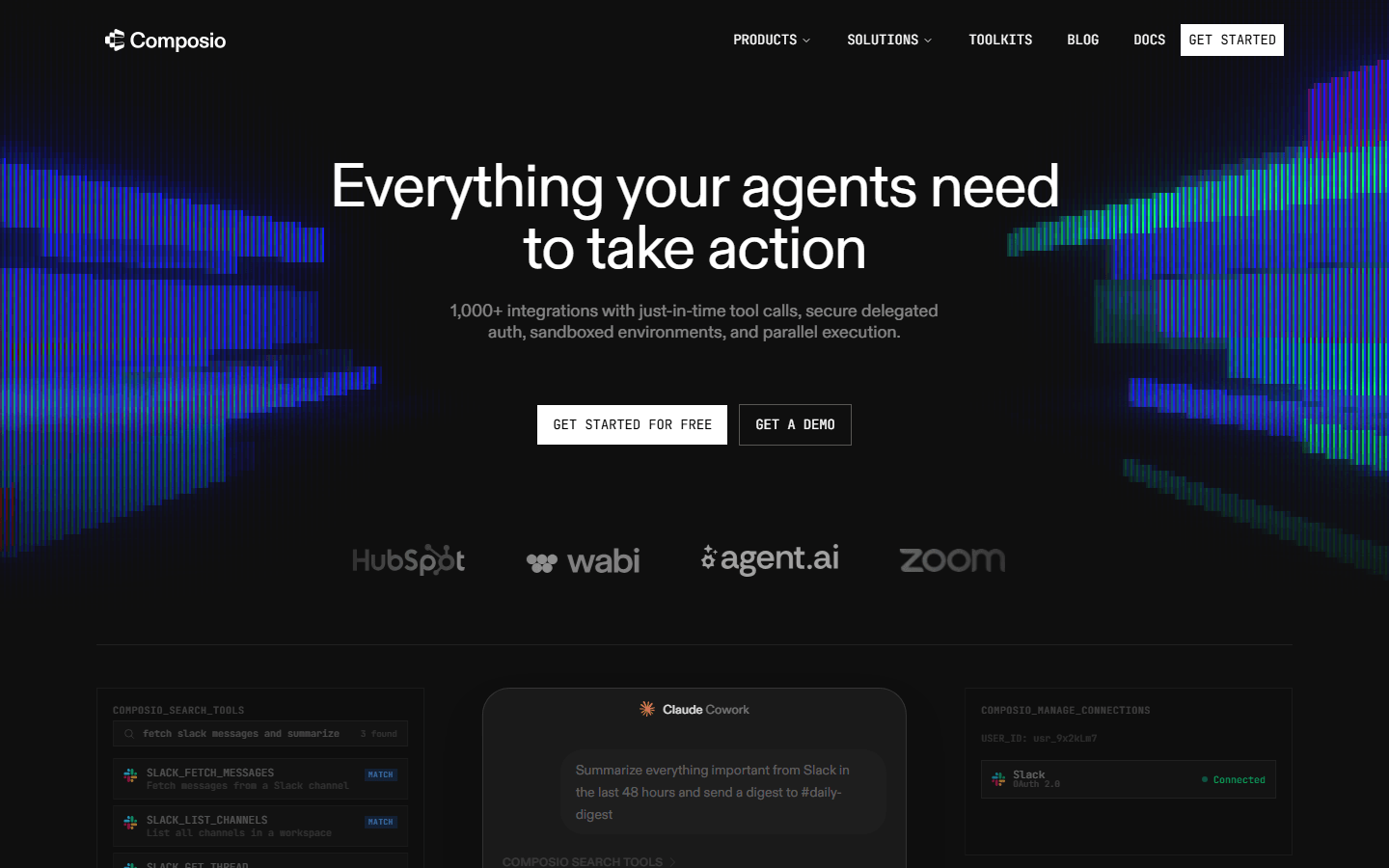
Composio wraps ElevenLabs as one toolkit among a thousand-plus integrations, with managed authentication and sandboxed execution handled for you. Instead of storing an API key locally, you connect the account once and Composio issues scoped, delegated credentials to the agent. For teams, that beats handing every developer a production voice key.
Its strength is what happens after the audio exists. The agent that generated a voiceover can drop it in Slack, attach it to a Notion page, or push it to Google Drive without you writing an upload function. This is the same pattern we describe for image work in connecting an AI image API to Claude, applied to audio.
Strengths: managed auth, broad app catalog, parallel tool execution, good fit for multi-user teams. Limits: another vendor in the path, and the ElevenLabs toolkit exposes a curated subset rather than the full first-party tool list.
4. Cursor: Best for Developers
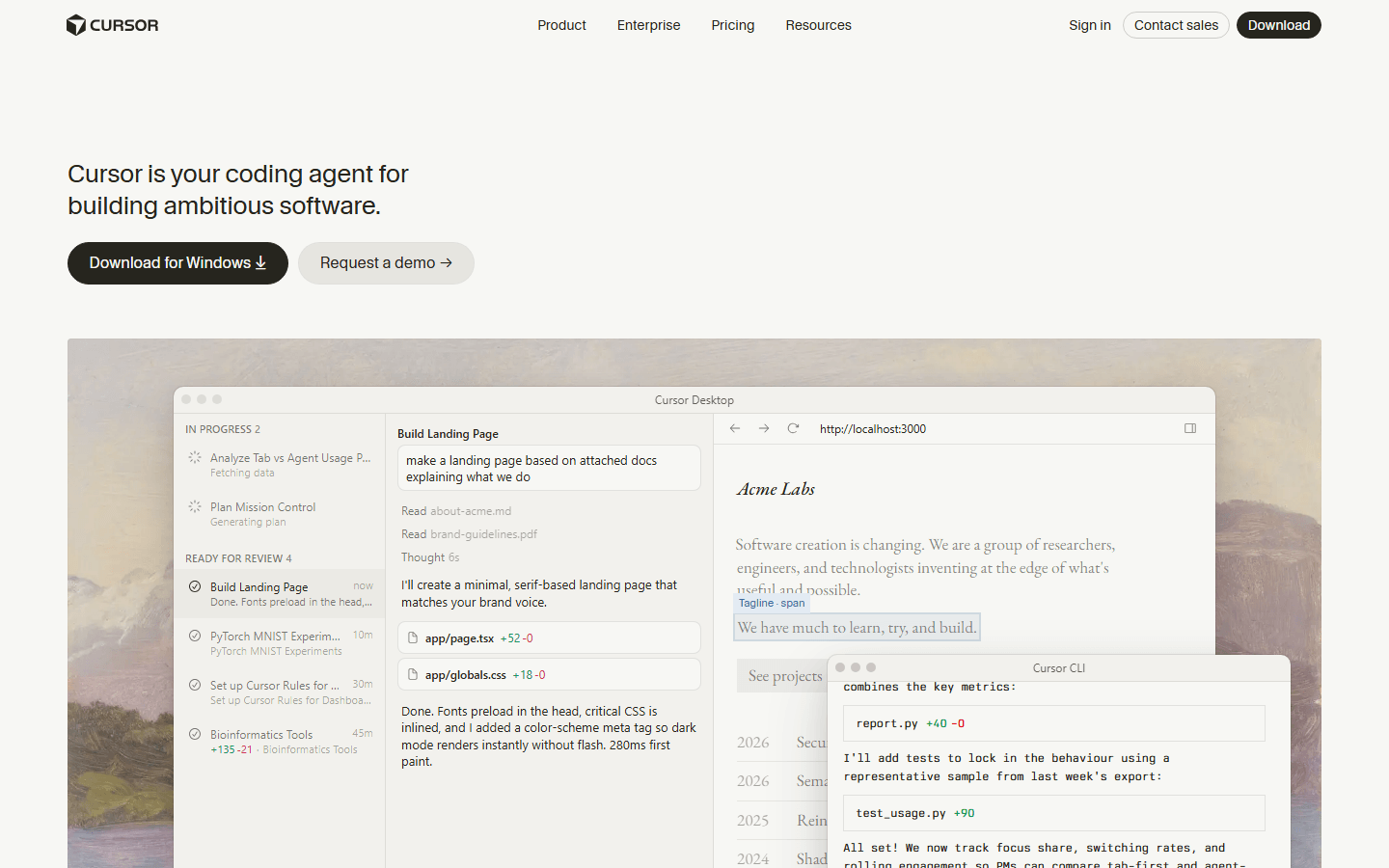
Cursor is a client rather than a server, and it earns a place here because it is where most developers actually invoke ElevenLabs MCP tools. Adding the server is a short JSON block in the MCP settings, after which the model can generate a voice line while editing the code that will play it.
The value is context. The agent reads the script file in your repository, generates the narration, writes the path back into a config, and runs the test that plays it. Nothing gets copied between a browser tab and an editor. The same setup works for the best AI text to speech tools more generally, since MCP client configuration is vendor-neutral.
Strengths: zero-friction config, repository context, immediate testing loop, works with any MCP server including the official one. Limits: it is a development environment, not a production runner. Nothing scheduled or headless comes out of it.
5. Smithery: Best for Discovery
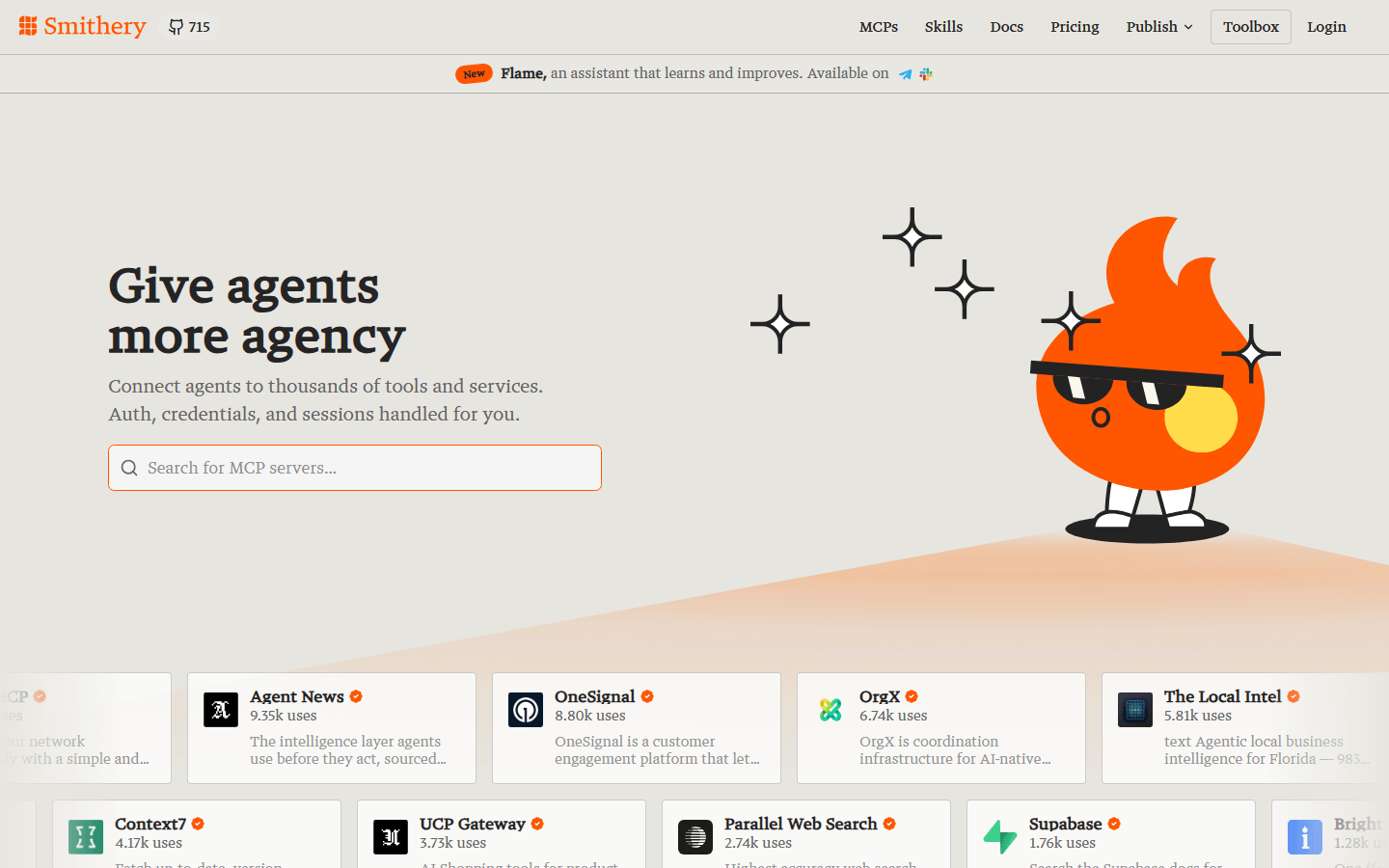
Smithery is a registry and hosted runtime for MCP servers, with search, usage counts, and one-click connection that handles auth and sessions. For ElevenLabs it means comparing the official server against community forks, seeing how much each is used, and connecting without touching a config file.
Hosting is the underrated half: a Smithery-hosted server keeps running when your laptop sleeps, turning an interactive tool into something a scheduled agent can rely on. If you are surveying the wider protocol ecosystem, our roundup of the best ComfyUI MCP tools shows the same registry pattern applied to image generation.
Strengths: discovery with real usage signal, hosted runtime, managed credentials, easy A/B of competing servers. Limits: you are trusting a third party with credential handling, and hosted tiers add cost above running the server yourself.
6. Zapier MCP: Best No-Code Route
Zapier exposes its automation catalog through MCP, so an agent can trigger a Zap that includes a voice step alongside thousands of business apps. The audience is operations and marketing teams who want a new blog post to become a narrated audio file in a shared folder, with nobody writing code.
The tradeoff is control. You get reliability, retries, and logs, but the voice step is a configured action rather than a full tool surface, so parameters such as voice design are out of reach. We cover the same tradeoff for video in our writeup on Zapier video editing integration.
Strengths: no code, enormous app catalog, dependable scheduling and error handling, familiar to non-technical teams. Limits: shallow parameter access, per-task pricing that adds up at volume, and latency from the extra hop.
7. n8n: Best Self-Hosted
n8n is an open source workflow engine that both consumes MCP servers and exposes its own workflows as MCP tools. Self-hosting means your keys, audio files, and logs stay on infrastructure you control, often the deciding factor in regulated environments.
It is also the most flexible option for branching logic. One workflow can transcribe an inbound recording, route long files to one voice and short ones to another, and retry only failed segments. That control comes with maintenance you own; our comparison of n8n versus MCP for automation walks through when the extra flexibility is worth it.
Strengths: self-hosted data control, bidirectional MCP support, rich branching and error handling, no per-task fees. Limits: you run the server, the updates, and the queue. Initial setup is measured in hours rather than minutes.
8. Pipedream MCP: Best for Event Triggers
Pipedream sits between the no-code and code-first camps: workflows are event-driven and serverless, but each step can be arbitrary Node or Python. Its MCP layer lets an agent call those workflows as tools, a clean way to attach voice generation to a webhook.
Event triggering is the real reason to pick it. A new database row, a completed transcript, or an inbound form submission starts a narration job with nothing polling. Agents that need this shape of trigger are worth reading about in our guide to building a media generation agent.
Strengths: genuine event triggers, code steps when configuration is not enough, generous free tier, fast cold starts. Limits: smaller community than Zapier or n8n, and per-execution limits that need watching on long audio jobs.
9. OpenAI Agents SDK: Best for Custom Agents

The OpenAI Agents SDK mounts MCP servers directly in code, so the ElevenLabs tool list becomes available to an agent you define and deploy yourself. There is no chat client in the loop, which is what you want when the agent runs on a schedule or behind an API.
You decide which tools are exposed, how failures are retried, and what the agent may spend. That control is also the cost, since orchestration you get free elsewhere is now yours to write. Teams comparing this against managed options should look at our roundup of agent media AI tools.
Strengths: full programmatic control, deployable anywhere, fine-grained tool permissions, no client dependency. Limits: you build and maintain the harness, including tracing, retries, and cost guards.
Comparison Table
| Tool | Type | Runs where | Tool coverage | Setup time | Best for |
|---|---|---|---|---|---|
| Wireflow | Server + graph | Hosted | Multi-model chain | ~15 min | Voice inside a media pipeline |
| ElevenLabs Official | Server | Local | Full ElevenLabs API | ~2 min | Complete first-party access |
| Composio | Server + routing | Hosted | Curated subset | ~5 min | Delivering audio to apps |
| Cursor | Client | Local | Depends on server | ~3 min | Development and debugging |
| Smithery | Registry + host | Hosted | Depends on server | ~2 min | Discovery and uptime |
| Zapier MCP | Orchestrator | Hosted | Shallow | ~10 min | No-code business flows |
| n8n | Orchestrator | Self-hosted | Configurable | Hours | Privacy and cost control |
| Pipedream | Orchestrator | Hosted | Configurable | ~15 min | Event-driven triggers |
| OpenAI Agents SDK | Framework | Your infra | Full, via server | Hours | Custom production agents |
Picking the Right One
Start with the official server. It costs two minutes and immediately tells you whether MCP solves your problem at all. If your only need is generating narration inside a chat, you can stop there.
Move up a layer when one of three things is true. If the audio has to reach another system, add a routing layer such as Composio or Zapier. If the job must run without a human present, move to a hosted runtime. If the voice track is one input to a larger render, a graph platform that chains steps saves you writing orchestration by hand; that is the case our AI voiceover generator page walks through end to end.
The mistake worth avoiding is stacking three of these at once. Each layer adds a failure point, and most teams with a fragile pipeline got there by adding an orchestrator before they needed one.
Try it yourself: open this MCP workflow in Wireflow to see a hosted graph exposed as a callable MCP tool, with the nodes already wired and executed.
FAQ
What is an ElevenLabs MCP tool?
It is a function exposed over Model Context Protocol that an agent calls to reach an ElevenLabs capability, such as text_to_speech or list_voices. The agent discovers the tool list at connection time and calls it by name, so no custom API integration is needed.
Do I need an ElevenLabs subscription to use these? Yes for anything touching the ElevenLabs API. MCP handles transport and tool discovery; generation still bills against your ElevenLabs plan, including the free tier's monthly character allowance.
Is the official ElevenLabs MCP server free? The server itself is open source and free to run. Costs come from the API calls it makes and, if you use a hosted runtime such as Smithery, from that platform's plan.
Which MCP clients work with ElevenLabs? Claude Desktop, Claude Code, Cursor, Windsurf, and the OpenAI Agents SDK are the common ones. Any client implementing the MCP specification can connect, since the server does not care who is calling.
Can an agent clone a voice over MCP? Yes. The official server exposes voice cloning and voice design as tools, so an agent can create a voice from sample audio or a text description. Consent and licensing rules still apply to the source recording, and those are your responsibility.
How do I chain ElevenLabs with image or video generation? A single-vendor MCP server cannot do it alone. Either write the orchestration yourself with an agent framework, or use a workflow platform whose graph is callable over MCP so the voice step and the render step run in one call.
Is a local MCP server safe for production? Not on its own. A local process stops when your machine sleeps and keeps audio and keys on a developer laptop. Production work belongs on a hosted runtime or a self-hosted server with proper credential handling.
What is the difference between an MCP server and an MCP client? The server publishes and executes tools. The client, usually an assistant or IDE, discovers them and decides when to call. Registries such as Smithery sit alongside both, handling distribution and hosting.
Conclusion
The ElevenLabs MCP ecosystem in 2026 sorts into four layers: the official server for coverage, clients for invocation, registries for distribution and uptime, and orchestrators for everything around the audio. Most teams need exactly two of those, and picking the wrong pair is what makes these setups feel fragile.
Install the official server first and see how far it takes you. Once the voice track stops being the final deliverable and becomes one input to a video, an ad, or a course module, a hosted graph beats hand-written orchestration on cost and maintenance, which is where a multi-model AI workflow approach pays for itself.

Co-Founder & Operations at Wireflow
Runs client operations and content strategy at Wireflow. Works directly with creative teams and agencies to build production AI workflows.
- Content Strategy
- Client Operations
Get unlimited ad creatives today.
One call to see if we are a fit and scope the first ad. If it fits, your first batch lands inside week one.