Most Realistic AI Voice Generators in 2026


In this article▾
Finding an AI voice generator that actually sounds human is harder than it looks. Most tools produce output that's technically correct but emotionally flat, with robotic cadence and unnatural pauses. Wireflow approaches this differently by letting you chain voice models with post-processing nodes in a single workflow, giving you fine-grained control over pacing, tone, and output quality. Below, we tested and ranked the eight most realistic AI voice generators available right now, based on naturalness, language support, and practical usability for content creators and developers.
Quick Summary
- Wireflow - Best for multi-model voice workflows with API access
- ElevenLabs - Best overall standalone voice quality
- Murf AI - Best for business and enterprise voiceovers
- LOVO AI (Genny) - Best for video creators needing voice + editing
- WellSaid Labs - Best for corporate training content
- Speechify - Best for converting text to natural audiobooks
- Resemble AI - Best for real-time voice cloning
- Fish Audio - Best for multilingual voice generation
1. Wireflow
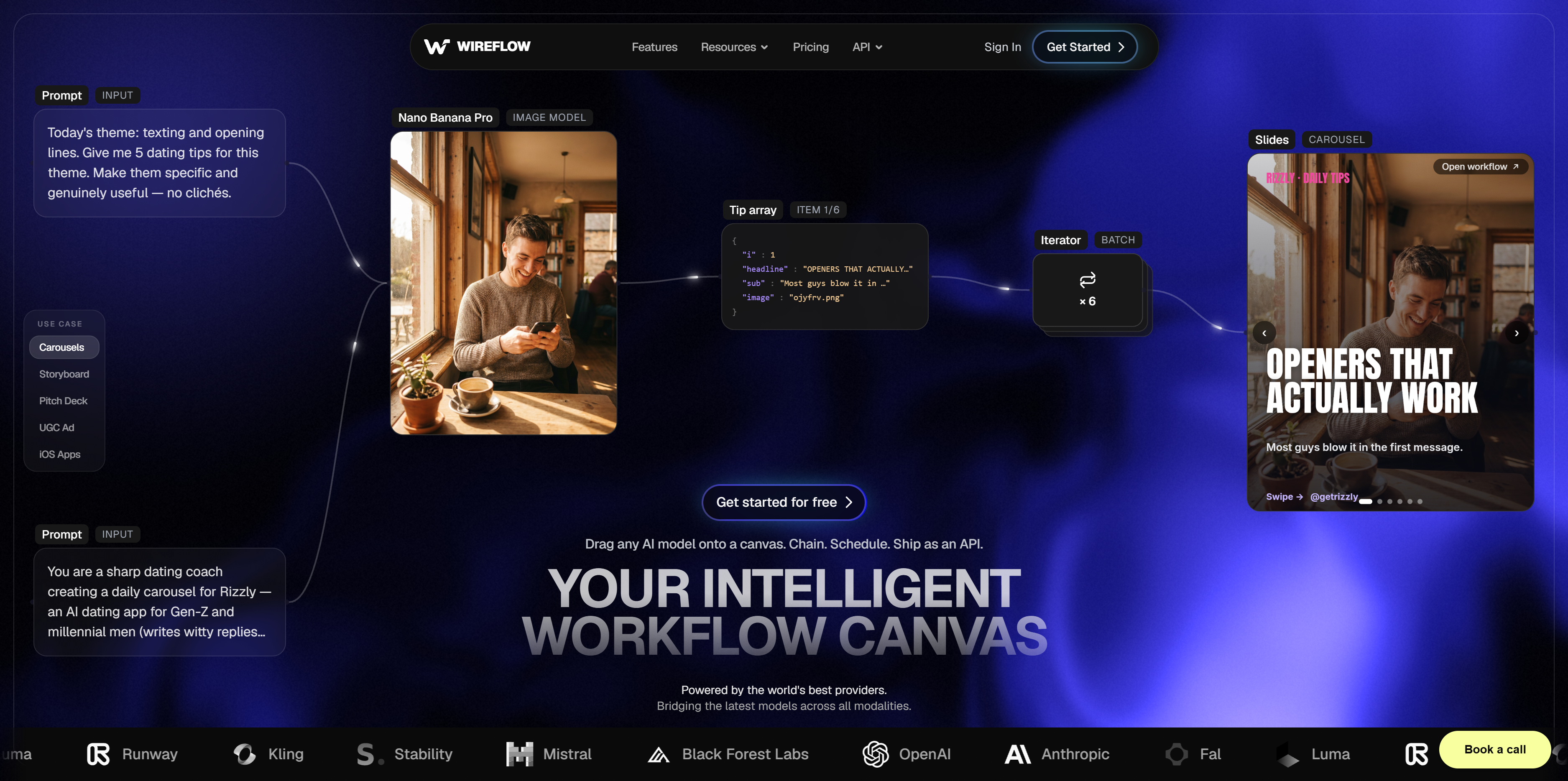
Wireflow is not a single voice model but a workflow platform that lets you connect multiple AI voice models, post-processing effects, and output nodes into a single pipeline. You can chain ElevenLabs or Fish Audio models with noise reduction, speed adjustment, and format conversion, all through a visual canvas or REST API. Once you have the voice, you can sync that voice to a video inside the same Wireflow graph instead of moving files between tools.
For a hands-on look at this in action, check out the AI voice generator feature page.
What makes this approach practical is consistency. Instead of manually running audio through three different tools, you build the pipeline once and reuse it. The API supports batch processing, so you can generate hundreds of voiceovers from a spreadsheet of scripts without touching the UI. Pricing starts at $0 for the free tier with pay-as-you-go model credits scaling from there.
Best for: Teams and developers who need repeatable, multi-step voice pipelines with full API control.
Build this in Wireflow
Make the same kind of asset on a canvas you control, with a free account and no credit card.
2. ElevenLabs
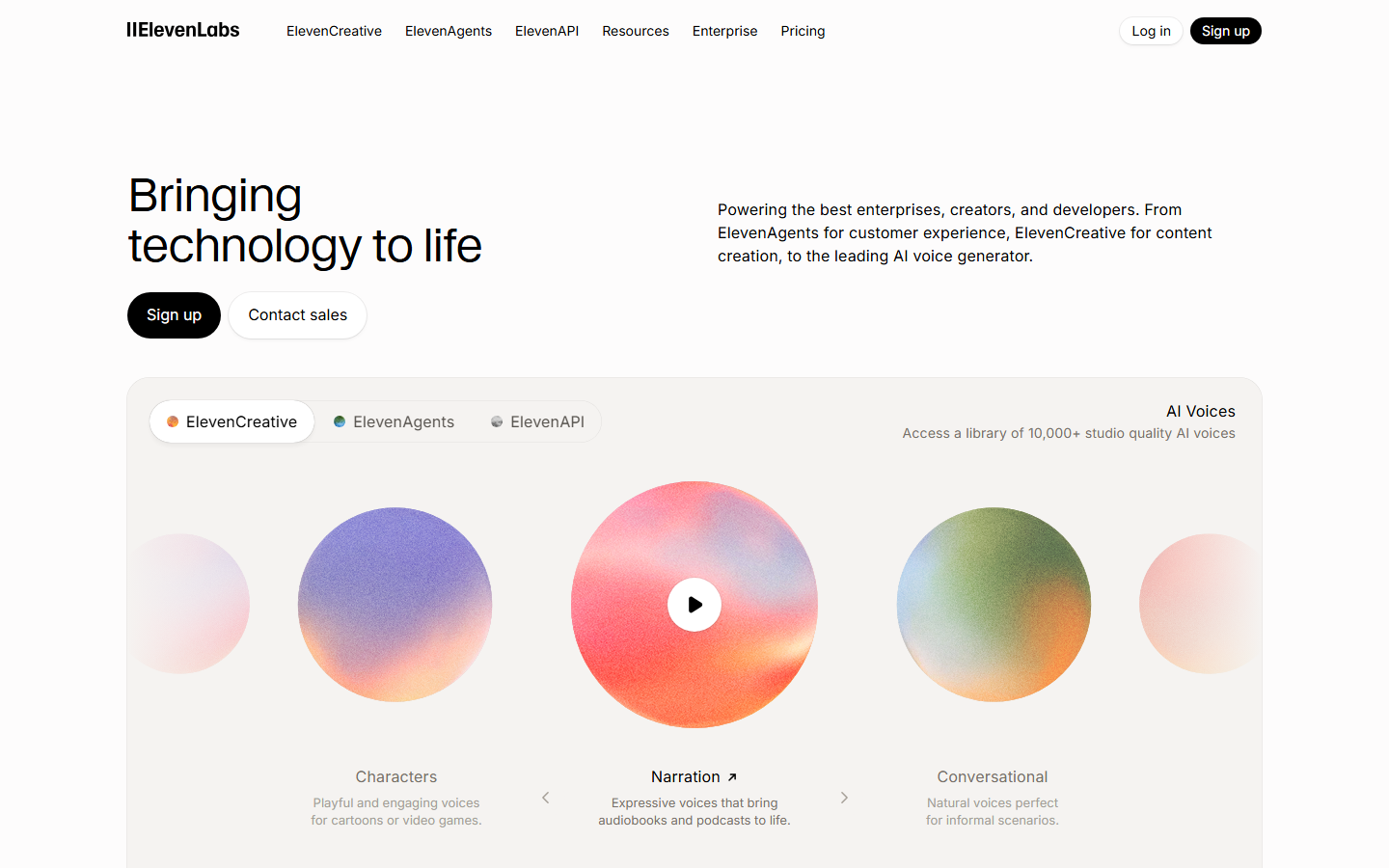
ElevenLabs consistently produces the most natural-sounding output of any standalone voice generator. Their Turbo v3 model handles emotional inflection, breathing patterns, and sentence-level pacing better than most competitors. The voice cloning feature requires only 30 seconds of sample audio and produces remarkably accurate replicas.
The platform supports 32 languages with native-quality pronunciation, not just accent overlays on English phonemes. Their API returns audio in under 300ms for most requests, making it viable for real-time applications. The free tier gives you 10,000 characters per month. Paid plans start at $5/month for 30,000 characters.
The main limitation is that ElevenLabs is a single-model tool. If you need to combine voice generation with other AI steps (image generation, video creation, subtitling), you will need to build that integration yourself or use a workflow platform to connect the pieces.
Best for: Creators who prioritize voice quality above all else and need multilingual support.
3. Murf AI
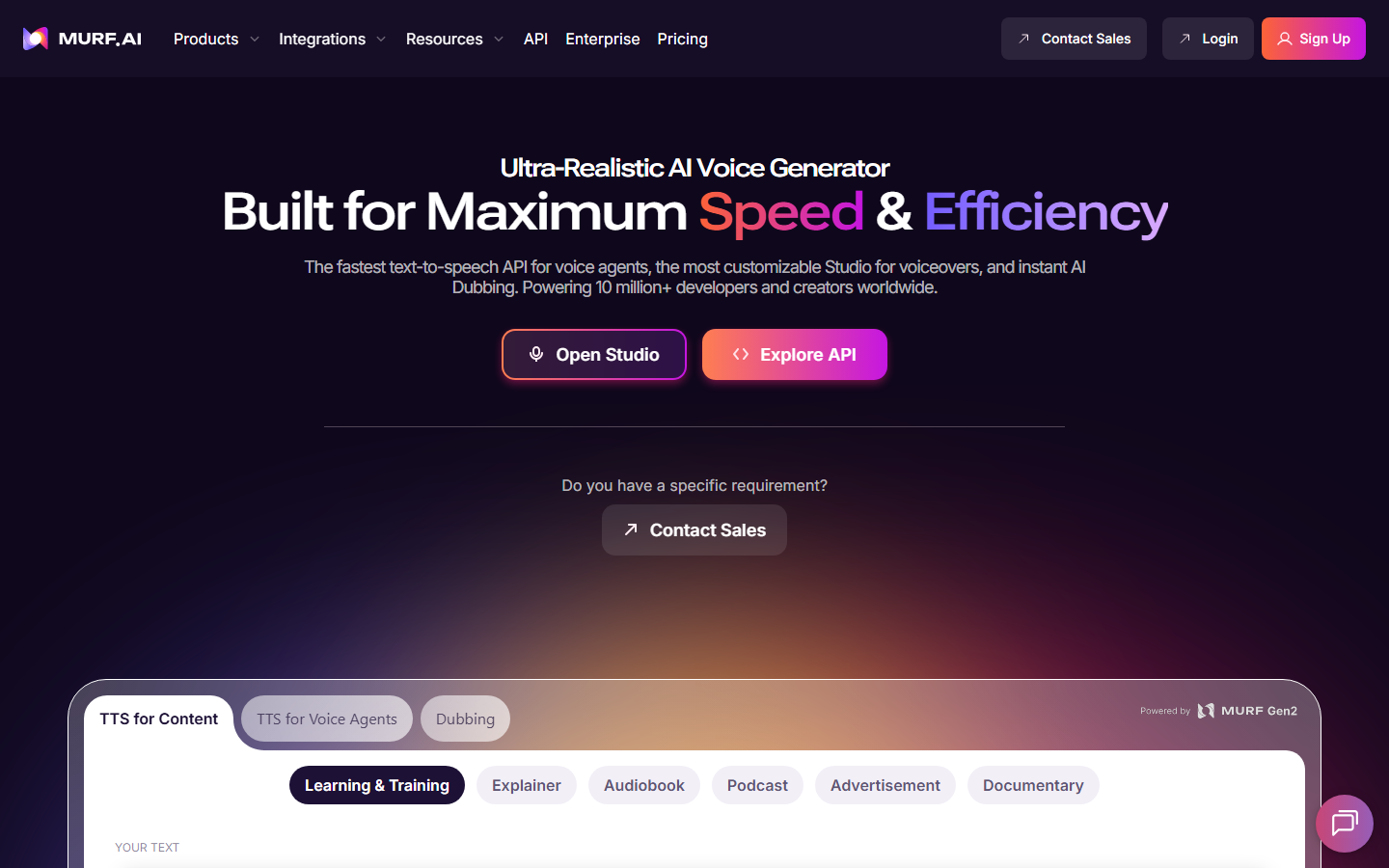
Murf AI targets professional voiceover production with a built-in studio editor. You can adjust pitch, emphasis, and speed at the word level, which gives more control than most text-to-speech tools. The voice library includes over 200 voices across 20 languages, with dedicated voices for different use cases like e-learning, marketing, and product demos.
The studio interface pairs your script with a timeline editor, so you can sync voiceover with video footage or presentation slides directly inside Murf. Enterprise teams use it heavily for training content and internal communications. Plans start at $23/month for the Creator tier, with enterprise pricing available for larger teams.
Voice quality is strong for professional tones but less convincing for casual or conversational styles. If you need a voice that sounds like a podcast host rather than a narrator, you may find the output slightly stiff. For choosing payment platforms to process your subscription, some teams have found it useful to compare alternatives to major payment processors before committing.
Best for: Marketing teams and L&D departments producing polished voiceover content at scale.
4. LOVO AI (Genny)
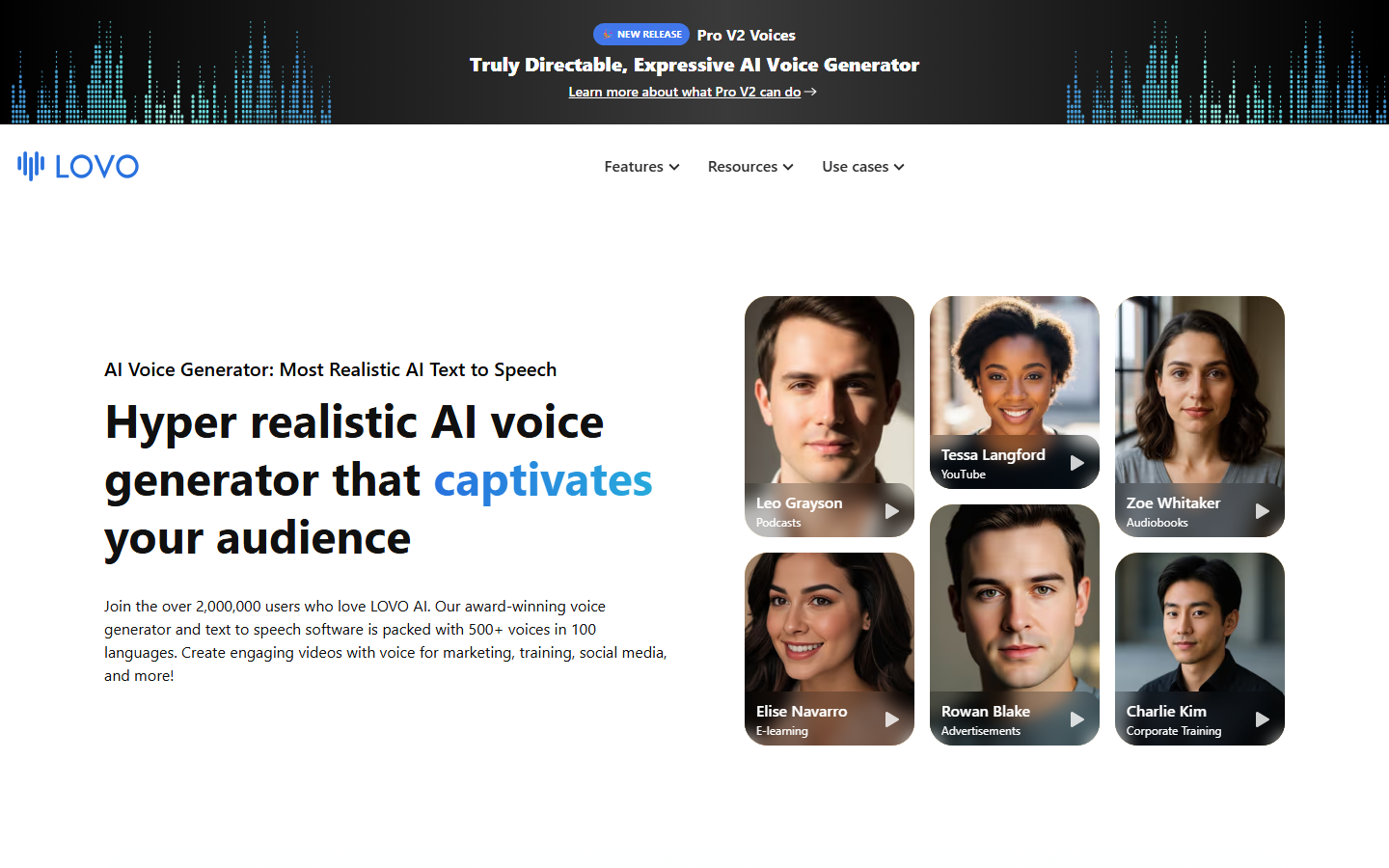
LOVO AI rebranded its primary product as Genny, combining voice generation with a lightweight video editing suite. The voice engine supports over 500 voices in 100+ languages. Their recent "hyper-realistic" model update closed much of the gap with ElevenLabs on naturalness.
The standout feature is the integrated editor. You write your script, generate the voiceover, add background music and stock footage, and export a finished video without leaving the platform. This makes it particularly efficient for YouTube creators, course builders, and social media teams who want an all-in-one workflow.
LOVO's API is available on higher tiers, but it's less mature than ElevenLabs or Wireflow's API. Rate limits are tighter and documentation is thinner. Pricing starts at $25/month for the Basic plan with limited voice cloning. The Pro plan at $49/month unlocks full API access and priority rendering.
Best for: Video creators who want voice generation and editing in one tool.
5. WellSaid Labs
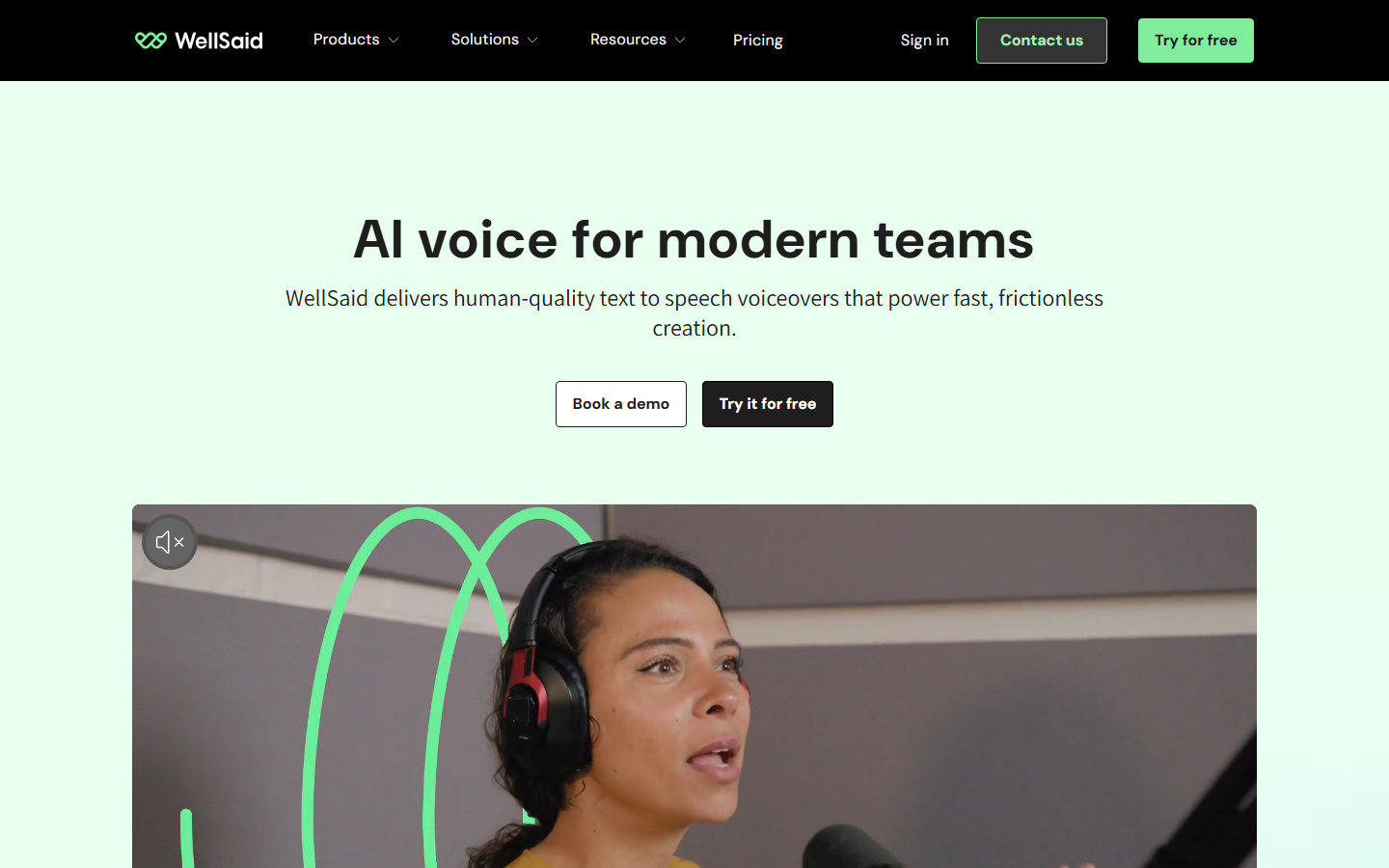
WellSaid Labs focuses exclusively on enterprise voice generation. Their voice avatars are trained on professional voice actors with full licensing, which means you get commercial-use rights without the legal ambiguity that plagues some AI voice cloning platforms. The output quality is consistently high for narration and corporate content.
The platform includes team collaboration features, brand voice kits, and pronunciation dictionaries for industry-specific terminology. If your company uses technical jargon or product names that standard TTS engines mispronounce, WellSaid lets you define custom pronunciations. Pricing is enterprise-only and starts around $49/month per seat. There is no free tier, which limits accessibility for individual creators and smaller teams.
Best for: Enterprise teams producing training, compliance, and corporate communications content.
6. Speechify
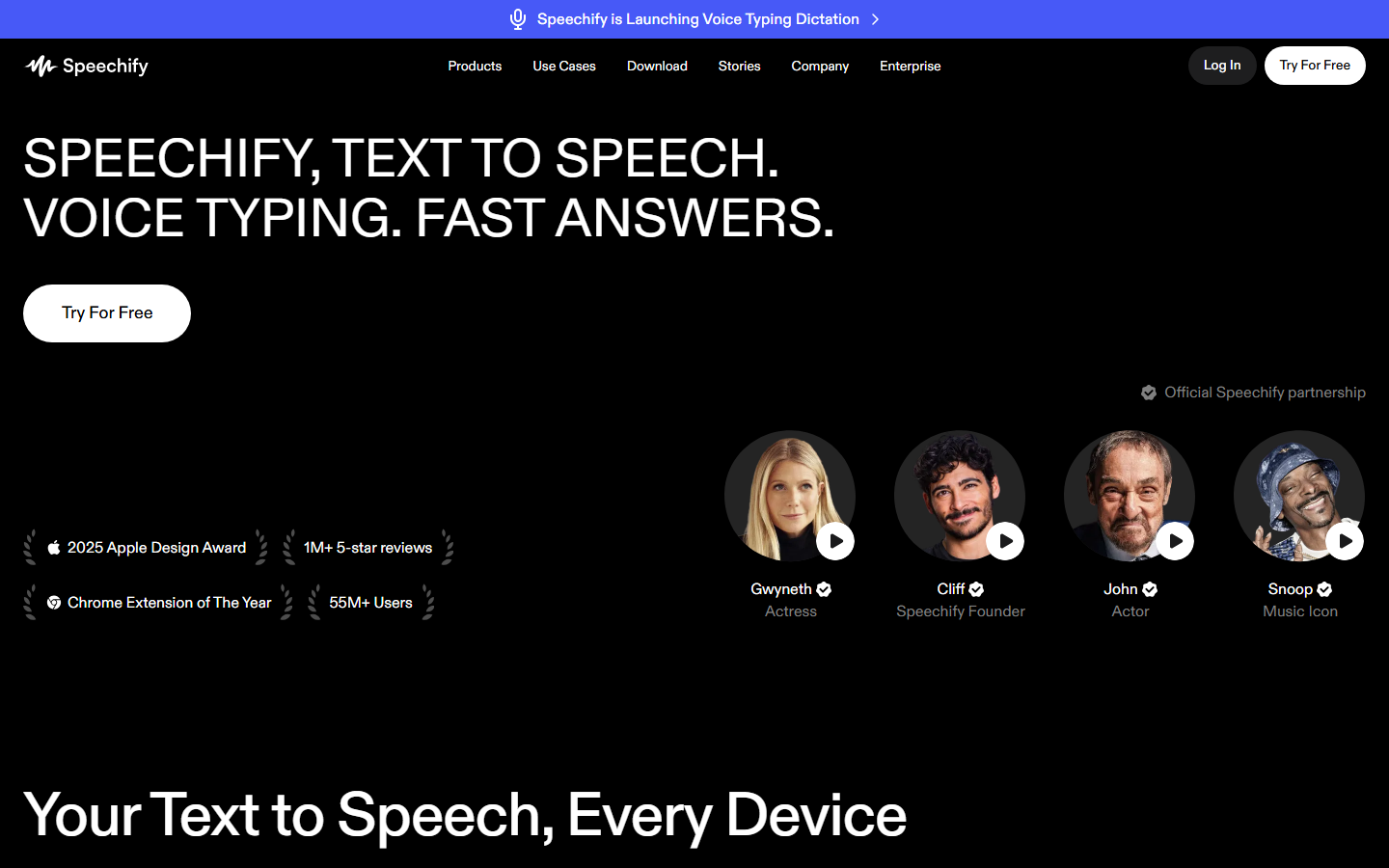
Speechify started as a text-to-speech reader for accessibility and expanded into voice generation for creators. Their voice models are optimized for long-form content, producing audio that maintains natural pacing across 10,000+ word documents without the degradation you hear in some batch generation tools.
The platform includes browser extensions, mobile apps, and integrations with Google Docs and PDF readers. Voice cloning is available on the Premium plan at $139/year. The Studio add-on at $140/month adds higher-quality voices, commercial licensing, and SSML control for developers building audio pipelines.
Speechify's strength is consistency over long sessions. For audiobook production, podcast intros, or reading long documents aloud, it performs well. It's less suited for short, punchy voiceover clips where emotional range matters more than endurance.
Best for: Authors, students, and publishers converting long-form text to natural audio.
7. Resemble AI
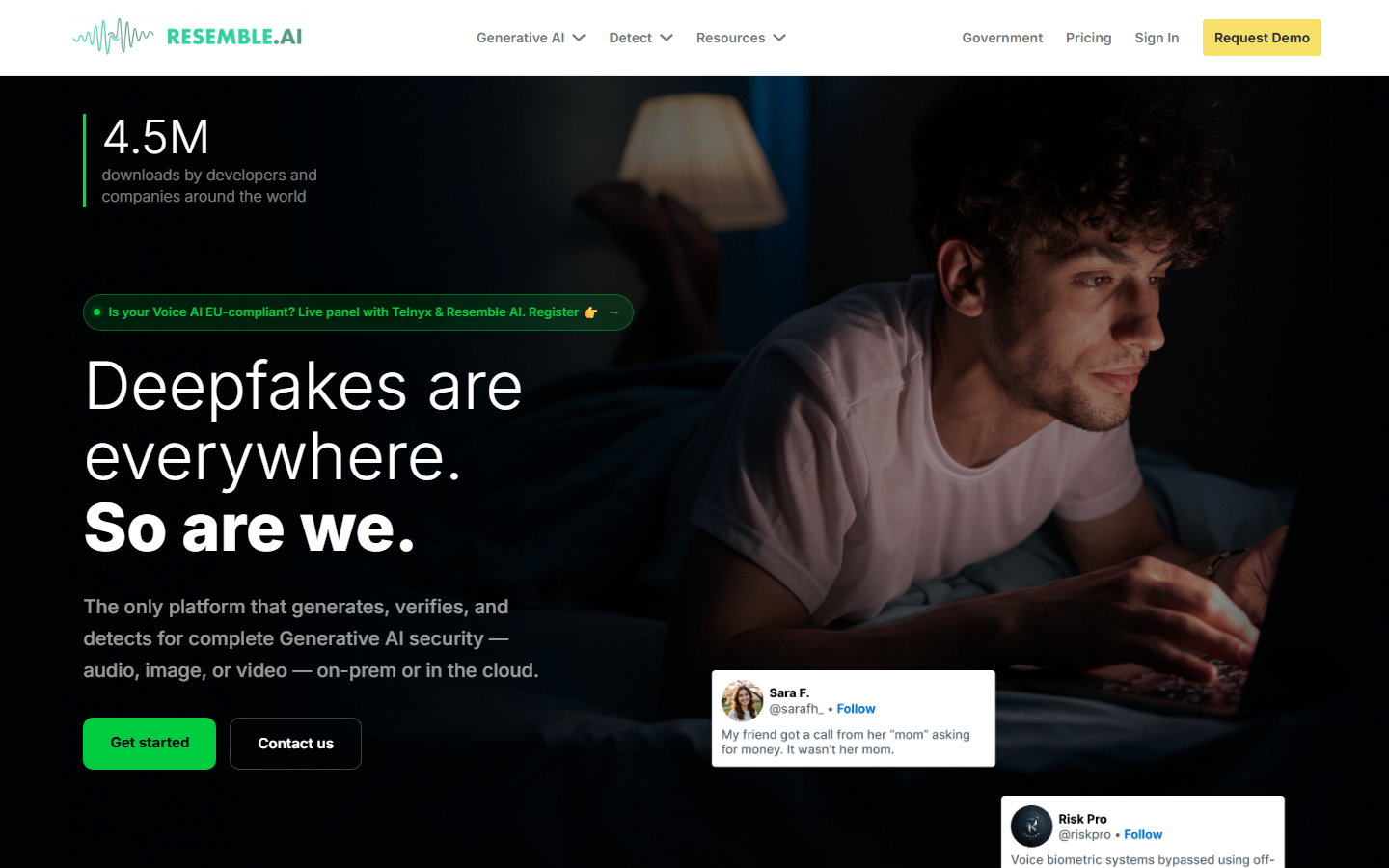
Resemble AI differentiates on real-time voice cloning and synthesis. Their API supports streaming audio with latencies under 200ms, which enables use cases like live customer service bots, interactive games, and real-time translation overlays. You can clone a voice from as little as 3 minutes of recorded speech.
The platform also includes neural speech-to-speech, which transforms one voice into another in real time while preserving the original emotion and cadence. Their Localize feature lets you dub content into other languages while keeping the speaker's voice characteristics intact. Pricing starts at $0.006 per second of generated audio on the pay-as-you-go plan.
The trade-off is that Resemble's standard (non-cloned) voice library is smaller than ElevenLabs or LOVO. If you need a wide selection of stock voices, other platforms offer more variety.
Best for: Developers building real-time voice applications and companies needing low-latency voice synthesis.
8. Fish Audio
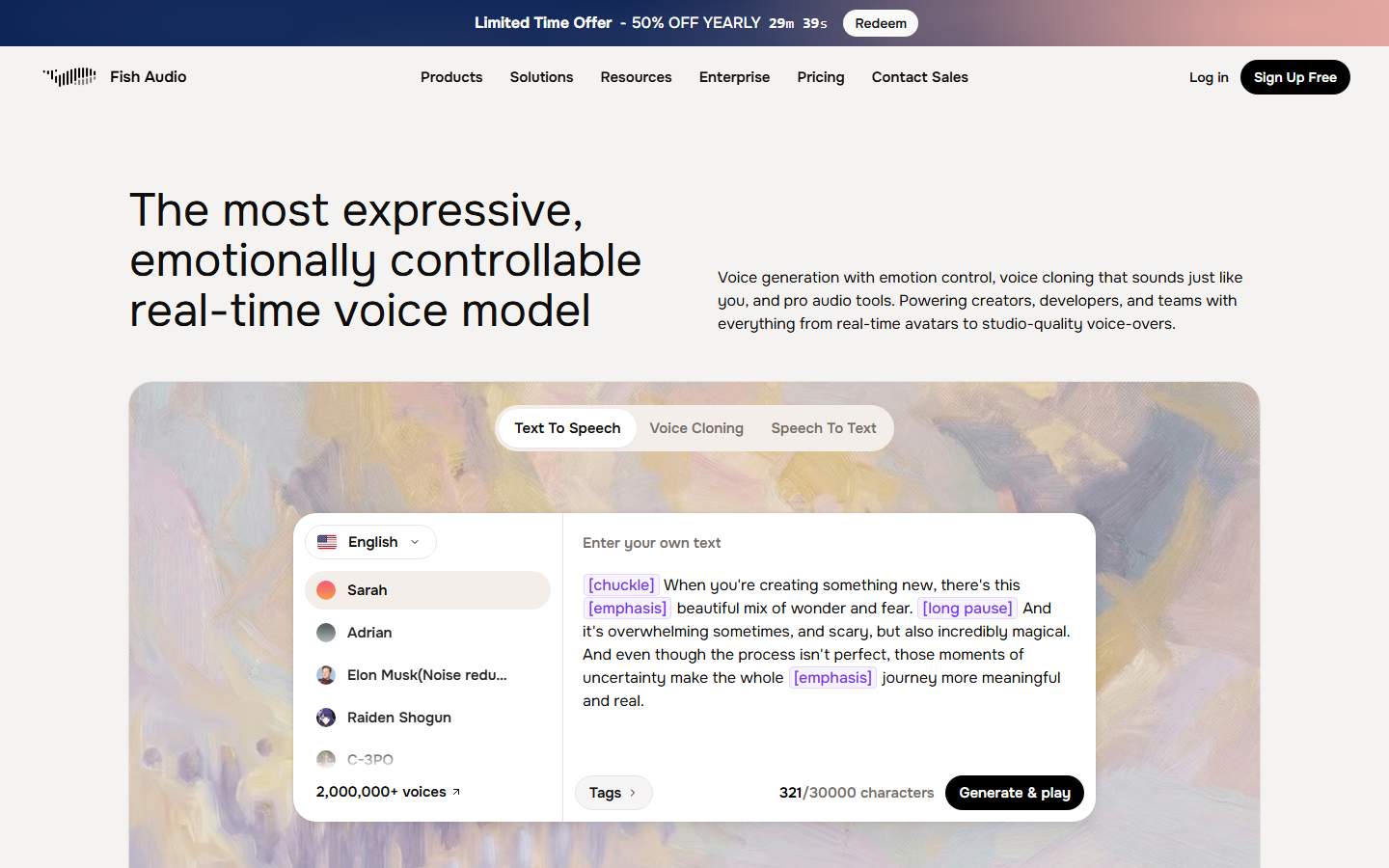
Fish Audio is an open-source voice synthesis platform that has gained traction for its multilingual capabilities, particularly in Asian languages. Their VITS-based models produce natural output in Chinese, Japanese, Korean, and English, with voice cloning available through their API and open-source tools.
The community-driven model library includes thousands of user-contributed voices, which gives Fish Audio a breadth of options that commercial platforms cannot match. You can fine-tune models on your own data and host them locally if you have the GPU resources. The hosted API starts at $0.002 per second, significantly cheaper than most alternatives listed here.
The main drawback is polish. The UI is less refined than ElevenLabs or Murf, and documentation assumes a technical audience. If you are comfortable with APIs and model fine-tuning, Fish Audio offers exceptional value. If you need a plug-and-play experience, other options on this list are more accessible.
Best for: Developers and researchers who want affordable, multilingual voice synthesis with open-source flexibility.
Comparison Table
| Platform | Realism (1-10) | Languages | Voice Cloning | API | Free Tier | Starting Price |
|---|---|---|---|---|---|---|
| Wireflow | 9 (multi-model) | Depends on model | Via chained models | Yes (REST) | Yes | $0/mo + credits |
| ElevenLabs | 9.5 | 32 | Yes (30s sample) | Yes | 10K chars/mo | $5/mo |
| Murf AI | 8.5 | 20 | No | Limited | No | $23/mo |
| LOVO AI | 8.5 | 100+ | Yes | Yes (Pro+) | Limited | $25/mo |
| WellSaid Labs | 9 | 8 | Custom avatars | Yes | No | ~$49/mo |
| Speechify | 8 | 30+ | Yes (Premium) | No | Limited | $12/mo |
| Resemble AI | 9 | 24 | Yes (3 min sample) | Yes (streaming) | No | Pay-per-second |
| Fish Audio | 8.5 | 15+ | Yes (open-source) | Yes | Limited | $0.002/sec |
Try it yourself: Build a voice generation workflow in Wireflow. The nodes are pre-configured with a text input connected to a Fish Audio TTS model, so you can swap in your own script and generate audio immediately.
Frequently Asked Questions
Which AI voice generator sounds the most human?
ElevenLabs Turbo v3 consistently ranks as the most natural-sounding single model. However, combining models through a platform like Wireflow can produce even better results by layering generation with post-processing.
Can I clone my own voice with AI?
Yes. ElevenLabs, Resemble AI, and Fish Audio all support voice cloning from short audio samples. ElevenLabs requires about 30 seconds, while Resemble AI works with as little as 3 minutes of recorded speech. Always ensure you have the legal right to clone any voice you use.
Are AI-generated voices legal to use commercially?
Most paid platforms include commercial licensing in their plans. WellSaid Labs explicitly trains on licensed voice actor recordings. Open-source tools like Fish Audio require you to verify licensing for each voice model independently.
What is the cheapest realistic AI voice generator?
Fish Audio offers the lowest per-second pricing at $0.002/second. For a free option, Wireflow's free tier includes voice model credits, and ElevenLabs gives 10,000 characters per month at no cost.
Can AI voice generators handle multiple languages?
LOVO AI leads with 100+ languages, followed by ElevenLabs at 32 and Speechify at 30+. Fish Audio is particularly strong in Asian languages. Quality varies by language, so test your specific language pair before committing to a platform.
How do AI voice generators handle emotional tone?
ElevenLabs and Resemble AI offer the most control over emotional delivery. ElevenLabs uses context-aware generation that adapts tone based on the text content. Resemble AI's speech-to-speech feature preserves emotional patterns from a source recording.
What is the best AI voice generator for developers?
Resemble AI and Fish Audio offer the most developer-friendly APIs with low latency and flexible deployment options. Wireflow adds workflow orchestration on top, letting you chain voice generation with other AI models through a single API call.
Do AI voices work for long-form content like audiobooks?
Speechify is optimized for this use case, maintaining consistent quality across documents exceeding 10,000 words. ElevenLabs also handles long-form well, though you may need to break content into chapters for the best results.

Co-Founder & Operations at Wireflow
Runs client operations and content strategy at Wireflow. Works directly with creative teams and agencies to build production AI workflows.
- Content Strategy
- Client Operations
Get unlimited ad creatives today.
One call to see if we are a fit and scope the first ad. If it fits, your first batch lands inside week one.