Best Midjourney MCP Tools in 2026

In this article▾
- Quick Summary
- How These Tools Were Ranked
- 1. Wireflow: Best Overall
- 2. AceDataCloud MidjourneyMCP: Most Complete
- 3. PiAPI MCP Server: Best Multi-Model Relay
- 4. ImaginePro: Best Managed Relay
- 5. UseAPI.net: Best for Existing Subscribers
- 6. APIframe: Best Simple API
- 7. Lala-0x3f/mj-mcp: Best Lightweight
- 8. shinpr/mcp-image: Best Open Source Alternative
- 9. Apify Midjourney Automation: Best for Scraped Workflows
- Comparison Table
- Choosing Between Them
- FAQ
- Conclusion
The best Midjourney MCP tools in 2026 let an AI agent write a prompt, trigger a render, and hand back an image URL without anyone opening Discord. Almost every option on this list is a community bridge you host yourself, wrapped around unofficial access, and that shapes what each one can promise. Wireflow takes the first slot because it is the only entry that is a hosted, agent-callable image graph rather than a relay you have to babysit, though it runs Flux, Nano Banana, Seedream and Imagen rather than Midjourney itself.
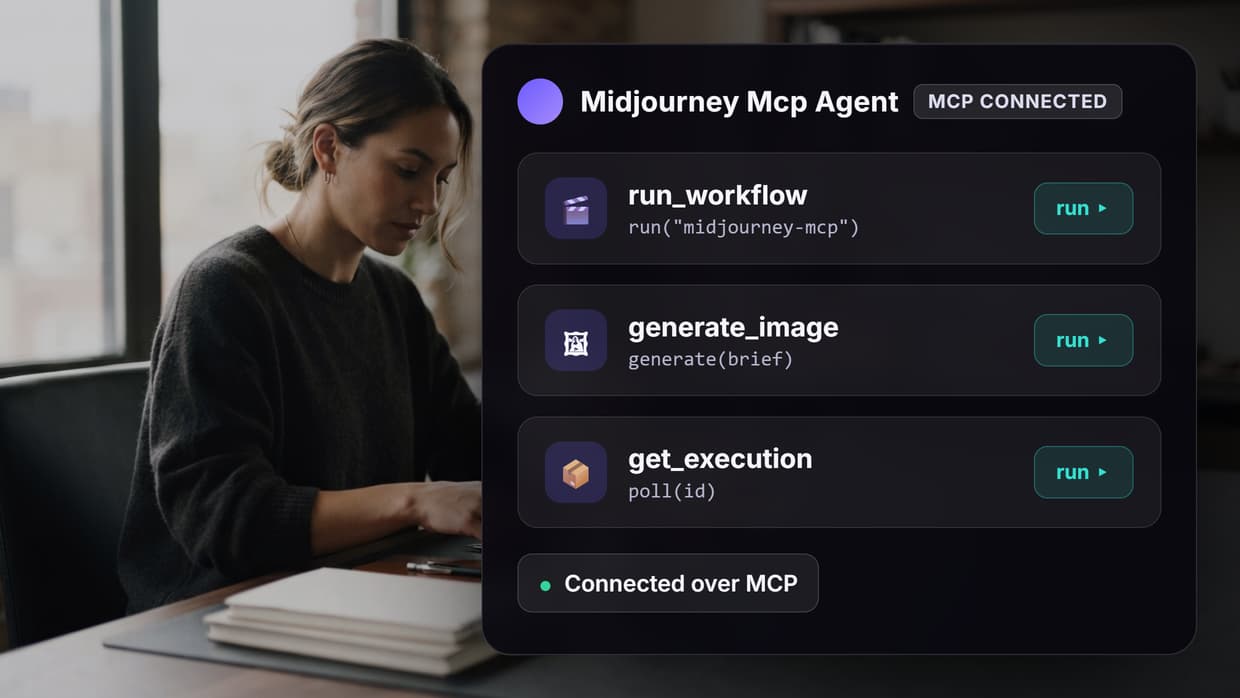
Model Context Protocol made this category possible: a server declares its tools once and Claude Desktop, Cursor, VS Code and Claude Code can all call it. The catch is that Midjourney has no first-party MCP server, so everything below is either a paid relay service, a self-hosted Discord bridge, or a multi-model server that covers the same job with different weights.
Quick Summary
- Wireflow: Hosted multi-model image graph callable over MCP. Best Overall
- AceDataCloud MidjourneyMCP: 15 tools, deepest Midjourney feature coverage. Most Complete
- PiAPI MCP Server: One server spanning Midjourney, Flux, Kling and more. Best Multi-Model Relay
- ImaginePro: Hosted relay with a documented MCP endpoint. Best Managed Relay
- UseAPI.net: Account-bridge access across several creative tools. Best for Existing Subscribers
- APIframe: Straightforward REST relay you wrap yourself. Best Simple API
- Lala-0x3f/mj-mcp: Minimal self-hosted bridge with aspect and version flags. Best Lightweight
- shinpr/mcp-image: Multi-model MCP image server with prompt optimization. Best Open Source Alternative
- Apify Midjourney Automation: Browser automation actor you run on demand. Best for Scraped Workflows
How These Tools Were Ranked
Four criteria separate a usable Midjourney MCP tool from a README. First, access model: a hosted endpoint you call with a key, or a bridge you run against your own account. Second, tool depth, since imagine alone is thin next to a server that also exposes upscale, variation, blend and describe. Third, output handling, because an agent that cannot retrieve the finished image URL cannot chain it. Fourth, operational risk, since several depend on unofficial access that can break without warning. For the mechanics before the rankings, this MCP server image generation example walks through an agent calling a graph and receiving a hosted file back.
For a hands-on look at this in action, check out the Midjourney MCP feature page. It covers connecting an assistant to a hosted image graph and running it from a chat window, which is the pattern every tool below implements with different tradeoffs in reliability and setup cost.
Build this in Wireflow
Make the same kind of asset on a canvas you control, with a free account and no credit card.
1. Wireflow: Best Overall
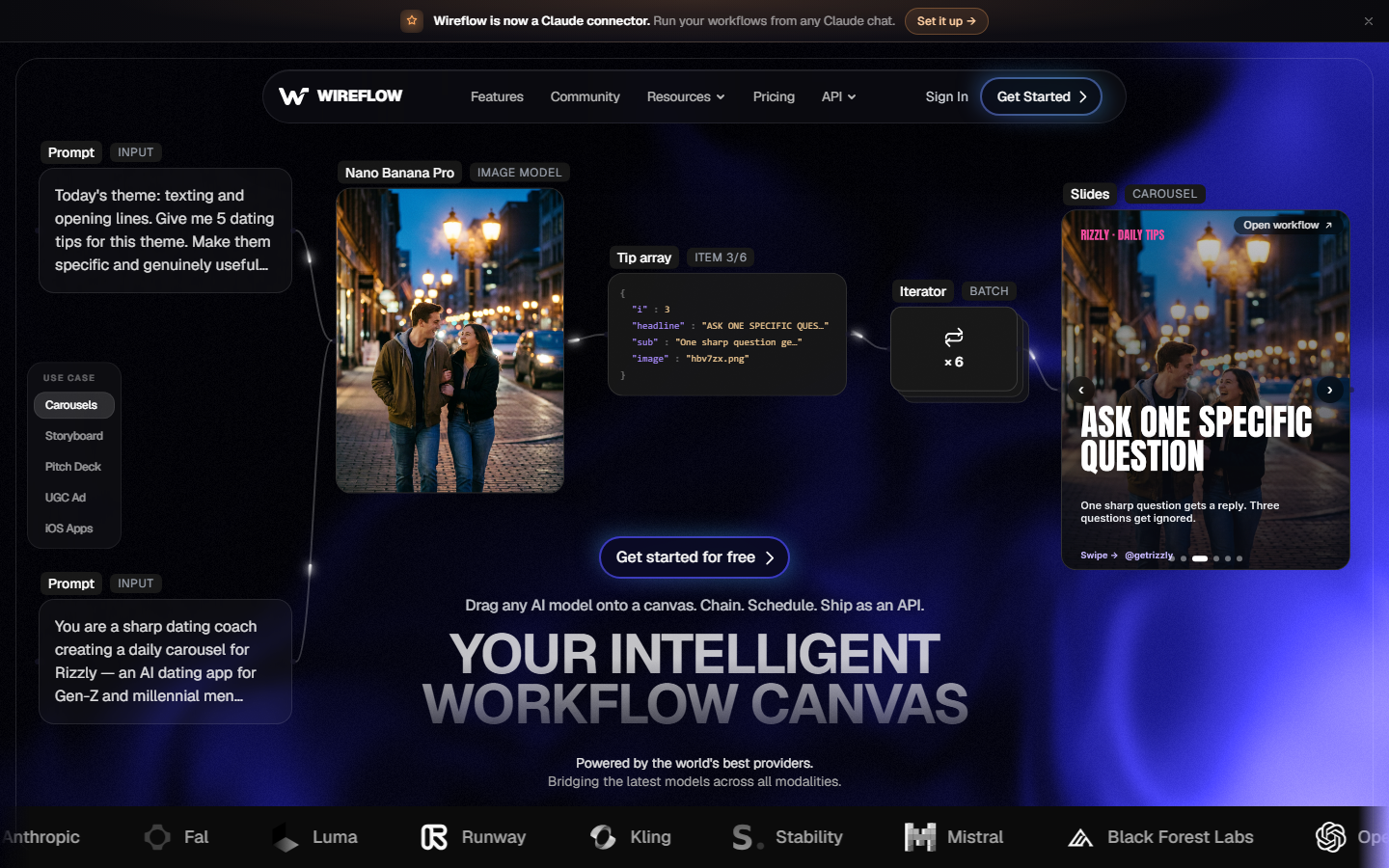
Wireflow is a hosted node canvas where each node is a model call, and the whole graph is reachable over MCP and REST. It does not host Midjourney, and that is worth stating plainly rather than burying: what it gives an agent instead is a single endpoint onto Flux, Nano Banana, Seedream, Recraft, Ideogram, Imagen and GPT Image, with no Discord account, no relay token, and no self-hosted process in the loop. An agent lists available workflows, passes inputs, and gets back durable output URLs it can feed into the next node.
The structural advantage is chaining. Every relay on this list returns one image and stops, while in a graph the render flows straight into an upscale, a background removal, or a video node without the agent shuttling files around. Teams comparing hosted options against subscription tools can read the Midjourney alternative breakdown for where output quality actually lands.
2. AceDataCloud MidjourneyMCP: Most Complete
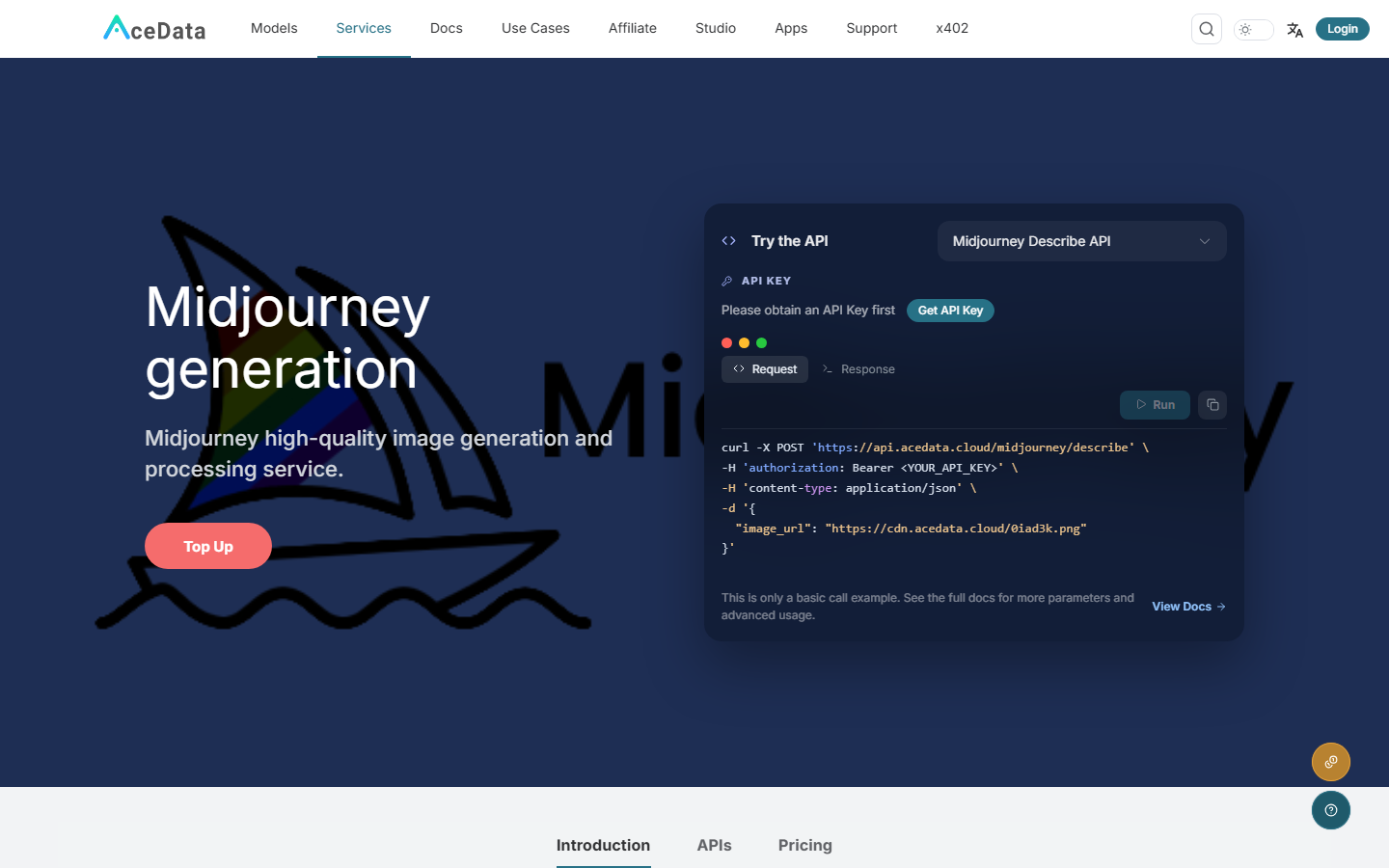
AceDataCloud ships the deepest tool surface in this category. Its MCP server exposes roughly fifteen tools covering imagine for text-to-image, transform for upscales and variations, blend for combining reference images, describe for reverse prompting, and edit for masked changes, plus video generation and extension. Installation is a one-liner: pip install mcp-midjourney or uvx mcp-midjourney, then an ACEDATACLOUD_API_TOKEN environment variable and a small block in your Claude Desktop config.
The tradeoff is that you are paying a relay for access, so throughput, queue times and continued availability are all downstream of a third party. At volume the economics look closer to the metered patterns in usage-based AI API pricing than to a flat subscription.
3. PiAPI MCP Server: Best Multi-Model Relay
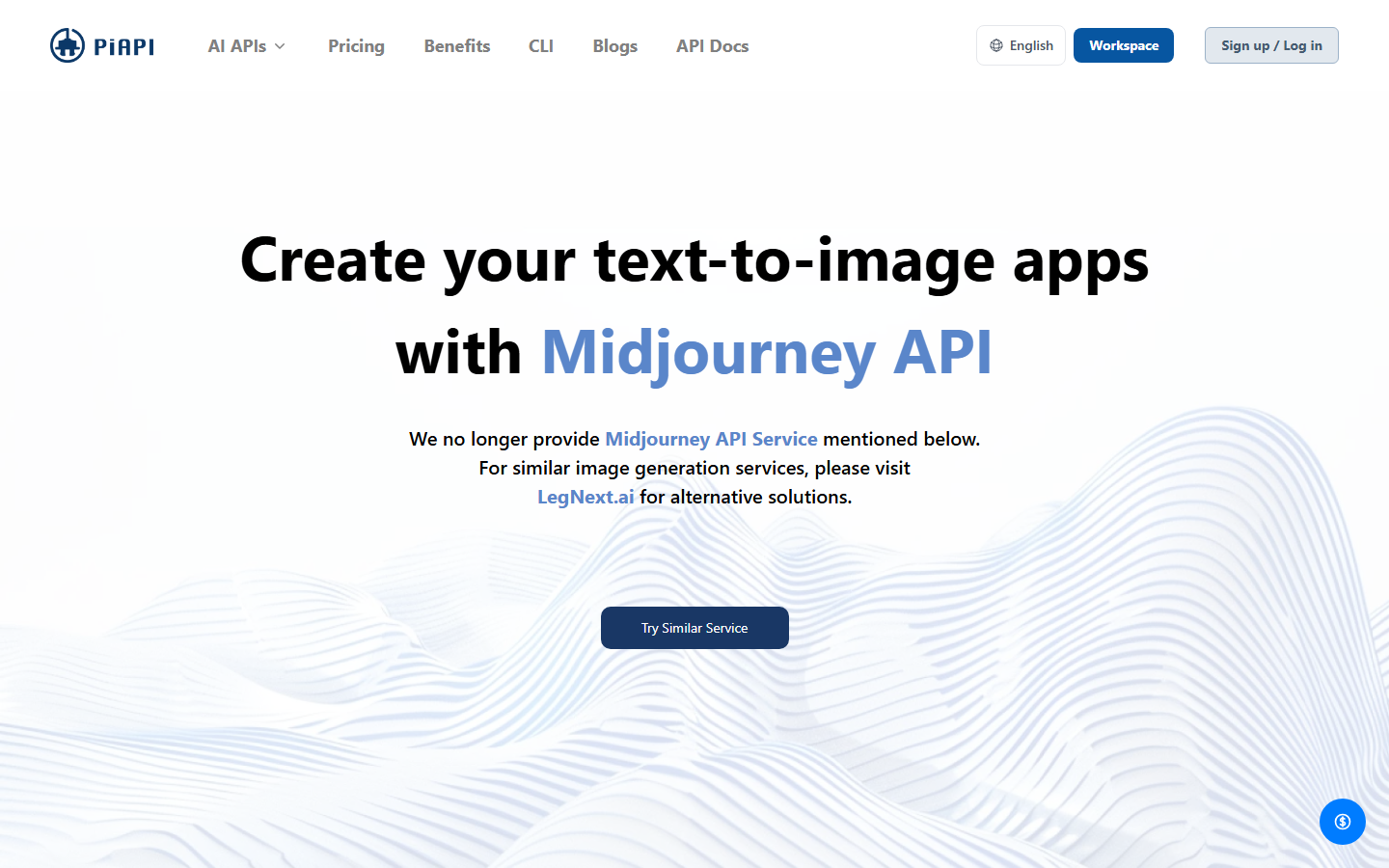
PiAPI publishes a TypeScript MCP server that fronts its wider API, so one connection reaches Midjourney alongside Flux, Kling, Luma, Udio and Trellis. For an agent that needs an image now and a short clip in the next step, that breadth removes a second server from the config file. The repo is active and the tool definitions are readable, which matters when you need to know exactly what arguments an agent is allowed to send.
Because it is a general media relay rather than a Midjourney specialist, some Midjourney-specific operations are shallower than AceDataCloud's. Treat it as the default when your agent's job spans formats rather than drilling into one renderer, and weigh cost per image against the numbers in best Midjourney API tools.
4. ImaginePro: Best Managed Relay

ImaginePro runs a hosted Midjourney relay with a documented MCP endpoint, which means no local process and no Discord session to keep alive. Setup is an API key and a server entry, and the service handles queueing on its side. For small teams that want the fewest moving parts, this is the least fragile of the relay options.
What you give up is control: you cannot see the queue, tune concurrency, or fail over to another renderer if throughput drops. Pairing a relay like this with a hosted graph downstream is common, and node-based image generation is what that second half usually looks like.
5. UseAPI.net: Best for Existing Subscribers
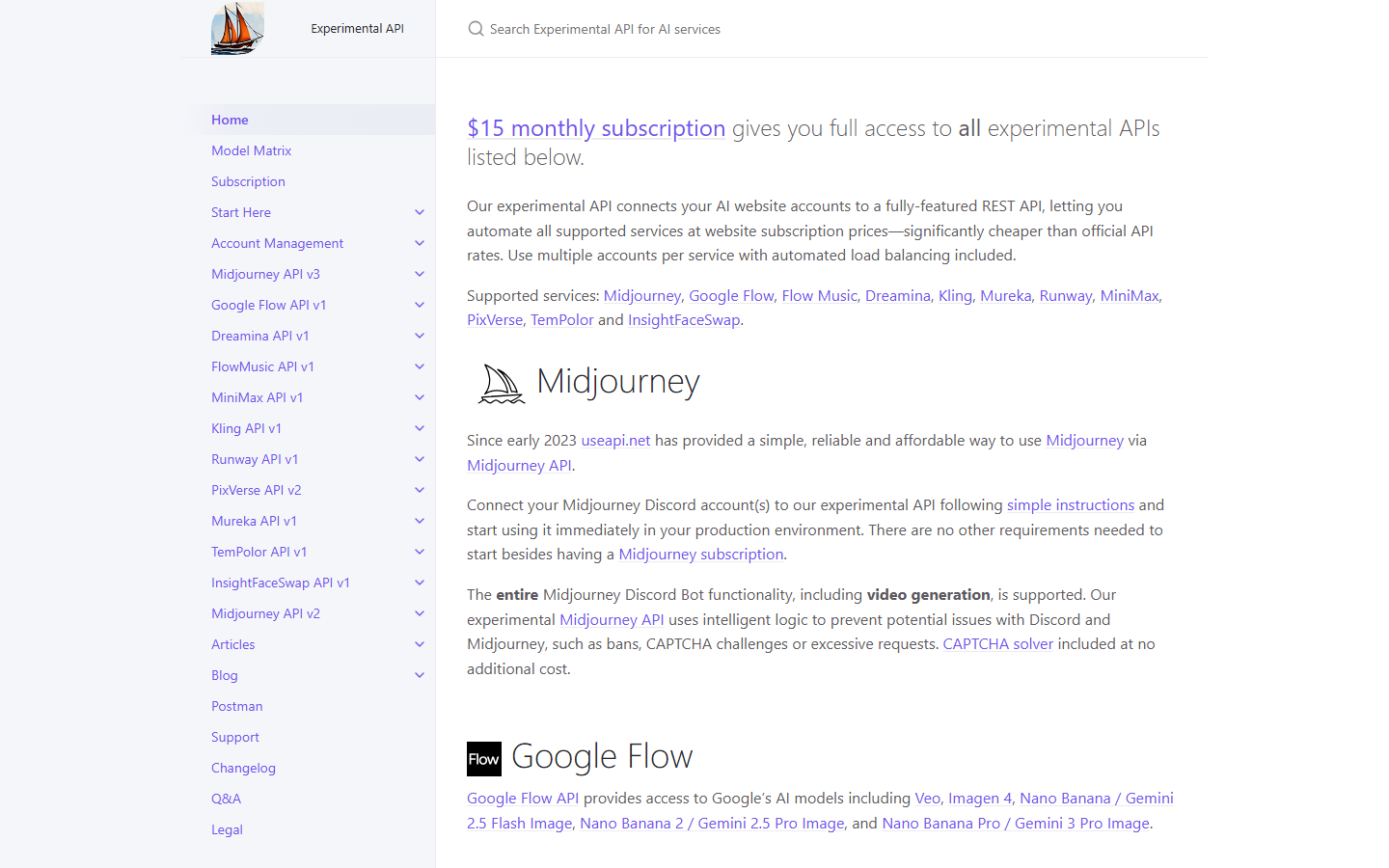
UseAPI.net bridges your own accounts rather than reselling capacity, so it suits people who already pay for Midjourney and simply want programmatic reach. It covers several creative tools under one API surface, and community MCP wrappers around it are straightforward to write because the REST shape is consistent.
The account-bridge model is also its main risk: access depends on your session staying valid, and upstream changes land on you rather than on a vendor. Keep a fallback renderer configured so agent workflows do not stall, since a batch image generation API path is the usual backstop for volume jobs.
6. APIframe: Best Simple API
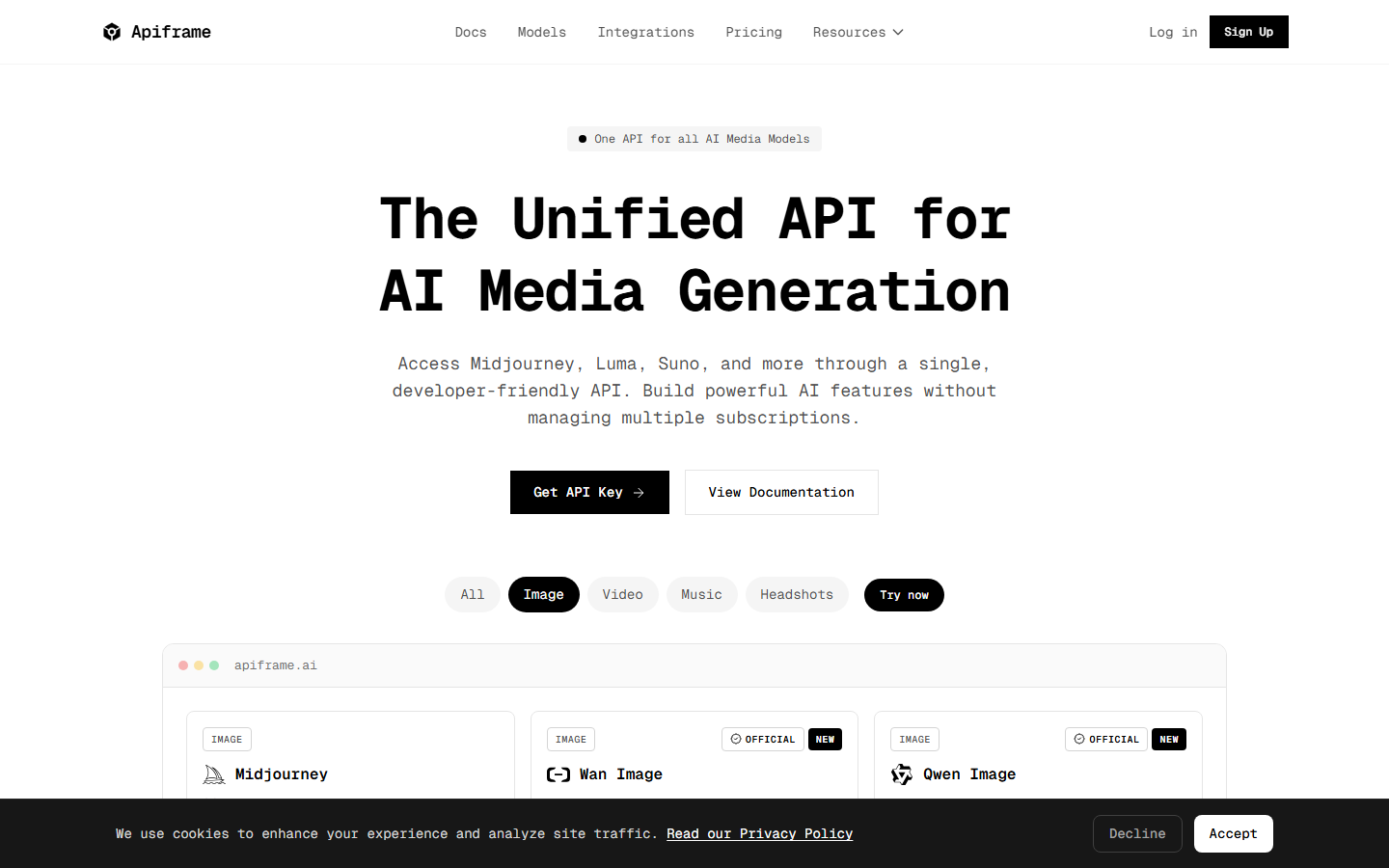
APIframe is a plain REST relay rather than a packaged MCP server, which sounds like a step backward until you have written the wrapper once. The endpoints are small and predictable: submit a prompt, poll a task id, collect the result. Wrapping that in a twenty-line MCP server gives you exact control over which tools an agent sees and what defaults they carry.
That is the right shape when you want a narrow, auditable tool surface instead of fifteen tools an agent might call unpredictably. Teams doing this at scale usually standardize on a programmatic image generation platform so the wrapper stays the only bespoke piece.
7. Lala-0x3f/mj-mcp: Best Lightweight
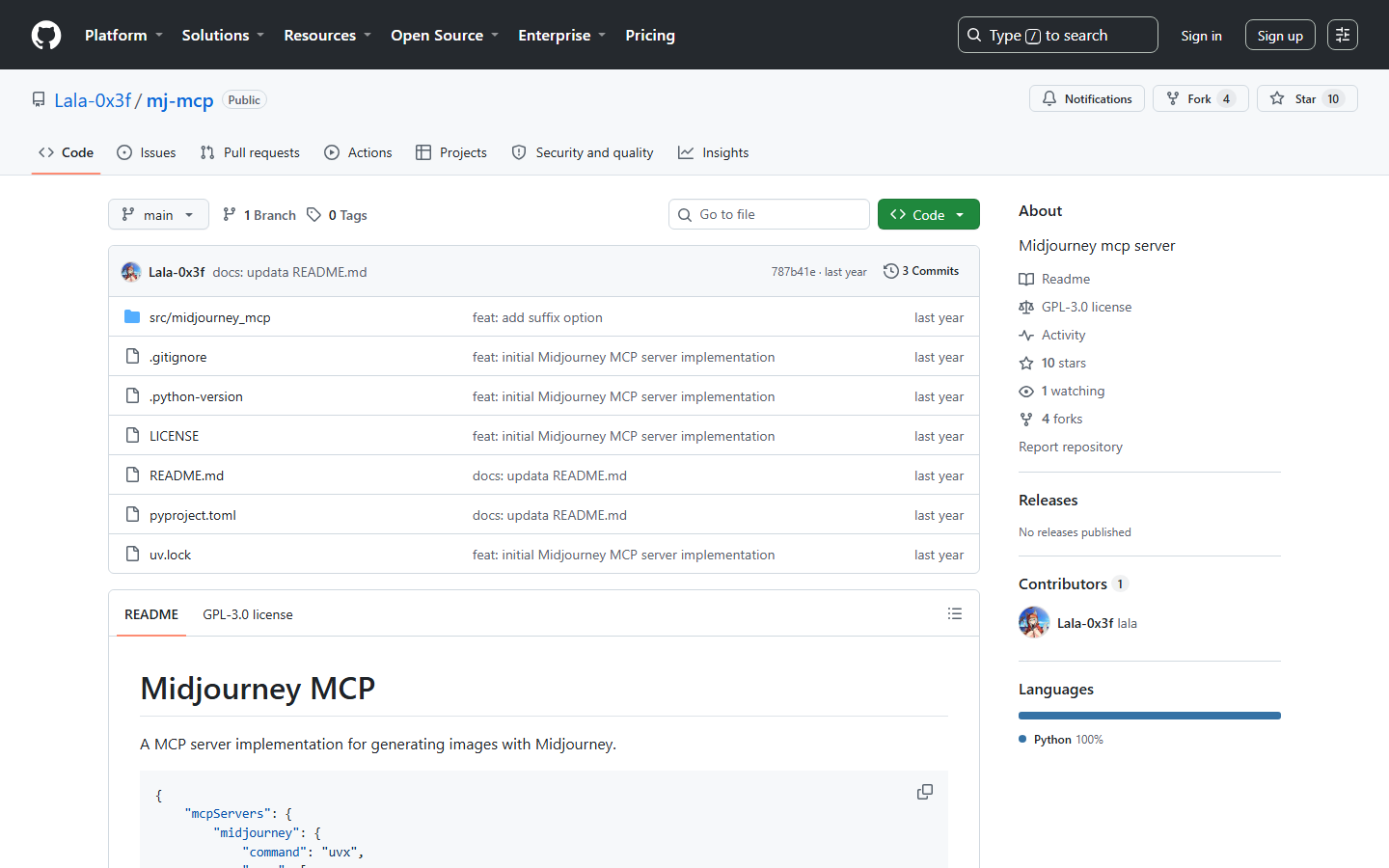
mj-mcp is the minimal end of the category: a small self-hosted server that submits a prompt, waits for generation, and returns image URLs, with support for aspect ratio, version and style flags. There is very little to configure and very little to go wrong in the server itself.
Everything that can go wrong lives upstream instead. It rides on unofficial Discord-bridge access, so it breaks when the bot side changes, and it has no queue management beyond what you add. Good for a prototype, not for a pipeline anyone depends on. The ComfyUI MCP roundup covers how sturdier open servers handle the same problems with local compute.
8. shinpr/mcp-image: Best Open Source Alternative
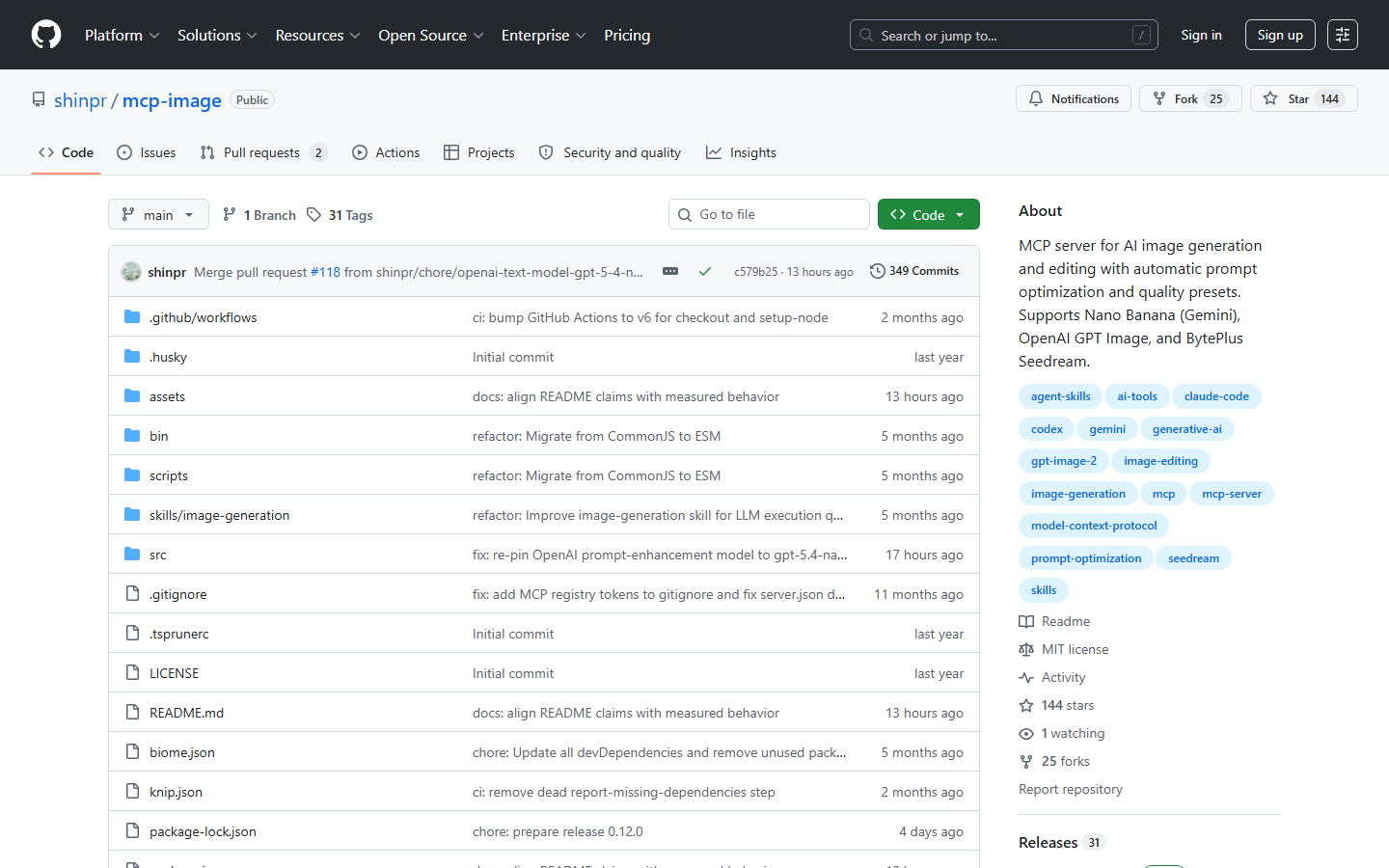
mcp-image skips Midjourney entirely and serves Nano Banana, GPT Image and Seedream through one MCP server, with automatic prompt optimization and quality presets. If the actual requirement is "my agent needs to make images," not "my agent needs Midjourney specifically," this removes the unofficial-access problem in one step.
It is also the cleanest reference implementation here if you are writing your own server. The prompt optimization layer is the pattern worth stealing: agents write terse prompts, and a rewrite step before the model call lifts output quality noticeably. Similar logic shows up in most multi-model AI workflow setups.
9. Apify Midjourney Automation: Best for Scraped Workflows
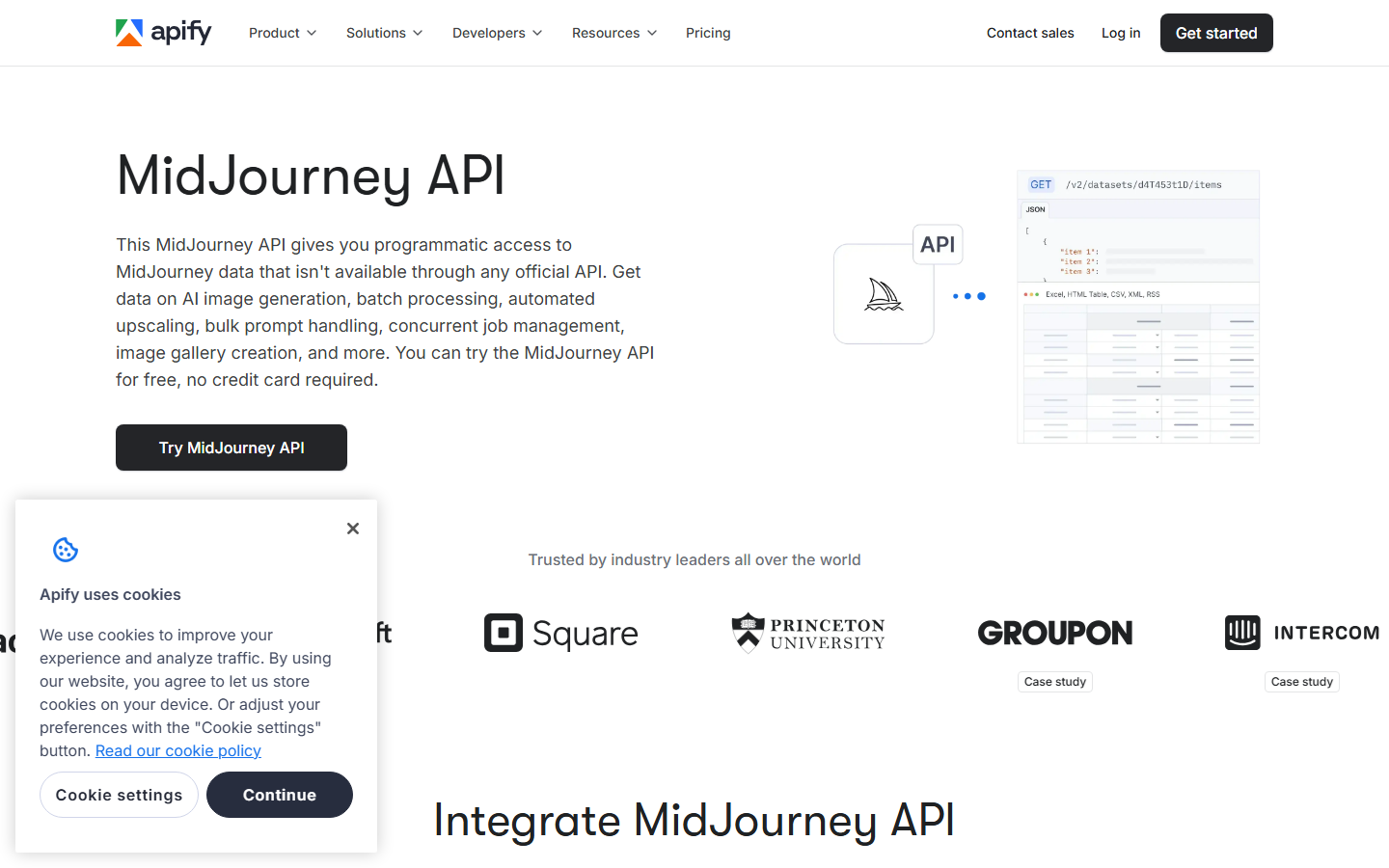
Apify hosts a Midjourney automation actor that drives the Discord interface directly and can be exposed to an agent through Apify's MCP integration. Runs are billed by compute time and the actor handles the browser session, so you are not maintaining a headless Chrome install.
Browser automation is the most brittle path here and the slowest per image, so this belongs in scheduled batch jobs rather than interactive agent turns. It earns its place as the only option that works with no relay vendor in the middle, though for interactive use an AI image generator endpoint will always answer faster.
Comparison Table
| Tool | Access model | MCP ready | Tool depth | Best for |
|---|---|---|---|---|
| Wireflow | Hosted graph, multi-model | Yes | Full chaining | Agent pipelines |
| AceDataCloud | Paid relay | Yes | ~15 tools | Deep Midjourney control |
| PiAPI | Paid relay, multi-model | Yes | Medium | Image plus video agents |
| ImaginePro | Managed relay | Yes | Medium | Lowest maintenance |
| UseAPI.net | Account bridge | Community wrappers | Medium | Existing subscribers |
| APIframe | REST relay | Wrap yourself | Narrow | Controlled tool surface |
| mj-mcp | Self-hosted bridge | Yes | Minimal | Prototypes |
| mcp-image | Self-hosted, multi-model | Yes | Medium | Open source stacks |
| Apify actor | Browser automation | Via Apify MCP | Minimal | Scheduled batches |
Choosing Between Them
Pick by constraint, not by feature count. If Midjourney's specific look is the requirement, AceDataCloud gives the most control and ImaginePro the least maintenance. If the requirement is really "images an agent can call reliably," a hosted multi-model graph removes the unofficial-access risk entirely and lets the render feed into the next step without a round trip. Anyone still comparing raw cost per image across providers will find the working numbers in best image editing API tools.
Try it yourself: Build this workflow in Wireflow, where the nodes are pre-configured with the exact setup discussed above.
FAQ
Is there an official Midjourney MCP server? No. Every Midjourney MCP server available is built by a third party, either as a paid relay service or as a self-hosted bridge. Plan for the possibility that access changes.
What is the difference between a relay and a bridge? A relay is a hosted service you pay for with an API key, and it manages access on its side. A bridge runs on your machine and uses your own account, so you carry the operational risk yourself.
Can I use these with Claude Desktop and Cursor?
Yes. Any of the packaged MCP servers register through the standard mcpServers config block, which Claude Desktop, Claude Code, Cursor and VS Code all read.
Do I still need a Midjourney subscription? For account-bridge tools like UseAPI.net and the Discord automation actors, yes. Paid relays such as AceDataCloud and PiAPI bill you directly and do not require your own subscription.
Which option is fastest per image? Hosted API endpoints answer fastest, typically in seconds. Discord-bridge and browser-automation paths add queue and page-interaction latency, so they can take a minute or more per render.
Can an agent upscale or vary an image it just made? Only where the server exposes those tools. AceDataCloud covers transform, blend and describe. Minimal servers like mj-mcp expose generation only, so the agent has no follow-up action available.
How do I chain image output into another model? The server must return a durable URL rather than inline bytes. Check the tool schema before building on it, since some servers return temporary links that expire before a second call can use them.
What breaks most often with these tools? Unofficial access. Self-hosted Discord bridges fail when the upstream interface changes, and relays can queue heavily under load. Configuring a fallback renderer is the standard mitigation.
Conclusion
The Midjourney MCP landscape in 2026 is a set of community bridges and paid relays with no official server behind any of them, so choosing well means deciding how much operational risk you want to own. AceDataCloud is the pick for depth, ImaginePro for low maintenance, and mcp-image for an open source path that sidesteps the access problem. If the goal is an agent-callable image step that chains into everything after it, a hosted graph on Wireflow removes both the relay and the self-hosted process from the picture.

Co-Founder & Operations at Wireflow
Runs client operations and content strategy at Wireflow. Works directly with creative teams and agencies to build production AI workflows.
- Content Strategy
- Client Operations
Get unlimited ad creatives today.
One call to see if we are a fit and scope the first ad. If it fits, your first batch lands inside week one.