Features
AI Slideshow Maker
Most slideshow makers are a closed template you rent.
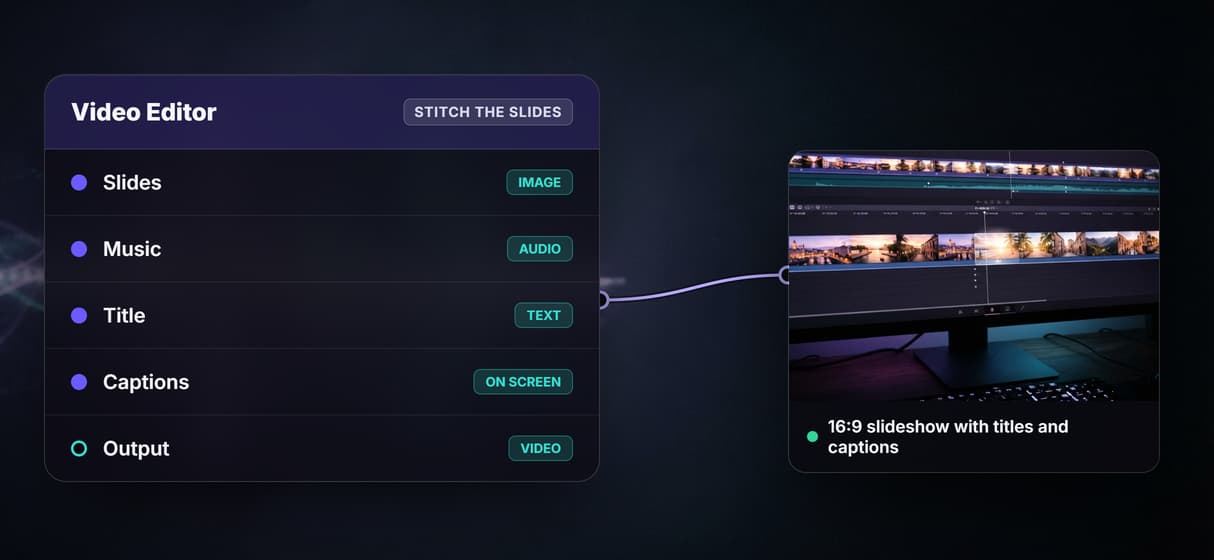
Wireflow hands you the pipeline: import or generate your photos, add a music track, and a Video Editor node stitches them into a slideshow with crossfades and captions. Free to build, pay per generation.
Free to build · no credit card · Read the agent docs · See how it works ↓
 Andrew Adams · Co-Founder & Operations at Wireflow ·

How to Use AI Slideshow Maker
Steps to get you started in Wireflow.
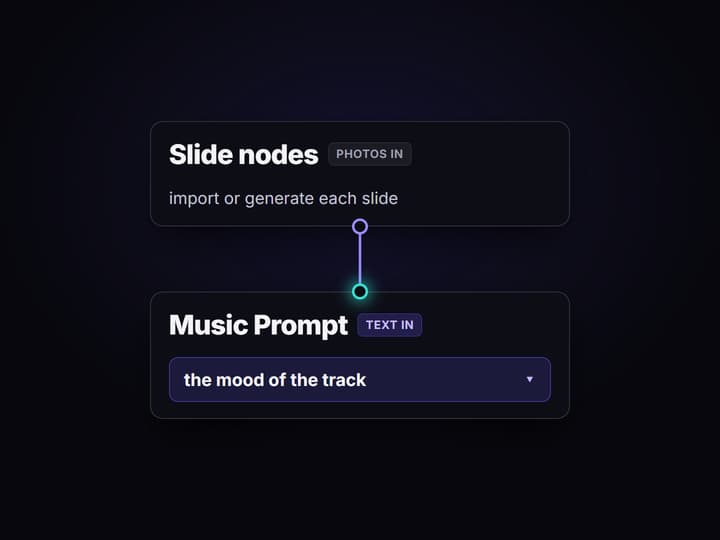
Add your photos to the slide nodes
Open the flow and drop a photo into each Slide node, or generate a missing one from a line of text with GPT Image 2.5 Flare. Add or remove Slide nodes to set the length.

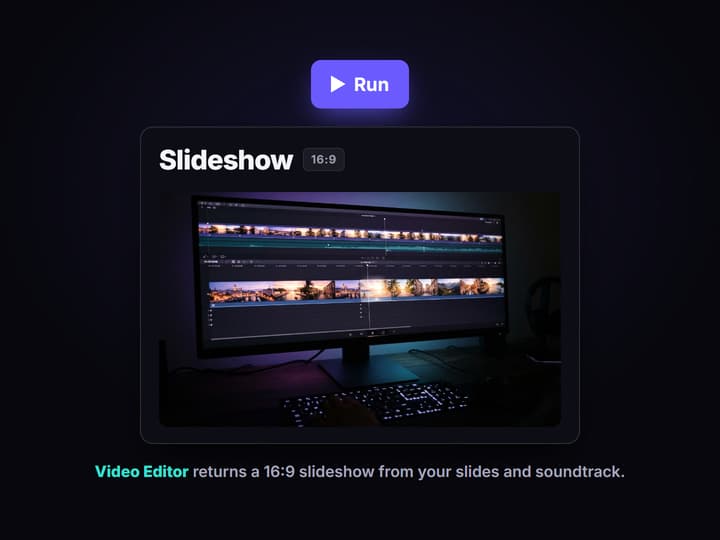
Run the graph once
The Video Editor arranges the slides on a timeline with crossfades, a title card, and an ElevenLabs Music track, and returns a 16:9 slideshow you can download.
Change a slide, keep the flow
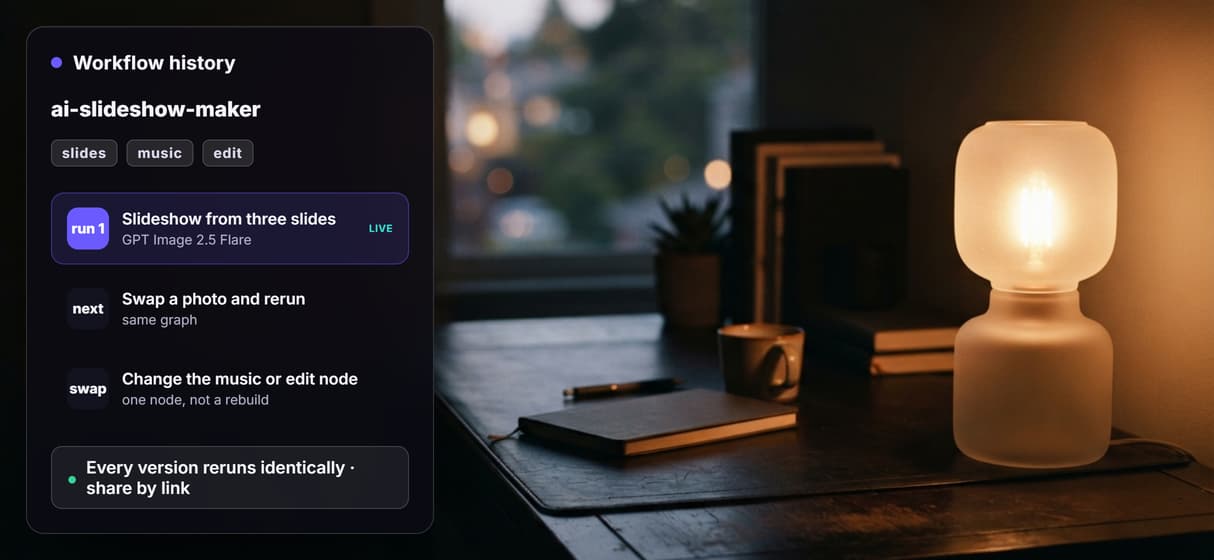
Swap a photo or add another slide and run again for a new cut, or swap the music node. Share the flow link and the whole team runs the exact same graph.
More Than Just AI Slideshow Maker
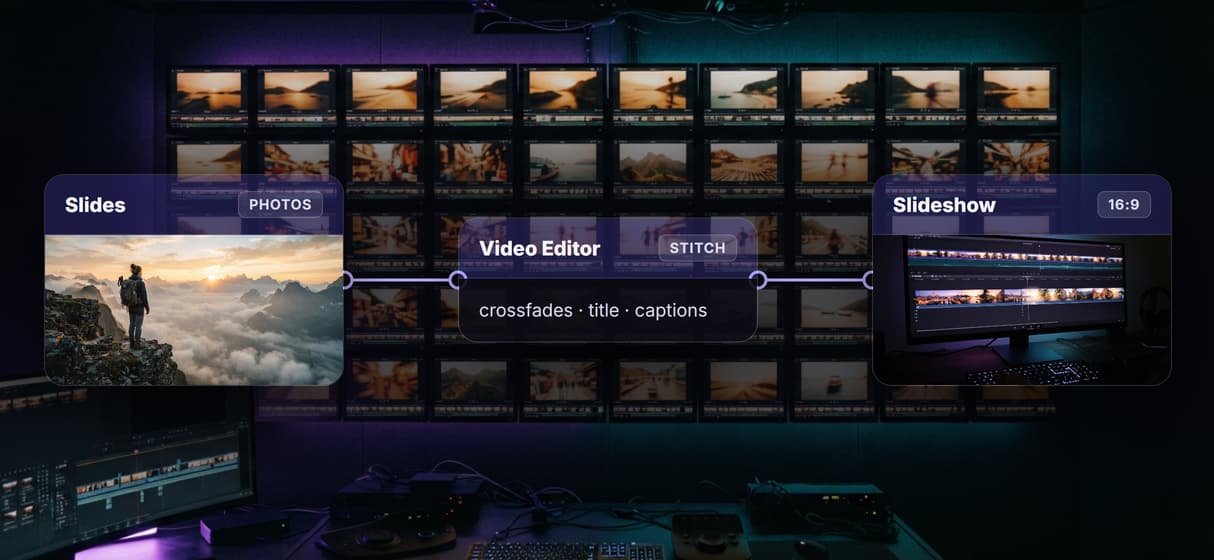
Your photos, turned into a slideshow
Import or generate your photos; the Video Editor stitches them into a 16:9 slideshow with crossfades and captions, the same image to video AI wiring done for you.
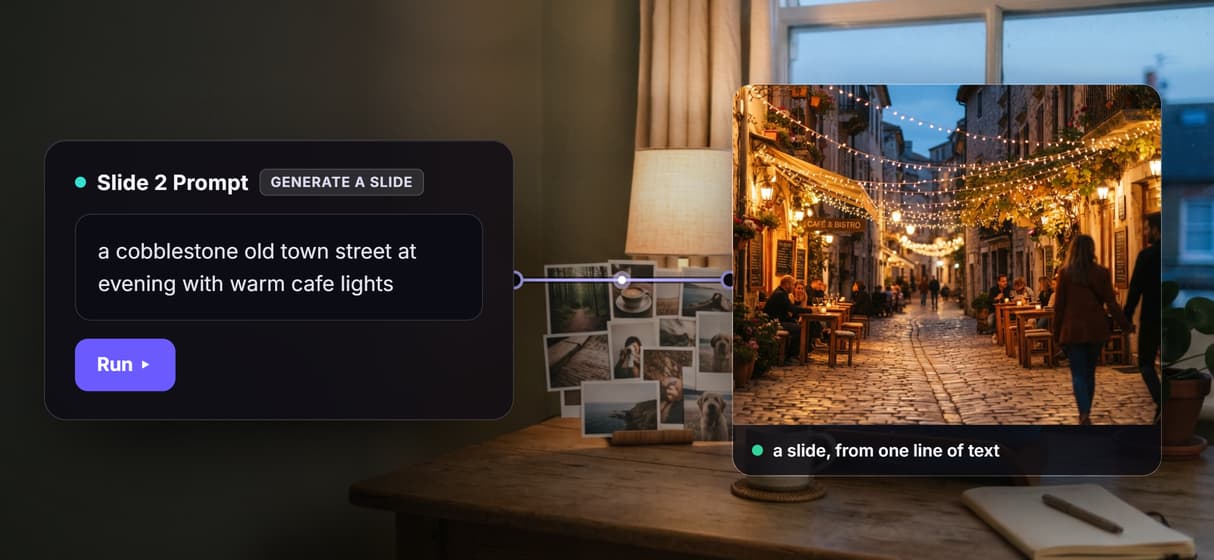
Generate the slides you are missing
No photo for a scene? GPT Image 2.5 Flare renders a slide from one line of text, so a gap in the story is a prompt away, the same AI photo generator on the canvas.
Titles and captions baked in
The Video Editor burns a title card and on-screen captions over the slides, so the clip is ready for a feed the way an AI TikTok video maker hands it back.
Own the pipeline, swap any model
Every step is a node you can rewire or replace, the slides, the music, the edit, the habit behind any node based video generation graph.
Pay per generation, not per seat
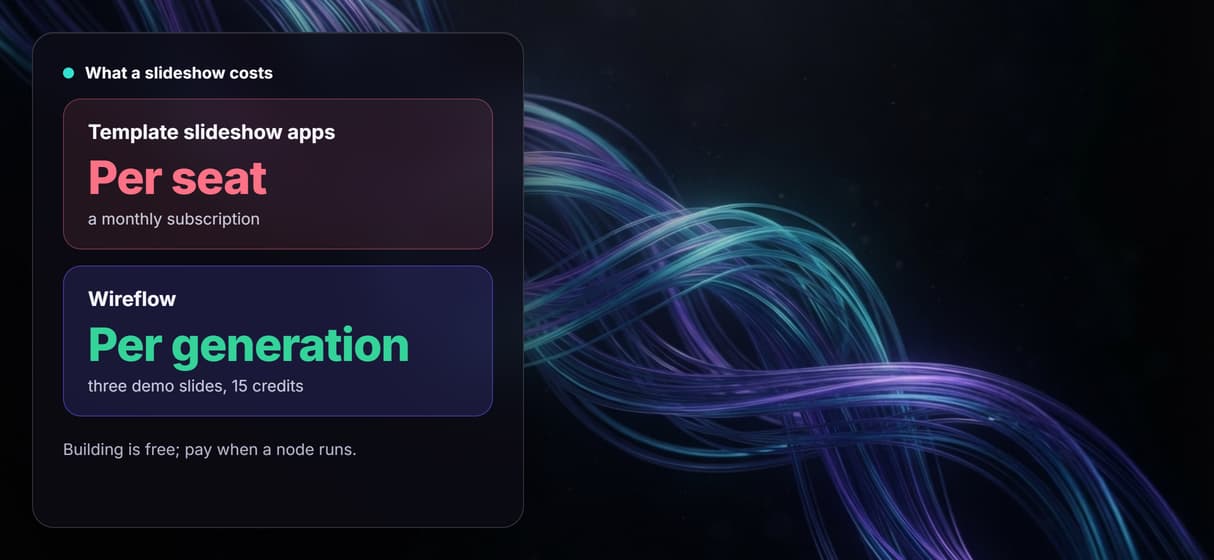
Building on the canvas is free and the three demo slides cost 15 credits, about 20 cents. Try it like any free AI video generator online and pay only when a node runs.
Slideshow Workflows
No Code Required
API & Batch Processing
Why a slideshow maker you own beats a template you rent
The usual slideshow maker is a one-screen tool: upload your photos, pick a template, hit export. It is fast until you hit the ceiling. You cannot see how the video is built, you cannot change the model that times the transitions or scores the track, and the output carries the same template look as everyone else's. Most people do not leave because the slideshows are bad; they leave because the tool is a locked box.
Wireflow answers with a different shape. A slideshow is a small workflow you own on a node canvas: each Slide node holds a photo you import or generate, an ElevenLabs Music node adds a soundtrack, and a Video Editor node stitches the slides into a 16:9 clip with crossfades, a title, and captions. It runs on hosted compute in the browser, nothing to install, and the same canvas drives every other AI video generator job your team has.
What goes into the slideshow graph
Your photos
Drop your own shots into the Slide nodes; add or remove nodes to set how long the slideshow runs.
Generated slides
GPT Image 2.5 Flare renders a missing slide from a line of text, matched to the rest of the set.
A soundtrack
An ElevenLabs Music node scores the slideshow with an instrumental track you can swap or replace.
The Video Editor
One Video Editor node arranges the slides on a timeline with crossfades, a title, and captions.
Rerun and swap
Workflows are versioned and shareable by link; swap any model node as better ones ship.
Endpoint and MCP tool
Every published slideshow flow is also a REST endpoint and an MCP tool an agent can call.
How the slideshow graph turns photos into a video
The workflow behind this page's button is deliberately small: a handful of Slide nodes, a music node, and one Video Editor.
- Slide nodes hold the photos. Import your own, or generate one with GPT Image 2.5 Flare when a shot is missing. Each Slide node is one frame of the story.
- A music node scores it. An AI background music generator node writes an instrumental track, or you wire in your own audio.
- The Video Editor stitches it. It lays the slides on a timeline, crossfades between them, drops a title card and captions, and returns a 16:9 slideshow.
That is the detail worth copying: the slides, the music, and the edit are separate nodes, so you can change one photo, re-score the track, or swap the image model without rebuilding the slideshow. And because the graph lives among 100+ hosted models, the same canvas handles the next job too.
When a plain slideshow tool is the right call
If you want to upload thirty phone photos and get a finished montage in one tap with zero choices to make, a single-purpose slideshow app is built for exactly that, and this page will not pretend otherwise. Wireflow asks you to wire a small graph the first time, which is a few minutes you do not spend in a one-tap tool.
Wireflow is also the generation and edit layer, not a slide-deck builder: it will not make editable PowerPoint or Google Slides, write your captions for you, or export to an LMS. What it offers instead is ownership of the pipeline, 100+ hosted models to swap between, and per generation pricing. If a slideshow is one step in a bigger content machine, build it here and pair the flow with a faceless AI video generator when the job grows.
FAQs
It depends on what you want to keep. If you want a one-tap template tool, a single-purpose slideshow app is the closest match. If you want to own the pipeline, Wireflow builds the slideshow as a node workflow: import or generate each slide, add a music track, and a Video Editor stitches them into a 16:9 clip with crossfades and captions, priced per generation.
Discover related AI tools
More From Wireflow
Written by
Andrew Adams · Co-Founder & Operations at Wireflow
Runs client operations and content strategy at Wireflow. Works directly with creative teams and agencies to build production AI workflows.
Build your slideshow on the canvas
Open the flow, drop in your photos, and run it: slides, music, and a 16:9 cut from one graph. Building is free; you pay per generation, not per seat.